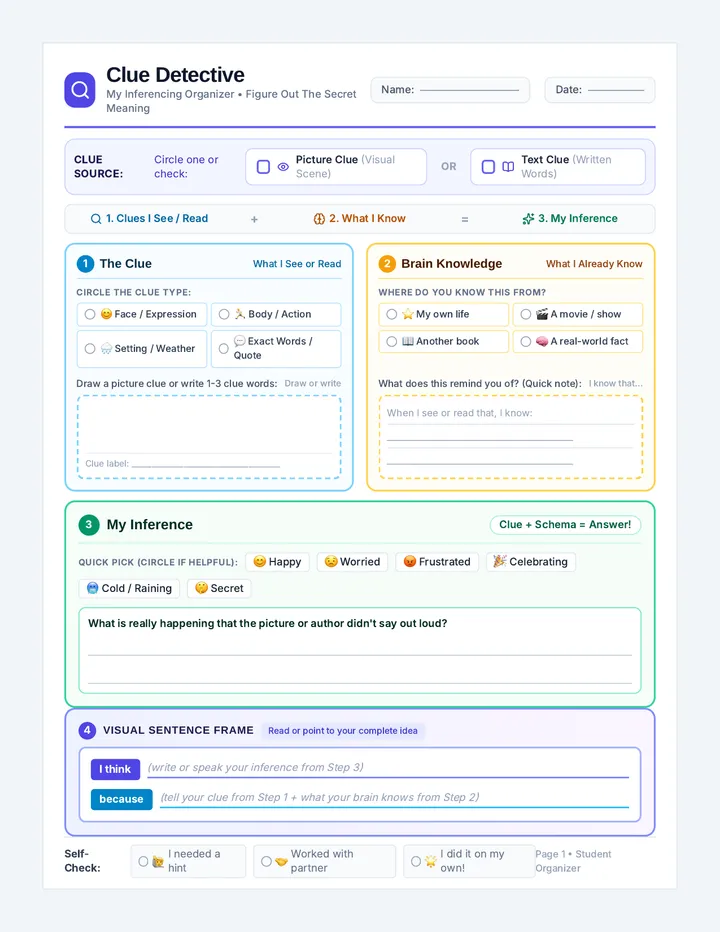
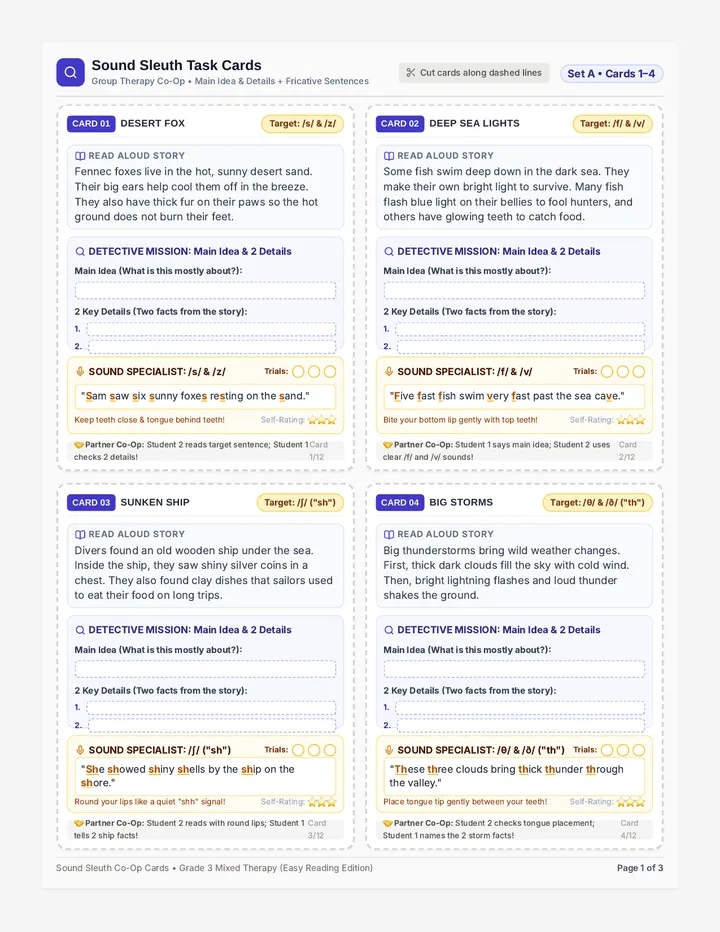
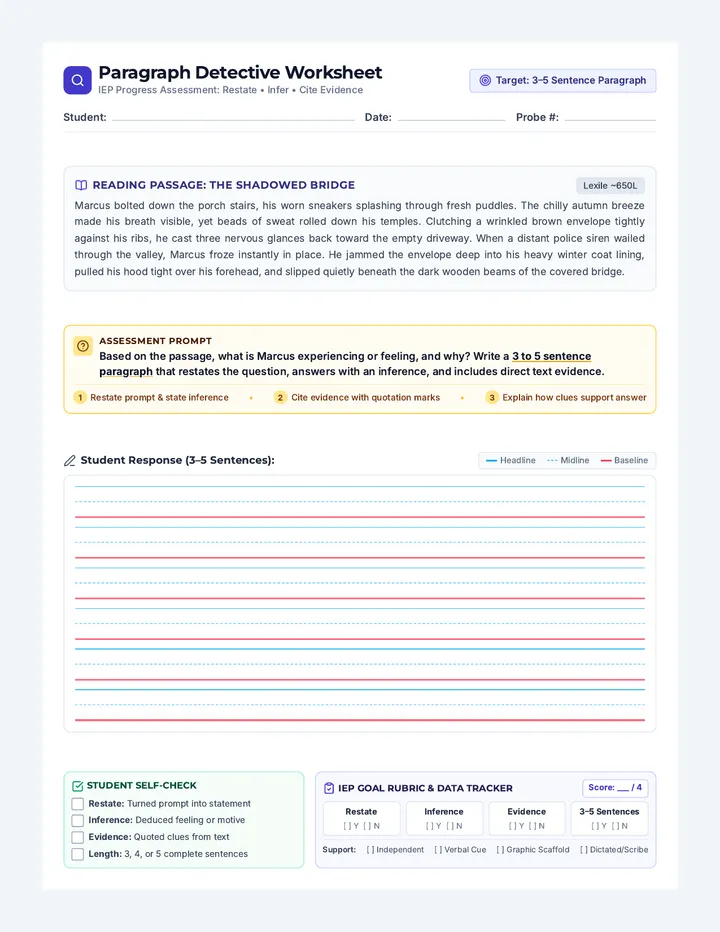
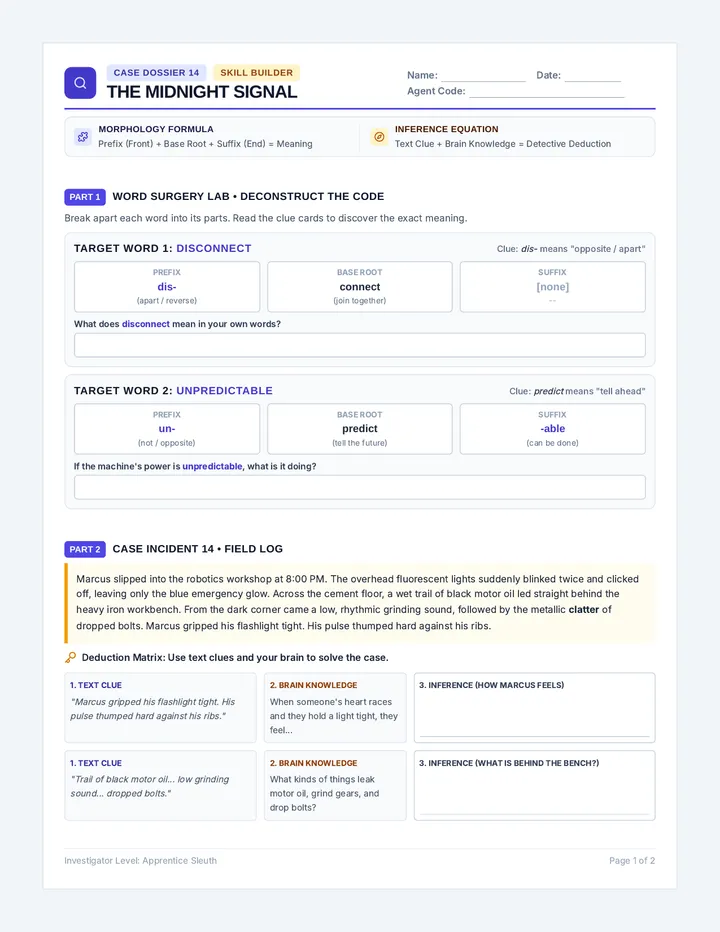
Evidence-based scaffolds and explicit modeling techniques for synthesizing textual clues with prior knowledge. Includes graphic organizers and guided prompts to build critical thinking and reading comprehension.
A sequence for 2nd Grade students to master text-to-speech (TTS) as a tool for reading comprehension. Students transition from decoding mechanics to deep understanding by using auditory support to predict, pause, answer questions, visualize, and sequence stories.
A 4th-grade sequence focused on using Text-to-Speech (TTS) technology as a multi-sensory reading comprehension tool. Students learn to synchronize visual tracking with audio, visualize content through pauses, clarify vocabulary, re-read for evidence, and summarize narratives.
A 5-lesson sequence designed for 9th-grade students in an academic support setting to master digital annotation, highlighting, and collaborative text analysis tools. The sequence focuses on transitioning traditional paper-based strategies to digital environments like Google Docs and PDFs, emphasizing visible thinking and peer collaboration.
This sequence teaches 7th-grade students how to use text-to-speech (TTS) tools strategically to improve reading comprehension. Students progress from basic active listening habits to advanced multi-tasking and synthesis, transforming TTS from a passive hearing aid into a powerful active reading strategy.
This sequence teaches 6th-grade students with diverse learning needs how to move beyond passive highlighting to active text annotation. Using a metacognitive approach, students learn to 'talk back' to text through symbolic shorthand, inquiry questions, synthesis summaries (gists), and personal connections to improve comprehension and memory.
A 5-lesson sequence for Pre-K students focusing on visual supports and graphic organizers to aid working memory in narrative sequencing. Students use tactile and visual aids like story stones and picture cards to categorize elements, sequence events, and retell stories.
A 5-lesson sequence for 2nd-grade students focusing on working memory support through graphic organizers. Students move from physical sorting to auditory classification and finally to independent T-chart note-taking to aid information recall.
A comprehensive sequence for pre-service teachers on teaching visualization strategies through sensory mapping. This sequence covers text selection, instructional gamification, inference-building, ELL support, and higher-order comprehension.
A comprehensive sequence for pre-service teachers on mastering the art of the 'Think-Aloud' protocol to teach visualization. Students progress from analyzing expert models to scripting sensory prompts and designing a full gradual release lesson plan.
A graduate-level sequence exploring how to adapt visualization strategies for neurodiverse learners, specifically addressing Aphantasia, ASD, and ADHD to create inclusive academic support.
This graduate-level sequence focuses on the clinical diagnosis and assessment of visualization deficits in students with comprehension challenges. Participants will learn to differentiate between decoding and imagery-based deficits, conduct clinical think-aloud interviews, and develop qualitative rubrics for sensory recall and non-verbal representations.
A professional development sequence for graduate-level educators on implementing explicit imagery instruction protocols to support reading comprehension. This sequence covers the progression from basic questioning to independent student visualization.
A story sequencing worksheet for Lesson 5 where students listen to a full narrative and practice putting events in the correct chronological order.
Slides for Lesson 5, focusing on story sequencing and using text-to-speech to follow the chronological order of events.
A student drawing sheet for Lesson 4 where students listen to descriptive passages and sketch the 'mind movies' they visualize.
Slides for Lesson 4, focusing on mental imagery and visualizing descriptive passages heard via text-to-speech.
A student worksheet for Lesson 3 where students use text-to-speech to find the 'Who, What, Where, When' details in two short stories.
A teacher resource for Lesson 5 providing two narrative 'News Flash' stories for students to summarize. Includes key details and sample headlines for teacher reference.
Slides for Lesson 3, focusing on finding text evidence for 'Wh-' questions using text-to-speech tools.
A teacher resource for Lesson 3 providing target vocabulary words, practice passages with built-in context clues, and a step-by-step instructional method for teaching vocabulary acquisition using text-to-speech.
A graphic organizer for Lesson 2 where students record visual and written summaries (the 'chew') for small sections of text (the 'chunk') they listen to via text-to-speech.
A student organizer for Lesson 5 where students act as reporters. They listen to a narrative and use a 'Reporter's Notebook' to record the 5 W's (Who, What, When, Where, Why) and write a summarizing headline.
Slides for Lesson 2, introducing the 'Chunk and Chew' strategy for summarizing small sections of text heard via text-to-speech.
A student activity sheet for Lesson 4 that teaches the 'click-back' strategy. Students listen to short passages and must re-listen to specific sections to find precise details for comprehension questions.
Students use TTS to follow the plot of a full narrative and practice putting events in the correct chronological order, reinforcing story structure.
Focusing on mental imagery, students listen to descriptive passages via TTS and translate those auditory details into visual representations.
Students use TTS to locate specific details in a text, answering the core 'Wh-' questions (Who, What, Where, When). They practice navigating audio to find evidence.
Introducing the 'Chunk and Chew' strategy, where students listen to small sections of text, pause, and reflect on the meaning. This lesson focuses on self-monitoring during auditory reading.
Students use TTS to listen to titles and introductory sentences, practicing the skill of predicting what comes next. They learn to stop and think before the story unfolds.
Students listen to narratives and use the 'reporter' mindset to summarize main events, using TTS to review key details as needed.
Students practice the 'click-back' strategy, re-listening to specific sections of text to find evidence for comprehension questions.
Students use TTS to hear the pronunciation of unfamiliar words and apply context clues to determine their meaning.
Students learn to pause the audio after descriptive paragraphs to create mental images and quick sketches, verifying their comprehension.
Students practice following the highlighted cursor or text block with their eyes while the audio plays, connecting visual word shapes with auditory pronunciations.
Focuses on data management and synthesis, teaching students how to move annotations from source texts into a structured research matrix.
Students learn to turn static text into rich resources by hyperlinking to external evidence, definitions, and multimedia.