Scaffolded templates, graphic organizers, and mnemonic techniques for designing accessible study materials. Enhances memory retention and independent review skills for students with diverse learning needs.
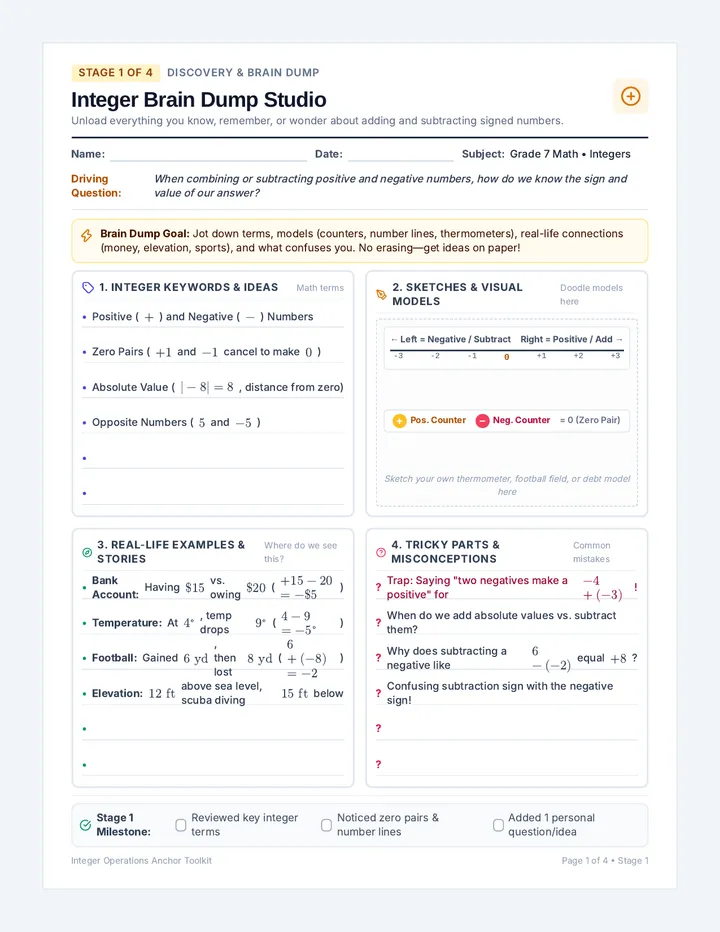
A four-stage student-led anchor chart creation packet tailored for 7th grade integer addition and subtraction, featuring zero pairs, tug-of-war models, Keep-Change-Change rules, and usability audits.
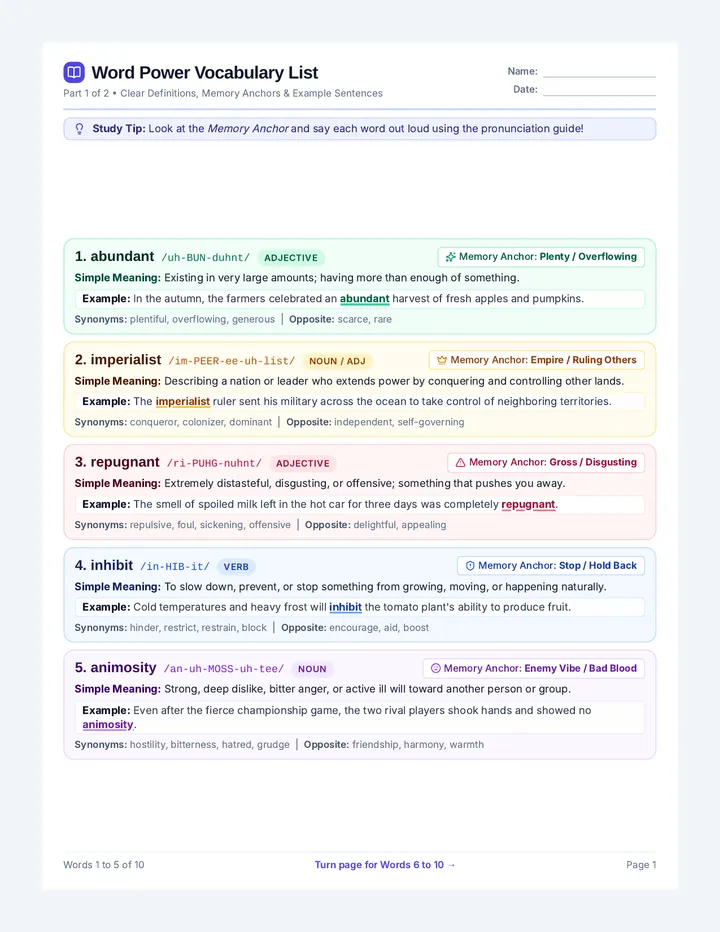
A comprehensive 2-page special education vocabulary guide covering 10 high-utility words with student-friendly definitions, pronunciation guides, visual memory anchors, and accessible example sentences. Designed with high-contrast chunked cards, clear typography, and supportive scaffolding tailored for accessible learning.
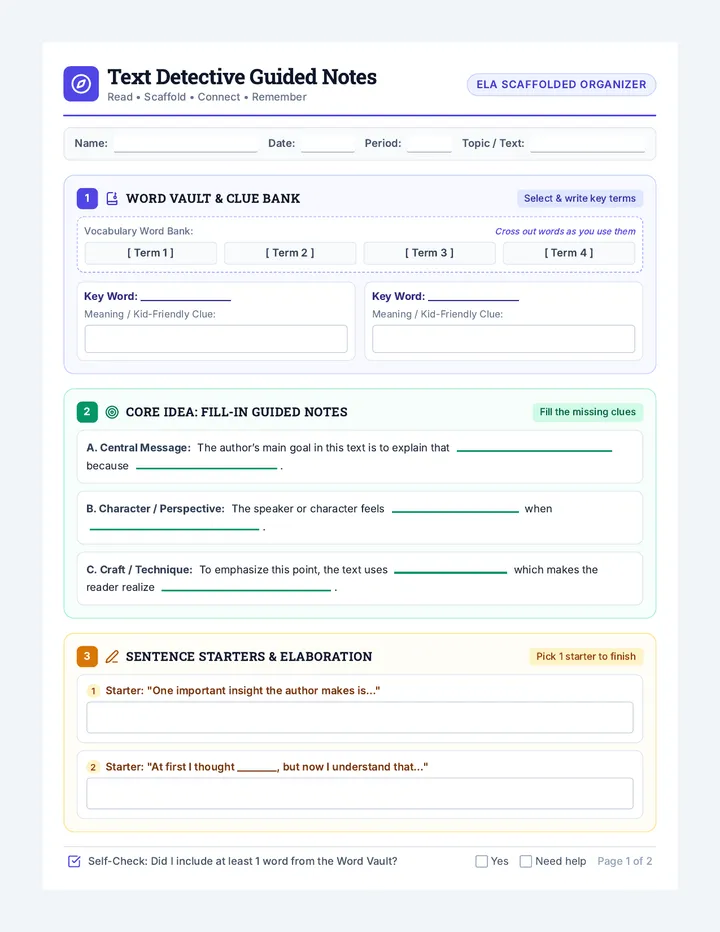
A reusable two-page scaffolded note-taking template designed for middle school English students with learning challenges. It features chunked sections, word banks, cloze comprehension prompts, text evidence sentence starters, and structured memory retrieval routines.
A 5-lesson sequence designed for 11th-grade students to master the Cornell Note-Taking System. The curriculum focuses on reducing cognitive load and supporting working memory through structured page formatting, keyword identification, synthesis, and retrieval practice.
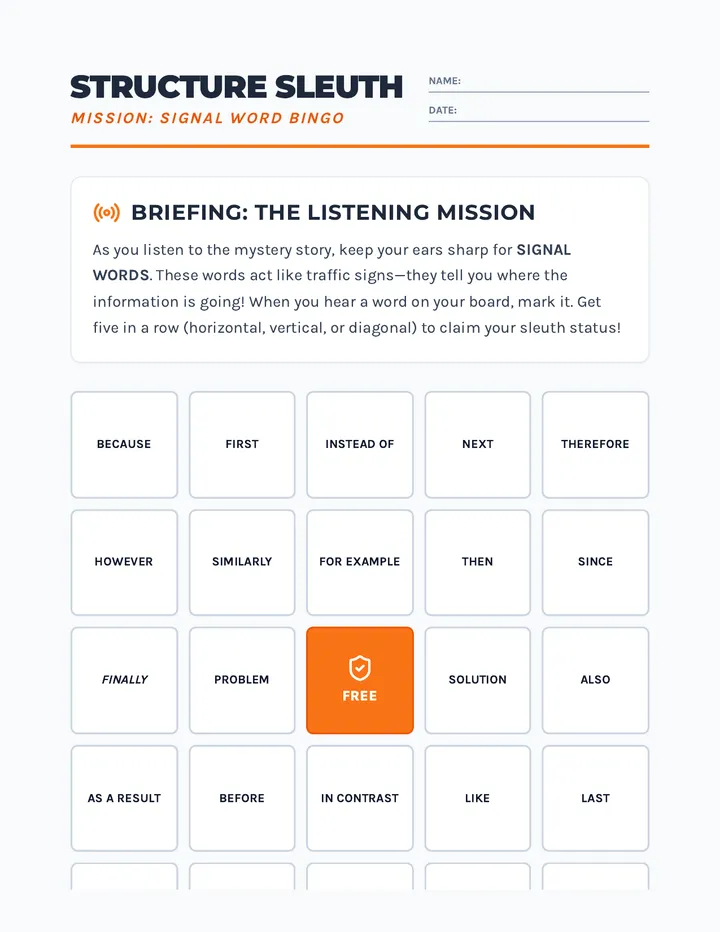
A specialized sequence for 6th-grade students with working memory challenges, focusing on transforming linear information into visual maps. Students learn to identify text structures through signal words, develop personal iconography, and master non-linear note-taking techniques to improve comprehension and recall.
This sequence shifts the focus from assistive technology to the cognitive strategies required for auditory learning. Students engage in inquiry-based activities to distinguish between passive hearing and active listening, applying specific comprehension strategies while using text-to-speech (TTS) to access grade-level texts.
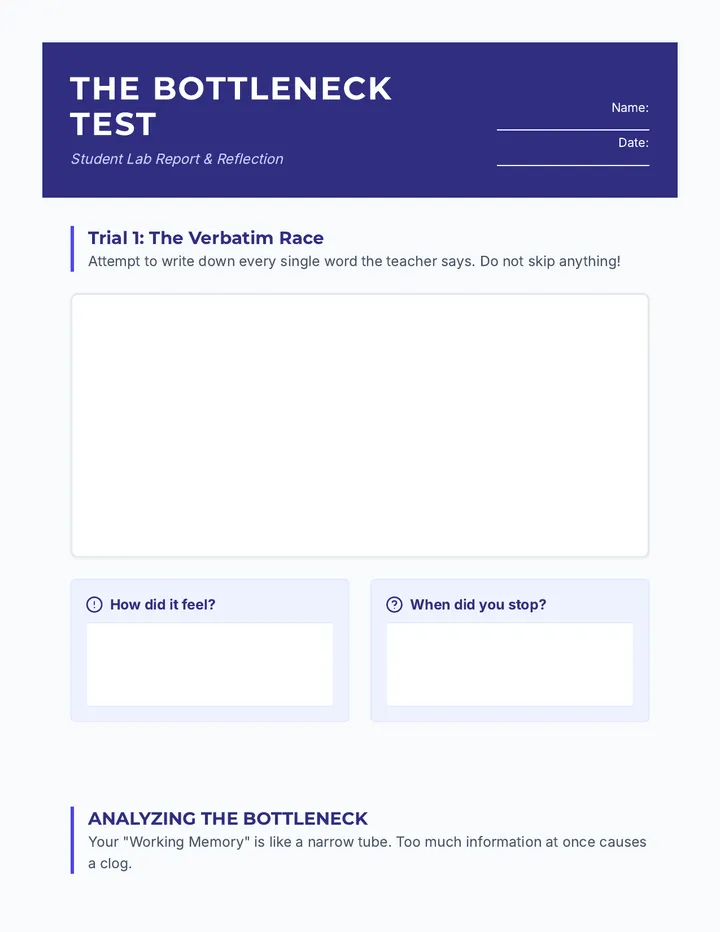
A metacognitive sequence for 10th-grade students to identify working memory bottlenecks and design personalized visual support systems to enhance academic independence. Students transition from being accommodation recipients to active cognitive architects.
This inquiry-based sequence teaches 10th-grade students with working memory challenges how to use visual note-taking strategies to capture spoken information. Students explore the 'cognitive bottleneck,' practice spatial page segmentation, develop a personal visual shorthand, and use their notes for retrieval practice.
This sequence teaches 3rd-grade students verbal rehearsal strategies to improve auditory working memory. Students progress from vocal repetition to whispered self-talk and finally silent inner speech, using games and mnemonics to hold information active while completing complex tasks.
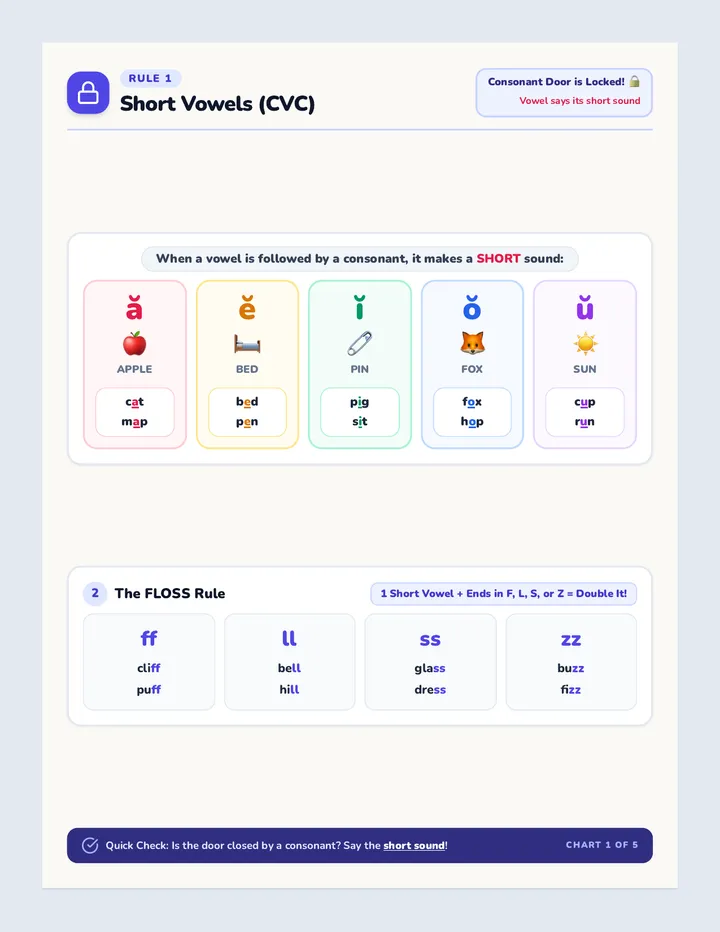
A targeted collection of visual phonics supports for 5th grade students with dyslexia. It features high-impact anchor charts and a compact one-page journal card sheet for daily decoding.
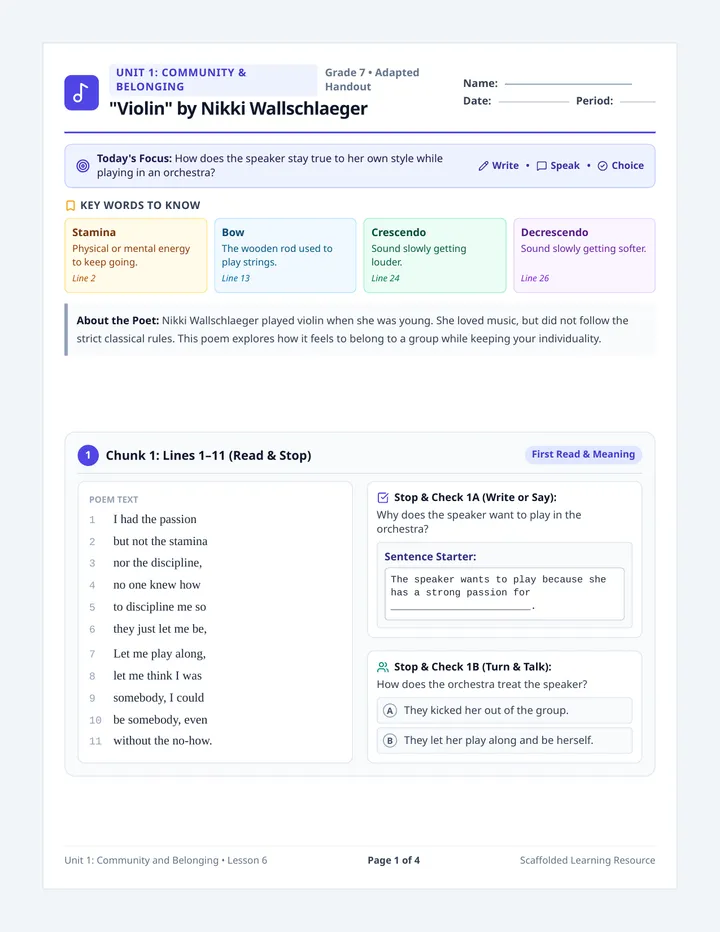
An adapted 7th-grade English Language Arts lesson for Nikki Wallschlaeger's poem 'Violin,' designed with systematic scaffolds for students with IEPs. Includes chunked text, multimodal vocabulary aids, graphic organizers, sentence frames, and clear communication choices.
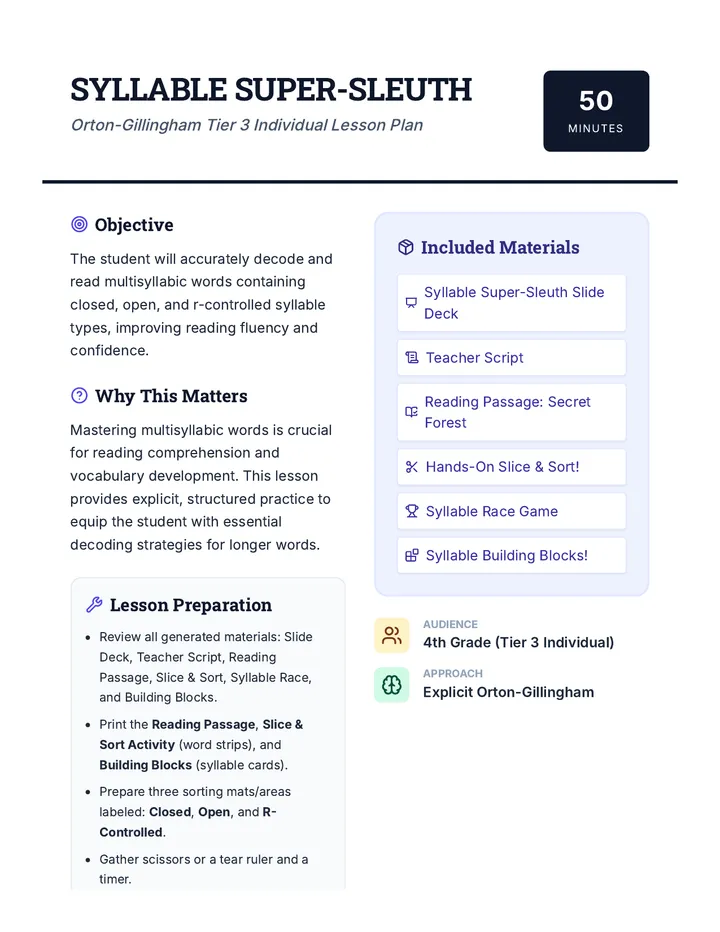
A 50-minute individualized Orton-Gillingham lesson for 4th-grade students with dyslexia, focusing on decoding multisyllabic words through syllable division rules for closed, open, and r-controlled syllables.
A Tier 2 small-group lesson for 8th-grade students with ADHD, focusing on unlocking their 'superpowers' through effective study, time management, and organization strategies.
A 30-minute professional development session for high school teachers focused on high-impact note-taking strategies (Cornell, Mind Mapping, Charting) as Tier 1 classroom supports.
A fast-paced 30-minute review session for 7th-grade concepts, featuring interactive recall, guided practice, and collaborative assessment to identify and address learning gaps.