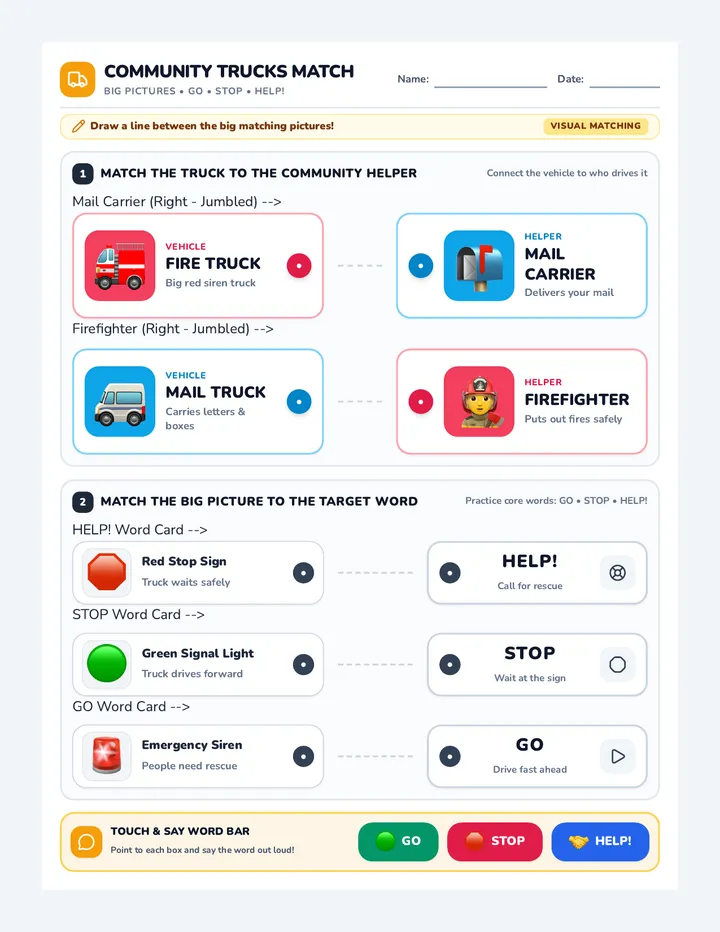
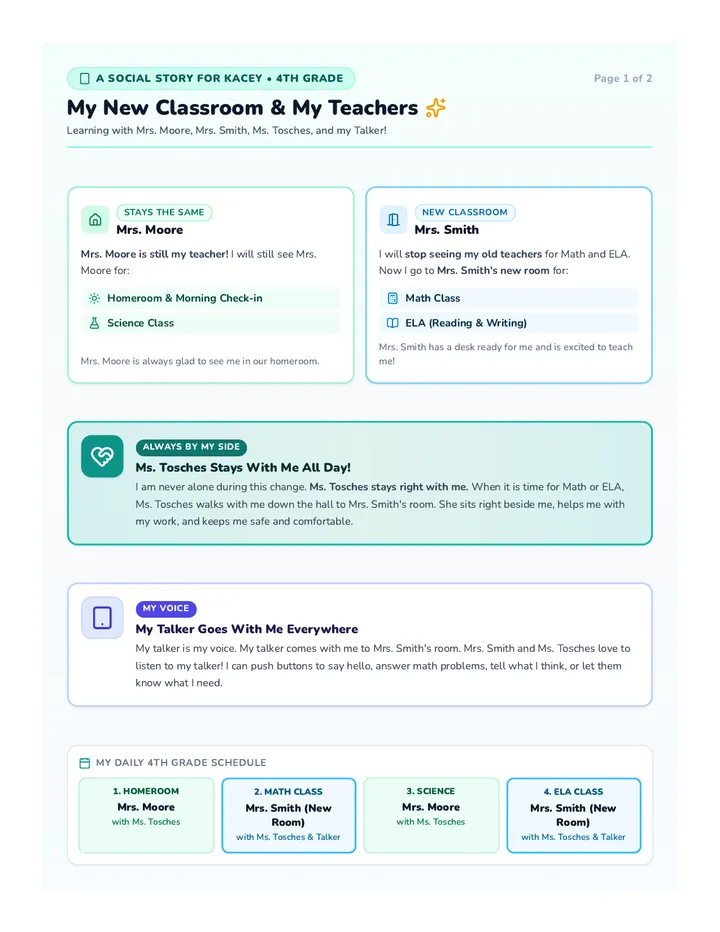
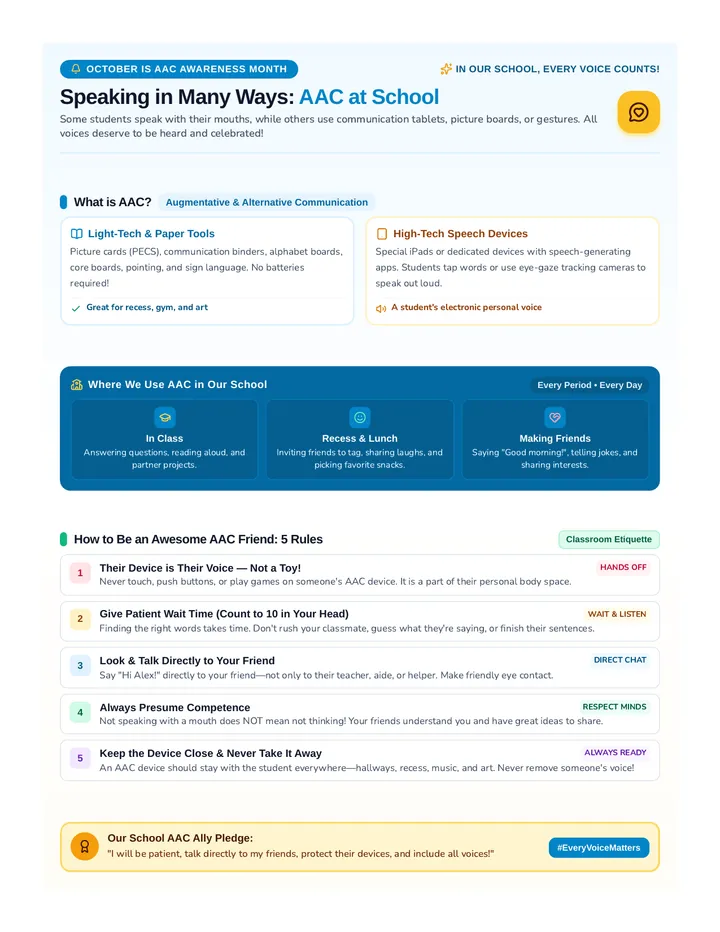
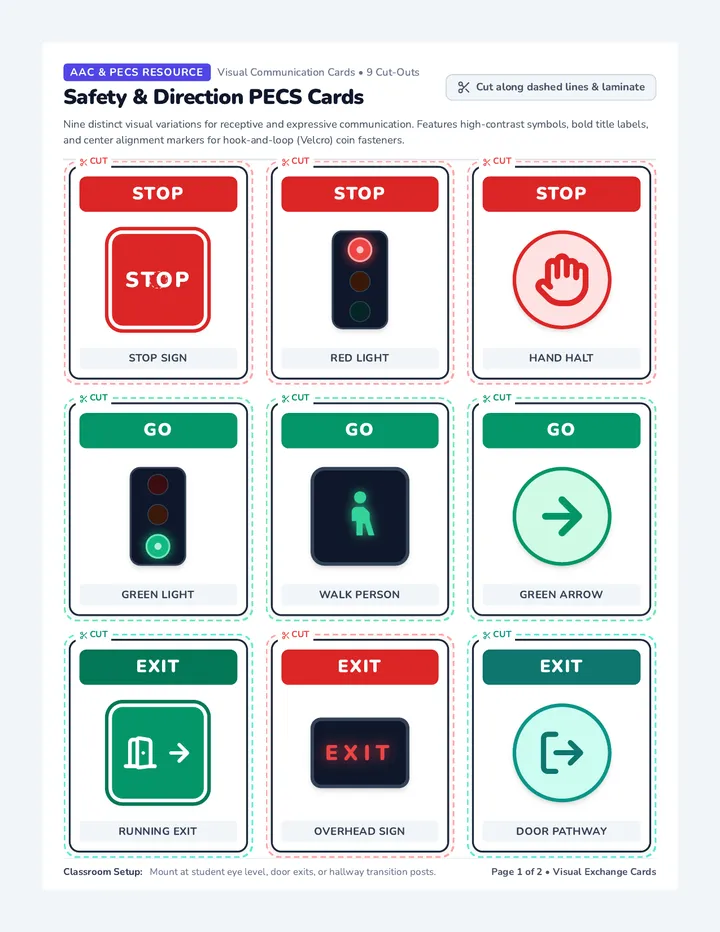
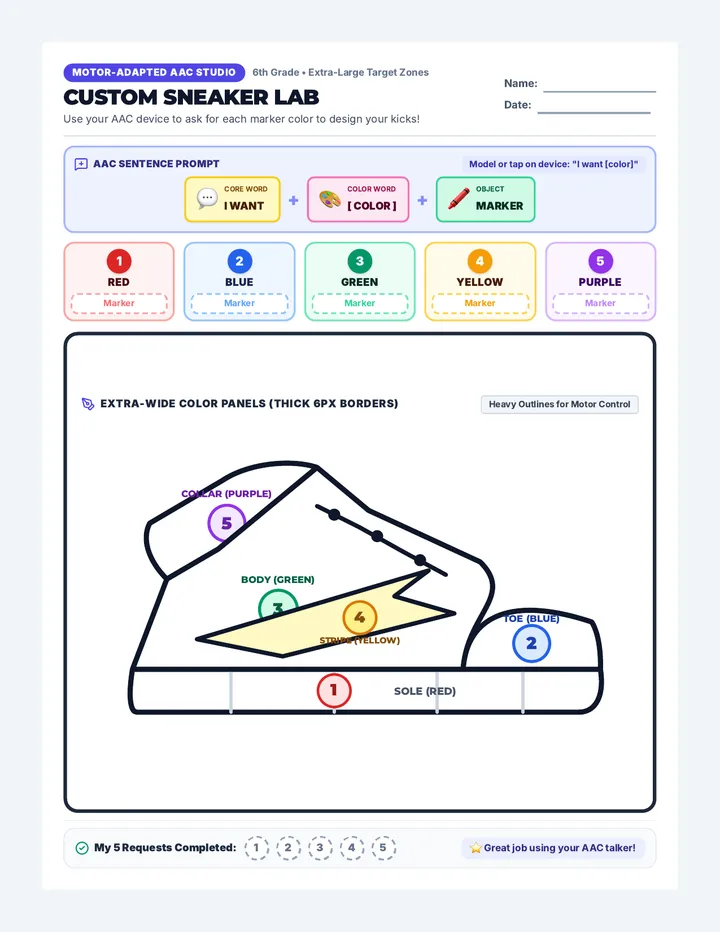
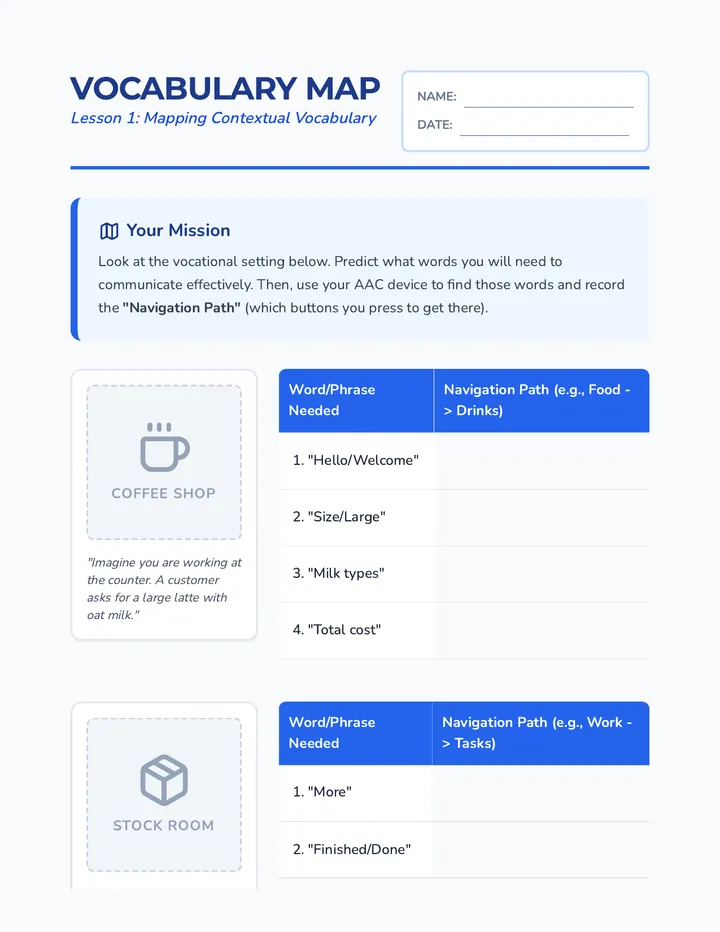
Visual supports and symbol-based software for developing literacy and functional communication. Targets students with complex communication needs through picture-word association and structured AAC systems.
A workshop-style sequence for undergraduate education students focusing on the neurobiology, design, and implementation of strategic break systems for neurodivergent learners. Students transition from theoretical understanding to creating tangible visual supports and transition protocols.
This advanced sequence guides graduate students through the design, implementation, and evaluation of strategic break protocols for neurodivergent learners. It covers the neurobiological basis for self-regulation, visual supports, sensory modality matching, and data-driven efficacy evaluation to foster student independence.
An advanced graduate-level course exploring the intersectional barriers to student self-advocacy. This sequence critiques traditional advocacy models through the lenses of Critical Race Theory and Disability Studies to develop culturally responsive strategies.
This graduate-level sequence examines how to adapt spaced repetition systems (SRS) for students with diverse learning needs, including Dyslexia, ADHD, and Dyscalculia. Students will learn to modify content, timing, and engagement strategies to bypass cognitive barriers and support long-term memory.
A comprehensive graduate-level sequence on implementing digital assistive technology for note-taking. It covers the transition from traditional methods to audio-synchronization, AI-driven summarization, and executive function-focused organization, concluding with IEP documentation.
A graduate-level course on the systematic instruction of replacement behaviors within a function-based framework. Students master shaping, chaining, FCT, DTT, and naturalistic teaching, culminating in advanced generalization and maintenance planning for long-term clinical success.
This sequence for undergraduate students explores the design and implementation of Functionally Equivalent Replacement Behaviors (FERBs). Students will learn to apply the Matching Law, design Functional Communication Training (FCT) protocols, and use shaping and chaining to teach adaptive skills that serve the same purpose as challenging behaviors.
This sequence challenges undergraduate students to adapt standard behavioral check-in protocols for diverse student populations, focusing on developmental, cultural, and neurological differences. Students move beyond a one-size-fits-all approach to design equitable and effective behavioral supports.
This sequence teaches 12th-grade students how to replace challenging behaviors with adaptive skills. Students explore the ethics of behavior change, master Functional Communication Training, learn instructional techniques like shaping and chaining, and design comprehensive intervention plans based on differential reinforcement.
A comprehensive sequence for 11th-grade students on behavioral support, focusing on the 'Fair Pair' rule. Students learn to identify, design, and implement functionally equivalent replacement behaviors (FERBs) to empower individuals to meet their needs pro-socially.
A project-based sequence for undergraduate special education students focused on modernizing social narratives through multimedia and technology. Students progress from selecting appropriate visual supports to creating a comprehensive digital social story portfolio featuring video modeling and accessibility features.
A comprehensive unit for high school students on the ethical and technical aspects of teaching replacement behaviors. Students move from the core philosophy of the 'Fair Pair' rule to technical skills like FCT, task analysis, and generalization planning.
Simulate the full cycle of a strategic break, focusing on the re-entry protocols and managing multiple student schedules simultaneously.
Learn Functional Communication Training (FCT) to teach students how to self-advocate for breaks using cards, gestures, or devices.
Categorize break activities into movement and respite categories, mapping sensory inputs to specific student needs to create effective 'Break Menus'.
Focuses on the creation and selection of temporal visual supports, evaluating timer types and designing visual schedules to reduce transition anxiety.
Explore the physiological basis of regulation and the difference between sensory overload and behavioral avoidance to understand the necessity of breaks.
Develop data collection systems to monitor break effectiveness on time-on-task. Analyze data sets to pivot intervention strategies based on efficacy.
Design protocols for student-initiated regulation through interoception training and communication tokens. Develop fading processes from teacher-scheduled to student-initiated breaks.
Curate sensory and movement menus categorized by regulatory effect (calming vs. alerting). Match break activities to the specific dysregulation profile of the learner.
Implement visual timers and temporal supports to reduce transition anxiety and externalize time for students with time-blindness. Design break contracts with clear start and stop criteria.
Differentiate between behavioral task avoidance and physiological dysregulation through neurobiological research and case analysis. Establish breaks as an antecedent intervention rather than a reward.
Critically debate the ethical balance between teaching student resilience and institutional responsibility. Synthesize a personal philosophy of advocacy instruction.
Conduct institutional audits to identify barriers that necessitate self-advocacy. Shift the focus from modifying student behavior to modifying the educational environment using UDL principles.
Simulation challenge cards for a role-playing activity where students practice managing different student profiles during transition periods.
A presentation deck for the culminating lesson, focusing on re-entry protocols and a whole-class simulation activity.
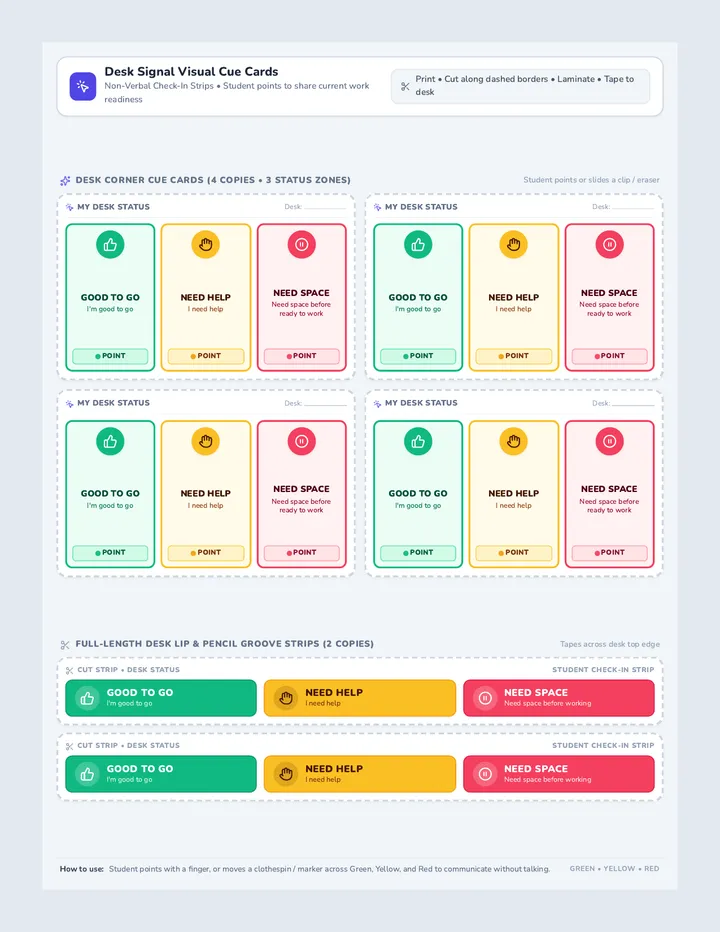
A set of printable break card templates and role-play simulation scenarios for teaching functional communication.
A presentation deck for undergraduate education students exploring Functional Communication Training (FCT) and self-advocacy for breaks.
A design workshop handout for categorizing and creating a visual 'Break Menu' with movement and respite activities.
A presentation deck for undergraduate education students exploring the categorization of break activities into movement and respite.
Graduate-level case study analysis worksheet where students analyze sample data sets to propose intervention pivots based on efficacy.
Teacher facilitation guide for Lesson 5, providing instructions for the root-cause data analysis exercise and a peer-review framework for the final break protocols.
A design workshop handout where students create a personalized visual support system for a case-study student, selecting timers and designing schedules.
Slides for Lesson 5 focusing on analyzing latency, duration, and frequency data to evaluate break protocol effectiveness. Highlights diagnostic patterns and pivot strategies.
A presentation deck focusing on the use of visual timers and schedules to make time concrete for students during breaks and transitions.
Design template for graduate students to create a specific self-regulation protocol for a student, focusing on the transition from interoception to communication.