Classroom layout strategies, sensory-friendly zones, and digital file organization tailored for neurodivergent learners. Equips educators with methods to minimize distractions and optimize accessibility in both physical and virtual environments.
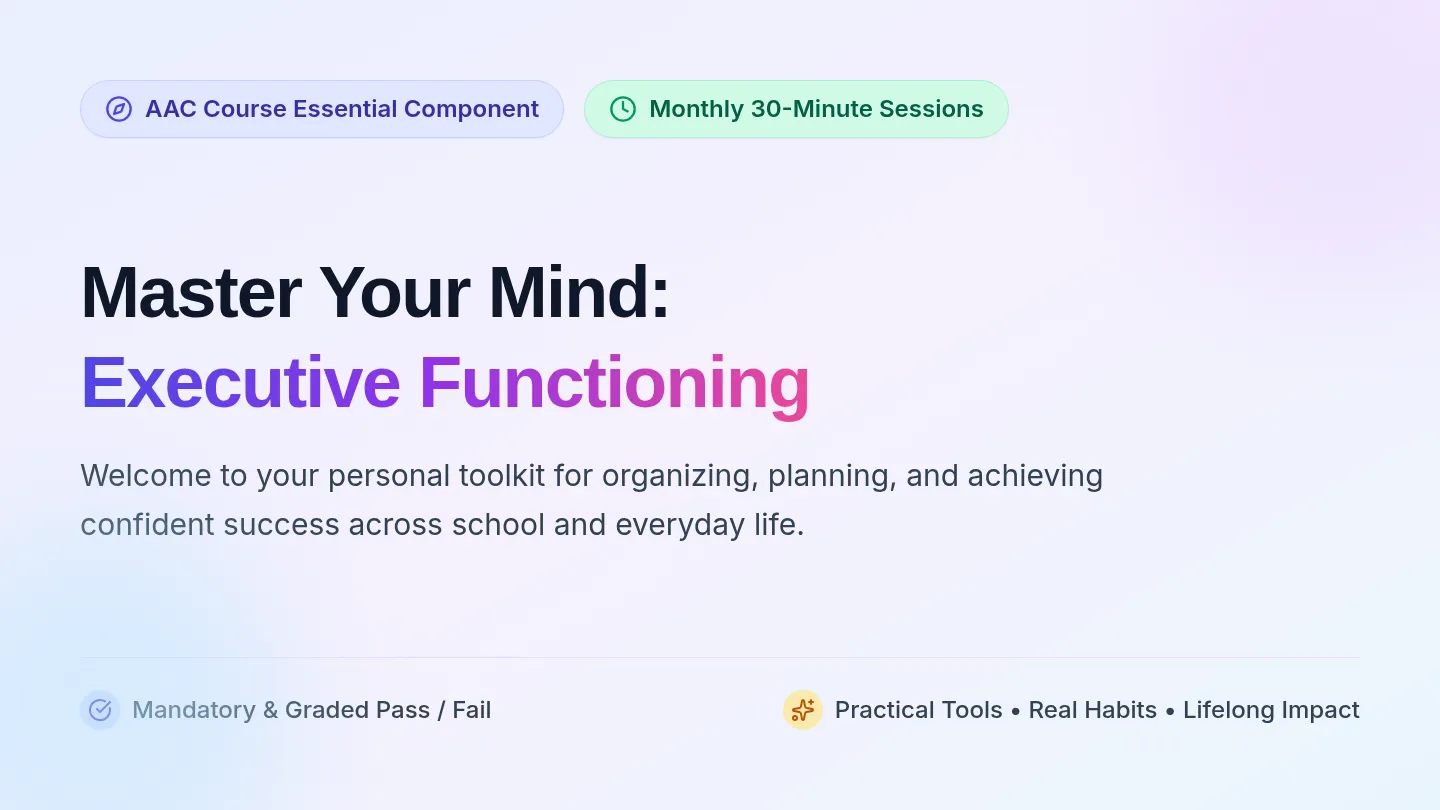
A 6-slide introductory deck in a calming, friendly pastel palette for the mandatory AAC Executive Functioning sessions, covering core skills, course grading, practical scenarios, and student expectations.
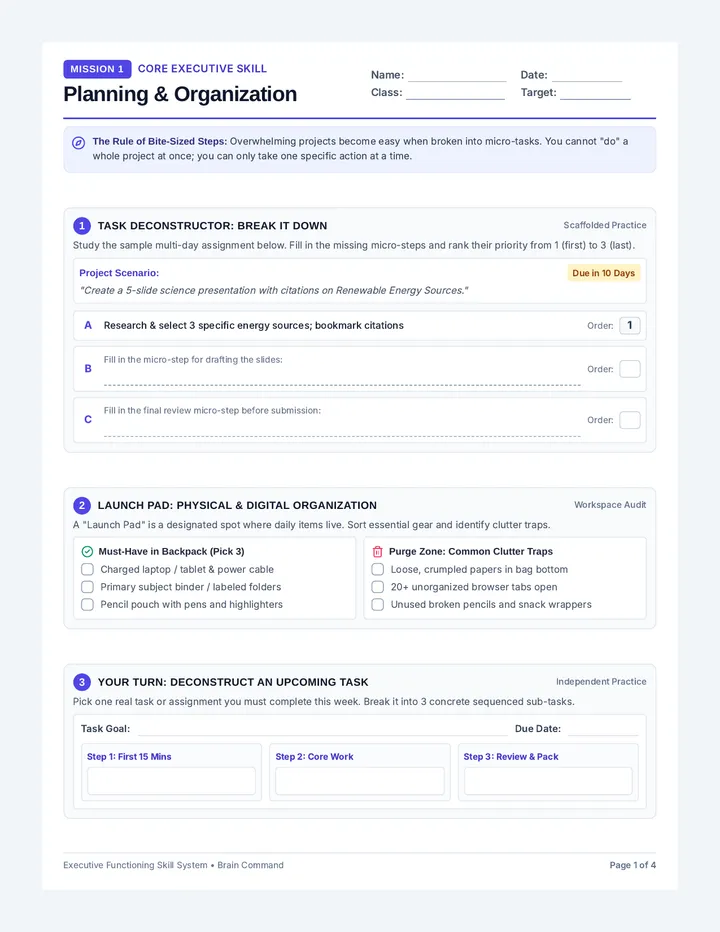
A comprehensive 4-page executive functioning printable worksheet packet targeting planning and organization, time management, focus and self-monitoring, and working memory and cognitive flexibility. Scaffolded activities guide students through task deconstruction, time estimation, distraction radar, and adaptive pivot strategies.
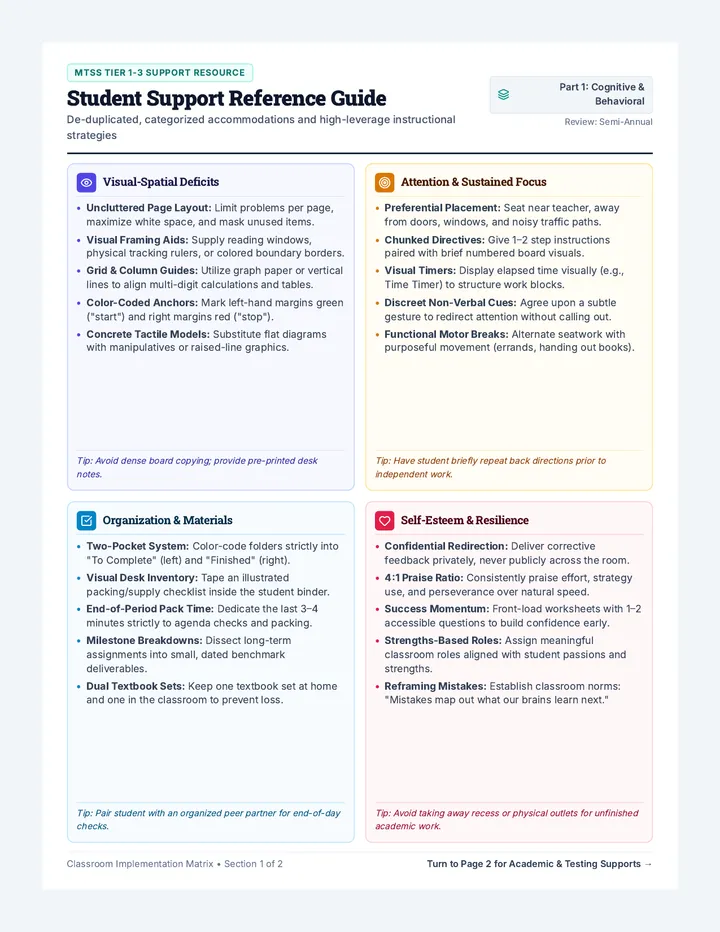
A comprehensive, de-duplicated reference guide for educators organizing evidence-based accommodations across seven core domains: visual-spatial deficits, attention, organization, self-esteem, writing, math, and testing/environmental accommodations.
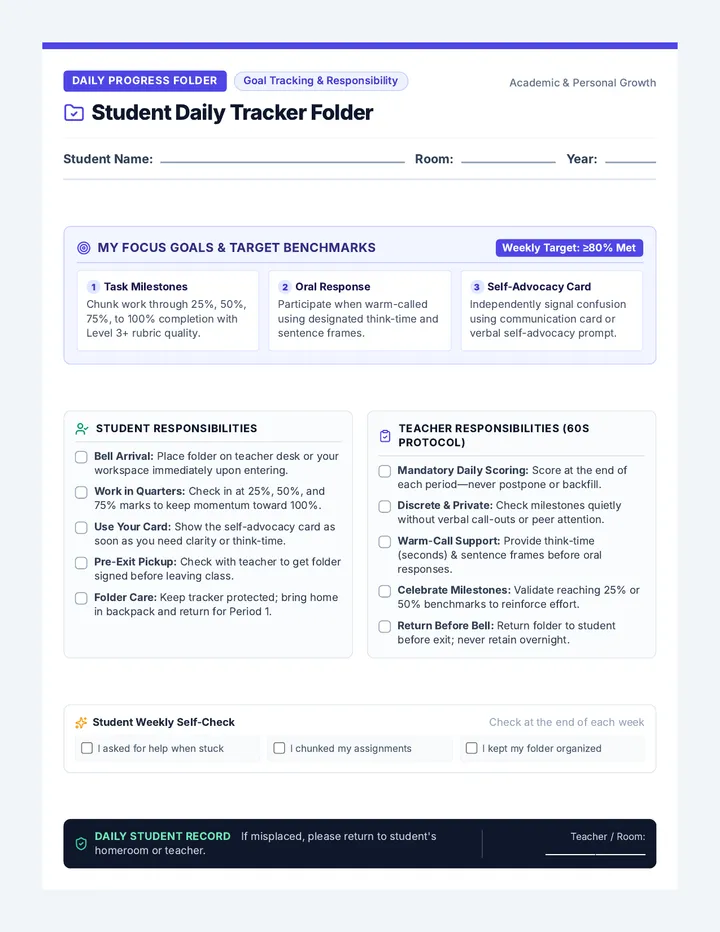
A peer-private 9-page set of printable Daily Tracker Folder Covers for students. All diagnostic labels, disability codes, and support profiles have been removed from the top header to ensure complete peer privacy, while retaining individual focus goals, blank name lines, student daily checklists, and teacher 60-second scoring protocols.
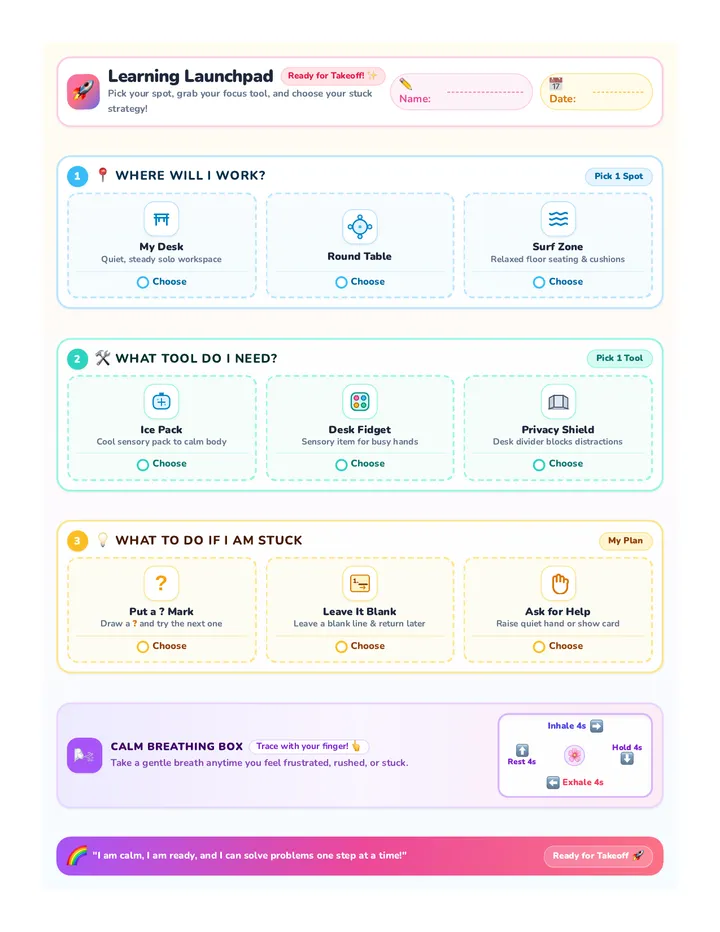
A 2-page complete student regulation and teacher facilitation resource: Page 1 is the cute student Learning Launchpad choice chart (with Round Table updated), and Page 2 is the verbatim Teacher Delivery Script and Assessment Hand-off Protocol.
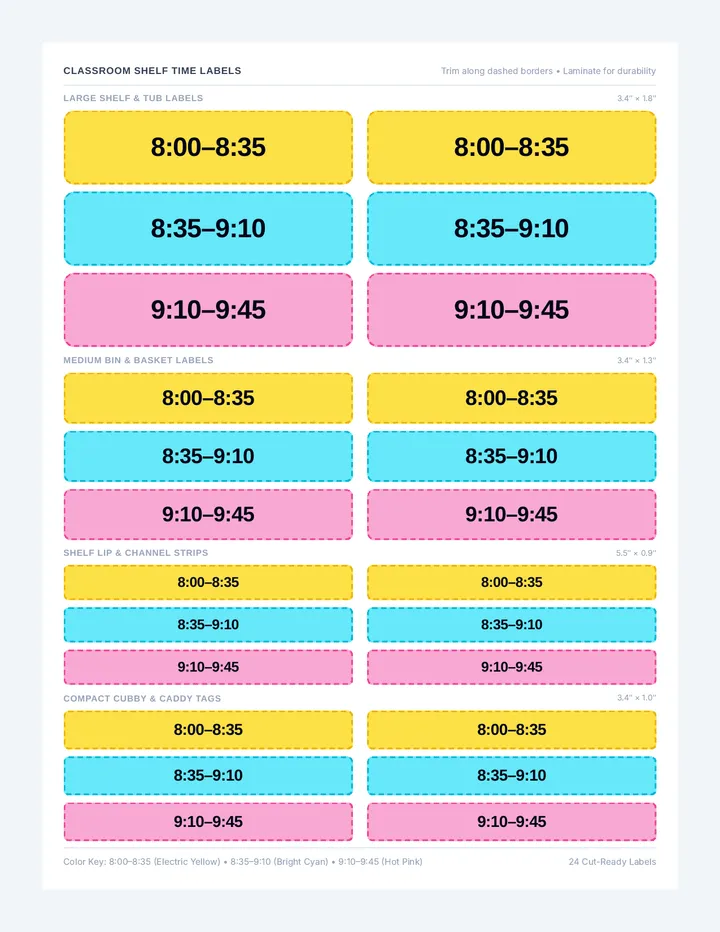
Printable color-coded classroom shelf and bin labels displaying only the scheduled time blocks in bright, high-contrast hues. Sized across four functional formats—large shelf tags, bin labels, ticket channel strips, and compact cubby tags—with dashed cut guidelines.
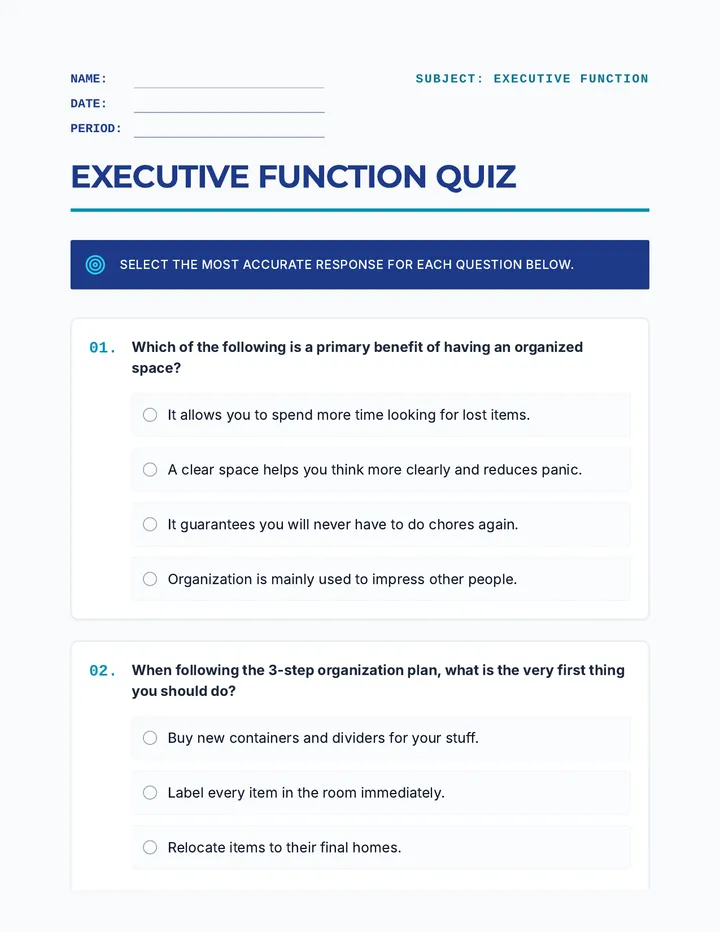
A comprehensive 9-session curriculum for 6th-grade students to master executive functioning skills like organization, planning, self-control, and emotional regulation through the metaphor of becoming their own 'Brain CEO'.
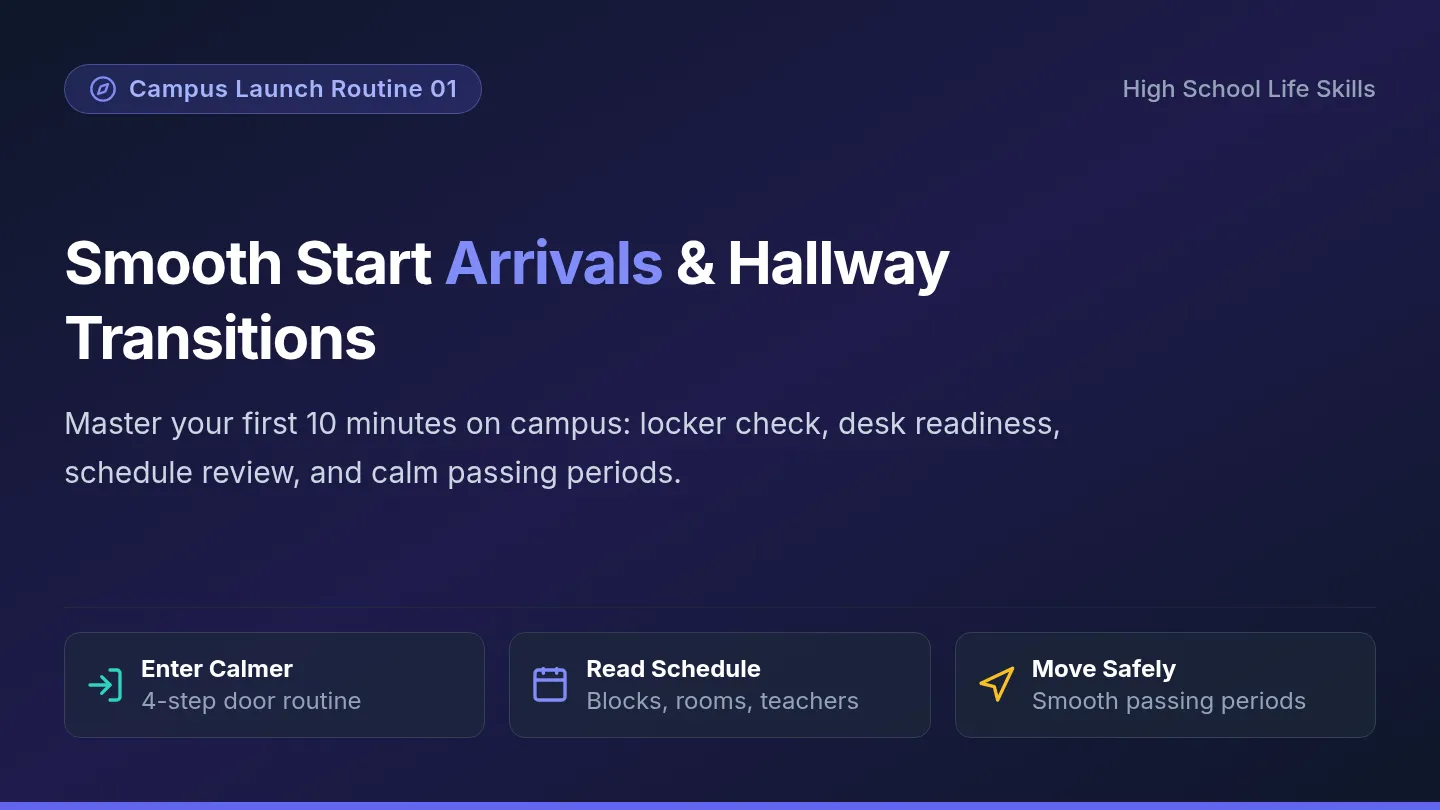
A comprehensive life skills and executive function sequence tailored for high school special education classrooms. Students learn and practice daily arrival, classroom participation, organization, and social safety routines to build independence throughout the school year.
A compassionate, gradual sequence designed for autistic learners to build handwriting tolerance without anxiety, using micro-intervals, sensory regulation, and radical student agency.
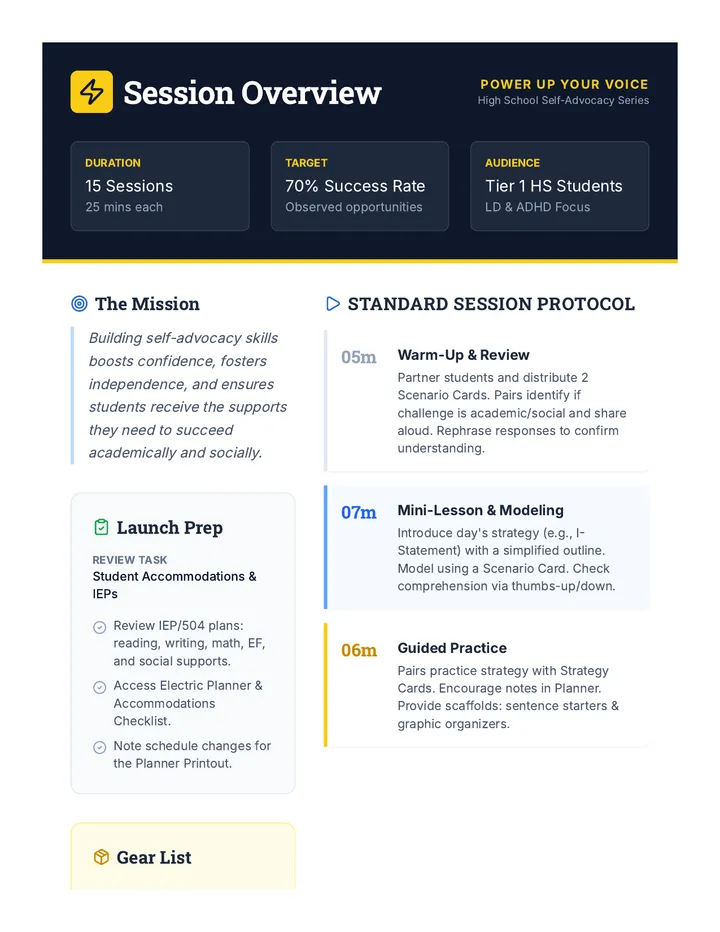
A comprehensive 15-session self-advocacy series designed for high school students with learning disabilities and ADHD, focusing on identifying challenges and requesting supports.
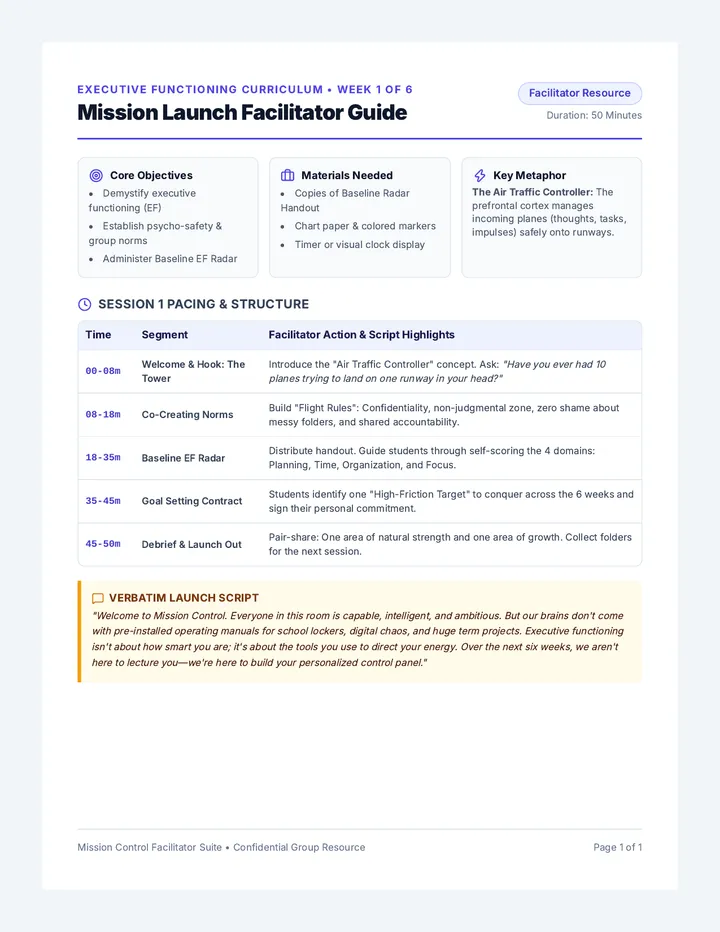
A comprehensive 6-week small-group curriculum targeting executive functioning development for adolescents. Emphasizes planning, prioritizing, time estimation, physical and digital organization, task initiation, and self-regulation.
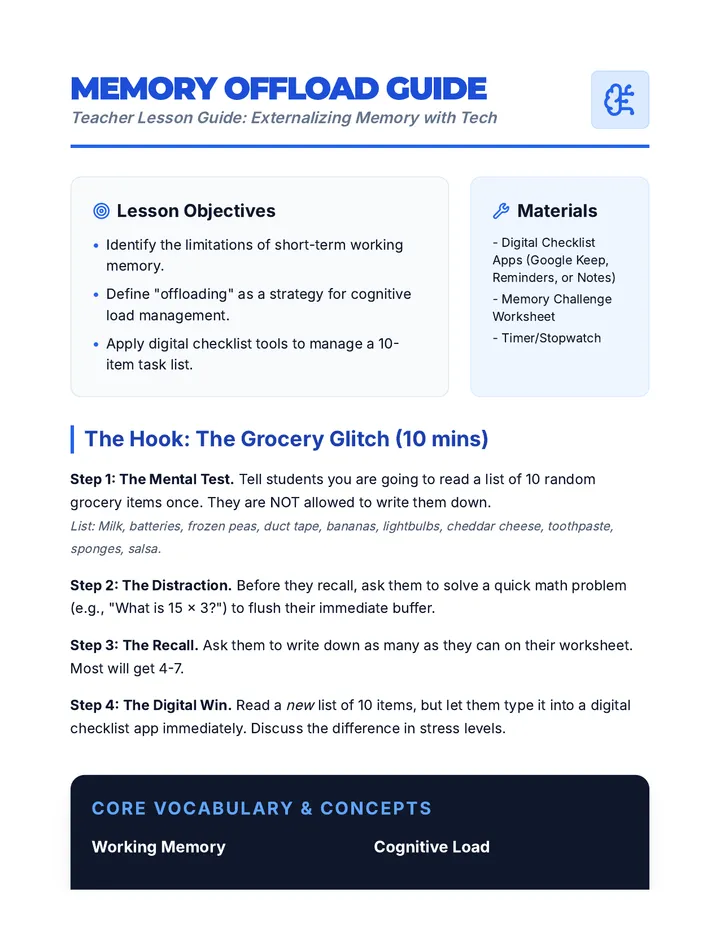
A 5-lesson unit for 8th-grade students focusing on using digital tools to offload working memory and manage cognitive load. Students learn to use task managers, focus modes, sequential reminders, and assistive speech technologies to create a personalized digital workflow for school success.
A lesson focusing on key executive function skills including organization, planning, working memory, and impulse control, featuring a 'Mission Control' theme.
A structured unit providing daily entry procedures, self-regulation habits, and teacher observation tools for secondary executive functioning seminars.
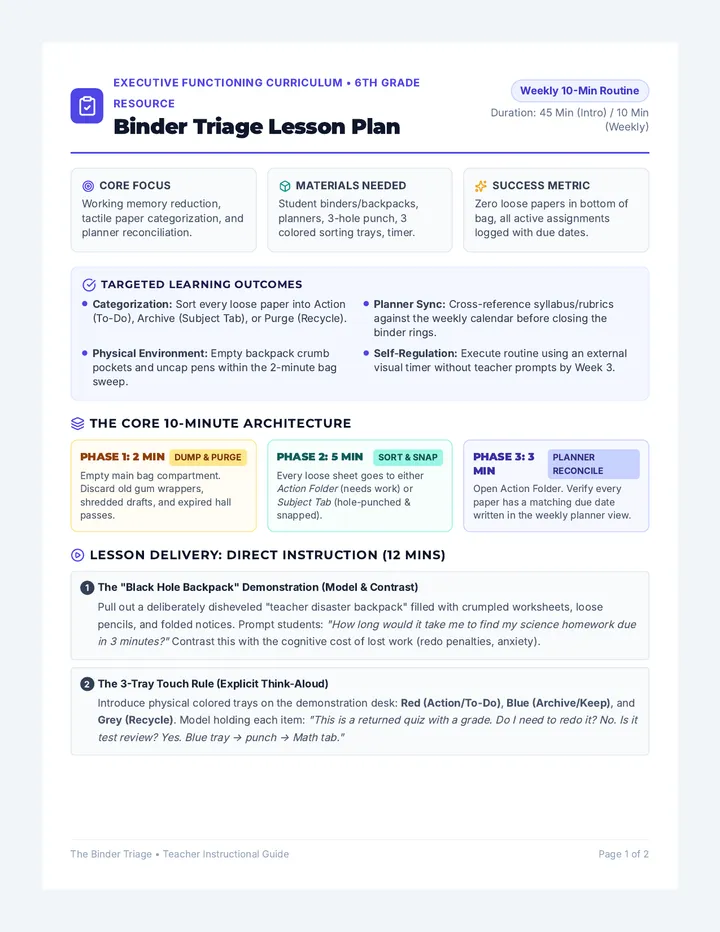
A targeted executive functioning lesson designed for sixth-grade resource students to master a ten-minute weekly triage routine. Students learn concrete sorting categories to organize loose papers, reconcile assignments with their academic planner, and purge backpack clutter before missing work cascades.
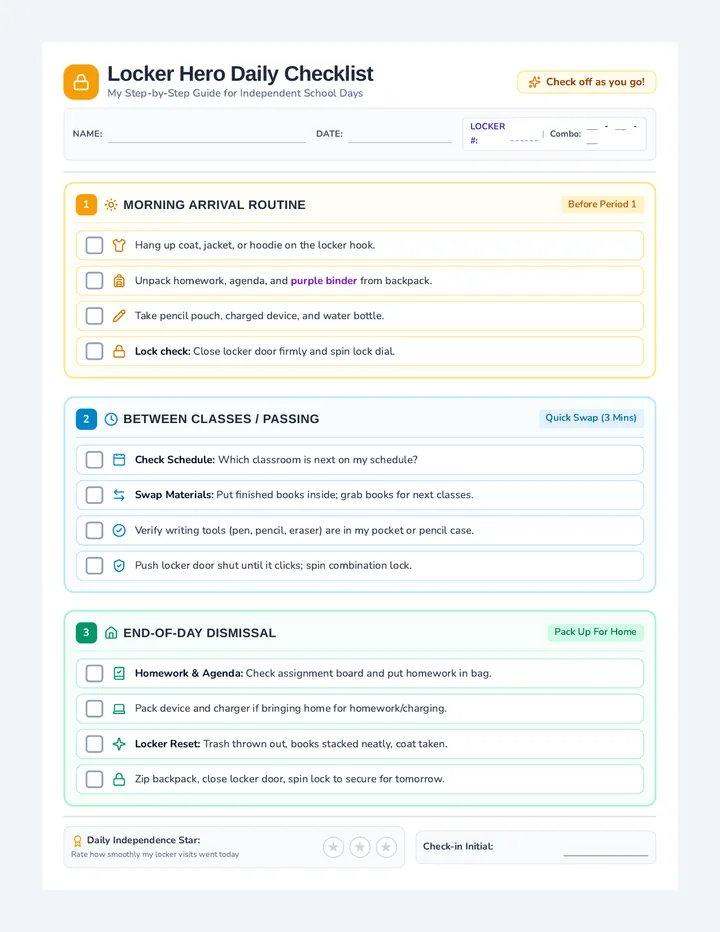
A supportive organization system designed for IEP students to navigate locker routines independently throughout the school day. Includes an actionable daily checklist and visual cut-out prompt cards for locker doors and lanyards.
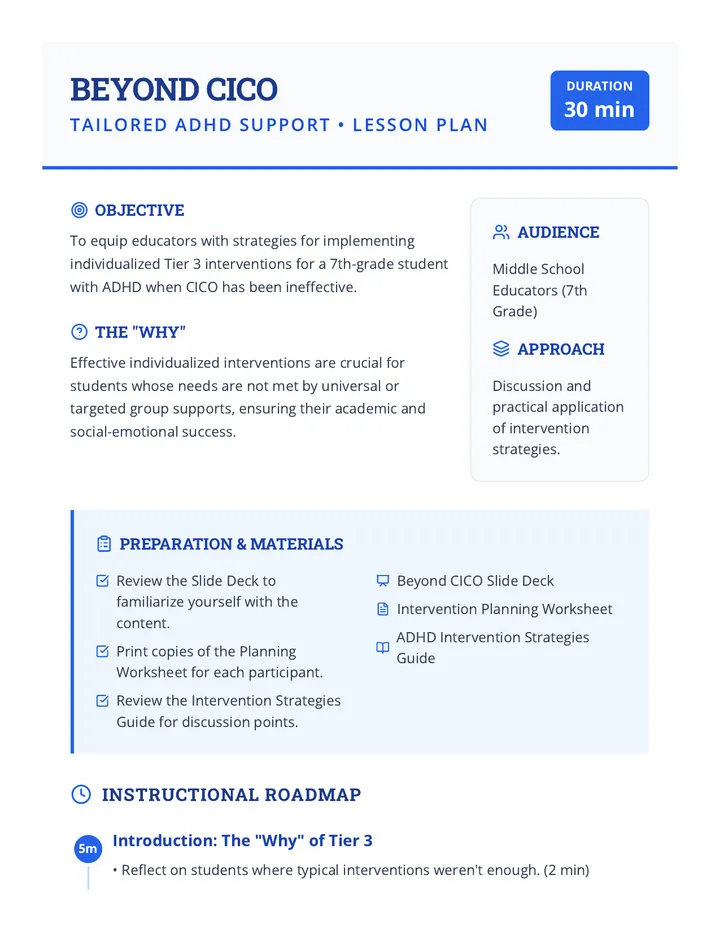
This professional development session equips 7th-grade educators with individualized Tier 3 strategies for students with ADHD who do not respond to standard Tier 2 interventions like Check-In/Check-Out. Participants will learn how to move beyond generic support to intensive, data-driven personal planning.
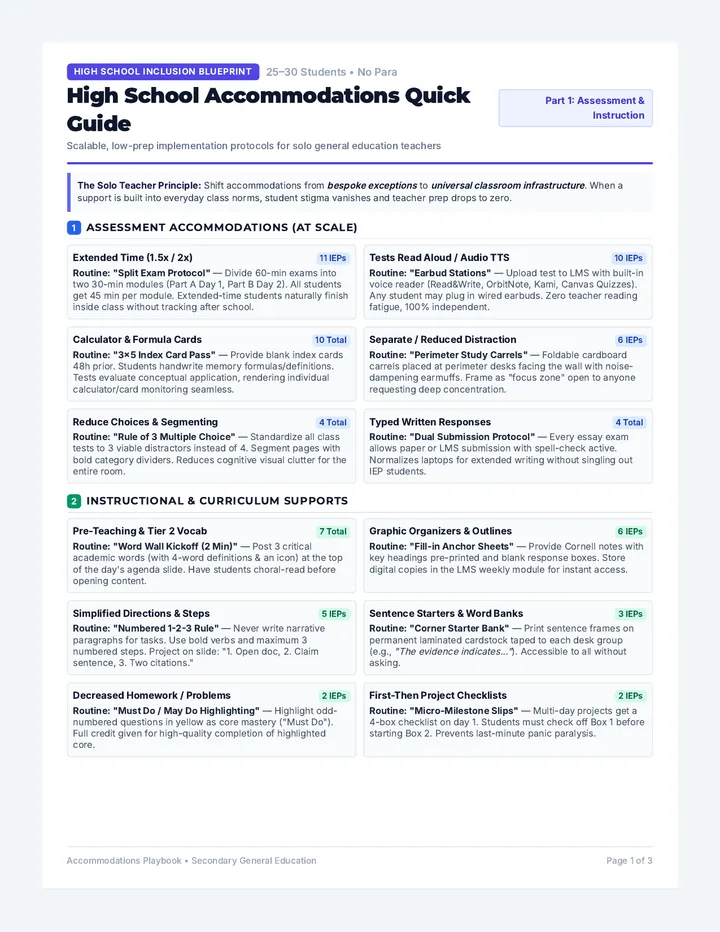
A practical toolkit for secondary general education teachers implementing IEP accommodations across 25–30 student classes without paraprofessional support. Focuses on low-prep classroom routines, scalable assessment strategies, and universal supports that safeguard student dignity and teacher bandwidth.