Differentiates between formal and informal greetings based on social settings and audience. Targets verbal and non-verbal cues for school, workplace, and community interactions.
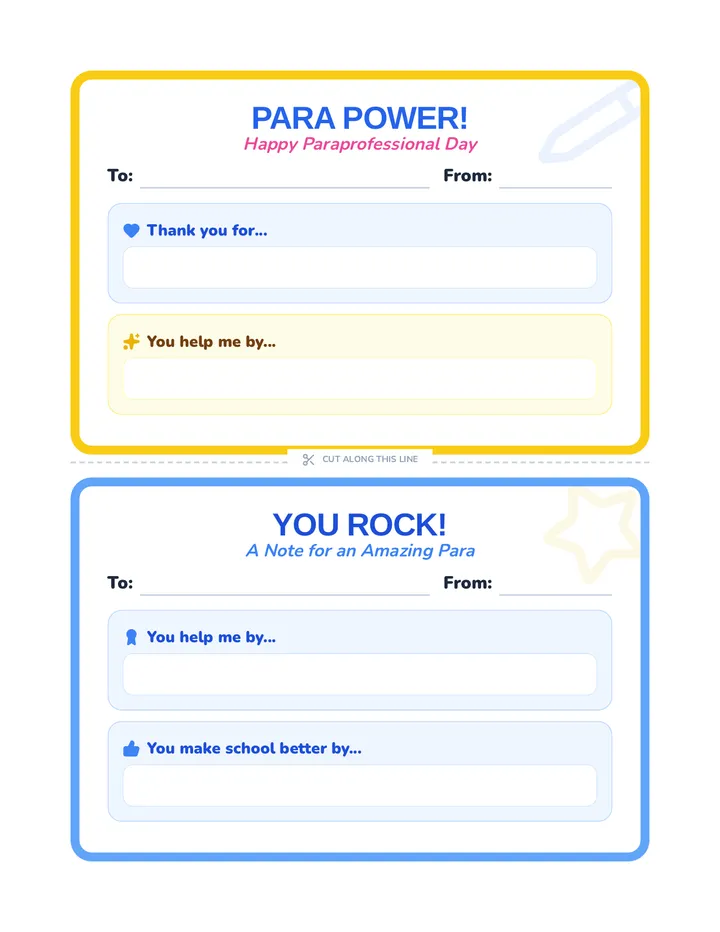
A set of 5 half-page Paraprofessional Appreciation templates with increased writing space and no drawing boxes. Features vibrant school-supply themes and three sentence stems per card.
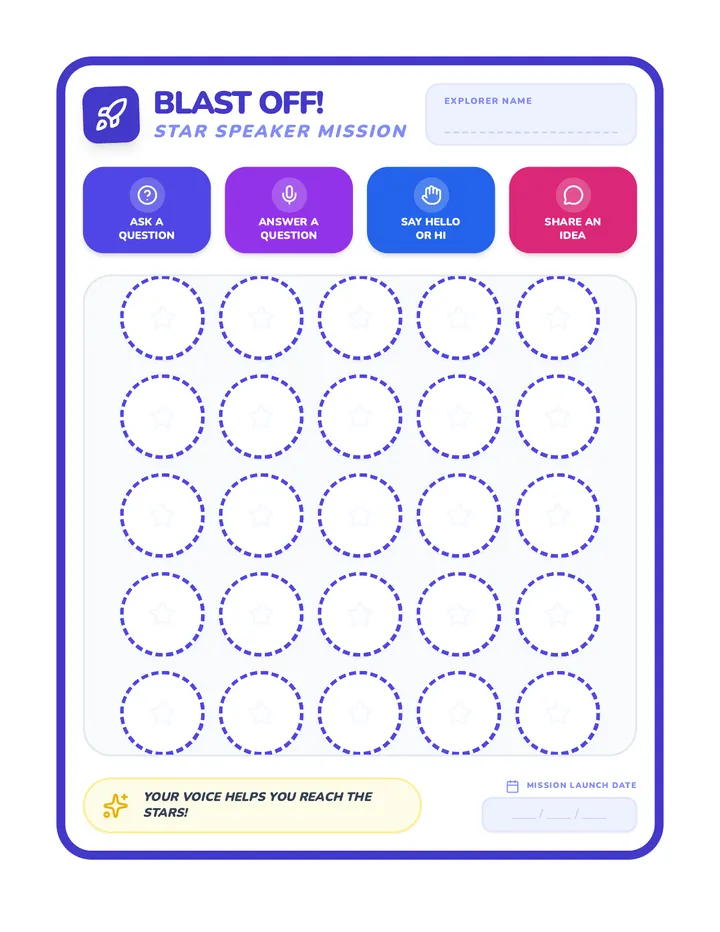
A high-contrast, print-optimized version of the Blast Off Sticker Chart. The grid background is now a neutral, very light slate wash, ensuring the pure white 1-inch sticker spots and their bold indigo-600 dashed outlines are extremely easy to see and use.
A 7-slide morning meeting presentation designed for middle school special education, featuring structured greetings, mood check-ins with sentence stems, share prompts, a daily warm-up puzzle, mindfulness breathing, and daily schedule previews.
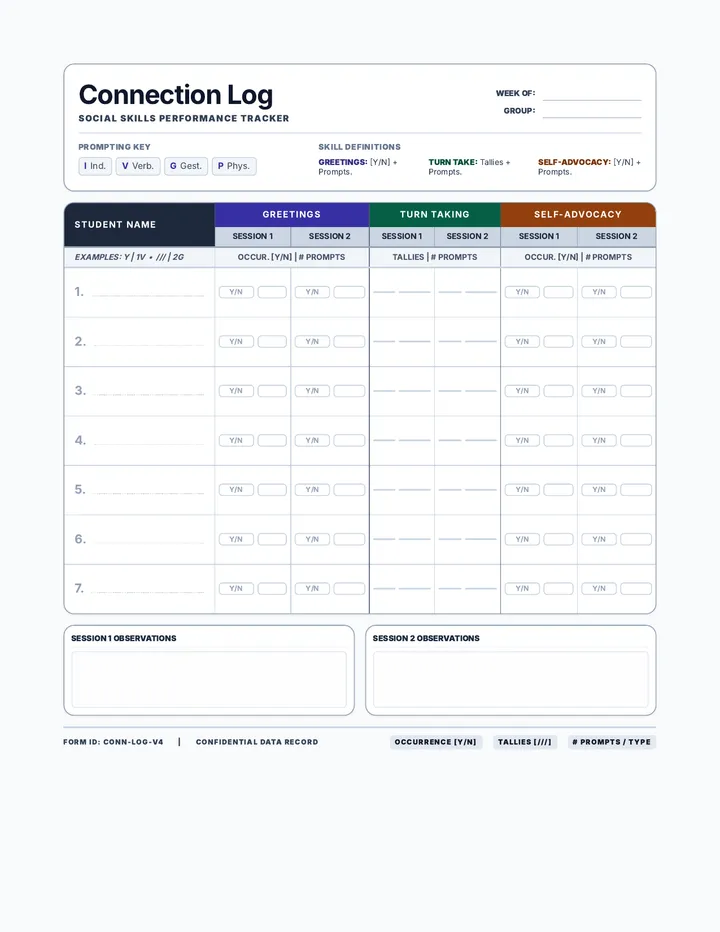
A professional data collection sheet for a 7-student social skills group. It features specific tracking for three skills over two sessions: Y/N and # Prompts for Greetings and Self-Advocacy, and Tallies and # Prompts for Turn Taking.
A gentle, 4-page printable social story designed for incoming Pre-K students. Features structured photo placeholders for real-life school pictures alongside reassuring text covering classroom routines, teachers, circle time, bathroom needs, snack, recess, cleanup, and dismissal.
An enhanced 7-page social skills visual prompt bundle with rich pictorial cues, color-coded Fitzgerald Key style icons, step-by-step visual storyboards, desktop AAC strips, and an IEP tracker for nonverbal and autistic learners.
A clean, single-page list of neurodiverse adaptations for instructional settings, optimized for readability and accessibility.
An updated version of the Job Ready Moves Poster with expanded hygiene tips, including specific advice on handwashing, hair grooming, and avoiding common hygiene pitfalls for students facing housing instability.
A colorful and appetizing 1-page picture menu featuring 16 common food and drink items. Each item includes a large representative emoji or a custom visual, a clear label, and a checkbox for students to 'order' or select their choices. Now with custom CSS jellybeans and a classic red wiggly Jello mold.
A visual guide for parents to use playground time for social skills development. Includes specific strategies for greetings (verbal/AAC), turn-taking, boundaries, and following multi-step directions.
A professional checklist for instructors titled 'Neurodiverse Supports', containing exactly the 13 points provided.
A polished, safari-themed articulation carryover checklist for the TH sound. Features home and school practice tasks covering initial, medial, and final word positions, a weekly habit tracker, and space for custom target words.
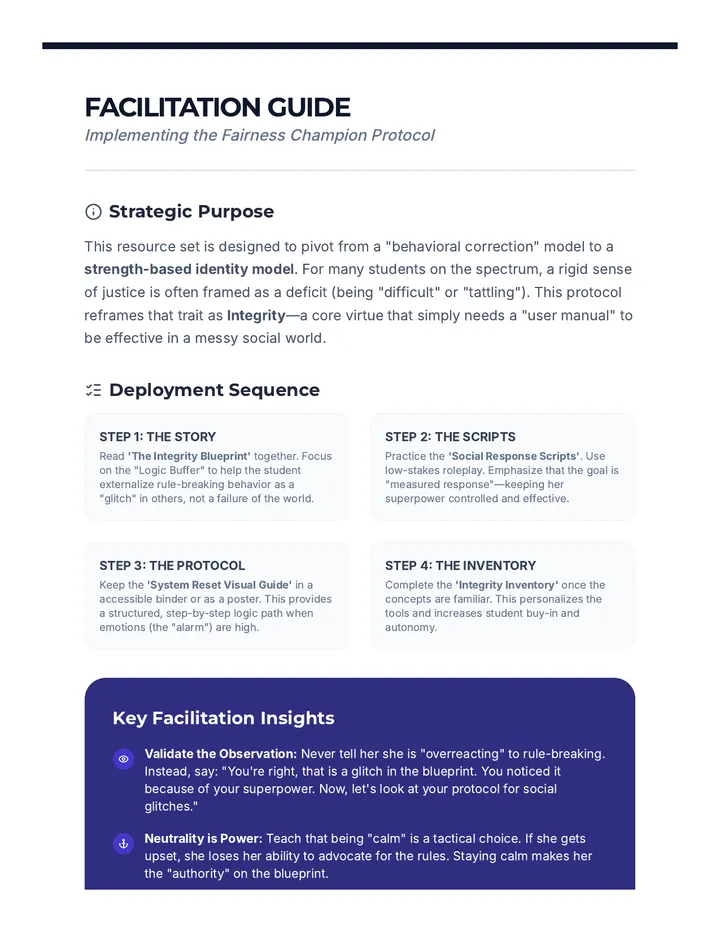
A 6-week social-emotional learning curriculum for a 13-year-old girl on the autism spectrum, focusing on managing specific triggers through a strength-based "Integrity Blueprint" lens.
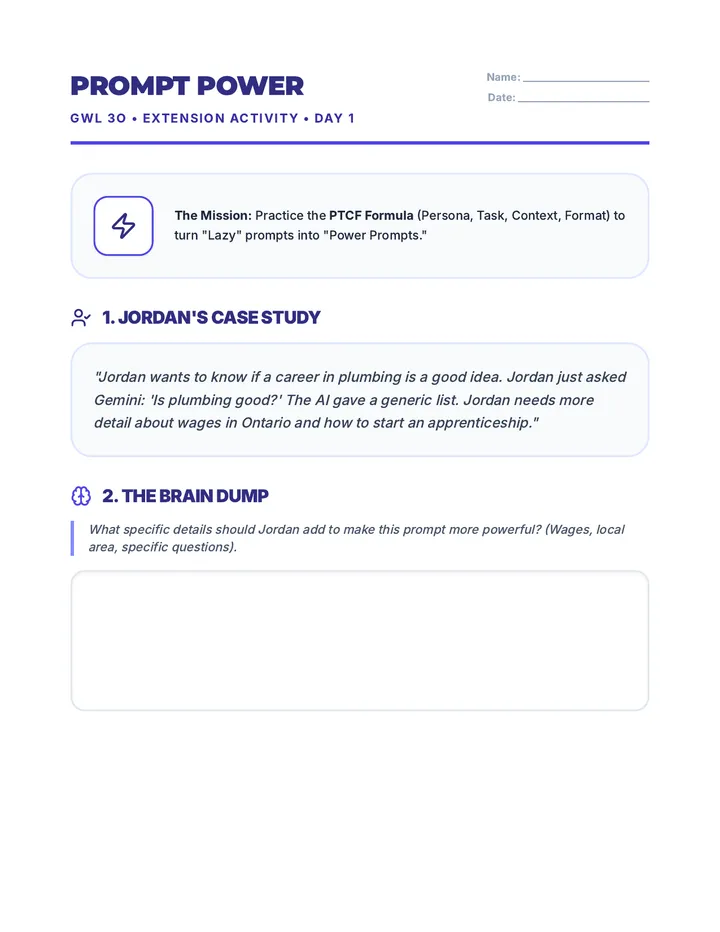
A comprehensive 7-day unit for Grade 11/12 Designing Your Future students, focusing on leveraging AI tools like Gemini for workplace and college success. Designed for special education contexts, it emphasizes self-advocacy, professional communication, research, and project management through visual and digital tasks.
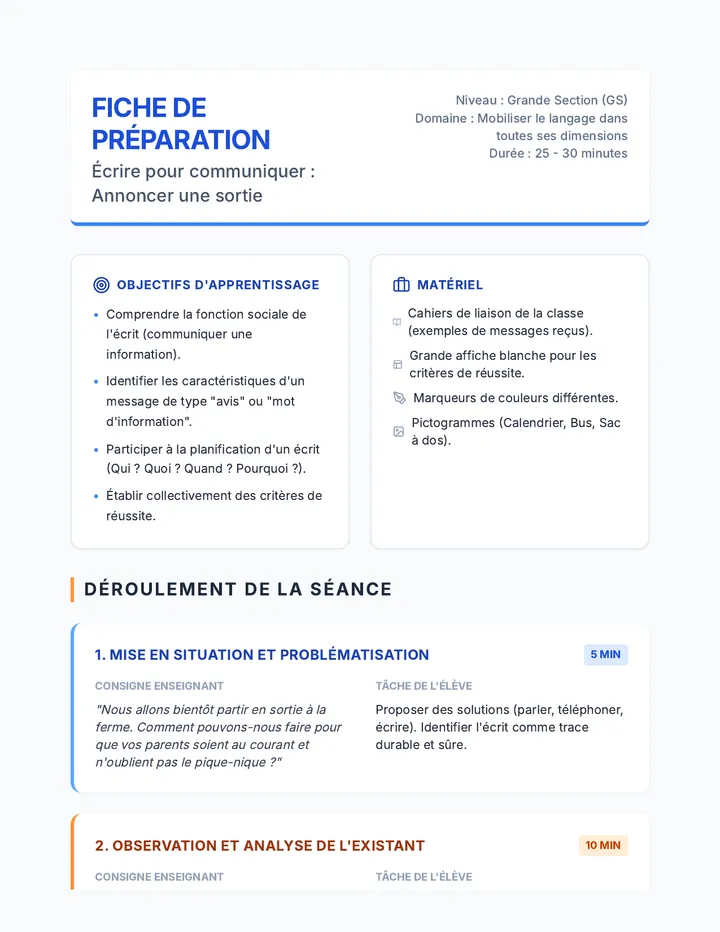
Une série de modules de formation destinés aux conseillers pédagogiques pour renforcer leur expertise en ingénierie de formation continue, spécifiquement appliquée à l'enseignement du français à l'école primaire.
A 4-week social skills program designed for students with autism, focusing on nonverbal communication, emotion recognition, personal space, and social interaction through visual stories and structured activities.
A comprehensive 12-session social skills program designed for a 1st-grade student with Autism, focusing on social norms, personal boundaries, and school safety through the engaging themes of Toy Story and NumberBlocks.
A comprehensive workplace simulation program for Club Challenge of Orange Park, designed to teach vocational skills through a realistic café environment. The sequence includes orientation materials, operational tools for students, and tracking resources for staff.
A comprehensive, highly visual curriculum sequence designed to prepare high school special needs students for employment. It covers critical social-emotional and practical work skills, starting with the job interview process and continuing with key on-the-job expectations, workplace etiquette, and self-advocacy.
A sequence of lessons designed for young adults with cognitive disabilities to navigate social boundaries and consent. It transitions from foundational personal boundaries to complex professional and community-based interactions.
A 5-week social skills curriculum designed for 5th-grade students with Autism, focusing on conversation mechanics, initiation, maintenance, and appropriate responding through high-visual, fast-paced lessons.
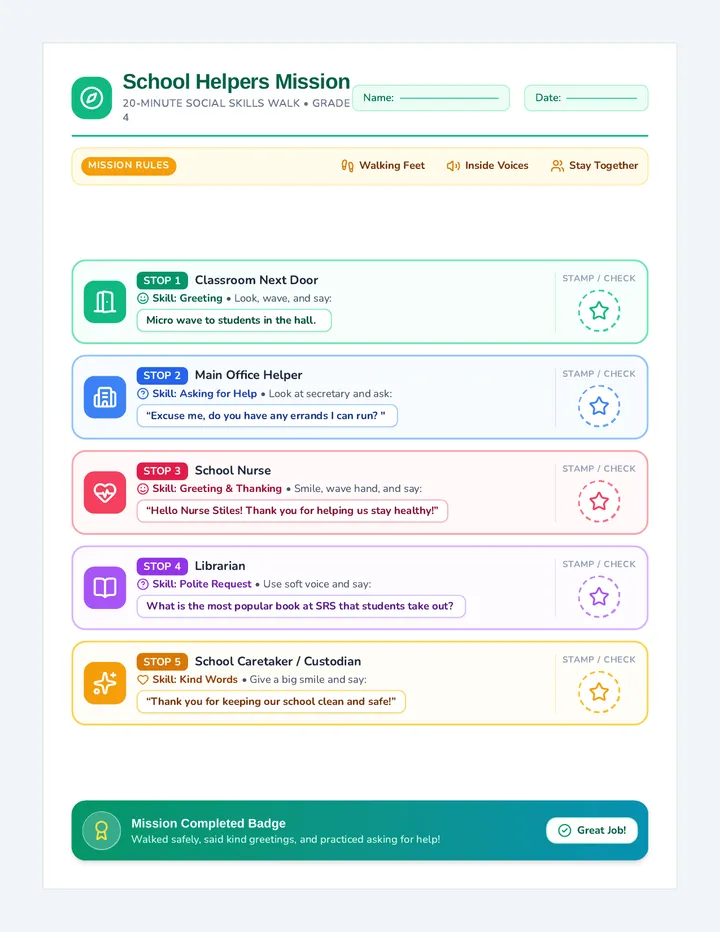
This sequence uses a 'Social Detective' theme to help 6th-grade students analyze environmental clues, social rules, and communication partner availability to determine context-appropriate greetings. Students move from basic environmental observation to complex social decision-making and code-switching.
A comprehensive sequence designed for 10th-grade Special Education students to build vocational readiness. It covers identifying soft skills, crafting resumes, completing applications, mastering workplace etiquette, and practicing mock interviews to prepare students for the transition to employment.
This sequence prepares 10th-grade students for the transition to community and vocational life by mastering the navigation of Augmentative and Alternative Communication (AAC) devices. Students progress from identifying context-specific vocabulary to navigating complex, multi-folder social and professional interactions.
A comprehensive 3-hour one-on-one session designed for adults with disabilities, covering pre-interview routines, professional presentation, and effective communication strategies during a job interview.
A foundational social skills lesson focused on introducing oneself, active listening, and discovering common interests through interactive activities and visual guides.
This lesson teaches 11th-grade students with autism essential conversation skills, including how to initiate and sustain meaningful interactions with peers. Students will watch a video, engage in guided discussions, and practice real-world scenarios through role-play.
A comprehensive life skills rotation lesson covering budgeting, social interactions at a cafe, job skills (stocking/packing), and self-advocacy through role-play and game-based learning.
A high-energy, superhero-themed lesson designed for students with autism to learn the 'superpower' of self-advocacy. This lesson covers standing up for oneself at home, school, and in the community through interactive slides, stories, and games.
A set of visual supports to help students with special needs practice ordering and money skills at a fast food restaurant.
A lesson designed for students with disabilities focusing on three core kindness skills: sharing, using kind words, and keeping hands and feet to oneself. This lesson uses the 'Kindness Superpowers' theme to engage students in social-emotional learning.
A social boundaries lesson designed for a student who uses PECS and enjoys counting songs. The lesson focuses on identifying safe touches and using numbers to regulate social interactions.
A foundational digital literacy intervention designed for SLIFE students to master essential school platforms like Canvas, ClassLink, and school email. This lesson includes a diagnostic screener, instructional slides, and a progress-tracking passport for students.
A lesson designed for 6th-grade students with ASD to develop the social skills needed to lose gracefully during games, featuring a social story, visual slides, and an exit ticket.
A 30-minute social skills lesson designed for a 7th-grade student with Autism, focusing on personal space and appropriate classroom boundaries using visual aids.
A structured, visual lesson designed for learners with autism to differentiate between family, friends, and strangers. Through color-coded zones, concrete rules, and portable checklist cards, students learn safe and appropriate social expectations for each group.