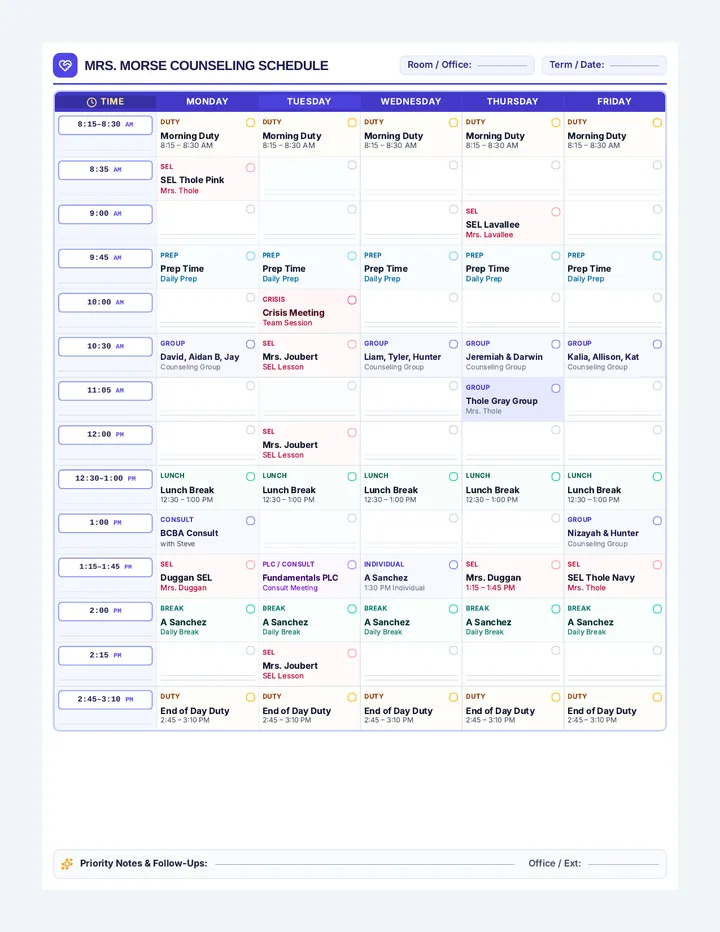
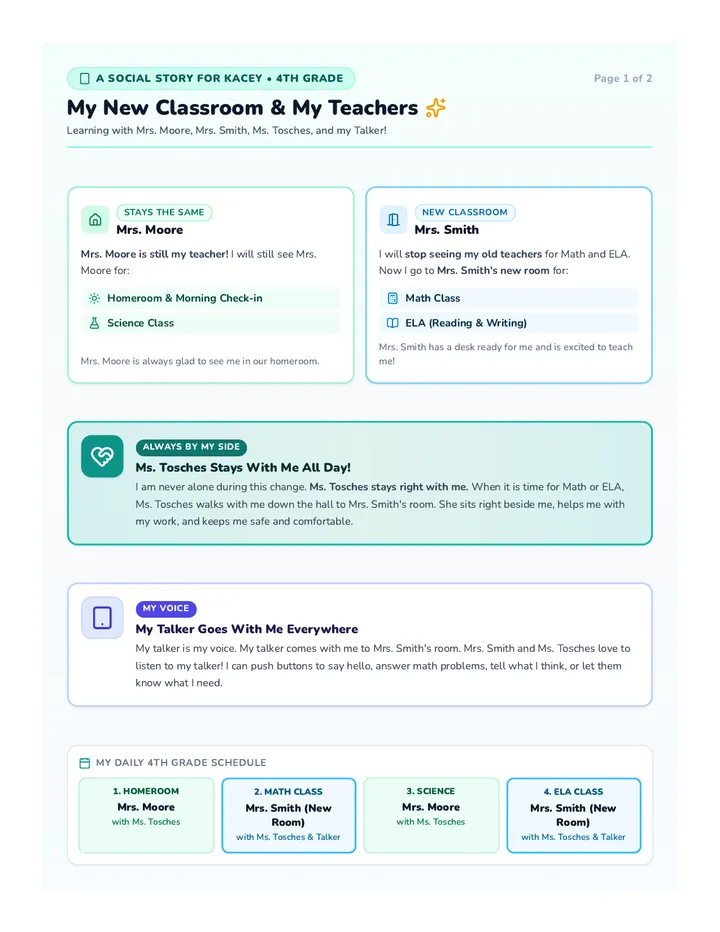
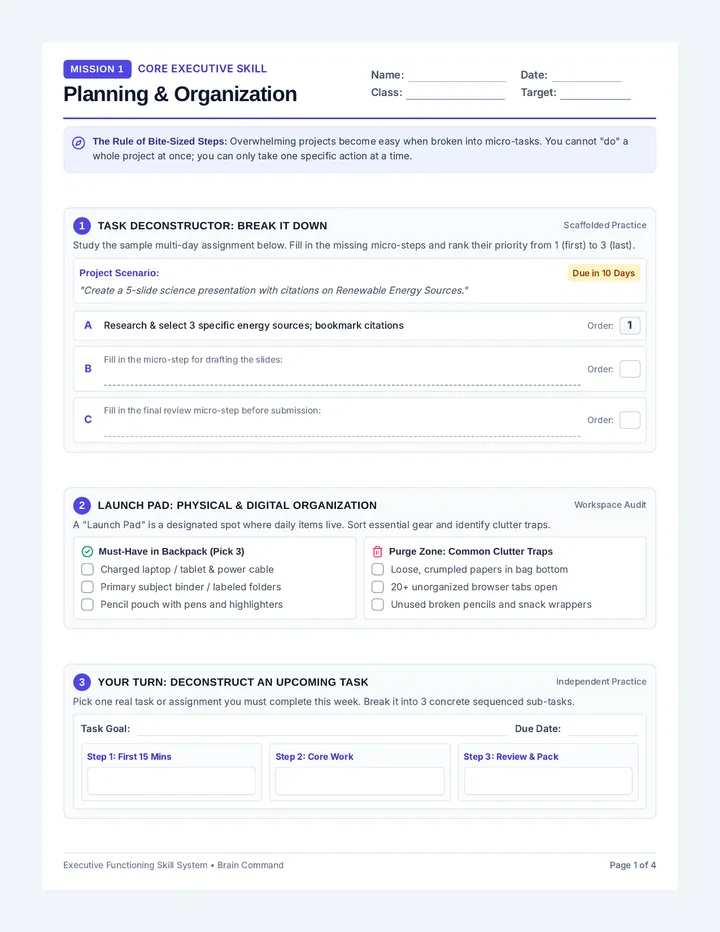
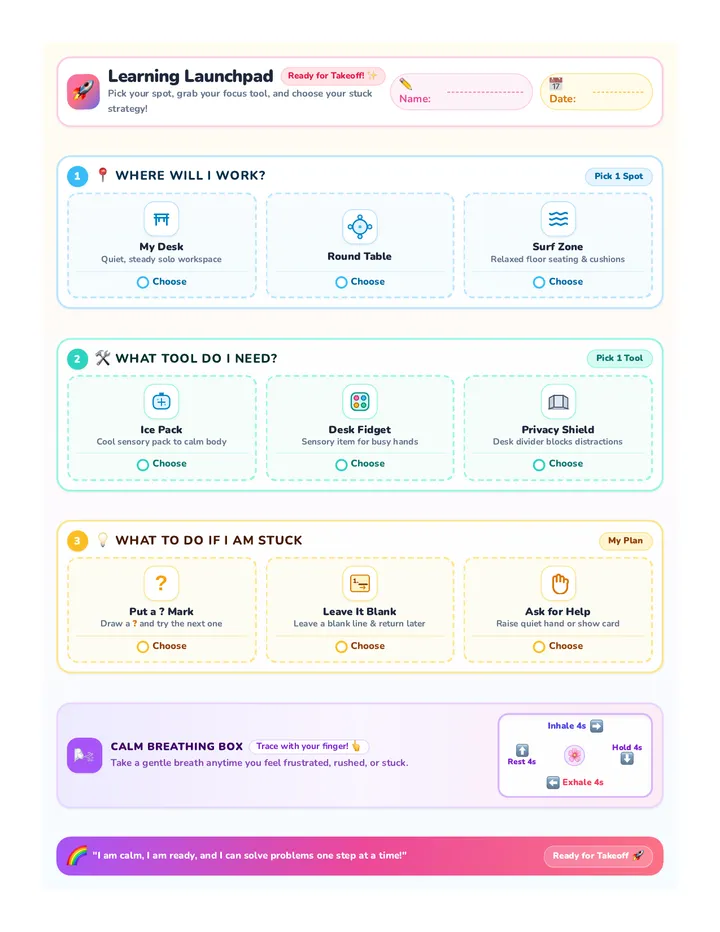
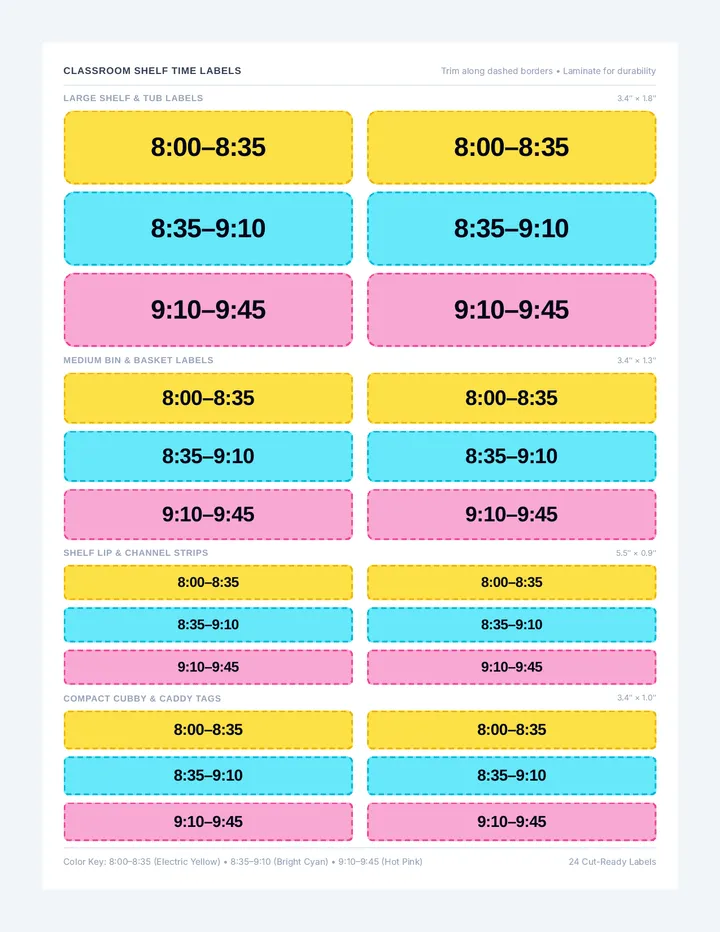
Visual schedules, timers, and task prioritization techniques to support executive functioning and independent workflow. Addresses workspace management, time estimation, and sequential task breakdown for diverse learning needs.
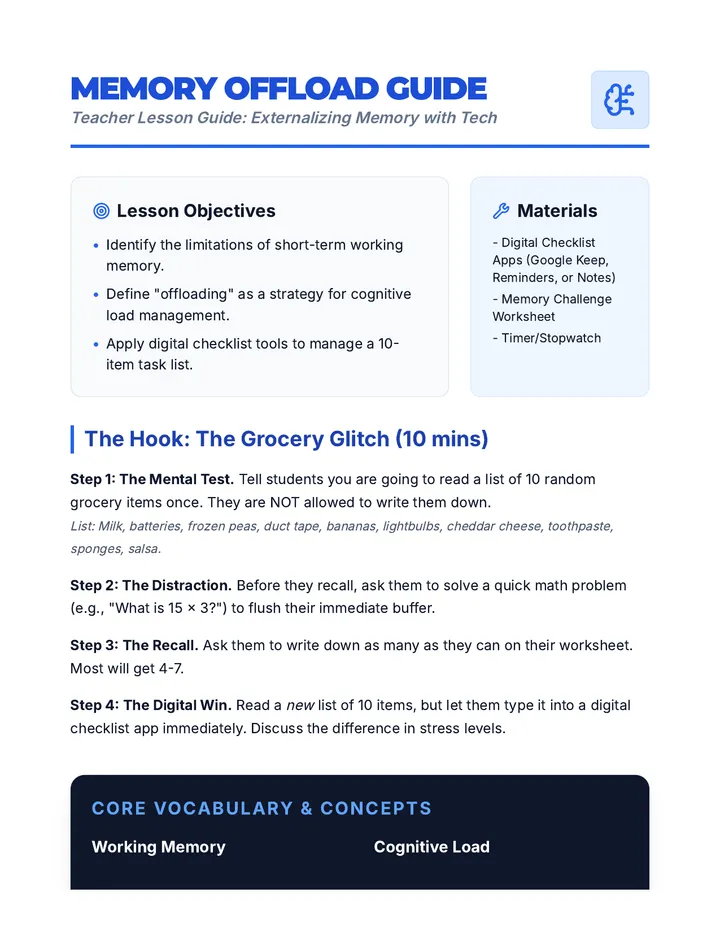
A 5-lesson unit for 8th-grade students focusing on using digital tools to offload working memory and manage cognitive load. Students learn to use task managers, focus modes, sequential reminders, and assistive speech technologies to create a personalized digital workflow for school success.
A sequence for 6th-grade students focusing on identifying distractions, designing effective workspaces, and mastering time-management techniques like Pomodoro and single-tasking to improve executive function and focus.
A Kindergarten sequence focused on building cognitive flexibility and emotional regulation when visual schedules change. Students learn to use specific visuals like 'Oops' cards, substitution icons, and 'Surprise' markers to navigate transitions and unexpected events calmly.
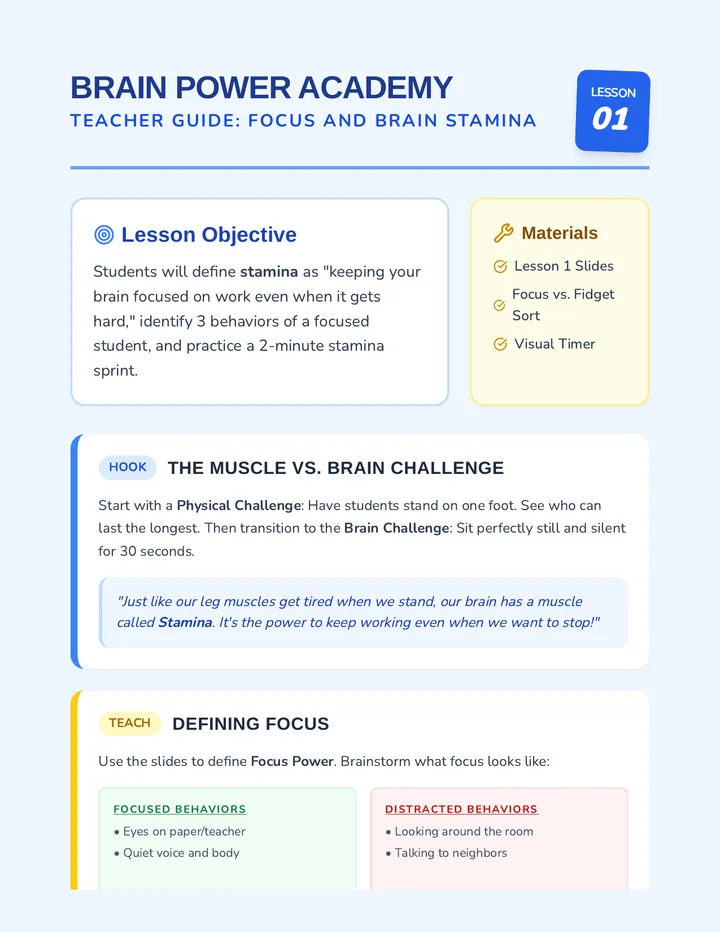
A comprehensive unit designed for 2nd-grade special education students to develop executive functioning skills, focusing on task persistence, stamina, and self-regulation through concrete strategies like chunking and positive self-talk.
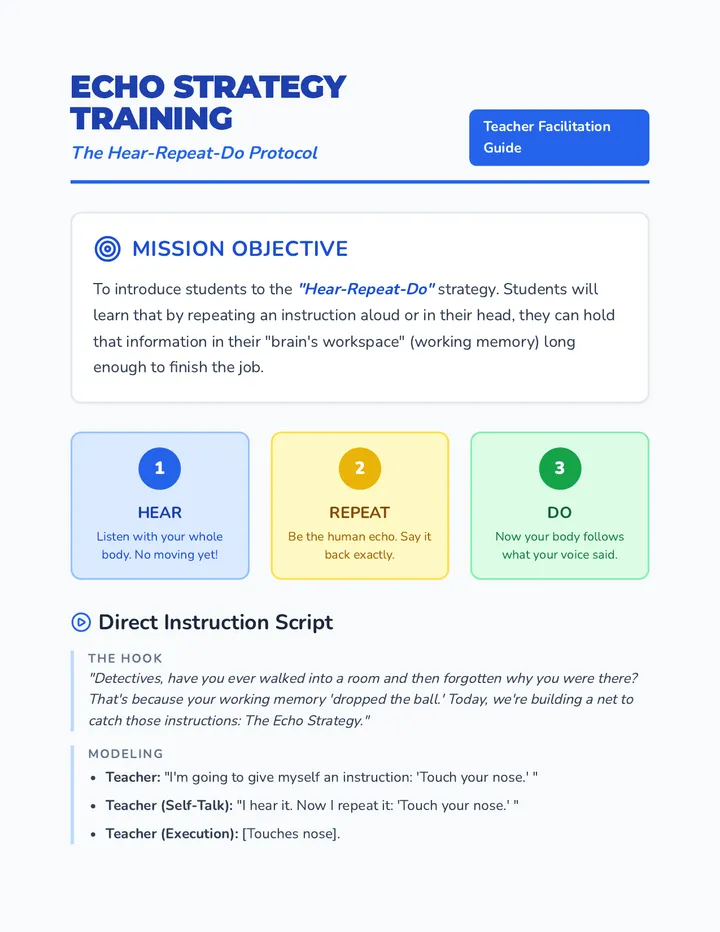
A specialized sequence for 4th-grade students to develop working memory through verbal rehearsal. Students practice the 'Hear-Repeat-Do' strategy, identify action keywords, utilize processing pauses, and verify their work to improve follow-through on single-step directions.
A 2nd-grade Special Education sequence focused on cognitive flexibility, emotional regulation during transitions, and problem-solving when routines change. Students learn to transition from 'rigid' to 'flexible' thinking using the 'Plan B' detour metaphor.
This sequence teaches 11th-grade students with working memory challenges how to deconstruct complex academic prompts into single, manageable steps using masking, checklists, and verification protocols.
A 5-lesson sequence for 4th Grade students focused on developing metacognitive awareness of attention, utilizing timer techniques, internalizing positive self-talk, and designing supportive environments to sustain focus on complex tasks.
A 5-lesson sequence for 9th-grade students to master a systematic, three-color highlighting strategy, moving from identifying 'over-highlighting' pitfalls to independent application on non-fiction texts.
A specialized sequence for 6th-grade students focusing on working memory support through visual encoding. Students learn to transform auditory single-step directions into mental images and physical sketches to improve recall and task execution.
A specialized sequence for 5th-grade students focusing on working memory support through task segmentation. Students learn to break complex tasks into single steps, using digital pacing and physical checklists to manage cognitive load and reduce anxiety.
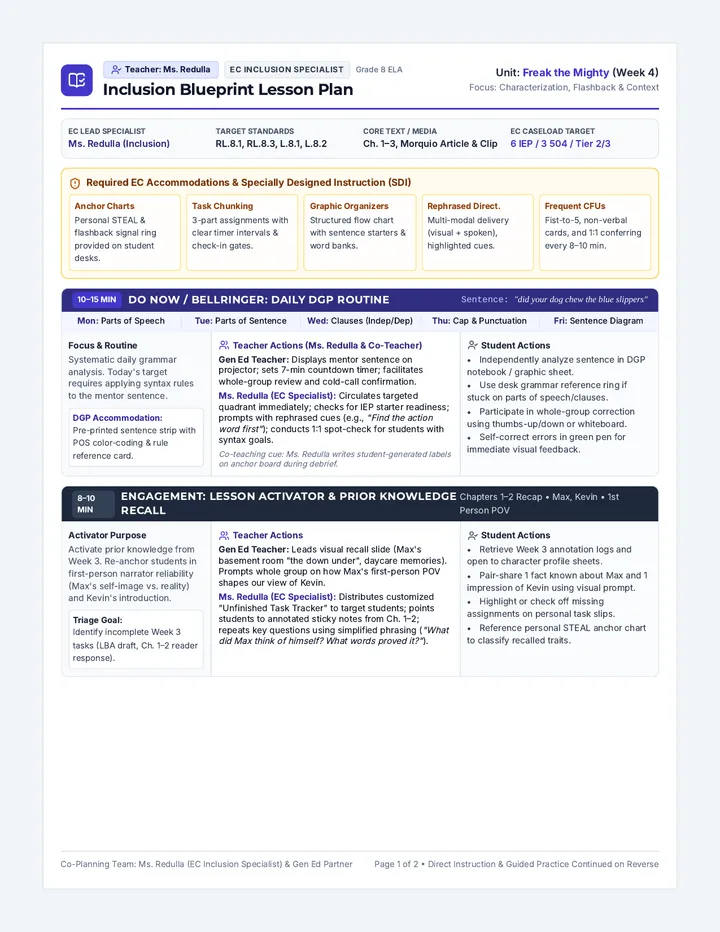
This sequence helps 8th-grade students with working memory challenges by teaching them to externalize tasks into single-step visual guides. Using an architectural blueprint theme, students learn to deconstruct complex goals, create symbolic anchors, and utilize physical tracking systems to ensure successful task completion.
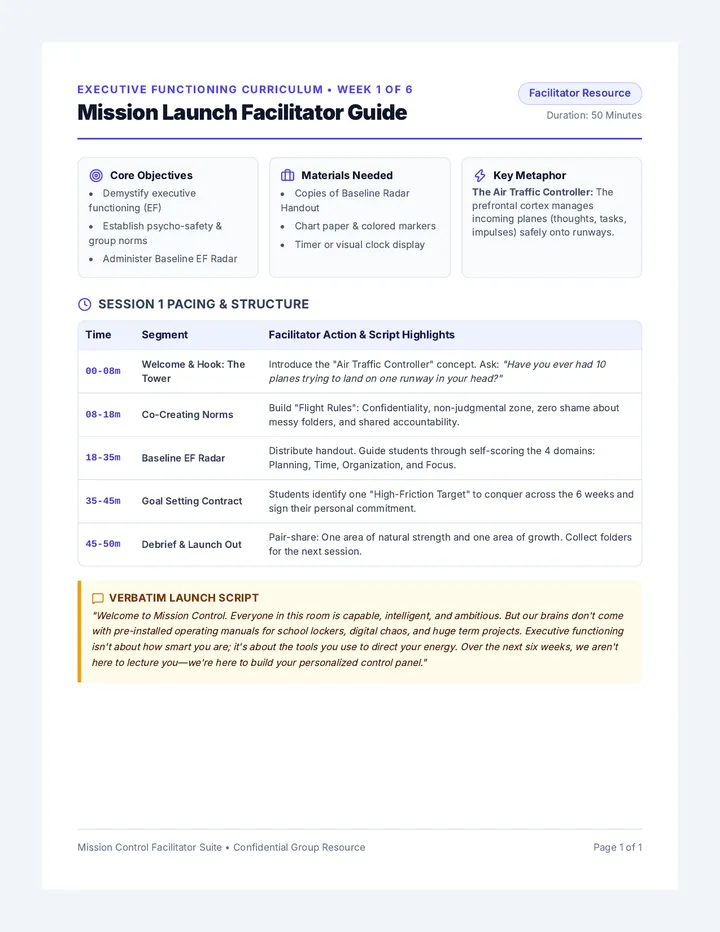
A comprehensive 9-session curriculum for 6th-grade students to master executive functioning skills like organization, planning, self-control, and emotional regulation through the metaphor of becoming their own 'Brain CEO'.
A 5th-grade Special Education sequence focused on externalizing executive functions through visual schedules, checklists, planners, and environmental cues to build independence and reduce anxiety.
This sequence teaches 5th-grade students how to offload working memory demands using visual scaffolding. Students learn to use mind maps, color-coding, focused drafting techniques, and visual checklists to sustain attention during complex, multi-step tasks like writing and project management.
This sequence empowers 9th-grade students to integrate Text-to-Speech (TTS) into their high school workflows through self-advocacy and digital organization. Students move from identifying reading barriers in their schedules to creating a professional Access Plan for their teachers.
A 5-lesson sequence for 5th-grade students focused on decomposing complex academic tasks into manageable steps to support working memory and sustained attention. Students progress from non-academic sequencing to math word problems and independent project planning.
A game-based transition planning simulation where 9th-grade students manage a monthly budget, navigate adult responsibilities, and make decisions about housing, transportation, and daily living. This sequence integrates financial literacy with practical life skills tailored for students with disabilities.
A 10th-grade sequence focused on empowering students to manage their own IEP/504 timelines, accommodations, and administrative responsibilities through the lens of project management. Students transition from passive recipients of services to active managers of their educational milestones.
A comprehensive sequence designed to help 9th-grade students with executive function challenges develop, implement, and test personalized organizational systems. Students explore analog and digital tools, master calendar management, organize digital and physical spaces, and simulate real-world 'stress tests' to refine their chosen frameworks.
An advanced workshop sequence for high school seniors to transition from passive reading to active text analysis. Students develop personalized systems for color-coding, marginalia, and strategic filtering to navigate complex academic texts.
A comprehensive graduate-level sequence designed to combat special education attrition by reframing self-care as a professional ethical competency. This inquiry-based unit moves students from systemic analysis of burnout to the creation of a personalized, sustainable professional lifestyle plan.
A 5-lesson series for 6th-grade special education students focused on executive functioning. Students learn to deconstruct complex assignments, estimate time accurately, plan backwards from deadlines, and maintain visual organization systems like Kanban boards to manage their middle school workload.
A comprehensive 5-lesson sequence designed for 4th-grade students (with a focus on Special Education) to master executive function skills for multi-day project completion. Using an aviation-inspired 'Project Pilot' theme, students learn backward design, milestone identification, task chunking, time estimation, and flexible problem-solving.
A project-based sequence for 4th-grade students in special education settings, focusing on moving from passive highlighting to active extraction, organization, and synthesis. Students learn to refine highlights, extract them onto cards, sort ideas logically, and create a visual 'One-Page Expert Guide' as a summary tool.
This sequence shifts the focus from assistive technology to the cognitive strategies required for auditory learning. Students engage in inquiry-based activities to distinguish between passive hearing and active listening, applying specific comprehension strategies while using text-to-speech (TTS) to access grade-level texts.
A comprehensive graduate-level sequence focused on the pedagogical implementation of assistive writing technology. It shifts the focus from tool selection to instructional methodologies that scaffold digital organizers, dictation, and text-to-speech for student autonomy.
A specialized sequence for 9th-grade students with executive function challenges, focusing on deconstructing long-term projects, backward planning, overcoming procrastination, and building accountability structures.
This sequence teaches 11th-grade students the essential skills of long-term project management through the lens of special education compliance. Students will master backwards planning, data collection scheduling, professional communication, and year-long calendar management to ensure legal deadlines are met without burnout.
This sequence prepares pre-service teachers to evaluate, select, and implement assistive technology (AT) tools specifically designed for students with dysgraphia and physical motor impairments. Students will move from understanding neurological barriers to designing comprehensive, data-driven AT implementation plans.
A 30-minute, individualized Tier 3 lesson for 3rd-grade students focused on executive functioning, sustained attention, and task completion strategies for ADHD support.
A 15-minute introductory lesson for high school students with IEPs to understand how their specific diagnoses might impact midterm exam week and to develop proactive management strategies.
This lesson introduces the 'STOP' strategy (Space, Time, Objects, People) to help high school students with ASD profiles navigate field trips, college visits, and professional events. It focuses on situational analysis, self-advocacy, and reducing anxiety in new environments.
This Tier 2 group lesson helps 8th-grade special education students practice creating and sustaining momentum during tasks. Through direct instruction and timed sprints, students learn to break down tasks and identify immediate next steps to maintain focus.
A 20-minute Tier 3 lesson for 4th-grade students to develop planning, organization, and self-monitoring skills using a superhero-themed approach.
A 20-minute, individualized Tier 3 lesson for a 7th-grade student to understand executive functioning as 'the brain's CEO,' focusing on organization and self-regulation strategies.
A 30-minute Tier 3 intervention for 9th-grade students with ADHD, focusing on discrete strategies for managing inattentiveness and time-blindness through subtle movement and visual tracking.
This professional development session equips 7th-grade educators with individualized Tier 3 strategies for students with ADHD who do not respond to standard Tier 2 interventions like Check-In/Check-Out. Participants will learn how to move beyond generic support to intensive, data-driven personal planning.
A targeted individual session for 10th-grade students to master executive functions: planning, organization, and task initiation. Includes interactive slides and a practical task-breaking workshop.
A 30-minute, Tier 3 LEGO-themed lesson for 1st graders focusing on attention, impulse control, and personal boundaries through building challenges.
A 30-minute one-on-one Tier 3 lesson designed to help middle school students build stamina for non-preferred tasks using executive functioning strategies like planning, chunking, and self-monitoring.
A 60-minute interactive lesson designed for 9th-grade special education students to explore daily routines and self-care skills, fostering independence and life readiness.
A 30-minute vocational lesson for 7th-grade students with IEPs, focusing on independent task completion through measuring, sorting, and filling activities. Students develop fine motor skills and follow multi-step instructions using a vocational task box.
A small-group workshop for 11th-grade special education students focusing on organization, hygiene, and community mobility to build independence and confidence.
In this individual Tier 3 project for a 5th grade special education student, learners compile personalized sensory and self-regulation strategies into an actionable toolkit. Over one 40-minute session, the student will design and plan their own toolkit to support lasting emotional and behavioral success.
A 30-minute, Tier 3 physical therapy session for non-verbal students with autism, focusing on balance, core stability, and sensory regulation through structured challenges and visual supports.
In this 30-minute Tier 2 lesson for 7th graders, students will learn about the roles, responsibilities, and importance of paraprofessionals in schools. Understanding these key team members empowers students to collaborate better and appreciate diverse supports in their learning environment.
A two-session intensive focus and organization program for high school students with ADHD, centered on binder management and task completion.
A 30-minute introductory lesson for high school students with low cognitive abilities, focusing on developing fine motor skills and independence through structured vocational task boxes.
An interactive lesson for 3rd-5th grade students, focusing on practical organizational tools and strategies specifically designed for students with ADHD to manage schoolwork and tasks.
This lesson introduces vocational task boxes for high school students with low cognitive abilities, focusing on hands-on activities that build fine motor skills, task completion, and independence.
This 30-minute, Tier 3 lesson for a 6th-grade individual student focuses on understanding executive functions and developing practical strategies to improve focus, organization, and task initiation.
A structured morning meeting routine for 9th-12th grade life skills students focusing on communication, calendar, weather, goal setting, and practical life skills practice.
This lesson introduces high school freshmen to executive functioning, focusing on planning and organization through game-based learning. Students explore how these brain functions serve as the 'command center' for academic and personal success.
A 45-minute lesson for 6th-grade small groups to reflect on flexibility, organization, and planning. Students engage in a collaborative storytelling mission and individual reflection to solidify their executive functioning strategies.
A 35-minute intervention for 9th-grade students to identify procrastination triggers and build a tactical playbook of personalized task-initiation strategies.
A comprehensive 60-75 minute lesson for middle schoolers focusing on executive functioning skills like organization and task management through the 'Brain Boss' metaphor.
A 30-minute parent workshop focused on practical strategies and tools to support second graders' executive function skills at home, including planning, organization, and self-monitoring.
A 90-minute Tier 2 session for parents on using visuals and schedules to support child learning and behavior, focusing on practical creation and implementation strategies.
A personalized, 20-minute Tier 3 intervention for a 2nd-grade student to develop a consistent task-initiation routine. The lesson uses a 'Mission Ready' theme to empower the student with predictable steps for starting academic work.
This 30-minute lesson for 11th-grade students provides practical strategies for managing ADHD symptoms in the classroom, helping students develop self-regulation skills to improve focus and academic performance.