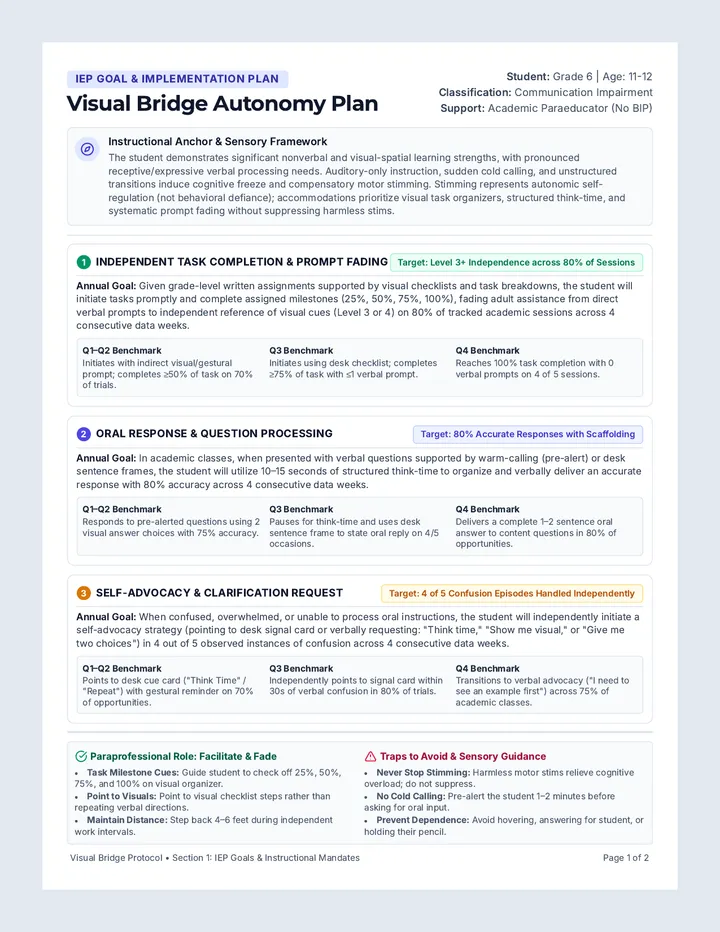
Systematic decomposition of complex routines into discrete, manageable steps for students with cognitive or developmental delays. Supports independent task completion through structured visual aids and incremental skill building.
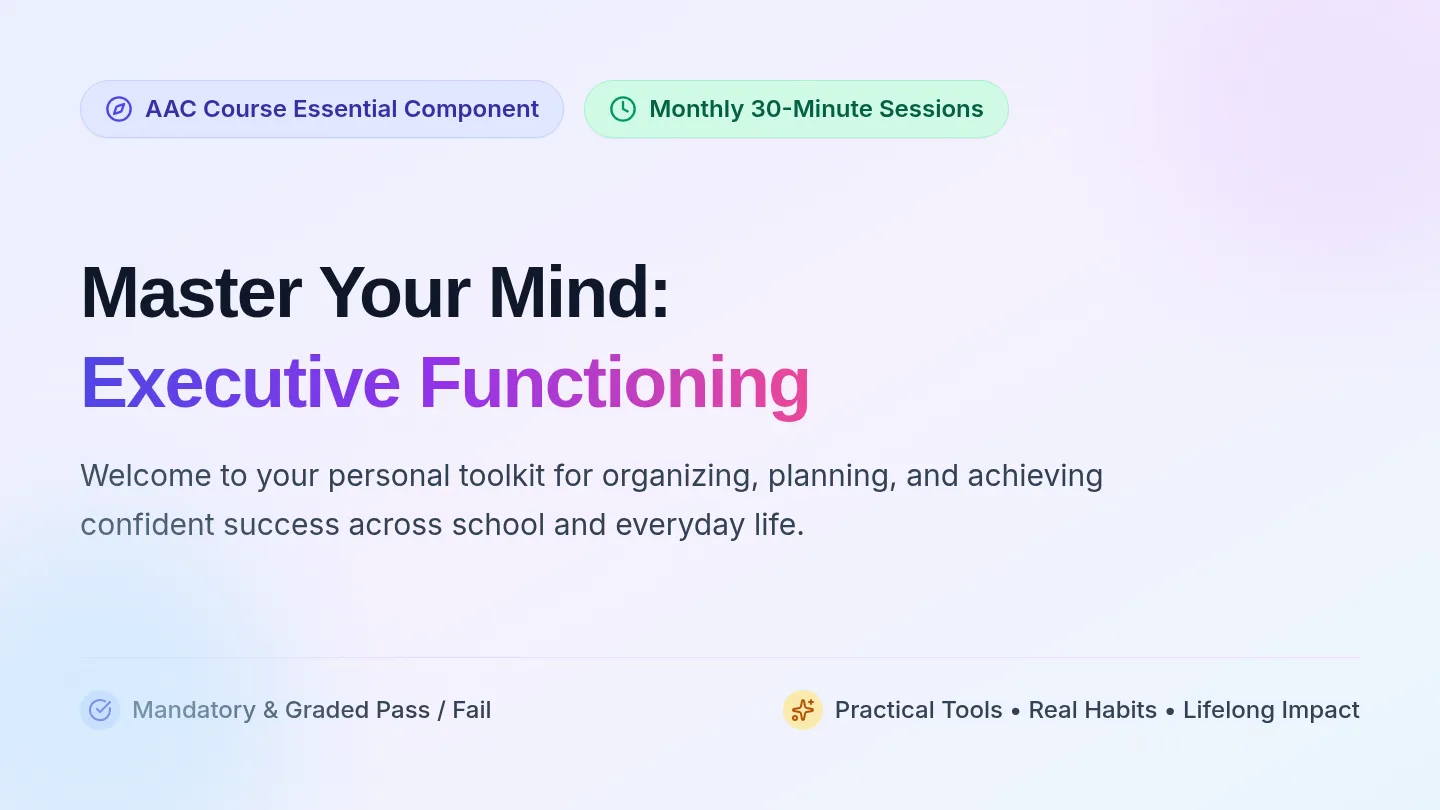
A 6-slide introductory deck in a calming, friendly pastel palette for the mandatory AAC Executive Functioning sessions, covering core skills, course grading, practical scenarios, and student expectations.
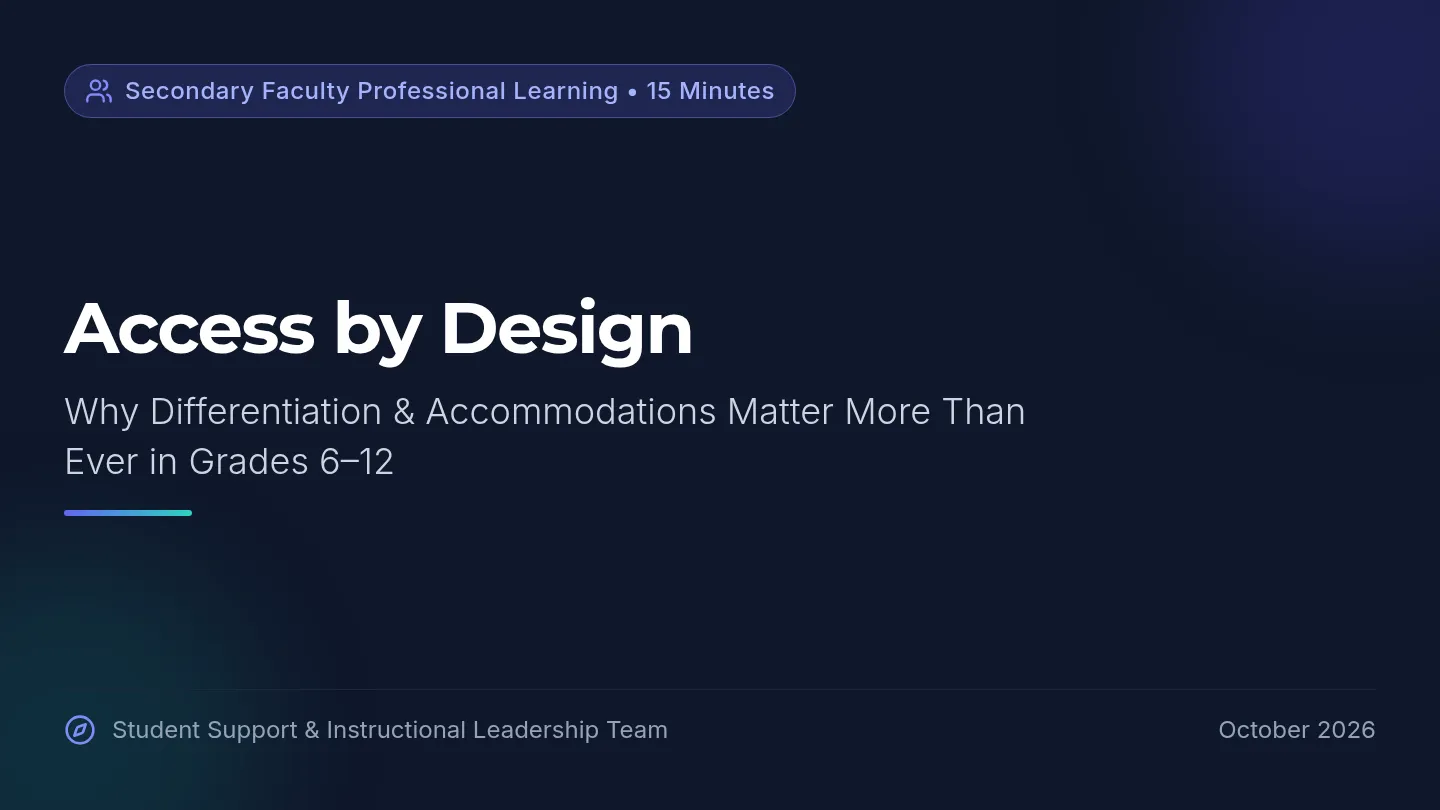
A 7-slide faculty presentation exploring the necessity and practical implementation of differentiation and accommodations for secondary students (grades 6-12) with learning differences.
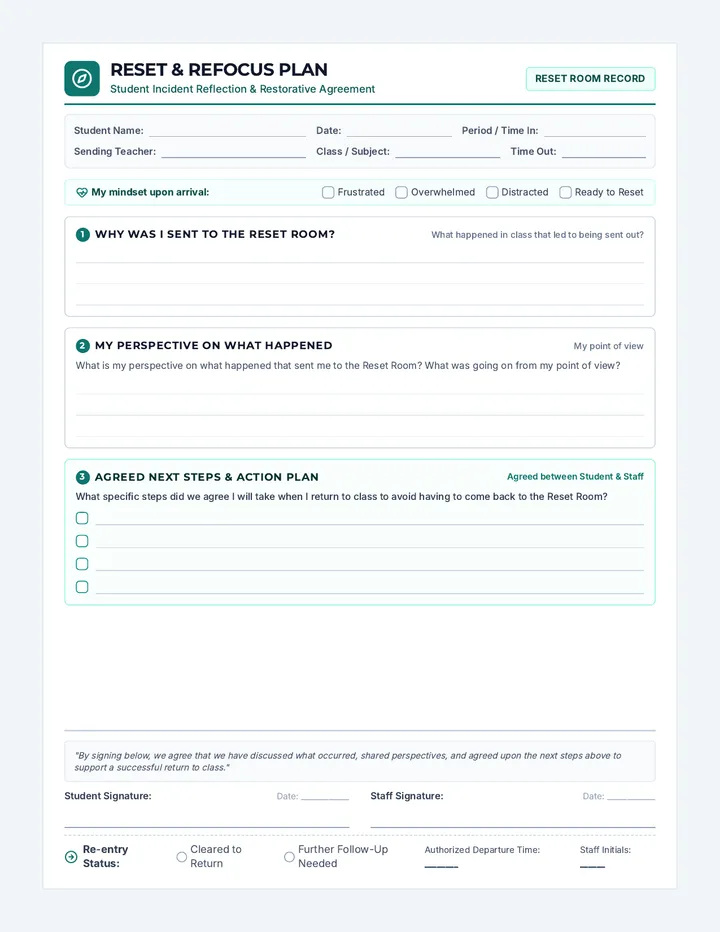
A restorative reset room reflection form with intake data, incident reason, a dedicated student perspective section, custom agreed-upon next steps, and dual student-staff signatures.
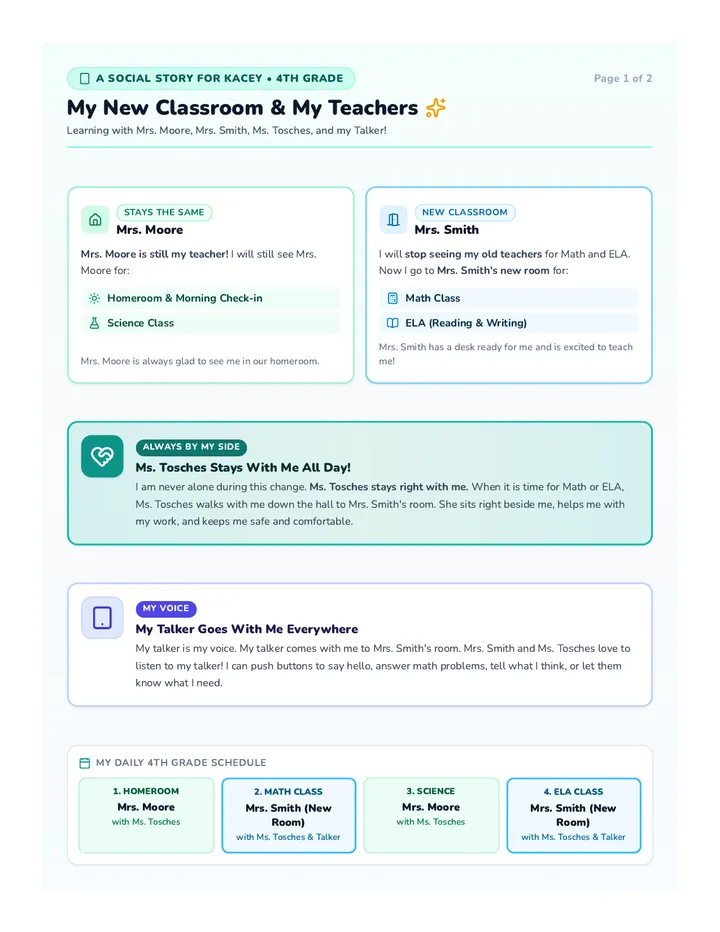
A highly concrete, visual 2-page social story customized for Kacey, a nonverbal fourth grader with intensive needs who uses an AAC talker. It clearly explains stopping with old Math/ELA teachers, starting in a new room with Mrs. Smith, keeping Mrs. Moore for Homeroom and Science, and having Ms. Tosches and her talker present at all times.
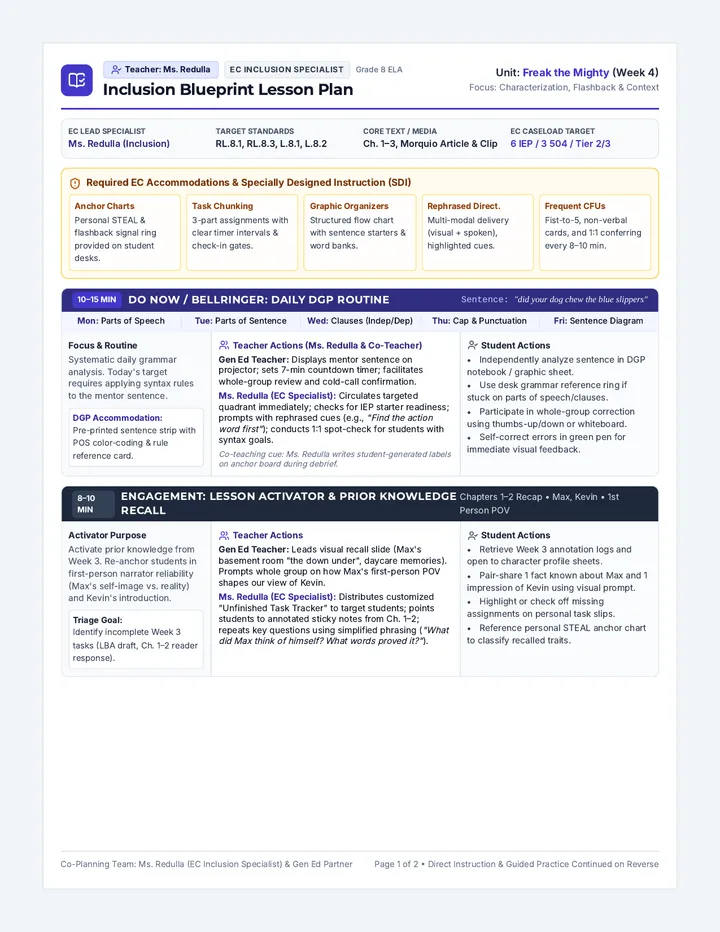
A comprehensive two-page co-teaching inclusion lesson plan designed for Ms. Redulla (EC Inclusion Specialist) and General Education ELA partner. It details the five-day DGP bellringer routine, novel study integration with *Freak the Mighty*, Morquio syndrome background reading, and explicit specially designed instruction (SDI) accommodations throughout each instructional framework phase.
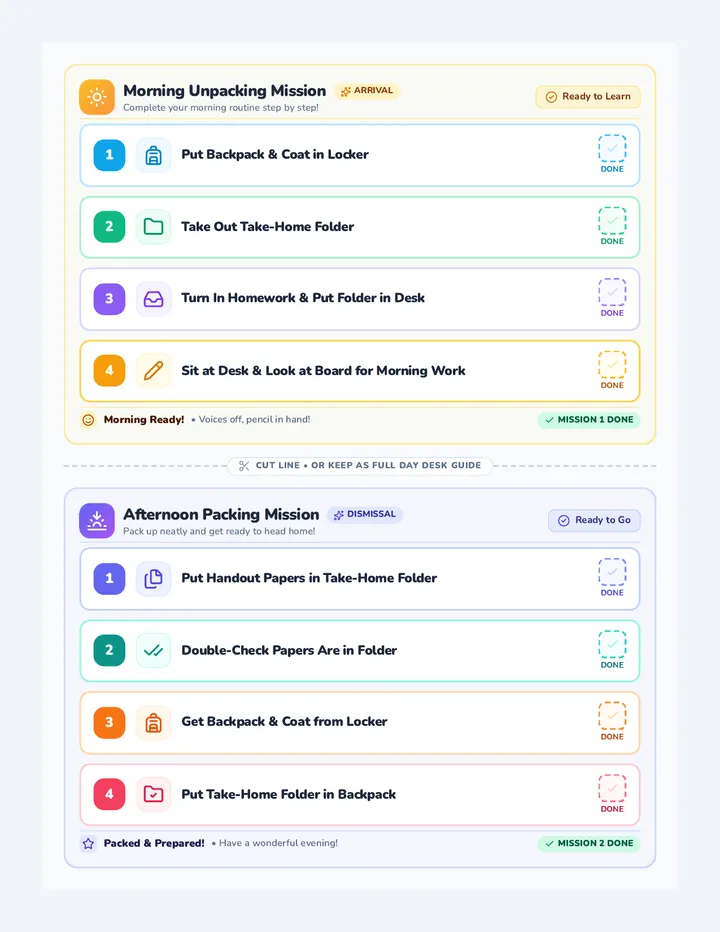
A high-visibility half-sheet daily routine checklist with enlarged bold step titles, prominent visual icons, and checkboxes, with all subtitle text removed for quick student reading.
A comprehensive 9-session curriculum for 6th-grade students to master executive functioning skills like organization, planning, self-control, and emotional regulation through the metaphor of becoming their own 'Brain CEO'.
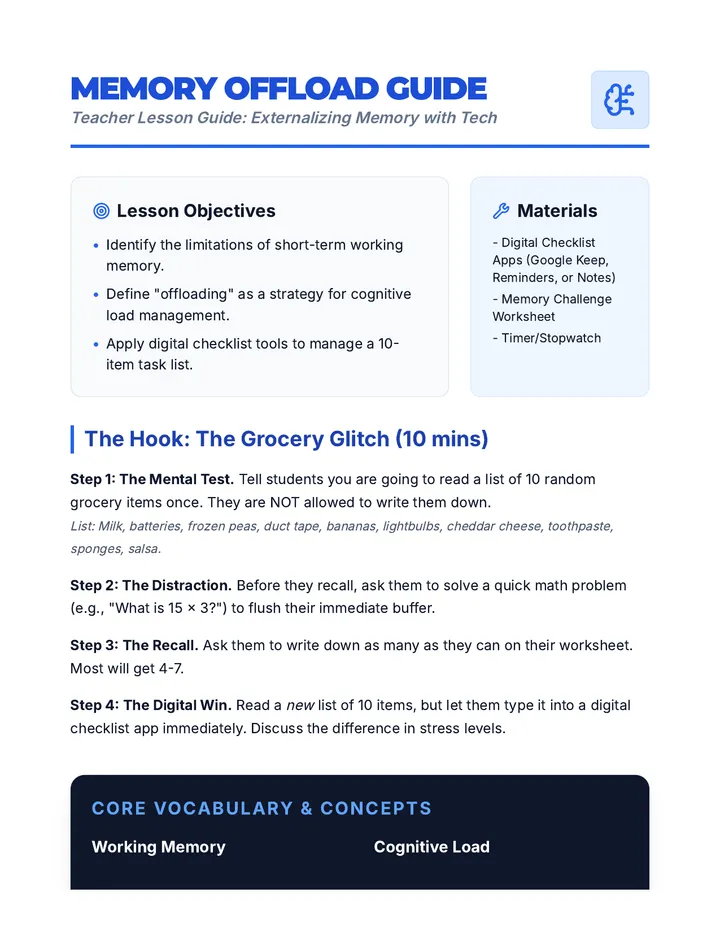
A 5-lesson unit for 8th-grade students focusing on using digital tools to offload working memory and manage cognitive load. Students learn to use task managers, focus modes, sequential reminders, and assistive speech technologies to create a personalized digital workflow for school success.
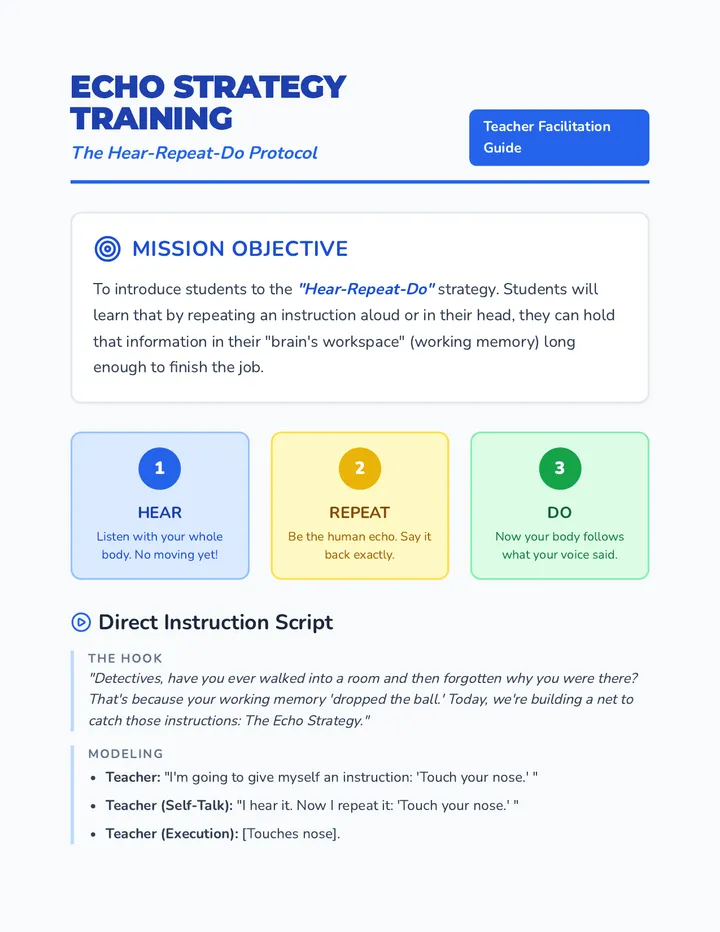
A specialized sequence for 4th-grade students to develop working memory through verbal rehearsal. Students practice the 'Hear-Repeat-Do' strategy, identify action keywords, utilize processing pauses, and verify their work to improve follow-through on single-step directions.
This sequence teaches 11th-grade students with working memory challenges how to deconstruct complex academic prompts into single, manageable steps using masking, checklists, and verification protocols.
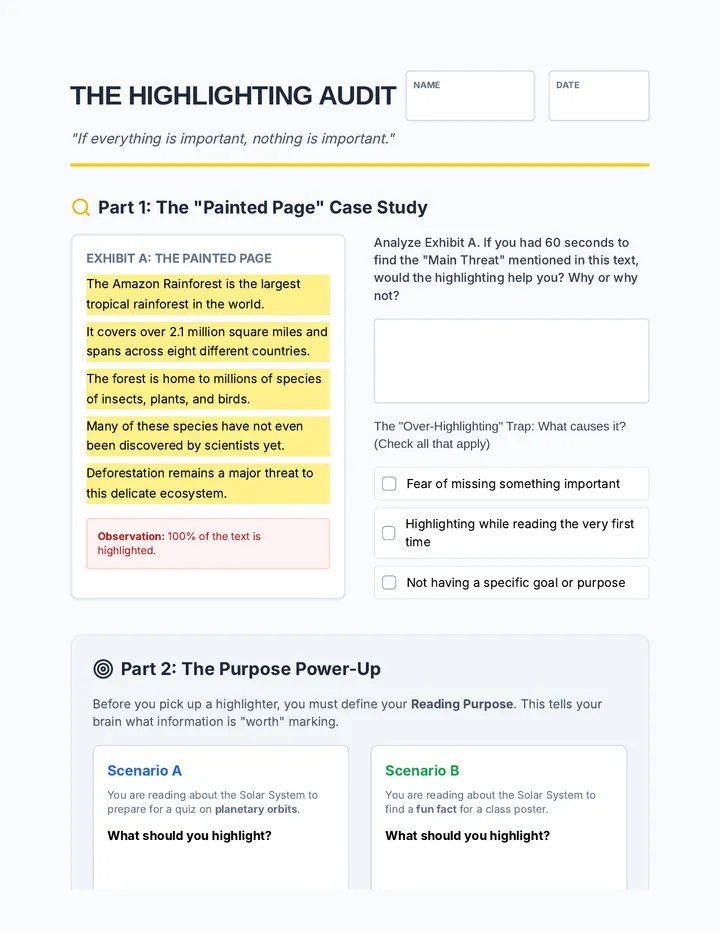
A 5-lesson sequence for 9th-grade students to master a systematic, three-color highlighting strategy, moving from identifying 'over-highlighting' pitfalls to independent application on non-fiction texts.
A specialized sequence for 6th-grade students focusing on working memory support through visual encoding. Students learn to transform auditory single-step directions into mental images and physical sketches to improve recall and task execution.
Comprehensive staff implementation guides and class-by-class daily data tracking sheets for middle school students receiving behavioral, emotional, and academic support services.
A foundational digital literacy intervention designed for SLIFE students to master essential school platforms like Canvas, ClassLink, and school email. This lesson includes a diagnostic screener, instructional slides, and a progress-tracking passport for students.
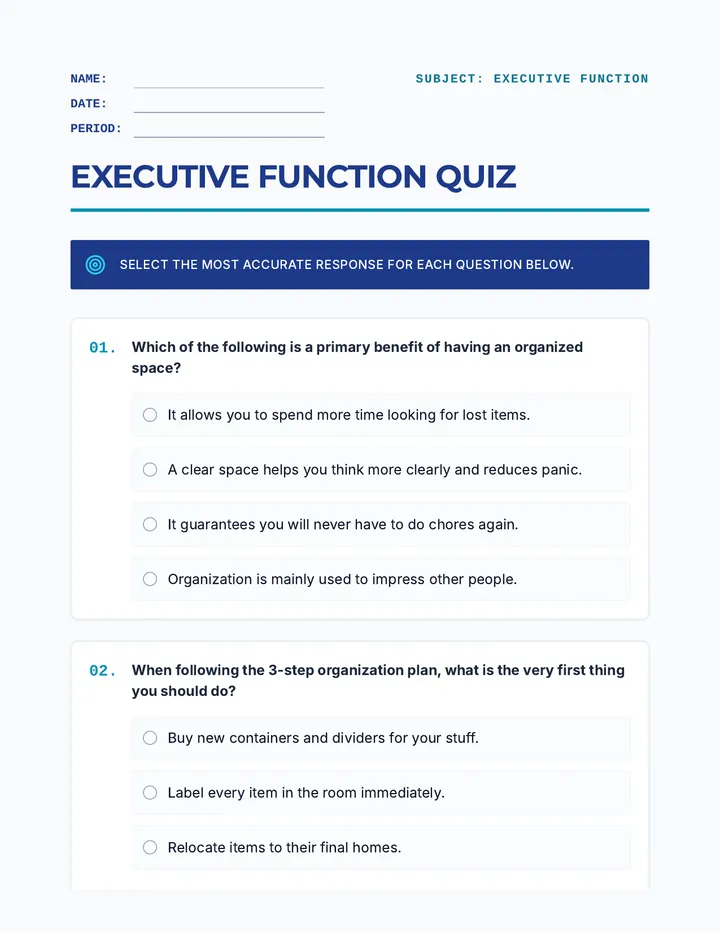
A lesson focusing on key executive function skills including organization, planning, working memory, and impulse control, featuring a 'Mission Control' theme.
A structured unit providing daily entry procedures, self-regulation habits, and teacher observation tools for secondary executive functioning seminars.
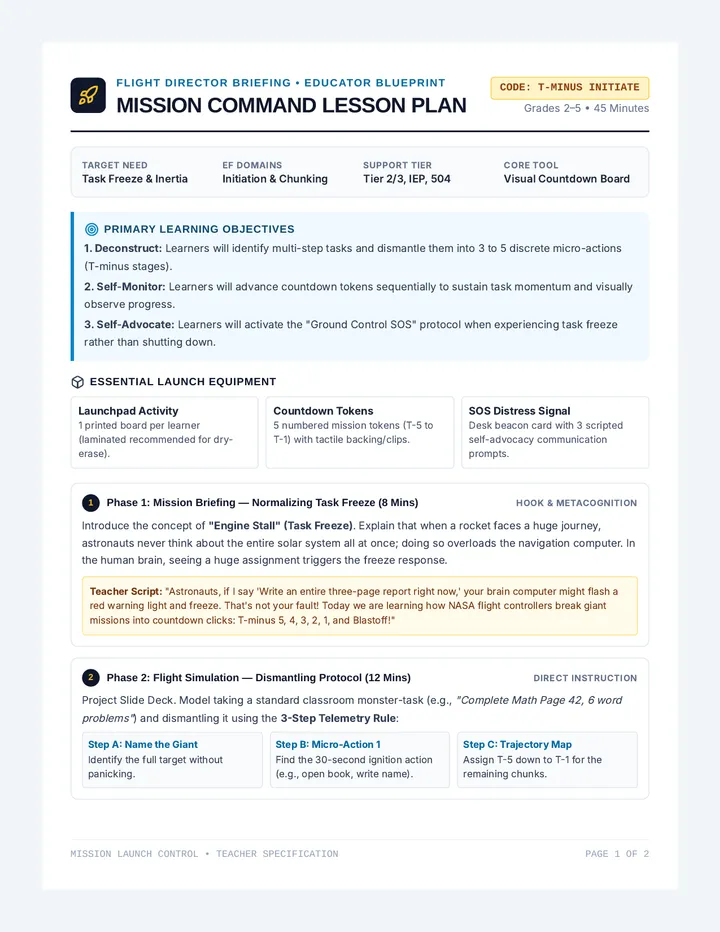
A comprehensive executive functioning and self-advocacy lesson guiding grades 2-5 learners to overcome task freeze by deconstructing multi-step assignments into visual trajectory checklists with countdown tokens and self-advocacy distress beacons.
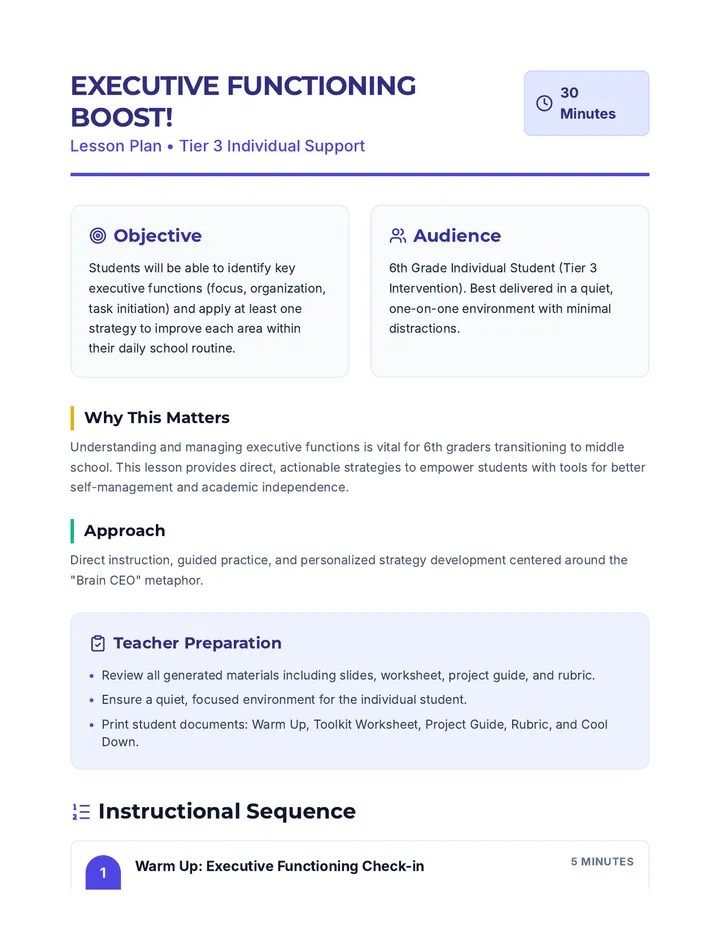
This 30-minute, Tier 3 lesson for a 6th-grade individual student focuses on understanding executive functions and developing practical strategies to improve focus, organization, and task initiation.