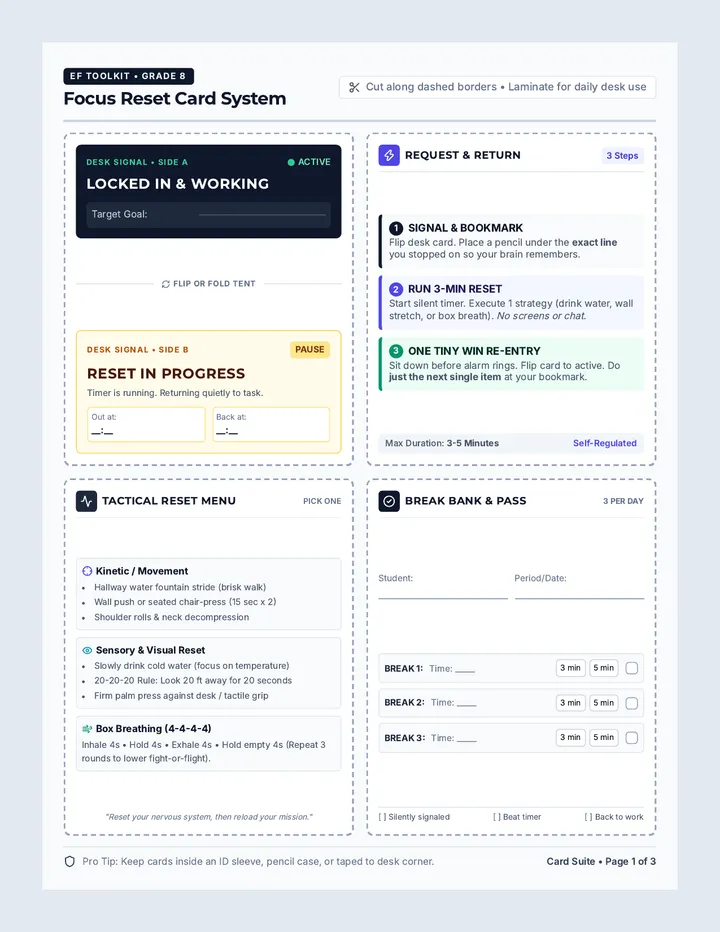
Post-meltdown intervention strategies and co-regulation techniques to help students return to a physiological baseline. Includes environmental modifications and sensory tools for emotional stabilization.
A comprehensive nine-week professional development sequence for middle school staff, delivering 10-15 minute training sessions on relationship-building, mindfulness, and de-escalation strategies. Includes interactive slides, facilitator guides, teacher reference cards, and digital newsletter templates.
A professional growth sequence focusing on student emotional regulation and systematic data-driven instructional leadership. This series pairs practical behavioral systems with rigorous academic reflection tools.
A comprehensive regulation system for a 4th-grade student with autism, focused on academic frustration, motivation, and communication support using the Zones of Regulation framework. Includes strategies for both classroom and home environments.
A collection of specialized support frameworks for high-achieving neurodivergent students, focusing on balancing academic rigor with sensory regulation.
A collection of science-themed behavioral interventions and transition supports designed for a first-grade student with ADHD and high support needs. The sequence focuses on using special interests to increase engagement and provide structured, predictable routines.
A comprehensive set of visual supports, behavioral tracking, and teacher guidance for a 1st grade non-verbal student with autism. The resources are designed with a cohesive 'Star Navigator' space theme to make the visual environment engaging and structured.
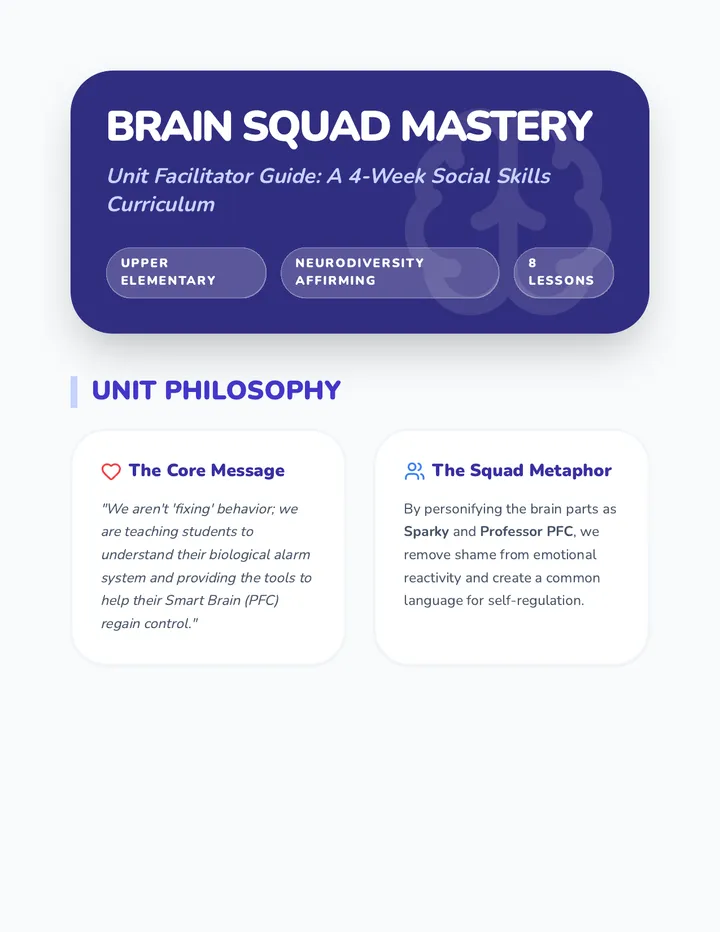
A 4-week social skills unit (8 lessons) teaching students to distinguish between their emotional brain and smart brain, focusing on regulation strategies, autism-specific challenges, and positive outlets.
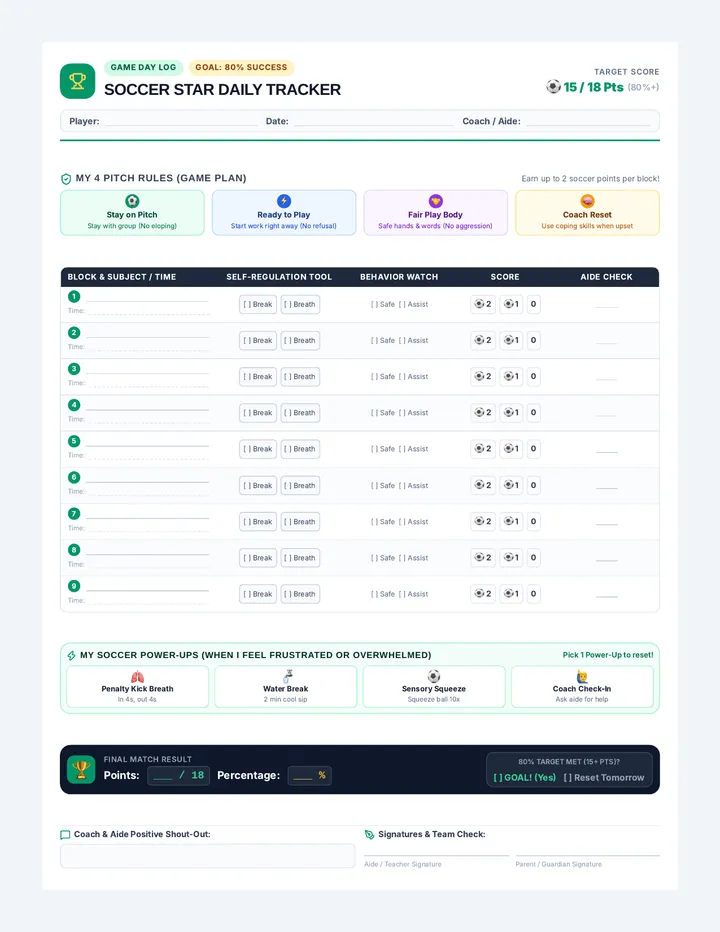
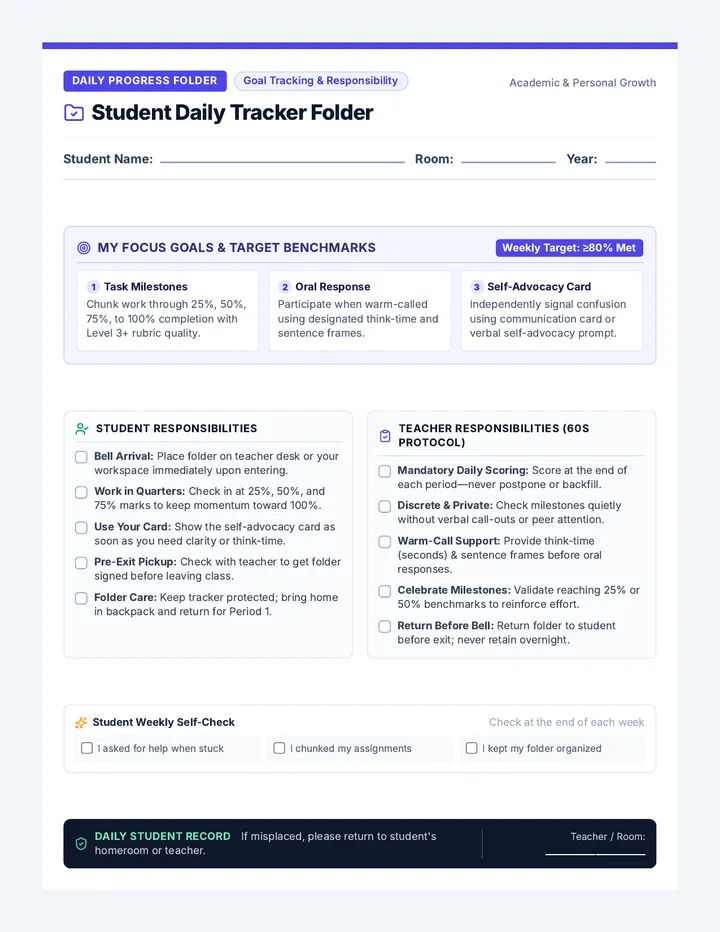
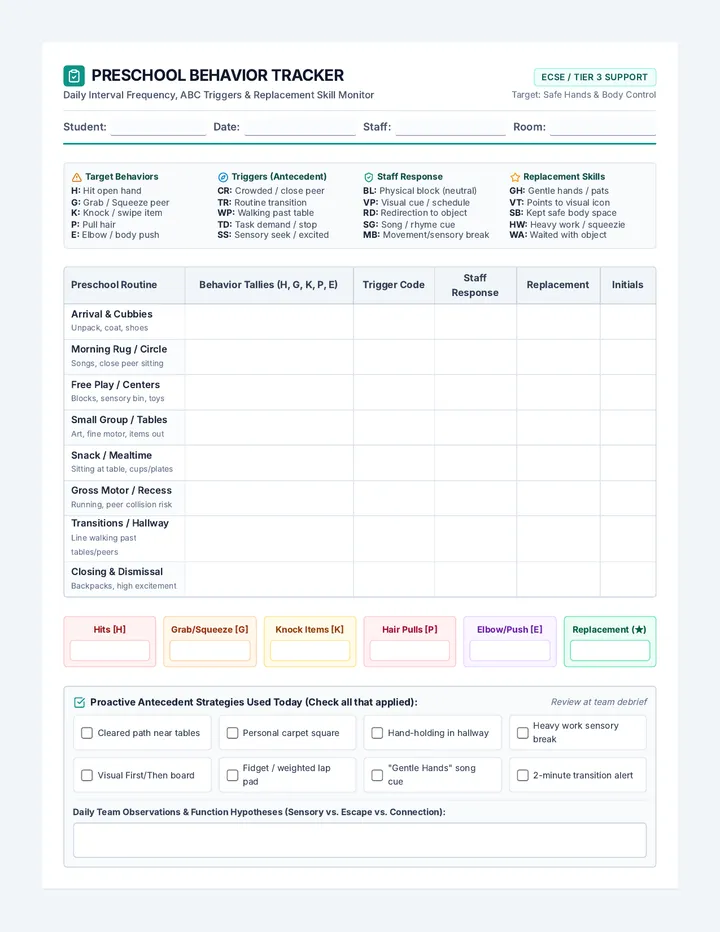
A collection of tools and guides for educators to monitor student behavior and progress, facilitating clear communication between school and home.
A comprehensive collection of resources for K-12 educators and staff focusing on trauma-informed care, social-emotional learning, neurodiversity, and crisis intervention. Includes training slides, student worksheets, clinical templates, and parent guides.
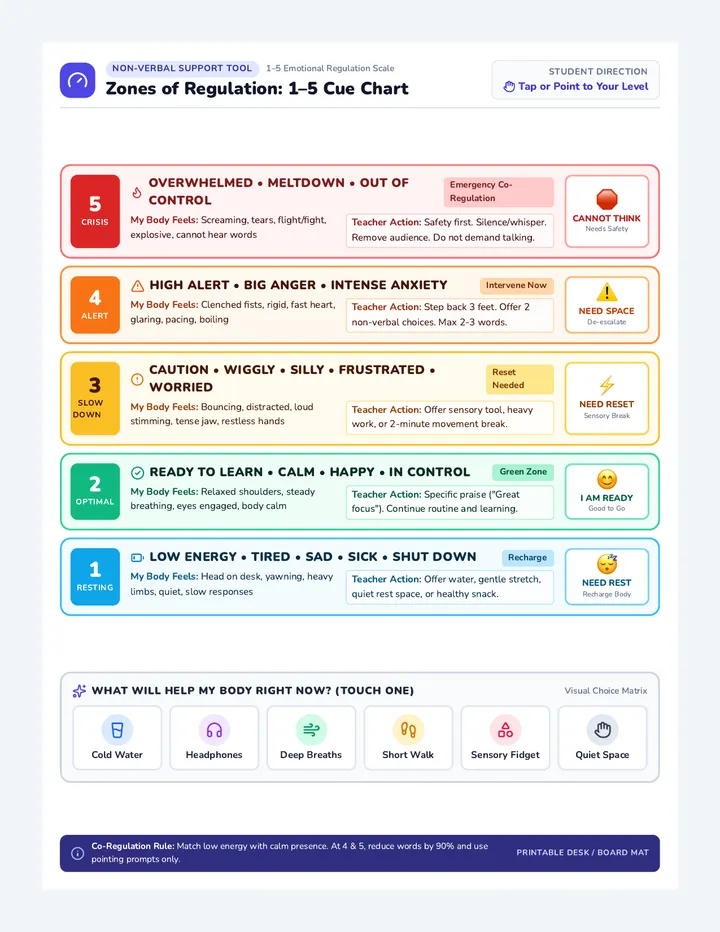
A 6-week social-emotional learning program for teenagers on the autism spectrum, delivered in focused 20-minute sessions. The program uses visual "blueprints" to teach energy management, body awareness, and Comic Strip Conversation techniques for emotional regulation and perspective taking.
A comprehensive series of lessons for high school students focusing on the four Zones of Regulation. Students will learn to identify internal physical cues, external triggers, and specific coping strategies to manage low-energy (Blue), regulated (Green), elevated (Yellow), and extreme (Red) states.
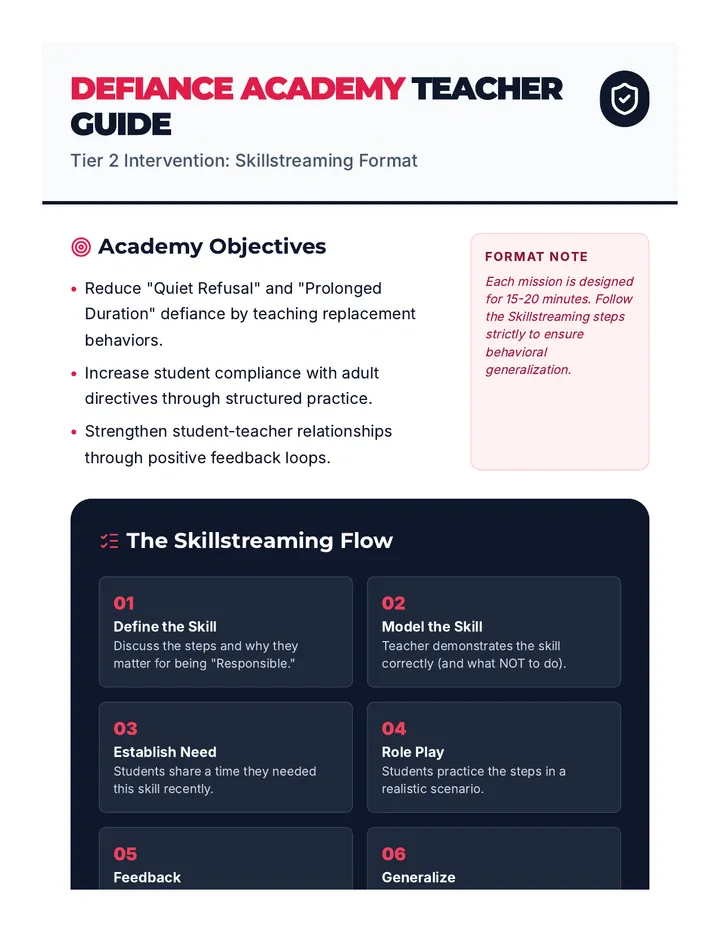
A series of Tier 2 behavior intervention academies for elementary students based on the Urbandale Student Code of Conduct. Using the Skillstreaming model, these 15-20 minute mini-lessons target specific pro-social skills to replace behaviors related to Defiance, Disruption, Physical Aggression, and Abusive Language.
A clean, minimalist single-page routine chart featuring a calming 8-step self-squeeze physical therapy routine. Includes physical count-down touchpoints from 1 to 5 to help students track their grounding exercises directly on the poster.
A set of printable visual communication support cards featuring simplified sentence starters, emotion descriptors, and de-escalation choices designed for students with emerging language skills.
A comprehensive teacher facilitation guide featuring step-by-step scripts, co-regulation strategies, and structured restorative dialogue pathways to navigate the four phases of re-entry after an emotional outburst.
A simplified, quick-read teacher facilitation guide outlining clean pacing rules, simple de-escalation tips, and 60-second restorative script prompts.
A simplified, high-clarity visual graphic organizer designed to reduce cognitive load, using highly direct language, emojis, and clear restorative steps for a middle school student after a classroom escalation.
An expanded, 2-page teacher-facing reference guide with larger font sizes and ample visual spacing. Page 1 features the Empathy Map and Distress Cues, and Page 2 focuses on Classroom Accommodations and Dos & Don'ts.
Interactive sorting mats and 8 large cut-out cards (representing facial expressions and emotional scenarios) to help Kindergarten students practice identifying and classifying sad and angry feelings.
A student-facing visual choice board using comforting, sensory-friendly colors. It displays simplified emotional state check-ins (Sad, Angry) alongside six core sensory and calming coping strategies.
A double-sided progress monitoring toolkit containing structured data sheets: Page 1 tracks discrete emotion identification trials, while Page 2 acts as an event log for real-time coping strategy usage.
A comprehensive educator guide outlining the annual IEP goal and three measurable objectives for identification of sad/angry emotions and sensory coping skill implementation, complete with progress rubrics and instructional tips.
A sheet of 12 printable, lanyard-sized visual support cards for a Kindergarten student with autism. Includes 2 emotion identification cards (Sad, Angry), 9 multi-category coping strategy cards, and a customizable title cover card. Featuring cut-lines, hole-punch marks, and child-friendly icons.
A structured IEP Goal and Data Sheet designed for Kindergarten Special Education. Includes measurable IEP annual goal phrasing, 4 scaffolded measurable objectives (benchmarks), a multi-tiered tracking rubric, a quick-reference prompts key, and a 9-row data collection chart for tracking emotion identification and coping strategy usage.
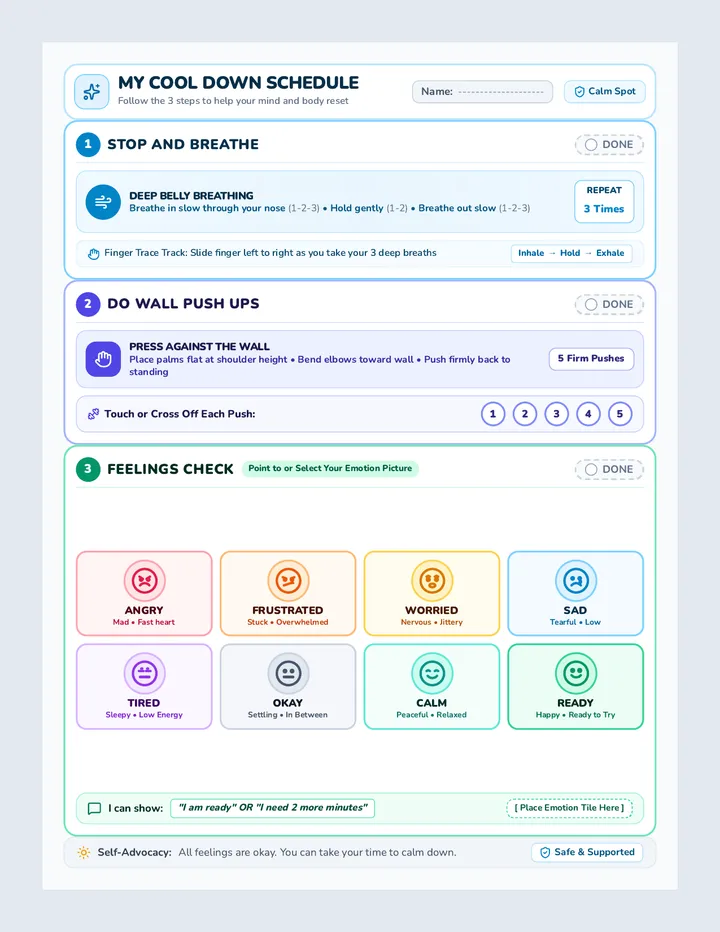
A pediatric grounding and sensory regulation lesson featuring a self-squeeze physical therapy routine to help students self-soothe and calm down.
A comprehensive restorative dialogue system designed to repair relationships and re-integrate students after emotional outbursts, featuring a teacher scripting guide and highly visual student communication support cards.
A collection of restorative and reflective tools to help middle school students process behavioral incidents, understand classroom community impact, and map out alternative, safe coping strategies.
A resource hub designed to support teachers in managing classroom adjustments and implementing trauma-informed strategies for students experiencing acute family transitions.
A structured support program designed for Kindergarten students with autism, focusing on identifying sad and angry emotions and utilizing sensory and calming coping strategies.
A specialized kit designed to support a Kindergarten student with autism in identifying emotions and practicing coping strategies. Includes a clear IEP goal and data collection sheet, along with printable visual support cards.
A supportive social narrative and positive self-talk booklet designed specifically for autistic children to cope with anger, the word 'no', and friendship anxieties. Includes clear visual scenes, concrete language, and calming coloring pages with traceable phrases.
A cohesive bundle of support resources for a student with Major Depressive Disorder and Intermittent Explosive Disorder, including formal 504 accommodations, an educator's de-escalation workflow, and a student-facing desk tool.
A collection of visual support tools and plans designed to help students self-regulate, manage big emotions, and transition back to learning.
Week 1 of the Regulated Classrooms PD. Teachers learn the '2x10 strategy'—spending two minutes a day for ten consecutive days talking to a struggling student about non-academic interests to build a relationship foundation.
A powerful professional development lesson for teaching assistants based on Jim Harris's eye-opening presentation "What's Wrong with Kids These Days?". This lesson shifts the perspective from diagnosing student deficits to decoding behavioral communication and building emotional safety.
An advanced data reflection and tracking module for educational leaders to systematically assess grade-level performance and plan organizational next steps.