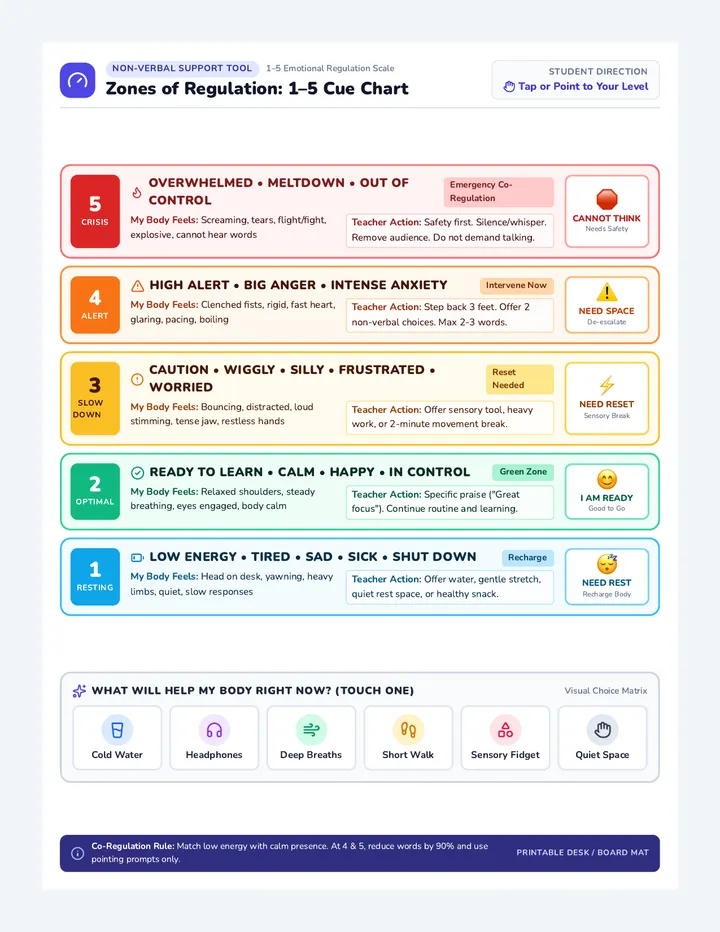
Guided breathing techniques, visual prompts, and rhythmic exercises to support self-regulation and anxiety management. Targets physiological calming responses for students with sensory processing needs.
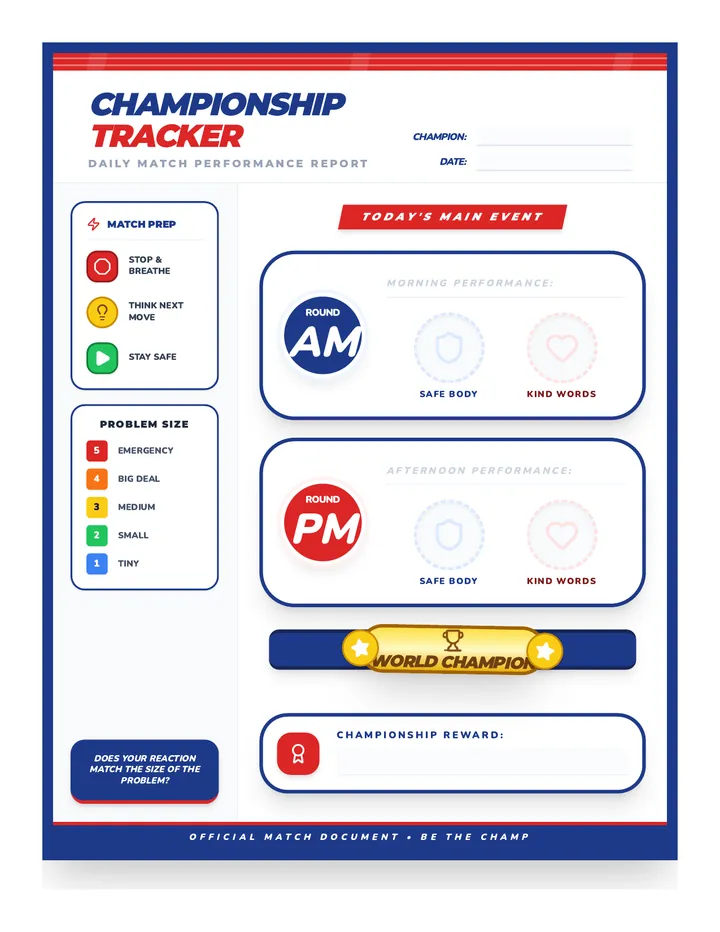
A wrestling-themed behavior tracker optimized for a single 8.5x11 page. It includes AM/PM match rounds with sticker spots for Safe Body and Kind Words, a sidebar with strategy tips and problem levels, and a World Champion title belt section for rewards. All elements are scaled and positioned to ensure a perfect fit without overflow.
A comprehensive two-page Behavior Intervention Plan (BIP) designed to support students experiencing academic anxiety, task avoidance, perfectionism, and shutdown. It provides operational definitions, functional triggers, proactive accommodations, replacement behaviors, a four-stage de-escalation protocol, and measurable progress monitoring metrics.
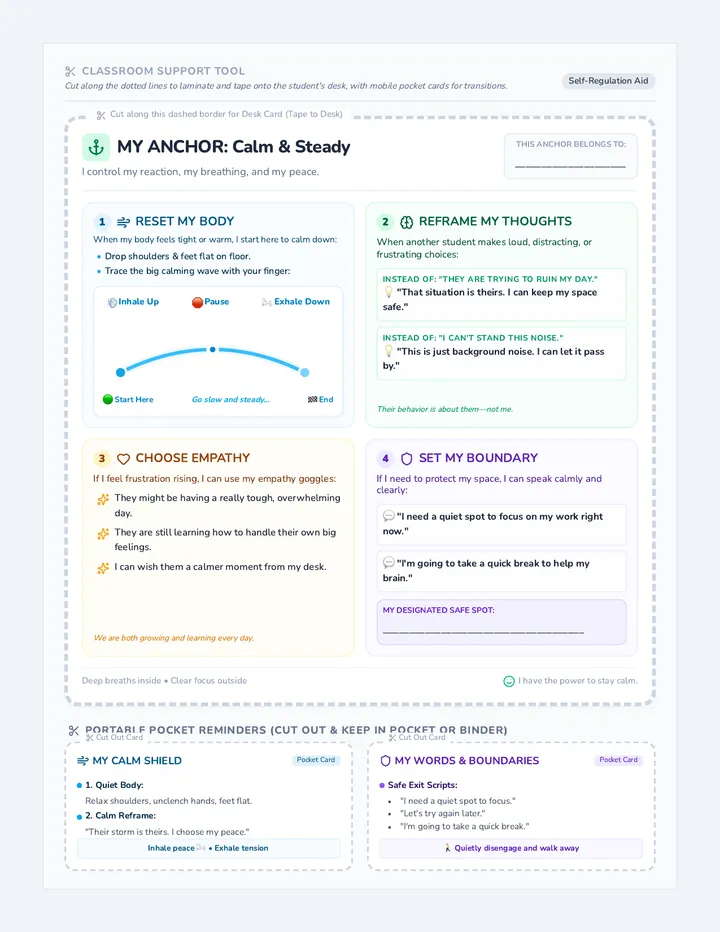
An updated desk-sized anchor chart featuring a much larger, visually prominent finger-tracing wave graphic for physical grounding, paired with neutral reframing scripts, empathy tools, and boundary phrases.
A comprehensive, autism-friendly visual choice board inspired by "What Would Danny Do?" for a third-grade student. It breaks the school day into six key settings with concrete "Power Choices" and calming "Power Resets" to support positive behavior and self-regulation.
A 7-slide morning meeting presentation designed for middle school special education, featuring structured greetings, mood check-ins with sentence stems, share prompts, a daily warm-up puzzle, mindfulness breathing, and daily schedule previews.
A progressive, dinosaur-themed bravery reward chart for children undergoing medical checkups, school tasks, or other scary activities. Features a step-by-step visual path mapping bravery stages, coping strategy cards, and a designated reward drawing space to make stressful experiences manageable.
A single-page visual Green Zone strategies worksheet designed for autistic students, featuring concise iconography, simple language, and a large drawing space for tool selection.
An expanded set of nine large-format printable desk strips with high-contrast visual reminders, including specific calming techniques and a "Safe Choices" strip for unwanted behaviors.
A social story and visual transition toolkit for 3rd graders with autism, teaching a calm 'Save & Pause' routine, coping strategies, and First-Then bridges for ending screen time calmly.
Kindergarten desk visuals kit featuring extra-large life-sized hand placemats for left and right hands, extra-large fonts, and centered visual communication cards.
A beautiful, printable 8-page social story booklet designed for a kindergarten student at Oak Hill Elementary School. It focuses on maintaining a safe body, transitions, using calming words, and utilizing first/then strategies with highly engaging, child-friendly visuals and large, easy-to-read text.
A clean, accessible document listing essential neurodivergent adaptations for workshops, featuring clear visual structure and checkmark icons for readability.
A 6-week social-emotional learning program for teenagers on the autism spectrum, delivered in focused 20-minute sessions. The program uses visual "blueprints" to teach energy management, body awareness, and Comic Strip Conversation techniques for emotional regulation and perspective taking.
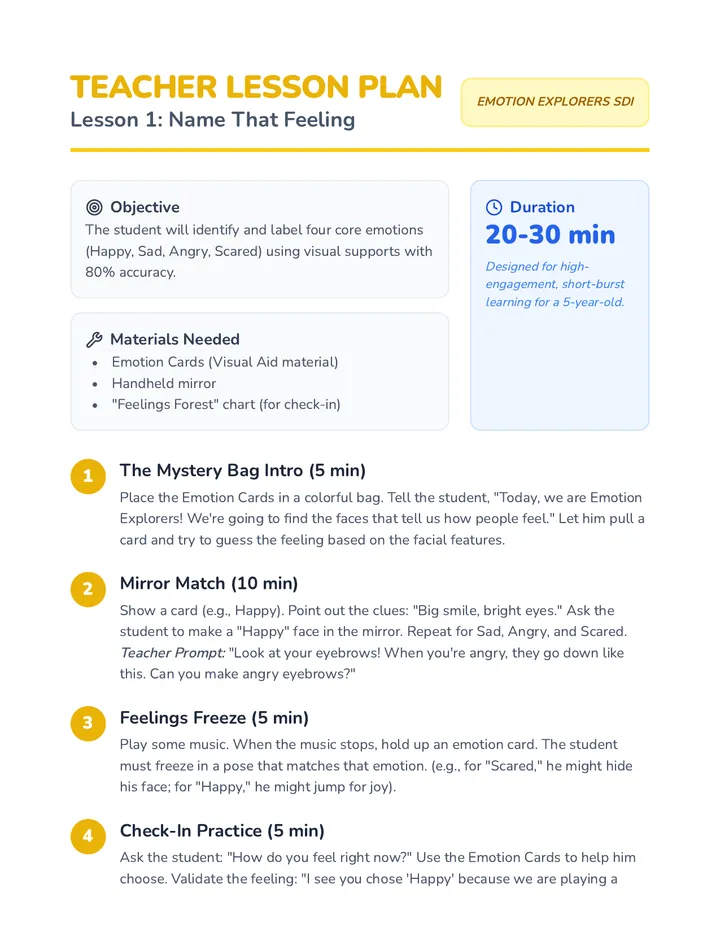
An 8-lesson SDI series designed for a 5-year-old student to develop emotional regulation skills, covering emotion identification, body awareness, and specific calming strategies like breathing and sensory tools.
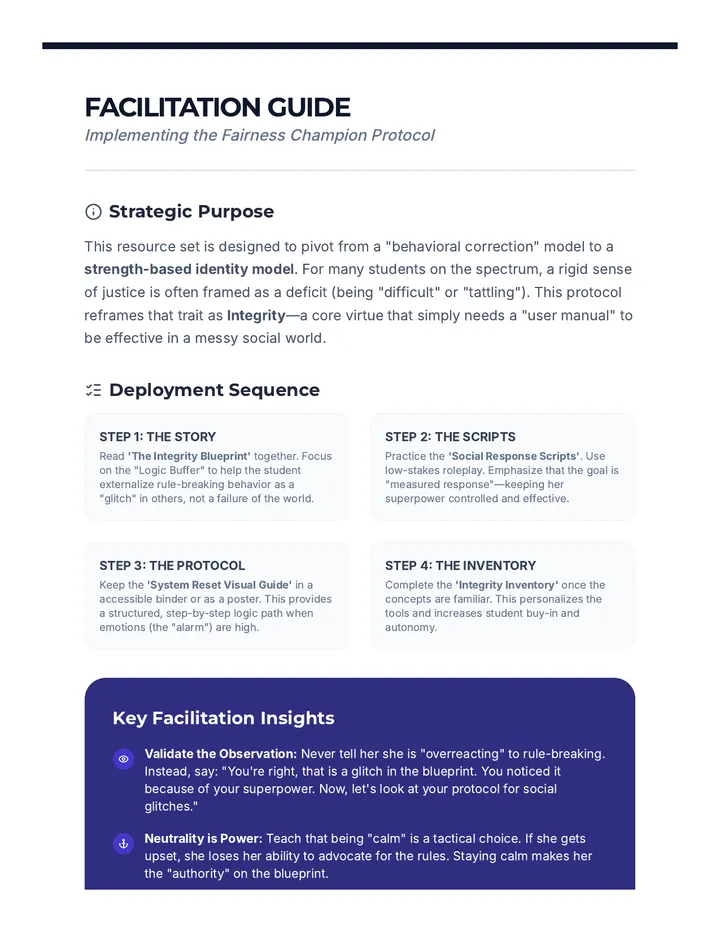
A 6-week social-emotional learning curriculum for a 13-year-old girl on the autism spectrum, focusing on managing specific triggers through a strength-based "Integrity Blueprint" lens.
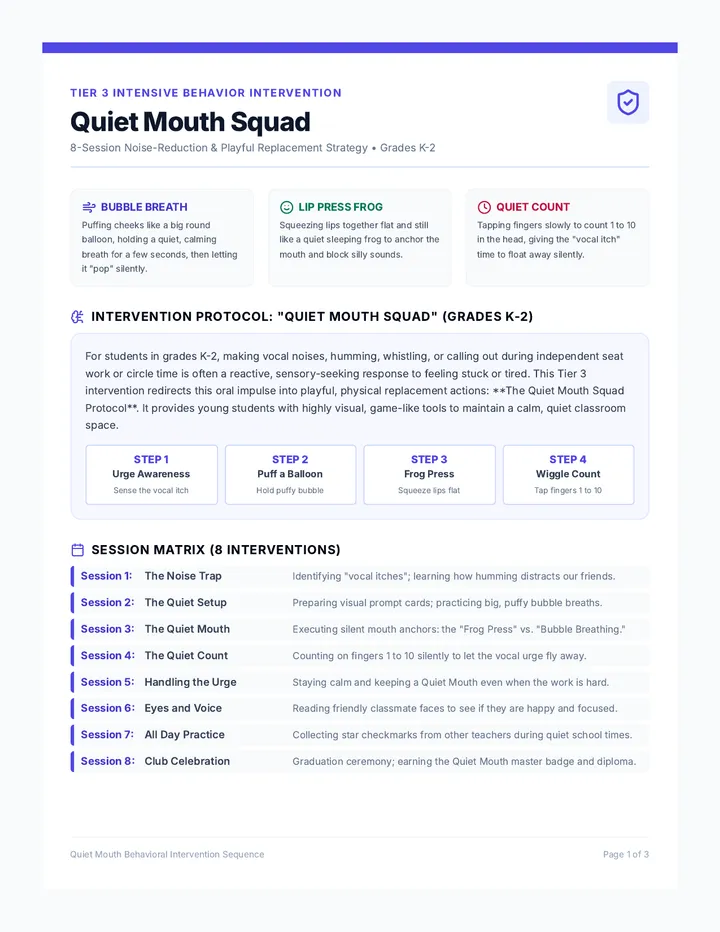
An 8-session intensive behavioral intervention sequence for students in grades K-2 targeting vocal noises, humming, or calling out during independent work. It teaches playful replacement behaviors: holding a quiet, puffy 'Bubble Breath' (like a balloon) or a firm 'Lip Press' (making a flat, silent mouth) to settle urges and maintain classroom focus.
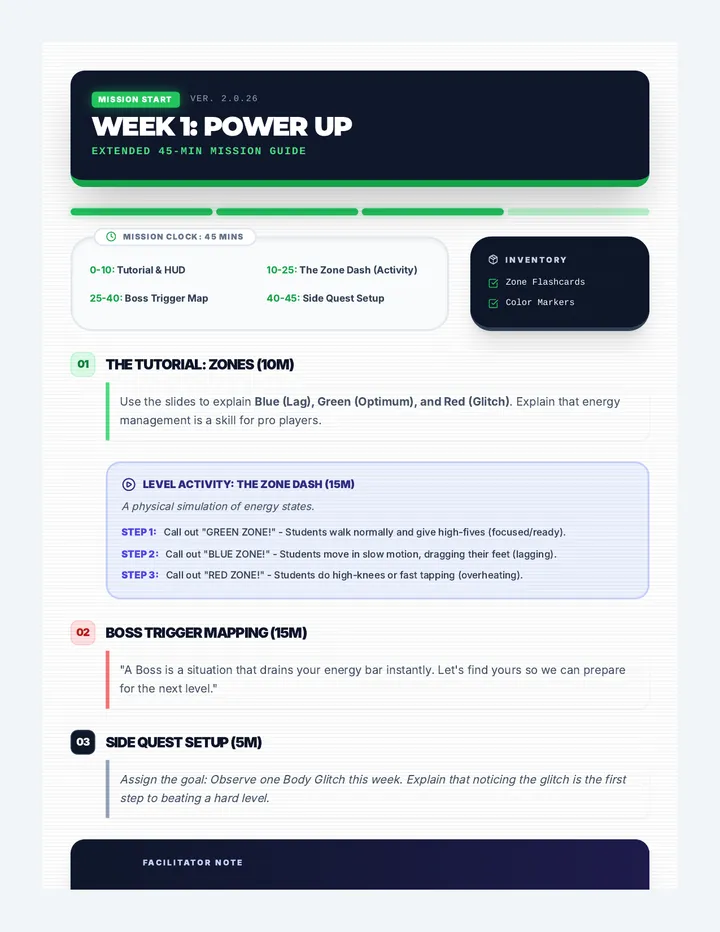
A 6-week social-emotional learning curriculum designed for 4th-grade students with ADHD, focusing on self-regulation, flexible thinking, and respectful communication through a high-engagement 'Level Up' video game theme.
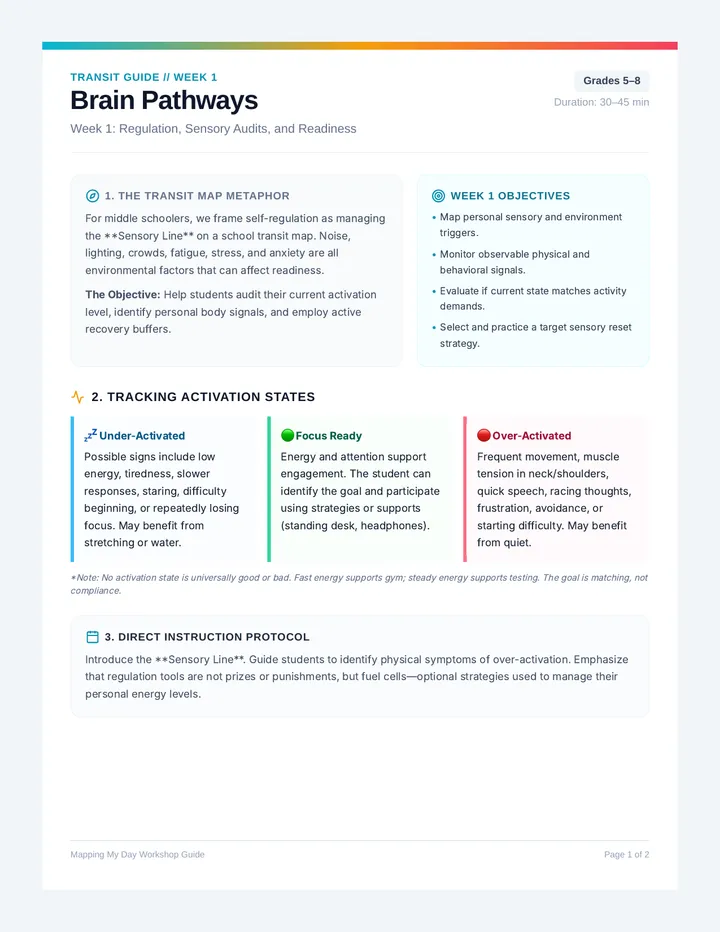
A developmentally scaffolded executive functioning workshop sequence designed to help neurodiverse students across elementary, middle, and high school map and optimize sensory, physical, and cognitive routines.
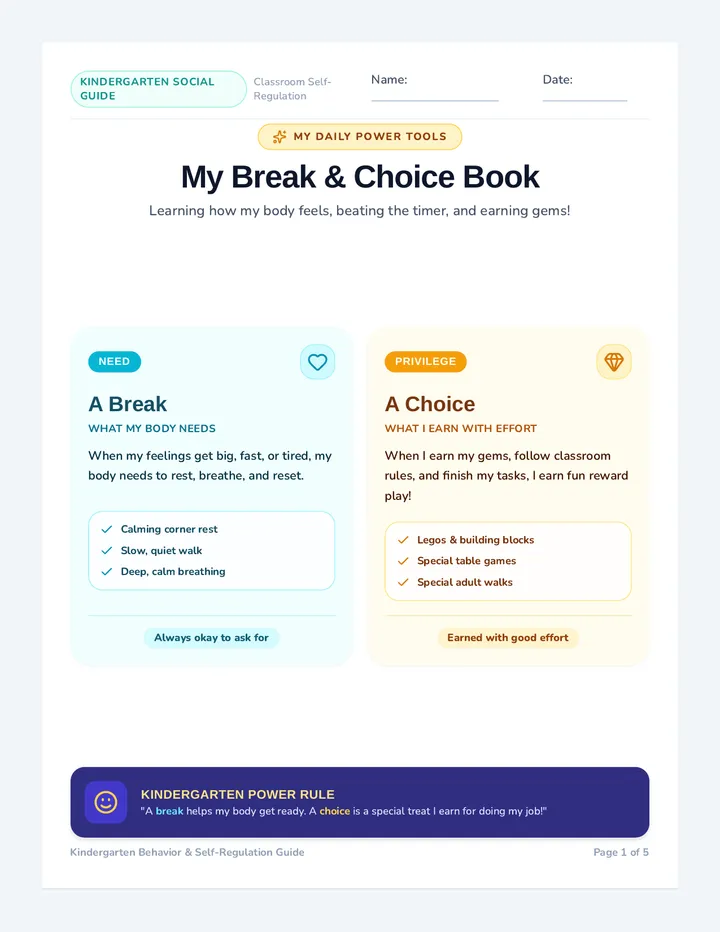
A comprehensive unit on emotional self-regulation, covering the identification of internal states and the application of effective regulation strategies to maintain focus and well-being.
A comprehensive 6-week social skills and problem-solving program designed specifically for 2nd-grade students with ASD. The sequence uses a 'Social Detective' theme to teach self-regulation, perspective taking, empathy, and social problem-solving through visual supports and concrete activities.
A Tier 3 social-emotional curriculum designed for middle school students on the autism spectrum, focusing on self-regulation, social cues, and conflict resolution through a 'Social Architect' theme.
A sequence for 6th-grade students focusing on identifying distractions, designing effective workspaces, and mastering time-management techniques like Pomodoro and single-tasking to improve executive function and focus.
A 10-session social skills curriculum designed for 1st graders with autism and ADHD, focusing on social behaviors, boundaries, and emotional regulation using a "Social Stars" space quest theme.
A Kindergarten sequence focused on building cognitive flexibility and emotional regulation when visual schedules change. Students learn to use specific visuals like 'Oops' cards, substitution icons, and 'Surprise' markers to navigate transitions and unexpected events calmly.
A personalized social story and visual support lesson designed to help Kyrie stay safe in the classroom when sensory triggers occur. It introduces a clear, actionable alternative behavior (walking to the purple square) when he hears the loud pencil sharpener, replacing the unsafe behavior of running out of the room.
A comprehensive behavior tracking system designed for a 1st-grade student struggling with work refusal and transitions. The system uses a 30-minute incremental tracker, visual desk reminders, and a teacher implementation guide to foster safety and academic engagement.
A comprehensive set of tools for teachers and occupational therapists to identify, score, and support students with sensory processing needs. Includes a screening checklist, a simplified scoring guide, and a classroom strategies handout.
A comprehensive Tier 3 behavior support system for a second-grade student with ADHD, focusing on emotion regulation, safe choices, and positive reinforcement through a structured daily check-in/check-out (CICO) process.
A comprehensive lesson designed to help a 3rd-grade student recognize and shift from 'stuck thinking' to 'flexible thinking' during transitions and writing tasks. Includes a social story, role-playing, and tangible strategy cards.
A comprehensive social story and supporting tools designed for an academically advanced 2nd grader to manage non-preferred tasks, transitions, and big emotions using verbal communication and solution-seeking strategies instead of screaming or eloping.
A social-emotional learning lesson designed for 1st grade students with ASD to identify and practice five specific coping skills and create a personalized visual toolbox.
A highly structured lesson on cell structure and function designed for students with IEPs and learning/behavioral disabilities. The lesson uses a 'Tiny Factory' analogy to simplify complex biological concepts and includes integrated behavioral supports like checklists and first/then boards.
A lesson designed to support adults with cognitive decline in nursing home settings, focusing on the social and emotional skills needed to wait for staff assistance patiently.
A comprehensive preparation resource set for Field Day, designed for upper elementary and sensory-sensitive students. It includes a structured, coping-strategy-focused social story booklet and a beautifully organized, visual rotation schedule poster to support seamless transitions.
A lesson designed to help students in behavior support programs identify their current emotional state, recognize triggers, and select appropriate coping strategies for self-regulation.
A sensory regulation routine using self-applied deep pressure to help students ground themselves and manage overstimulation. The lesson includes visual squeeze cards for the student and a facilitation guide for the teaching assistant.