Construction of personalized narratives to explain social situations, cues, and behavioral expectations. Supports neurodivergent students in navigating transitions, routines, and interpersonal interactions.
A simplified 4-page Kindergarten Social Story and desk visual toolkit covering 5 essential expectations: kind words, respectful hands, following teacher directions the first time, raising hands to speak, and staying safely in seat, complete with a printable 5-choice desk strip and daily star tracker.
A 4-page black-and-white printable social story coloring book for a Pre-K student whose mom works in the school building. Highlights their lobby hug, reassuringly explains that Mom misses him too but needs to help other friends, outlines their daily jobs, and celebrates their end-of-day reunion.
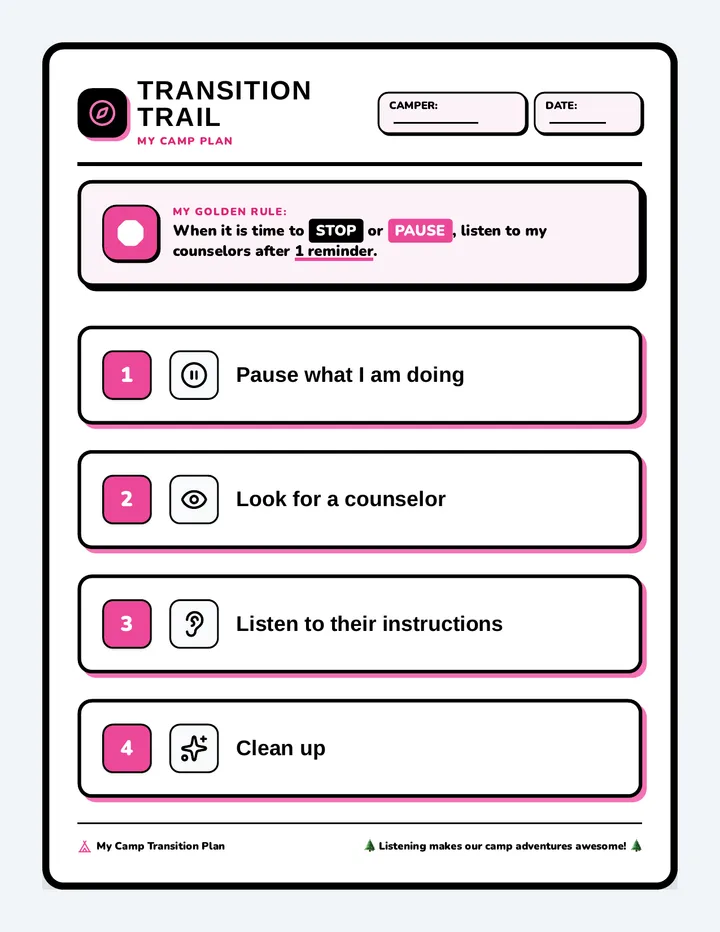
A highly-structured, simplified vertical bullet-list transition visual designed in a bold black-and-white comic style with punchy pink highlights, showing young campers concrete steps to stop, listen, and clean up.
An interactive, elementary-adapted Social Story slide presentation featuring touch-and-count prompts, thumbs up/down sorting games, tactile squeeze practice, flushing rules, and guided participation cues for students with autism and Down syndrome.
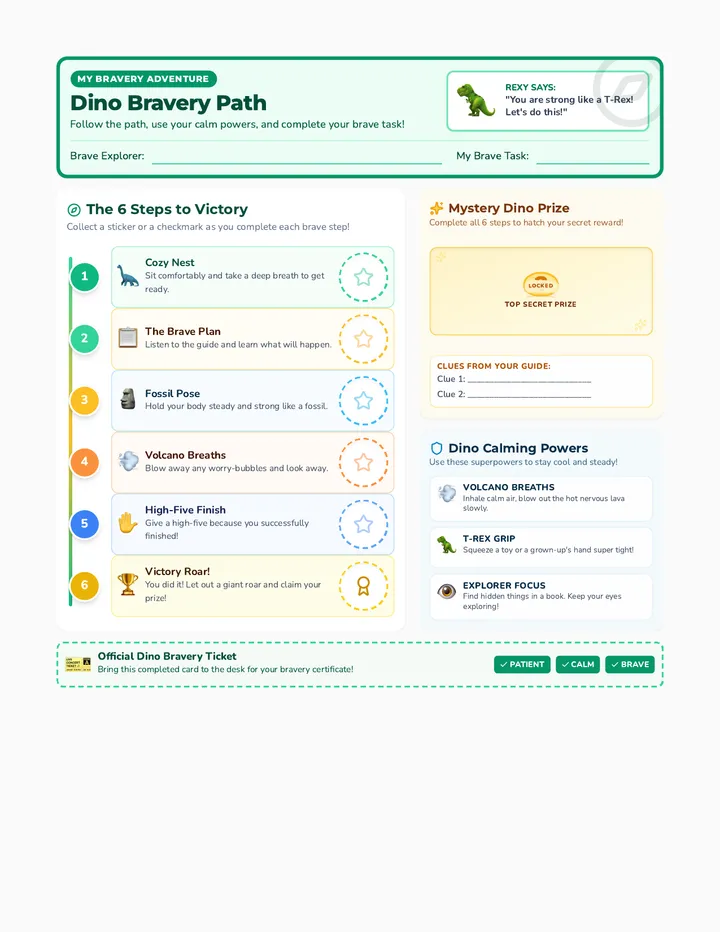
A progressive, dinosaur-themed bravery reward chart for children undergoing medical checkups, school tasks, or other scary activities. Features a step-by-step visual path mapping bravery stages, coping strategy cards, and a designated reward drawing space to make stressful experiences manageable.
A social story and visual transition toolkit for 3rd graders with autism, teaching a calm 'Save & Pause' routine, coping strategies, and First-Then bridges for ending screen time calmly.
A 6-week social-emotional learning program for teenagers on the autism spectrum, delivered in focused 20-minute sessions. The program uses visual "blueprints" to teach energy management, body awareness, and Comic Strip Conversation techniques for emotional regulation and perspective taking.
An 8-week deep dive into Kafka's Metamorphosis for special education students, focusing on abstract thinking, social value, and the human condition through high-engagement activities and visual organizers.
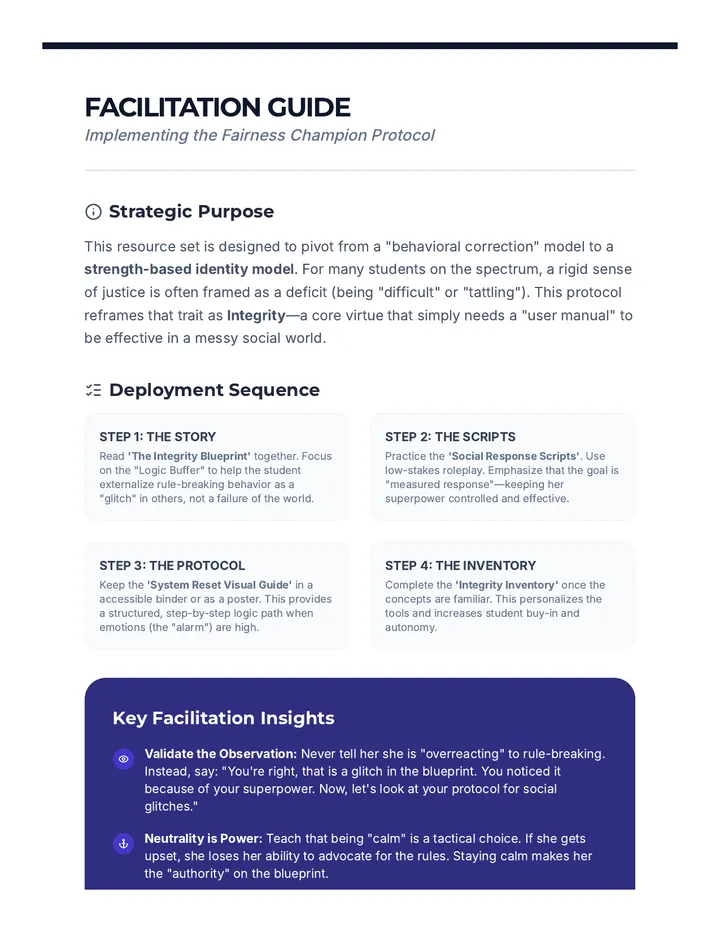
A 6-week social-emotional learning curriculum for a 13-year-old girl on the autism spectrum, focusing on managing specific triggers through a strength-based "Integrity Blueprint" lens.
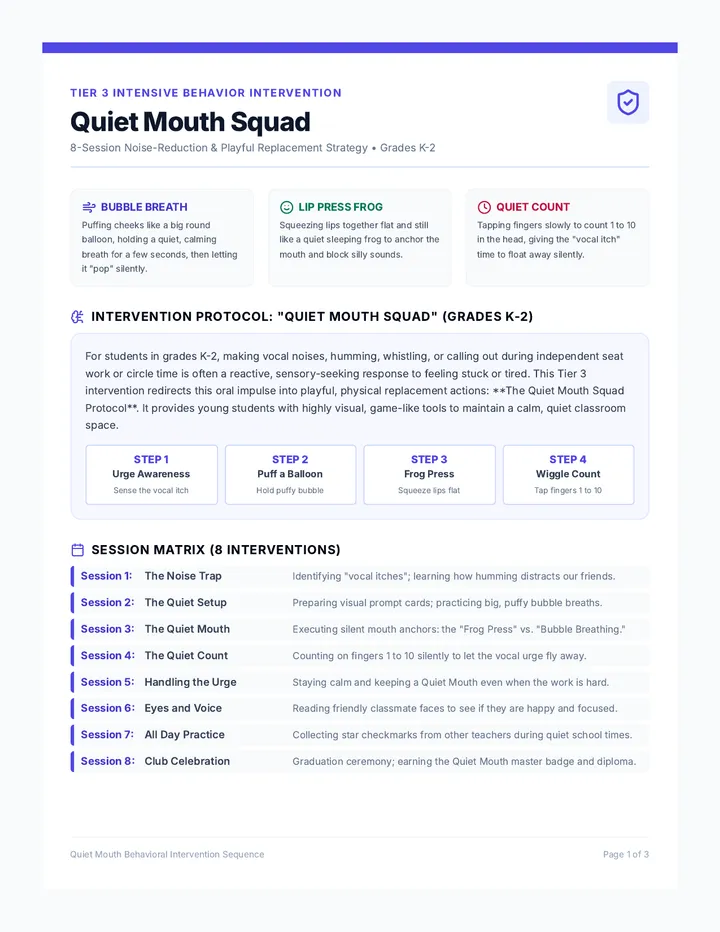
An 8-session intensive behavioral intervention sequence for students in grades K-2 targeting vocal noises, humming, or calling out during independent work. It teaches playful replacement behaviors: holding a quiet, puffy 'Bubble Breath' (like a balloon) or a firm 'Lip Press' (making a flat, silent mouth) to settle urges and maintain classroom focus.
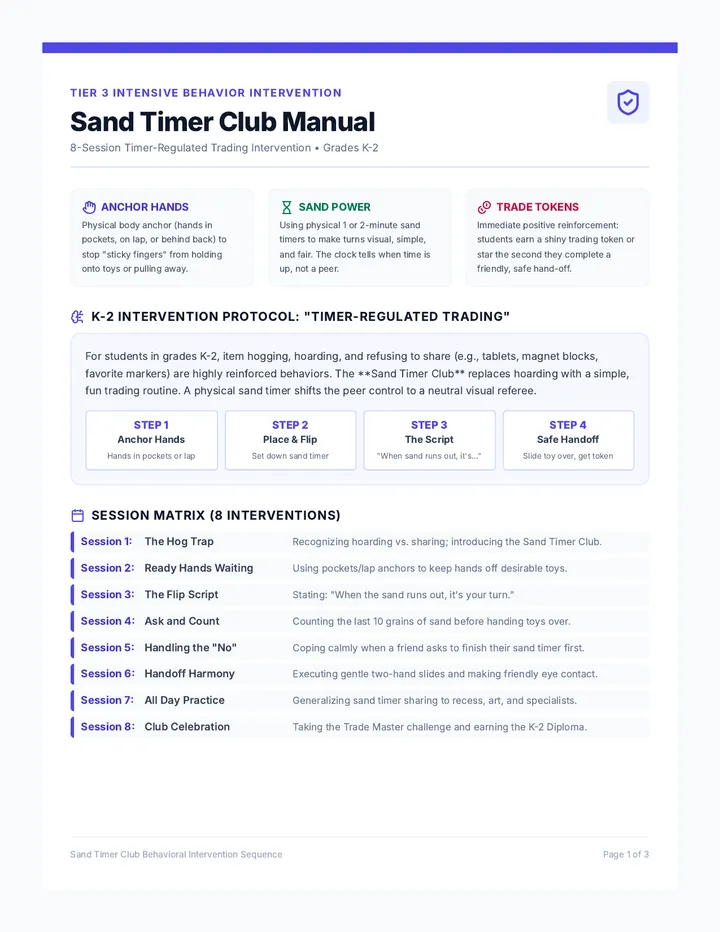
An 8-session intensive behavioral intervention sequence for students in grades K-2. It targets the reduction of item hogging and refusal to share, teaching a 'Timer-Regulated Trading' replacement behavior using sand timers, cooperative scripts, and token hand-offs.
A social-emotional unit for 3rd grade students in inclusive programs, focused on building 'Social Detective' skills. Students learn to scan environmental cues, interpret non-verbal communication, and flexibly adjust their behavior to match the social energy of different contexts.
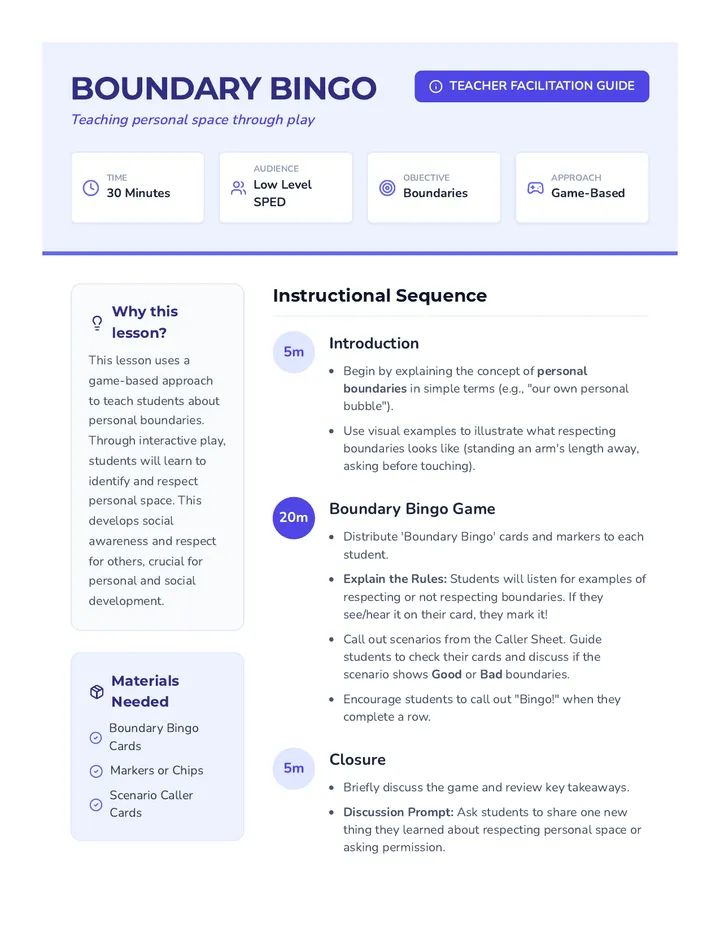
A game-based lesson designed for low-level SPED students to learn about and practice respecting personal boundaries and space through interactive play.
A personalized social story and visual support lesson designed to help Kyrie stay safe in the classroom when sensory triggers occur. It introduces a clear, actionable alternative behavior (walking to the purple square) when he hears the loud pencil sharpener, replacing the unsafe behavior of running out of the room.
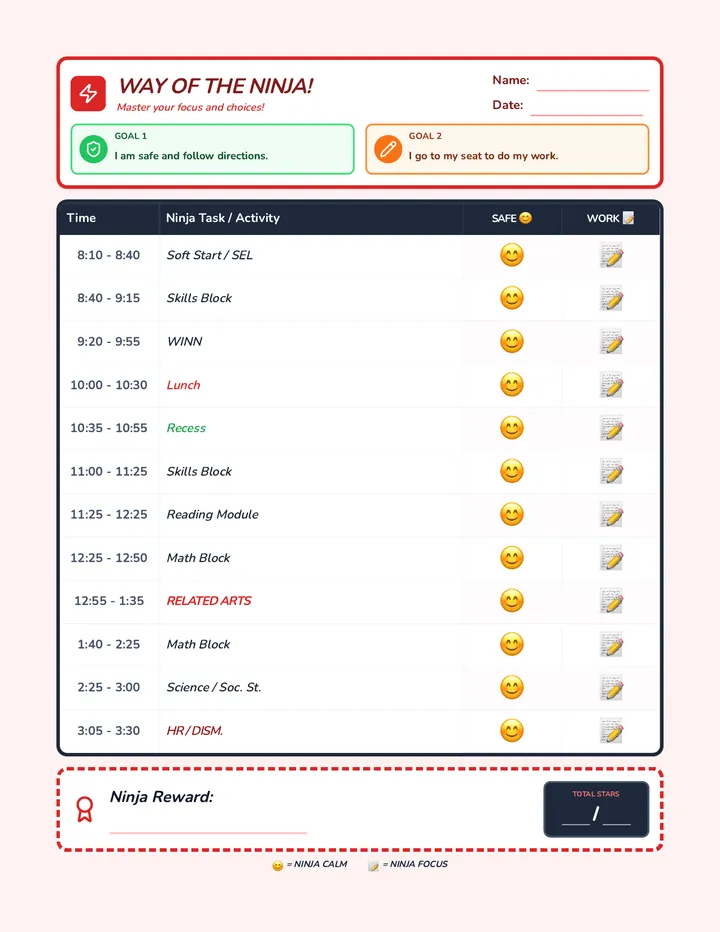
A comprehensive behavior tracking system designed for a 1st-grade student struggling with work refusal and transitions. The system uses a 30-minute incremental tracker, visual desk reminders, and a teacher implementation guide to foster safety and academic engagement.
A 20-minute Tier 1 lesson for exceptional children introducing the concept of personal space bubbles to improve social comfort and reduce task avoidance.
A comprehensive lesson designed to help a 3rd-grade student recognize and shift from 'stuck thinking' to 'flexible thinking' during transitions and writing tasks. Includes a social story, role-playing, and tangible strategy cards.
A comprehensive social story and supporting tools designed for an academically advanced 2nd grader to manage non-preferred tasks, transitions, and big emotions using verbal communication and solution-seeking strategies instead of screaming or eloping.