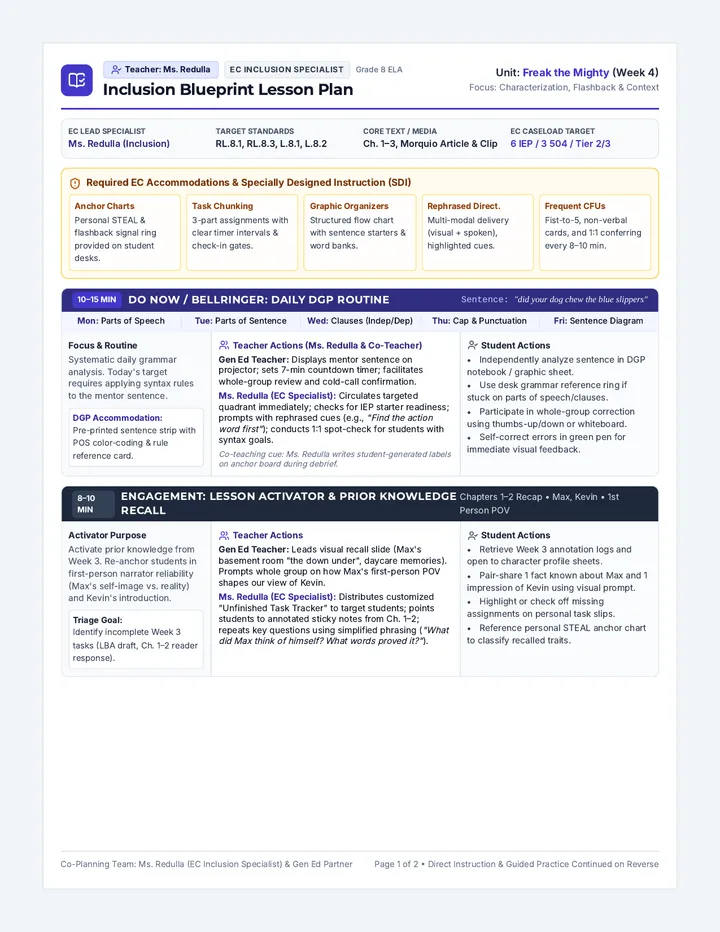
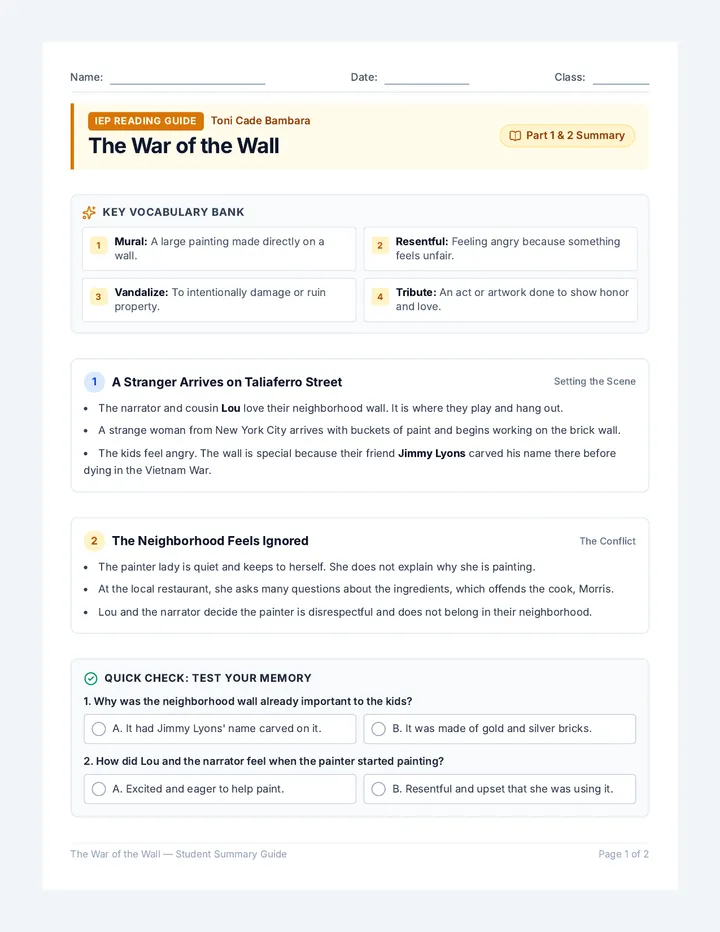
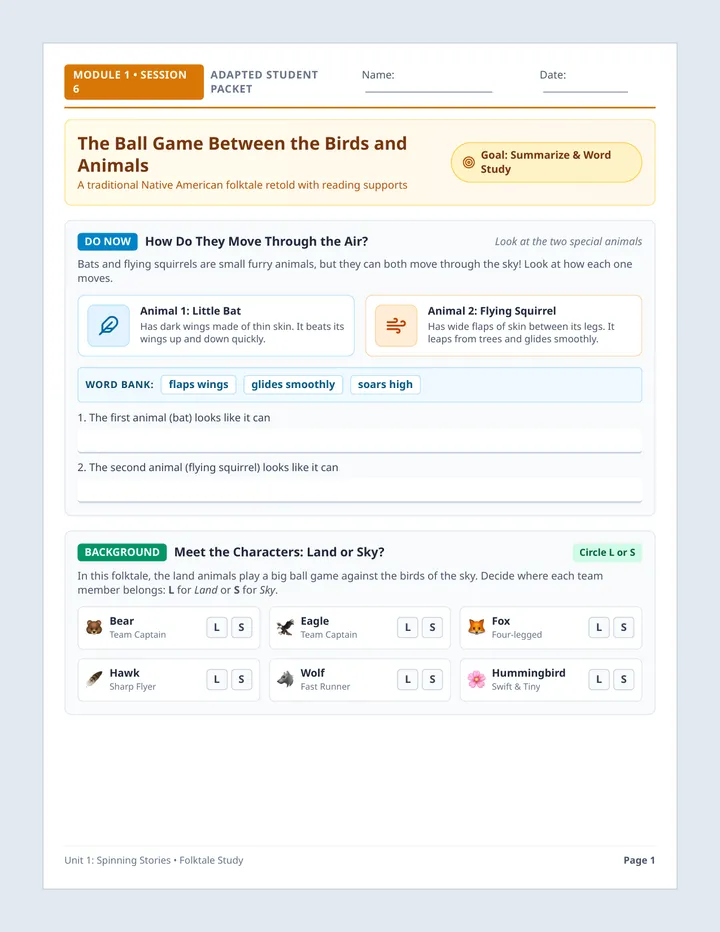
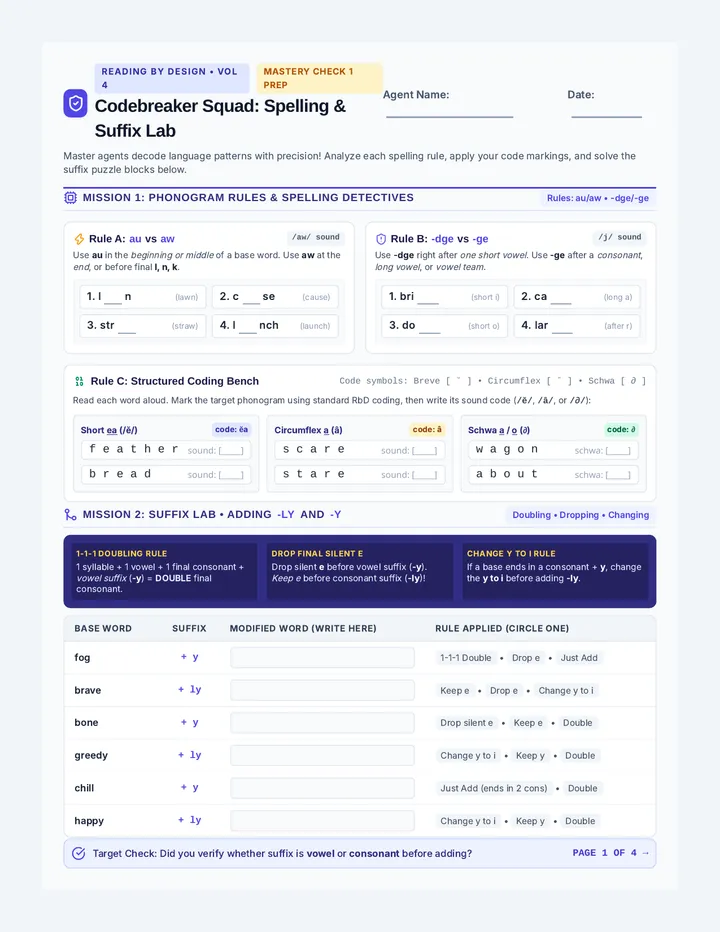
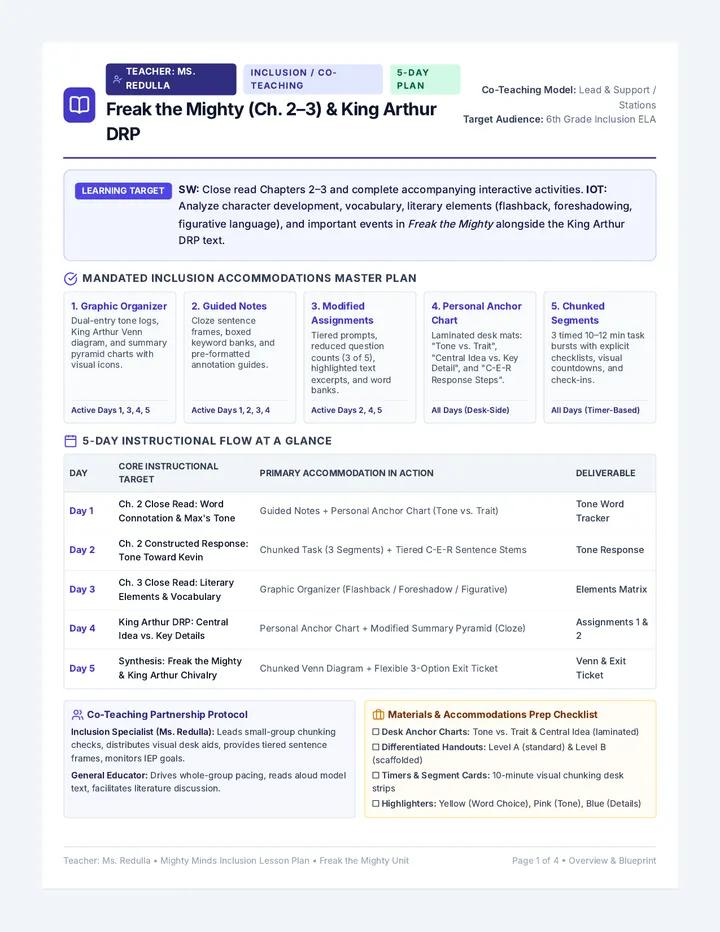
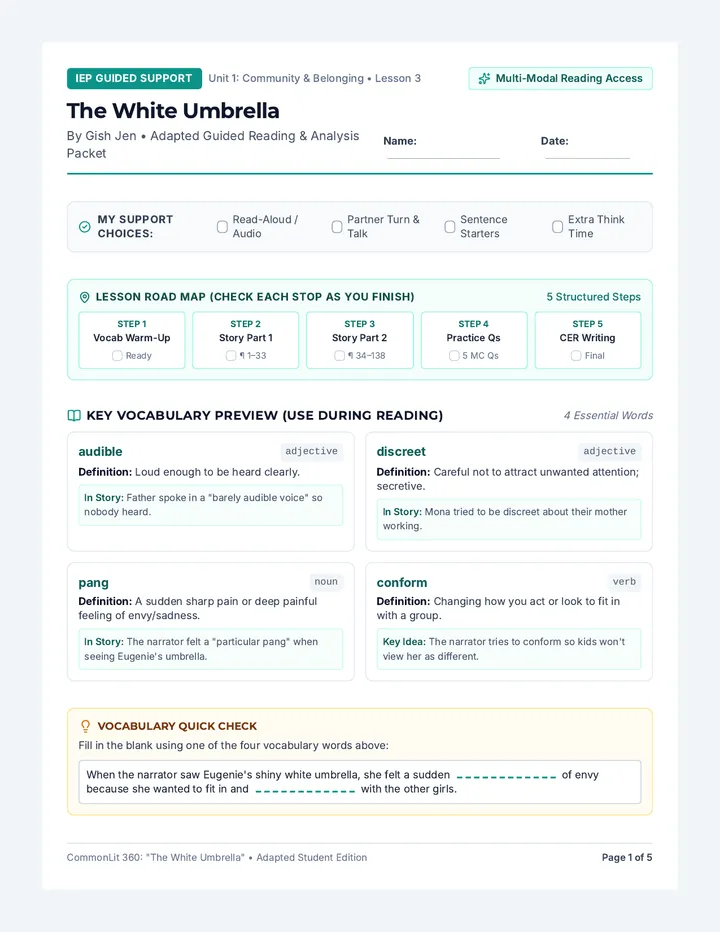
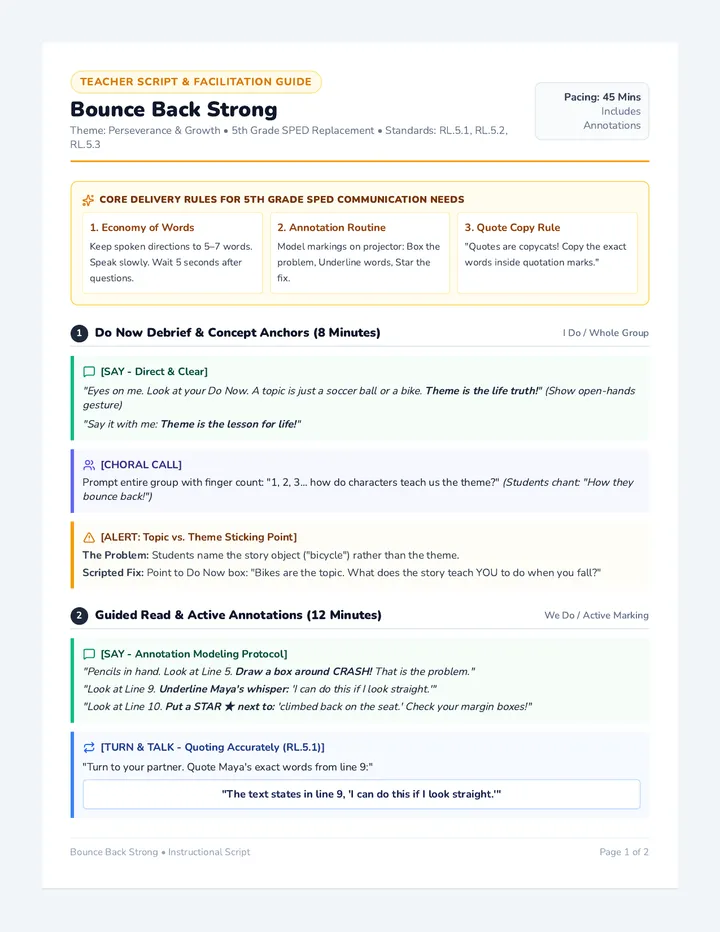
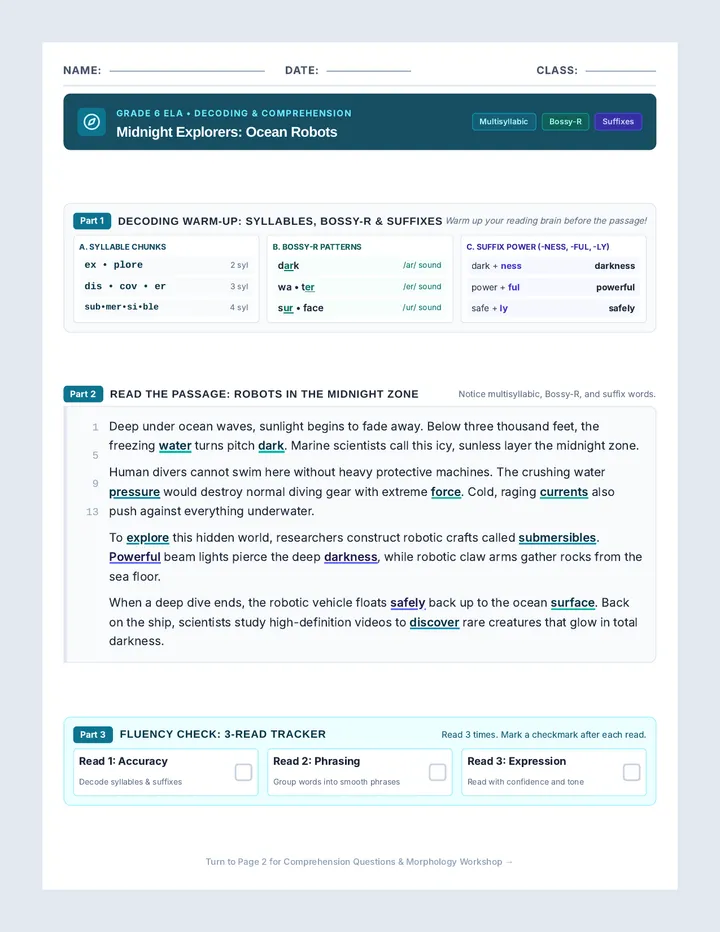
Linguistic scaffolds and fill-in-the-blank structures support students in organizing complex thoughts and formulating academic responses. Facilitates written and oral expression across various subject areas and genres.
Students create a presentation about a topic researched using TTS and reflect on how the tool helped them access information independently.
Students use TTS to read two short articles on the same topic and practice comparing the information heard to build a broader understanding.
Students listen to informational passages and use the pause function to write down key facts, distinguishing between narrative listening and listening for information.
Teaches students how to direct the TTS tool to read non-linear elements like captions, diagrams, and sidebars rather than just the main body text.
Students practice using TTS to decode specific domain-specific vocabulary by highlighting difficult words to hear the pronunciation and building oral fluency through repetition.
Students listen to two contrasting viewpoints on a topic using TTS and synthesize the information into a coherent summary. This tests their ability to maintain focus and organize auditory information over a longer duration.
Students encounter challenging vocabulary words within a text. They use TTS to hear proper pronunciation and use context clues from the audio flow to define words before checking definitions.
This lesson introduces graphic organizers designed for auditory learners. Students practice listening to a TTS-read article and simultaneously mapping out key ideas and supporting details.
Students learn the 'Stop and Think' method, using the pause button to break dense text into manageable chunks. They practice paraphrasing orally or in writing after every segment played by the TTS tool.
Students compare retention when passively listening to TTS versus active engagement. They identify distractions and brainstorm environments and behaviors that support deep listening.
Students practice taking notes while listening to an educational article. They pause the audio to write down key facts, combining listening comprehension with note-taking skills.
Students conduct a mini-research project on a topic of interest using TTS to access articles that might be above their independent reading level. They practice gathering facts via audio.
A comprehensive teacher guide for Lesson 5, focusing on student presentation of facts and reflection on the utility of text-to-speech technology.
A presentation planning worksheet for Lesson 5 where students outline a fact learned through text-to-speech and reflect on the specific tools and methods they used.
A slide deck for Lesson 5, guiding 3rd-grade students through the process of presenting a fact learned via text-to-speech and reflecting on the utility of the tool.
A comprehensive teacher guide for Lesson 4, focusing on teaching students to use text-to-speech to compare and contrast informational sources.
A comparison worksheet for Lesson 4 where students use text-to-speech to read and compare two sources about sharks and dolphins. Includes a structured comparison log and a synthesis question.
A slide deck teaching 3rd-grade students how to use text-to-speech to conduct research by comparing two informational sources on the same topic.
A comprehensive teacher guide for Lesson 3, focusing on teaching students to use the pause function of TTS for note-taking and informational synthesis.
A reporter-style worksheet for Lesson 3 where students use the text-to-speech pause function to collect facts from a news article about Mars. Includes segmented text and dedicated fact collection areas.
Final assessment worksheet for Lesson 5, challenging students to map two contrasting auditory viewpoints and synthesize them into a coherent written summary.
A slide deck teaching 3rd-grade students how to use the 'pause' function of text-to-speech tools to take notes and gather facts from informational text.
Teacher guide for Lesson 5, outlining the final synthesis task and providing a step-by-step facilitation plan for the culminating lesson.
Slide deck for Lesson 5: Synthesizing Auditory Information, introducing the final challenge of summarizing contrasting viewpoints using all previous auditory strategies.
A 5-lesson sequence designed for 3rd-grade students to master the use of text-to-speech (TTS) technology for decoding informational texts, academic vocabulary, and non-linear text features like captions and sidebars. Students progress from decoding individual words to synthesizing information from multiple sources for research and presentation.
This sequence shifts the focus from assistive technology to the cognitive strategies required for auditory learning. Students engage in inquiry-based activities to distinguish between passive hearing and active listening, applying specific comprehension strategies while using text-to-speech (TTS) to access grade-level texts.
A comprehensive sequence for 4th-grade students to master Text-to-Speech (TTS) assistive technology. Students learn to navigate complex text features, clean up cluttered webpages, tackle math word problems, conduct research, and take effective notes using auditory tools.
A comprehensive graduate-level sequence focused on the pedagogical implementation of assistive writing technology. It shifts the focus from tool selection to instructional methodologies that scaffold digital organizers, dictation, and text-to-speech for student autonomy.
This graduate-level sequence prepares educators to evaluate and select assistive writing technologies using evidence-based frameworks like SETT. It covers the neurology of dysgraphia, technical analysis of speech-to-text and word prediction, and the legal requirements for IEP implementation.
This sequence empowers 9th-grade students to integrate Text-to-Speech (TTS) into their high school workflows through self-advocacy and digital organization. Students move from identifying reading barriers in their schedules to creating a professional Access Plan for their teachers.
A 5-lesson sequence for 7th-grade students focusing on text-to-speech (TTS) as a tool for writing revision and a foundation for self-advocacy. Students progress from technical editing skills to understanding neurodiversity and communicating their accommodation needs to others.
This sequence explores how graduate students can leverage assistive technology for digital annotation, moving from basic tool audits to advanced data extraction and AI integration to support students with disabilities.
A 2nd-grade special education unit focused on executive function. Students learn to recognize the physical signs of being 'stuck' and categorize barriers into materials, comprehension, and environment.
A 10th-grade sequence focusing on the cognitive and analytical applications of Text-to-Speech (TTS). Students transition from using TTS as a basic accommodation to leveraging it as a sophisticated tool for proofreading, literary analysis, and research efficiency, culminating in a self-advocacy project.
A 5-lesson sequence designed for 6th-grade special education students to master text highlighting and annotation. Students act as 'Text Detectives' to identify, scan, categorize, and evaluate textual evidence to support argumentative writing.
This sequence prepares pre-service teachers to evaluate, select, and implement assistive technology (AT) tools specifically designed for students with dysgraphia and physical motor impairments. Students will move from understanding neurological barriers to designing comprehensive, data-driven AT implementation plans.