Foundational techniques in theater, music, dance, and visual arts alongside strategies for creative thinking. Examines the relationship between artistic expression and societal development.
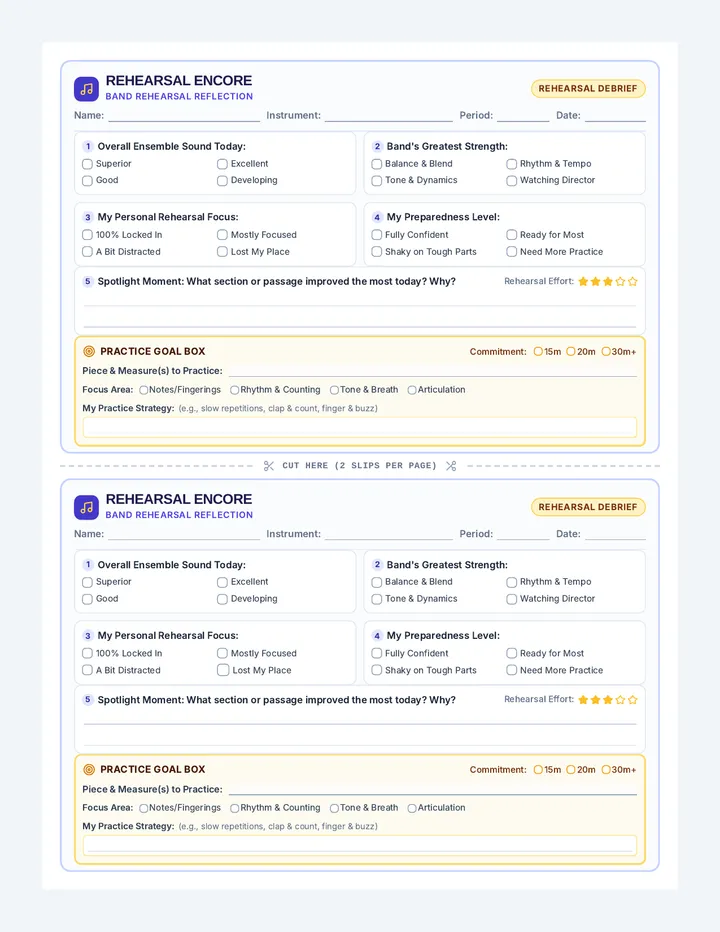
A printable half-page rehearsal reflection handout for band students, formatted two-up per page with a cut line. It includes multiple-choice questions assessing ensemble rehearsal sound and personal engagement, a spotlight moment reflection, and a structured practice goal box for focused home practice.
Removed all references to voice and singing from the bonus question, focusing exclusively on physical musical instruments and their mechanics.
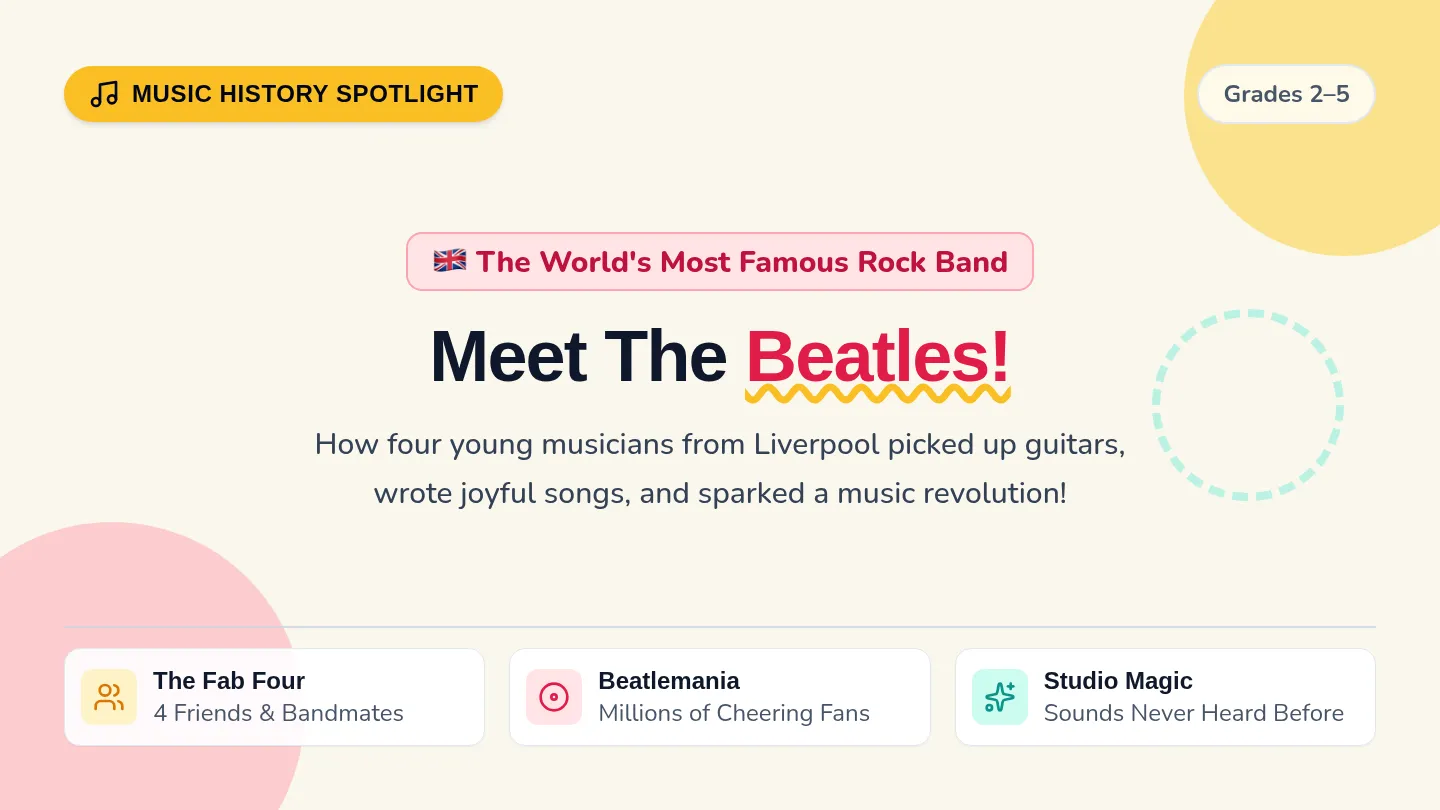
An engaging elementary-friendly presentation introducing The Beatles, featuring a direct photo and dedicated spotlight of John Lennon, member profiles, Liverpool origins, Beatlemania, and iconic songs.
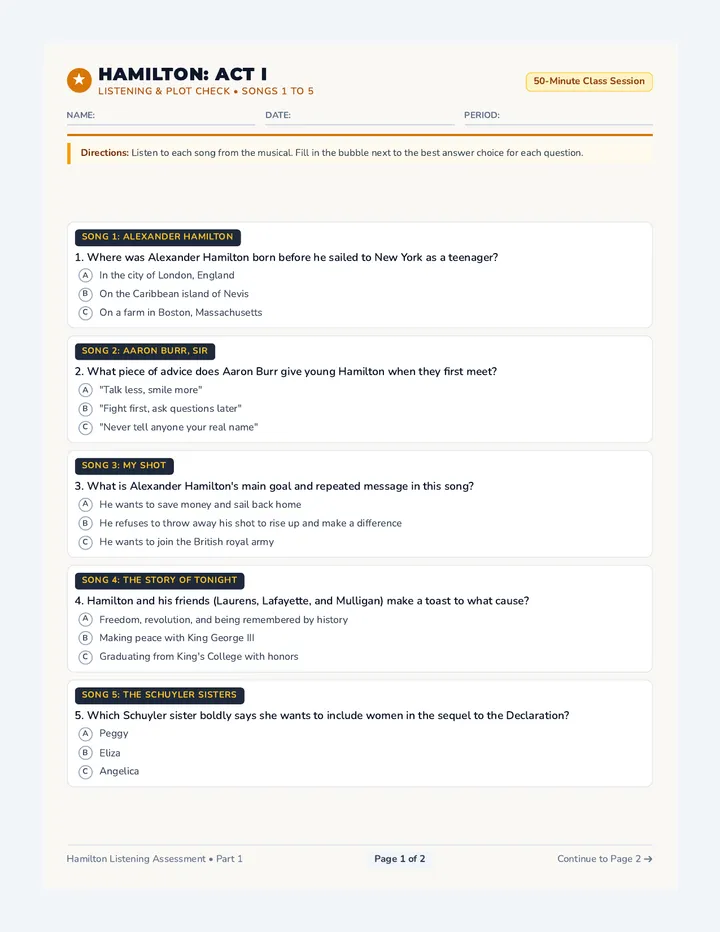
A print-ready two-page multiple choice listening worksheet covering the first 10 songs in Hamilton, designed specifically for eighth-grade self-contained learners with clear song anchors, accessible three-option multiple choice questions, and a reflection prompt.
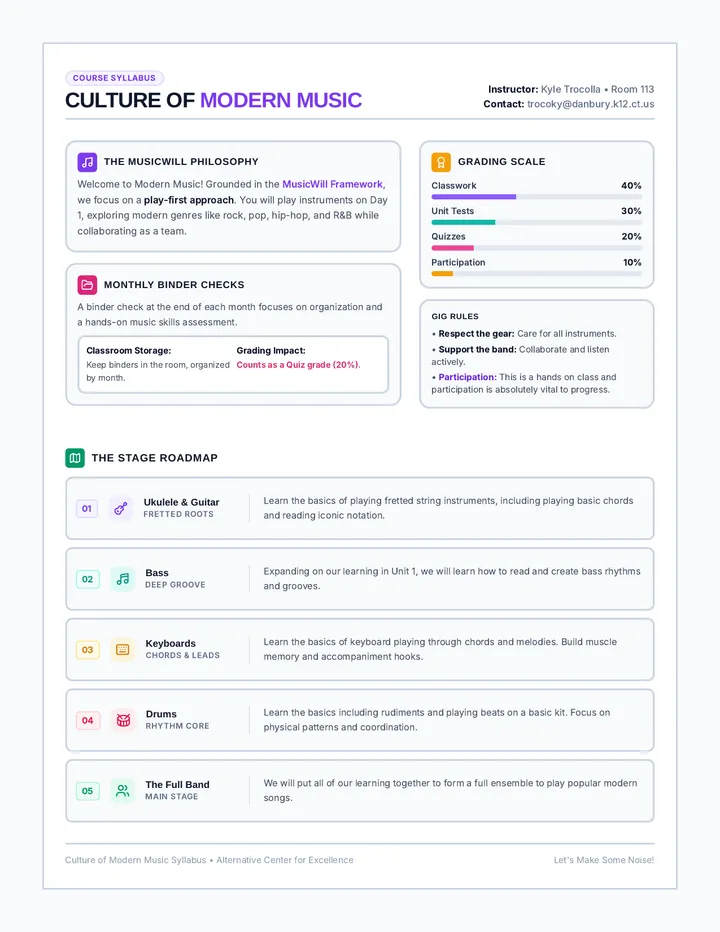
A highly polished, single-page infographic-style syllabus for the 'Culture of Modern Music' course taught by Kyle Trocolla in Room 113. Based on the MusicWill Framework with a clean white background, a visual grading breakdown, monthly binder checks, and a 5-unit roadmap of student progress.
A 3-step music listening and drawing worksheet for K-4 students to visualize, detail, and color what they hear in any musical piece, featuring expanded feeling options with clear instructions and a full-width title frame.
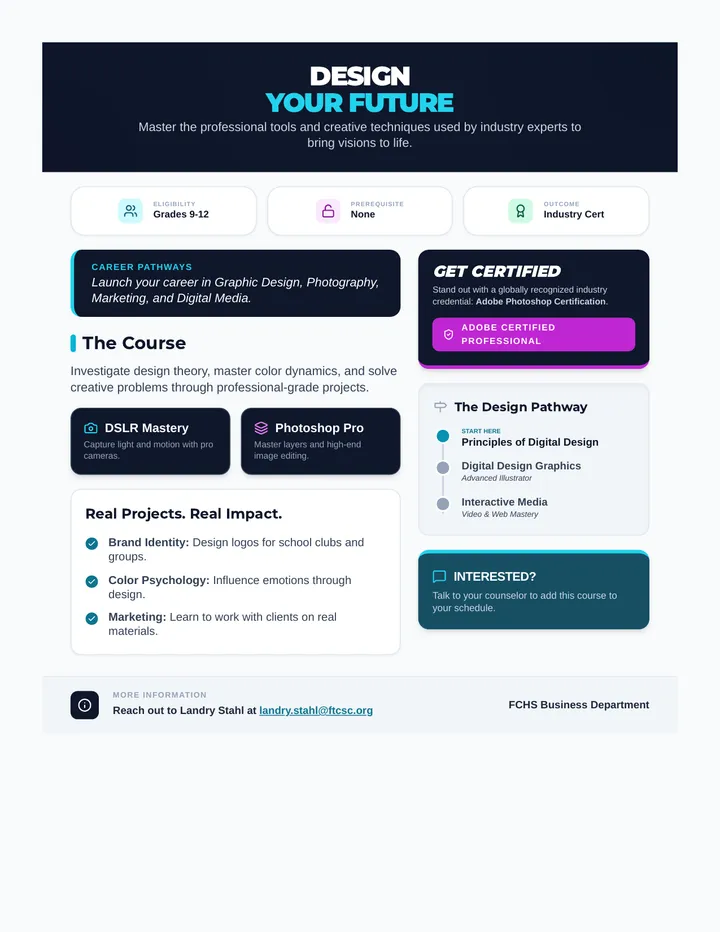
A high-contrast, modern informational flyer for the Principles of Digital Design course, highlighting Photoshop certification, DSLR photography, and career pathways. This version is optimized for single-page printing, with tightened margins to accommodate contact information and counselor recommendations.
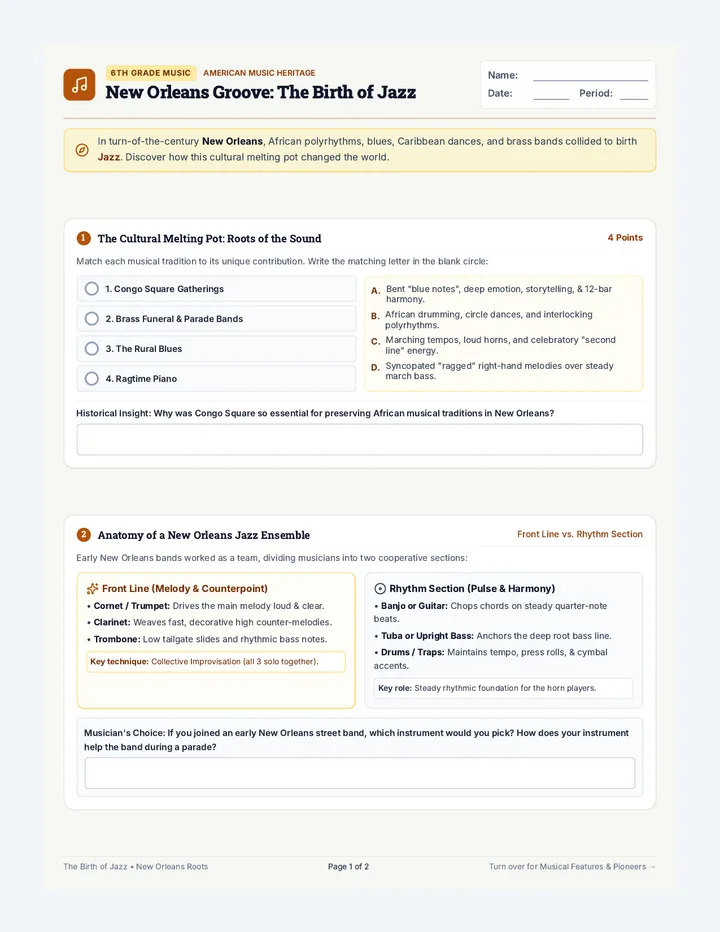
A two-page interactive 6th-grade music worksheet exploring the birth of jazz in New Orleans. Students investigate cultural roots in Congo Square, early ensemble instrumentation, core musical elements like syncopation and improvisation, and pioneering musicians including Louis Armstrong and Jelly Roll Morton.
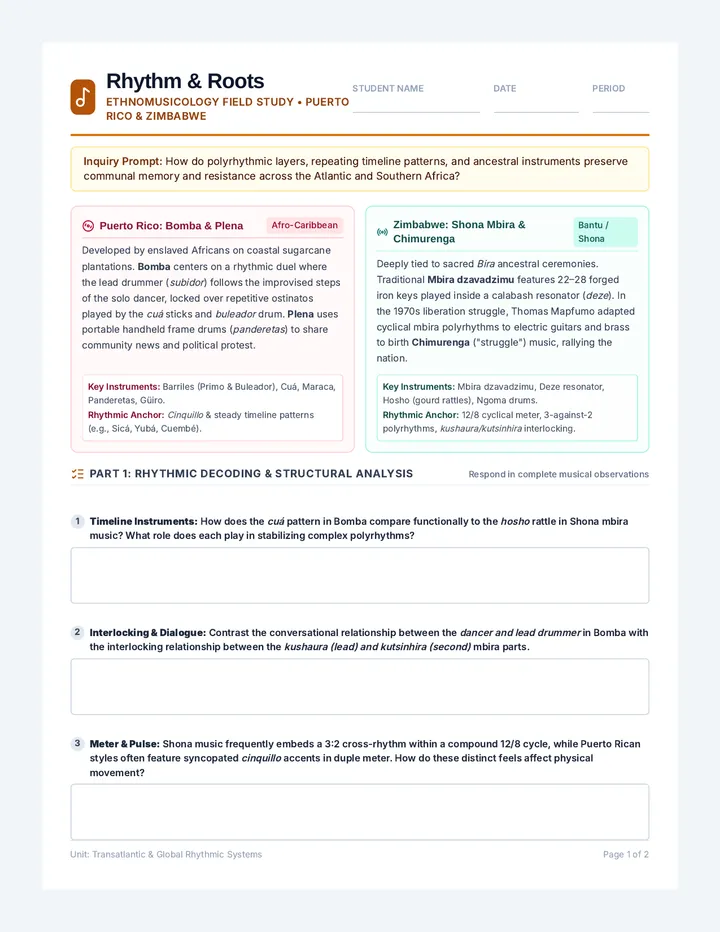
A two-page music analysis worksheet comparing the rhythmic structures, instruments, and cultural traditions of Puerto Rican Bomba and Plena with Zimbabwean Shona Mbira and Chimurenga music.
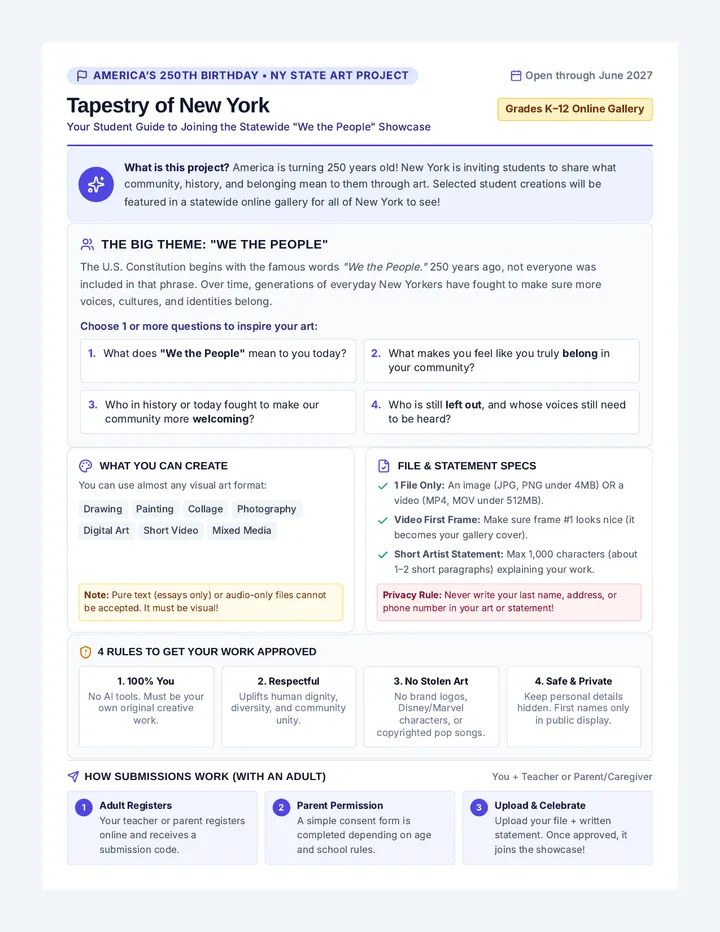
A 2-page middle school project guide and planning worksheet for New York's 'We the People' 250th anniversary statewide art project. Page 1 simplifies the background, creative options, rules, and submission process, while Page 2 provides a step-by-step brainstorm organizer and artist statement drafting space.
Présentation PowerPoint de 6 diapositives sur le thème d'Halloween, intégrant des objectifs pédagogiques clairs, des repères concrets et un quiz d'évaluation final de 5 questions à choix multiples.
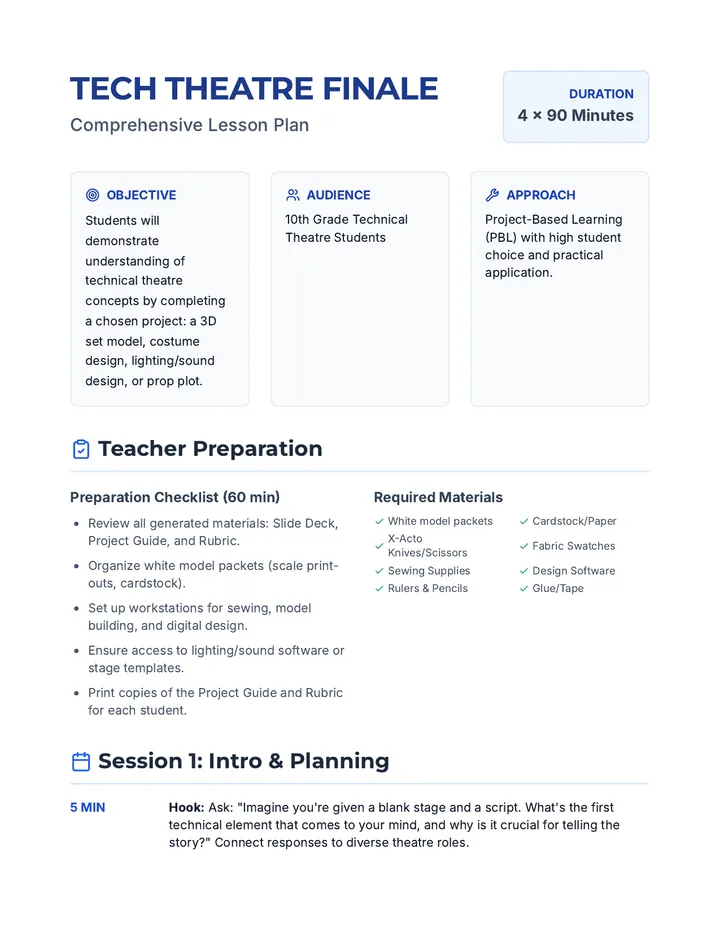
A 4-session project-based final exam where 10th-grade students demonstrate technical theatre mastery through set, costume, lighting, sound, or prop design.
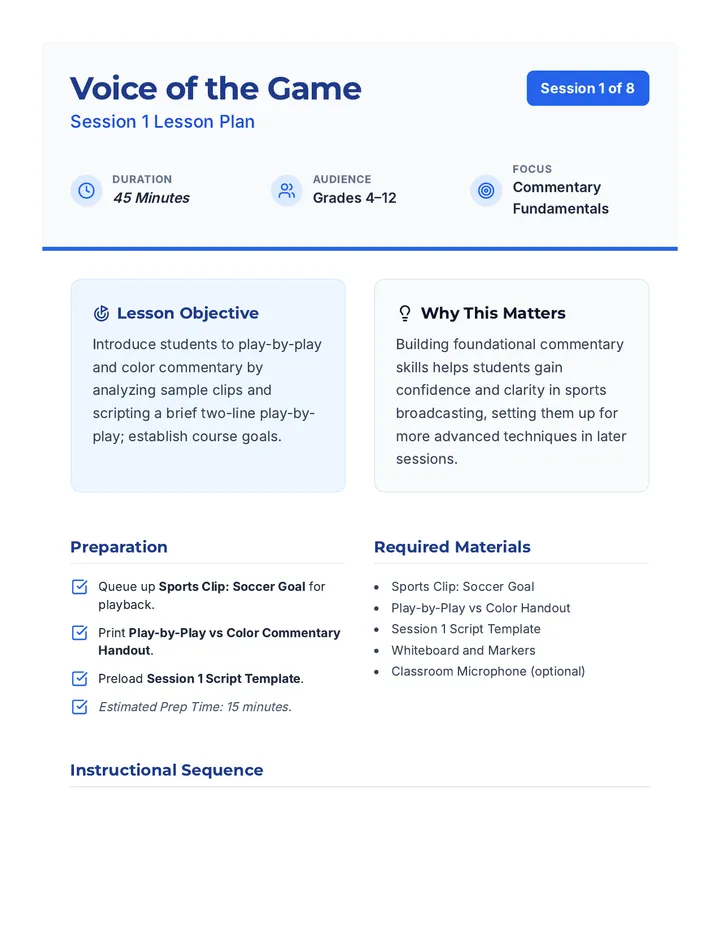
An 8-session sports broadcasting course for grades 4–12, covering play-by-play, color commentary, interviewing, camera work, audio mixing, and live production directing. Students progress from foundational vocal skills to a complete capstone broadcast project.
A 5-lesson sequence for 5th graders exploring how color, typography, and layout influence audience perception. Students move from design theory to the creation and critique of an informational digital poster.
This hands-on sequence introduces 4th graders to the visual and engineering side of theater. Students analyze scripts to design environments, draft scale floor plans, build 3D scenic models, and fabricate props, emphasizing spatial reasoning and storytelling through physical space.
A comprehensive introduction to digital graphic design and typography for 10th-grade students. This sequence bridges the gap between traditional art and modern vector-based technology, focusing on anatomy, hierarchy, logo design, and print preparation.
Students investigate how costumes and properties (props) function as tools for character development and storytelling. The sequence guides students through the process of distinguishing between prop types, exploring costume psychology, fabricating safe props, and mastering backstage organization.
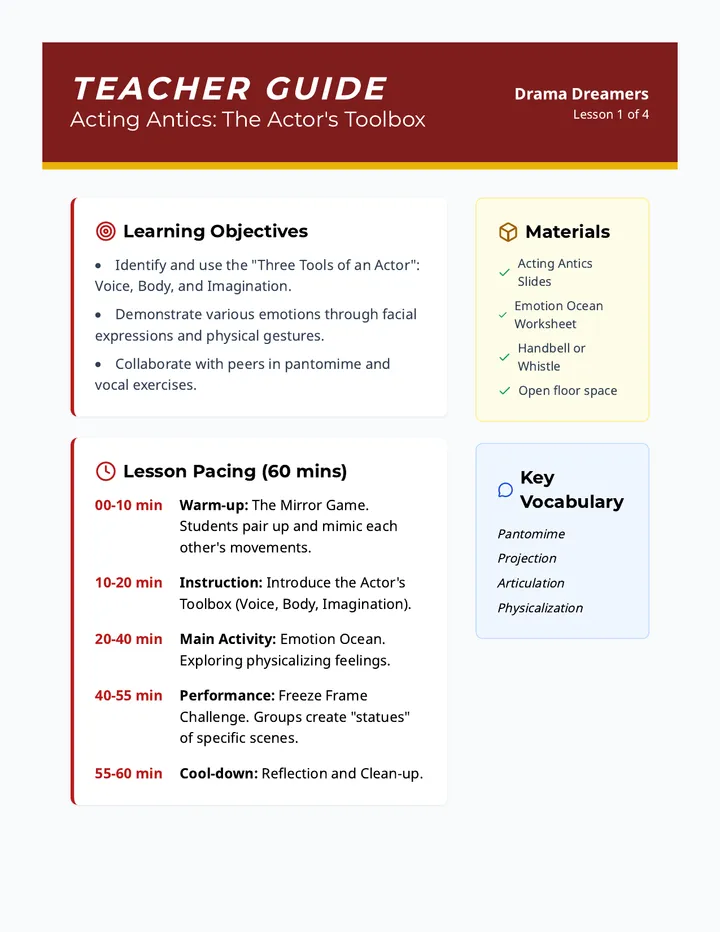
A comprehensive introduction to theater for elementary students, covering acting techniques, playwriting, stage types, theater history, and technical "behind the scenes" magic. Students move from basic expression to designing and performing with confidence.
An advanced technical theater sequence for graduate students exploring the intersection of light physics, human perception, and visual storytelling. Students move from the biological mechanics of the eye to high-level system integration and dramaturgy.
This sequence introduces 5th-grade students to the world of technical theater through the lens of scenic design. Students progress from learning stage geography to analyzing scripts, drafting floor plans, and ultimately building a 3D scale model (maquette) of their own set design.
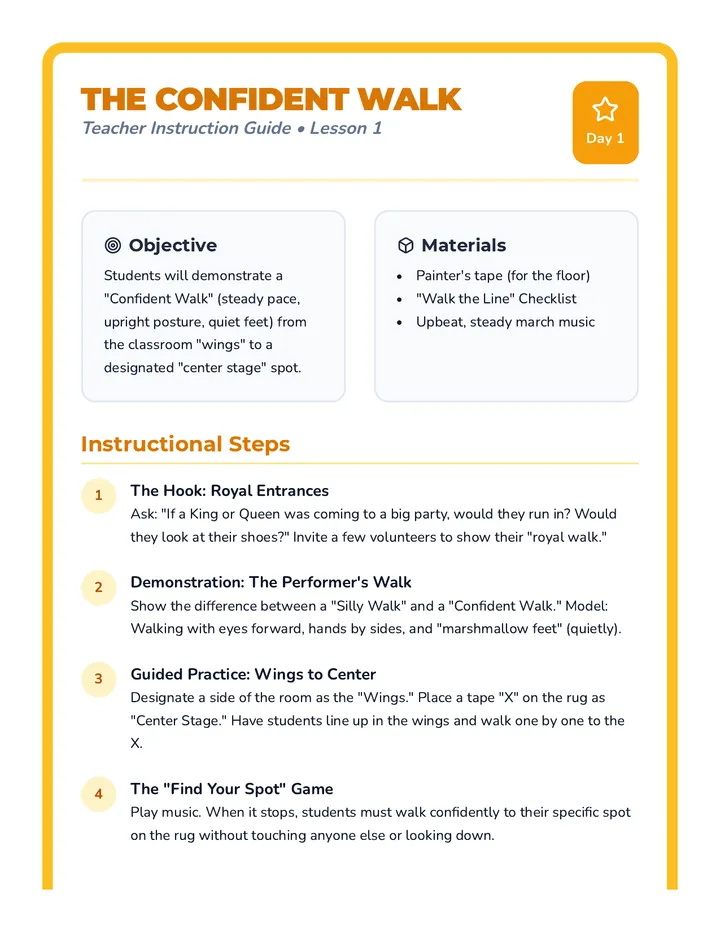
A Kindergarten music sequence focused on stage presence, performance routine, and building confidence through role-play and preparation. Students learn the full cycle of a performance, from walking on stage to the final bow.
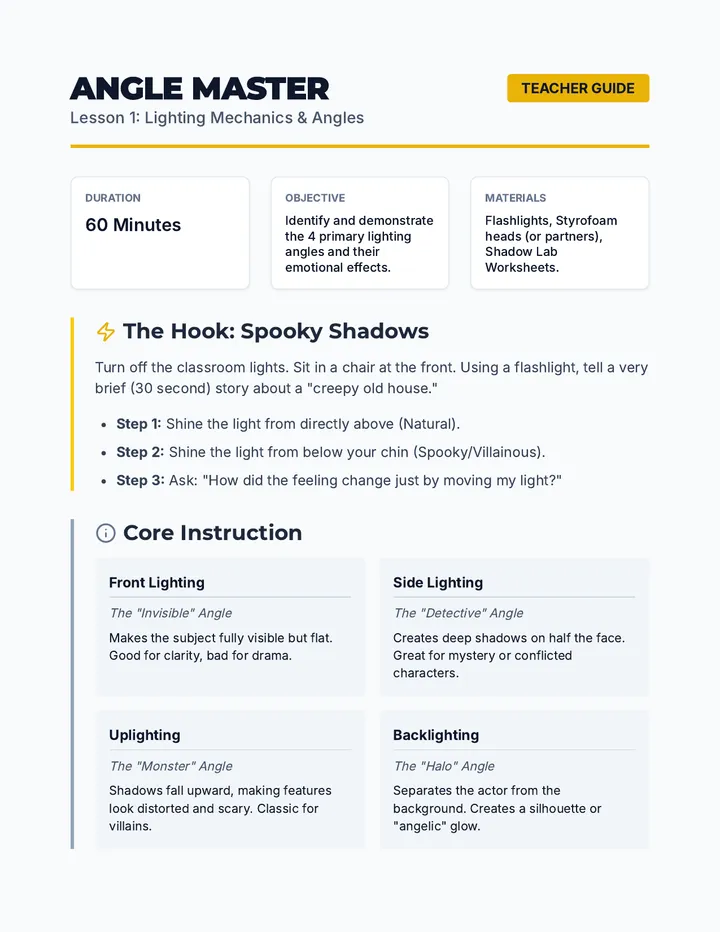
This sequence introduces 4th-grade students to the technical side of theater, focusing on lighting and sound. Students learn how lighting angles and colors create mood, and how sound effects and soundscapes build immersive worlds.