Stagecraft fundamentals, lighting design, and sound engineering for live performance. Develops skills in set construction, prop making, and costume design while addressing safety and stage management routines.
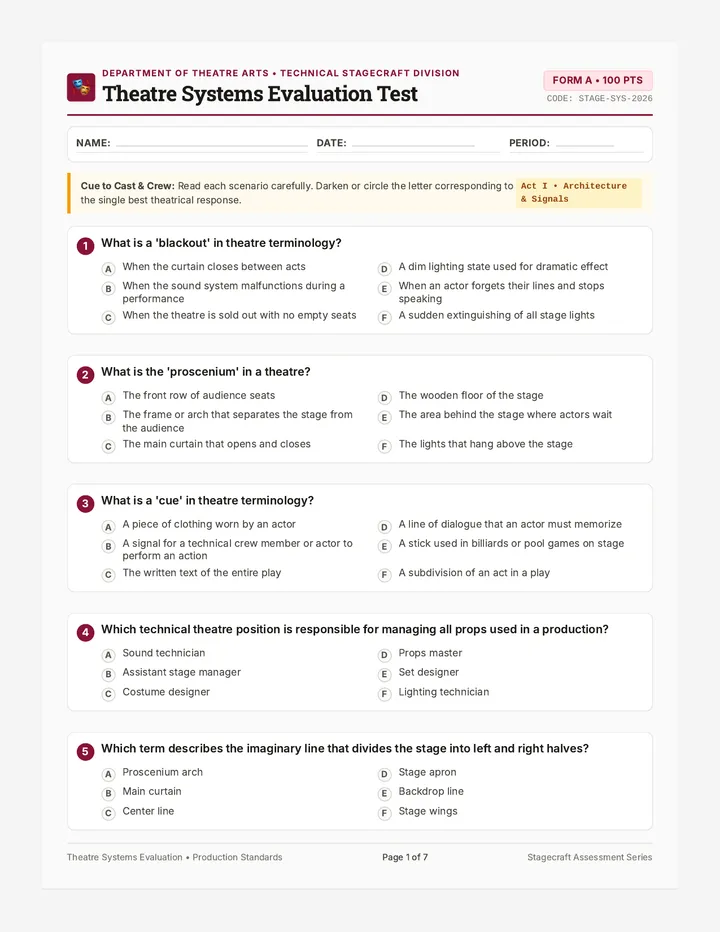
A comprehensive, highly engaging 7-page Theatre Systems Evaluation Test featuring 29 stagecraft assessment questions followed by a dedicated Tech Theatre Reflection and Backstage Pass interest page.
A comprehensive, visually stunning 2-page theatre interest inventory for high school students, featuring a classic theatrical aesthetic. It guides students through reflecting on their overall interest in theatre, rating their comfort with public speaking and performance, and checking off their interests across performance, design, technical crew, and creative leadership roles.
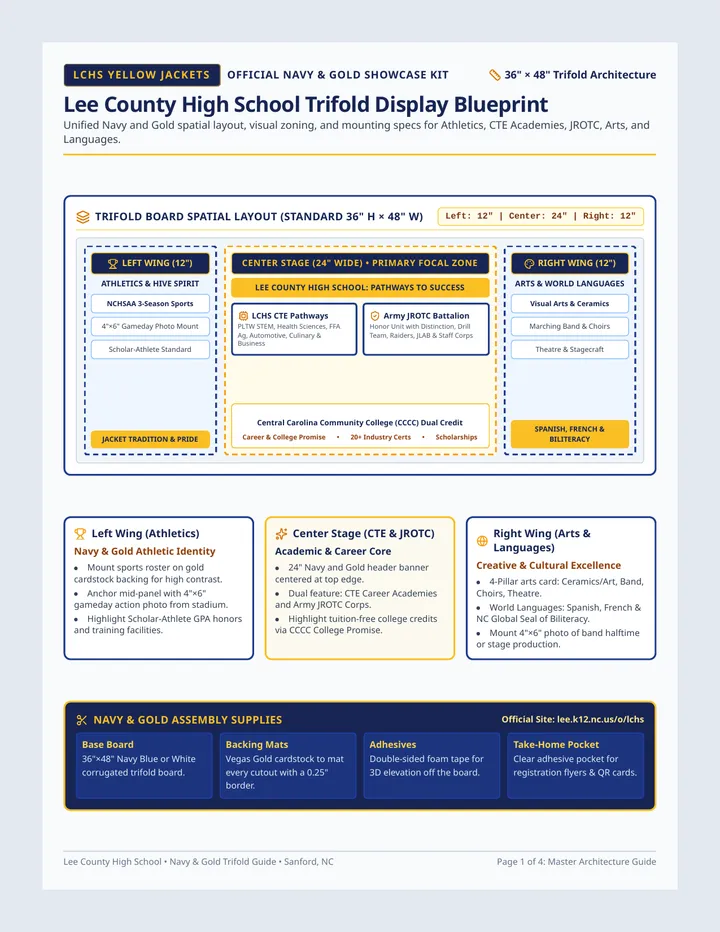
Lee County High School trifold display kit styled in a unified Navy and Gold palette, featuring an architectural layout blueprint, supply checklist, and printable cutouts for Athletics, CTE, Army JROTC, Arts, and World Languages.
A comprehensive 5-page master program and 10-week curriculum package for Mattahunt NextGen DJs (ages 9–12), featuring program policies, 3x25-minute daily structure, twenty complete Tuesday–Thursday lesson plans, icebreaker activities, equipment protocols, student set planner, and assessment rubric.
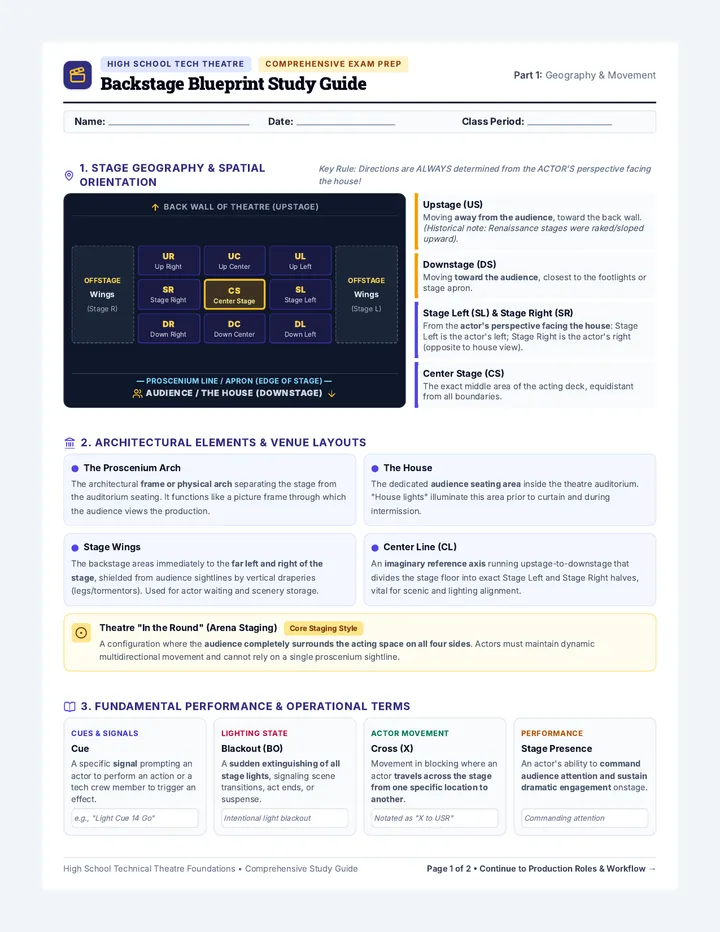
A comprehensive two-page printable study guide for high school technical theatre students covering stage geography and architecture, production roles, performance vocabulary, and the complete production process from workshop to strike.
A comprehensive 100-prompt categorized master reference guide for High School Theatre 1-2 educators covering acting technique, vocal/physical expression, script analysis, stagecraft, theatre history, directing, and performance critique.
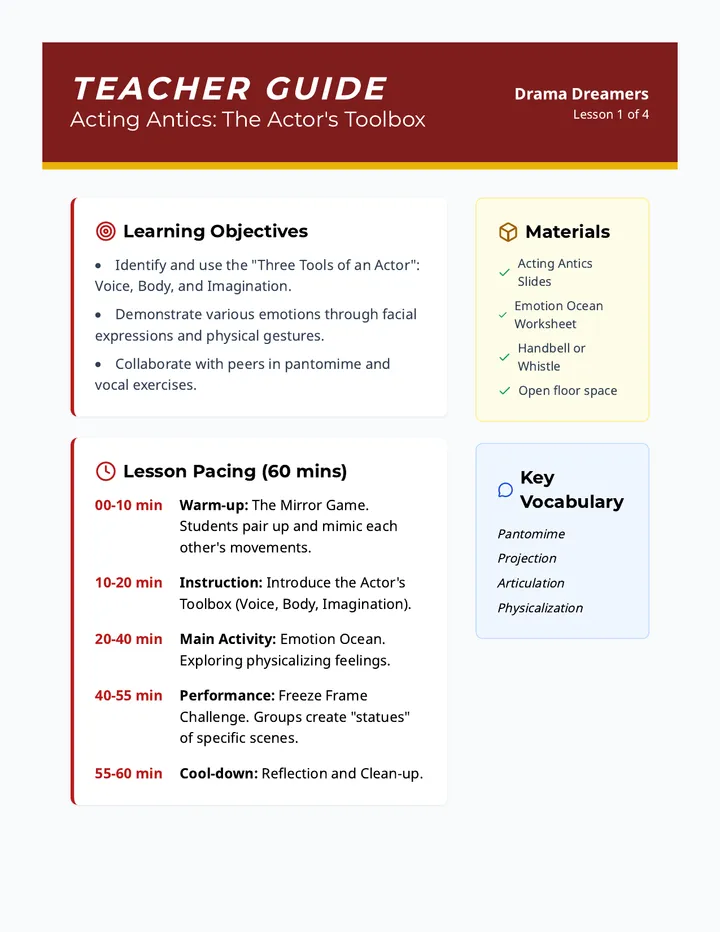
A comprehensive introduction to theater for elementary students, covering acting techniques, playwriting, stage types, theater history, and technical "behind the scenes" magic. Students move from basic expression to designing and performing with confidence.
A project-based learning sequence for theatre students focused on the directorial challenges of staging Matilda Jr. in two vastly different performance spaces: a traditional proscenium auditorium and a modern thrust-stage black box.
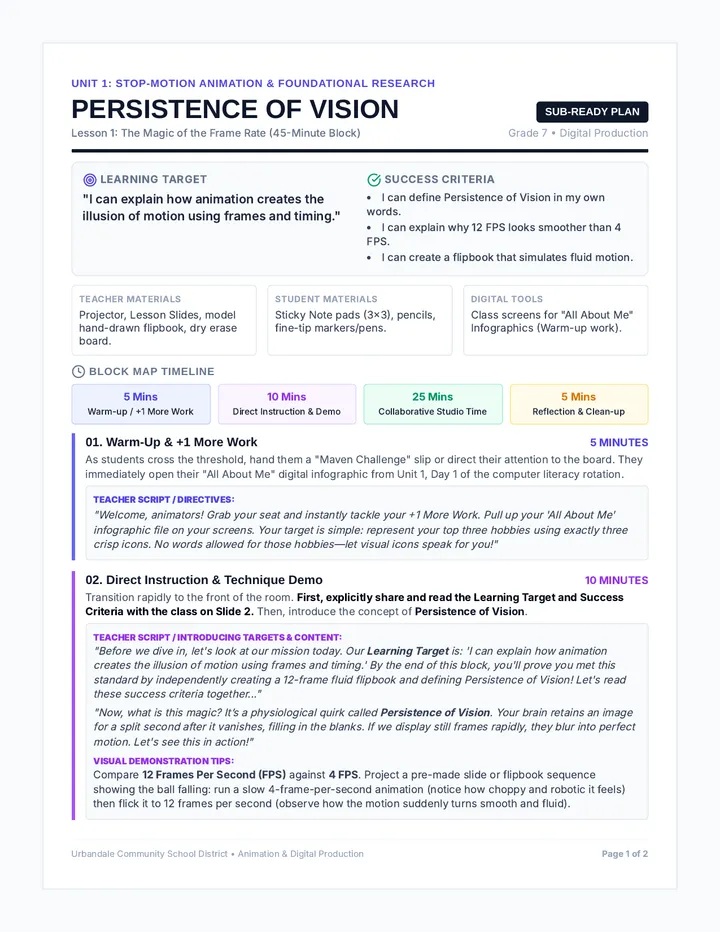
Unit 1: Stop-Motion Animation & Foundational Research. Students explore persistence of vision, digital research credibility, storyboarding, animation physics, and production.
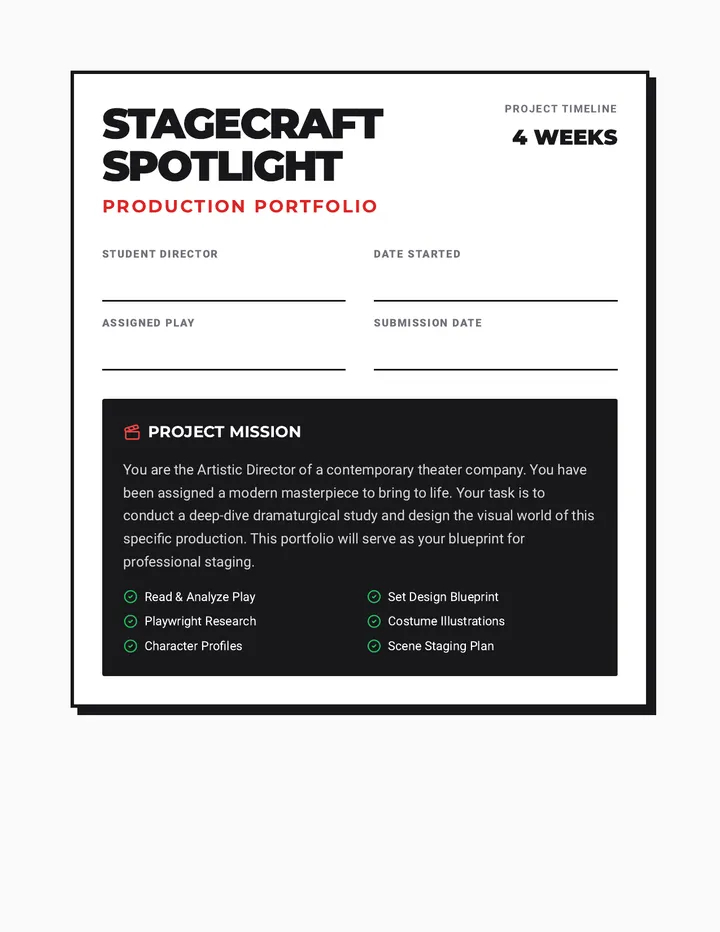
A comprehensive four-week unit and independent study guide for contemporary drama. Students analyze scripts, research playwrights, design technical elements, and stage scenes for a final production portfolio.
An advanced technical theater sequence for graduate students exploring the intersection of light physics, human perception, and visual storytelling. Students move from the biological mechanics of the eye to high-level system integration and dramaturgy.
This sequence introduces 5th-grade students to the world of technical theater through the lens of scenic design. Students progress from learning stage geography to analyzing scripts, drafting floor plans, and ultimately building a 3D scale model (maquette) of their own set design.
A lesson exploring the evolution of English theater during the reign of King James I, focusing on stagecraft, darker themes, and the transition to indoor performance spaces.
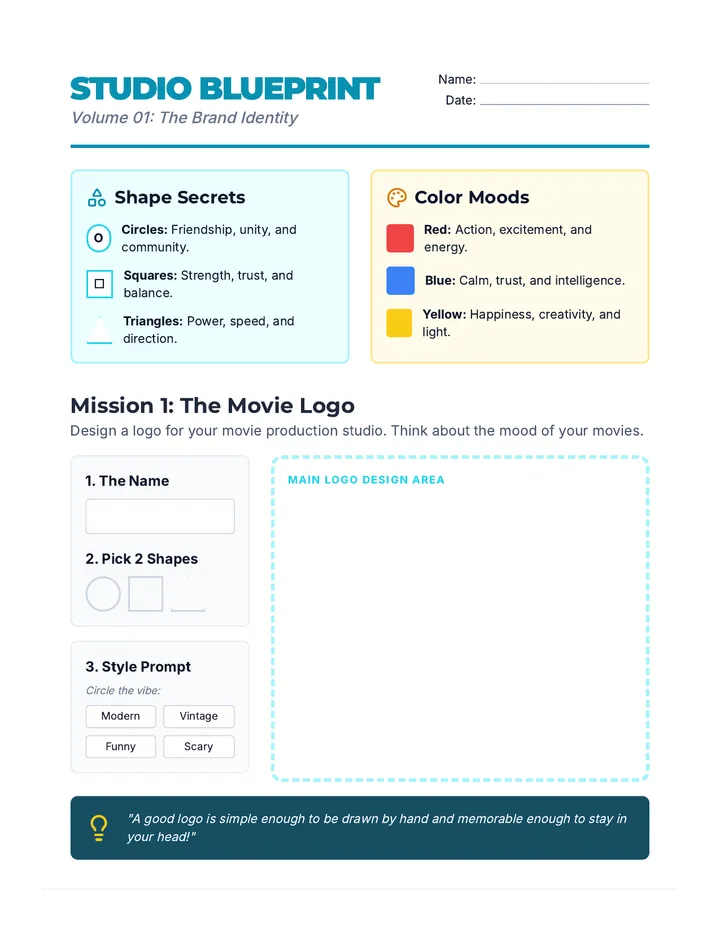
A creative, structured guide for students to explore the intersection of graphic design and filmmaking, focusing on branding, character design, and visual storytelling.
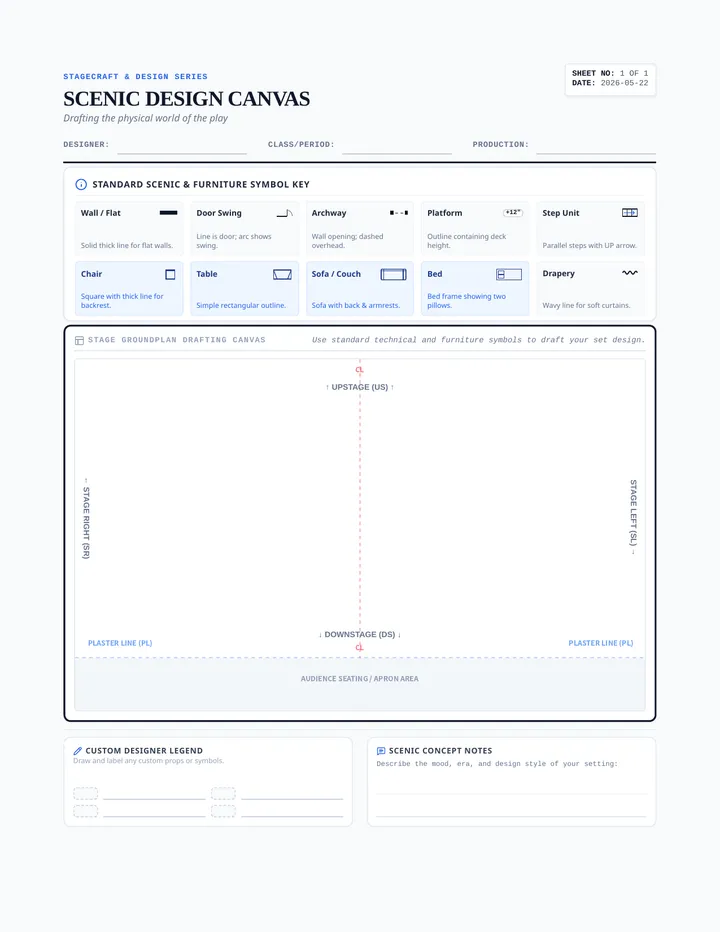
An introductory lesson on the fundamentals of scenic design, guiding students to create their own stage groundplans using industry-standard drafting symbols.
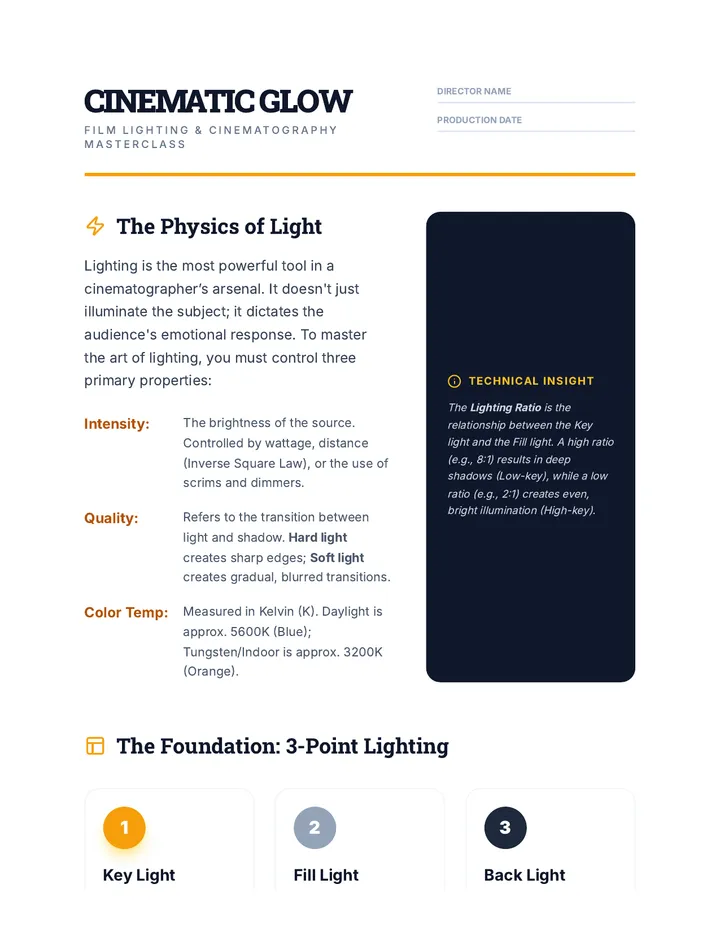
A deep dive into cinematic lighting, from the physics of light and 3-point setups to professional styles like Rembrandt and Butterfly lighting, including a hands-on assessment.
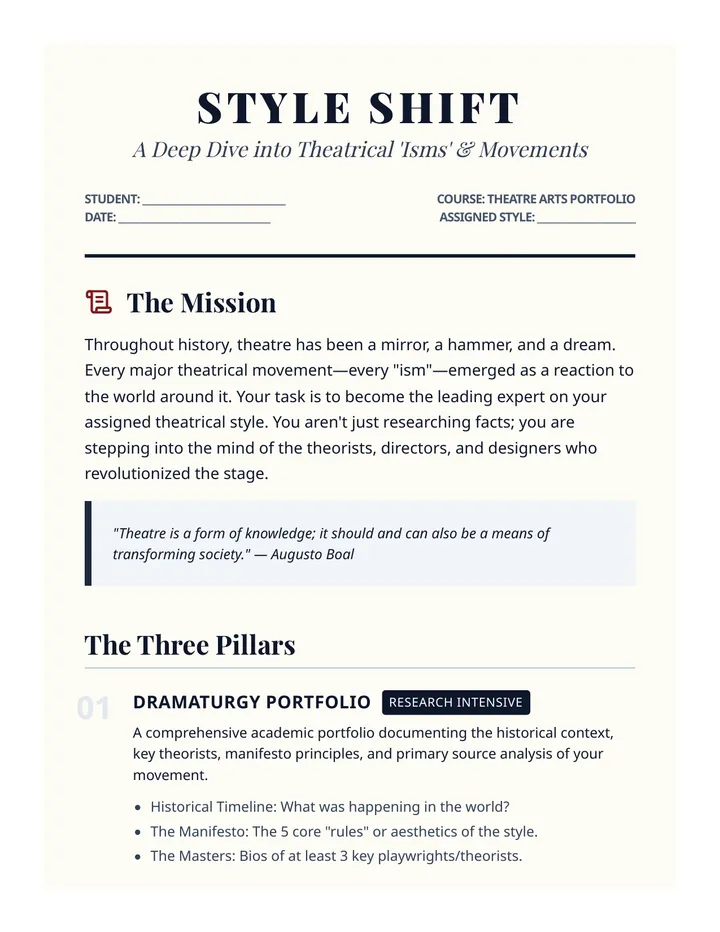
A comprehensive culminating research project where students explore a specific theatre style or 'ism'. Students produce a research-heavy Dramaturgy Portfolio, a Creative Design Pitch Deck, and a final Presentation with a visual aid.
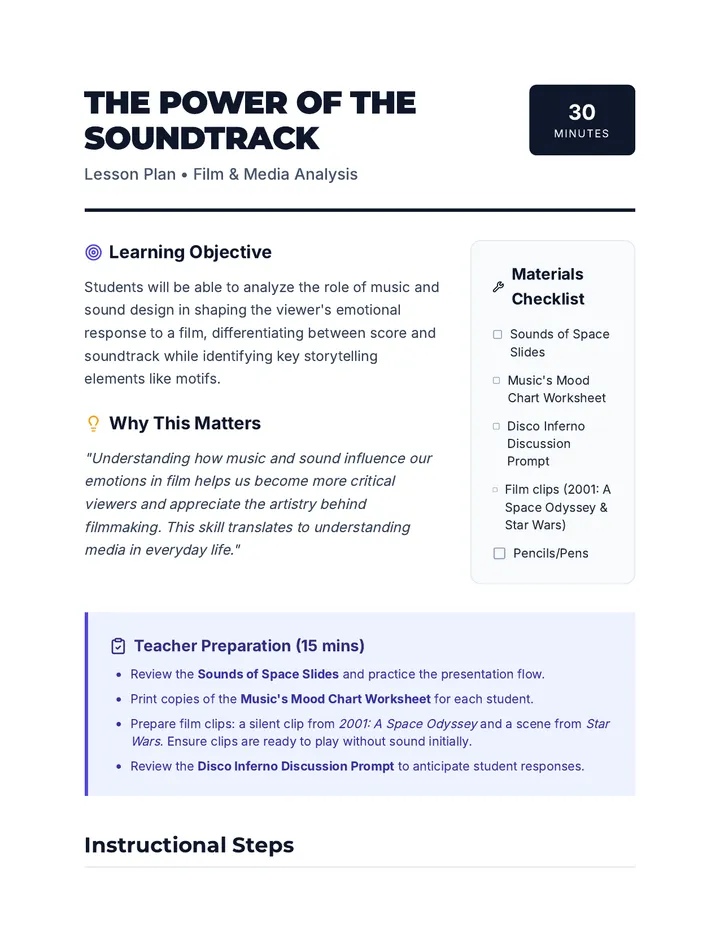
This lesson explores how music and sound design influence emotions in film, helping students analyze the role of scores, soundtracks, and motifs in storytelling.