Chronological evolution of musical styles, genres, and influential composers from historical eras to the modern day. Develops critical listening skills and contextual understanding of global musical traditions.
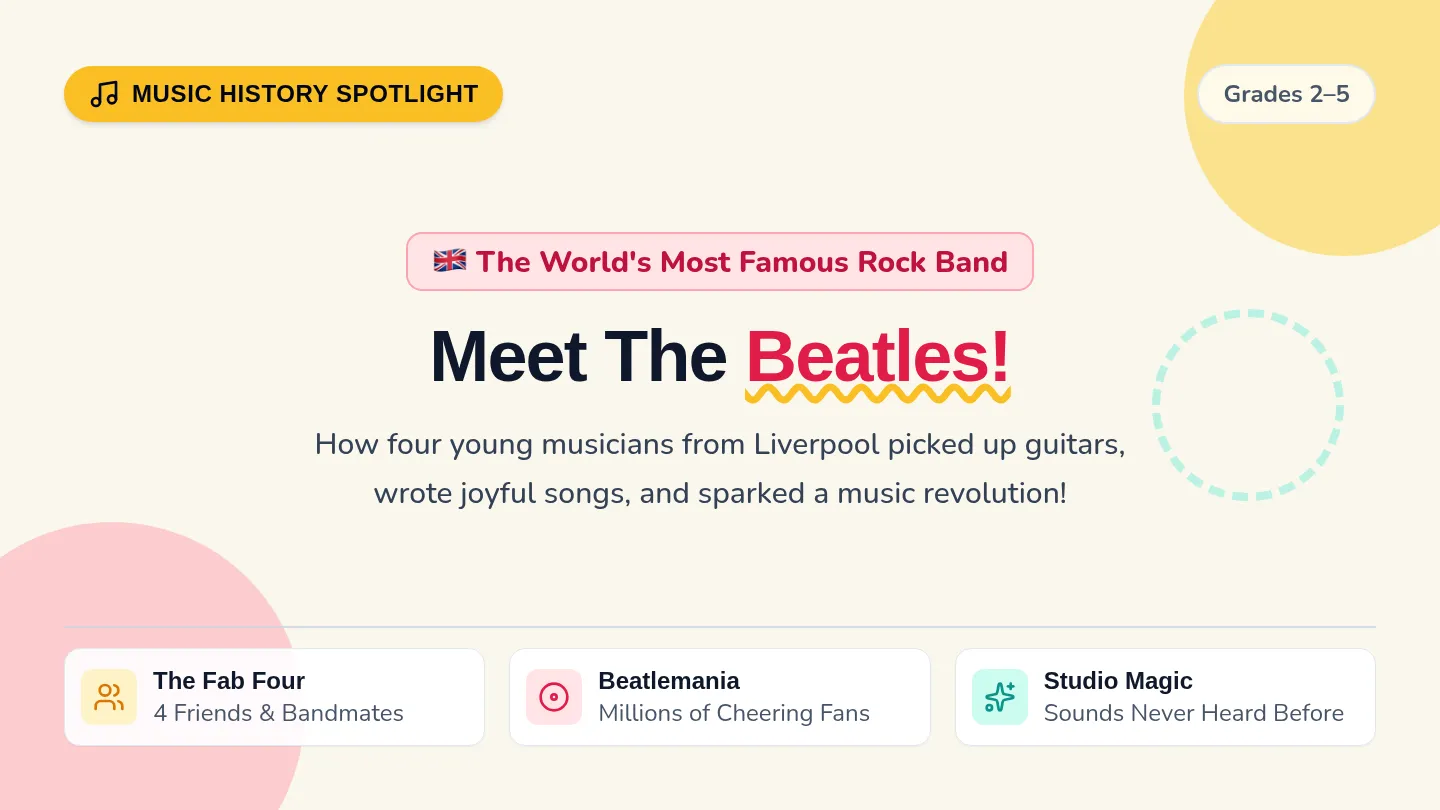
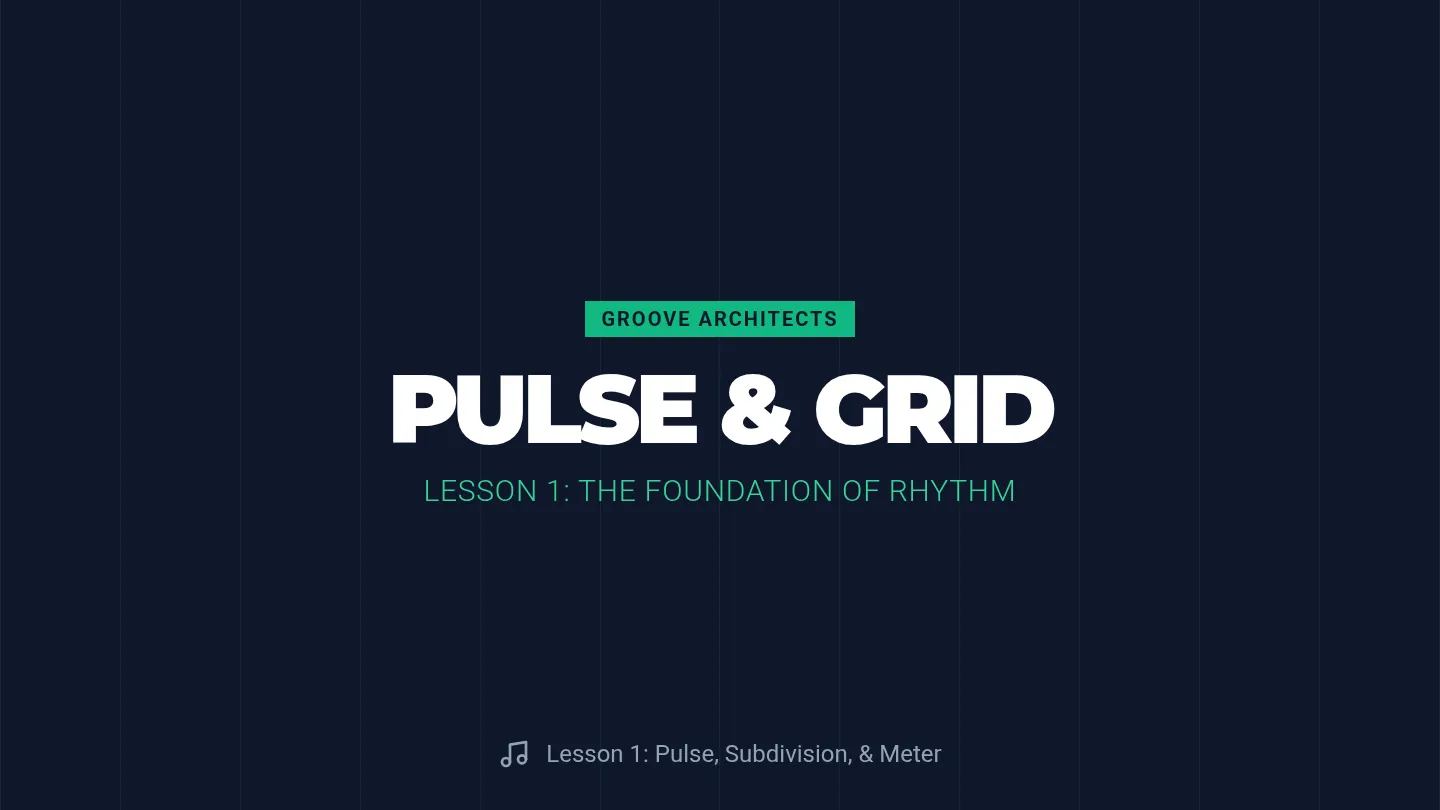
A journey through the 20th and 21st centuries, exploring how technology like electric guitars and synthesizers shaped genres from Rock 'n' Roll to Pop. Students analyze rhythm, structure, and sound to build a chronological timeline of musical evolution.
A global musical expedition for 2nd graders to discover how geography and culture shape instruments and traditions across four continents. Students explore materials, physics of sound, and the cultural roles of music through inquiry and hands-on activities.
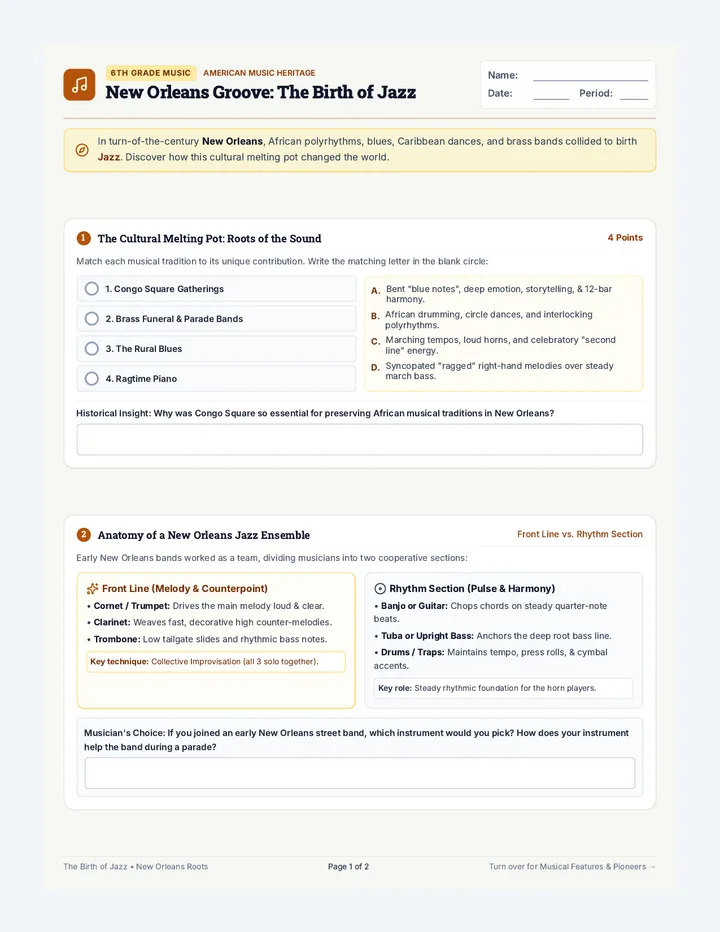
An immersive workshop-style sequence for 2nd graders exploring the roots of Jazz, Blues, and Folk music through call-and-response, syncopation, and improvisation. Students trace American musical history from work songs to the Swing era through active music-making.
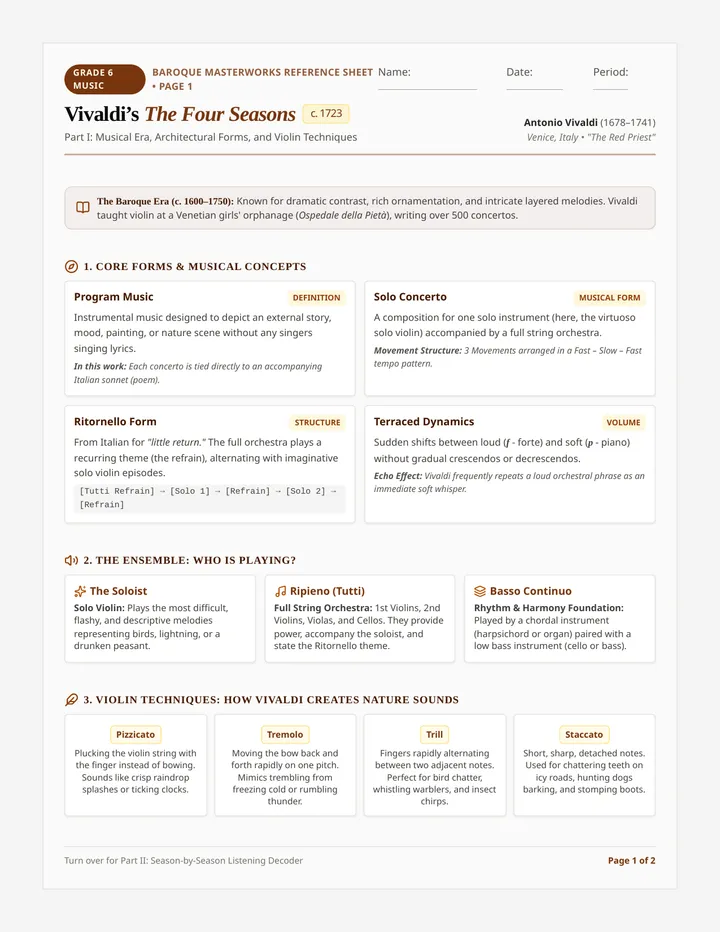
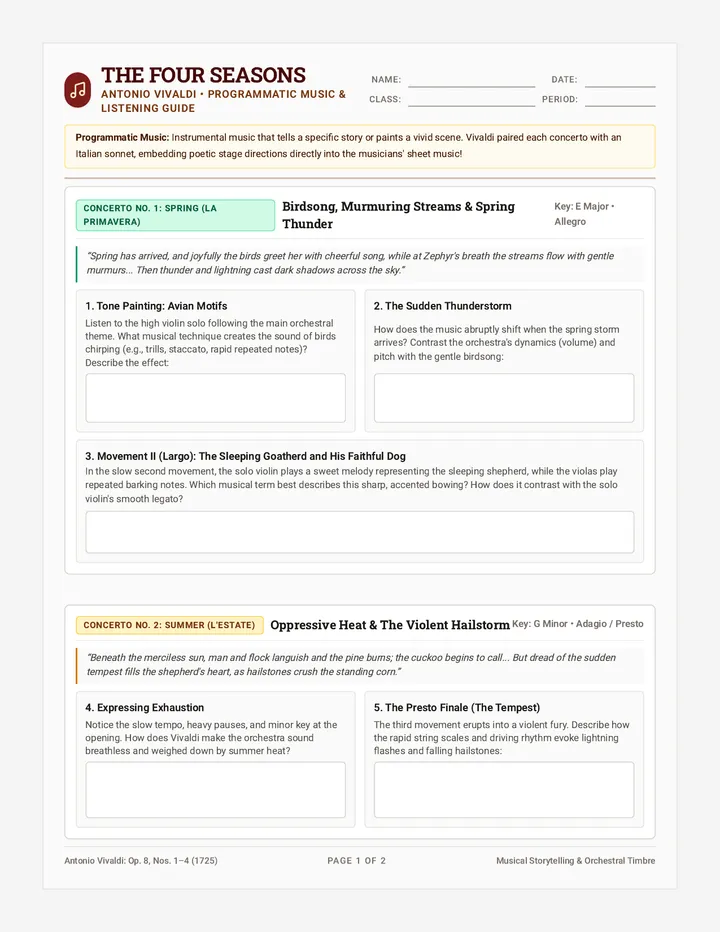
A 5-lesson sequence for 2nd graders exploring how classical composers use musical elements to tell stories and express emotions. Students 'meet' famous composers like Vivaldi and Beethoven, identifying tempo, dynamics, and leitmotifs in iconic works.
A comprehensive introduction to the four families of the orchestra for 2nd graders. Students explore timbre, mechanics, and historical roles of strings, woodwinds, brass, and percussion, culminating in a conductor simulation.
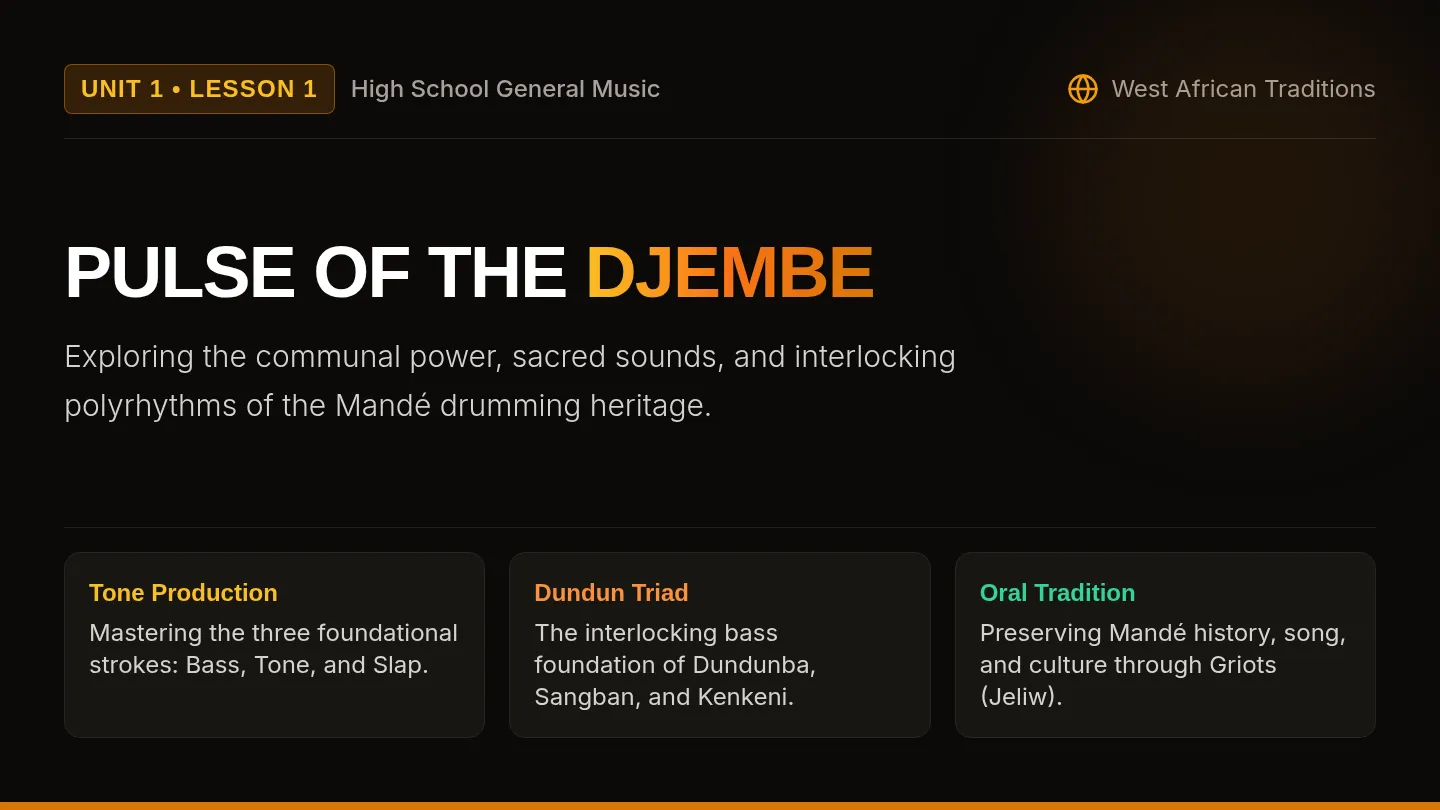
A 5-lesson sequence for 3rd graders exploring the music and instruments of West Africa, Asia, the Andes, and North America, focusing on how geography and culture shape sound.
This sequence explores how technology—from the electric guitar to digital software—transformed music from the mid-20th century to today, focusing on genre evolution, song structure, and production.
A comprehensive introduction to the orchestra and the Classical era for 3rd graders, covering instrument families, specific sections, key composers (Mozart and Beethoven), and the art of conducting.
Students explore the world of Jazz through rhythm, syncopation, and improvisation. They'll meet legends like Louis Armstrong and Ella Fitzgerald while learning to find their own musical voice through 'swing' and scat singing.
A 3rd-grade music history and appreciation unit exploring the roots of American folk and blues music, focusing on oral traditions, storytelling, and musical structures like call-and-response and the AAB blues form.
This sequence investigates how the technological explosion of the 20th and 21st centuries, from the electric guitar to AI, redefined music genres and creation. Students analyze production techniques, listen for layers, and explore the concept of technology as a musical instrument.
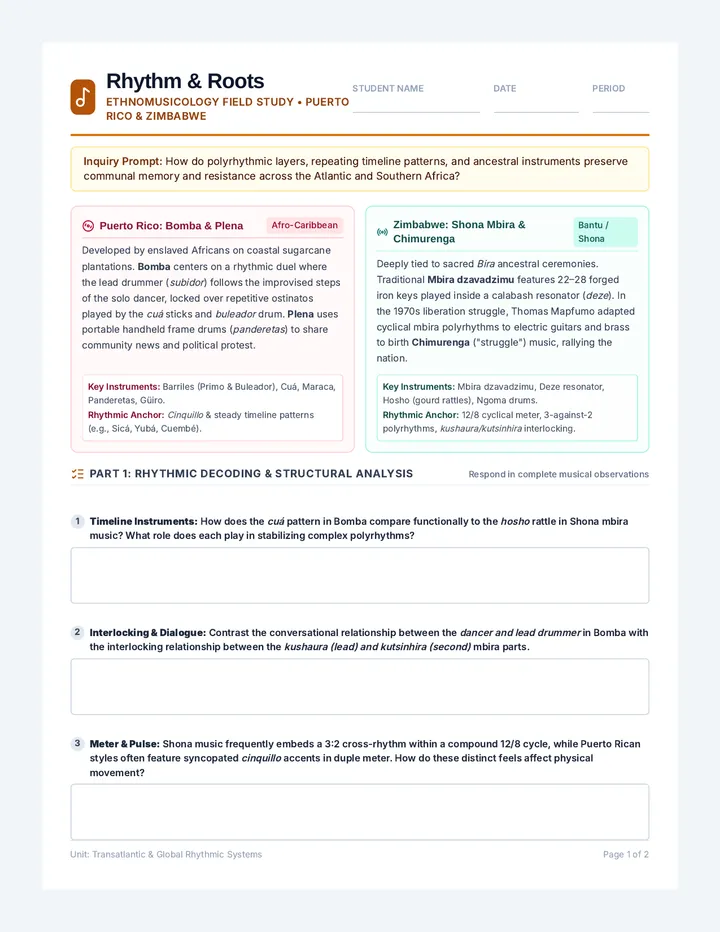
This project-based sequence takes students on a global tour as ethnomusicologists, examining how geography and culture influence musical instruments and sounds. Students classify instruments using the Hornbostel-Sachs system and explore rhythms and scales from Africa, Asia, and Latin America.
A facilitation guide for the final lesson, including solo circle rules and assessment criteria for student improvisation.
A teacher guide for the final lesson, providing a roadmap for synthesizing the global music journey and assessing student understanding of the sequence's essential question.
Comprehensive teacher answer key and reference guide covering all five lessons in the "Global Rhythm Quest" sequence.
A student planning sheet for designing a simple 4-beat rhythm or scat solo for the final classroom improvisation circle. Identical styling applied to all mood options.
Final presentation slides for Lesson 5, reviewing the journey through music history and addressing the essential question regarding technology's impact on sound.
A final synthesis worksheet for students to compare musical instruments, materials, and cultural celebrations, acting as a final "passport" reflection.
A student worksheet for Lesson 5 including a conducting pattern practice, vocabulary matching for dynamics and tempo, and a final sequence reflection.
Student project planner for the "World Stage" festival, including budget tracking, a written pitch for a selected region, and a stage design blueprint area.
Visual presentation for the final lesson, synthesizing the global journey, reviewing key instruments, and exploring how different cultures use music for celebration.
Final cumulative worksheet for Lesson 5. Students place technological and musical milestones on a chronological timeline from the 1950s to the present.
A visual presentation for the final project, focusing on the rules of improvisation and how to conduct a classroom solo circle.
Visual presentation slides for Lesson 5, introducing the "World Stage" festival project, defining the curator's role, and providing an instrument catalog with "budget" pricing.
Students apply what they've learned by creating a classroom percussion circle where individuals take turns 'soloing' over a steady beat, applying the concept of improvisation.
Students work in small groups to 'curate' a stage for a world music festival. They select a region, choose instruments to feature, and explain why that music is unique.
In this culminating lesson, students learn what a conductor does to unify the orchestra. They practice basic conducting patterns and understand how tempo and expression are communicated without words.
Students listen to the drumming and singing styles of Native American tribes. They discuss the importance of the drum as the 'heartbeat' and the preservation of culture through powwow music.
Students look at larger jazz ensembles, identifying the sections (saxophones, trumpets, trombones, rhythm). They learn how many musicians play together while still allowing for solos.
Students debate the future of music history, looking at streaming, AI composition, and bedroom production, analyzing how digital tools change the creation and distribution of music.
Students study the lives and music of Mozart and Beethoven. They compare the light, structured sounds of the Classical period with the dramatic emotional shifts of the early Romantic period.
Students investigate the wind and percussion instruments of South America, such as panpipes and maracas, and explore the connection between music and dance in Latin American cultures.
Students explore vocal improvisation through scat singing—using the voice as an instrument with nonsense syllables. They practice call-and-response scat patterns.
Synthesize knowledge by categorizing mystery musical excerpts into the correct historical era. Students will use specific vocabulary to justify their choices in a 'Time Machine' game.
Students investigate the origins of Hip-Hop and the revolutionary technique of sampling, discussing the artistic and legal implications of repurposing existing audio to create new music.
Students explore the power and rhythm of the brass and percussion sections. The lesson focuses on dynamics (loud/soft) and the role of percussion in keeping the heartbeat of the orchestra.