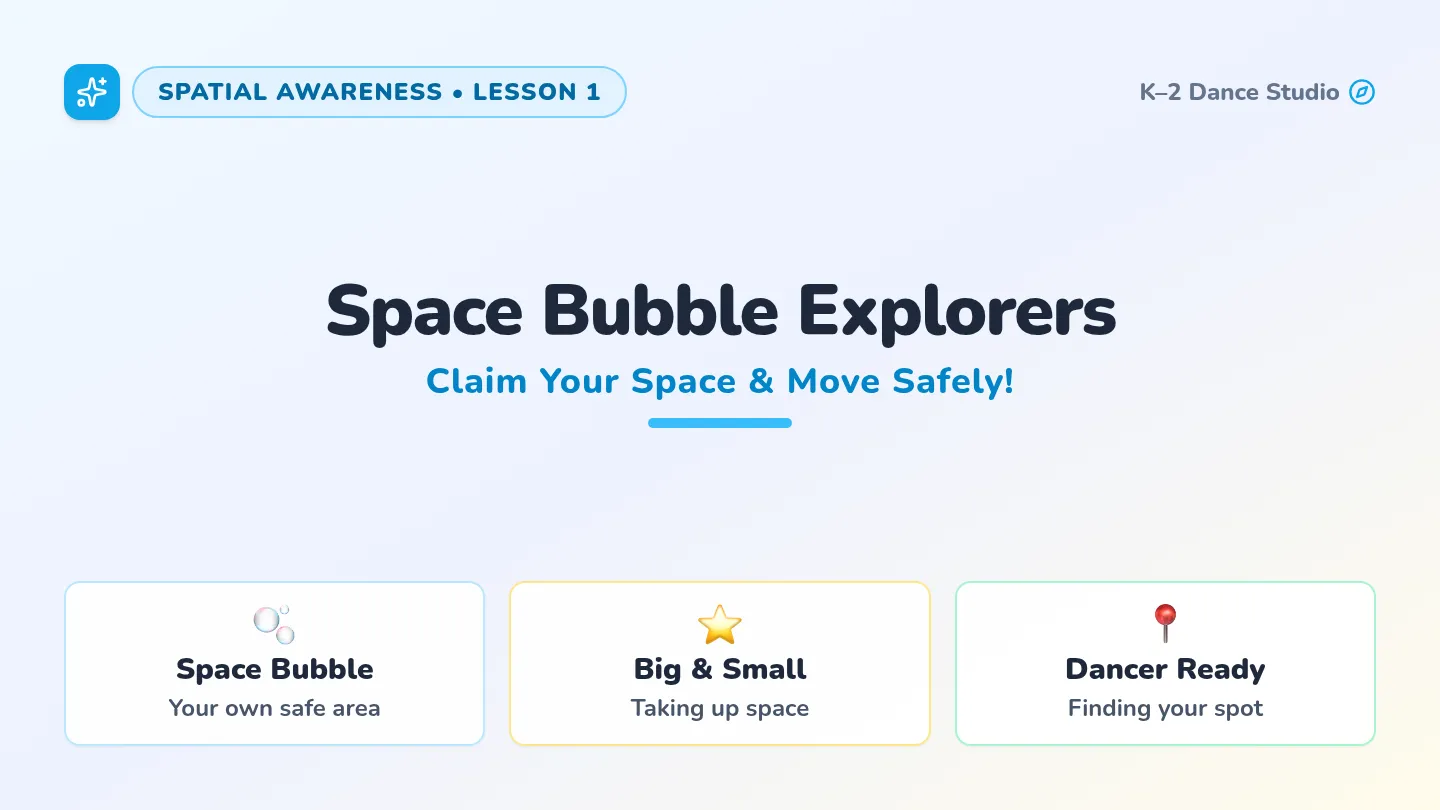
Guided improvisation, spatial awareness, and rhythmic exploration to foster self-expression. Develops fundamental motor coordination and emotional communication through physical storytelling.
A global musical journey for Kindergarten students to explore traditional folk music, instruments, and rhythms from West Africa, East Asia, the Andes, and North America. Students build cultural awareness and musical skills through hands-on drumming, melodic improvisation, and storytelling songs.
A graduate-level sequence exploring creative movement as a rigorous Practice-as-Research (PaR) methodology. It bridges phenomenological philosophy and somatic practice to investigate academic questions through the body.
A high-level graduate sequence exploring the transition from solo improvisation to complex ensemble instant composition, utilizing Viewpoints, Contact Improvisation, and indeterminate scoring.
A graduate-level sequence exploring advanced pedagogical frameworks for creative movement facilitation. Students deconstruct somatic cues, developmental patterns, trauma-informed practices, and neurodiverse scaffolding to design inclusive and effective movement workshops.
This sequence introduces Pre-K students to the expressive power of creative movement. Students learn to use their bodies to communicate animals, weather, emotions, and stories, developing physical empathy and creative confidence through guided improvisation and play.
This Pre-K dance sequence explores how students can use their bodies to tell stories and express emotions. Students move from identifying feelings and simple actions to choreographed nature cycles and character studies, culminating in a collaborative narrative dance performance.
Students explore movement dynamics including speed, weight, and texture to understand how energy changes choreography. This Pre-K unit uses imagery and play to build foundational dance skills and creative expression.
Kindergarten students explore the foundations of dance composition through creative play, investigating how to link movements into coherent patterns and sequences.
A Pre-K sequence focused on exploring emotions and storytelling through song, dynamics, and facial expressions. Students learn to identify musical moods and adapt their vocal performance to convey different feelings.
A vibrant and active introduction to Hispanic music and culture for Kindergarten students. Students explore the Spanish guitar, maracas, dance steps like Salsa, and concepts of tempo through hands-on making, movement games, and collaborative performance.
A first-grade introduction to global dance traditions, exploring dance as communication, storytelling, community building, and performance art. Students learn basic movements from Hula, folk dances, and ballet while developing cultural appreciation and creative expression.
A Kindergarten dance unit exploring global traditions, storytelling through movement, and community celebration. Students learn how different cultures use dance to express feelings and history.
An observational rubric for teachers to assess Kindergarten students' musical and cultural proficiency at the end of the global music sequence.
A cumulative activity sheet where Kindergarteners "stamp" their musical passports for each region studied in the sequence, reinforcing the geographical journey and key takeaways.
A celebratory slide presentation for the final lesson in the global music sequence, reviewing geographical locations, identifying universal musical elements, and introducing the passport activity.
A handbook for teachers containing lyrics to classic North American folk ballads, performance tips, and discussion prompts for Kindergarteners.
A student storyboard worksheet for North American folk music, where Kindergarteners draw the beginning, middle, and end of a song's narrative.
Visual presentation for the North American folk music lesson, focusing on the cultural significance of folk music, the banjo and fiddle, and using song lyrics as a storytelling medium.
A teacher facilitation guide for teaching a simple Andean-inspired folk dance to Kindergarteners, focusing on rhythm and movement.
A visual, step-by-step guide for Kindergarteners to create a DIY pan flute from straws, reinforcing concepts of pitch and length.
Visual presentation for the Andean music lesson, introducing the geography of the Andes, the mechanics of the pan flute (pitch and length), and traditional festival dance movements.
A teacher guide for the East Asian music lesson, focusing on setting up pentatonic instruments and facilitating melodic improvisation for Kindergarteners.
A student worksheet for the East Asian music lesson, helping Kindergarteners identify the number five, recognize black keys on a piano, and express themselves through drawing.
Visual presentation for the East Asian music lesson, exploring the guzheng and the calming pentatonic scale found in traditional Chinese and Japanese music.
A cumulative celebration where students synthesize their learning by creating a musical passport and identifying universal themes in global music making.
An exploration of American folk music where students discover the banjo and fiddle while learning how songs tell stories of history and daily life.
Students investigate the pan flute and the charango, learning about Andean festivals and experiencing traditional dance and pitch variation.
Learners explore the peaceful sounds of the guzheng and the pentatonic scale, practicing melodic improvisation on simple instruments.
Students discover the djembe and the vibrant traditions of West African drumming, focusing on maintaining a steady beat and participating in a call-and-response circle.
The teacher narrates a simple adventure story, and students act it out collectively using the skills they have learned. They might cross a river (jumping), climb a mountain (high levels), or hide in a cave (low levels). This synthesizes listening skills with creative movement.
Students use scarves or ribbons to extend their movement range and visual expression. They explore how the prop reacts to their movement, creating soft, flowing lines or sharp snaps. The prop serves as a partner, helping shy students express themselves more boldly.
Students identify basic emotions (happy, sad, angry, surprised) and create body shapes that represent them. They explore how an 'angry' dance might look sharp and fast, while a 'sad' dance might be slow and low. This connects emotional literacy with physical expression.
Using the environment as inspiration, students use their bodies to depict weather conditions. They swirl for wind, tap for rain, and jump for lightning. The teacher guides a 'storm' narrative where the class transitions from a sunny day to a storm and back to a rainbow.
A final mastery-based lesson where students present research findings through performance-lectures.
Translating dense theoretical abstracts into choreographic scores to analyze the architecture of arguments.
Learning to codify movement using Laban's Effort factors as a tool for qualitative data analysis.