Fundamental principles of typography, color theory, and layout for digital and print media. Equips students with technical skills in vector illustration, photo manipulation, and user interface design using industry-standard tools.
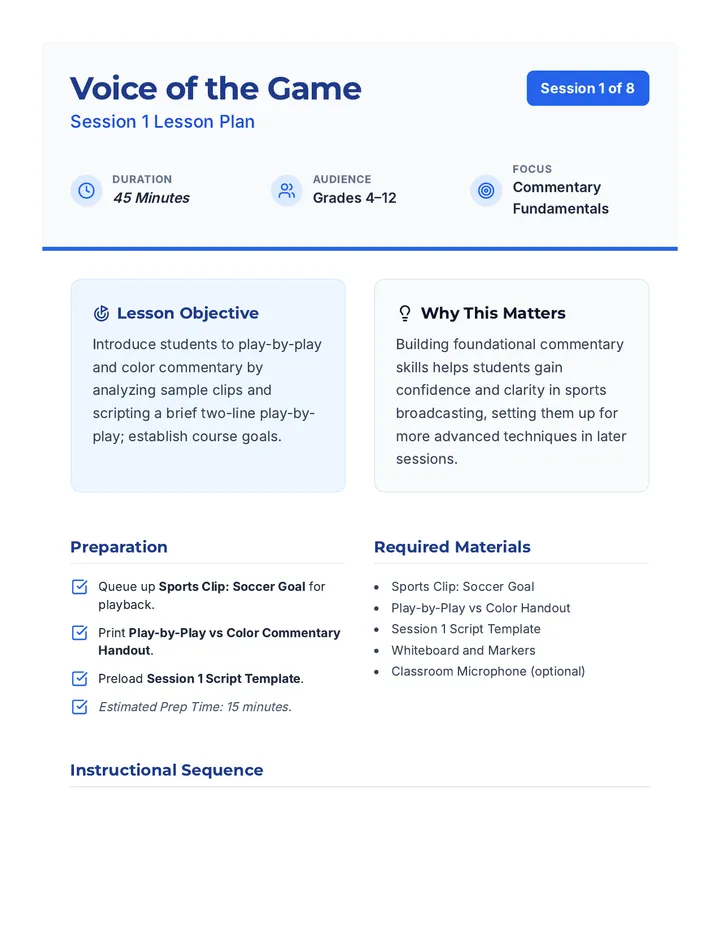
An 8-session sports broadcasting course for grades 4–12, covering play-by-play, color commentary, interviewing, camera work, audio mixing, and live production directing. Students progress from foundational vocal skills to a complete capstone broadcast project.
A 5-lesson sequence for 5th graders exploring how color, typography, and layout influence audience perception. Students move from design theory to the creation and critique of an informational digital poster.
A comprehensive introduction to digital graphic design and typography for 10th-grade students. This sequence bridges the gap between traditional art and modern vector-based technology, focusing on anatomy, hierarchy, logo design, and print preparation.
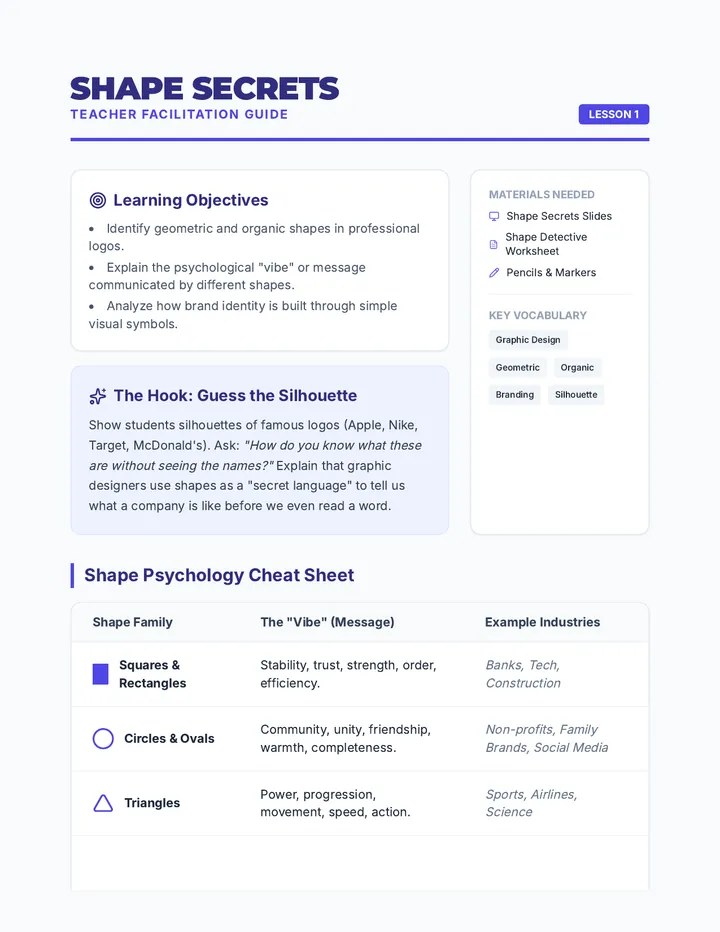
A comprehensive graphic design simulation where students act as a design agency to develop a full brand identity. They progress from analyzing logo symbolism and interpreting client briefs to digital vectorization and presenting a professional brand style guide.
A comprehensive introduction to graphic design for fourth graders, focusing on how typography, color, and shapes communicate messages. Students progress from analyzing professional brands to creating their own personal logo and visual identity using digital tools.
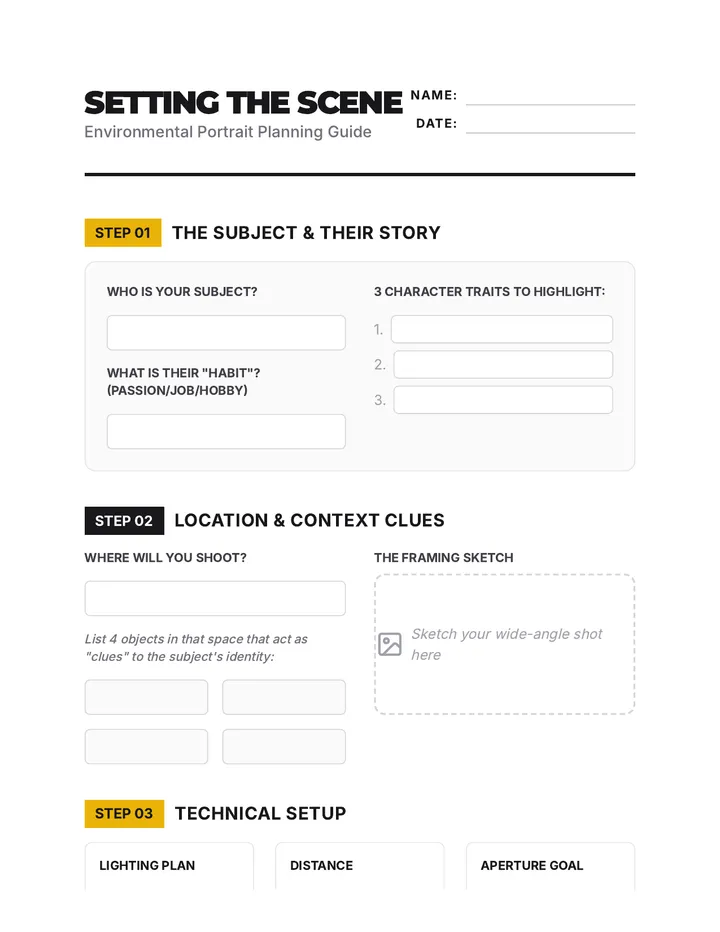
This sequence explores the technical and social challenges of photographing people, focusing on environmental portraiture, posing, abstract representation, and the ethics of digital identity.
A project-based sequence where 7th-grade students act as community organizers to launch an arts advocacy campaign, moving from needs assessment to a final pitch.
A project-based unit where 8th-grade students act as cultural consultants to research, design, and pitch arts advocacy campaigns for their local communities. Students learn to combine data-driven evidence with persuasive storytelling and visual design to effect real-world change.
A high school sequence exploring the intersection of digital design and traditional printmaking. Students learn to bridge vector precision with analog texture through zine production and professional practice.
A comprehensive 8th-grade unit bridging traditional printmaking concepts with modern digital graphic design. Students explore typography anatomy, vector illustration, grid-based layouts, and digital color theory to create professional-quality visual communications.
This sequence explores the intersection of digital design and traditional printmaking. Students learn to combine the precision of vector graphics with the tactile, organic qualities of analog transfers and mixed media to create a professional 'hybrid' portfolio.
A comprehensive introduction to typography and digital layout for 5th graders, blending traditional art analysis with modern graphic design skills. Students explore font psychology, visual hierarchy, and digital tools to create impactful visual communications.
A creative exploration of visual storytelling where students analyze and design movie posters to understand the power of marketing art.
This lesson explores the 12 fundamental principles of animation, revealing how animators use techniques like squash and stretch and anticipation to breathe life and emotion into characters. Students will learn the "secret sauce" of animation through visual examples, sketching activities, and analytical viewing.
A high school animation lesson exploring the core principles of dynamic character design, including silhouette, expression, pose, personality, and movement. Students will learn how to make their creations 'pop' through analysis and sketching.
A 30-minute creative project lesson where 12th-grade students design an animated movie poster in Adobe Illustrator, applying design principles like hierarchy, color theory, and typography.
Students step into the role of a graphic designer to create a movie poster for an original animated film using Adobe Illustrator, applying core design principles.
A comprehensive 90-minute lesson sequence for 7th graders on the art of digital storytelling, combining narrative structure with multimedia production. Students will move from understanding the narrative arc to storyboarding and eventually producing their own digital narratives.
This lesson empowers 10th-grade students to create impactful Public Service Announcement (PSA) posters. Students will learn the key elements of effective visual communication and persuasive messaging to raise awareness about important social issues.
A 15-minute introductory lesson for 7th graders on low-poly 3D modeling. Students learn basic Blender navigation and modeling tools (move, scale, rotate, extrude) to create a simple Stegosaurus.
A 30-minute introductory lesson for 9th-grade students on the fundamentals of magazine cover design using Adobe InDesign, focusing on design principles and basic software tools.
This lesson introduces 11th-grade neurodivergent students to the fundamental concepts of Photoshop blending modes. Students will learn how different blending modes affect image layers, enhancing their digital art and photo manipulation skills through hands-on exploration and a creative final project.
A hands-on, 30-minute session for 9th-grade students to master the artistic double exposure effect in Adobe Photoshop using blending modes and layer masks.
A comprehensive 190-minute hands-on lesson for 9th graders covering the fundamentals of Adobe InDesign, specifically focusing on importing images, placing text, and managing layout frames for print-ready documents.