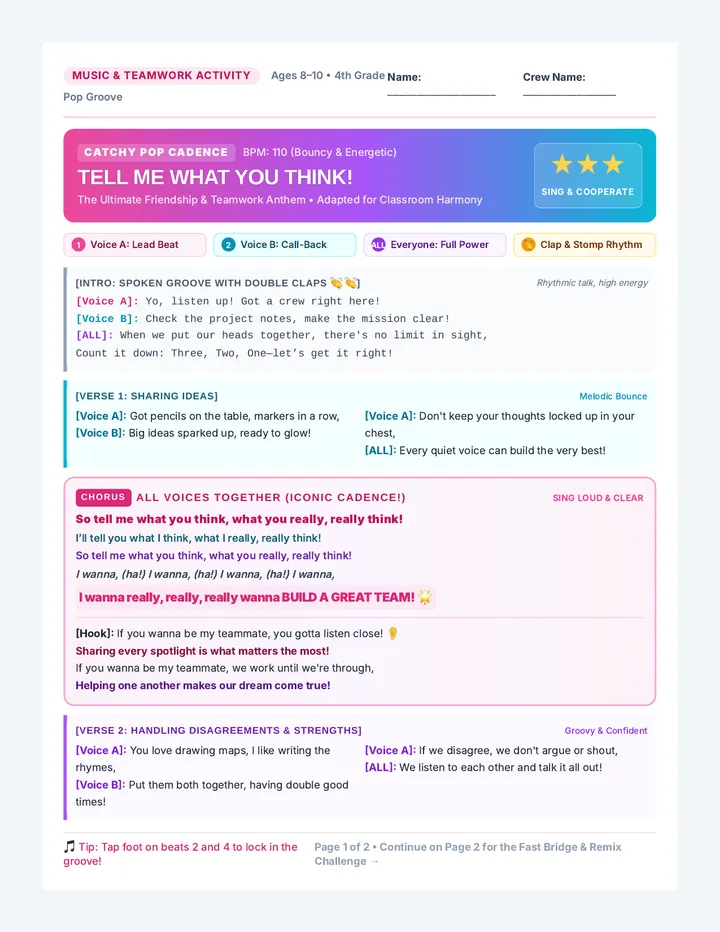
Shared artistic processes, ensemble techniques, and collective brainstorming methods. Develops skills in giving feedback, negotiating creative differences, and co-authoring works across various media.
Unit 2 of the 7th Grade Animation & Digital Production curriculum, focusing on podcasting, audio editing, legal/ethical rules, and multi-track mixing.
Unit 1: Stop-Motion Animation & Foundational Research. Students explore persistence of vision, digital research credibility, storyboarding, animation physics, and production.
A collaborative art sequence where students create a large-scale mosaic mural to honor a retiring teacher, focusing on themes of growth, beauty, and legacy.
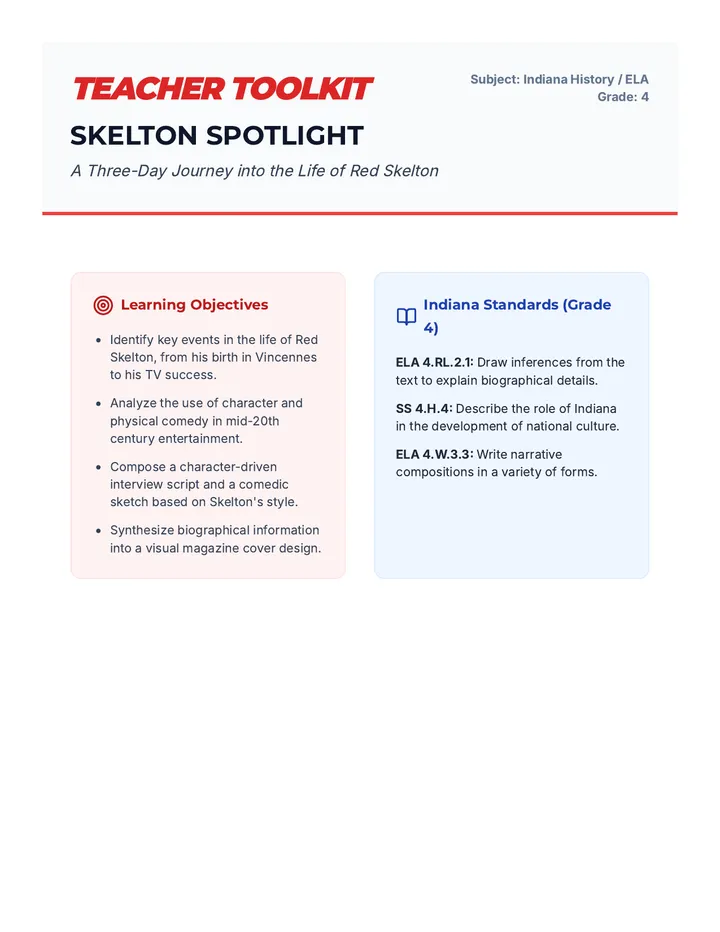
A three-day exploration of the life and legacy of Indiana-born comedian Red Skelton, presented in a vibrant magazine format. Students explore his early life in Vincennes, his iconic characters, and his lasting impact on American comedy through reading and creative performance activities.
A 12-lesson unit utilizing drama and enactment techniques to deepen reading comprehension, themed around Kuwaiti heritage, global travel, healthy lifestyles, and environmental science for grades 3-8. Focused on skills in action across Before, During, and After reading phases.
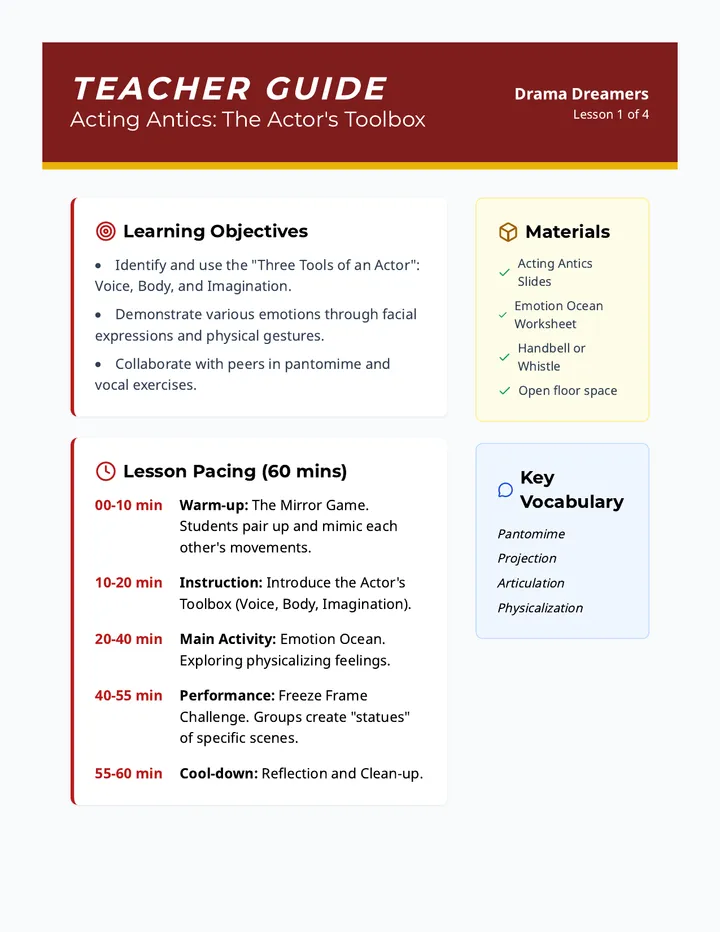
A comprehensive introduction to theater for elementary students, covering acting techniques, playwriting, stage types, theater history, and technical "behind the scenes" magic. Students move from basic expression to designing and performing with confidence.
A unit focused on the visual principles of brand identity, moving from theory (color, type) to creation using vector-based tools like Google Drawing.
A comprehensive identity design unit where students explore the psychological and visual elements of branding, including color theory, typography, and logo composition.
A student-facing 1-page discussion cards resource. Features a grid of 6 beautifully designed, cut-out-ready prompt cards with vintage dashed borders to guide student partners in character development, vocal warmups, and collaborative oral play.
A student-facing 2-page activity packet. Page 1 provides an guided, lined template for writing a three-step dialogue script with a scene-selection grid. Page 2 includes 4 retro-themed finger puppet cutouts ready for students to color, cut, and loop around their fingers.
An elegant 5-slide presentation designed for Grade 2 instruction. Guides students through understanding character voice, writing a 3-step script, building puppets, and demonstrating good audience manners. Uses larger, easy-to-read text of 24px and up.
A comprehensive 2-page teacher's guide and lesson plan for running a classroom puppet theater lesson. Includes detailed pacing, materials checklist, step-by-step facilitation prompts, oral reflection questions, and a kid-friendly grading rubric.
A 2-page print-ready student workbook including an artifact excavation log, a design placement grid, and a curatorial manifesto rubric. Designed in a field-ledger style.
A 6-slide visual presentation for introducing the project to students, guiding them through the archaeology mindset, the mission phases, composition rules, and cleanup protocols.
A 2-page print-ready lesson plan for teachers, detailing objectives, materials, zone setup, pacing, and clean-up integration. Designed in a museum-catalog/field-notebook style.
A unified classroom grading rubric and step-by-step physical assembly guide designed to help teachers assess and construct the final collective paper quilt mural.
A high-impact, 2-page student worksheet containing guided reflection prompts, a symbol brainstorming grid, a structured draft canvas, and an artist statement writing template.
A beautifully styled, high-impact slide presentation featuring visual guides, creative design rules, and symbolic storytelling prompts to guide middle schoolers through the Mural Makers project.
A comprehensive, 2-page teacher facilitation guide outlining lesson phases, prep checklists, discussion prompts, and classroom assembly instructions for the Legacy Mural project.
A high-impact 7-slide presentation designed for Day 16. It includes a projected Class Entry Directions slide with +1 More Work entry tasks, outlines recording level guidelines, models decibel clipping, and guides students through Figure 4.2 Steps 5 and 6.
A hands-on, creative storytelling lesson where second-grade students write simple scripts, design paper finger puppets, and practice expressive reading and oral storytelling. Helps boost reading fluency, collaboration, and character development in an engaging classroom theater format.
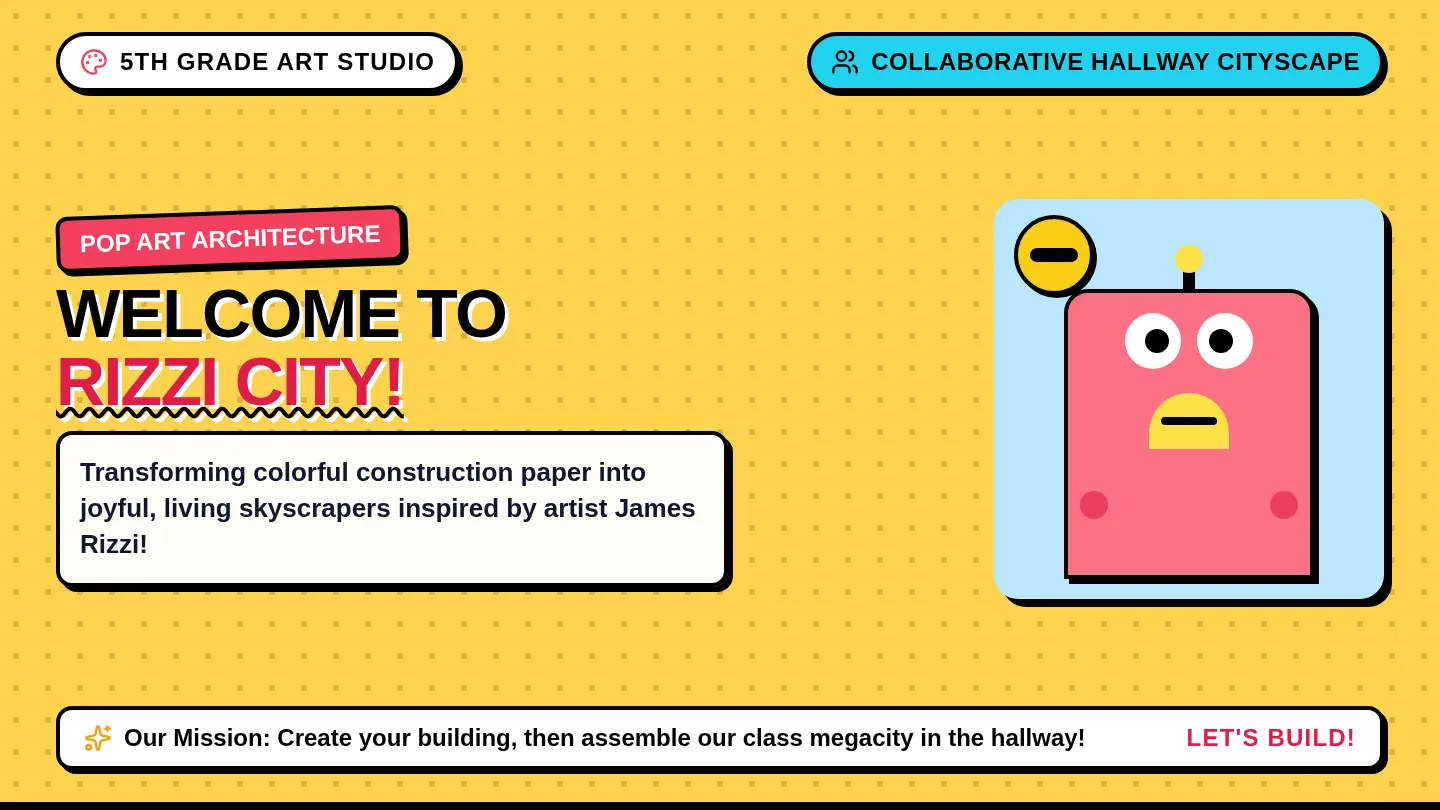
An end-of-year collaborative sculpture project for grades 8-12. Students dig through studio scraps, catalog their findings, and curate temporary artistic assemblages, turning cleanup into creative archaeology.
A collaborative art and reflection project where students design individual symbolic quilt squares representing their growth and memories, combining them into a grand classroom legacy mural.
Students transition from planning to production. They explore recording etiquette, monitor input decibels to avoid 'The Red Zone' clipping, and conduct interviews and narration recordings following Figure 4.2 Steps 5 and 6.
Students script their podcast host introductions (Intros) and closing thoughts (Outros) using Figure 4.7 (Intro/Outro Organizer). Teachers model vocal modulation and review Figure 4.1 Rubric standards.
Students define the narrative structure of their podcast using Figure 4.4 (Podcast Treatment), organizing their show into a three-act structure. Teachers introduce WeVideo/Google Vids workspace setup and establish asset organization expectations.
Introduce students to copyright, public domain, the four factors of fair use, generative AI complications, and interview release ethics.
Learn the ethical and technical aspects of scripting for audio, focusing on writing for the ear, citing audio sources, and research fact-finding using the Five Fascinating Facts Form.
Introduce students to podcasting and the concept of 'Theater of the Mind.' Students explore how sound paints pictures, select topics, form groups, and complete Figure 4.3 (Topic Selection).