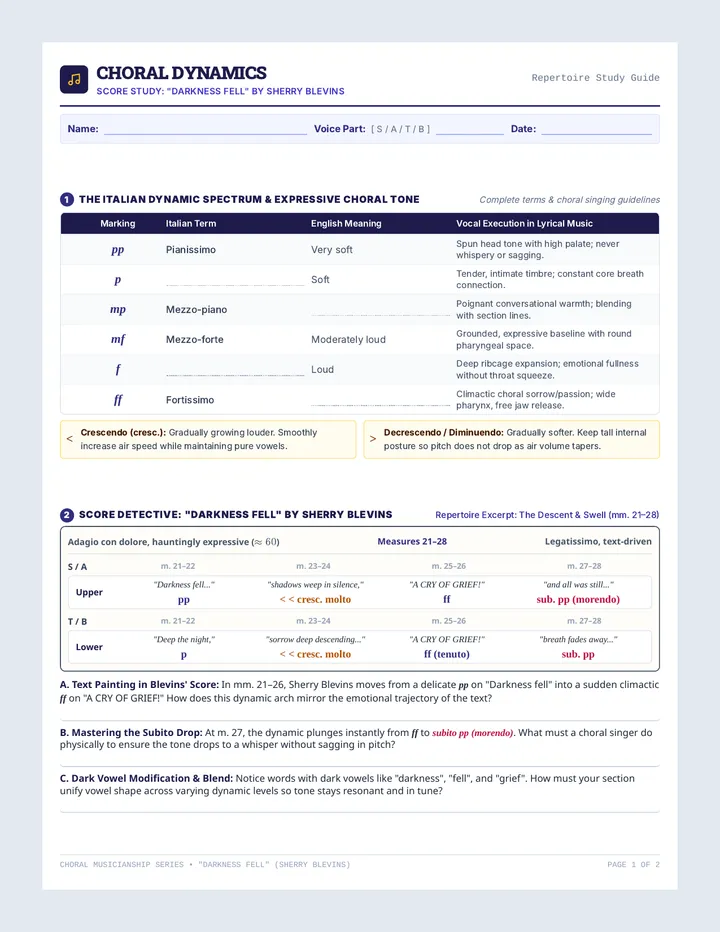
Vocal anatomy, diction, and phrasing techniques for diverse musical genres. Strengthens stage presence and interpretive skills for live performance.
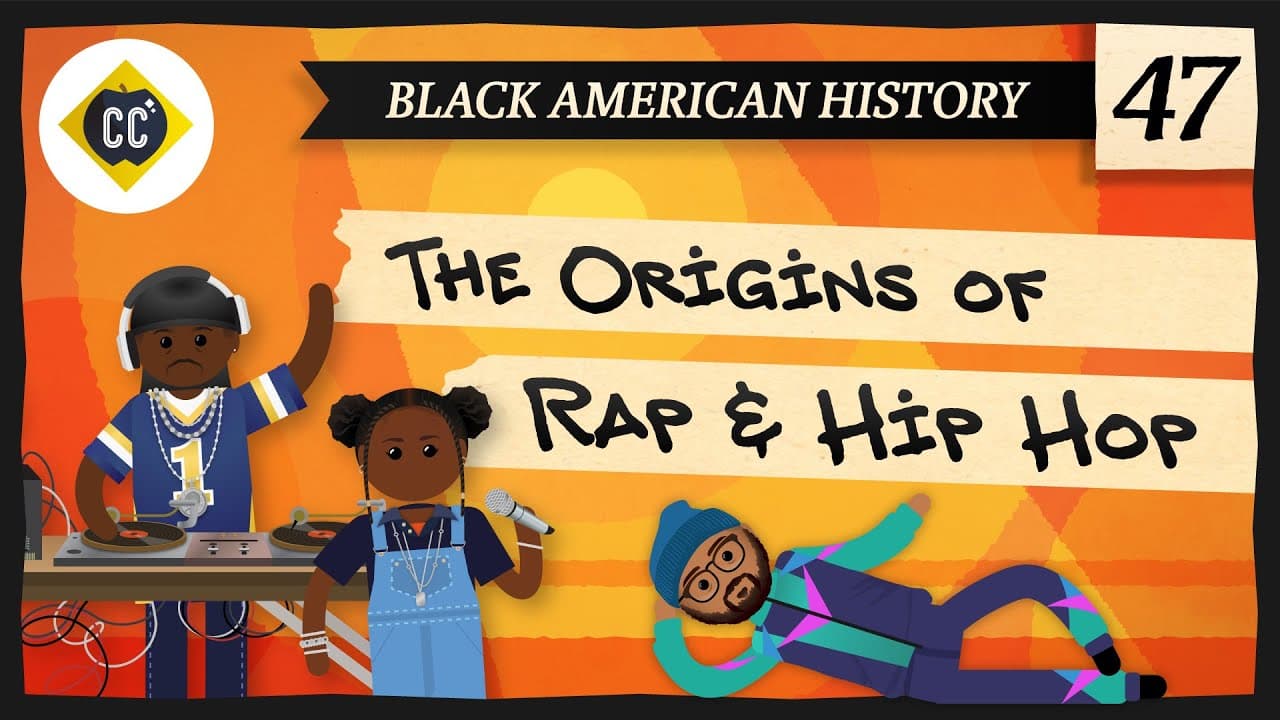
This video from Crash Course Black American History explores the dynamic origins and evolution of hip hop and rap, tracing its roots from the streets of Harlem and the South Bronx in the 1970s to its status as a global cultural phenomenon. Clint Smith explains how the genre emerged as a creative response to the economic neglect of Black communities and the artistic legacy of the Black Arts Movement. The video breaks down the "four pillars" of hip hop—DJing, rapping, graffiti, and breakdancing—demonstrating how these distinct art forms coalesced into a unified counterculture.
14mins 55s
An introductory exploration of jazz music for K-2 students, centering its Black American roots and legendary pioneers through listening, speaking, and creative expression.
A K-12 collaborative music video project where students across all grade levels work together to produce a 'Playing for Change' style cover of a protest song centered on equality and cultural identity. High school students lead production, while K-8 students provide the musical and visual heart of the performance.
A comprehensive 6-lesson unit for 5th graders exploring the history, evolution, and legendary figures of American Jazz, from its New Orleans roots to its global legacy today.
An immersive workshop-style sequence for 2nd graders exploring the roots of Jazz, Blues, and Folk music through call-and-response, syncopation, and improvisation. Students trace American musical history from work songs to the Swing era through active music-making.
Students explore the world of Jazz through rhythm, syncopation, and improvisation. They'll meet legends like Louis Armstrong and Ella Fitzgerald while learning to find their own musical voice through 'swing' and scat singing.
A 5th-grade music history sequence exploring the development of Jazz and Blues, from African call-and-response roots to the birth of Rock n' Roll. Students investigate structural forms like the 12-bar blues, concepts like syncopation and improvisation, and the cultural resilience behind the music.
This sequence introduces Kindergarteners to the distinctly American art forms of Jazz and Blues, focusing on emotion and spontaneity. Students explore the 'swing' feel, improvisation, and scat singing through active movement and vocal play.
Students explore the relationships between notes, focusing on intervals (steps, skips, leaps) and the construction of the C Major scale. Using solfege, hand signs, and aural analysis, students learn to identify and dictate melodic patterns in simple folk music.
A 5-lesson sequence for 2nd graders to master reading pitch on the musical staff, moving from high/low discrimination to reading 3-note melodies using Solfege.
An inquiry-based journey into the logic of pitch organization, covering the Grand Staff, major scale construction, the Circle of Fifths, relative minors, and sight-singing applications. Students use a 'decoding' lens to master the patterns that govern tonal music.
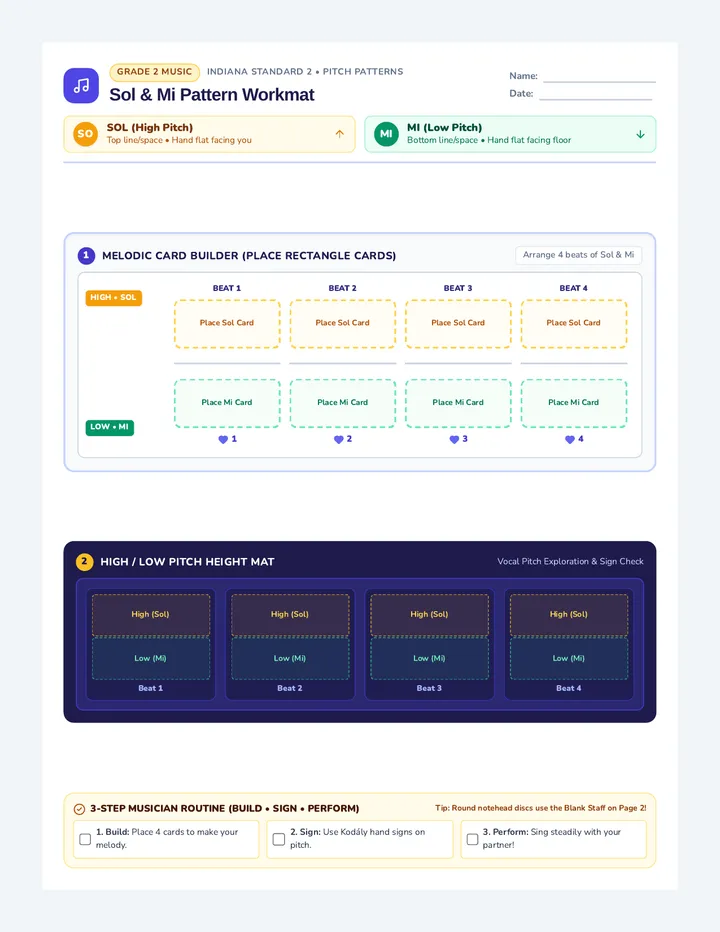
A 1st-grade music sequence focusing on pitch discrimination, melodic contour, Sol-Mi intervals, and the basics of the musical staff through movement and composition.
A rigorous sequence on music theory, covering intervals, triads, seventh chords, Roman numeral analysis, and four-part voice leading for 12th-grade students.
A granular pedagogical manual detailing Lessons 19 to 36 of the Kindergarten Music Curriculum. Each lesson plan outlines a precise 25-minute chronological guide covering advanced solfege, ensemble playing, simple bordun, and improvisation.
A granular pedagogical manual detailing Lessons 1 to 18 of the Kindergarten Music Curriculum. Each lesson plan outlines a precise 25-minute chronological guide covering voice exploration, steady beat, high/low, and fast/slow.
The comprehensive year-long curriculum map, pacing guide, and repertoire list for Kindergarten Music, detailing the pedagogical approach, 25-minute class routine, quarterly focal points, and a curated master repertoire list.
A simplified, punchy, and highly visual bilingual flyer for tomorrow's Beatbox & Dance Showcase. Features dynamic geometric dancer silhouettes performing on a stylized glowing stage with spot beams, doors opening at 4:30 PM, show starting at 4:45 PM, and location updated to the Multi-Purpose Room (MPR).
A beautifully designed printable lyric sheet for Brackett staff to sing a goodbye song to their AP who is becoming the Principal at Peirce Elementary, incorporating specific inside jokes like the rainbow door, inflatable costumes, chirping, and coherence.
A collaborative shipyard rhythm card game where student crews arrange rhythmic maritime action cards to build and perform 4-bar labor song sequences.
A creative student worksheet for maritime vocabulary matching, call-and-response analysis, and guided modern sea shantey lyric writing.
Interactive lesson presentation slides on Portsmouth shipyards, maritime history, and the musicology of call-and-response sea shanteys.
A comprehensive teacher's lesson plan covering historical context, musical analysis, and step-by-step facilitation instructions for the Maritime Melodies lesson.
A student activity worksheet for tracing melodic contours. Students listen to bird calls and follow the "flight paths" provided, then create their own melodic line at the bottom.
A warm-up guide for vocal and physical preparation before the main music activity. Includes breathing exercises and visual "vocal sirens" for students to follow.
A vibrant slide deck for visual support during the Birdsong Ballet lesson, featuring Idaho birds, movement cues, and visual representations of melodic pitch.
A comprehensive, year-long curriculum for Kindergarten Music. It contains a detailed Scope and Sequence Document and two highly granular Lesson Structure Manuals detailing 36 distinct bi-weekly lesson plans.
An exploration of nineteenth-century Portsmouth shipyards through historical sea shanteys, teaching upper elementary students about rhythm, labor history, and call-and-response song structures.
A delightful introduction to melody and pitch through the lens of Idaho's native birds. Students use scarves and vocal play to connect physical movement with melodic contour.
A complete bulletin board kit featuring vibrant, rainbow-themed musical elements and diverse student illustrations to celebrate music as a universal language.
This lesson introduces students to the sounds of jazz, the concept of improvisation, and the historical origins of the genre in New Orleans.
Second and third graders explore the history of American folk music on the Idaho Trail, focusing on the unique sounds of the banjo, fiddle, and washboard while practicing call-and-response.
A musical exploration where students use the growth of a plant to understand crescendo and decrescendo through movement and voice.
A 45-minute lesson for adult Sunday School focusing on Exodus 7-17. It explores Pharaoh's pride, the Passover as a type of Christ, and the concept of daily spiritual bread through the miracle of manna.
Курс з екстремального скату та сучасного музичного продакшну, що поєднує абсурдну фонетику з агресивними бітами (phonk, hardbass, trap).
A foundational lesson on the precursors to opera, focusing on Renaissance vocal forms like the Chanson, Madrigal, and Lute Song that paved the way for the Baroque invention of opera.
An introductory lesson to the world of musical theatre for 3rd graders, focusing on the 'Three Pillars': acting, singing, and dancing. Students will explore how these elements combine to tell stories on stage.
A comprehensive 5th-grade music lesson focused on ukulele proficiency and vocal performance in preparation for a spring showcase, aligned with the Danielson Framework.