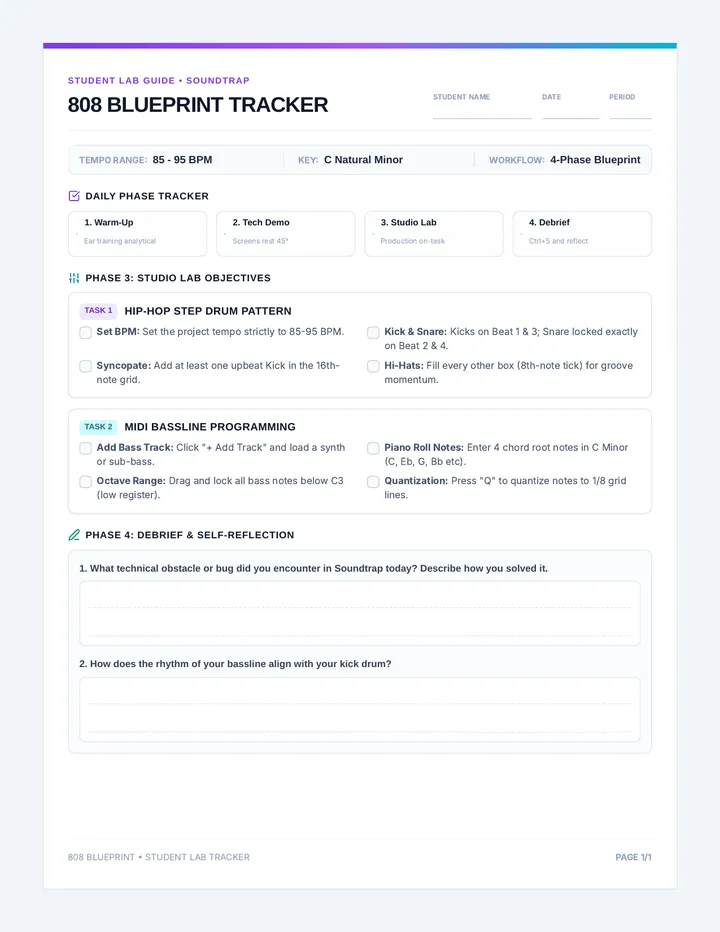
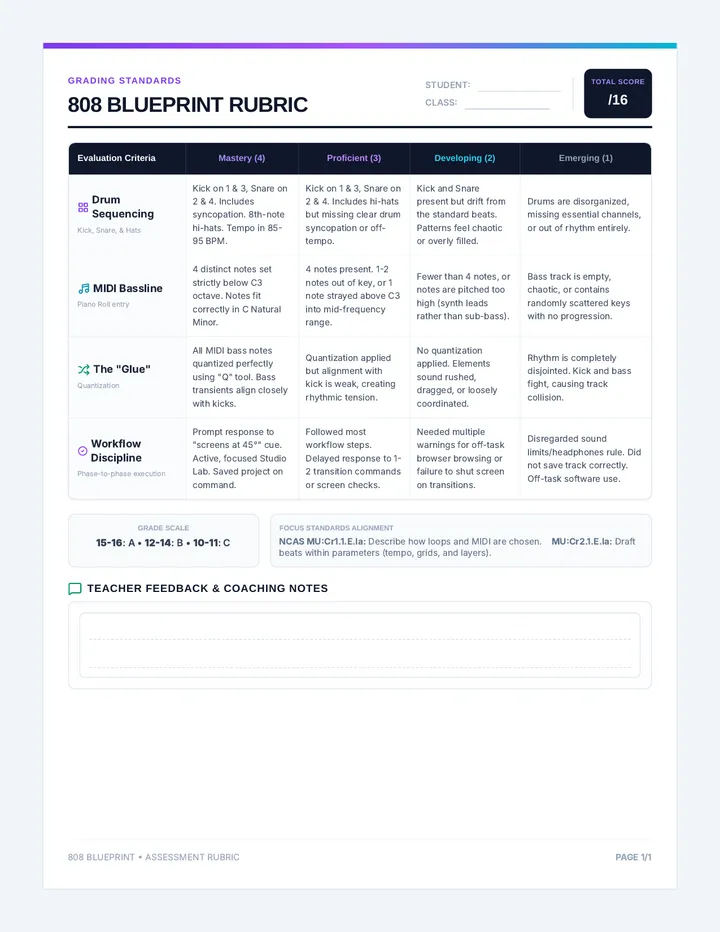
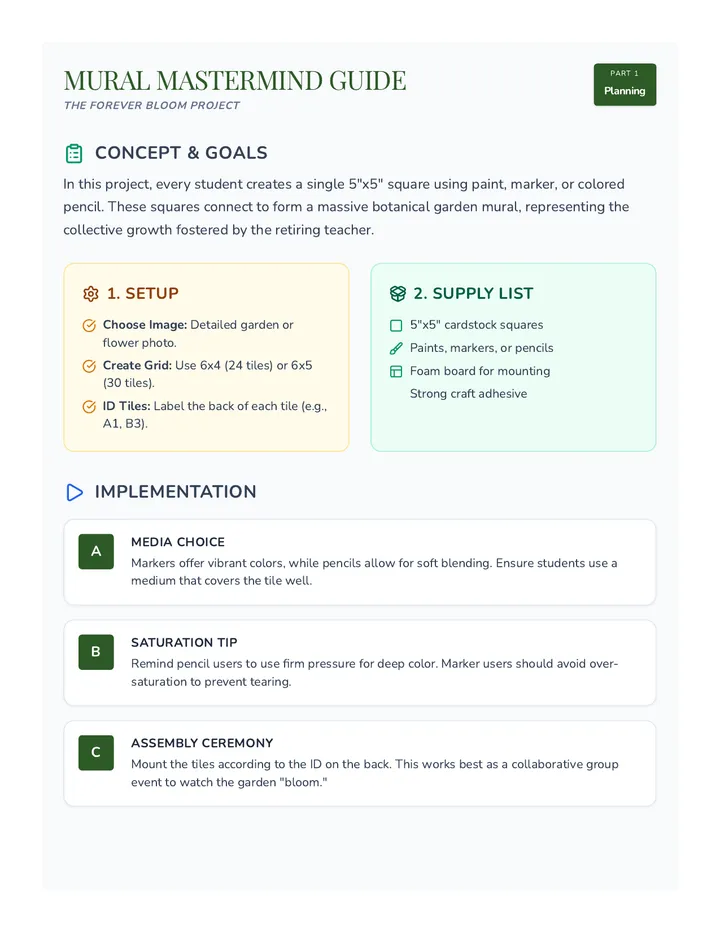
Monologue Magic Slides Monologue Magic
Stripping the Melody for Authentic Storytelling
Lyrical Interpretation
Acting for Singers
The Monotone Challenge
01 // HOOK
"I'm findin' ways to articulate the feelin' I'm goin' through... I'm findin' ways to tell you that I miss you."
The Task
Read these lyrics aloud in a completely flat, monotone voice. No inflection. No rhythm. No emotion.
The Discovery
What is lost when we remove the "music"? How does the lyric feel different as just spoken word?
Why Strip the Melody?
02 // CONCEPT
Unmasking Subtext
The melody often masks the raw vulnerability of the words. Spoken text demands honesty.
Character Discovery
Who is saying this? To whom? Where are they? The melody can distract from these clues.
Natural Phrasing
Spoken speech has a natural rhythm. Finding this rhythm helps avoid "robotic" singing later.
The Three Pillars of Context
03 // ANALYSIS
1
The Speaker (Character)
What is their current state? What has just happened to them 5 minutes ago?
2
The Listener (The 'Other')
Songs are rarely sung to a void. Are you singing to a lover, a parent, yourself, or God?
3
The Conflict
What is stopping the character from getting what they want? Why must they sing *now*?
Workshop Instructions
04 // PRACTICE
Select one verse and one chorus of your chosen song.
Write the text out as a paragraph—no song structure formatting.
Perform the text standing. No "sing-song" rhythms allowed.
"Acting is the ability to live truthfully under imaginary circumstances."
— Sanford Meisner
Lyric Anatomy Worksheet Lyric Anatomy
Text Analysis for Vocal Performance
NAME: ________________________________ DATE: _________
THE OBJECTIVE
Before we sing a single note, we must understand the dramatic truth of the text. Use this worksheet to strip away the melody and treat your song as a piece of literature.
Step 1: The Monologue Conversion
Write out your chosen verse and chorus as a continuous paragraph of prose. Ignore line breaks or rhyming patterns. Focus only on the punctuation and thought flow.
Step 2: Character State
Who is the speaker?
What happened 5 minutes ago?
Where are they standing right now?
Step 3: The Listener
Who are they speaking to?
What is the speaker's relationship to them?
Why can't they just say this normally? Why sing?
Step 4: Beats & Turning Points
Identify three "beats" in your text—moments where the thought or emotion shifts significantly.
01
LYRIC LINE / MOMENT:
WHAT SHIFTS EMOTIONALLY HERE?
02
LYRIC LINE / MOMENT:
WHAT SHIFTS EMOTIONALLY HERE?
03
LYRIC LINE / MOMENT:
WHAT SHIFTS EMOTIONALLY HERE?
The "Aha!" Moment
After doing this work, what is the one thing you discovered about this song that you hadn't noticed while just singing the notes?
Monologue Workshop Teacher Guide Monologue Workshop
Teacher Facilitation & Facilitation Guide
Lesson No. 01
Duration
90 Minutes
Grouping
Pairs & Solo Work
Goal
Emotional Authenticity
The Opening Gambit
Perform a set of lyrics yourself (or play a recording) of a highly emotional song, but read it as if you are reading a grocery list or a technical manual.
Key Discussion Prompts:
"When the 'beauty' of the music is gone, what is left? Is it enough to carry the story?"
"If you can't make the words compelling as a monologue, can you ever truly make them compelling as a song?"
Instructional Flow
1
Deconstruction (20 mins)
Students use the Lyric Anatomy Worksheet . They must select a song they know well. Circulate and ensure they are writing in prose, not stanzas. If they struggle, tell them: "Tell me the story of these lyrics as if you're explaining what happened to you this morning."
2
The Character Workshop (25 mins)
Pairs interview each other in character. Student A is the speaker; Student B asks probing questions: "Why are you telling me this now?", "What do you want from me?", "Why can't you just leave?"
Pro Tip: Encourage students to be specific. "A breakup song" is too vague. "A breakup after 4 years, sitting in a car in the rain while the engine is still running" is a performance-ready context.
3
The Monologue Performance (35 mins)
Students stand and perform their "verse/chorus monologue." The Rule: If they start singing or using a melodic rhythm, they must stop and start the sentence over.
Troubleshooting Common Issues
The "Musical Theater Smile"
Students often default to a "performance face" regardless of text. Fix: Have them perform the monologue while sitting in a chair, leaning forward, as if they are whispering a secret to a friend.
Generalized Emotion
Being "sad" isn't an action. Fix: Ask them to pick a specific person in the room to speak to. Make them try to "convince" that person to stay or "apologize" until the other person nods.
Hidden Meanings Slides Hidden Meanings
Objectives & Tactics for the Vocalist
"The music is what the character cannot say; the subtext is why they are saying it."
The Power of "Why"
Simulation
The Phrase:
"I am leaving."
Scenario A
You finally won the lottery and you're quitting your terrible job.
Scenario B
You are breaking up with the person you love because you have to move.
Scenario C
You are bored at a party and just want to go get tacos.
The Objective
DEFINITION
What is it?
An Objective is the goal your character is trying to achieve. In singing, every phrase should be a step toward this goal.
The Gold Standard
A good objective starts with:
"I want to [VERB] [WHO] to [DO SOMETHING]."
Weak vs. Strong
WEAK: "I want to be sad." (This is a feeling, not a goal)
STRONG: "I want to force my ex to see how much they hurt me."
The Tactics
HOW you get what you want
If the objective is the destination, tactics are the different paths you take. When one tactic fails, the character must try a new one.
To Defend
Protective, soft, cautious tone
To Attack
Sharp, loud, edgy vocal color
To Charm
Smooth, breathy, melodic
To Interrogate
Focused, staccato, rhythmic
Practical Application
Workflow
STEP 1
Write out one line of your song.
STEP 2
Assign an active verb (Tactic) to that line.
STEP 3
Sing the line focusing ONLY on the verb.
Tactics Toolbox Worksheet Tactics Toolbox
Mapping Intent to Every Vocal Phrase
NAME: ________________________________ SONG: ________________________________
Part 1: The Super-Objective
What is your character's overall goal in this entire song? It must be an active verb directed at someone else .
I WANT TO...
Part 2: Phrase-by-Phrase Tactics
Break down your song section (verse/chorus). For each lyrical phrase, identify a specific tactic (an active verb) and how that will change your vocal quality.
The Lyric Phrase The Tactic (Verb) Vocal Color / Dynamic
The Tactic Bank (Reference)
Choose active, playable verbs. Avoid internal states like "to feel sad" or "to be angry." Use these for inspiration:
To Convince
• To plead
• To educate
• To charm
• To beg
To Attack
• To mock
• To blame
• To intimidate
• To pierce
To Shield
• To hide
• To comfort
• To soothe
• To deflect
Tactical Transition
Where in your song do you switch from one tactic to a completely different one? Why did the character have to change their strategy?
Subtext Scenarios Activity Cards Subtext Scenarios
Classroom Activity Cards
Cut these cards out. Give one to a student. They must sing a line of their song using the "Hidden Context" provided. The class must guess what their secret scenario is.
The Secret Ghost
You are singing to a person who has already passed away, but you can see them in front of you.
The Time Bomb
You have exactly 30 seconds to say this before you have to leave forever. You are in a rush.
The Lullaby Lie
You are singing to a child who is falling asleep, but the news you're giving is actually terrifying.
The Public Shaming
You are singing this to one person, but 100 people are watching and listening to every word.
The False Front
You are absolutely devastated inside, but you are trying to convince everyone you're fine.
The Hidden Royalty
You are a king/queen pretending to be a commoner. You are superior but trying to hide it.
Lesson 2 Activity Material
Print & Cut for Workshop
Energy Arcs Slides Energy Arcs
Dynamics & Phrasing as Narrative
CRESCENDO
RUBATO
CLIMAX
The Visual Energy Map
Warm-up
Sing a simple scale or a line from your song while following this line with your finger. Your volume and intensity must match the height of the line exactly.
START
FINISH
CLIMAX!
Climax Alignment
CORE CONCEPT
Musical Climax
The highest note, the loudest volume, or the most complex accompaniment in the score.
Emotional Climax
The moment of greatest vulnerability, realization, or victory in the story.
"If these two do not align, the audience feels a disconnect. If they do align, the performance becomes iconic."
THE SWEET SPOT
The Plasticity of Time
Rubato
Lingering
Slowing down on a word to show hesitation, realization, or deep affection.
Urgency
Pushing forward (accelerando) to show anger, excitement, or panic.
The Breath
Using silence (caesura) as a dramatic choice, not just for oxygen.
Your Mission
APPLICATION
Find the Climax.
Find the Whisper.
Performance Practice:
Sing your song. You are not allowed to sing any two phrases at the same volume. Every line must either be building up (crescendo) or winding down (decrescendo).
Musical Map Activity Worksheet The Musical Map
Visualizing the Phrasing Arc
STUDENT NAME
Musical Climax
Where does the music peak? (Note name, measure number, or lyric line)
Emotional Climax
Where does the character's heart peak? (What is the lyric?)
The Convergence
Do these two moments happen at the same time? If not, how many measures apart are they? What happens between the two peaks?
Part 2: The Visual Energy Graph
Draw a continuous line representing the "Energy" of your performance from start to finish. Mark the Climaxes, the Whispers, and any moments of Rubato (stretching time).
Intensity Max
Intensity Min
Verse 1
Chorus 1
Bridge
Chorus 2
Outro
Part 3: Dynamic Decisions
The Crescendo
Where do you build? Why?
The Decrescendo
Where do you pull back? Why?
The Rubato
Where do you stretch time?
Phrasing Glossary Reference Sheet Vocal Performance Reference
The Phrasing Glossary
A singer's guide to expressive terminology and interpretive techniques.
I. Dynamics (Volume)
Crescendo / Decrescendo
Gradually getting louder or softer. In storytelling, a crescendo often represents growing realization or rising anger , while a decrescendo shows resignation or intimacy .
Subito Piano
Suddenly quiet. Used to show a moment of shock , a secret , or a loss of confidence mid-sentence.
Sforzando (sfz)
A sudden, strong emphasis. Represents an outburst , an accusation , or a sharp realization .
II. Tempo (Timing)
Rubato
"Borrowed time." Stretching the tempo for expressive purposes. It is the singer's most powerful tool for conversational authenticity .
Accelerando
Getting faster. Used to convey breathlessness , anxiety , or joyous excitement .
Caesura ( // )
A complete break or pause. In acting, this is the "beat" where the character thinks or waits for a reaction from the listener.
III. Articulation
Legato
Smooth and connected. Suggests peace , continuity , or romance .
Staccato
Short and detached. Suggests playfulness , frustration , or mechanical stiffness .
Tenuto
Holding a note for its full value or slightly longer. Gives the word weight and importance .
Pro Tips
Never repeat a line the same way twice. Change the dynamic or the emphasis the second time to show a shift in thought.
The climax isn't just "loud." Sometimes the most intense climax of a song is a whispered high note. Intensity comes from intent , not just decibels.
Breathe where the character would breathe. Use breaths to show emotion (a gasp of air vs. a slow sigh).
Vocal Palette Slides The Vocal Palette
Expressive Timbre & Vocal Texture
Breathey
Edgy
Velvet
Cry
Defining Timbre
Science of Sound
Timbre (pronounced TAM-ber ) is the quality or "color" of a sound that distinguishes it from others, even at the same pitch and volume.
"If a piano and a violin play the same Middle C, you can tell them apart because of their timbre. Your voice has an infinite range of timbres."
Dark Color
Warm, round, cavernous, mature.
Bright Color
Sharp, thin, youthful, piercing.
The Texture Toolbox
Techniques
Breathiness
"The Whisper"
Emotion: Intimacy, fatigue, fear, vulnerability.
Edge (Twang)
"The Bite"
Emotion: Confidence, anger, sarcasm, determination.
Vocal Cry
"The Break"
Emotion: Desperation, pleading, overwhelming grief.
Vocal Fry
"The Growl"
Emotion: Boredom, sexy/cool vibes, deep exhaustion.
The Power of Choice
Analysis
"Hallelujah"
Imagine three singers performing the same note:
🎤
Singer 1
Pure, operatic, clear tone. (Reverence)
🎸
Singer 2
Breathy, airy, fragile. (Brokenness)
🤘
Singer 3
Edgy, raspy, loud. (Defiance)
Texture Testing
Workshop
Take one short phrase from your song and sing it four different ways using the textures we discussed.
1
AIR
2
EDGE
3
CRY
4
MIX
Texture Tester Worksheet Log Texture Tester
Vocal Experimentation Log
PERFORMER: ________________________________ PHRASE: "________________________________"
"The voice is not a static instrument. Like a painter, you must choose the right 'brush' for the right lyric." Choose one phrase from your song and run it through the following "texture filters." Describe how each change affects the emotion of the line.
Texture 01
Breathiness
More air, less cord closure.
HOW DOES THE EMOTION SHIFT?
Texture 02
Vocal Edge
Bright, forward, "brassy" resonance.
HOW DOES THE EMOTION SHIFT?
Texture 03
Vocal Cry
Tilt in the larynx, sounds like sobbing.
HOW DOES THE EMOTION SHIFT?
Texture 04
Vocal Fry
Creaky, low energy, rough texture.
HOW DOES THE EMOTION SHIFT?
Synthesis: The Final Choice
Now that you've tested the extremes, which texture (or blend) will you use for this phrase in your actual performance? Why does this choice serve the objective of the character better than the others?
Note: Always practice textures in a healthy way. If your throat feels scratchy or sore, stop immediately and return to a neutral, balanced tone.
Interpretive Masterclass Slides The Masterclass
Authentic Performance & Critique
Presence • Purpose • Performance
Visual Storytelling
The Hook
The Silent Test
"If I turn off the sound on your performance, will I still know what your character is feeling?"
Your eyes, your breath, and your physical tension tell 50% of the story before you even make a sound.
The Constructive Mirror
Feedback Guide
I Heard...
Focus on the vocal colors, dynamics, and phrasing choices. Did they serve the story?
I Saw...
Focus on the physical presence, focus points, and facial expressions.
I Felt...
Focus on the emotional impact. Was the objective clear? Did you believe them?
The Golden Rule
"Critique the choices, not the person. Focus on clarity of intent, not 'good' or 'bad' singing."
The Sacred Space
Culture
Vulnerability
Allow yourself to fail or look 'ugly' if it serves the truth of the song.
Generosity
Listen as if your own life depends on the story they are telling.
Growth Mindset
Take every note as a chance to find a deeper layer of meaning.
Curtain Up
Protocol
1
Slate your name, your song, and your objective .
2
Find your focus point (the listener) in the room.
3
Breathe. Begin the story.
4
Stay "in it" until the very last note decays into silence.
Peer Critique Form Worksheet Masterclass Critique
Authenticity & Narrative Feedback
CRITIC: _____________________ DATE: _________
PERFORMER NAME
SONG TITLE / CHARACTER
I. The Vocal Palette (Sound)
Timbre, Dynamics, Phrasing
Did the singer use vocal color (breathiness, edge, etc.) and dynamics to tell the story? Give a specific example of a phrasing choice that worked.
II. The Acting Truth (Intent)
Objectives, Subtext, Tactics
Was the character's objective clear? Did they seem to be "talking" to someone specific? When did you most believe their emotional truth?
III. Stage Presence (Body)
Eyes, Breath, Posture
How did the performer use their eyes and physical tension? Did their physical life match the energy arc of the song?
The Ultimate Impact
"In one sentence: What was the most compelling 'story' moment of this performance?"
OBSERVE • ANALYZE • EMPATHIZE
Masterclass Facilitator Teacher Guide Facilitating the Masterclass
Teacher Strategy & Facilitation Guide
Lesson No. 05
Philosophy
A masterclass is not a recital. It is a collaborative workshop where the performer and the audience work together to unlock the "truth" of a piece. The teacher acts as a director, helping the student discover deeper layers of interpretation.
Primary Objectives
Clear Lyrical Intent
Authenticity over "Beauty"
Vulnerable Body Language
Strategic Vocal Colors
The "Director's" Intervention
If a student is singing beautifully but without "heart," use these exercises to break through the surface:
Exercise A: The Eye Lock
Have the student sing the song while looking directly into the eyes of one person in the front row. They are not allowed to look away. This forces intimacy and stops "performer face."
Exercise B: The "But Why?" Chain
Stop them mid-song. Ask "Why are you saying that?" When they answer, ask "But why?" again until they get to a deep, personal truth. Then say: "Sing it from that place."
Exercise C: The Resistance
Have the student try to walk toward their listener while you (the teacher) gently hold them back by the shoulders. This physical resistance naturally adds "cry" and "edge" to the voice.
Managing Peer Feedback
What to encourage
"I noticed your breath hitch on that line; it made me feel the character's panic."
"I liked how you used a breathy color in the verse to show how tired the character is."
What to redirect
"That was a pretty song." (Redirect to: "What story did the prettiness tell?")
"You sang a wrong note." (Redirect to: "How did the error affect the character's focus?")
The Closing Question
End the class by asking every student to share one thing they saw another student do that they want to "steal" for their own practice.
Reflective Empowering Iterative