Historical evolution of performance styles from classical Greek tragedy through modern realism and experimental theater. Analyzes the interplay between playwrighting, stagecraft, and the societal contexts that shaped theatrical traditions.
A comprehensive 100-prompt categorized master reference guide for High School Theatre 1-2 educators covering acting technique, vocal/physical expression, script analysis, stagecraft, theatre history, directing, and performance critique.
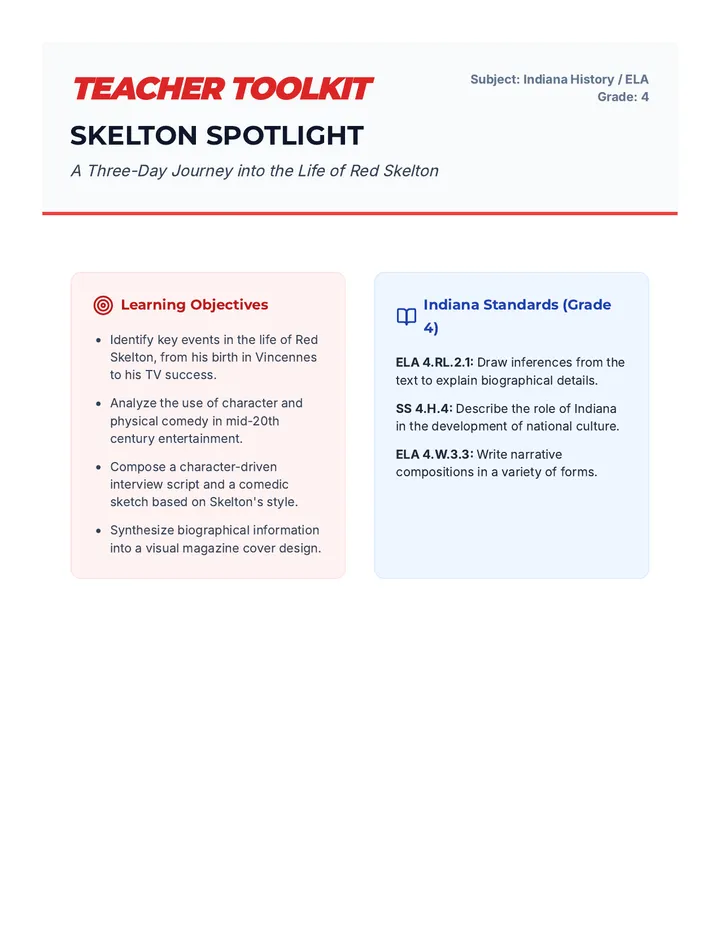
A three-day exploration of the life and legacy of Indiana-born comedian Red Skelton, presented in a vibrant magazine format. Students explore his early life in Vincennes, his iconic characters, and his lasting impact on American comedy through reading and creative performance activities.
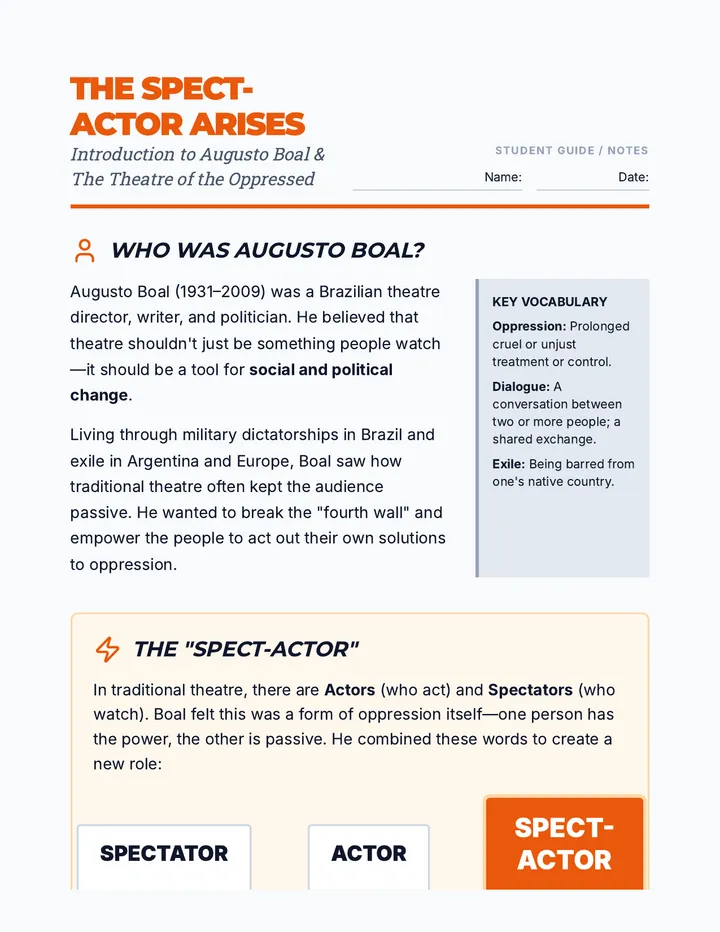
A multi-day unit exploring Augusto Boal's Theatre of the Oppressed, focusing on the transition from spectator to 'spect-actor' through Image and Forum Theatre to address contemporary social issues.
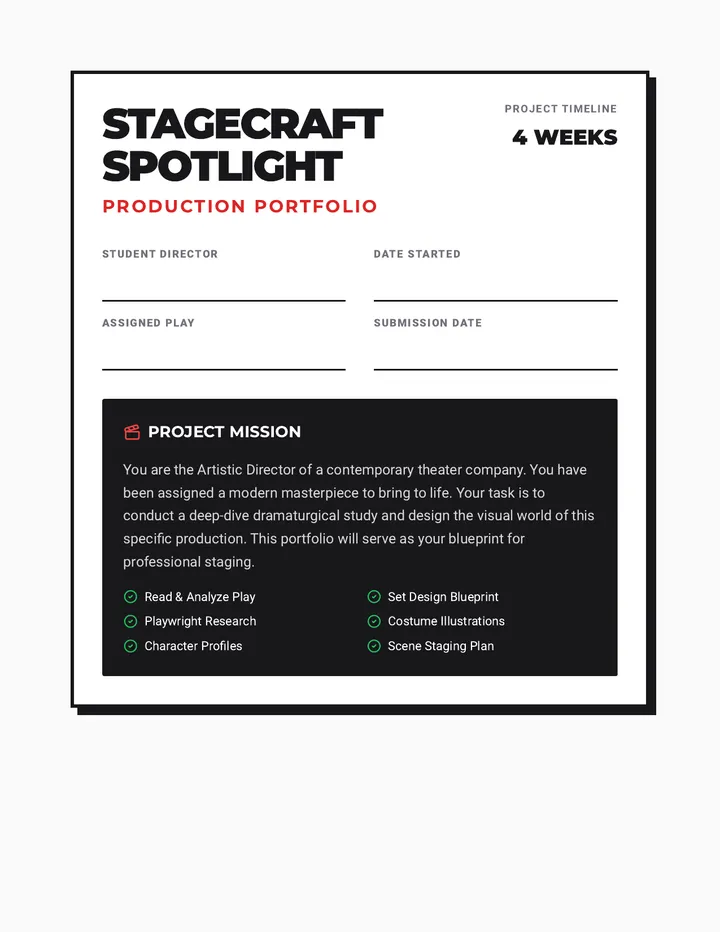
A comprehensive four-week unit and independent study guide for contemporary drama. Students analyze scripts, research playwrights, design technical elements, and stage scenes for a final production portfolio.
An advanced literary sequence for high school sophomores exploring archetypal evolution, intertextuality, and the deconstruction of folklore across Victorian literature and modern musical theater. Students analyze the socio-cultural shifts that transform classic legends into modern subversive narratives.
A sequence exploring the daily lives and creative processes of renowned artists, starting with John Byrne. Students observe artistic routines and apply those methods to their own creative practice.
This unit explores the history of physical comedy, from the masked archetypes of Italian Commedia dell'Arte to modern slapstick and sitcoms. Students develop physical characterization skills, understand status dynamics, and learn to identify recurring comic archetypes across theater history.
A hands-on activity where students learn to decode and encode Shakespearean language by writing secret messages or insults, then swapping them with peers to translate.
A comprehensive assessment for Act 5 of Shakespeare's Romeo and Juliet, focusing on the resolution of the plot, the role of fate, and the ultimate tragedy in the Capulet tomb.
Students explore the structural components of drama by mapping plot elements onto a diagram and analyzing how characters evolve through theatrical conflict.
A high-energy guessing game focused on iconic quotes from movies and television, designed to test pop culture knowledge and spark discussion.
A deep dive into Stanislavski's 'System', focusing on using real-world experiences to inform character work through peer interviews.
A lesson exploring the evolution of English theater during the reign of King James I, focusing on stagecraft, darker themes, and the transition to indoor performance spaces.