Mood Ring Teacher Guide
What's Your Musical Mood Ring?
Lesson Facilitation Guide
45-60 Minutes Middle School (Grades 6-8)
Learning Objective
Students will be able to identify how tempo, harmony, and instrumentation contribute to specific emotions in music, and articulate their own emotional responses using specific musical terminology.
Why This Matters
Understanding the emotional impact of music helps students connect with art on a deeper level, develop empathy, and gain a new lens through which to appreciate creative expression. It bridges the gap between passive listening and active, critical engagement.
Materials
- Music Mood Ring Slide Deck
- Diverse musical excerpts (Classical, Pop, Film, Electronic)
- Mood Detective Worksheets
- Whiteboard or Projector
- Paper/Whiteboards and markers
Teacher Preparation (15 mins)
- Review the Music Mood Ring Slide Deck and ensure audio is functional.
- Curate a selection of 4-6 short musical clips (1-2 mins each) representing distinct emotions (e.g., Happy, Sad, Tense, Triumphant).
- Print copies of the Mood Detective Worksheet for each student.
- Set up your "Warm-Up" track so it plays immediately as students enter or as the lesson begins.
Instructional Sequence
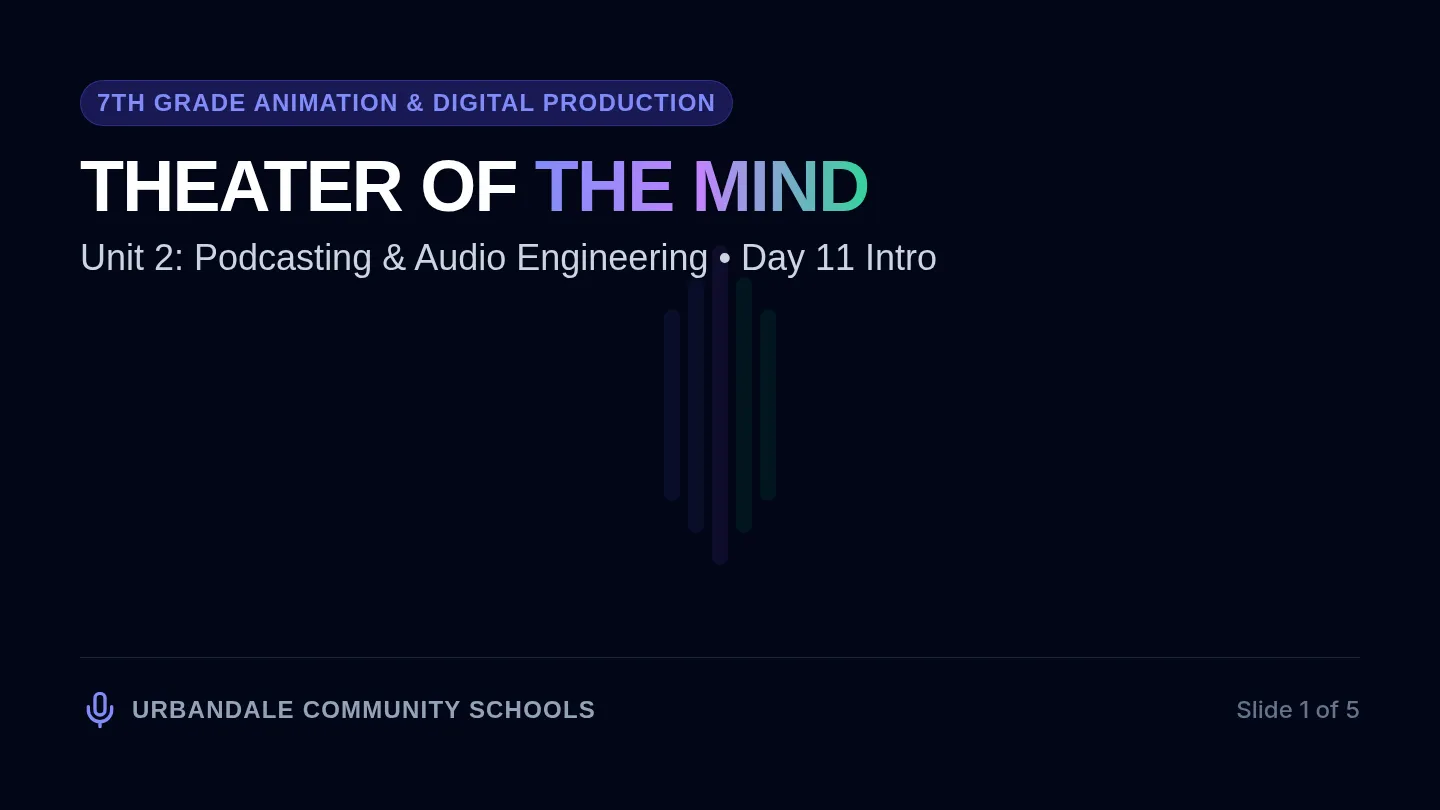
01
5 Mins
Warm-Up: The Sound of Emotion
Begin by playing an emotionally charged piece of music (e.g., John Williams' Schindler’s List Theme or a high-energy pop track) without introduction.
Teacher Prompt: "Close your eyes. What emotions does this music evoke? Don't think about the lyrics or the movie—just the sounds. Why do you feel that way?"
02
10 Mins
Introduction: Your Musical Mood Ring
Use the Slide Deck (Slides 1-3) to introduce the mood ring metaphor. Explain that just as a mood ring reacts to heat, our brains react to musical elements.
Key Metaphor: Music changes, reflects, and amplifies our inner state.
03
15 Mins
The Secret Ingredients
Walk through Slides 4-6. Focus on how Tempo, Harmony, and Instrumentation act as "dials" that a composer turns to change the mood.
Tempo (Speed)
Harmony (Color)
Instrumentation (Voice)
Hand out the Mood Detective Worksheet. Play excerpts and have students document their findings. Foster discussion: "How did the cello make that sound somber? What happened when the tempo increased?"
04
10 Mins
Musical Mood Challenge
Divide into small groups. Assign each group a specific "Mood Word" (Adventurous, Peaceful, Frantic, Triumphant).
Task: If you were the composer, what "dials" would you turn? Which instruments would you hire? How fast would the beat be?
05
5 Mins
Reflection: The Mood Check-Out
Exit Ticket Questions:
- What was one new thing you learned about music and emotions today?
- How might you listen to music differently after this lesson?
Music Mood Ring Slides
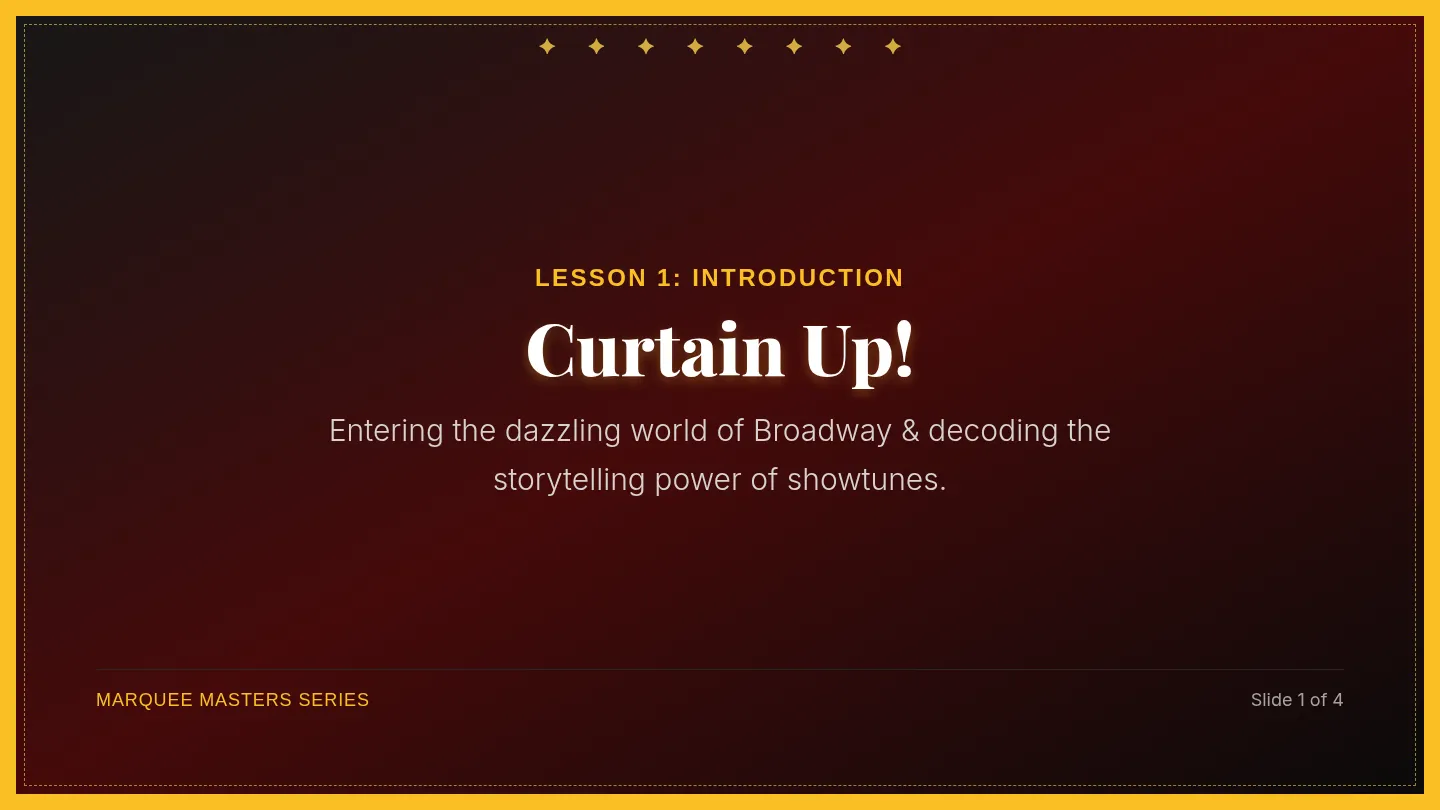
Musical Mood Ring
What Do You
Feel?
Close your eyes. Listen.
Let the music speak to your emotions.
Music: Your Personal Mood Ring
Just like a mood ring changes color with your feelings...
Music can change, reflect, and amplify our emotions!
Today's Expedition
Discover
How music makes us feel in the moment.
Unpack
The secret ingredients composers use to stir emotions.
Analyze
Become musical detectives, decoding different sounds!
Tempo: The Heartbeat
Tempo is the speed of the music.
Just like your pulse, it can race or rest.
Fast Tempos
Exciting, energetic, urgent, frantic
Slow Tempos
Calm, peaceful, sad, mysterious, heavy
Harmony: The Soundscape
Major
Happy, bright,
optimistic, sunny.
Minor
Sad, serious,
dramatic, thoughtful.
Dissonance
Tension, unease,
clashing, excitement.
Harmony is how different notes blend together to create a "color" in music.
Instrumentation: The Voices
Bright Instruments
Flutes, high violins, trumpets
Joyful, playful, light, sharp
Dark Instruments
Cellos, trombones, bassoons
Serious, somber, powerful, deep
Percussion
Drums, cymbals, timpani
Excitement, tension, heartbeat, impact
Composers choose instruments like a painter chooses colors for their brush.
Musical Mood Challenge!
1
Receive your assigned MOOD.
2
Discuss: How would you create music for this mood?
3
List your specific elements on the worksheet.
Tempo
Harmony
Instruments
Your Takeaway
Question 1
What was one new thing you learned about music and emotions today?
Question 2
How might you listen to music differently from now on?
Music is a bridge to our feelings. Keep listening.
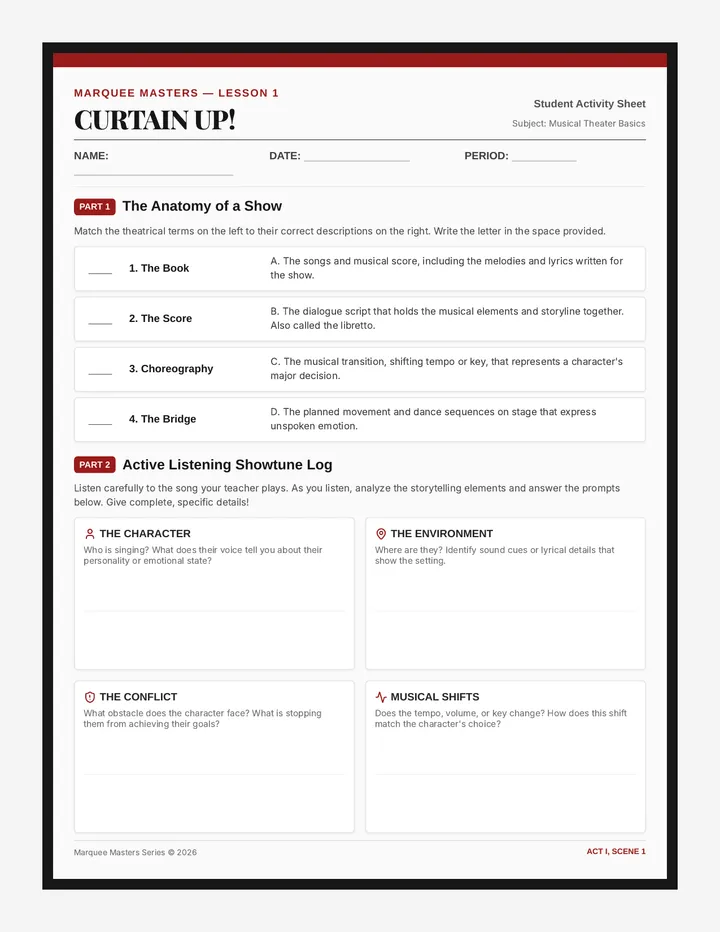
Mood Detective Worksheet
Mood Detective
Music Mood Ring Investigation
Name:
Date:
01
The Listening Log
As you listen to each excerpt, record your emotional reaction and identify the musical "ingredients" the composer used.
Excerpt #1
Main Emotion
Tempo (Speed)
Harmony (Color)
Instruments
Why? (Explain your reasoning)
Excerpt #2
Main Emotion
Tempo (Speed)
Harmony (Color)
Instruments
Why? (Explain your reasoning)
Excerpt #3
Main Emotion
Tempo (Speed)
Harmony (Color)
Instruments
Why? (Explain your reasoning)
02
Musical Mood Challenge
Assigned Mood:
If you were a composer, how would you design a piece of music to match this mood? Be specific!
Tempo
Harmony
Instruments
03
Reflect & Review
What was one new thing you learned about music and emotions today?
How might you listen to music differently from now on?