Style Shift Project Guide Style Shift
A Deep Dive into Theatrical 'Isms' & Movements
Student: ________________________________ Date: __________________________________
Course: Theatre Arts Portfolio Assigned Style: ______________________
The Mission
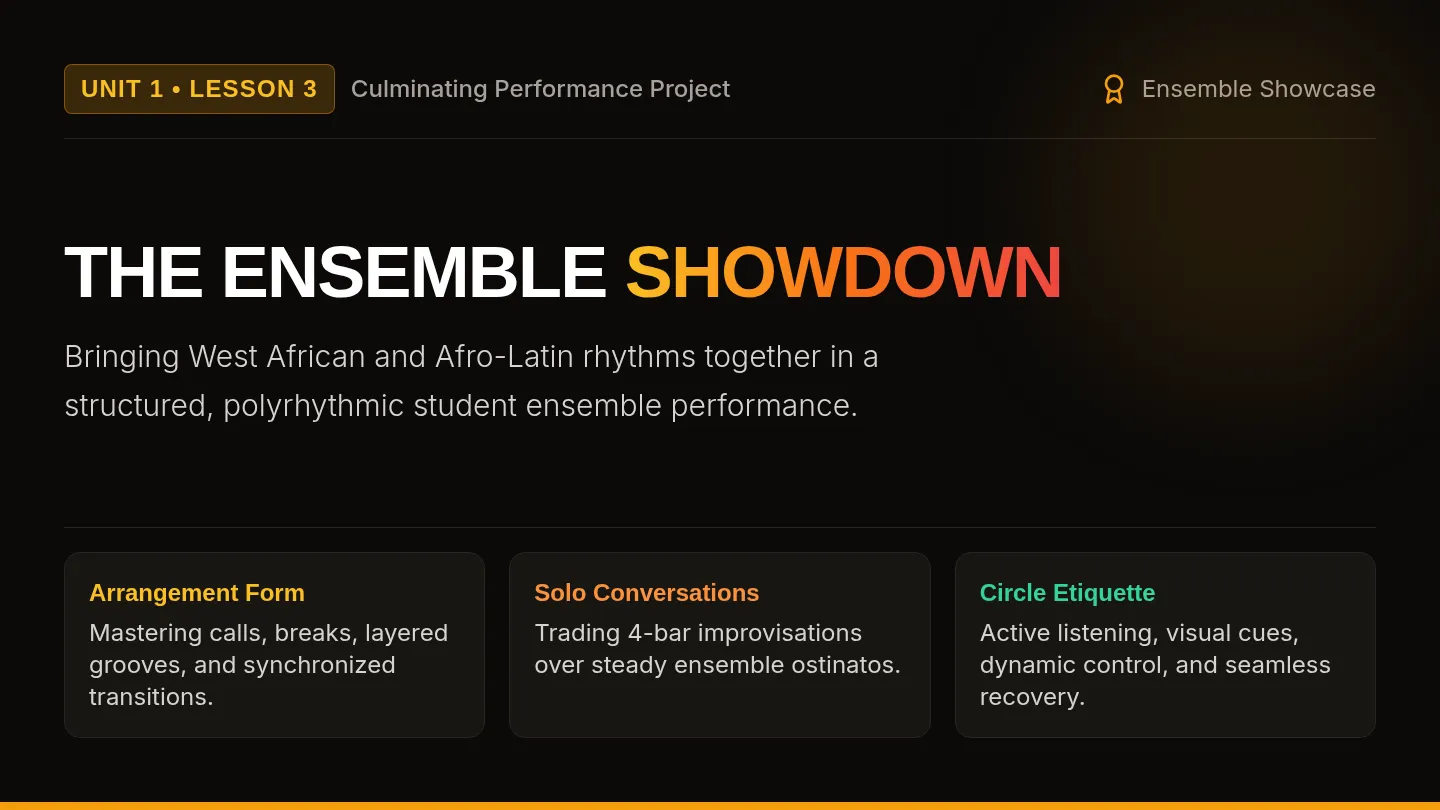
Throughout history, theatre has been a mirror, a hammer, and a dream. Every major theatrical movement—every "ism"—emerged as a reaction to the world around it. Your task is to become the leading expert on your assigned theatrical style. You aren't just researching facts; you are stepping into the mind of the theorists, directors, and designers who revolutionized the stage.
"Theatre is a form of knowledge; it should and can also be a means of transforming society." — Augusto Boal
The Three Pillars
01
Dramaturgy Portfolio Research Intensive
A comprehensive academic portfolio documenting the historical context, key theorists, manifesto principles, and primary source analysis of your movement.
Historical Timeline: What was happening in the world?
The Manifesto: The 5 core "rules" or aesthetics of the style.
The Masters: Bios of at least 3 key playwrights/theorists.
Play Study: Analysis of one "anchor" script in this style.
02
Creative Design Pitch Deck Visual/Artistic
Imagine you are pitching a modern revival of a classic play reimagined through the lens of your assigned 'ism'.
Director's Concept: Your unique vision for the production.
Mood Board: A collection of textures, colors, and inspirations.
Design Sketches: Costume, Set, and Lighting concepts.
03
Style Spotlight Presentation Public Speaking
A 10-minute presentation summarizing your research and pitching your design. You must include a Physical Visual Aid (3D model, tactile mood board, or costume piece).
Style Immersion: One element of your presentation must be performed *in* the style.
Visual Aid: Beyond slides—something the class can see or touch in person.
Mastery Rubric
Criteria Exemplary (10 pts) Developing (7 pts) Novice (4 pts) Dramaturgy Depth Research is nuanced; clear links between historical events and the movement's aesthetic. Covers basic facts and theorists but lacks deep connection to context. Missing key theorists or surface-level research only. Stylistic Fidelity Design and presentation perfectly embody the 'ism'. Vision is bold and clear. Elements of the style are present but inconsistent or misunderstood in parts. Project feels like general theatre; specific style is absent. Visual Impact Visual aid is high-quality, creative, and essential to the presentation. Visual aid is functional but lacks polish or strong connection to the pitch. Visual aid is incomplete or poorly integrated. Oral Performance Engaging, professional, and includes a seamless immersion element. Informative but presentation lacks energy or stylistic performance. Difficult to follow; immersion element is missing or awkward.
Deadlines & Benchmarks
Topic Lock: __________________
Portfolio Rough Draft: _________
Mood Board Check-in: _________
Final Presentation Day: ________
Style Shift Intro Slides Style Shift
A Masterclass in Theatrical Movements
The Mission
You aren't just reading history. You are becoming it.
Your goal is to master a specific theatrical movement and show us how it breathes in the modern world.
"The stage is not merely the meeting place of all the arts, but is also the return of art to life."
— Oscar Wilde
What is an "Ism"?
Reaction
Every movement is a "revolt" against what came before it.
01
Aesthetic
A specific "vibe" or "rulebook" for how theatre should look.
02
Philosophy
A belief about what theatre's purpose is in society.
03
The Gallery of Movements
Elizabethan Theatre
Restoration Comedy
Realist Theatre
Naturalist Theatre
Expressionist Theatre
Surrealist Theatre
Epic Theatre
Theatre of Cruelty
Theatre of the Absurd
One of these will be your focus...
1
Dramaturgy Portfolio
Context: Why did this movement start? What wars or inventions shaped it?Theory: Who were the "Masters" (Brecht, Artaud, Stanislavski)?Analysis: Deep dive into one "Anchor Play."
Mood Board: A visual explosion of your style's aesthetic.The Pitch: Pick a standard play (e.g. Hamlet ) and "Shift" it into your style.Concept: What is your "Big Idea" as a director?
2
Creative Design Pitch
The Grand Finale
The Presentation
Physical Visual Aid
Model, tactile board, or costume piece.
Style Immersion
Speak or perform as the style dictates.
One Final Rule...
"
Your presentation must feel like the style you are teaching.
If you are Surrealism, surprise us. If you are Epic Theatre, break the fourth wall. Don't just talk about it—DO it.
ANY QUESTIONS?
Time to shift
Movement Master List Teacher Resource Movement Master List
Teacher Resource: A Guide to Theatrical 'Isms' & Styles
Teacher Note
This list corresponds to the 9 styles outlined in the introductory presentation. Use these summaries to guide student research and ensure their "Anchor Play" choices align with the movement's core philosophy.
Elizabethan Theatre
1558 – 1603
Aesthetic: Thrust stages, minimal scenery, poetic verse (iambic pentameter), and the "Great Chain of Being." Focus on tragedy and cosmic order.
Theorists/Playwrights: William Shakespeare, Christopher Marlowe
Anchor Play: Hamlet or Doctor Faustus
Restoration Comedy
1660 – 1710
Aesthetic: "Comedy of Manners." Wit as a weapon, sexual intrigue, foppish characters, and the introduction of actresses to the English stage.
Theorists/Playwrights: William Wycherley, Aphra Behn
Anchor Play: The Country Wife or The Rover
Realist Theatre
MID-LATE 19th CENTURY
Aesthetic: The "Fourth Wall." Depicting everyday life and social problems. Believable dialogue and psychological motivation.
Theorists/Playwrights: Henrik Ibsen, Anton Chekhov
Anchor Play: A Doll's House or The Cherry Orchard
Naturalist Theatre
LATE 19th CENTURY
Aesthetic: "Slice of Life." Darwinian focus on heredity and environment. Often grittier and more deterministic than Realism.
Theorists/Playwrights: Émile Zola, August Strindberg
Anchor Play: Miss Julie
Expressionist Theatre
1910s – 1920s
Aesthetic: Subjective reality. Distorted sets, mechanical movement, and heightened, often telegrammatic dialogue.
Theorists/Playwrights: Georg Kaiser, Sophie Treadwell
Anchor Play: Machinal
Surrealist Theatre
1920s – 1930s
Aesthetic: Dream logic and the subconscious. Strange juxtapositions, unexpected imagery, and non-linear narratives.
Theorists/Playwrights: Guillaume Apollinaire, Jean Cocteau
Dramaturgy Organizer Worksheet Dramaturgy Organizer
PHASE 01: RESEARCH & CONTEXT
Name: ________________________
Style: ________________________
1
Historical Environment
Research the world events, scientific breakthroughs, or social changes happening when your style emerged. Why did artists feel the need to create this new way of theatre?
Major Conflict or Event
Social/Political Atmosphere
2
Aesthetic Manifesto
List five "non-negotiable" rules for this style. If someone were making a play in this style, what MUST they include or avoid?
3
Key Theorists & Artists
Artist Name
Contribution & Style Notes
Artist Name
Contribution & Style Notes
Artist Name
Contribution & Style Notes
4
Anchor Play Case Study
TITLE OF PLAY: __________________________________________________
PLAYWRIGHT: _____________________________________________________
Stylistic Elements Present
Impact on Audience Design Pitch Planner Worksheet Creative Pitch Planner
Phase 02: The Artistic Vision
Student: ________________________
Assigned Style: __________________
1
The "Shift" Concept
Choose a well-known play that is NOT originally in your assigned style. Your mission is to "Shift" it. How does this play change when viewed through the lens of your 'ism'?
Target Play Title
The "Big Idea" (1-sentence pitch)
Why does this play work in this style?
2
Visual Vocabulary
Identify the colors, textures, and shapes that will define your world.
Color Palette
Describe the psychological impact
Textures
Metal, silk, mud, shadows?
Shapes
Jagged, circular, distorted?
3
Design Pillars
Set / Environment
How does the stage look? Is it literal or symbolic?
Costume / Makeup
How do the bodies move? Is clothing restrictive or flowing?
Lighting / Sound
What is the sensory atmosphere?
Visual Aid Brainstorm
What physical object will you bring to the presentation? (3D Model, Fabric Swatches, Mask, etc.)
Anatomy of an Ism Slides Anatomy of an 'Ism'
Understanding Theatrical Movements & Styles
The Definition
An "Ism" is a collective movement or philosophy that defines how theatre should look, feel, and function.
It is a specific "Flavor" of reality.
The Reaction
Styles rarely happen by accident. They are usually a Revolt against what came before.
Example Realism was too "boring" for Expressionists, so they used distorted shadows and screams to show internal emotion.
Identifying a Style
Aesthetic
The "Look." Sets, costumes, and lighting. Is it a dream or a photograph?
Rules
The Conventions. How do actors talk? Do they break the 4th wall?
Why
The Philosophy. What is the artist saying about the human condition?
The Lens
Think of a theatrical style as a camera lens. You can look at the same story through 9 different lenses and get 9 different worlds.
Perspective
Is Everything
Choose your lens wisely
Anatomy of an Ism Worksheet Anatomy of an 'Ism'
Guided Notes & Concept Check
Name: ________________________
Date: _________________________
The Core Definition
Based on the presentation, define what a theatrical "Ism" or Movement is in your own words:
"It is a specific _________________ of reality."
The Reaction
The slideshow mentions that most styles are a "REVOLT" against what came before. Why do you think artists feel the need to revolt rather than just continue what was working?
The Three Pillars of Style
Aesthetic
Conventions
Philosophy
The "Lens" Metaphor
Explain the "Camera Lens" metaphor in your own words. If you took a story like Cinderella and looked at it through two different "lenses" (styles), how might the same story change for the audience?
Instant Insight
Think of a movie, play, or show you've seen recently. If you had to describe its style based on the Three Pillars , what words would you use?