Identifies personal learning needs and develops communication strategies for requesting IEP or 504 plan accommodations. Equips students with scripts and confidence to articulate specific support requirements to educators and staff.
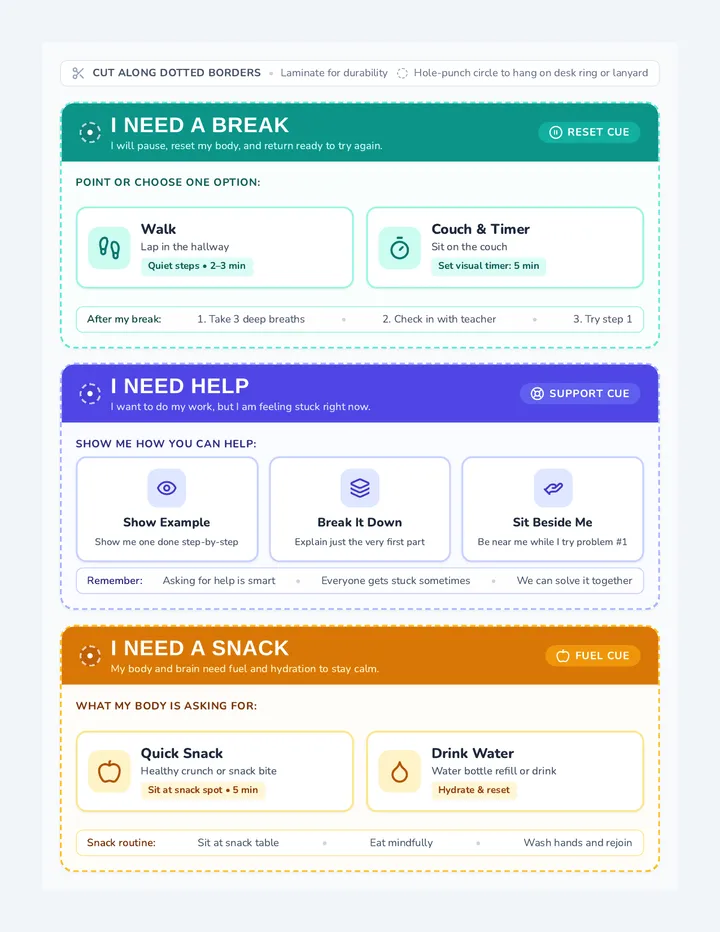
A printable sheet of three color-coded visual cue cards for students who need to communicate when frustrated. Features updated options: a walk lap in the hallway or couch with timer for breaks, three support choices for help, and simplified snack and water options.
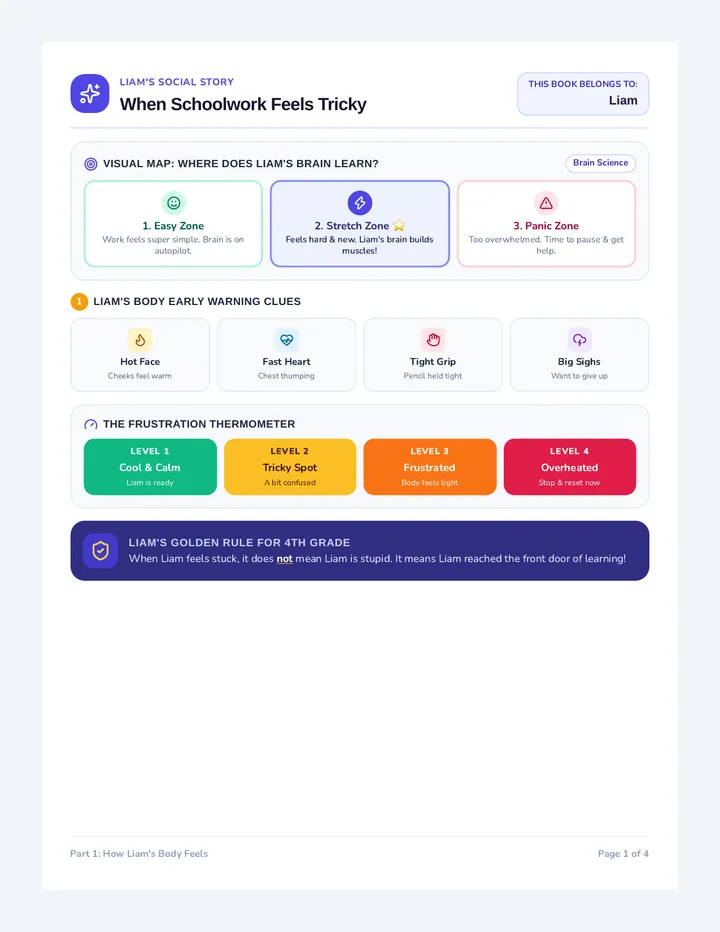
A 4-page personalized visual social story and coping booklet for Liam, a 4th grader with autism. Features Liam's name throughout, along with the Frustration Thermometer, Learning Zones diagram, Finger-Trace Box Breathing, thought-flipping visual panels, and desk help signals.
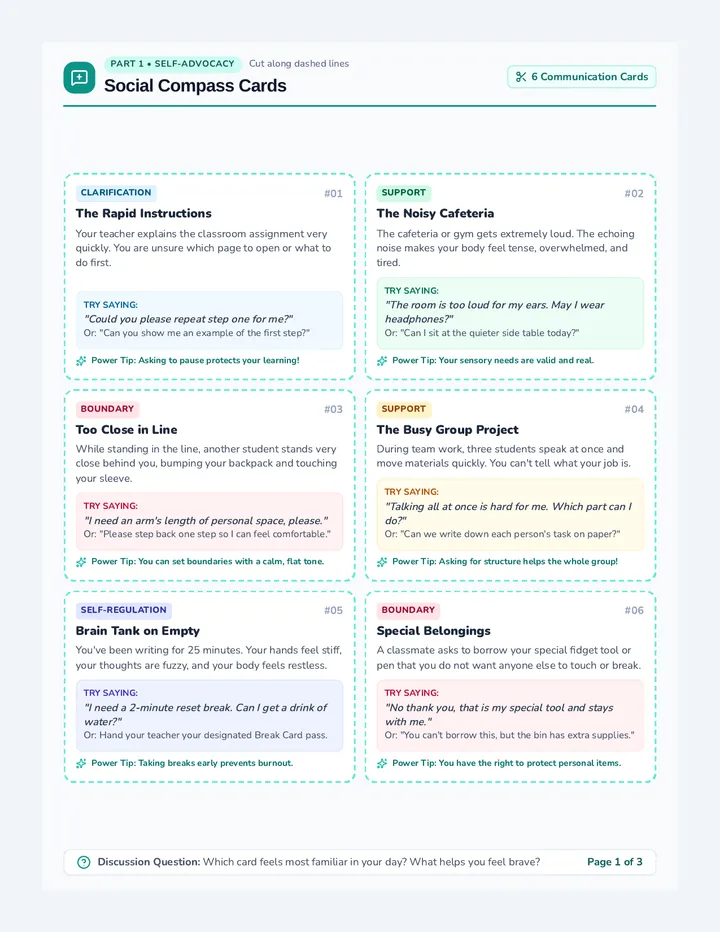
A 3-page printable scenario card set and role-play toolkit designed for autistic students to practice communication needs and friendship skills. Features 12 realistic scenarios with neurodiversity-affirming power scripts, boundary-setting strategies, and a quick-reference strategy mat.
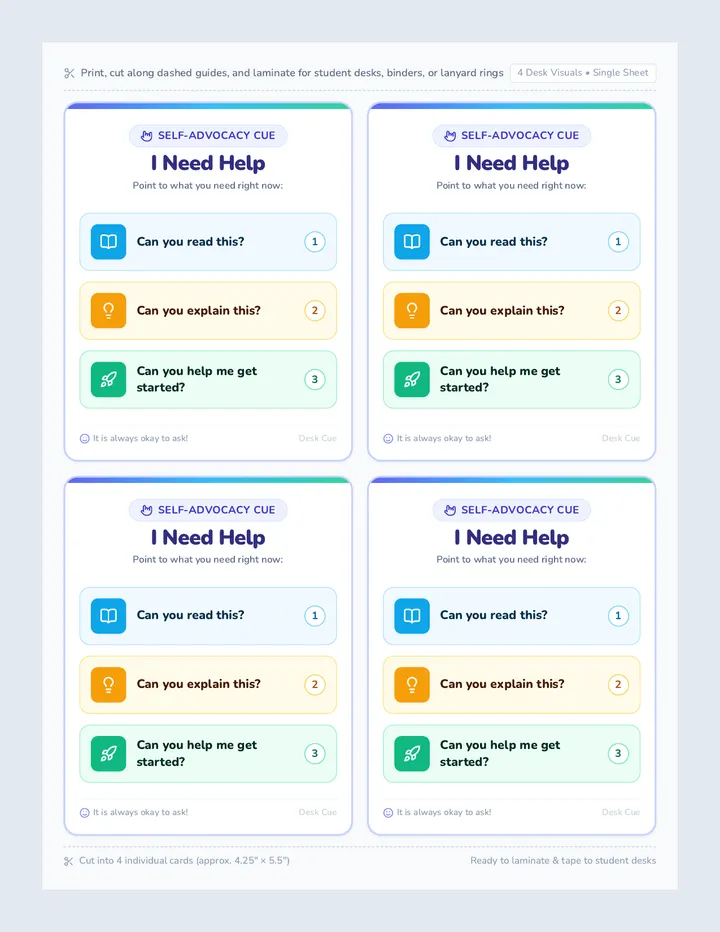
A set of four printable student desk cue cards featuring the 'I Need Help' header and three clean self-advocacy prompts: 'Can you read this?', 'Can you explain this?', and 'Can you help me get started?'. Streamlined without subtitle descriptors for maximum clarity.
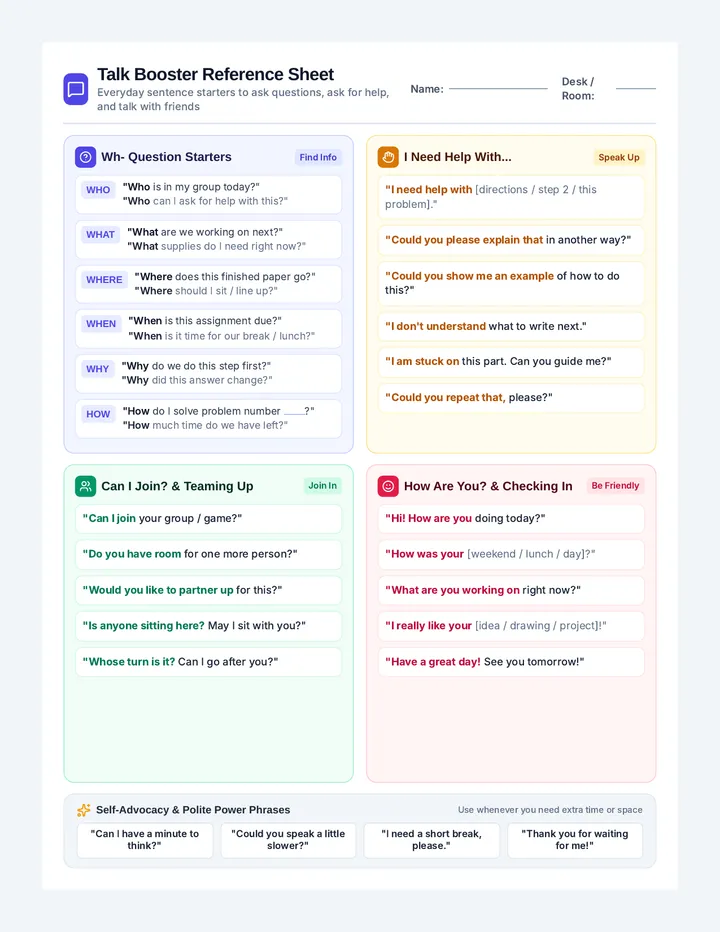
A color-coded visual reference sheet filled with structured sentence starters for asking Wh- questions, requesting classroom help, joining group activities, and engaging in friendly conversation.
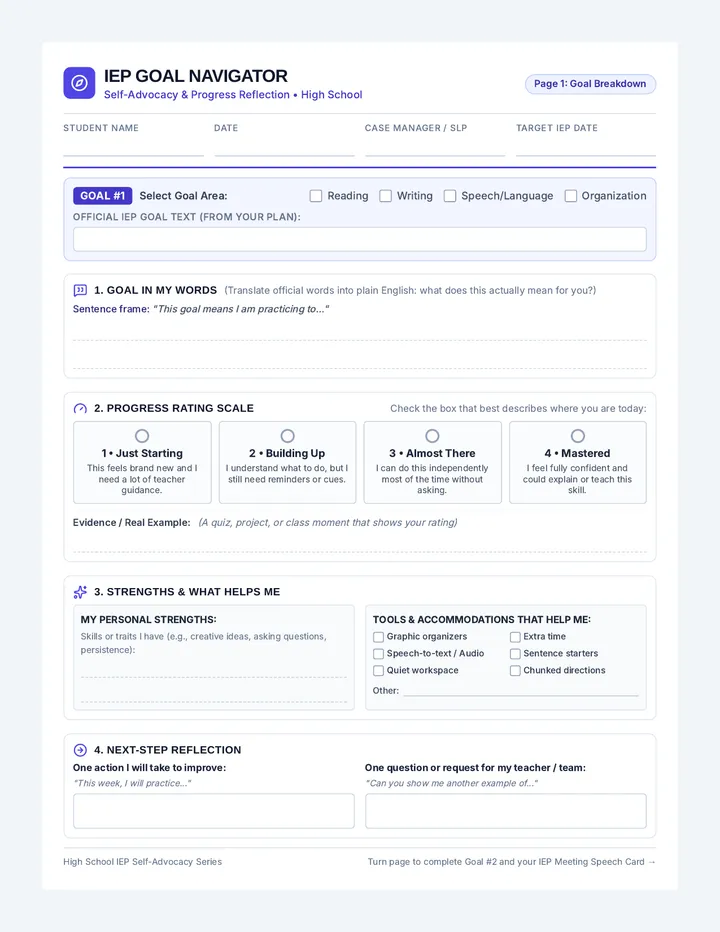
A high school IEP self-advocacy worksheet designed for students with language disorders to translate IEP goals into plain language, rate their current progress, identify strengths and accommodations, and prepare next steps for their IEP meeting.
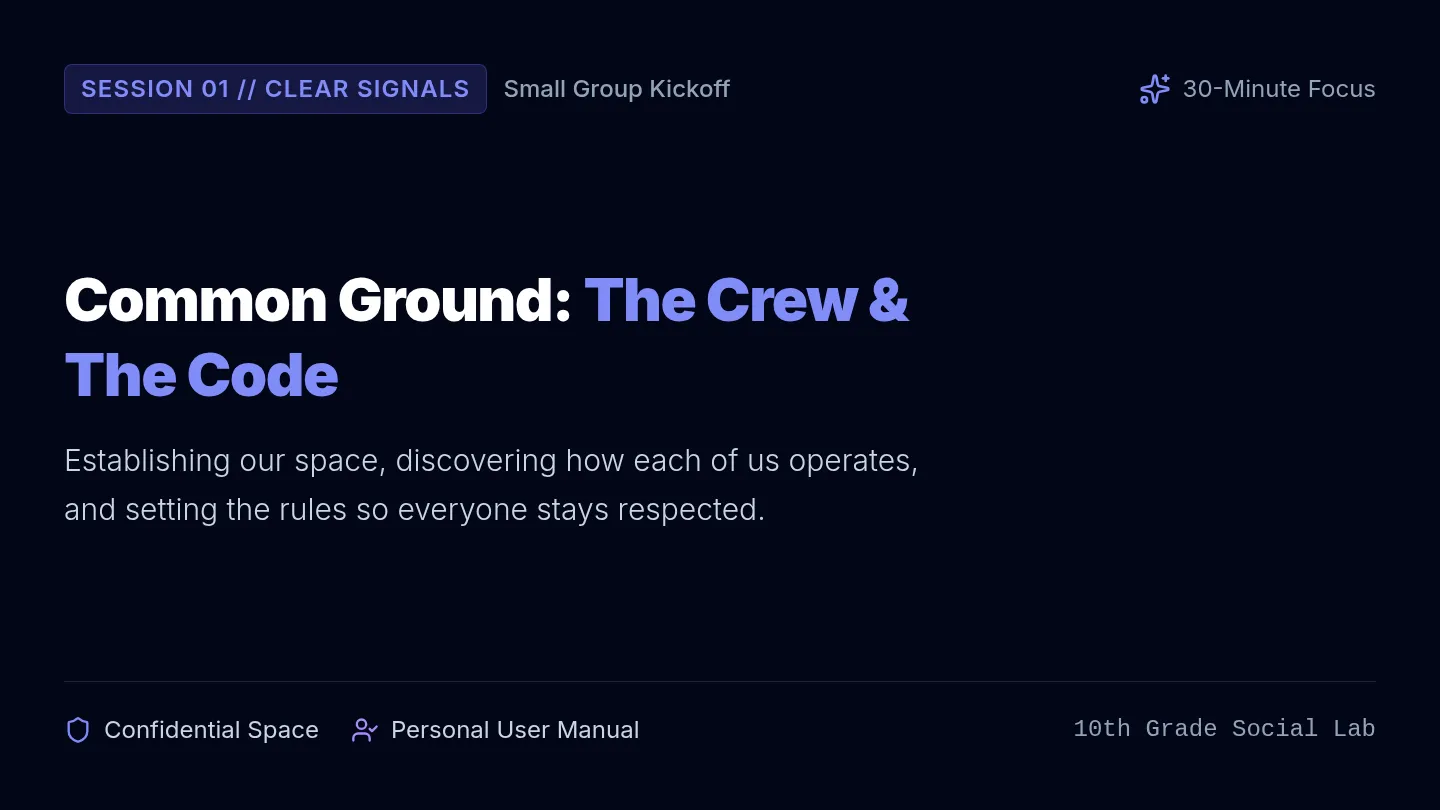
A five-part social communication and emotional regulation curriculum designed for high school small groups. Students establish group norms, analyze social contexts, develop assertive self-advocacy, map somatic emotional triggers, and assemble discreet in-class coping routines.
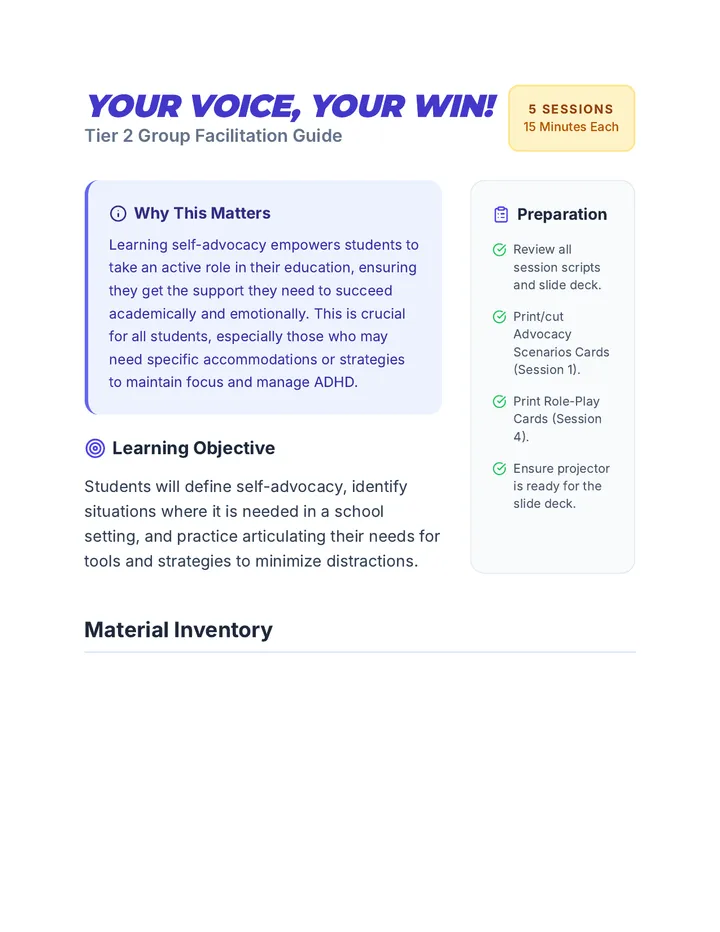
A 5-session self-advocacy sequence for 5th-grade boys, focusing on identifying needs, using learning tools, managing distractions, and practicing clear communication with teachers.
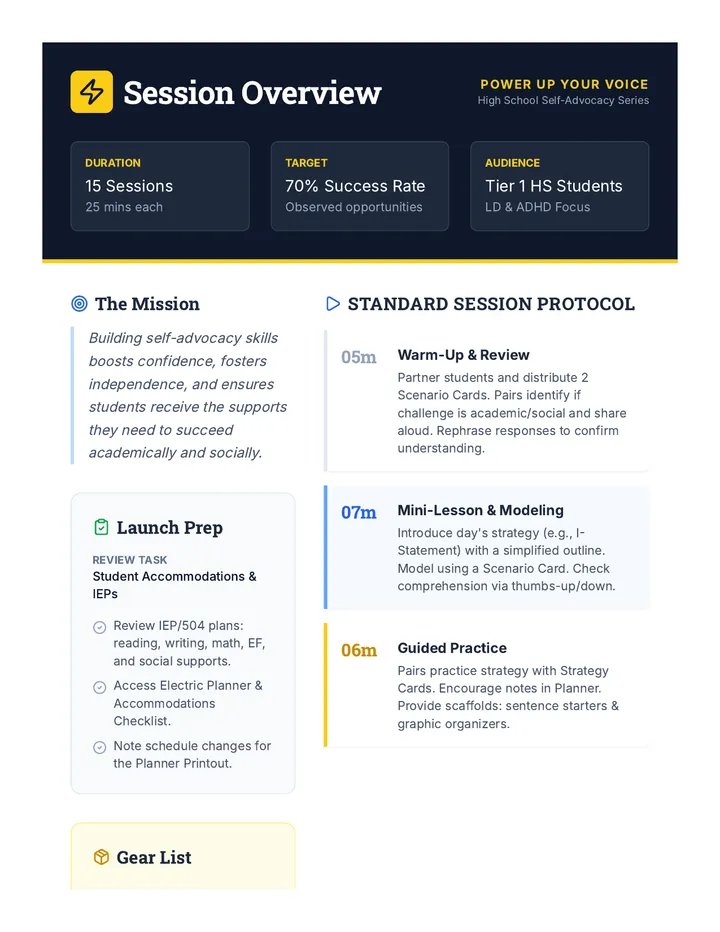
A comprehensive 15-session self-advocacy series designed for high school students with learning disabilities and ADHD, focusing on identifying challenges and requesting supports.
A 5-lesson sequence designed for 3rd-grade students to transition from general problem-solving to self-advocacy. Students learn to distinguish between complaining and advocating, identify appropriate sources of help, draft personal advocacy scripts, and create a physical 'Help Menu' tool for daily use.
This sequence empowers 6th-grade students with working memory challenges to recognize cognitive overload and advocate for single-step directions. Students develop metacognitive awareness and a practical 'clarification toolkit' to manage learning inputs effectively.
A graduate-level sequence focused on the instructional methodology for teaching self-advocacy skills, specifically requesting accommodations. Graduate students will learn to task-analyze requests, design tiered scripts, facilitate behavioral rehearsals, collect data on advocacy behaviors, and plan for generalization.
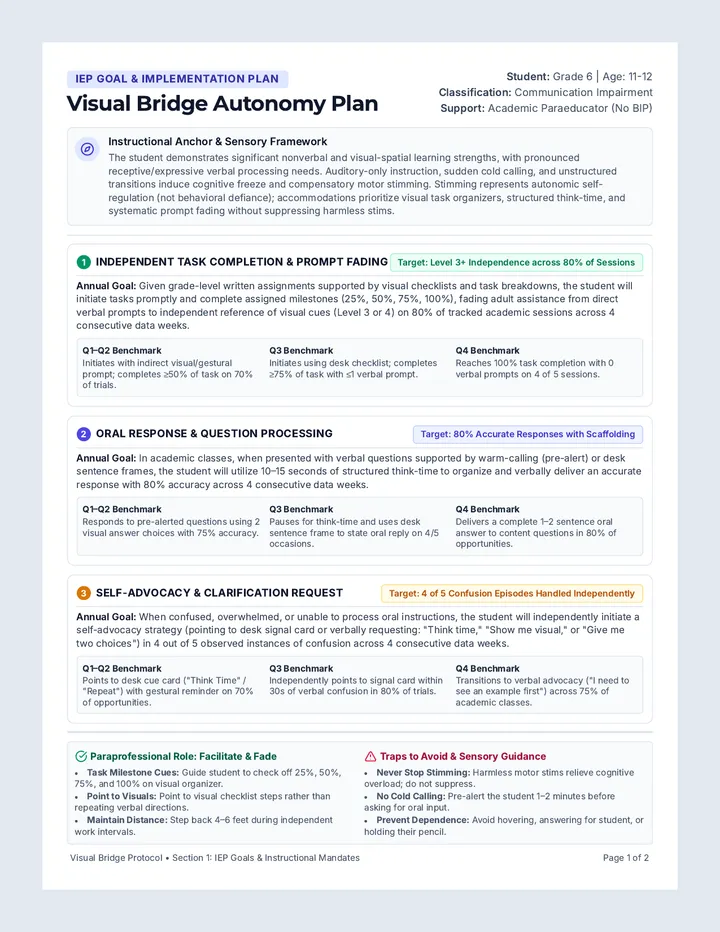
Comprehensive staff implementation guides and class-by-class daily data tracking sheets for middle school students receiving behavioral, emotional, and academic support services.
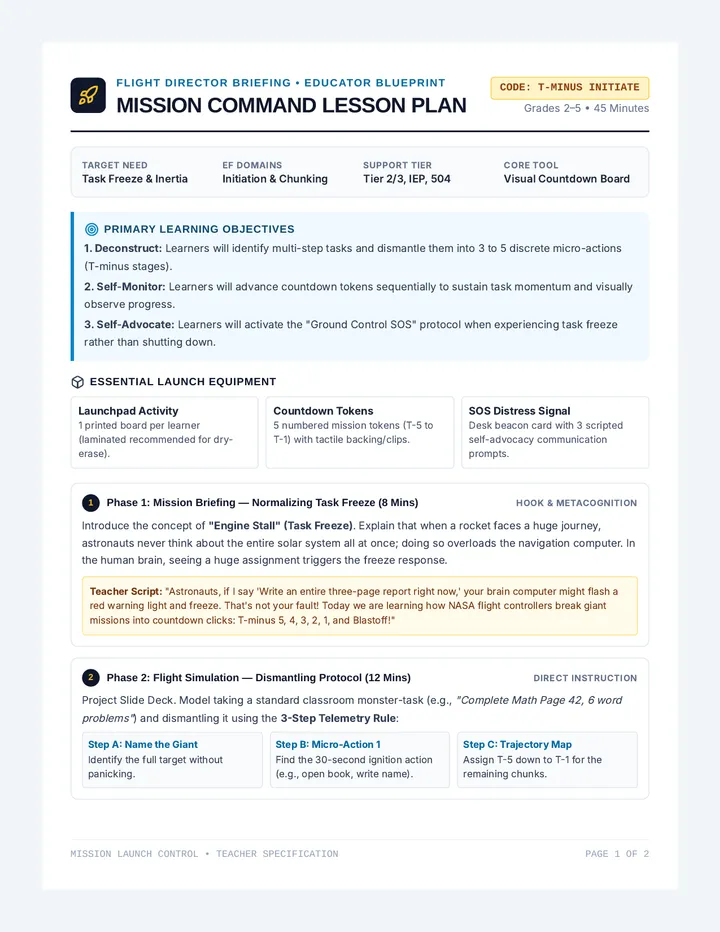
A comprehensive executive functioning and self-advocacy lesson guiding grades 2-5 learners to overcome task freeze by deconstructing multi-step assignments into visual trajectory checklists with countdown tokens and self-advocacy distress beacons.
A concise 15-minute Tier 3 session designed for a 17-year-old male student with autism to build self-advocacy skills. This lesson equips the student with strategies to express needs and request support effectively, fostering independence and confidence.
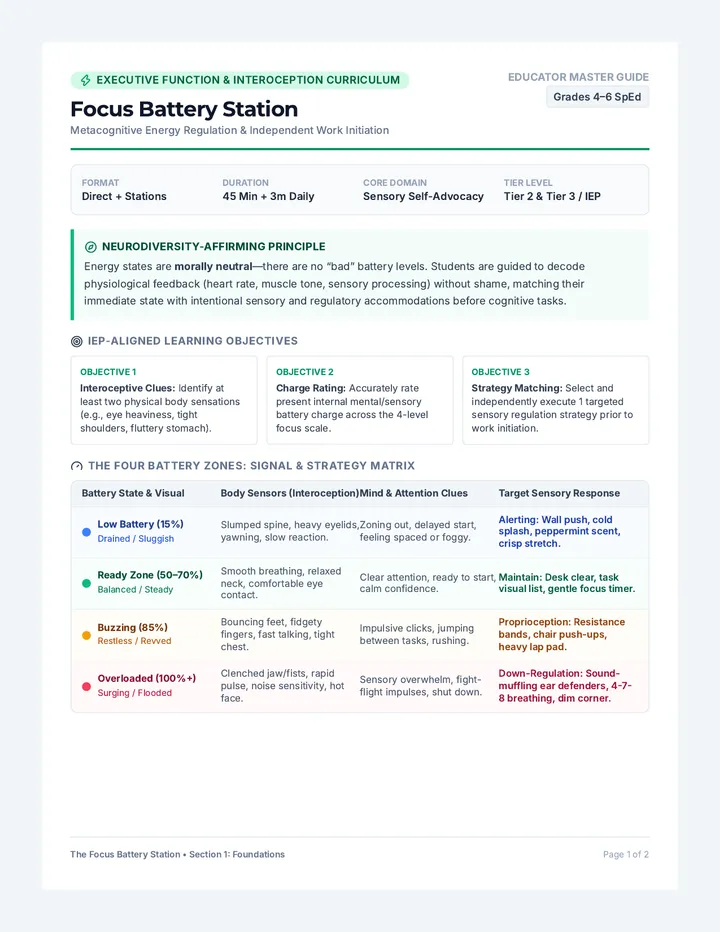
A targeted metacognitive and sensory self-regulation lesson for upper elementary special education students. Learners decode interoceptive body clues, assess their sensory-mental charge, and implement customized sensory strategies before independent learning tasks.
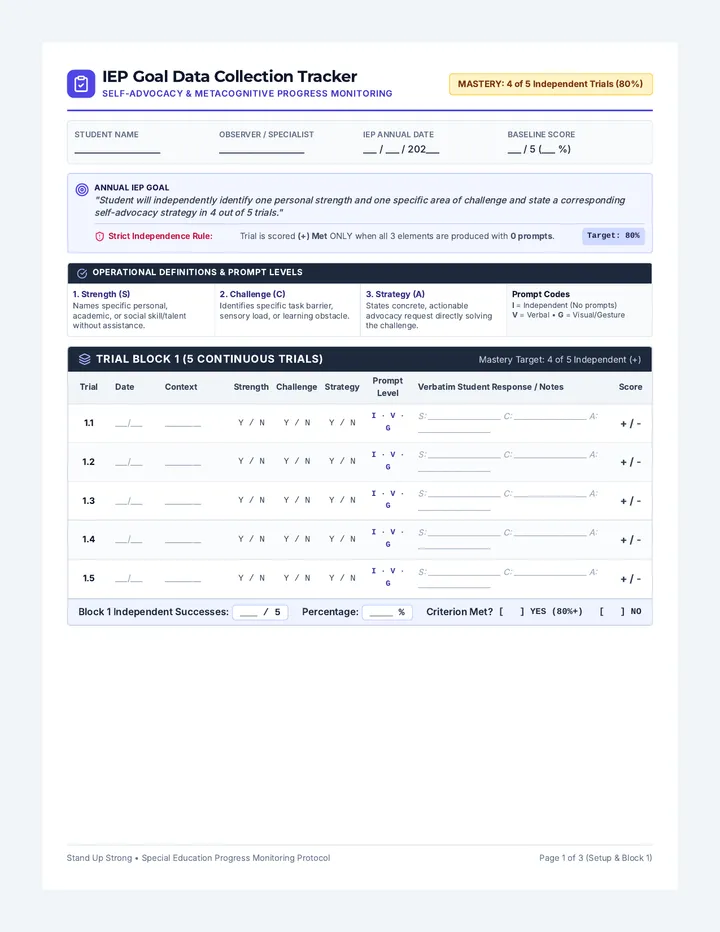
A targeted IEP progress-monitoring lesson focused on teaching and measuring a student's ability to independently recognize personal strengths, isolate specific challenges, and execute aligned self-advocacy strategies across multiple trials.
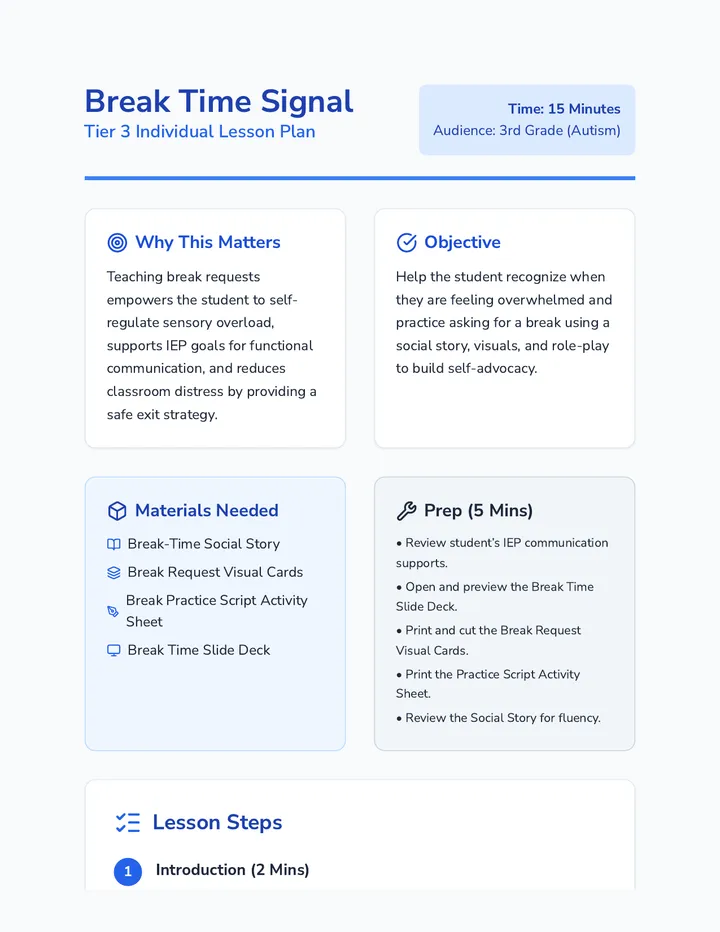
A concise 15-minute individual lesson for a 3rd grade student with autism to learn how to recognize and request a break. The lesson utilizes a social story, visual supports, and guided role-play to build self-advocacy and emotional regulation skills.