Visual scaffolds for identifying cause-effect, comparison, and sequential patterns within informational texts. Supports reading comprehension and pre-writing organization for students requiring targeted academic interventions.
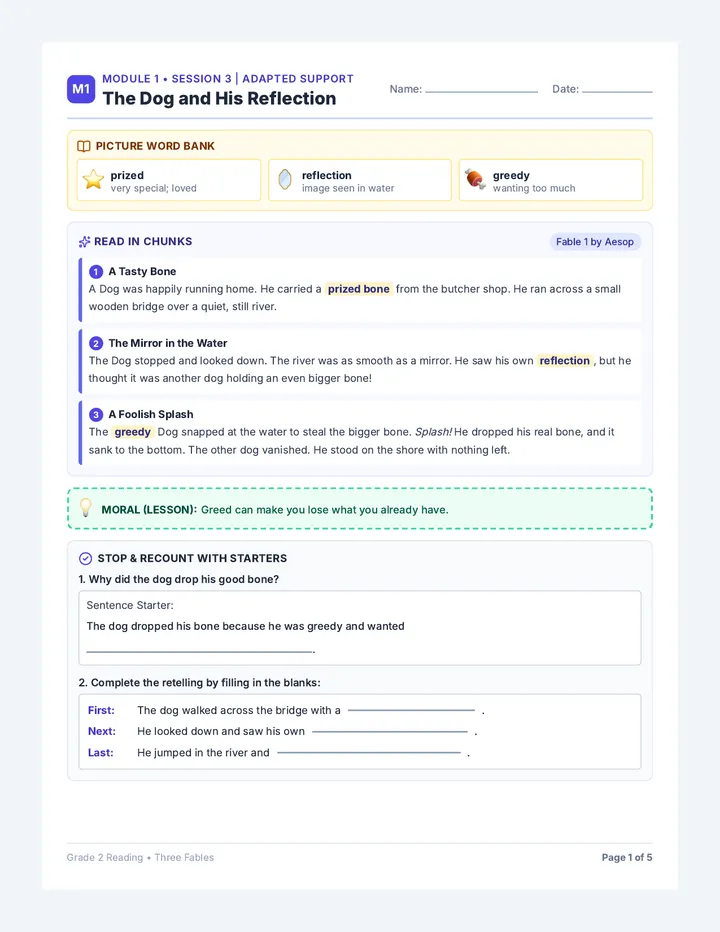
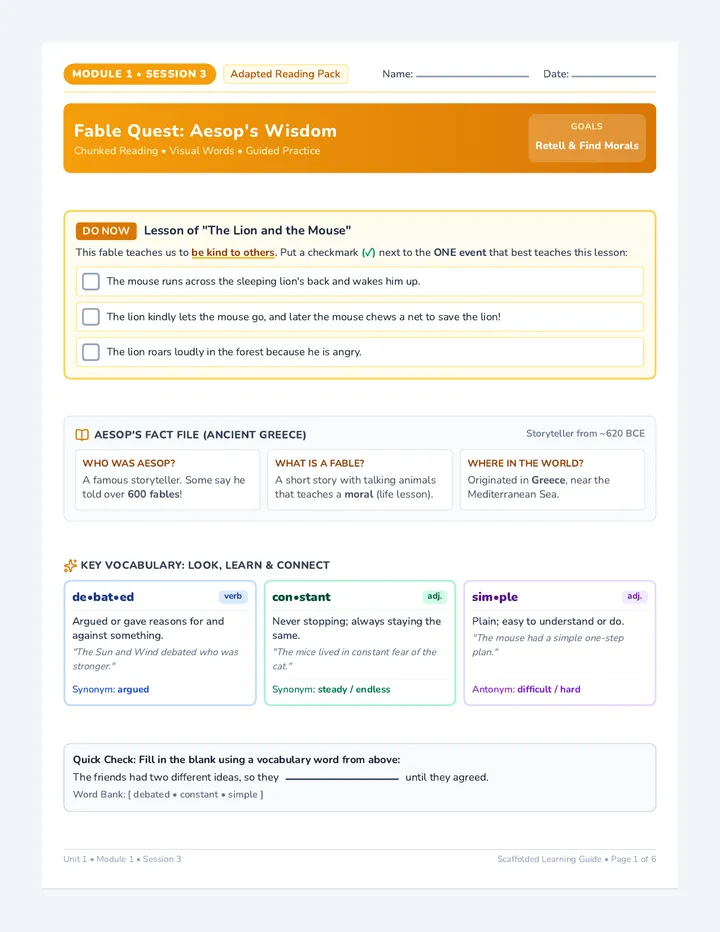
A 5-page modified, SPED-friendly student workbook for Aesop's Three Fables (The Dog and His Reflection, The Wind and the Sun, and Belling the Cat). Features chunked text, visual vocabulary banks, guided graphic organizers, sentence starters, and an adapted exit ticket.
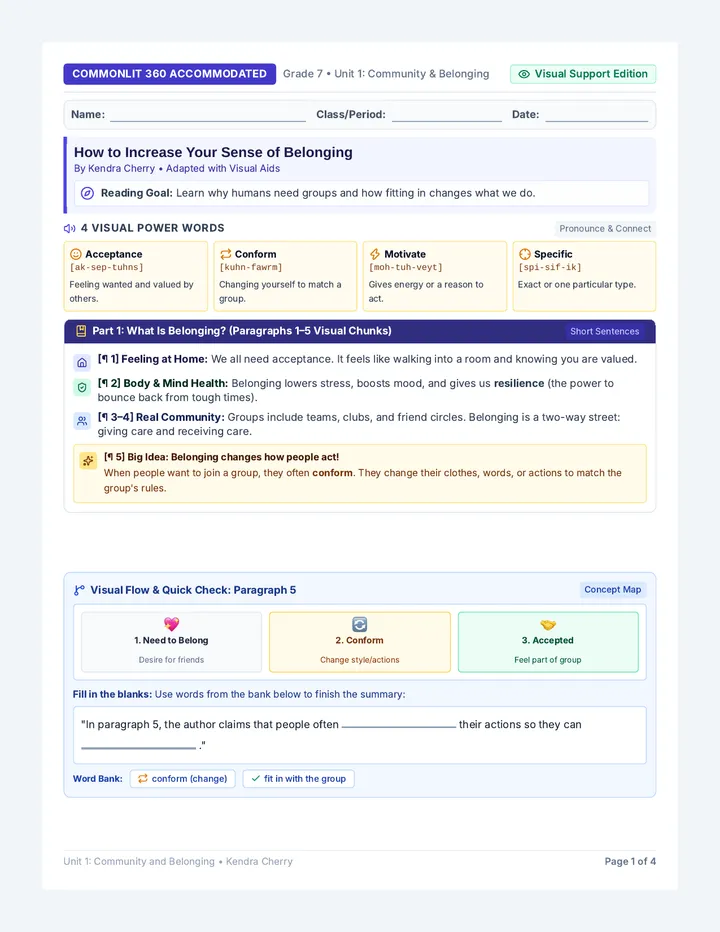
Enhanced student packet with rich visual supports, including a Paragraph 5 visual flowchart, illustrated vocabulary badges, an improved Maslow pyramid diagram, step-by-step test strategy icons, and speech-bubble discussion cards for IEP learners.
Adapted 6-page worksheet pack for Aesop's Three Fables designed for special education and tiered intervention, featuring chunked texts, visual vocabulary, guided sentence starters, and reduced-writing response scaffolds.
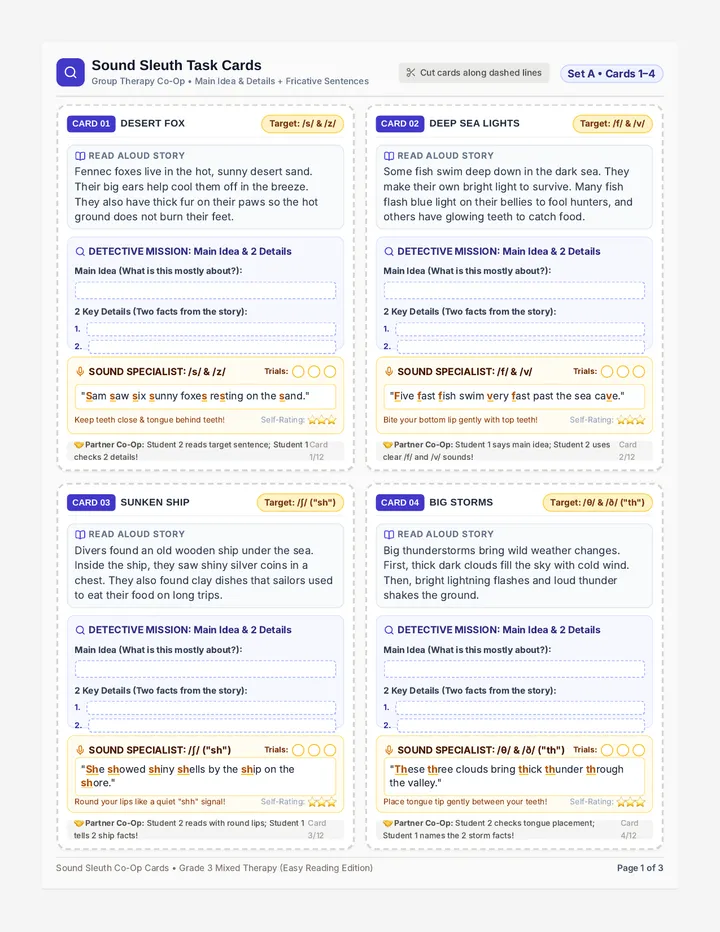
Adjusted 12-card group therapy set with an easier 2nd-3rd grade accessible reading level. Features simpler decodable vocabulary, shorter sentences, and clearer main idea and detail prompts, while maintaining full fricative phonetic density (/s, z, f, v, sh, th, zh/) for speech practice.
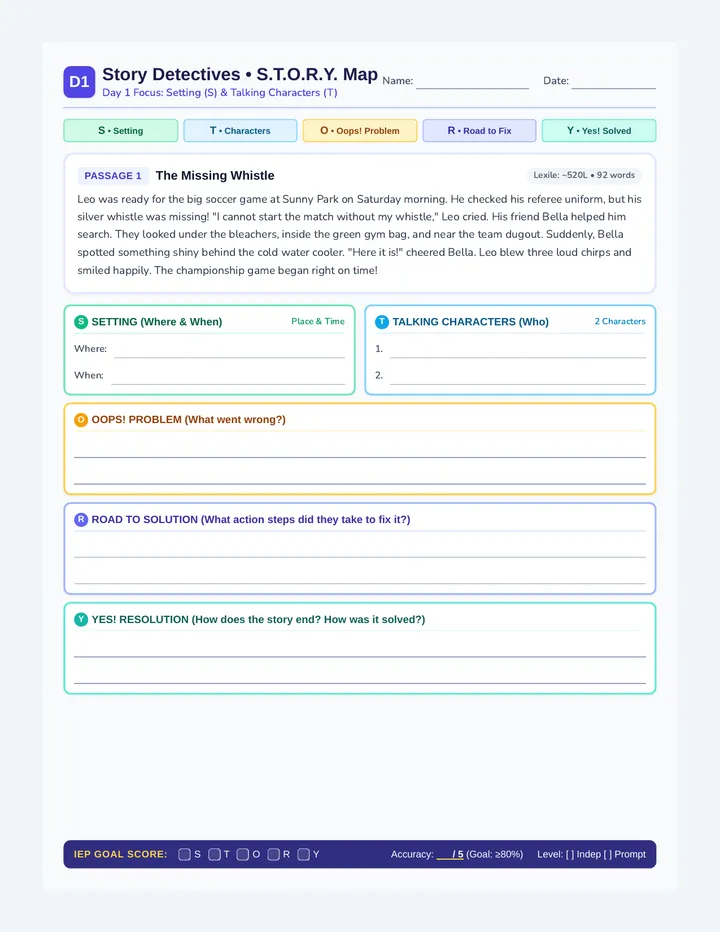
A 5-day printable worksheet packet designed for IEP story element extraction using the visual S.T.O.R.Y. graphic organizer framework. Each page provides an original 450L–650L narrative passage, scaffolded daily target element focus, lined student writing areas, and an IEP progress monitoring score bar.
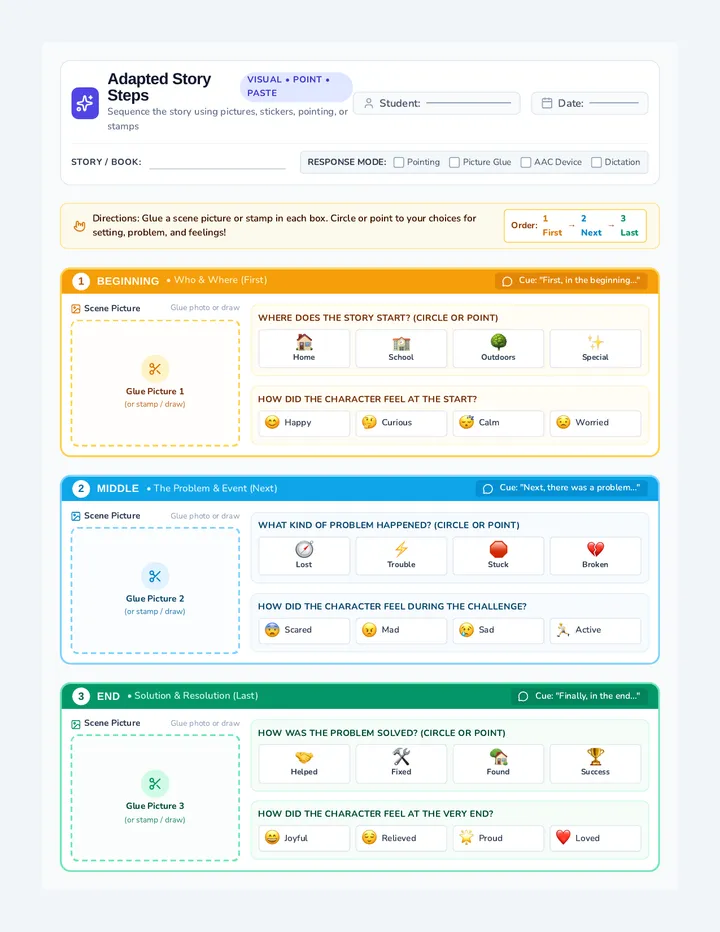
A comprehensive two-page graphic organizer for analyzing story structure with expanded writing space. Features streamlined sketch boxes, enlarged full-width writing lines with generous line heights across Beginning, Middle, and End stages on Page 1, plus an expansive 14-line narrative retell writing canvas and compact transition toolkit on Page 2.
A 5-session comprehension program for 7th and 8th grade special education students using animated shorts to teach sequencing, inference, and perspective-taking. Students use "detective" tools and movement breaks to stay engaged and build critical thinking skills.
A project-based sequence for 4th-grade students in special education settings, focusing on moving from passive highlighting to active extraction, organization, and synthesis. Students learn to refine highlights, extract them onto cards, sort ideas logically, and create a visual 'One-Page Expert Guide' as a summary tool.
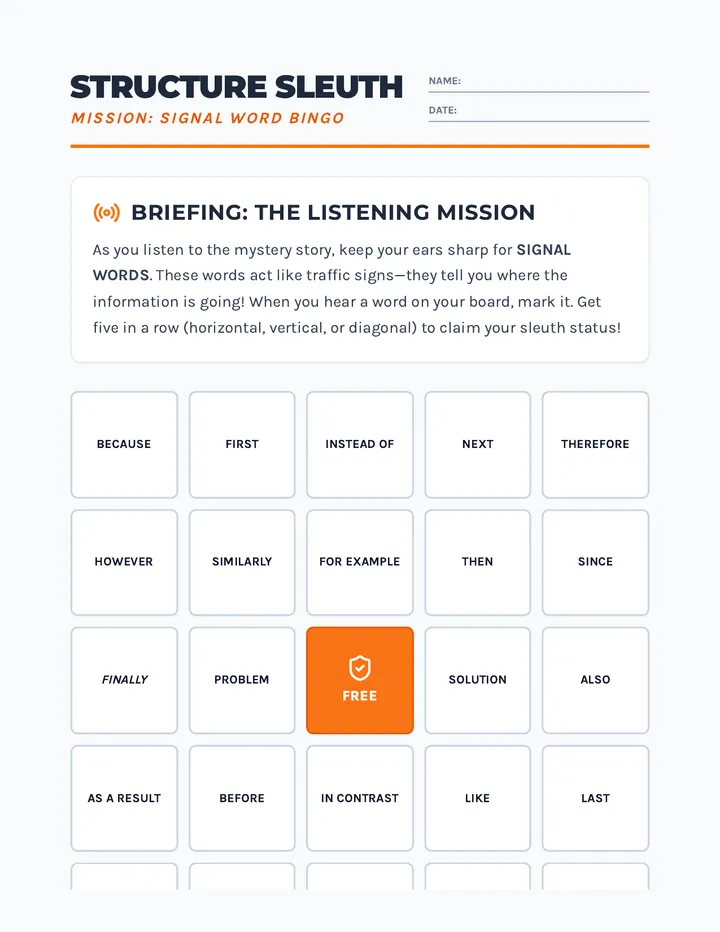
A specialized sequence for 6th-grade students with working memory challenges, focusing on transforming linear information into visual maps. Students learn to identify text structures through signal words, develop personal iconography, and master non-linear note-taking techniques to improve comprehension and recall.
A structured 5-lesson sequence for 8th-grade special education students to master inferencing. Moving from visual analysis to textual evidence, students learn to combine explicit clues with prior knowledge using the formula: Text Clues + Schema = Inference.
A 3rd-grade sequence focused on teaching students with processing difficulties how to navigate informational texts using annotation and highlighting techniques. Through a 'text detective' theme, students analyze informational articles as 'specimens' to identify features, vocabulary, and main ideas.
This sequence helps 2nd-grade students with working memory challenges transfer single-step focus strategies to academic tasks. Students learn to use visual tools like reading windows, highlighters, and information filtering to prevent cognitive overwhelm in reading and math.