Task analysis and milestone tracking for multi-step assignments. Supports executive functioning through visual schedules, prioritization tools, and scaffolded planning templates.
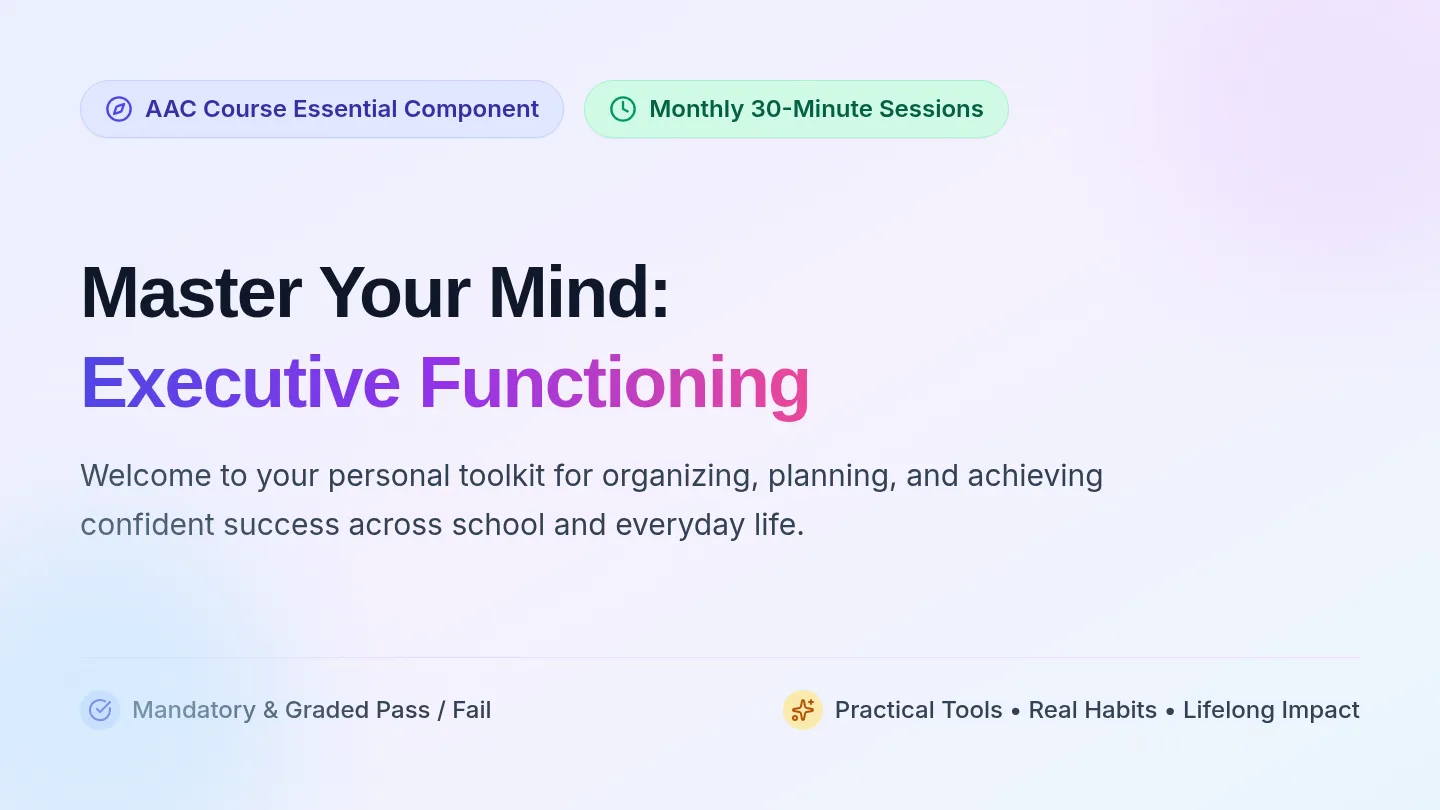
A 6-slide introductory deck in a calming, friendly pastel palette for the mandatory AAC Executive Functioning sessions, covering core skills, course grading, practical scenarios, and student expectations.
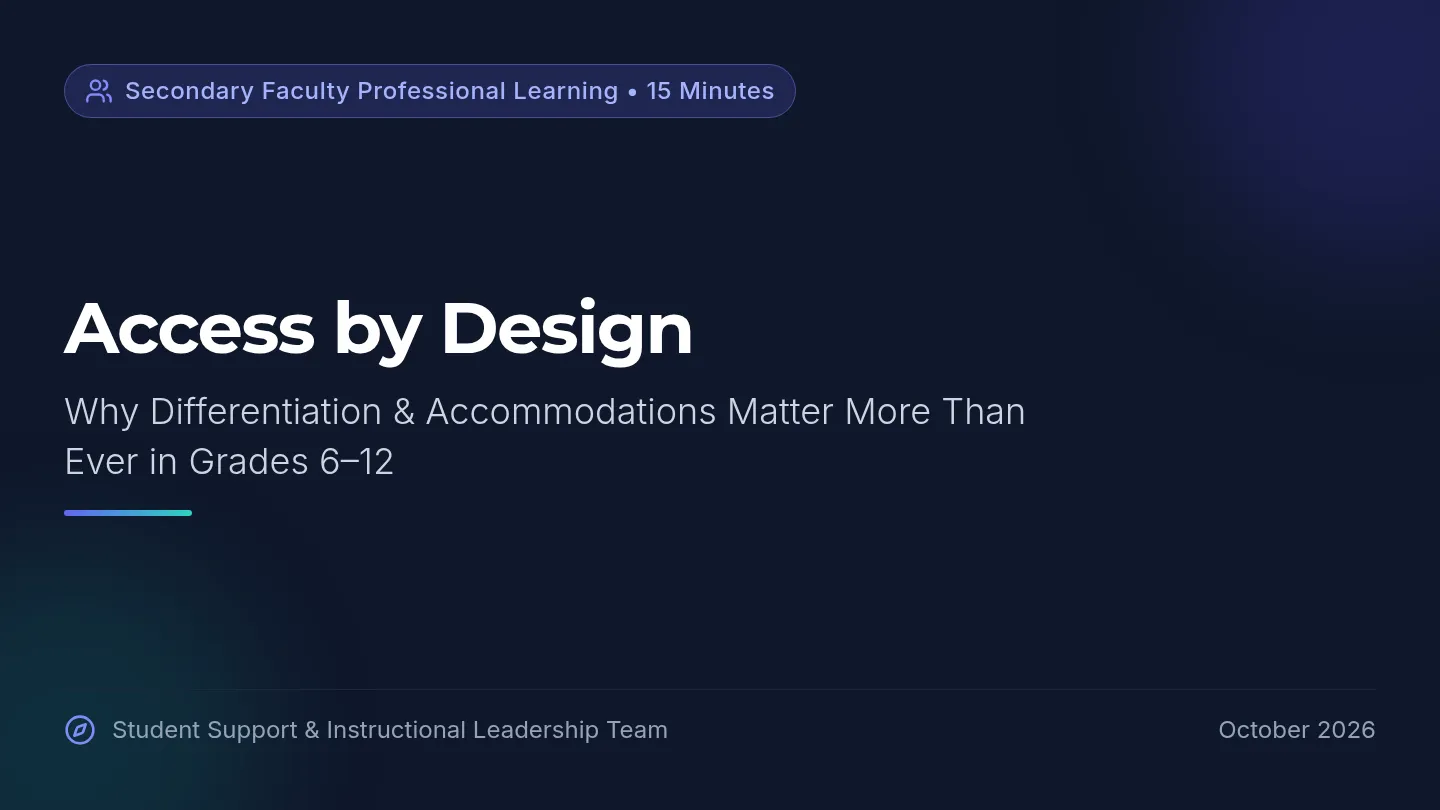
A 7-slide faculty presentation exploring the necessity and practical implementation of differentiation and accommodations for secondary students (grades 6-12) with learning differences.
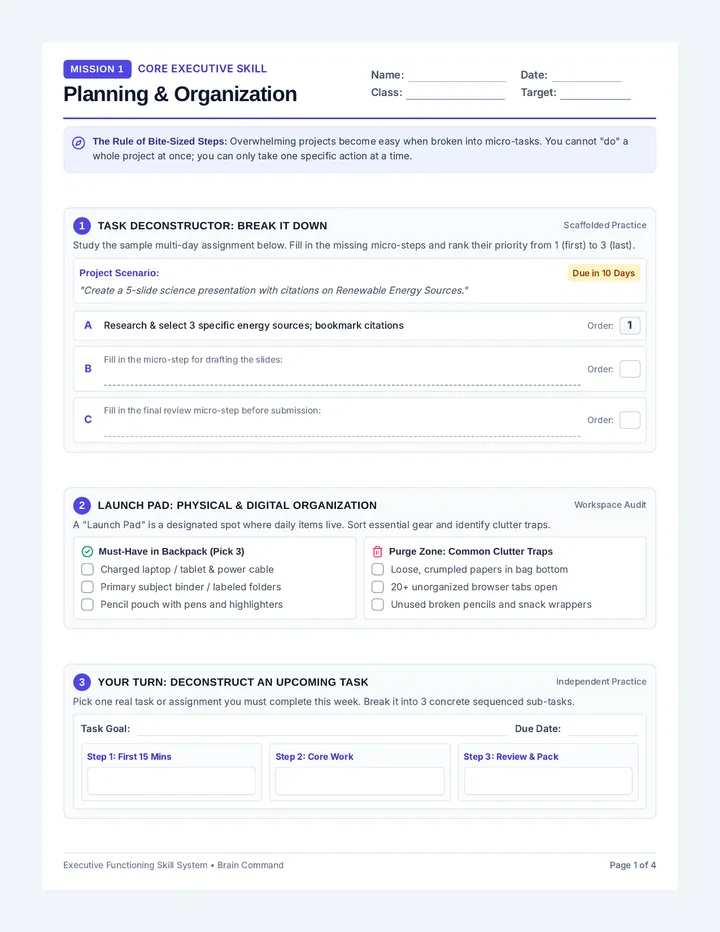
A comprehensive 4-page executive functioning printable worksheet packet targeting planning and organization, time management, focus and self-monitoring, and working memory and cognitive flexibility. Scaffolded activities guide students through task deconstruction, time estimation, distraction radar, and adaptive pivot strategies.
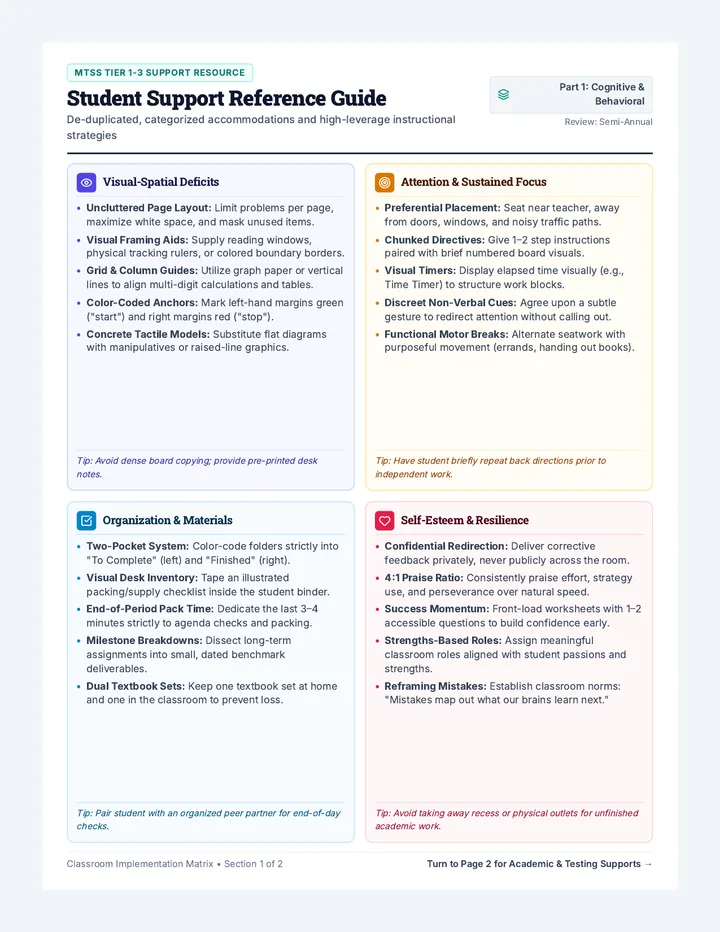
A comprehensive, de-duplicated reference guide for educators organizing evidence-based accommodations across seven core domains: visual-spatial deficits, attention, organization, self-esteem, writing, math, and testing/environmental accommodations.
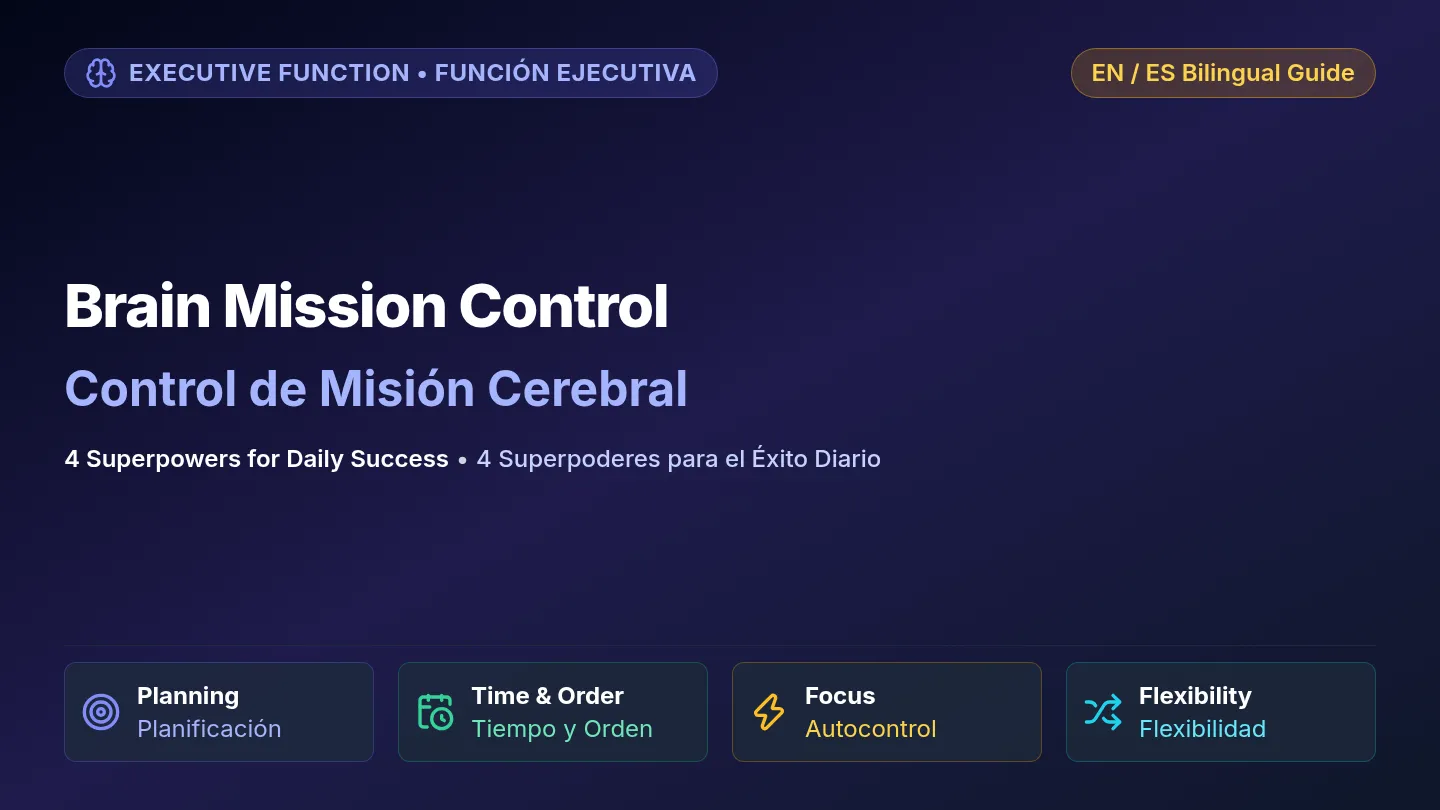
A comprehensive 10-slide bilingual English and Spanish presentation introducing core executive function skills. Guides students through planning, organization, focus, self-control, and flexible problem-solving with concrete visual strategies.
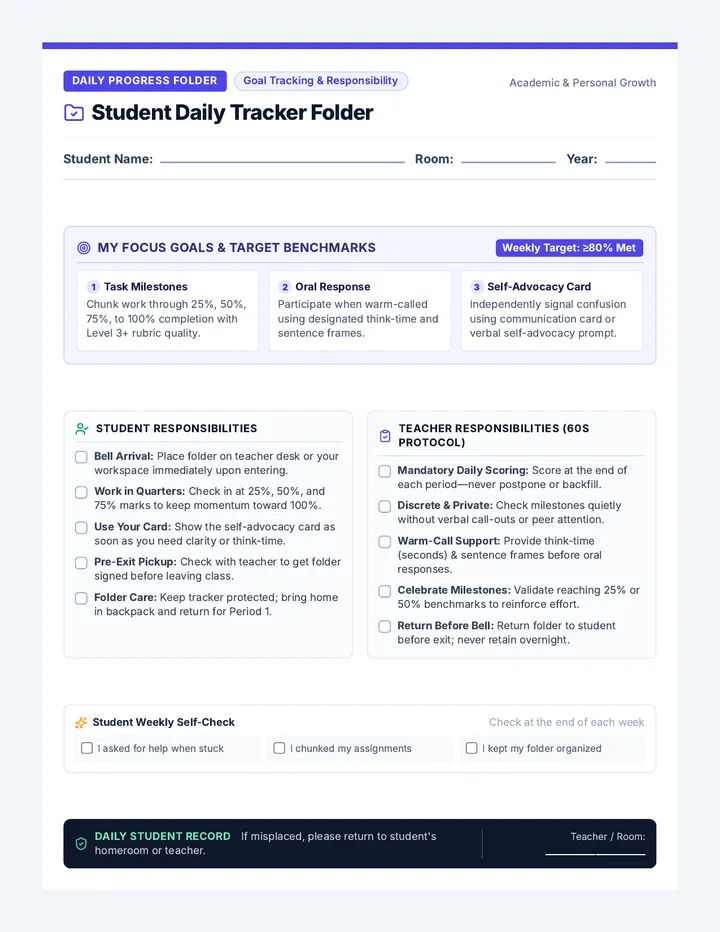
A peer-private 9-page set of printable Daily Tracker Folder Covers for students. All diagnostic labels, disability codes, and support profiles have been removed from the top header to ensure complete peer privacy, while retaining individual focus goals, blank name lines, student daily checklists, and teacher 60-second scoring protocols.
A comprehensive 9-session curriculum for 6th-grade students to master executive functioning skills like organization, planning, self-control, and emotional regulation through the metaphor of becoming their own 'Brain CEO'.
A comprehensive 8-session course for 9th graders with IEPs to build essential life skills including organization, accountability, time management, emotional regulation, and focus.
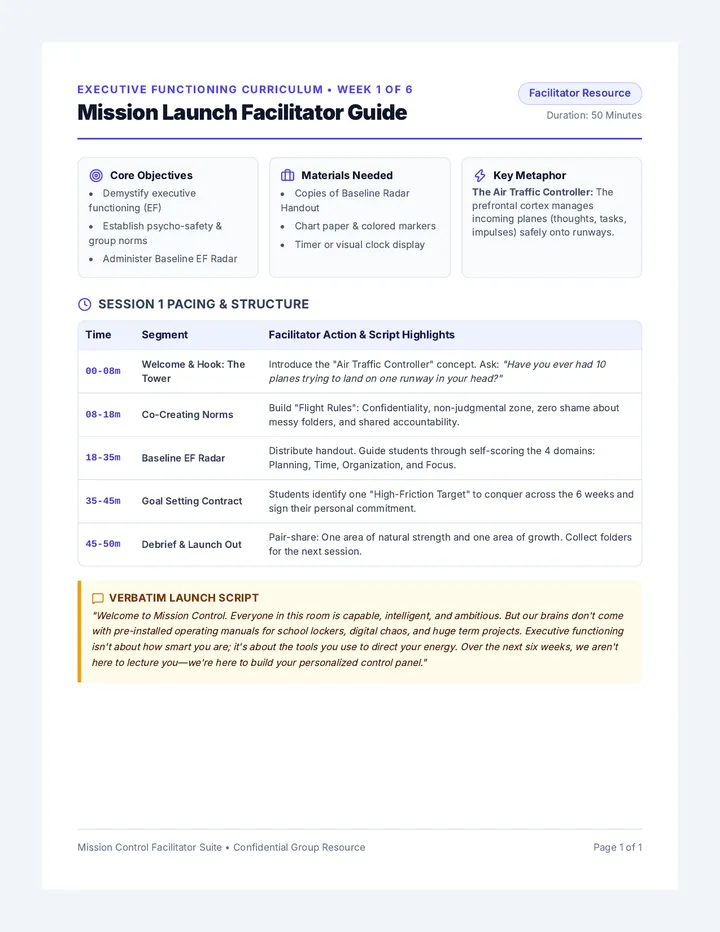
A comprehensive 6-week small-group curriculum targeting executive functioning development for adolescents. Emphasizes planning, prioritizing, time estimation, physical and digital organization, task initiation, and self-regulation.
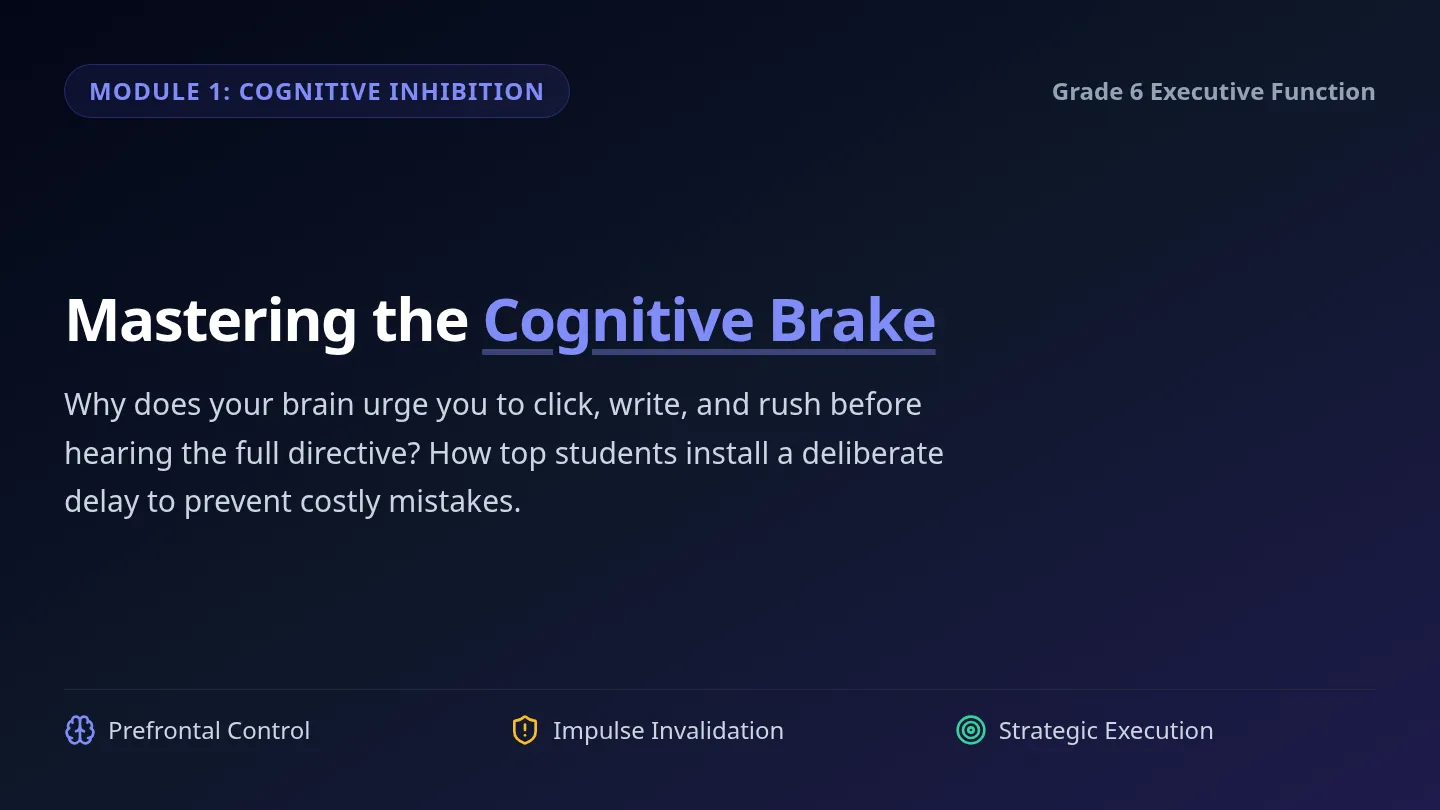
A targeted 5-part executive functioning sequence designed for 6th graders navigating the cognitive demands of middle school. Students master cognitive inhibition, auditory attention, multi-step task decomposition, and working memory strategies to achieve autonomous classroom execution.
A specialized sequence for 5th-grade students focusing on working memory support through task segmentation. Students learn to break complex tasks into single steps, using digital pacing and physical checklists to manage cognitive load and reduce anxiety.
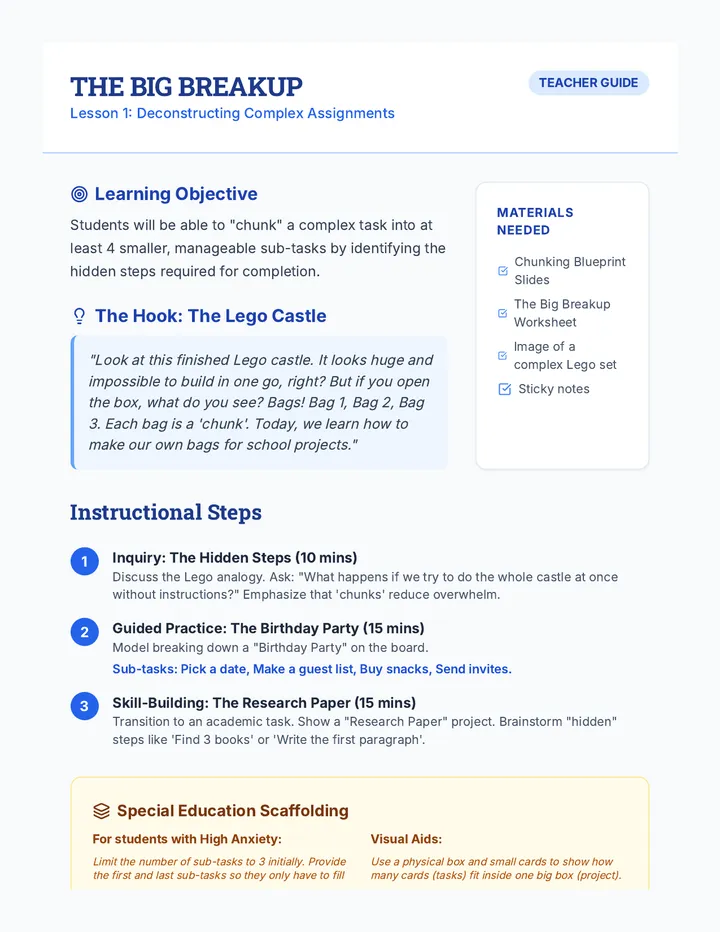
A 5-lesson series for 6th-grade special education students focused on executive functioning. Students learn to deconstruct complex assignments, estimate time accurately, plan backwards from deadlines, and maintain visual organization systems like Kanban boards to manage their middle school workload.
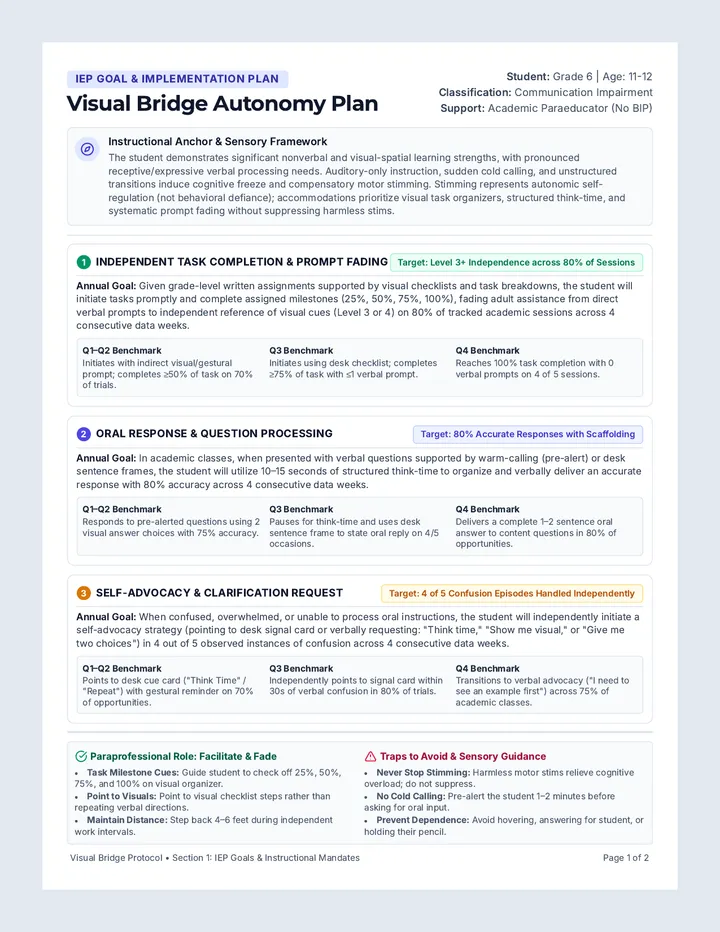
Comprehensive staff implementation guides and class-by-class daily data tracking sheets for middle school students receiving behavioral, emotional, and academic support services.
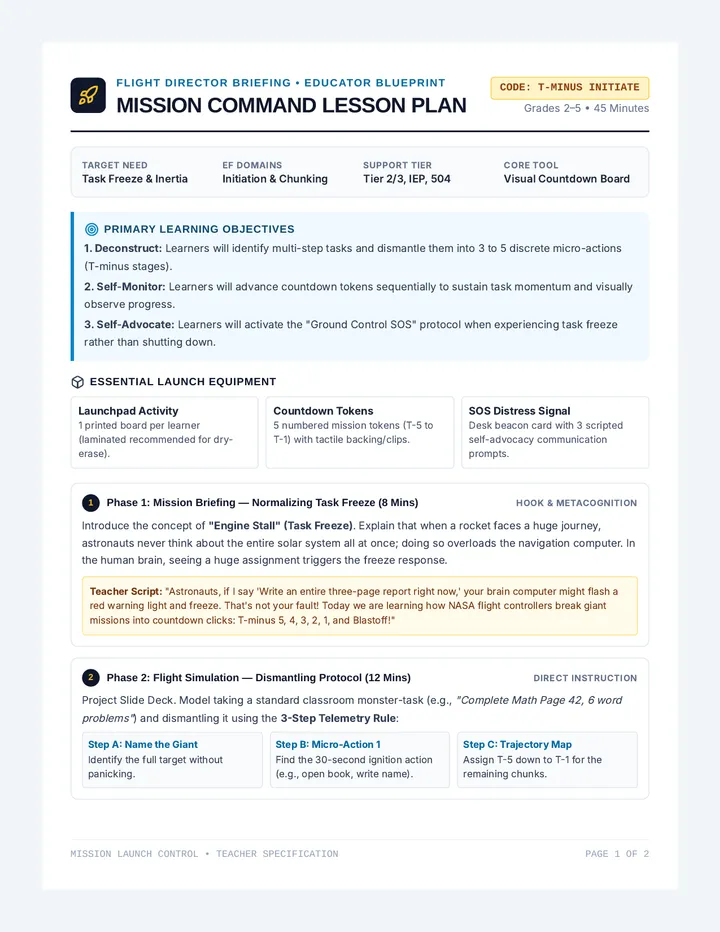
A comprehensive executive functioning and self-advocacy lesson guiding grades 2-5 learners to overcome task freeze by deconstructing multi-step assignments into visual trajectory checklists with countdown tokens and self-advocacy distress beacons.
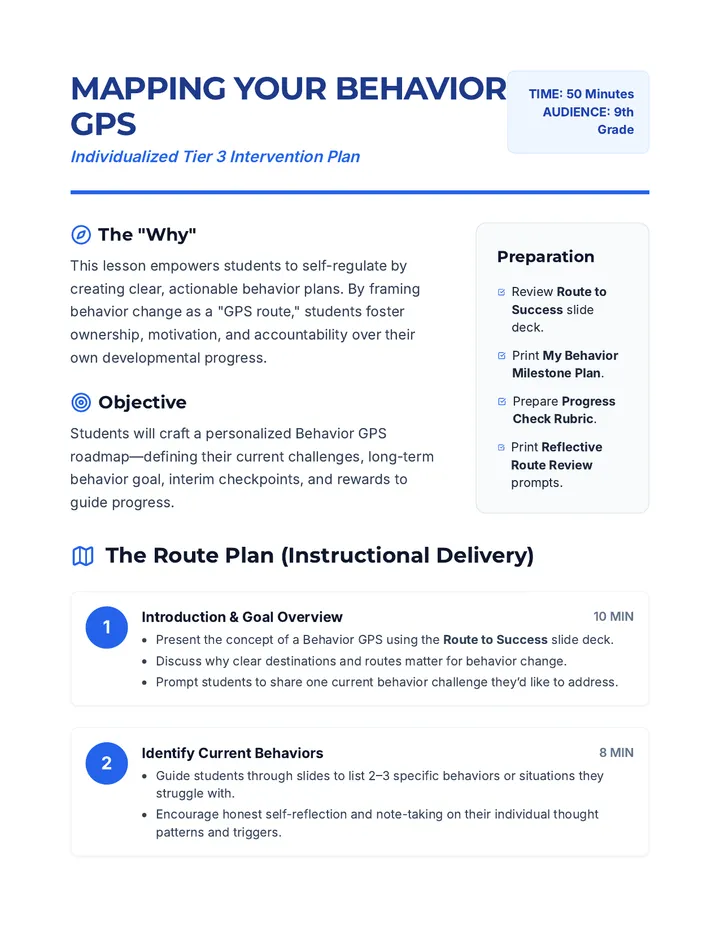
An individualized roadmap guiding 9th-grade students through a 50-minute behavior intervention using goal-setting, checkpoints, and rewards. Students create a personalized 'Behavior GPS' to navigate from current challenges to positive behavior destinations.
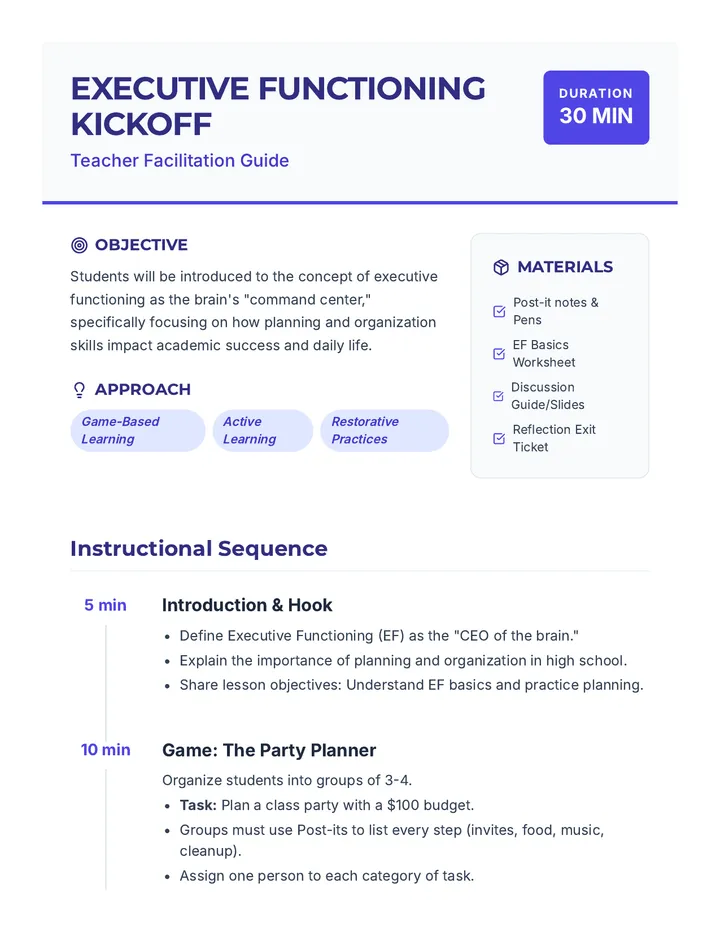
This lesson introduces high school freshmen to executive functioning, focusing on planning and organization through game-based learning. Students explore how these brain functions serve as the 'command center' for academic and personal success.
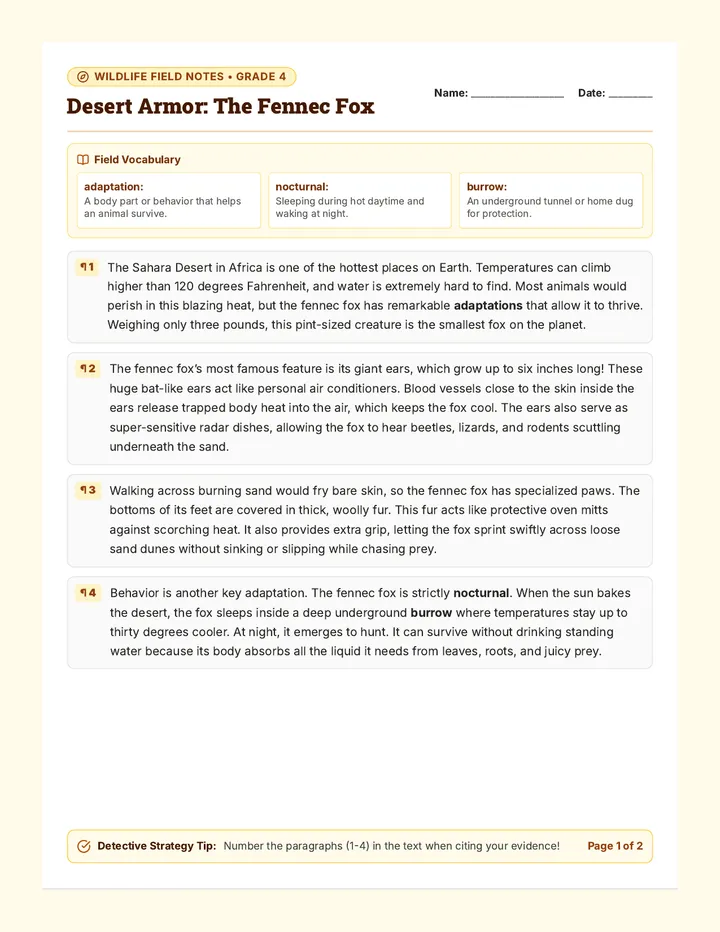
A comprehensive 4th-grade special education reading unit where students master Short Constructed Responses using the RACES strategy through high-interest informational texts on desert animal adaptations.
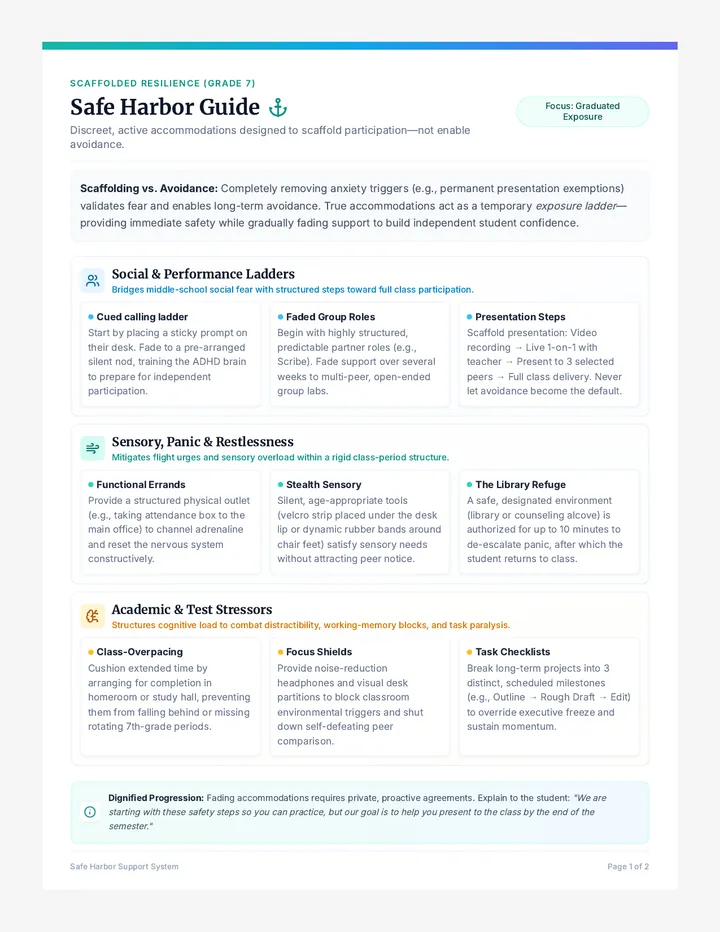
A lesson containing resources and guides for teachers to implement subtle, effective classroom accommodations for students dealing with anxiety.