Techniques for task initiation, strategic break management, and navigating transitions through minimal prompting and self-talk strategies. Addresses multi-day project completion, adaptive planning, and problem-solving when facing obstacles.
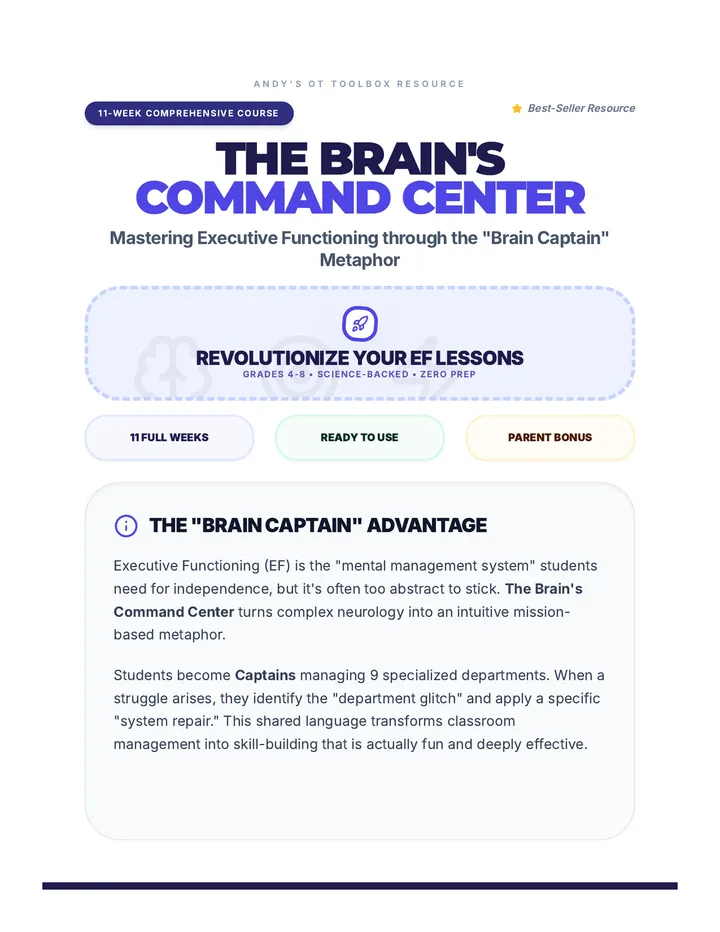
A 5-page Teachers Pay Teachers (TpT) product page for an 11-week Executive Functioning course, featuring a bold 'Command Center' theme, departmental skill highlights, parent guide mockups, and testimonials. Page 4 has been adjusted to ensure the 'missions' text is fully visible without cutoff.
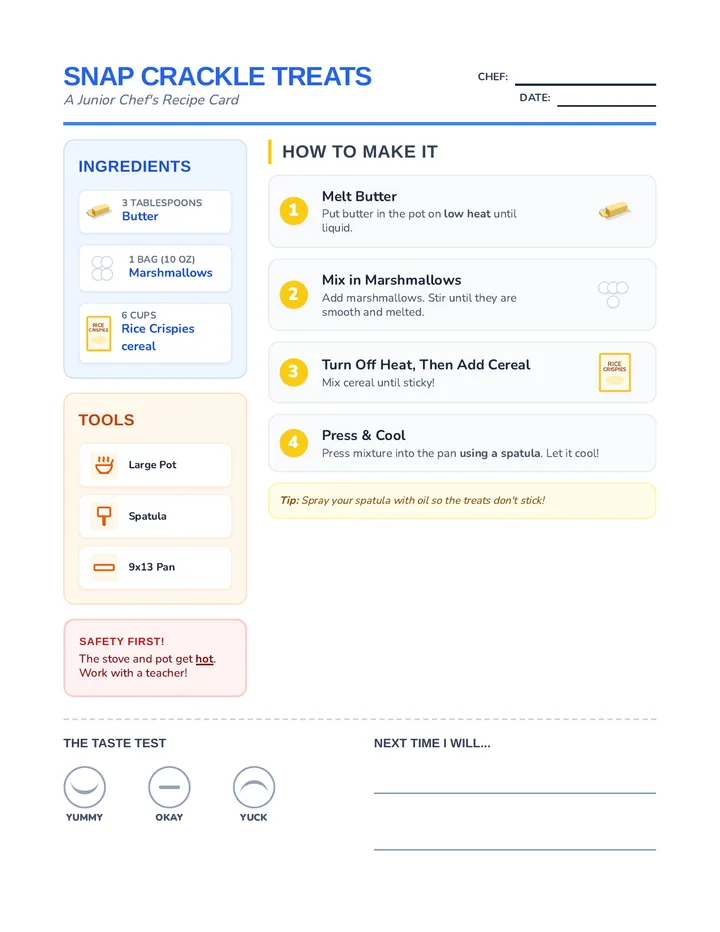
A simplified, single-page picture recipe for Rice Krispie treats. It features illustrations for the three core ingredients (including a labeled Rice Crispies box) and the three kitchen tools, with clear stovetop instructions and an expanded student reflection area. Safety instructions have been updated for a classroom setting. Step 3 heading explicitly includes turning off the heat. Cereal is labeled as "Rice Crispies cereal" in the ingredients list.
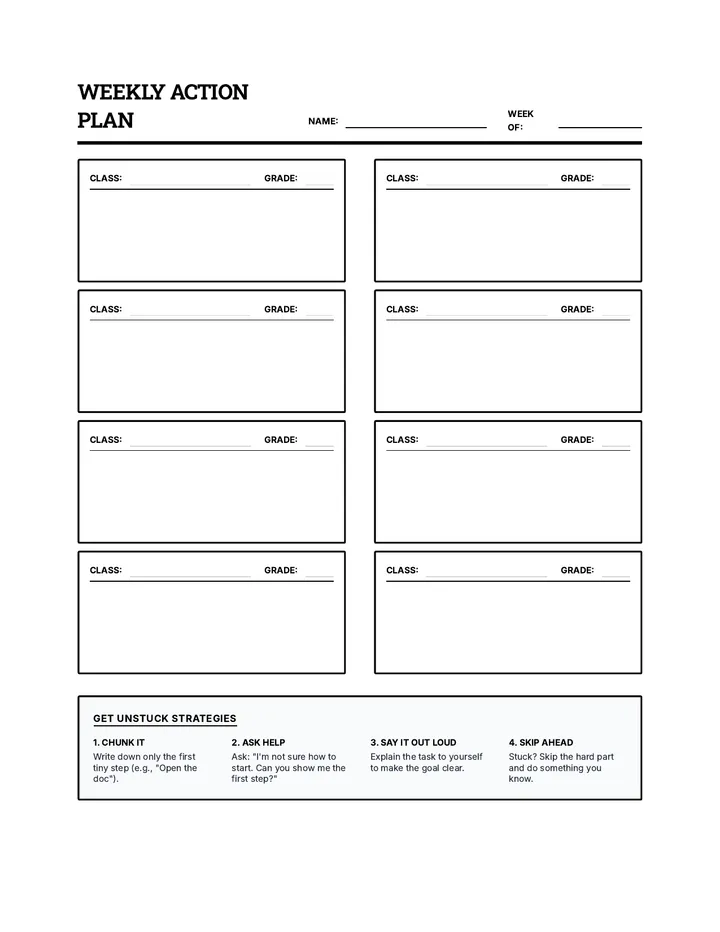
A highly efficient, single-page Weekly Action Plan designed for students with executive functioning needs. It features 8 streamlined class boxes with space for subjects and grades, plus a concise footer with 'Get Unstuck' strategies, all formatted to fit within a single printable page.
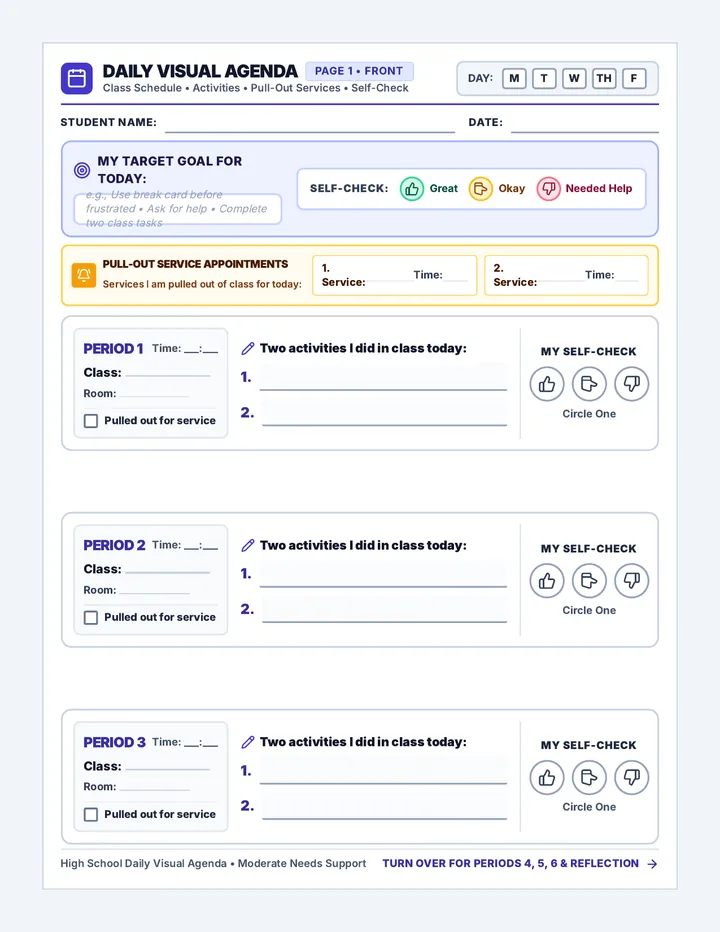
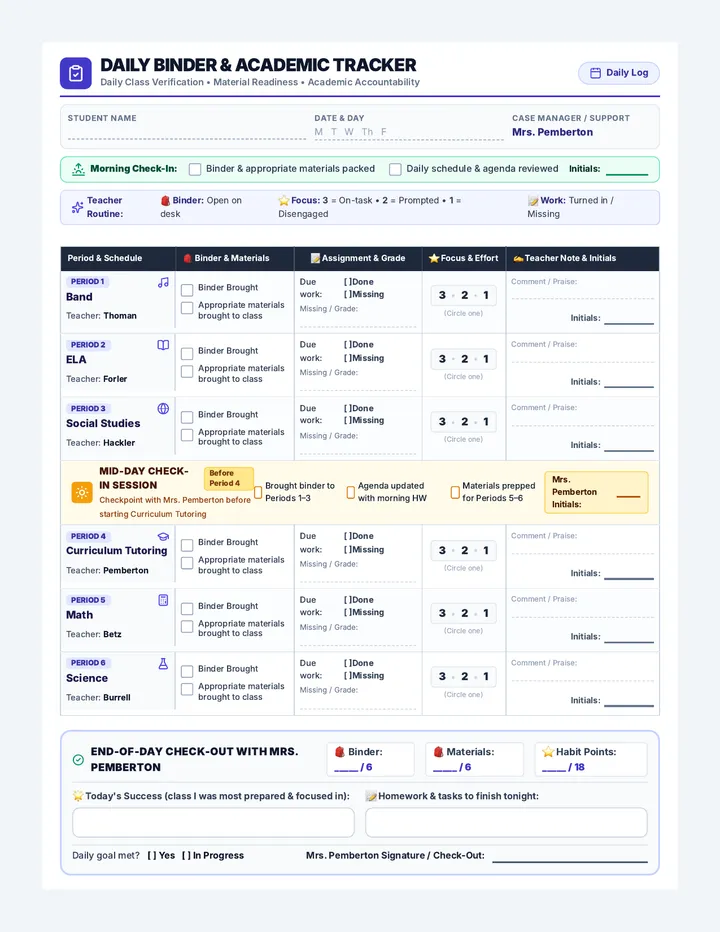
A daily behavior contract and tracker designed for students to monitor their progress. This version is digitally fillable with editable text fields for name, date, tracking scores, and reflections, featuring 7 period rows and an expanded reflection area.
A vibrant, high-contrast one-page infographic for high school students. Features deeply color-coded zones for executive functioning strategies with a modern, checklist-style layout and a bold, professional aesthetic. Optimized for one-page printing with improved contrast and consistent styling.
A two-page resource for teaching assistants. Page 1 provides a concise overview of what executive functioning is and why it's critical for student success. Page 2 contains four printable, color-coded reference cards with "look-fors" and actionable classroom strategies, sized to fit perfectly on a single sheet.
A highly professional, structured 7-hour shift time study log designed to track work activity every 15-30 minutes with an analytical corporate aesthetic while preserving low-friction tracking and cognitive offload features.
A printable collection of individual desk visual schedules including two large, easy-to-use 18-step daily tracker boards and a library of 24 color-coded cut-out subject icons. Perfect for student workspaces, laminated visual supports, and desk-based routines.
A set of three hockey-themed desk reminder strips for students, featuring sections for planning tools, editing tools, and participation strategies. Each strip is designed to be cut out and adhered to a desk to support self-regulation and executive functioning.
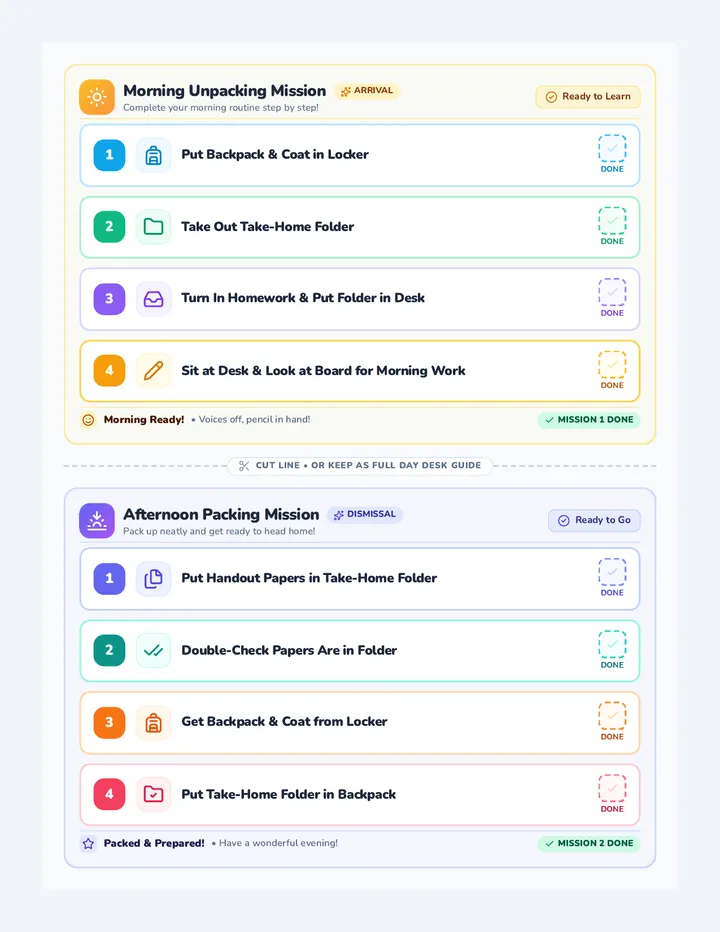
A clean, modern morning checklist designed for a high school freshman with ADHD. It features pink and purple tones, bold icons, clear task descriptions, and a high-contrast 'launch sequence' theme to assist with task initiation and routine building.
A bilingual (English/Spanish) 'Mission Control' organizer with significantly enlarged writing areas. Features a subject grid for current and missing work, a 'Deployment Sequence' for ordering assignments numerically, and updated reflection questions including a teacher check-in prompt.
A set of large-format visual recipe task cards for 3-Ingredient Apple Muffins, with one card per page. Designed for easy viewing in a classroom or kitchen, these cards feature bold line-art illustrations, a tools checklist, and step-by-step baking instructions.
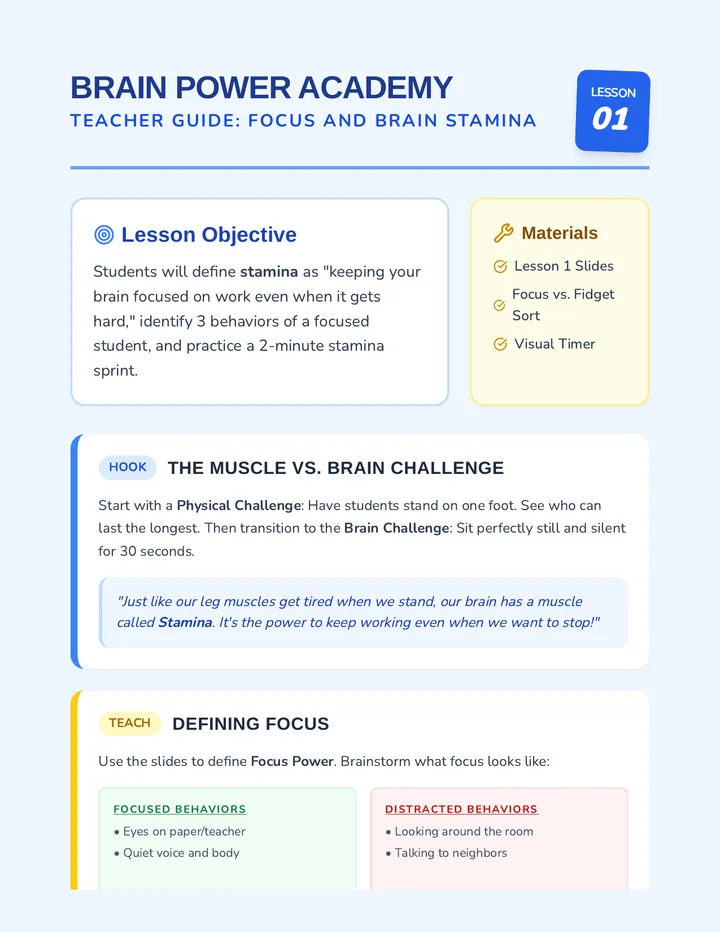
A series of 6 targeted sessions focused on building focus and stamina for students with diverse learning needs, using the 'Jack and Jill' story as a central anchor.
A 5-lesson unit for 8th-grade students focusing on using digital tools to offload working memory and manage cognitive load. Students learn to use task managers, focus modes, sequential reminders, and assistive speech technologies to create a personalized digital workflow for school success.
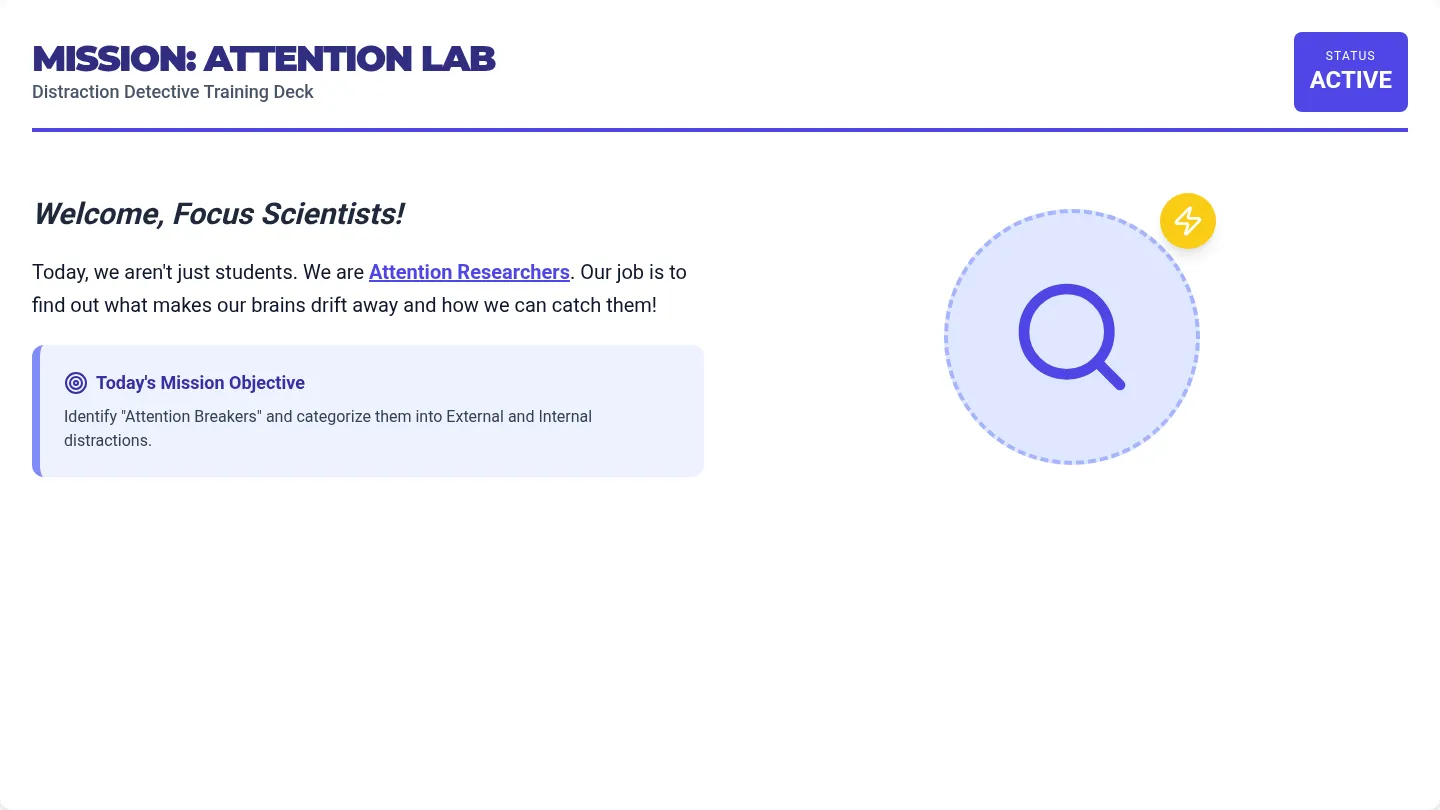
A sequence for 6th-grade students focusing on identifying distractions, designing effective workspaces, and mastering time-management techniques like Pomodoro and single-tasking to improve executive function and focus.
A comprehensive unit designed for 2nd-grade special education students to develop executive functioning skills, focusing on task persistence, stamina, and self-regulation through concrete strategies like chunking and positive self-talk.
A 5-lesson sequence for 4th Grade students focused on developing metacognitive awareness of attention, utilizing timer techniques, internalizing positive self-talk, and designing supportive environments to sustain focus on complex tasks.
A specialized sequence for 5th-grade students focusing on working memory support through task segmentation. Students learn to break complex tasks into single steps, using digital pacing and physical checklists to manage cognitive load and reduce anxiety.
A 5th-grade Special Education sequence focused on externalizing executive functions through visual schedules, checklists, planners, and environmental cues to build independence and reduce anxiety.
A sequence focused on teaching 5th-grade students with academic support needs how to apply spaced repetition and interleaving strategies to master complex procedural skills like multi-step math and grammar. Students learn to diagnose errors, manage practice intervals, and mix problem types to build long-term retention.
A 5-lesson sequence designed for 2nd-grade students to master the use of visual timers and schedules for smoother activity transitions. Students explore time perception, learn to read various visual countdowns, and develop self-regulation strategies for independent transitions.
This sequence shifts the focus from assistive technology to the cognitive strategies required for auditory learning. Students engage in inquiry-based activities to distinguish between passive hearing and active listening, applying specific comprehension strategies while using text-to-speech (TTS) to access grade-level texts.
A 5-lesson sequence for 9th Grade Special Education students focused on the neurobiology of attention, interval-based work techniques, environmental management, and energy regulation to improve task execution and self-regulation.
A comprehensive sequence designed to help 9th-grade students with executive function challenges develop, implement, and test personalized organizational systems. Students explore analog and digital tools, master calendar management, organize digital and physical spaces, and simulate real-world 'stress tests' to refine their chosen frameworks.
A comprehensive 9-session curriculum for 6th-grade students to master executive functioning skills like organization, planning, self-control, and emotional regulation through the metaphor of becoming their own 'Brain CEO'.
A 2nd-grade special education unit focused on executive function. Students learn to recognize the physical signs of being 'stuck' and categorize barriers into materials, comprehension, and environment.
This sequence empowers 8th-grade students with metacognitive strategies to recognize cognitive overload and advocate for single-step directions. It covers identifying personal cues of overload, deconstructing complex instructions, and practicing self-advocacy scripts.
A comprehensive 5-lesson sequence designed for 4th-grade students (with a focus on Special Education) to master executive function skills for multi-day project completion. Using an aviation-inspired 'Project Pilot' theme, students learn backward design, milestone identification, task chunking, time estimation, and flexible problem-solving.
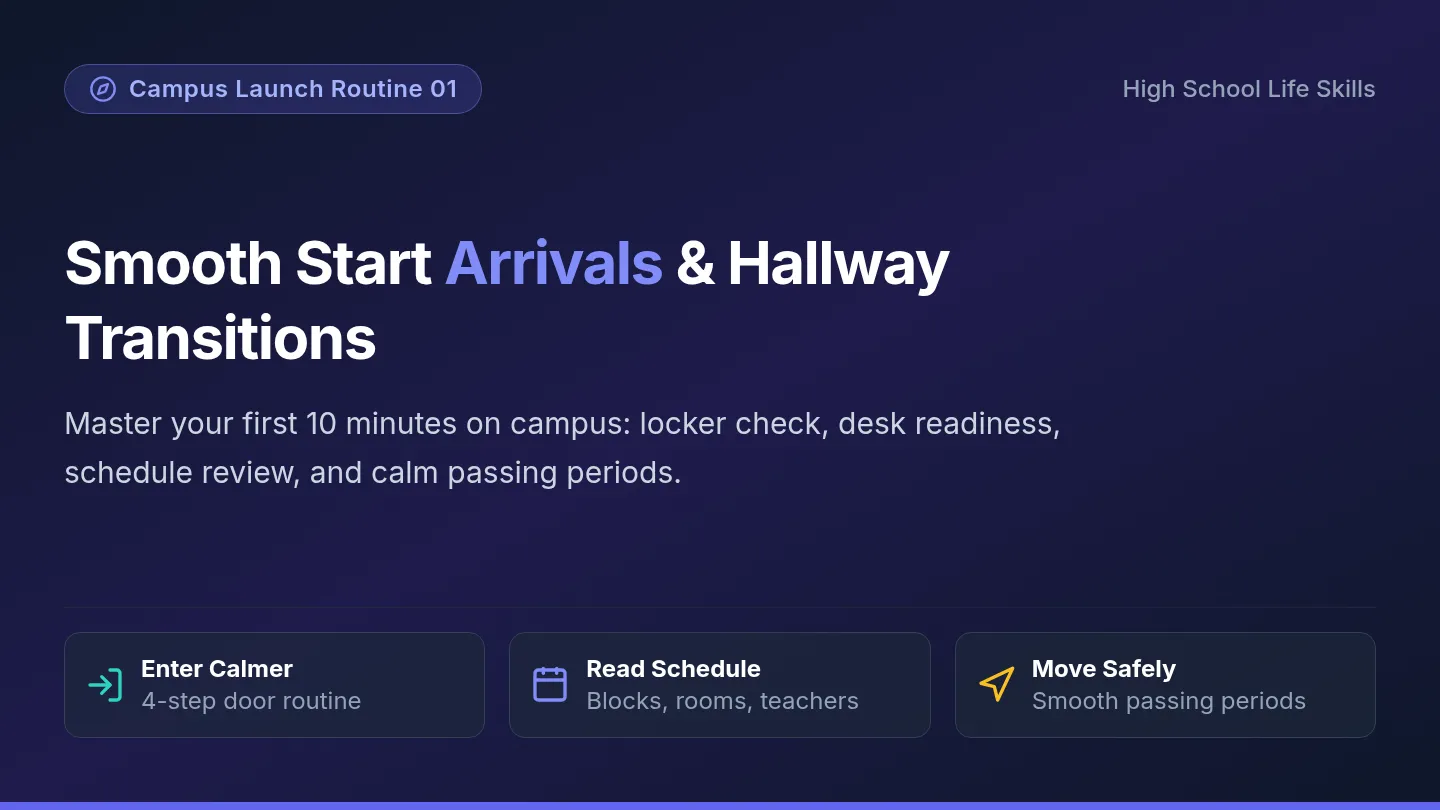
A 5-lesson sequence for 7th-grade students to master school transitions through visual cues, checklists, and cognitive routines. Students identify stress points, design locker maps, and navigate a 'Transition Gauntlet' to build executive function and emotional regulation.
A project-based sequence for 4th-grade students in special education settings, focusing on moving from passive highlighting to active extraction, organization, and synthesis. Students learn to refine highlights, extract them onto cards, sort ideas logically, and create a visual 'One-Page Expert Guide' as a summary tool.
A 5th-grade sequence focused on using Text-to-Speech (TTS) technology as a cognitive strategy for reading comprehension. Students learn bi-modal reading, text chunking, evidence collection, and active annotation to transition from passive listening to active engagement with digital text.
This sequence equips 12th-grade students with advanced technical skills in Text-to-Speech (TTS) technology. It moves beyond basic tool usage to professional-grade workflows, including auditory calibration, OCR conversion, immersion reading, mobile synchronization, and technical troubleshooting, preparing students for the heavy reading demands of post-secondary environments.
A comprehensive graduate-level sequence focused on the pedagogical implementation of assistive writing technology. It shifts the focus from tool selection to instructional methodologies that scaffold digital organizers, dictation, and text-to-speech for student autonomy.
This sequence explores how graduate students can leverage assistive technology for digital annotation, moving from basic tool audits to advanced data extraction and AI integration to support students with disabilities.
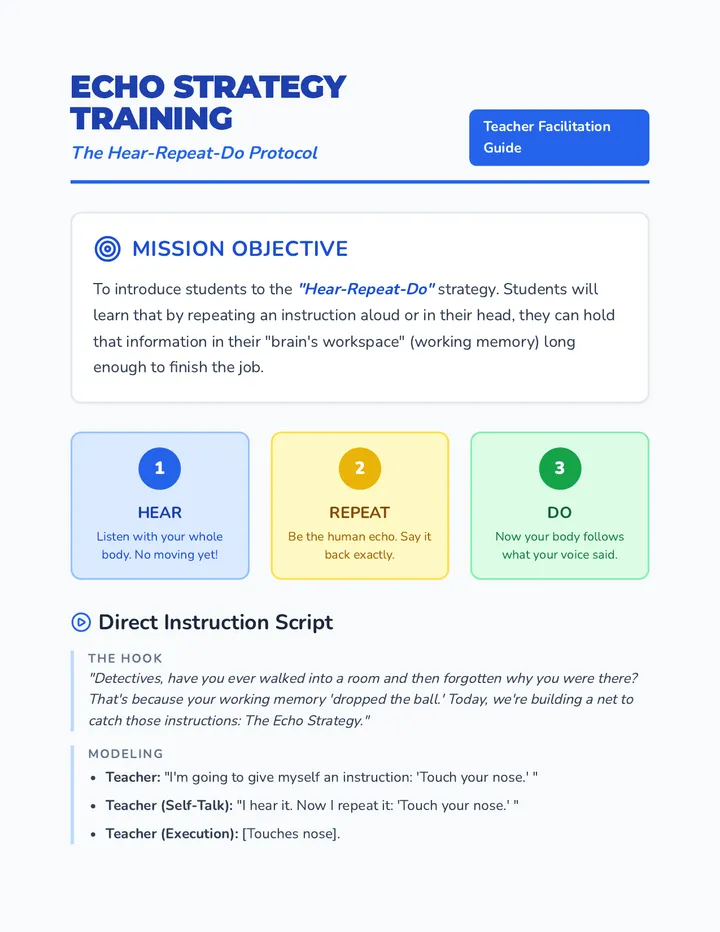
A specialized sequence for 4th-grade students to develop working memory through verbal rehearsal. Students practice the 'Hear-Repeat-Do' strategy, identify action keywords, utilize processing pauses, and verify their work to improve follow-through on single-step directions.
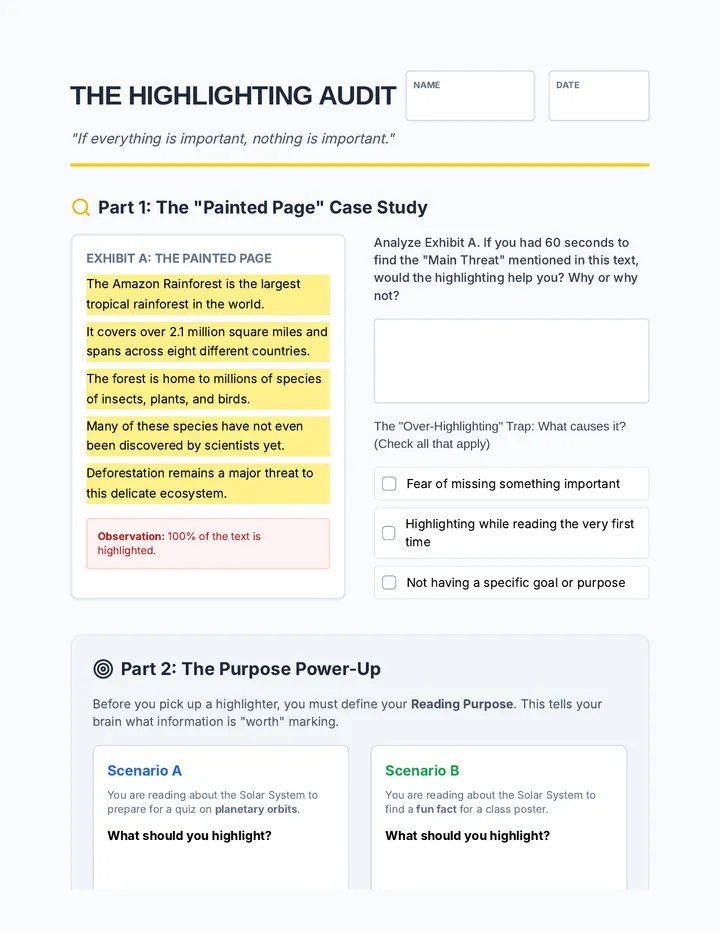
A 5-lesson sequence for 9th-grade students to master a systematic, three-color highlighting strategy, moving from identifying 'over-highlighting' pitfalls to independent application on non-fiction texts.
A specialized sequence for 6th-grade students focusing on working memory support through visual encoding. Students learn to transform auditory single-step directions into mental images and physical sketches to improve recall and task execution.
This sequence teaches 11th-grade students with executive functioning needs how to use cognitive rehearsal and self-talk to overcome task initiation barriers. Students move from identifying psychological triggers to building and applying personalized 'starting scripts' for their actual academic workload.
This sequence teaches 3rd-grade students how to use text-to-speech (TTS) as a strategic tool for narrative comprehension. Students learn to use audio for identifying story elements, summarizing via the 'Listen-Stop-Think' routine, citing evidence by re-listening, and visualizing descriptive text.
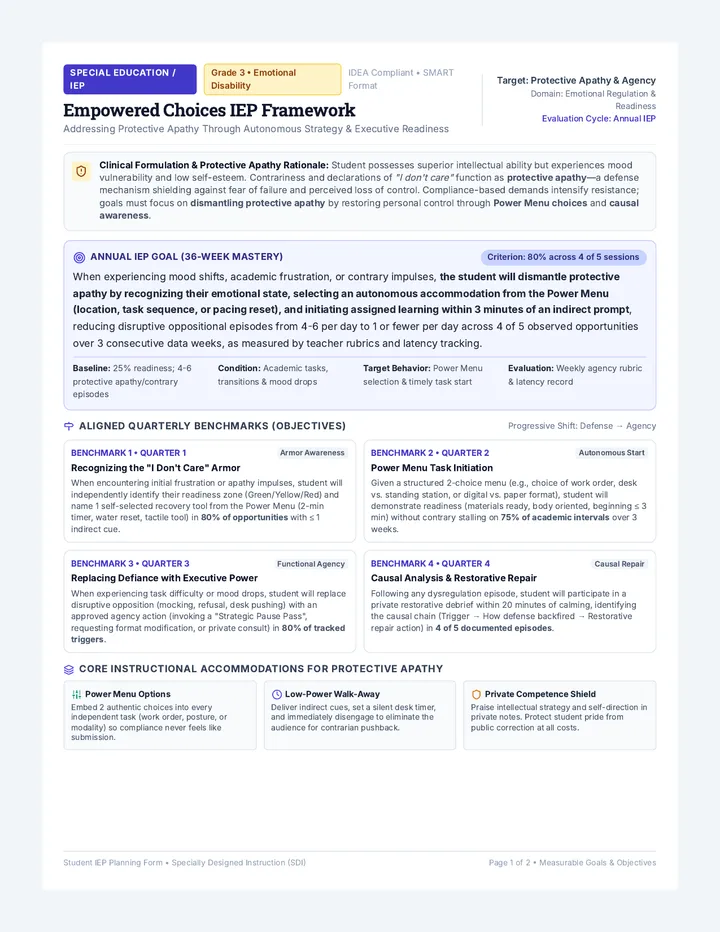
A graduate-level sequence focused on the mechanics of administrative compliance in Special Education. Students will design and implement a comprehensive IEP workflow system using project management principles, automation, and deep work strategies to prevent burnout and ensure 100% legal compliance.
A 30-minute, individualized Tier 3 lesson for 3rd-grade students focused on executive functioning, sustained attention, and task completion strategies for ADHD support.
This 30-minute Tier 3 individual lesson for 1st-grade students with IEPs focuses on developing impulse control, attention, and focus through the metaphor of 'Focus Superpowers.' Students learn three specific tools (Stop-Think-Act, Deep Breath Dragon, and Look and Listen) and practice them through a hands-on building activity.
A Tier 3 individualized 20-minute lesson for 6th-grade students to develop a personalized task initiation routine, focusing on building momentum and minimizing distractions.
This Tier 2 group lesson helps 8th-grade special education students practice creating and sustaining momentum during tasks. Through direct instruction and timed sprints, students learn to break down tasks and identify immediate next steps to maintain focus.
A 20-minute Tier 3 lesson for 4th-grade students to develop planning, organization, and self-monitoring skills using a superhero-themed approach.
A 20-minute, individualized Tier 3 lesson for a 7th-grade student to understand executive functioning as 'the brain's CEO,' focusing on organization and self-regulation strategies.
An individualized lesson for 4th-grade students to develop focus and task-completion strategies through the 'Focus Funnel' concept, breaking down large tasks and minimizing distractions.
A 30-minute parent workshop focused on practical strategies and tools to support second graders' executive function skills at home, including planning, organization, and self-monitoring.
A 30-minute, Tier 3 LEGO-themed lesson for 1st graders focusing on attention, impulse control, and personal boundaries through building challenges.
This lesson introduces vocational task boxes for high school students with low cognitive abilities, focusing on hands-on activities that build fine motor skills, task completion, and independence.
A 30-minute one-on-one Tier 3 lesson designed to help middle school students build stamina for non-preferred tasks using executive functioning strategies like planning, chunking, and self-monitoring.
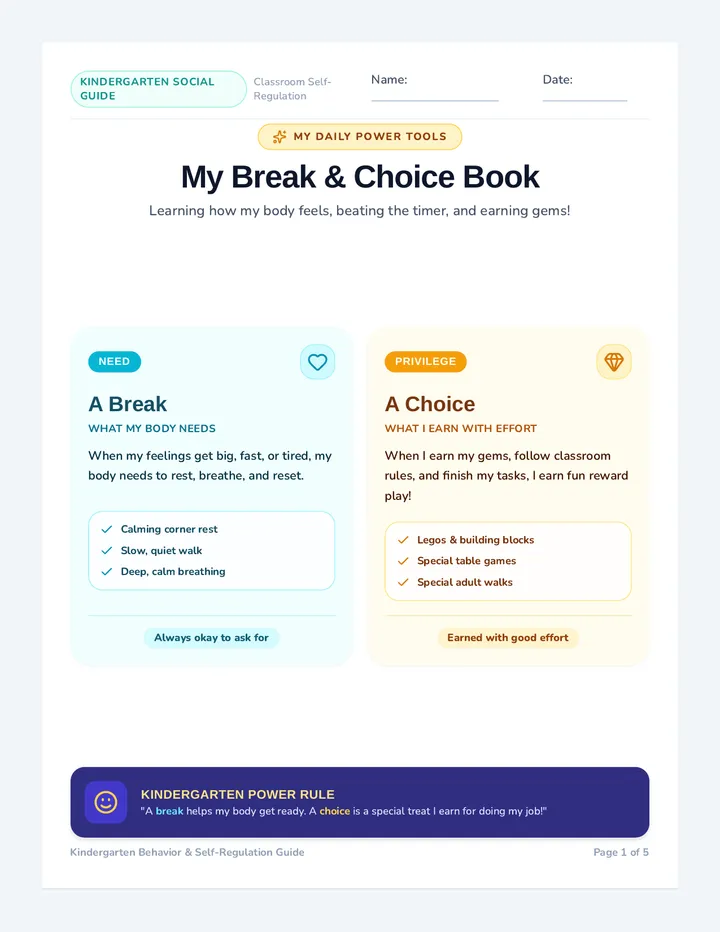
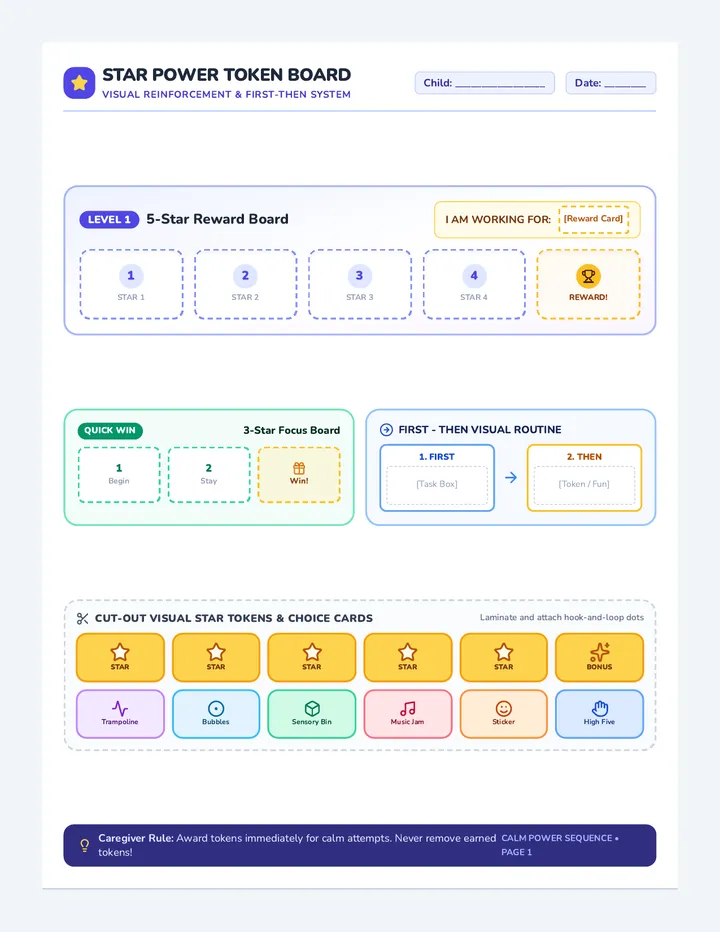
A Tier 3 individual intervention lesson designed to introduce a personalized behavior tracker to a 2nd-grade student, focusing on self-regulation and academic success through positive reinforcement.
A comprehensive behavior tracking system designed for a 1st-grade student struggling with work refusal and transitions. The system uses a 30-minute incremental tracker, visual desk reminders, and a teacher implementation guide to foster safety and academic engagement.
A comprehensive lesson designed to help a 3rd-grade student recognize and shift from 'stuck thinking' to 'flexible thinking' during transitions and writing tasks. Includes a social story, role-playing, and tangible strategy cards.
A short, high-impact PD session for school staff focusing on identifying the root causes of student work avoidance and implementing practical classroom strategies to boost engagement.
A comprehensive behavior modification support system designed for coaches, parents, and a high-energy 10-year-old player. It targets pre-practice preparation, in-session focus, impulse control, and emotional regulation during soccer practice.
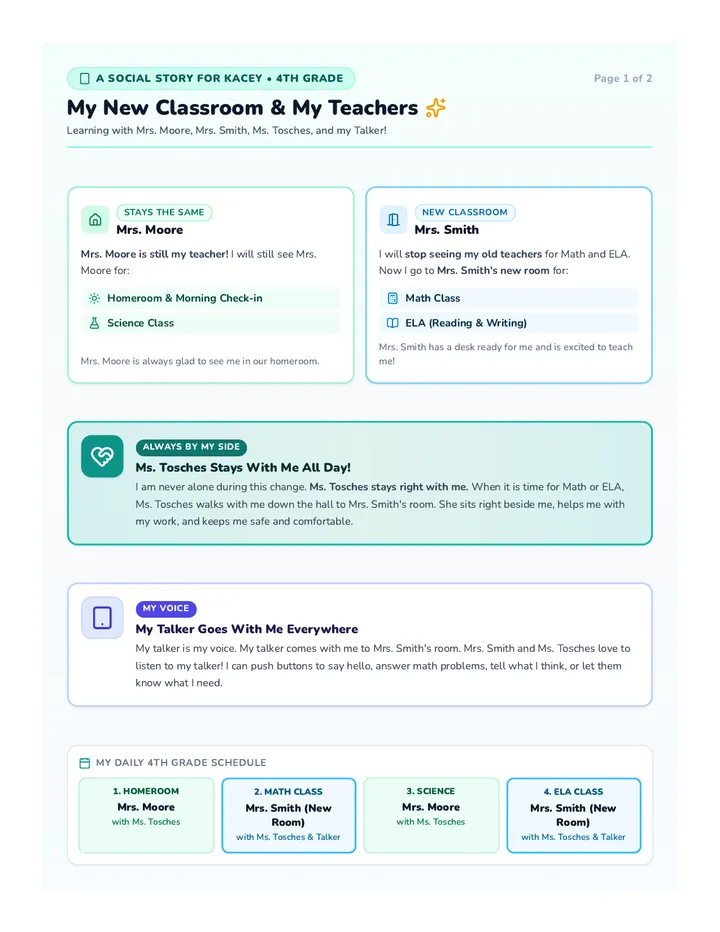
A comprehensive social story and supporting tools designed for an academically advanced 2nd grader to manage non-preferred tasks, transitions, and big emotions using verbal communication and solution-seeking strategies instead of screaming or eloping.
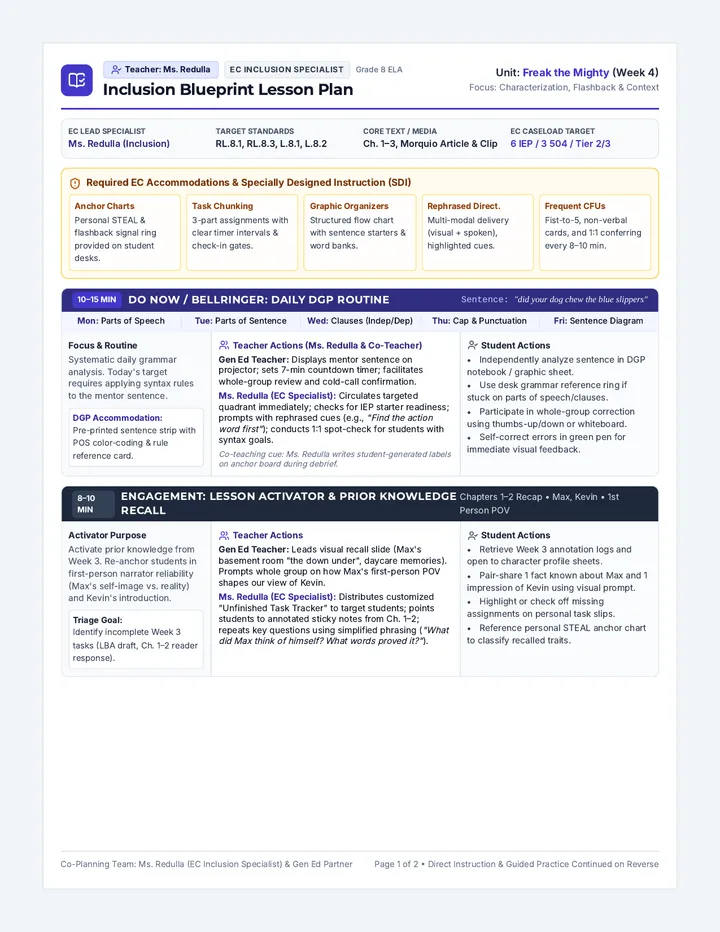
A professional development session equipping educators with blueprint-inspired strategies to scaffold executive functioning for students with ADHD, focusing on Working Memory, Organization, and Time Management.
A set of foundational literacy and numeracy materials designed for an EC student performing at a Kindergarten level, focusing on CVC words, number sense 0-10, and basic addition.
A foundational digital literacy intervention designed for SLIFE students to master essential school platforms like Canvas, ClassLink, and school email. This lesson includes a diagnostic screener, instructional slides, and a progress-tracking passport for students.
A 20-day series of functional math, life skills, and vocational morning worksheets designed to build real-world independence. Each daily worksheet includes personal information practice, coin and bill calculations, budgeting, next-dollar-up calculations, and real-world functional reading.
A series of focused tracing worksheets for 1st grade students with ADHD, featuring high-contrast paths, minimal distractions, and integrated reward stars.
A 30-minute introductory lesson on metacognition designed for high school students with SLD, ADHD, and neurological disabilities. The lesson uses a 'Brain Boss' theme to teach students how to plan, monitor, and evaluate their own thinking processes.
A visual support system designed to foster independence in students with autism during structured work tasks using a four-step sequence.
A comprehensive life skills rotation lesson covering budgeting, social interactions at a cafe, job skills (stocking/packing), and self-advocacy through role-play and game-based learning.
A lesson designed to support adults with cognitive decline in nursing home settings, focusing on the social and emotional skills needed to wait for staff assistance patiently.
A comprehensive preparation resource set for Field Day, designed for upper elementary and sensory-sensitive students. It includes a structured, coping-strategy-focused social story booklet and a beautifully organized, visual rotation schedule poster to support seamless transitions.
A lesson for highly intelligent 1st grade students with autism focused on turn-taking and classroom flexibility using the metaphor of a 'Classroom Garden' to illustrate how every student's voice needs space to grow.
A comprehensive annual functional skills pacing framework for grades K-8. This framework structures a whole-school alignment across living, social-emotional, and community safety domains, optimized for special education administrators, resource teachers, and service providers.
A 15-minute interactive lesson for an individual student with autism to introduce flexible vs. rigid thinking using routines, visuals, and movement.
A comprehensive visual support kit and implementation system designed to assist students struggling with classroom transitions. Includes visual schedules, first-then boards, countdown cues, and a practitioner's guide to addressing anxiety, task avoidance, and slow processing speed.
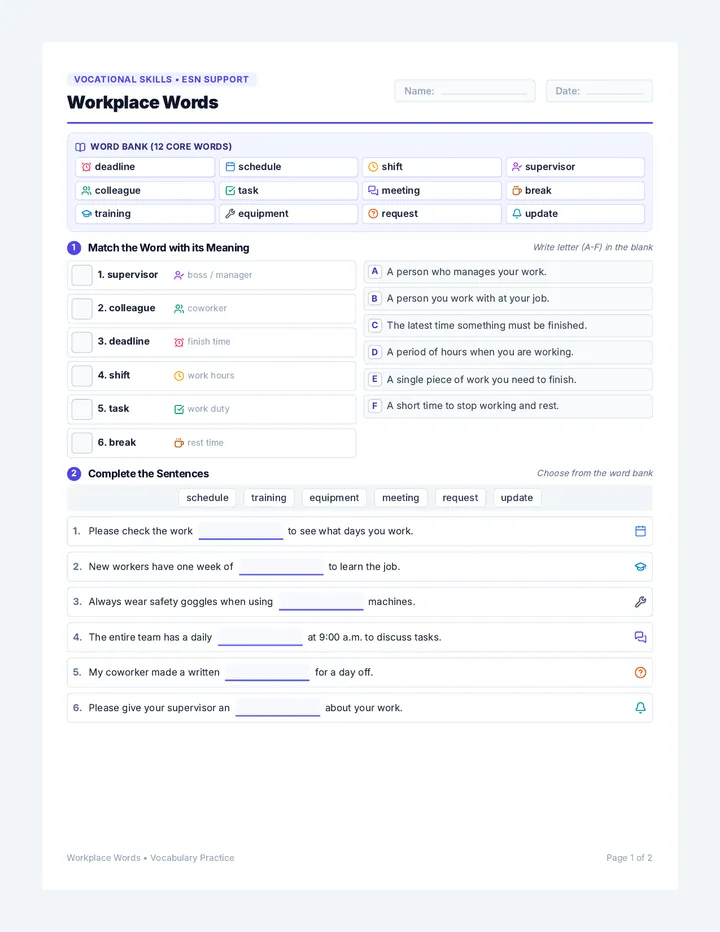
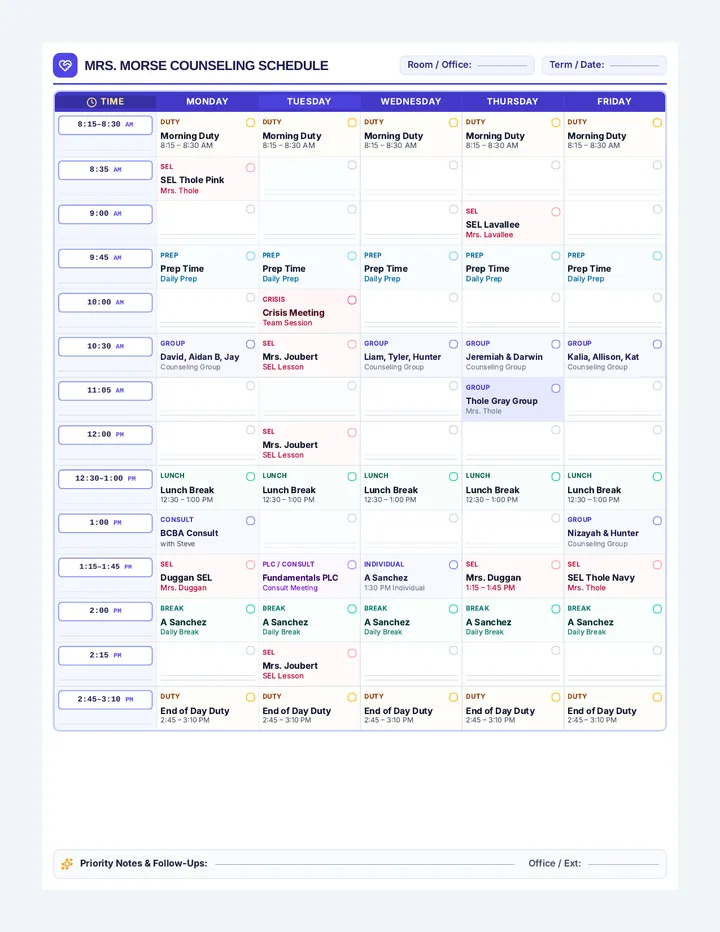
A comprehensive lesson for transition-age students to master reading daily, weekly, and monthly work schedules through realistic workplace scenarios.
A weekly routine for students to track and reflect on self-created executive functioning goals, promoting metacognition and self-regulation.