Scaffolding long-term assignments through task analysis, milestone setting, and visual progress tracking. Builds executive function skills for managing complex workflows over extended periods.
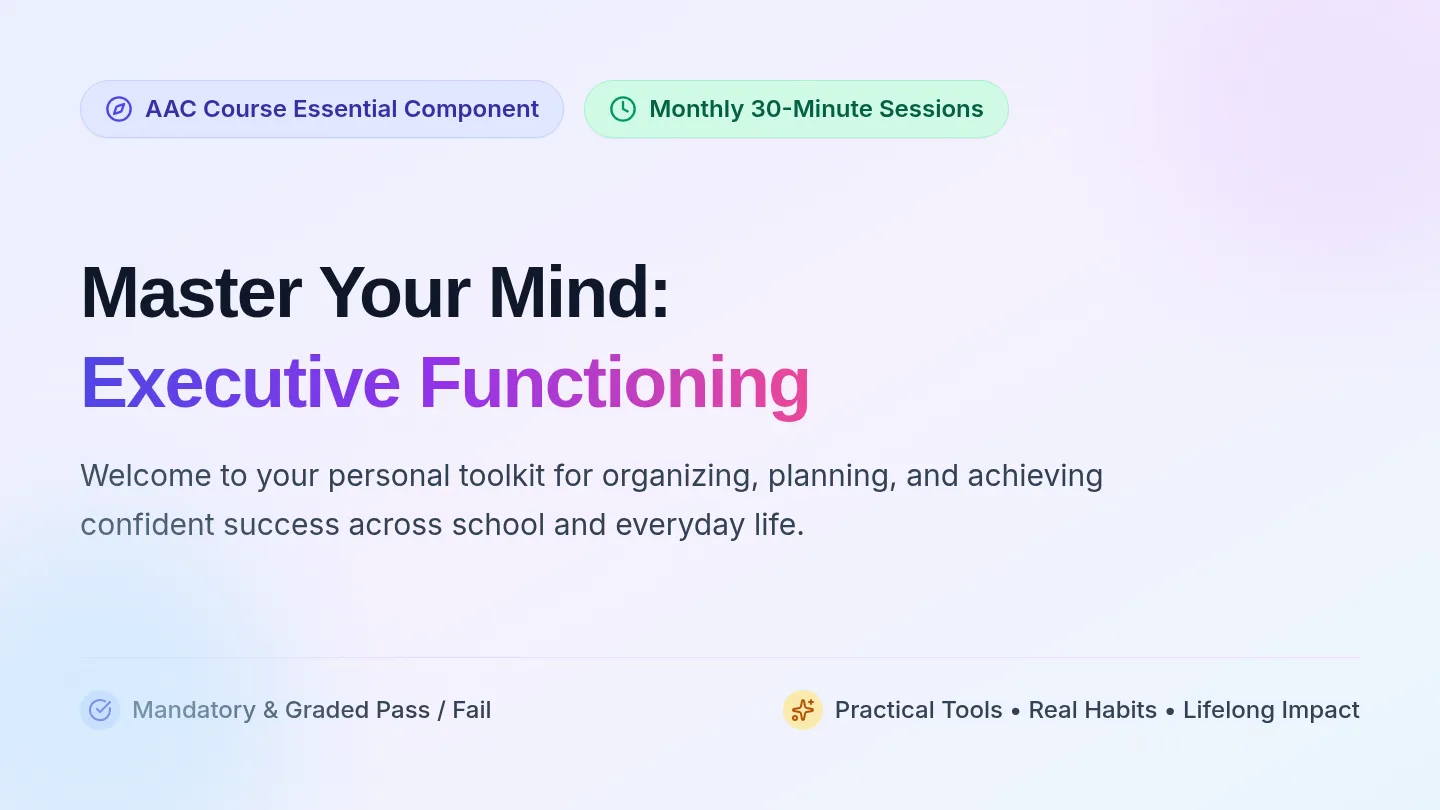
A 6-slide introductory deck in a calming, friendly pastel palette for the mandatory AAC Executive Functioning sessions, covering core skills, course grading, practical scenarios, and student expectations.
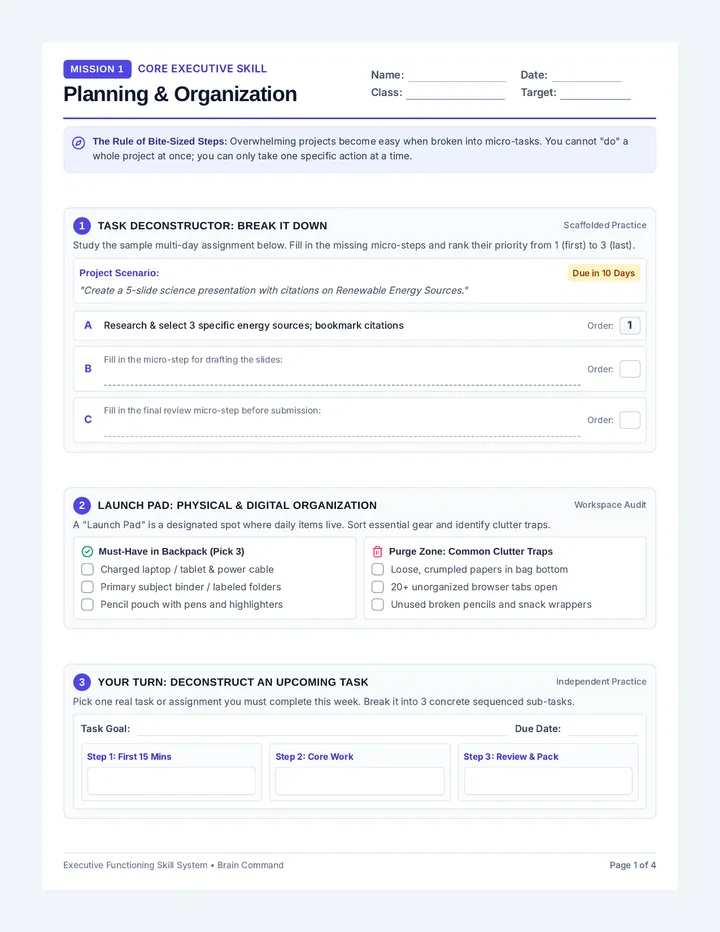
A comprehensive 4-page executive functioning printable worksheet packet targeting planning and organization, time management, focus and self-monitoring, and working memory and cognitive flexibility. Scaffolded activities guide students through task deconstruction, time estimation, distraction radar, and adaptive pivot strategies.
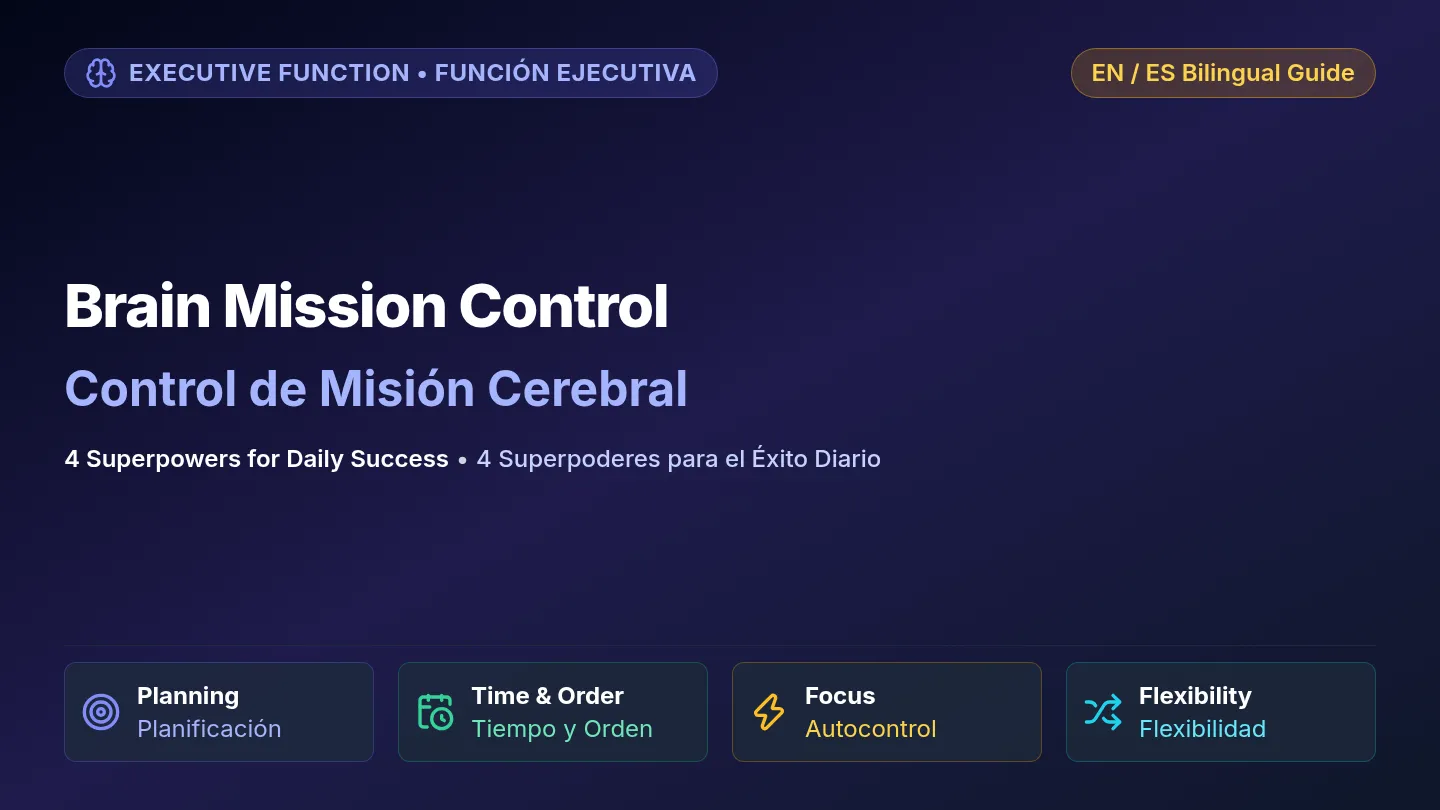
A comprehensive 10-slide bilingual English and Spanish presentation introducing core executive function skills. Guides students through planning, organization, focus, self-control, and flexible problem-solving with concrete visual strategies.
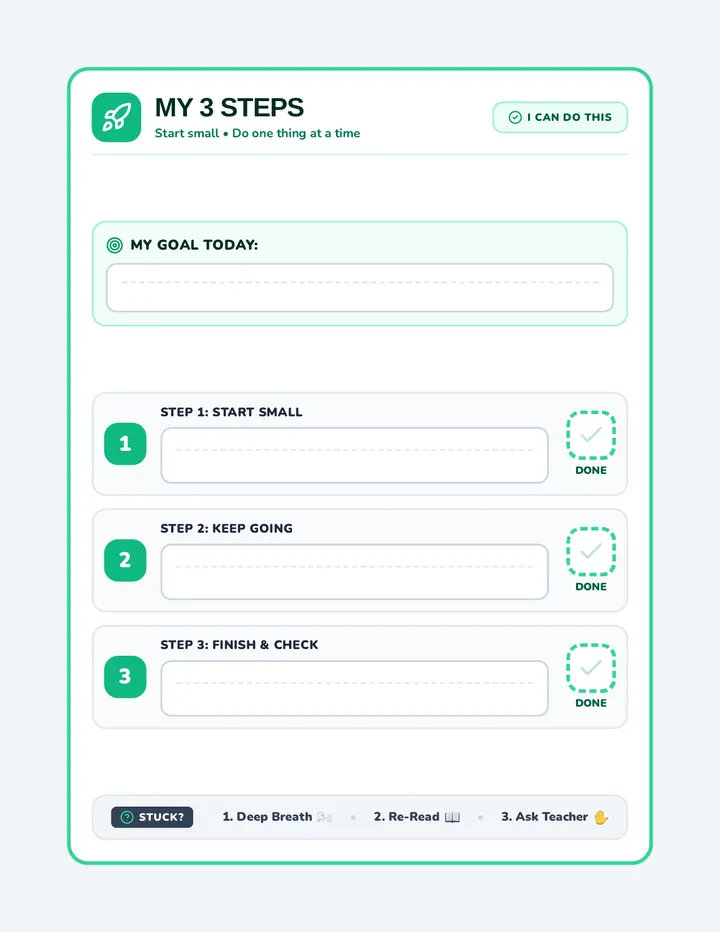
A clean, large-format desktop task card designed for a 3rd grade student with task initiation and completion challenges. Features ultra-large text, minimal wording, giant handwriting areas, and a simple 3-step breakdown with tactile dry-erase check boxes.
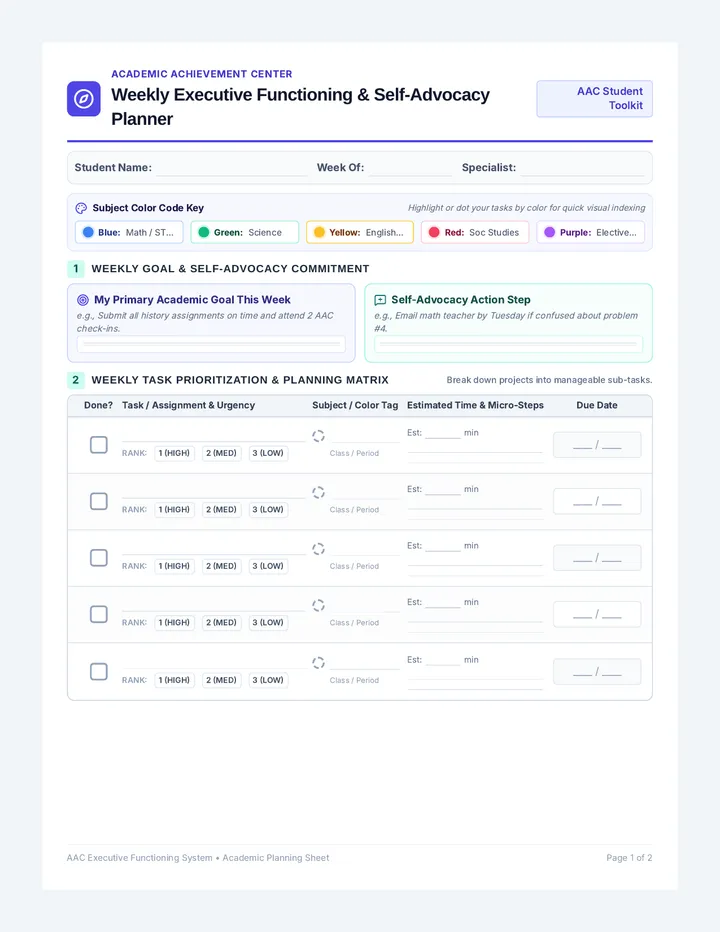
A comprehensive, printable two-page executive functioning and self-advocacy planner designed for Academic Achievement Centers, featuring a dedicated subject color code key, goal setting, a color-coded task prioritization matrix, daily focus tracking, strategy quick-references, and self-monitoring reflections.
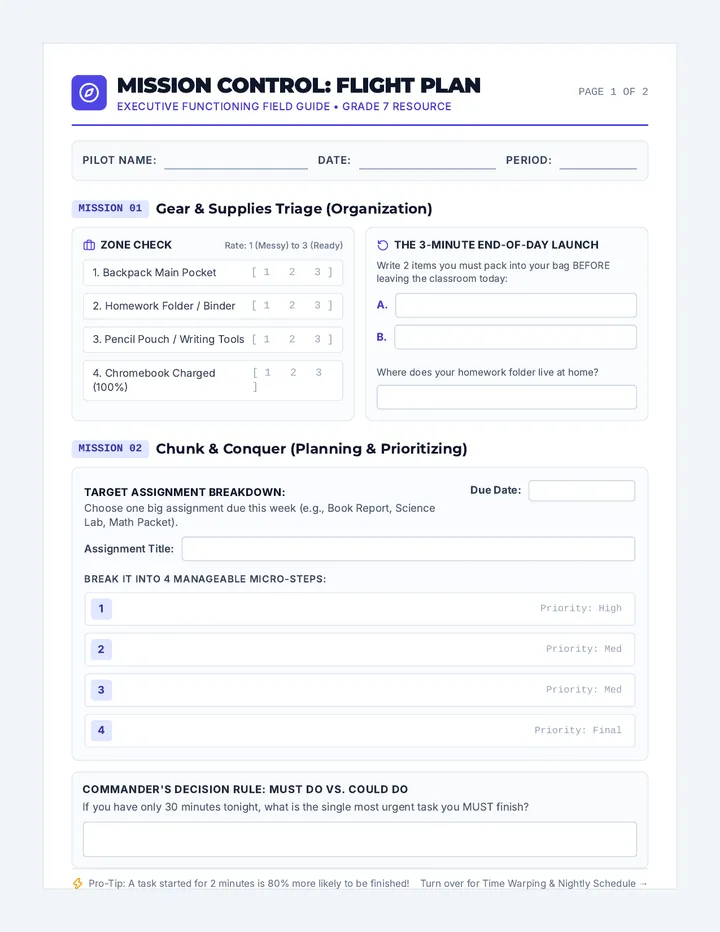
A 2-page executive functioning printable worksheet designed for 7th-grade resource students. It covers backpack organization routines, multi-step assignment chunking, priority ranking, time estimation reality-checks, and evening study block planning.
A comprehensive 9-session curriculum for 6th-grade students to master executive functioning skills like organization, planning, self-control, and emotional regulation through the metaphor of becoming their own 'Brain CEO'.
A comprehensive 8-session course for 9th graders with IEPs to build essential life skills including organization, accountability, time management, emotional regulation, and focus.
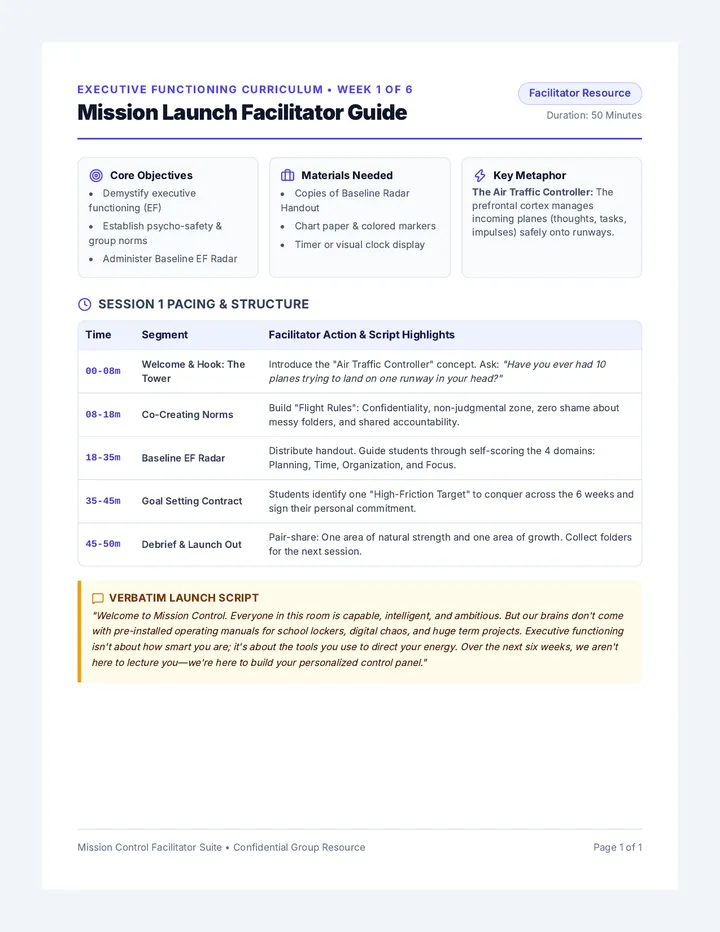
A comprehensive 6-week small-group curriculum targeting executive functioning development for adolescents. Emphasizes planning, prioritizing, time estimation, physical and digital organization, task initiation, and self-regulation.
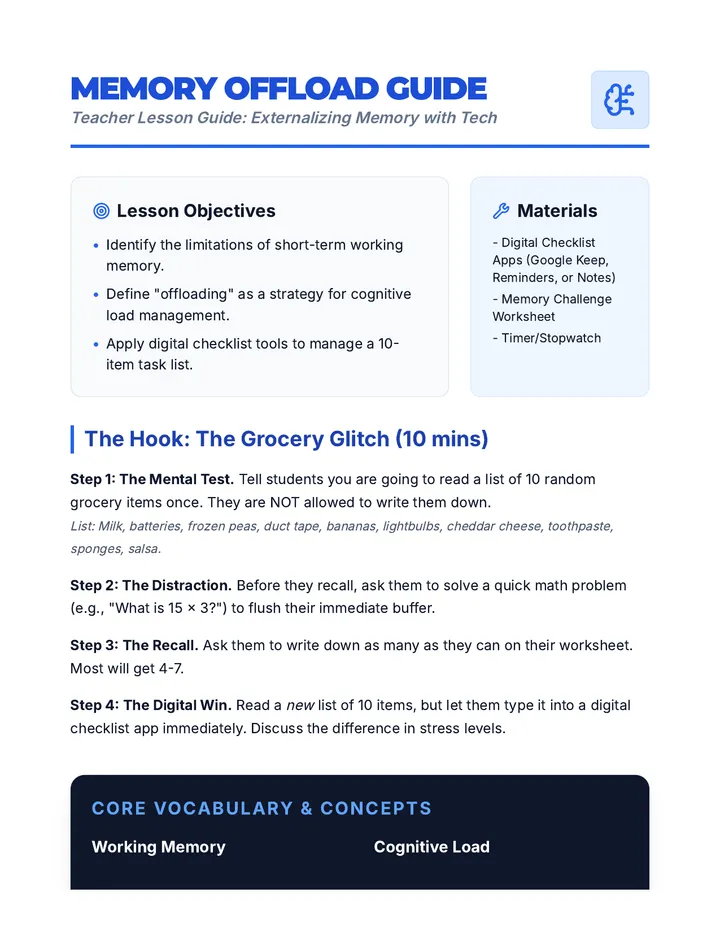
A 5-lesson unit for 8th-grade students focusing on using digital tools to offload working memory and manage cognitive load. Students learn to use task managers, focus modes, sequential reminders, and assistive speech technologies to create a personalized digital workflow for school success.
This sequence teaches 11th-grade students with working memory challenges how to deconstruct complex academic prompts into single, manageable steps using masking, checklists, and verification protocols.
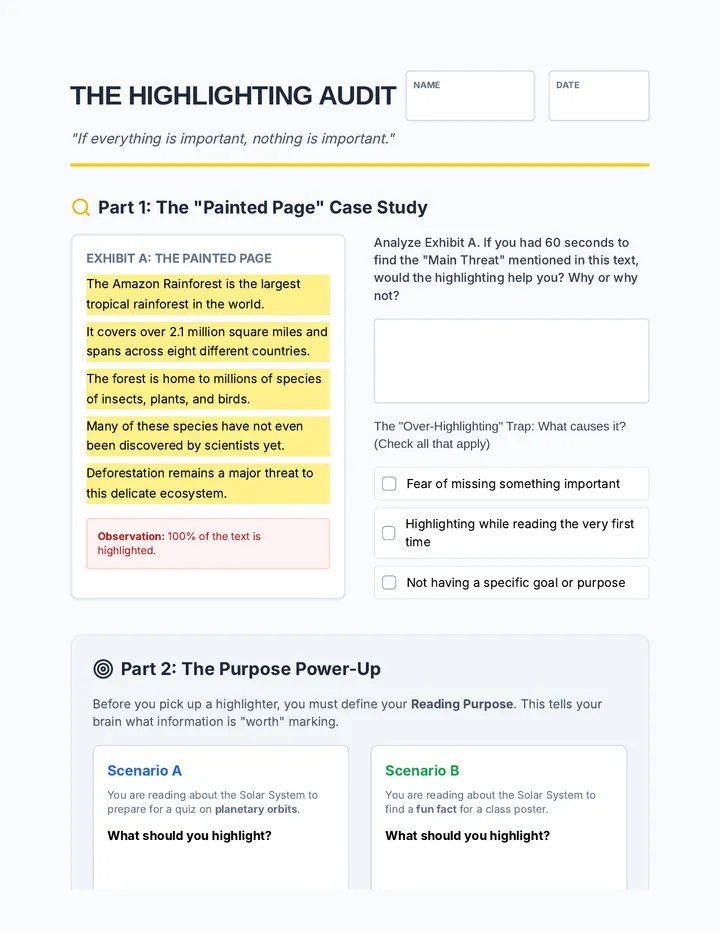
A 5-lesson sequence for 9th-grade students to master a systematic, three-color highlighting strategy, moving from identifying 'over-highlighting' pitfalls to independent application on non-fiction texts.
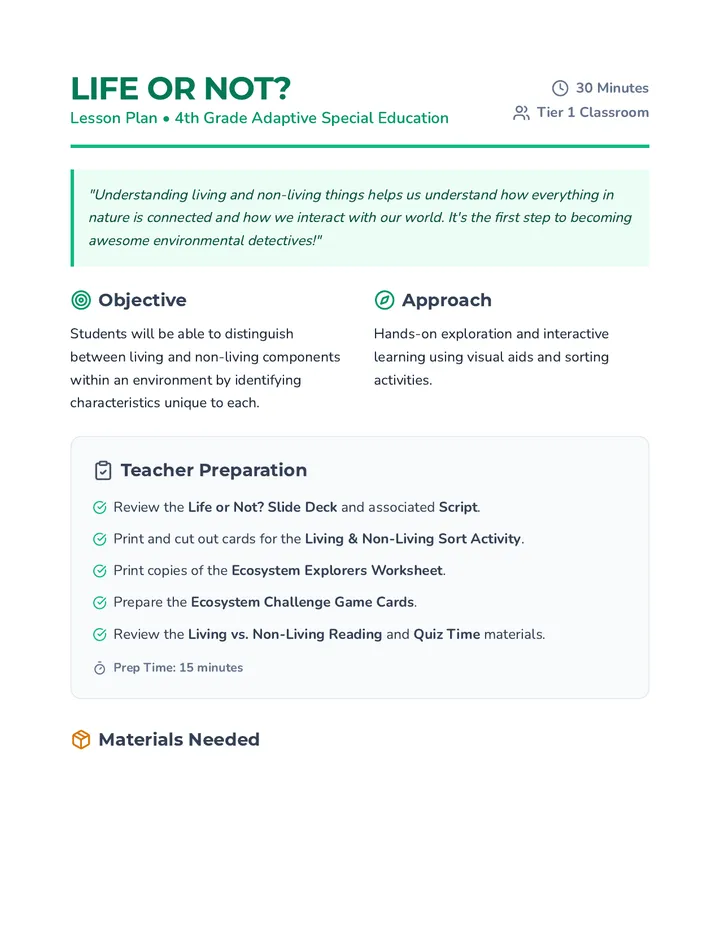
A foundational lesson for 4th-grade adaptive special education students to distinguish between living and non-living components of an environment through hands-on exploration and detective-themed activities.
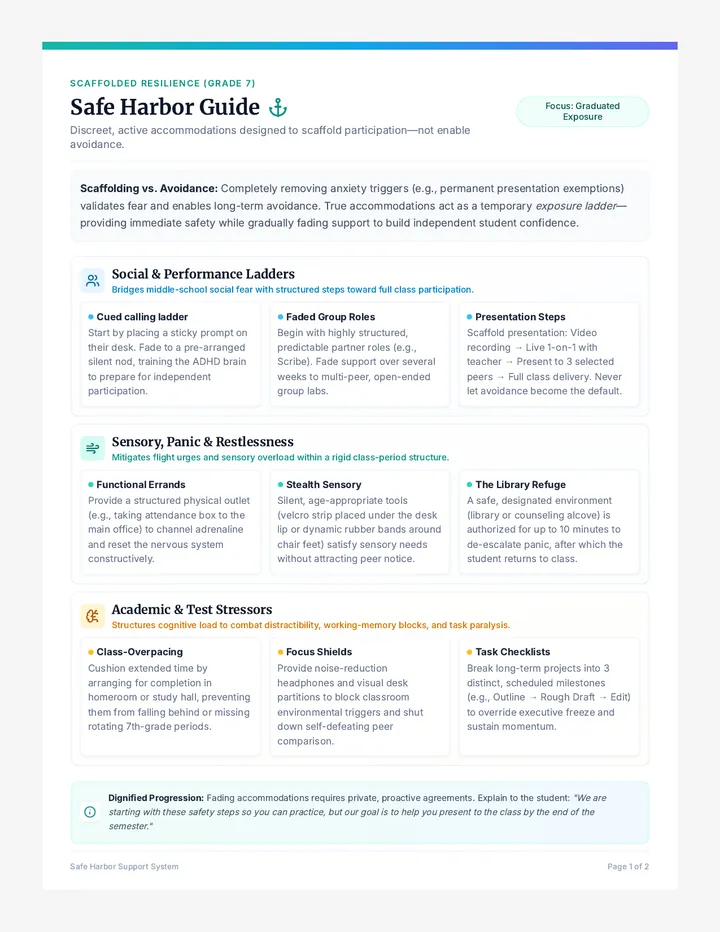
A lesson containing resources and guides for teachers to implement subtle, effective classroom accommodations for students dealing with anxiety.
A 45-minute lesson for 9th-grade students to master executive functioning skills including planning, organization, and self-control through interactive coaching and practical scenarios.
A high school life-skills independent study lesson integrating plant life science, healthy nutrition choices, and functional daily math including grocery money, time, and kitchen measurement.
A structured college application planning bundle designed specifically for high school students with executive functioning challenges. It breaks the overwhelming application process into micro-steps, externalized timelines, and concrete actionable checklists.
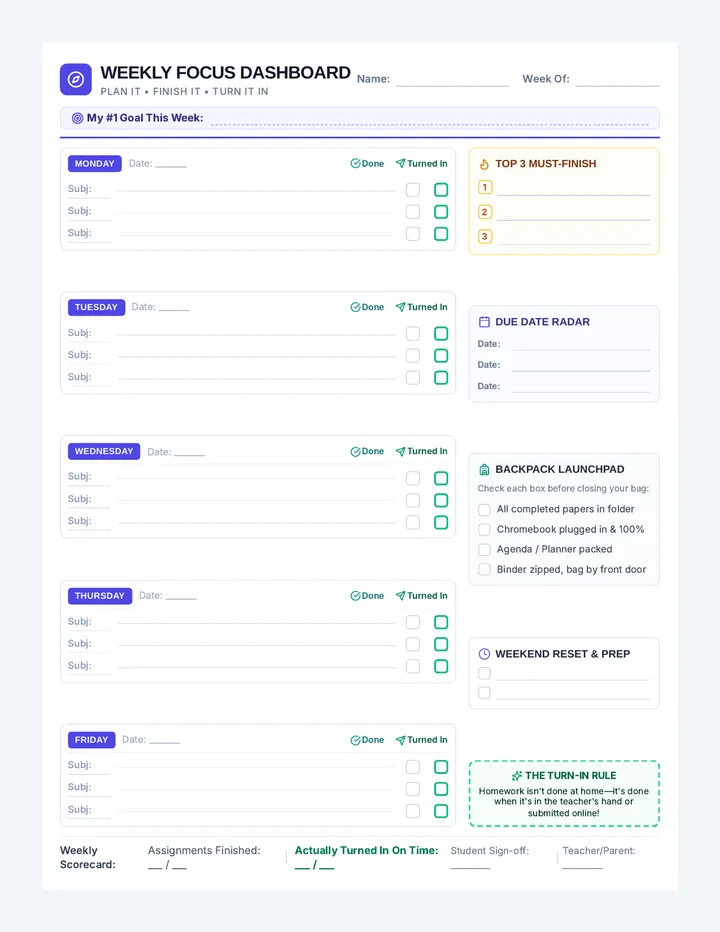
An executive functioning and assignment tracking toolkit specifically tailored for 7th grade students struggling with organization, time management, and turning in completed homework.