An individualized 90-minute lesson for adult students exploring the vital concept of communication accessibility, barriers, and inclusive strategies.
A 4-week social-emotional learning sequence designed for a transition-age student with significant cognitive and social-emotional disabilities. Focuses on body awareness, concrete physical calming, non-verbal functional communication, and highly simplified problem-solving.
A practical, discussion-based lesson designed to help students build professional judgment and conflict resolution skills. Students analyze realistic workplace dilemmas across diverse industries and discuss actionable solutions.
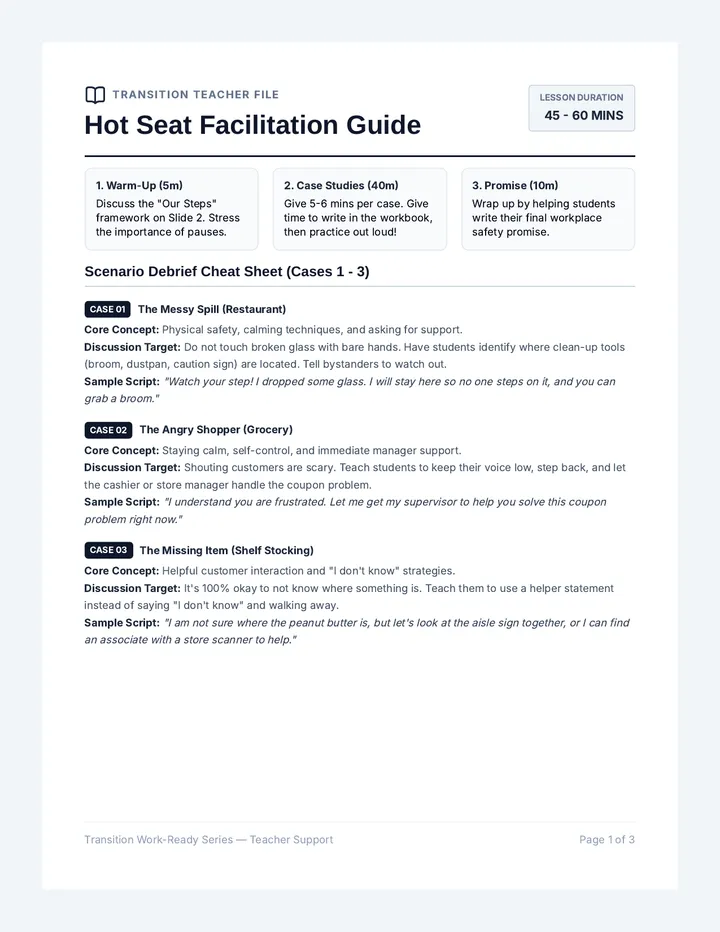
A comprehensive teacher's guide containing pacing notes, scenario debrief details, sample professional scripts, and a grading rubric to help educators confidently facilitate the Hot Seat discussion lesson.
A foundational sequence introducing students to the ChromeVox screen reader on Chromebooks. Students learn activation, voice personalization, linear text navigation, and structural element navigation to independently explore web content.
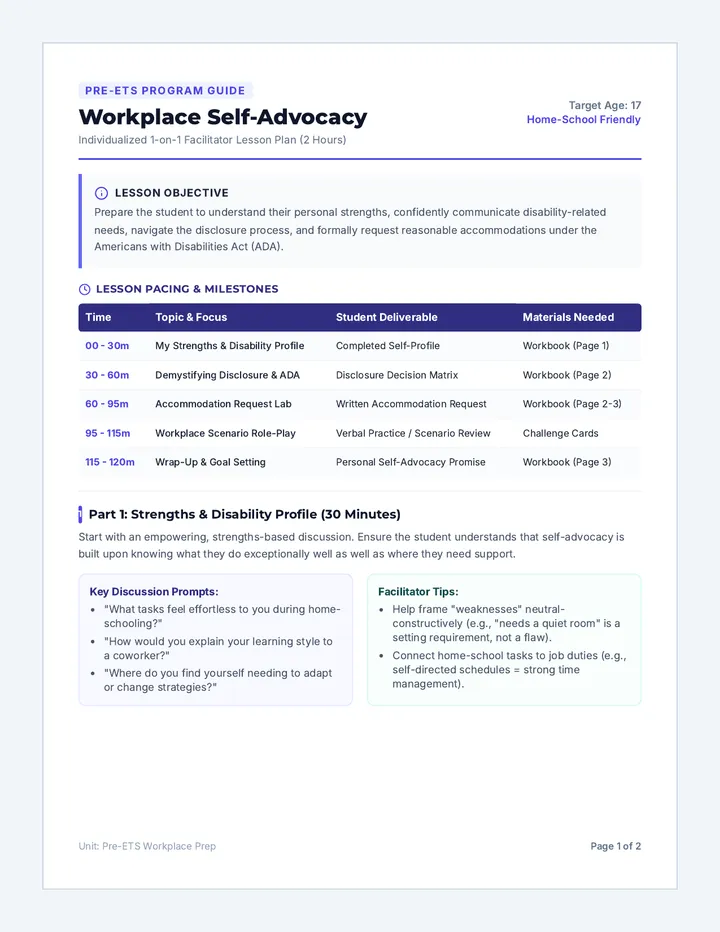
A comprehensive 2-hour individualized Pre-ETS lesson designed for a 17-year-old home-schooled student, focusing on self-advocacy, disability disclosure, and requesting accommodations in the workplace.
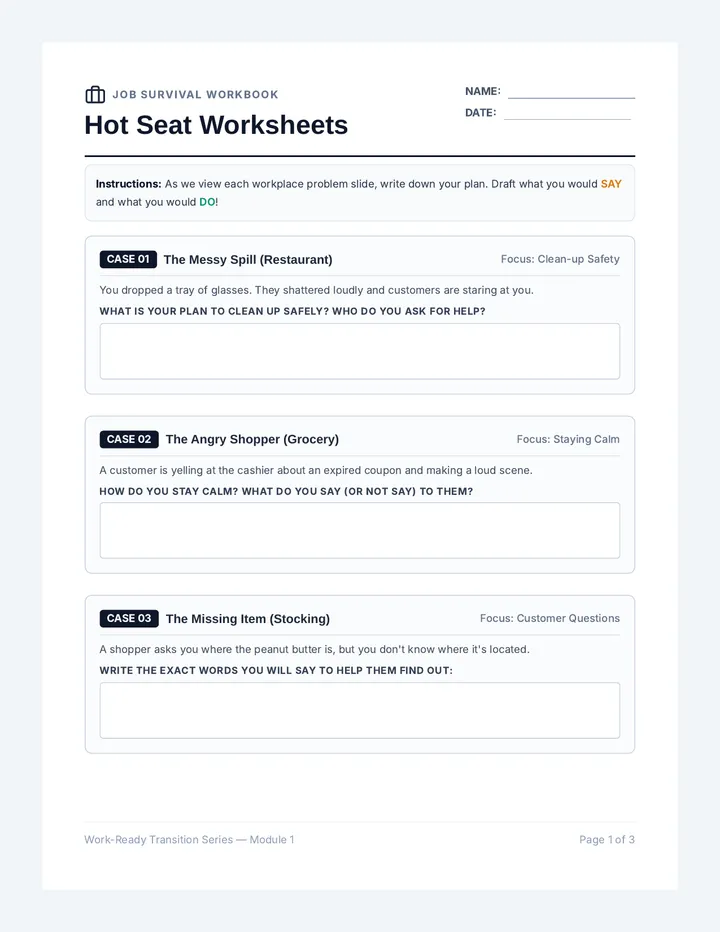
A printable, structured response worksheet designed to accompany the Hot Seat Slides. Students analyze the 7 workplace scenarios individually or in small groups and record their professional action plans.
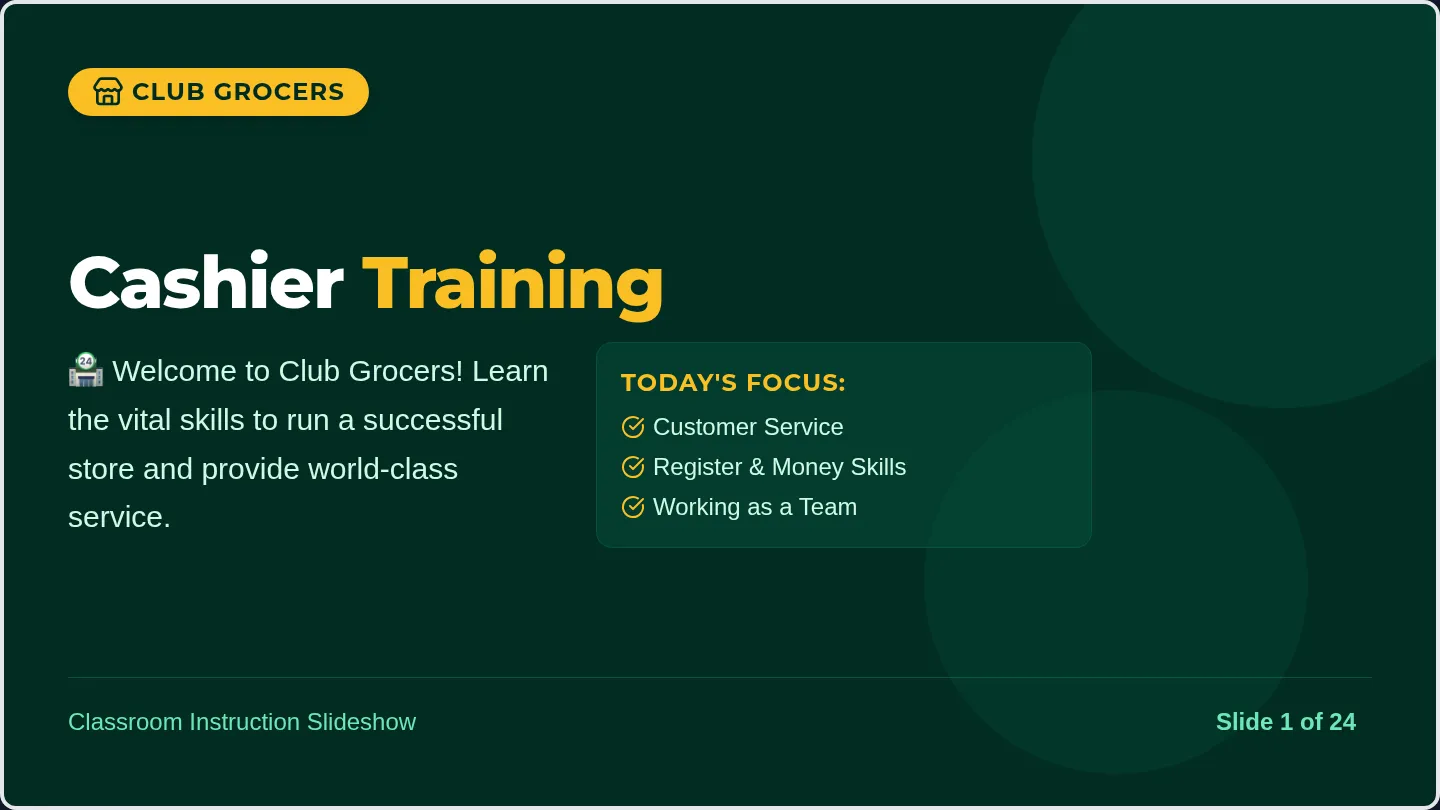
A comprehensive training program for real-world grocery cashier skills, featuring a classroom instruction slideshow and a hands-on store simulation lab.
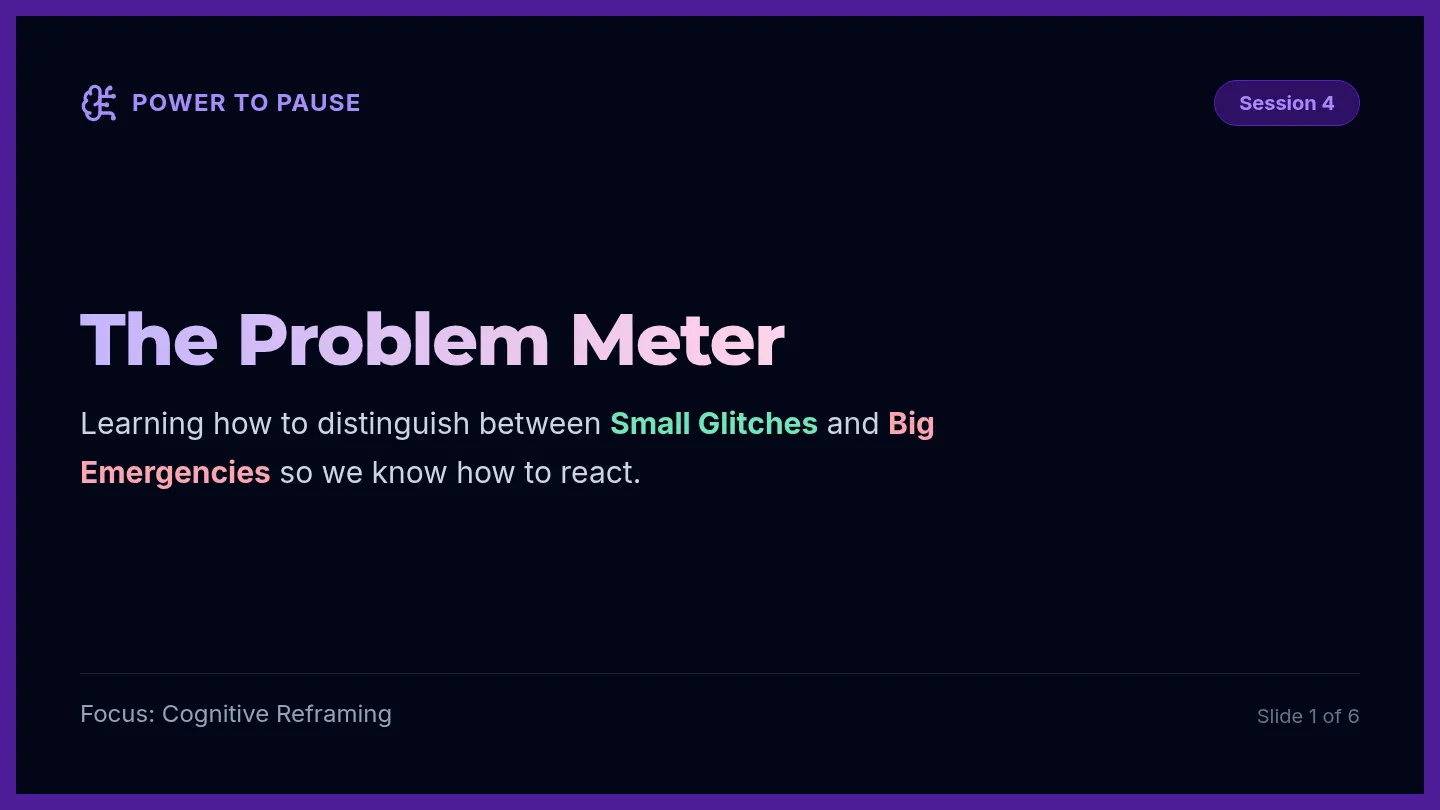
Week 4: Focuses on simplified cognitive reframing, teaching the student to distinguish between 'big problems' and 'small problems' with highly simplified high-contrast visual meters.
A high-contrast classroom slide presentation featuring 7 simplified workplace scenarios tailored for special education transition students (grocery, retail, food service). Prompts are short with direct, verbal discussion questions. Text is kept at or above 24px for maximum visibility.
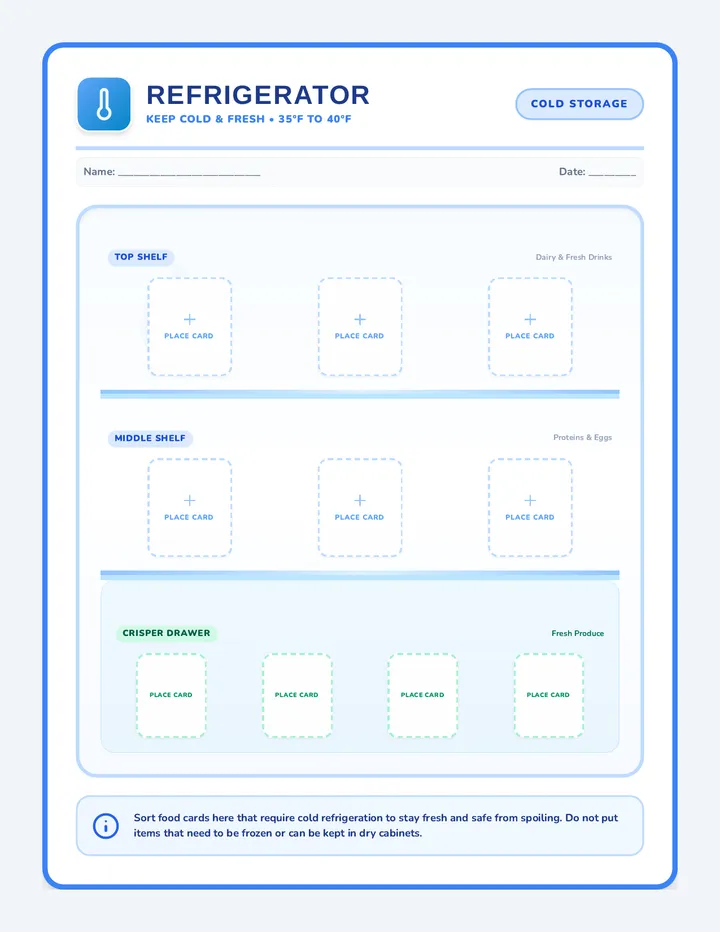
A progressive life-skills curriculum designed to teach students how to identify, categorize, and sort grocery items. Starts with kitchen storage sorting (fridge, freezer, pantry) and advances to sorting by major retail grocery store departments.
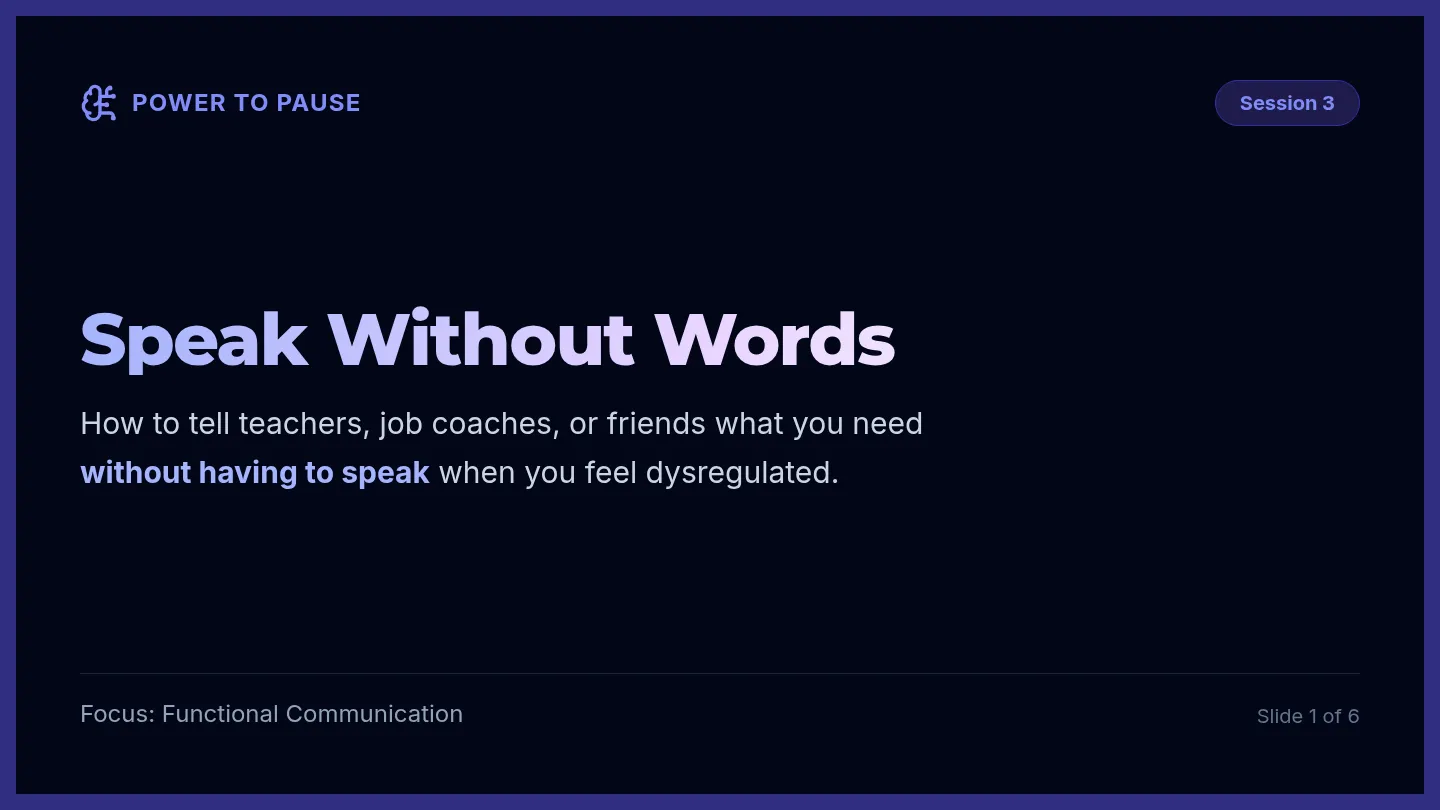
Week 3: Focuses on teaching the student how to use high-contrast non-verbal communication cards to request a break, seek help, or select a quiet space.
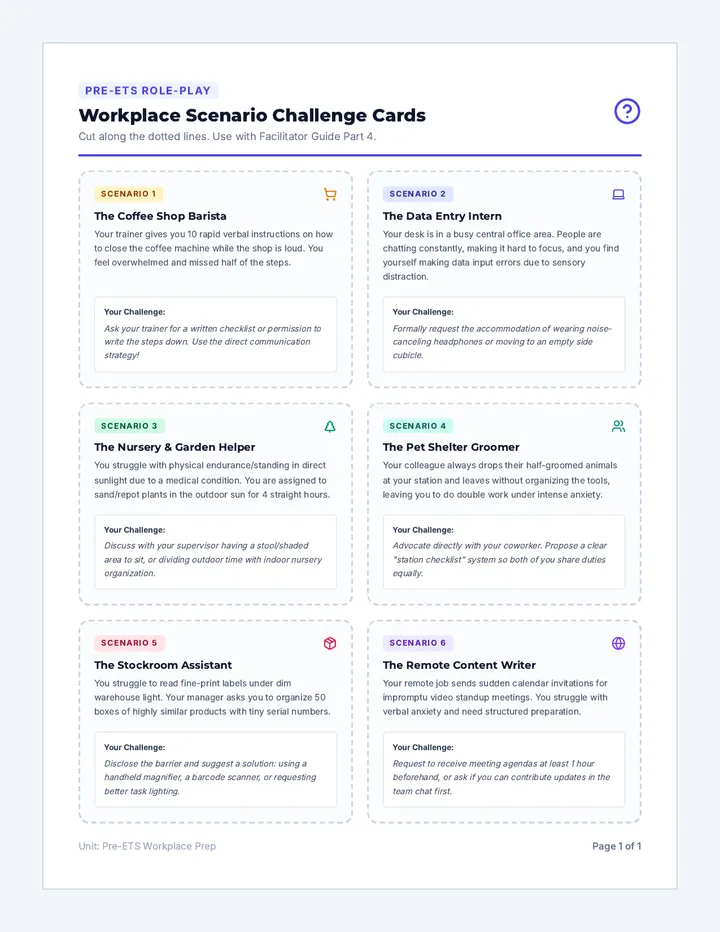
A printable set of 6 structured scenario challenge cards for 1-on-1 workplace role-playing, featuring realistic barriers and self-advocacy prompts.