Visual Schedules Power Lesson Plan
Visual Schedules Power
Tier 2 Parent Workshop Guide
90 Minutes
Workshop Objective
Parents will learn to use visual supports and structured schedules to enhance their child's independence and positive behavior, and will create personalized visuals and schedule plans to implement at home.
Why This Matters
Visuals and schedules clarify expectations, build routine, and reduce behavior challenges. Empowering parents with these tools boosts child confidence, consistency, and family harmony.
Prep & Materials
Digital Resources
- Routine Map Worksheet
- Routine Example Reference
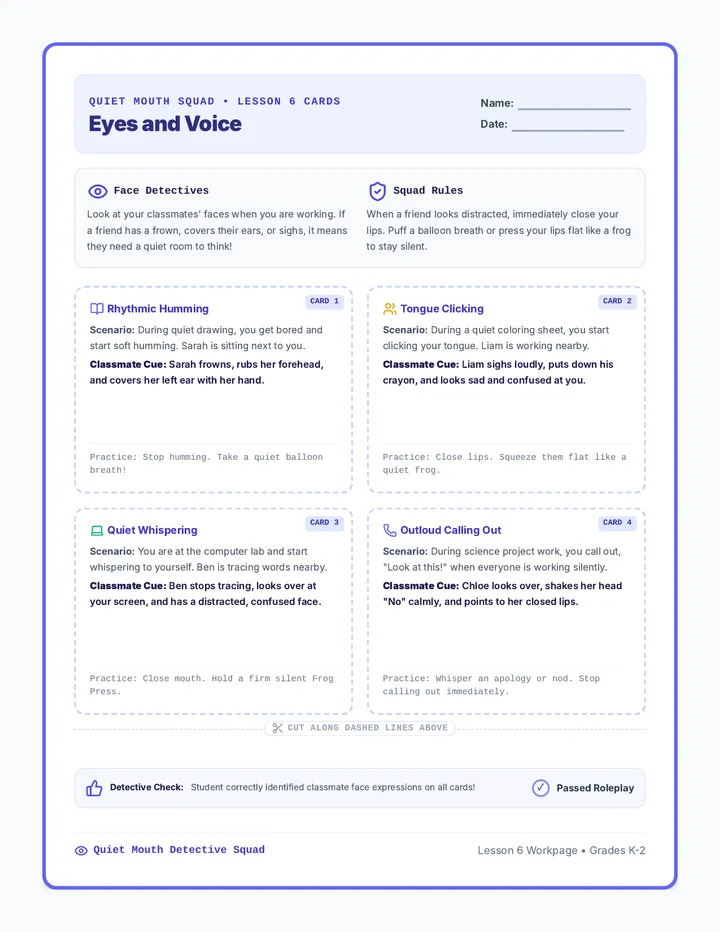
- Cue Card Cutouts
- Reflect & Plan Worksheet
- Visuals Inspiration Gallery
Physical Supplies
- • Flipchart & Markers
- • Sticky Notes
- • Projector / Screen
- • Markers / Colored Pencils
- • Scissors (for cue cards)
Time Required: 15 minutes setup
Review digital resources, print copies for all participants, and arrange tables for small-group work.
Workshop Agenda
10 Minutes
Welcome and Introduction
- • Welcome participants and introduce facilitator roles.
- • Outline session objectives and agenda on screen.
- • Icebreaker: Invite each parent to share one routine they find challenging (e.g., "The Morning Rush").
- • Establish group norms for participation and confidentiality.
15 Minutes
Understanding the Benefits
- • Present key research on how visuals support learning and behavior regulation.
- • Display examples from the Visuals Inspiration Gallery.
- • Discuss common daily challenges and how visuals can address them (e.g., reducing anxiety, increasing independence).
- • Encourage questions about real-life applicability.
25 Minutes
Hands-On Visual Creation
- • Distribute Routine Map Worksheet, markers, and sticky notes.
- • In small groups, choose one routine (e.g., morning or homework) to design a visual support.
- • Apply symbols, pictures, and color-coding to represent each step.
- • Groups present their visuals; facilitator and peers provide constructive feedback.
20 Minutes
Designing Effective Schedules
- • Introduce the Routine Example Reference.
- • Provide Cue Card Cutouts for embedding reminders and transitions.
- • Parents draft a weekly schedule tailored to their child’s needs using their workshop notes.
- • Complete the Reflect & Plan Worksheet to identify potential barriers and solutions.
15 Minutes
Group Discussion and Reflection
- • Invite parents to share insights, surprises, and challenges from the activities.
- • Facilitator prompts discussion on adapting visuals for different ages or abilities.
- • Open Q&A: Troubleshoot anticipated implementation issues.
- • Capture key tips on flipchart for group reference.
5 Minutes
Wrap-Up and Next Steps
- • Recap main takeaways: benefits, creation steps, and implementation strategies.
- • Share contact details for follow-up support or questions.
- • Distribute and collect session feedback forms.
Visual Schedules Power Slides
Visual Schedules Power
Supporting Child Learning and Behavior Through Structure
Tier 2 Parent Session | 90 Minutes
Session Objectives
- 1 Understand the core benefits of visual supports and structured schedules for your child.
- 2 Collaboratively create a personalized visual schedule for a challenging daily routine.
- 3 Develop a practical weekly routine plan tailored to your family's unique needs.
- 4 Identify common implementation barriers and brainstorm effective solutions.
Teacher Note: Read objectives aloud, highlighting the hands-on nature of the session.
Why Use Visuals?
Clarity
Clarifies expectations and reduces the "verbal clutter" kids can find overwhelming.
Independence
Builds confidence by showing children exactly what comes next without constant reminders.
Reduced Stress
Schedules provide a sense of safety and predictability, lowering anxiety and behavior challenges.
Routine
Creates a consistent "internal clock" that helps transition between tasks more smoothly.
The Power of Visuals: Research
!
"Visual supports improve task engagement and significantly reduce frustration during daily transitions."
— Smith et al., 2018
35%
Average reduction in transition delays when using structured visual schedules at home.
— Jones & Lee, 2020
Children with consistent routines show increased confidence and compliance with household expectations.
Gallery of Ideas
Morning Boards
"First/Then" charts and step-by-step icons for dressing and breakfast.
Homework Checklists
Simple checklists to track progress and celebrate small wins.
Behavior Cue Cards
Portable reminders for listening, waiting, and gentle hands.
Refer to your printed Visuals Inspiration Gallery for more detailed examples!
Activity: Create Your Own
25 Minutes
The Steps:
-
- Grab your Routine Map Worksheet.
-
- Choose ONE routine (Morning, Bedtime, Homework).
-
- Sketch icons or use symbols to map 5–7 steps.