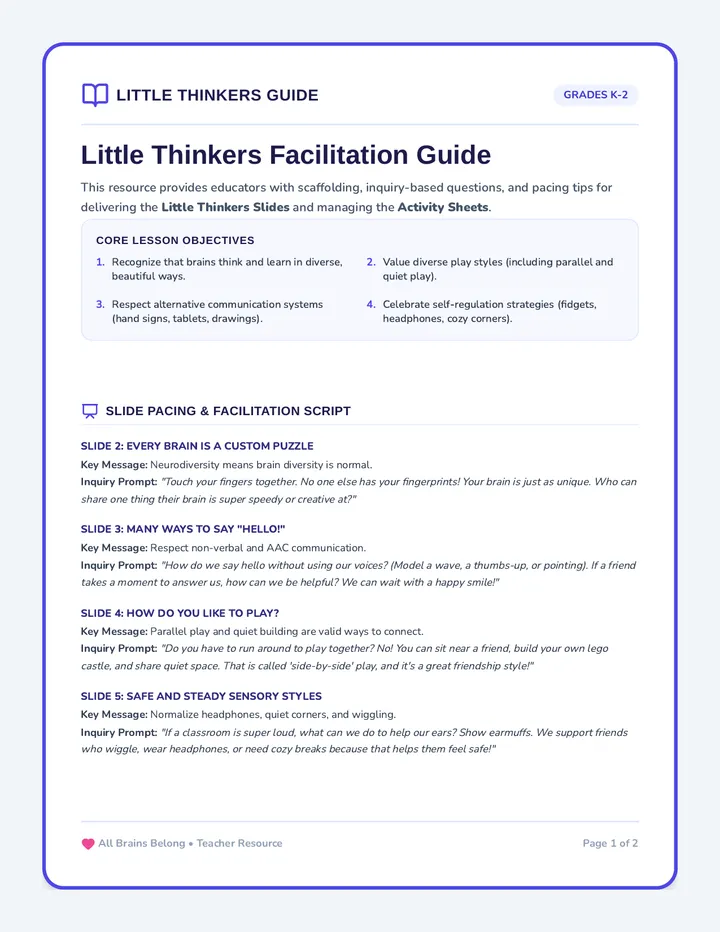
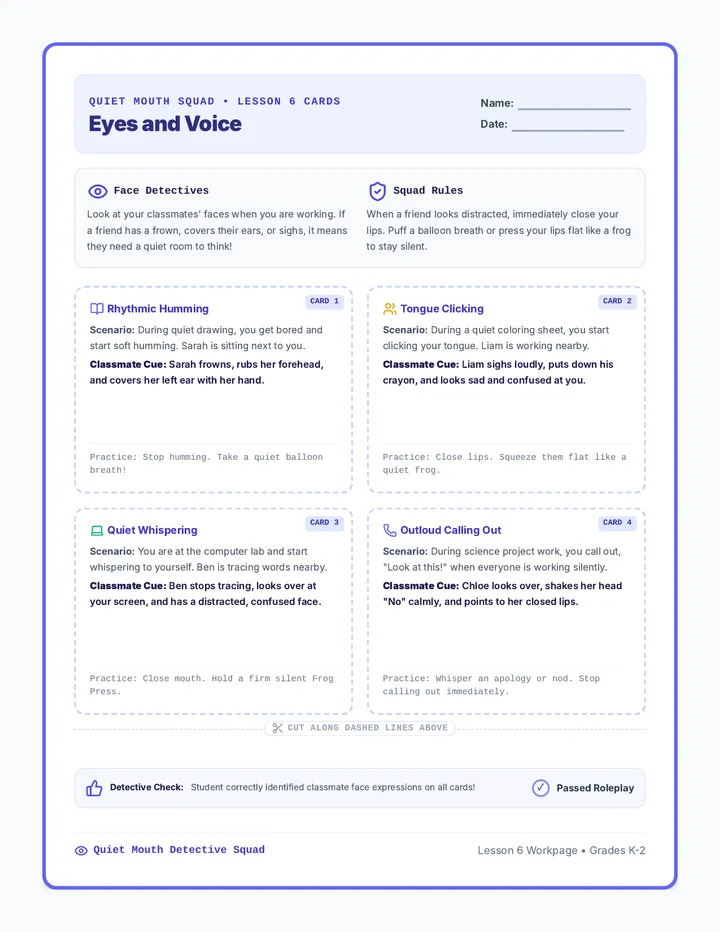
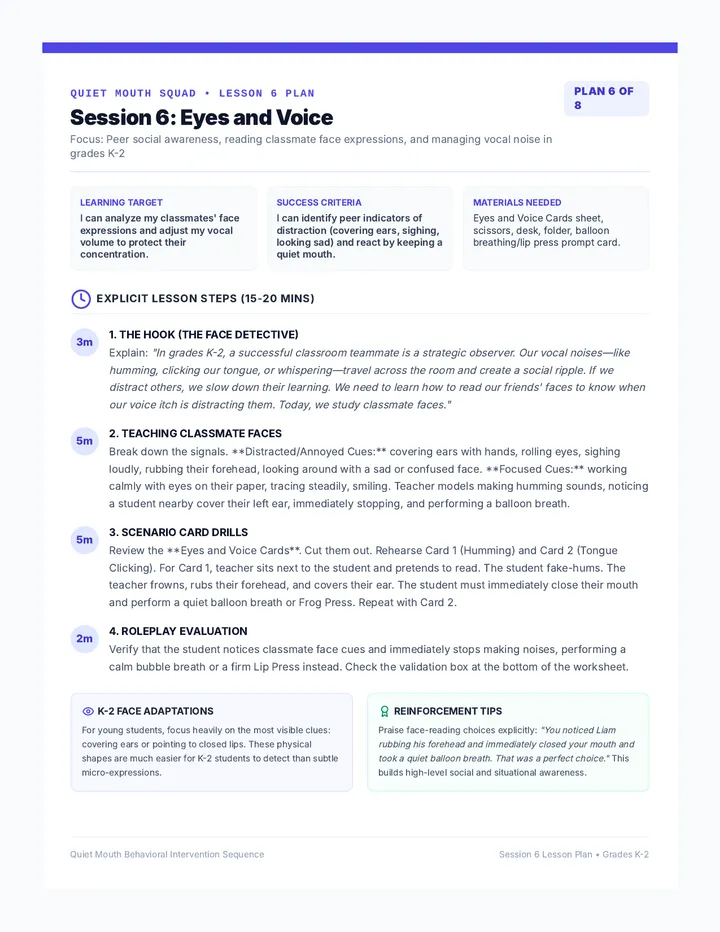
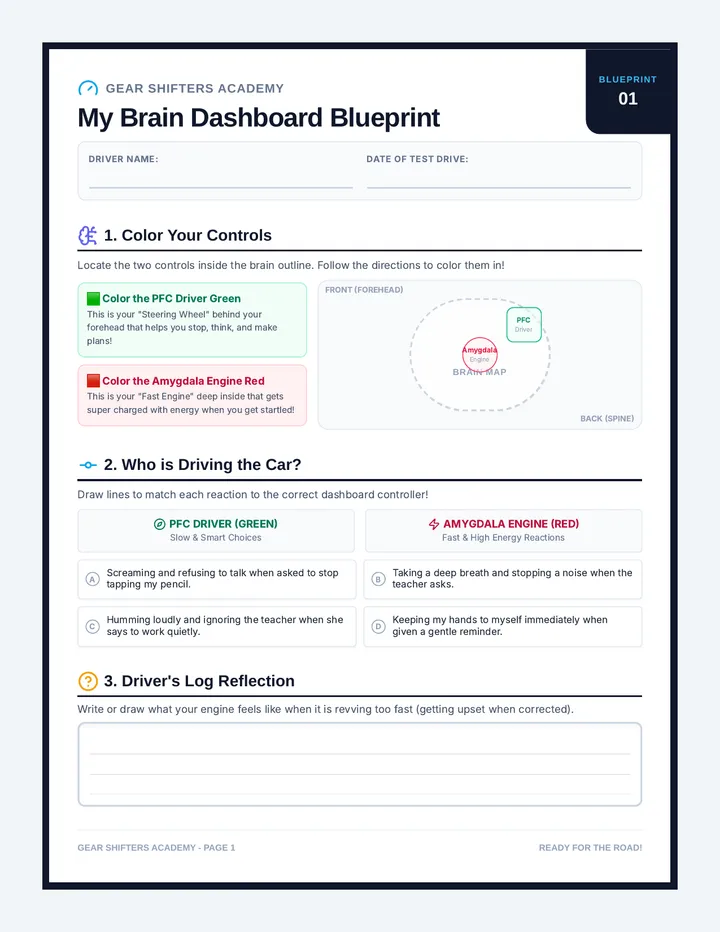
Skill Power Folder Cover
A bold and encouraging cover page for an independent work folder, featuring student name and class fields with clear skill-based icons.
Sound Box Search Worksheet
A CVC word building worksheet using Elkonin boxes (sound boxes) and clear picture cues to help students practice phonemic awareness and spelling.
Number Hunt Worksheet
A number sense worksheet focused on counting objects (0-10) and identifying the correct numeral, with a number tracing reference at the bottom.
Add It Up Worksheet
A basic addition worksheet (within 30) featuring visual representations (counters in ten-frames) to support conceptual understanding of adding two numbers.
Skill Power Teacher Guide
A teacher guide containing implementation strategies, folder setup instructions, and instructional tips for supporting an EC student with Kindergarten-level literacy and math goals.
Number Grid 30 Worksheet
A comprehensive number grid from 1 to 30 with tracing support, designed for number identification and writing practice.
Base Ten Quest Worksheet
A base ten block worksheet focusing on numbers 11-30, providing visual representations of tens and ones to support place value understanding.
Sentence Stars Worksheet
A literacy worksheet where students read simple CVC-based sentences and draw a corresponding picture, promoting reading comprehension and visualization.
Pattern Power Worksheet
A pattern completion worksheet that focuses on visual patterns (AB, AAB, ABC) to develop logic and sequencing skills in an independent format.
Subtract It Down Worksheet
A basic subtraction worksheet (within 30) featuring visual representations (counters in ten-frames) to support conceptual understanding of subtraction.
Rhyme Rocket Worksheet
A CVC rhyming worksheet where students match words with similar ending sounds using clear picture cues and text.
Vowel Valley Worksheet
A vowel-focused phonics worksheet where students identify and write the missing middle vowel sound for CVC words.
Word Builder Basics Worksheet
A CVC word building activity where students unscramble letters to correctly spell words matching the provided picture prompts.
Skip Step Challenge Worksheet
A comprehensive skip counting worksheet challenging the student to count by 2s, 5s, and backward, with an added number-word phonics matching section.
Math Mystery Addition Worksheet
An advanced missing addends and subtraction worksheet that uses ten-frames for numbers up to 30, with an integrated vowel-identification phonics section.
Greater Gains Comparison Worksheet
A comprehensive number comparison worksheet featuring greater-than identification, subtraction comparison, ordering challenges, and a phonics-based initial sound matching section.