A 20-minute, individualized Tier 3 lesson for a 7th-grade student to understand executive functioning as 'the brain's CEO,' focusing on organization and self-regulation strategies.
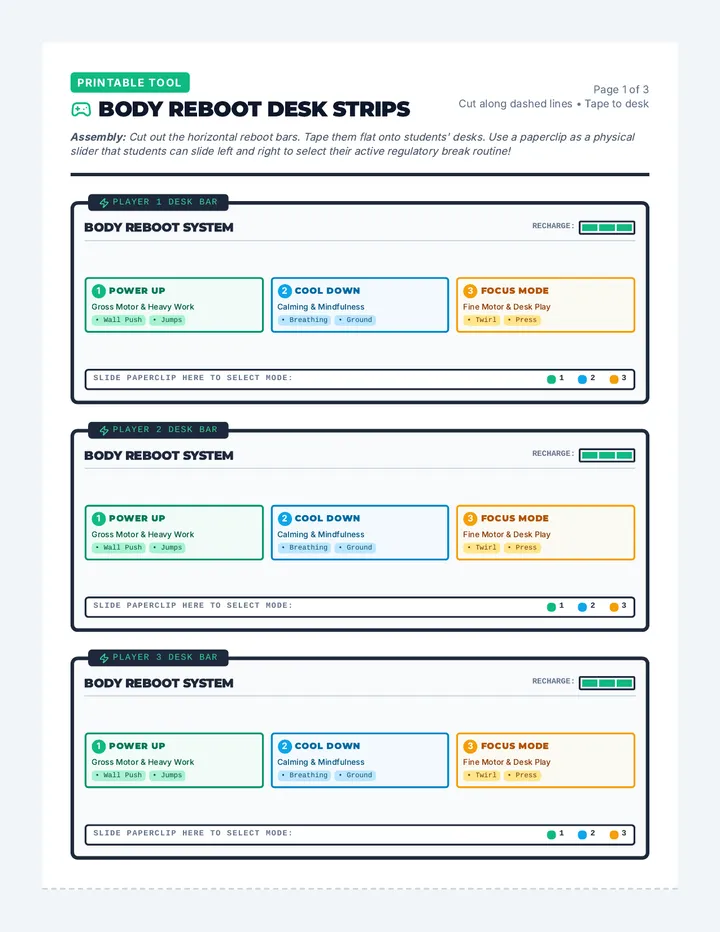
Sensory support strategies and proprioceptive activities designed for students in grades 3-5. Bridges the gap between play-based movement and functional household participation with age-appropriate "strength challenges."
Sensory support strategies and proprioceptive activities specifically designed for students in grades K-3. Focuses on play-based heavy work, animal walks, and simple household participation.
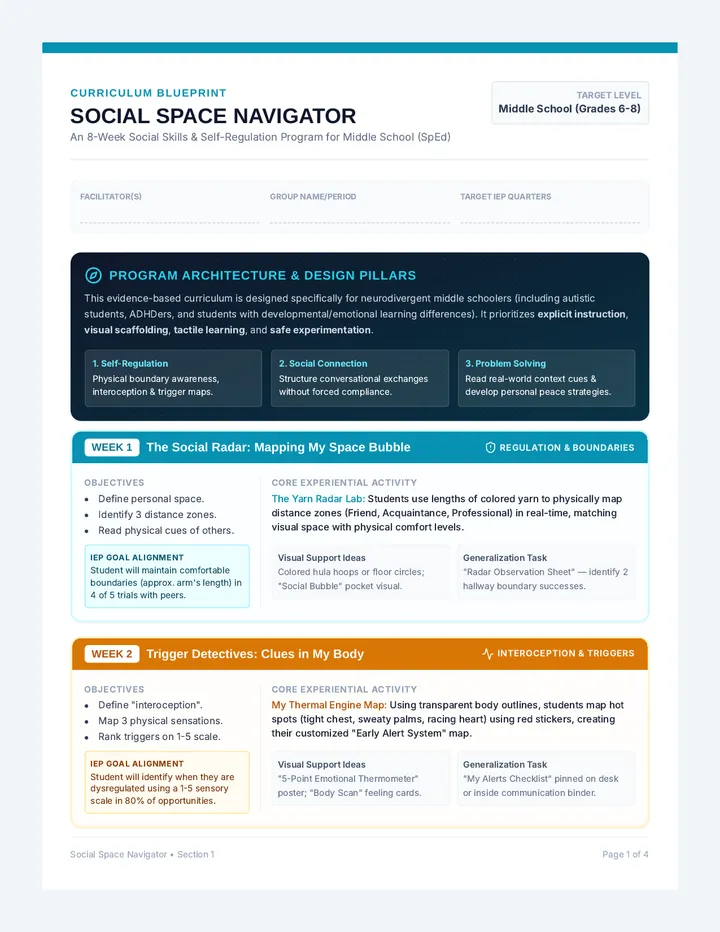
A 5-page workbook unit focused on strengthening executive functioning and planning skills for teenagers, using a 'Command Center' technical manual theme.
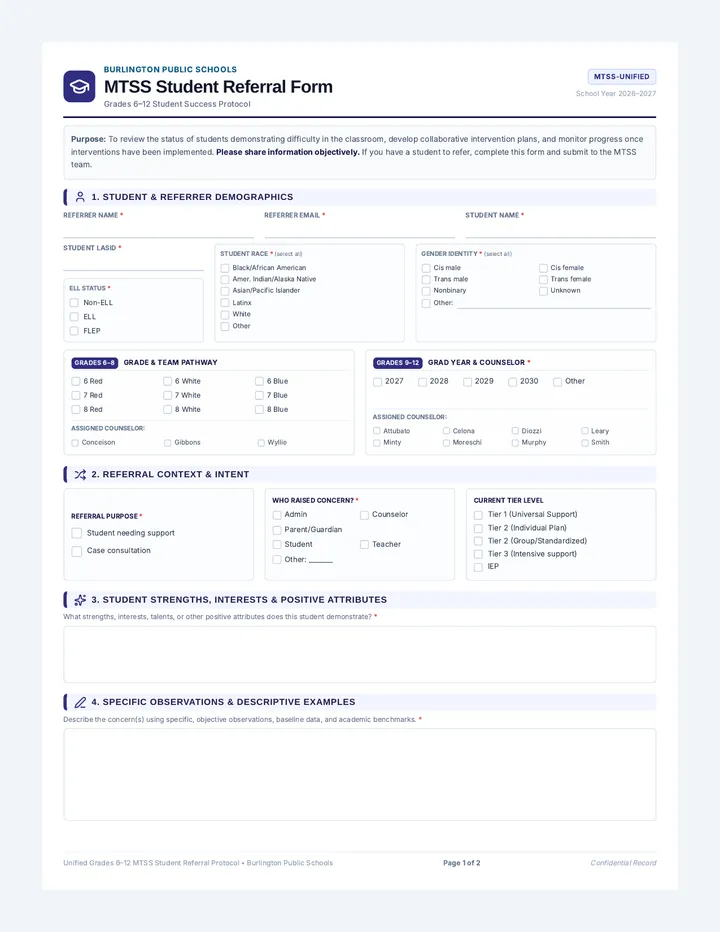
A comprehensive K-12 behavior management system that synthesizes best practices from MTSS, PBIS, and restorative justice frameworks. This lesson provides teachers with a clear decision-making flow and a detailed policy handbook for maintaining a positive school culture.
A comprehensive set of resources for parents of junior high and high school students, focusing on proprioception, sensory seeking behaviors, and practical home-based strategies.
A comprehensive parent training resource designed to support task initiation and sustained focus for students with autism using visual strategies and structured home routines.
A collection of video-based independent work stations for student rotation and self-paced learning.
A comprehensive set of data collection tools designed for tracking IEP behavior frequency, duration, and academic accuracy, including a synthesis log for weekly reporting.
Combines addition, multiplication, and a simplified sales tax calculation for a realistic 'Big Spender' shopping experience.
Introduces multiplication for buying multiple items and division for sharing costs among friends in a 'Party Planner' context.
Focuses on adding and subtracting prices and calculating change from a $20 bill using a visual 'Snack Shop' theme.
This lesson dismantles the stigma surrounding IEPs and emotional dysregulation by highlighting the 'twice-exceptional' nature of many brilliant minds. It features a slide presentation of successful African Americans who overcame learning and emotional challenges to achieve greatness.
A focused 4-week history-themed intervention designed to help students overcome the 'blank page' hurdle by mastering task initiation through a structured 3-2-1 'Discovery Protocol'.
A lesson exploring the social and political changes following the Creole-led revolutions in Latin America, specifically designed for students requiring IEP accommodations.
A lesson exploring the key moments of the Latin American Creole Revolutions, designed with heavy scaffolding for IEP students to express their understanding of revolutionary events through visual and written journals.
A collection of modified essay planning guides for key topics in European history, specifically designed for students with IEPs. Each guide features a simplified 3-paragraph structure, sentence starters, and visual organizers.
A set of discreet communication cards designed for an 8th-grade student to advocate for their needs during moments of frustration or sensory overwhelm.
A toolkit designed to help students with expressive language challenges engage meaningfully in group discussions while remaining focused on the core topic.
A collection of simple, visual reminder slips to help bridge the gap between home and school for students using AAC devices.
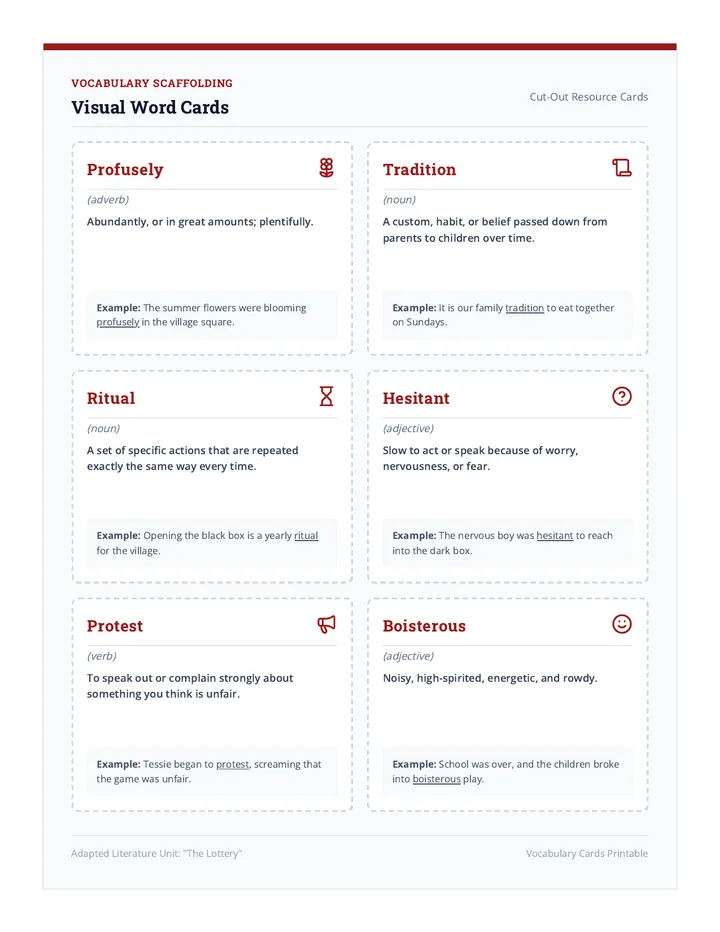
A collection of research-backed typographical resources designed to support readers with dyslexia, including reference guides and classroom visual aids.
A high-stakes secret agent escape room designed for middle school students, featuring complex logic grids, binary decryption, spatial reasoning, and data analysis. Operatives must work through three rigorous phases of testing to earn their field status.
A foundational lesson on the four-quadrant coordinate plane, specifically designed with scaffolds and visual aids for students with IEPs to master identifying ordered pairs.
A high-energy collaborative review day. Students participate in a 'Relay Race' of unit rate tasks, moving through stations that cover whole numbers, fractions, consumer math, and measurement to reinforce skills before the final assessment.