Stress Thermometer Worksheet
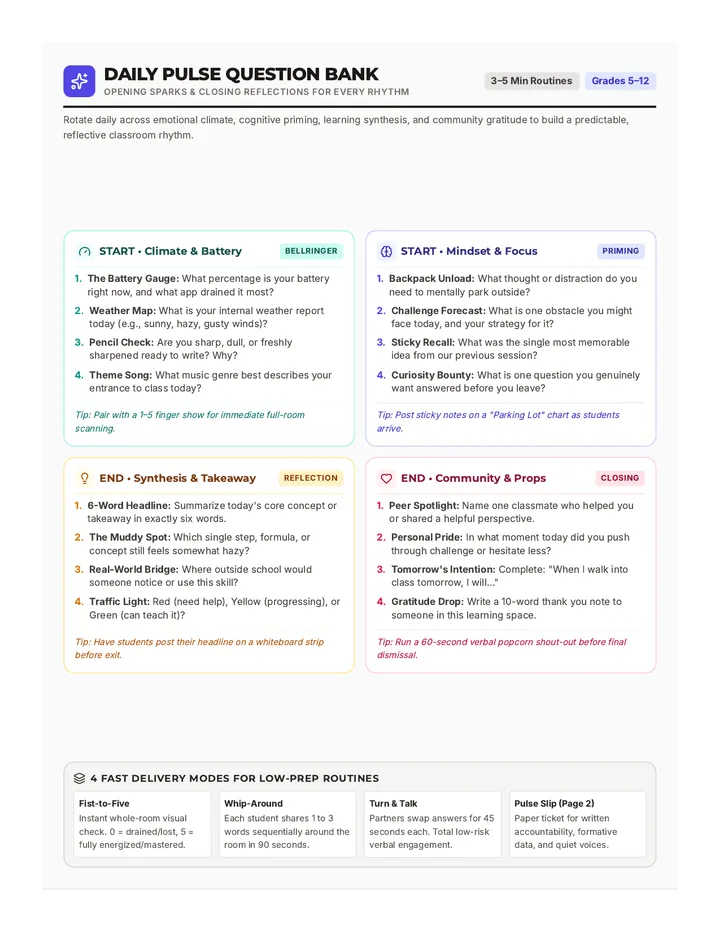
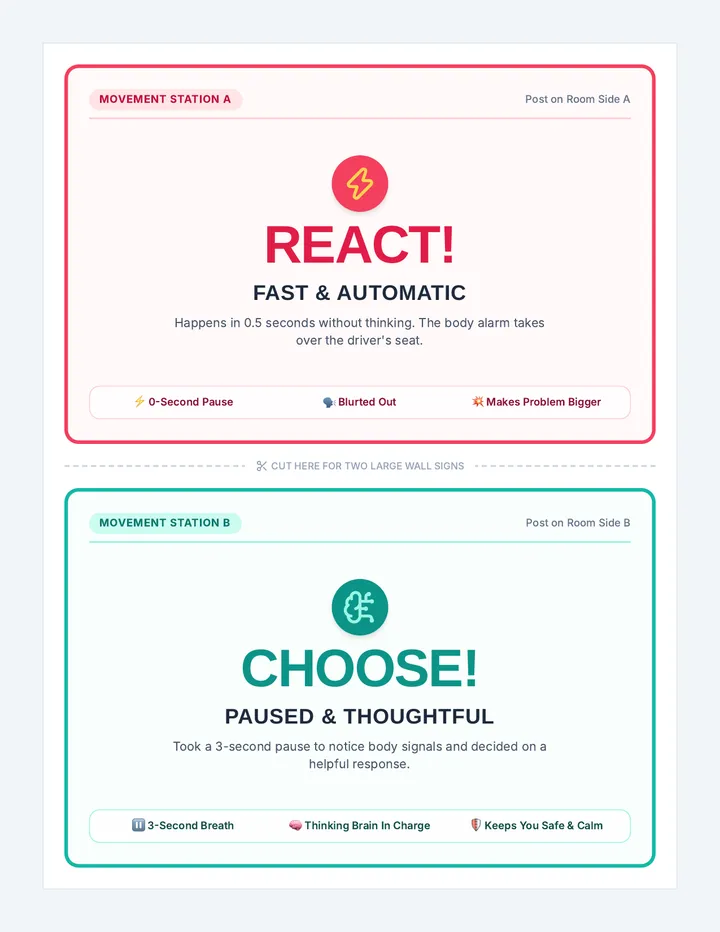
Body Awareness & Self-Regulation
Human Stress Thermometer
Tune into your body's early warning cues, track your temperature, and cool down before boiling over.
Name:
Date:
Class:
The 4 Heat Zones of Stress
Notice signals early at Level 2 to prevent reaching Level 4
Level 4 100°+ Boiling
Body Alarms
Shaking, crying, dizzy, clenched jaw, yelling or frozen stiff
Feelings
Furious, panicked, terrified, completely overwhelmed
Immediate Action
Safe space, stop talking, use Adult SOS signal
Level 3 75°-90° Simmering
Body Alarms
Pounding heart, tight fists, hot ears/face, heavy breathing
Feelings
Frustrated, anxious, agitated, defensive, irritated
Immediate Action
5-4-3-2-1 grounding, cold water, ask for 3-min reset
Level 2 50°-75° Warm Alert
Body Alarms
Fidgeting, foot tapping, butterfly stomach, tense neck/shoulders
Feelings
Nervous, rushed, annoyed, distracted, uneasy
Immediate Action
3 slow belly breaths, shoulder shrugs, drink water
Level 1 0°-50° Calm Cool
Body Alarms
Rhythmic breathing, relaxed shoulders, open hands, calm pulse
Feelings
Peaceful, confident, focused, safe, ready to collaborate
Immediate Action
Keep going, enjoy the moment, support a classmate
1
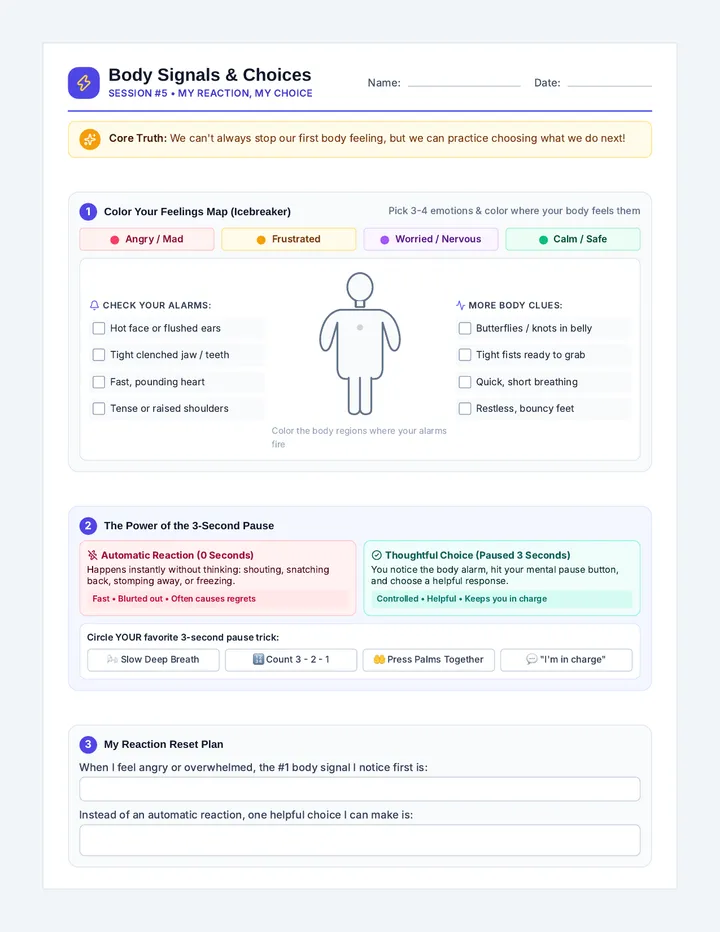
Part 1: Body Radar — Check Your Personal Warning Signals
Check every cue you notice when your stress starts climbing:
Head & Face
Clenched teeth or tight jaw Hot cheeks or burning ears Tension headache or brow frown
Chest & Breathing
Fast thumping heartbeat Short, rapid breathing Tight, heavy feeling in chest
Hands & Shoulders
Fists balled up tight Shoulders hiked up to ears Sweaty palms or shaking hands
Stomach & Movement
Butterflies or knotted stomach Restless knee bouncing or pacing Frozen body / unable to move
My First Warning Sign
Write the very first physical signal your body sends when you move from Level 1 to Level 2:
My Boiling Trigger Zone
When I ignore early cues, the body signal that tells me I have reached Level 3 or 4 is:
Cues are clues! Your body sounds the alarm before your mind reacts.
P2
My Self-Regulation Action Plan
Name the emotion, select a coping tool, and practice asking for support.
Student Name:
2
Part 2: Name the Feelings — Emotion Detective
Word Bank: Frustrated • Worried • Overwhelmed • Embarrassed • Excited
Scenario A: You are asked to present your project in front of class. Your stomach flutters, mouth turns dry, and your knees shake.
Body Alarm:
Emotion Named:
Scenario B: During a group game, classmates change the rules without asking. Your teeth clench, face feels hot, and fists tighten.
Body Alarm:
Emotion Named:
Scenario C: You have three unfinished worksheets on your desk and only 5 minutes left. Your breathing speeds up and head spins.
Body Alarm:
Emotion Named:
3
Part 3: Choose Your Cool-Down Tools
Pick strategies that match your body's energy
Breath Resets (Slow Pulse)
- 4-4-6 Wave: Inhale 4, hold 4, exhale 6
- Volcano Breath: Inhale hands up, whoosh out
- Cooling Sip: Inhale like sipping through straw
Body Releases (Dispel Energy)
- Wall/Desk Push: Press hard for 10 seconds
- Squeeze & Release: Tighten fists, let go
- Shoulder Rolls: 5 rolls back, shake out hands
Sensory Shifts (Reset Mind)
- 5-4-3-2-1: Name 5 things you can see around
- Cold Water Sip: Focus on cold sensation
- Anchor Phrase: "I am safe. I can take a breath."
When I notice Level 2 (Warm Alert), my go-to coping tool is:
When I notice Level 3 (Simmering Heat), my go-to coping tool is:
4
Part 4: Ask For Support — My Trusted Adult SOS Script
Never face Level 3 or 4 alone!
The 3-Step SOS Formula:
Step 1: Signal "Right now my body feels..."
Step 2: Level "My thermometer is at Level..."
Step 3: Request "Can you help me with..."
Draft Your Spoken Rehearsal Script:
"Excuse me,
my body is feeling
and I need
. Can you help me?"
My 2 Anchor Adults
Name two adults at school or home you feel safe approaching:
Adult 1 (School):
Role/Room:
Adult 2 (Home / Community):
Relationship:
Asking for help is a sign of courage and strength!
P3
Scenario Heat Lab — How Intense Does It Feel?
Gauge situation intensity, predict your body's alarm, and match your response.
Student Name:
Intensity Insight: The same event can feel like a Level 1 to one classmate and a Level 3 to you! There are no wrong ratings—what matters is tuning into how intensely your body experiences the situation.
5
Part 5: Rate the Heat & Map Your Response
Circle your personal intensity level for each situation:
Scenario 1 (Surprise Test): Your teacher announces without warning: "Put everything away, silent pop quiz on yesterday's chapter begins right now."
My Intensity: L1 (Cool) L2 (Warm) L3 (Simmer) L4 (Boil)
Body Alarm I'd Experience:
Cool-Down Strategy or Support I Need:
Scenario 2 (Dismissed Idea): In group project time, you share a thoughtful suggestion, and a teammate rolls their eyes and talks loudly over you.
My Intensity: L1 (Cool) L2 (Warm) L3 (Simmer) L4 (Boil)
Body Alarm I'd Experience:
Cool-Down Strategy or Support I Need:
Scenario 3 (The Spotlight): You are standing at the microphone or foul line with 10 seconds remaining and hundreds of eyes watching silently.
My Intensity: L1 (Cool) L2 (Warm) L3 (Simmer) L4 (Boil)
Body Alarm I'd Experience:
Cool-Down Strategy or Support I Need:
Scenario 4 (Sensory Chaos): The cafeteria is deafeningly loud. Someone bumps your elbow, spilling milk down your sleeve, with nowhere to sit.
My Intensity: L1 (Cool) L2 (Warm) L3 (Simmer) L4 (Boil)
Body Alarm I'd Experience:
Cool-Down Strategy or Support I Need:
6
Part 6: Intensity Reflection & Calibration
Different Thermometers: Name one situation that feels like a Level 1 or 2 to you, but might feel like a Level 3 or 4 to a classmate:
Right-Sized Response: When a situation spikes straight to Level 3 or 4, what is the most respectful and safe way to pause before speaking or reacting?
Intensity changes, but your tools and trusted adults are always there to help you cool down!