Lenny.com
Explore
Create
ActivitiesNewMathEnglish Language ArtsScience & EngineeringSocial StudiesGlobal LanguagesHealth & Physical EducationSpecial EducationCounseling & Life SkillsArts & CreativityESL
Lenny.com
Lenny.com
Explore
Create
ActivitiesNewMathEnglish Language ArtsScience & EngineeringSocial StudiesGlobal LanguagesHealth & Physical EducationSpecial EducationCounseling & Life SkillsArts & CreativityESL
Lenny.com
Lenny.com

Solutions

Lenny for EducatorsLenny for SchoolsLenny for Districts

Product

ExploreSign inCreateSupportAbout

Resources

Getting startedMTSS Acceleration Program

© 2026 Lenny Learning Inc.

TermsPrivacyAccessibility
LinkedInInstagramX
Lenny
Counseling & Life SkillsSelf-AwarenessBasic Emotion RecognitionComplex Emotion IdentificationEmotional Nuance & Mixed FeelingsBuilding Positive Self-ImageRecognizing Strengths & Growth AreasAccurate Self-AssessmentPersonal Values IdentificationCultural & Individual Identity ExplorationValues-Based Decision MakingSelf-ManagementStop-and-Think StrategiesDelaying GratificationIndependent Impulse ManagementIdentifying Stress TriggersShort-Term Goal SettingSMART Goals DevelopmentGoal Monitoring & AdjustmentBuilding Perseverance & ResilienceInternal Motivation DevelopmentComprehensive Stress Reduction PlanningSocial AwarenessRecognizing Others' FeelingsDemonstrating EmpathyRespecting Individual DifferencesUnderstanding Cultural DiversityComplex Empathetic ResponsesMultiple Viewpoint ConsiderationMulti-Perspective AnalysisChallenging Stereotypes & BiasRelationship SkillsActive ListeningClear Verbal & Nonverbal CommunicationBuilding Positive FriendshipsWorking Cooperatively in GroupsCommunicating Personal BoundariesRespecting Others' BoundariesAssertive ExpressionPeaceful Problem-SolvingContributing to Team GoalsComplex Conflict NavigationMediation & NegotiationHealthy Romantic RelationshipsResponsible Decision-MakingDaily Problem IdentificationBrainstorming Multiple SolutionsEvaluating Pros & ConsRecognizing Risks & ConsequencesApplying Ethical FrameworksInformed Risk-Benefit DecisionsRoot Cause AnalysisMindfulnessMindful BreathingBody Scan MeditationDaily Mindfulness ApplicationDaily Self-Care RoutinesBalancing Life DemandsAdvocating for Wellness NeedsMental Health SupportUnderstanding Anxiety SymptomsWorry Management StrategiesProgressive Muscle RelaxationRecognizing Depression SignsBuilding Mood-Supporting RoutinesBehavioral Activation for MoodUnderstanding Grief StagesHealthy Grief CopingCreative Expression of LossBehavioral SupportDaily Check-In ProceduresDaily Goal Setting & ReviewRecognizing Escalation Warning SignsRequesting Breaks & SupportSelf-Calming During DistressUnderstanding Positive ReinforcementToken Economy ImplementationBehavior Chart TrackingAnalyzing Behavior PatternsIdentifying Antecedents & ConsequencesDetermining Behavior FunctionFunction-Based InterventionsIndividualized Behavior ContractsData-Driven Behavior AdjustmentTherapeutic ApproachesThoughts-Feelings-Behaviors ConnectionRecognizing Thinking PatternsChallenging Negative ThoughtsPositive Self-Talk PracticeThought Record TrackingAdvanced Cognitive RestructuringComprehensive CBT PlansBehavioral Activation TechniquesBuilding Positive ExperiencesExposure Hierarchies for AnxietyPresent-Moment AwarenessNon-Judgmental ObservationSelf-Soothing & DistractionComplex Emotion LabelingReducing Emotional Vulnerability (PLEASE)DEAR MAN CommunicationGIVE Skills for RelationshipsFAST Skills for Self-RespectRadical Acceptance PracticeCrisis Survival Skills (TIPP)Understanding Trauma EffectsTrauma Responses & TriggersIdentifying Trauma FeelingsGrounding TechniquesRegulation During Trauma DistressSafe Place VisualizationProcessing Through NarrativeDeveloping Trauma StoryPersonalized Safety PlanningGroup SupportTurn-Taking & SharingGroup Conversation SkillsSharing in Supportive EnvironmentLearning from Similar ChallengesBuilding Community & BelongingNavigating Peer RelationshipsGroup Skill PracticeGroup Mental Health EducationStress & Anxiety UnderstandingCrisis Support & SafetyKnowing When to Seek HelpIdentifying Mental Health CrisesGrounding During CrisisUsing Crisis HotlinesBuilding Support NetworksAccessing Mental Health ResourcesWarning Signs & Coping StrategiesDeveloping Personal Safety PlansUnderstanding Suicide Warning SignsGatekeeper Skills for PeersDigital LiteracySocial MediaTechnology BasicsProductivity ToolsInternet and Online ResearchWeb Design and PublishingDigital CitizenshipOnline Safety and PrivacyEmerging TechnologiesFinancial LiteracyMaking Financial DecisionsBanking and AccountsConsumer SkillsSaving and InvestingCredit and DebtEmployment and IncomeTaxesInsuranceMajor PurchasesEconomic ConceptsFinancial PlanningCollege & Post-Secondary PlanningCareer ExplorationUnderstanding Post-Secondary OptionsCollege Research & SelectionAdmission RequirementsCollege Application ProcessPersonal Statement WritingFAFSA CompletionScholarship Search & ApplicationsUnderstanding Student LoansContinuing Education PlanningInterview PreparationResearching EmployersCommon Interview QuestionsSTAR Method ResponsesProfessional Interview PresenceVirtual Interview SkillsInterview Follow-UpJob Search SkillsUnderstanding Job PostingsEffective Job Search StrategiesNetworking for OpportunitiesResume Writing BasicsAction Verbs & AchievementsTailoring Resumes to JobsCover Letter WritingProfessional ReferencesProfessional CommunicationBusiness Email EtiquettePhone & Voicemail ProfessionalismMeeting ParticipationPresentation SkillsProfessional Work EthicTime Management & ProductivityTeamwork & CollaborationAdaptability & FlexibilityProblem-Solving at WorkConstructive FeedbackWorkplace RightsUnderstanding Employment LawsPay & Benefits UnderstandingWorkplace SafetyAnti-Discrimination & Harassment

Pause Power

An upper-elementary social-emotional learning lesson that demystifies the mind-body connection by teaching students to spot physical alarm sensations, distinguish automatic reactions from thoughtful choices, and practice taking a pause.

Pause Power

An upper-elementary social-emotional learning lesson that demystifies the mind-body connection by teaching students to spot physical alarm sensations, distinguish automatic reactions from thoughtful choices, and practice taking a pause.

8 Classroom & Recess Scenario Prompts Read aloud clearly

1. Hallway Bump

Someone accidentally bumps your shoulder in line. You spin around, shove them back, and yell, "Watch it!"

[REACT • Upgrade: Breathe, say "Excuse me"]

2. Hard Math Problem

You can't solve problem #4. You feel tears and your head hurts. You drop your pencil, count 3-2-1, and raise your hand for help.

[CHOOSE • Good self-regulation]

3. Recess Game Call

In kickball, the referee calls you out. Your face turns red, you kick the dirt, and shout, "You cheat!"

[REACT • Upgrade: Fist bump, say "Good catch"]

4. Borrowed Supply

A classmate grabs your highlighter without asking. Your hands clench, but you take a breath and say, "Please ask first."

[CHOOSE • Calm, firm communication]

5. Chromebook Freeze

Your computer restarts right before submitting your essay. You slam the screen shut and cross your arms angrily.

[REACT • Upgrade: Shake hands out, tell teacher]

6. Seat Taken

Someone sits in your favorite rug spot. You feel a knot in your tummy. You pause, look around, and find another great spot.

[CHOOSE • Flexible problem solving]

7. Whispering & Laughing

Two peers whisper and look your way. Your ears get hot. You immediately glare and mock what they are wearing.

[REACT • Upgrade: Focus on work, check in later]

8. Interrupted Mid-Sentence

While sharing your story, a friend talks over you. You wait 3 seconds, then politely say, "Hold on, let me finish."

[CHOOSE • Patient, assertive boundary]

Accommodations for Processing & Attention Needs

Visual Support: Use the companion slides or scenario flashcards so students who struggle with auditory processing can read along.

Motor Break: Movement to signs satisfies ADHD sensory seeking while anchoring the lesson in physical embodiment.

Student Leader Role: Allow high-energy students to take turns reading scenarios or holding the room signs.

Final Debrief Question (5 Minutes)

"The next time you feel your body alarm fire this week, what is one 3-second pause trick you will test out?"

Collect worksheets or keep in student SEL folders.

Body Alarm: Heavy chest, stinging eyes.

Upgrade Prompt: "Show how to pause, blow out slow breath, and say: 'Can I join the next round?'"

Card #6 • Accused Unfairly Answer: CHOOSE

Story: A teacher thinks you were talking when you were quiet. Ears feel hot. You take a breath and calmly say, "It wasn't me, but I'm ready to listen."

Body Alarm: Burning ears, fast heartbeat.

Discussion Prompt: "Why is talking in a calm voice so powerful when your ears are burning hot?"

💡 Tip: Hand one card to a confident student volunteer to read aloud and lead their peers!
Page 2 of 2

You might also like

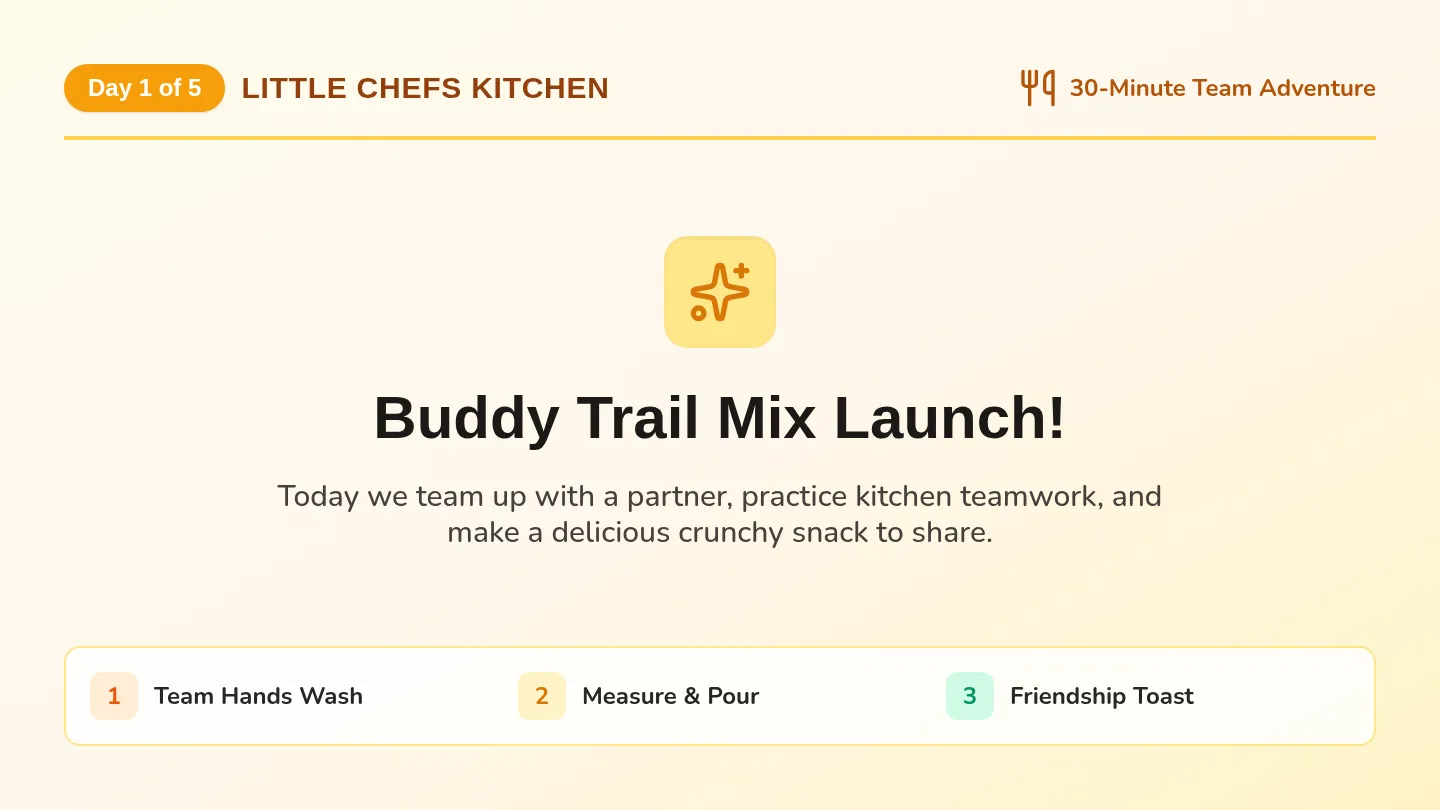
Trail Mix Station Slides

Little Chefs Kitchen

A vibrant five-day culinary and teamwork unit for K-3rd grade students where partners use simple no-cook recipes to build sharing, communication, and joyful friendship.

Lenny Avatar
Lenny
10
Daily Pulse Prompt Cards

Daily Pulse

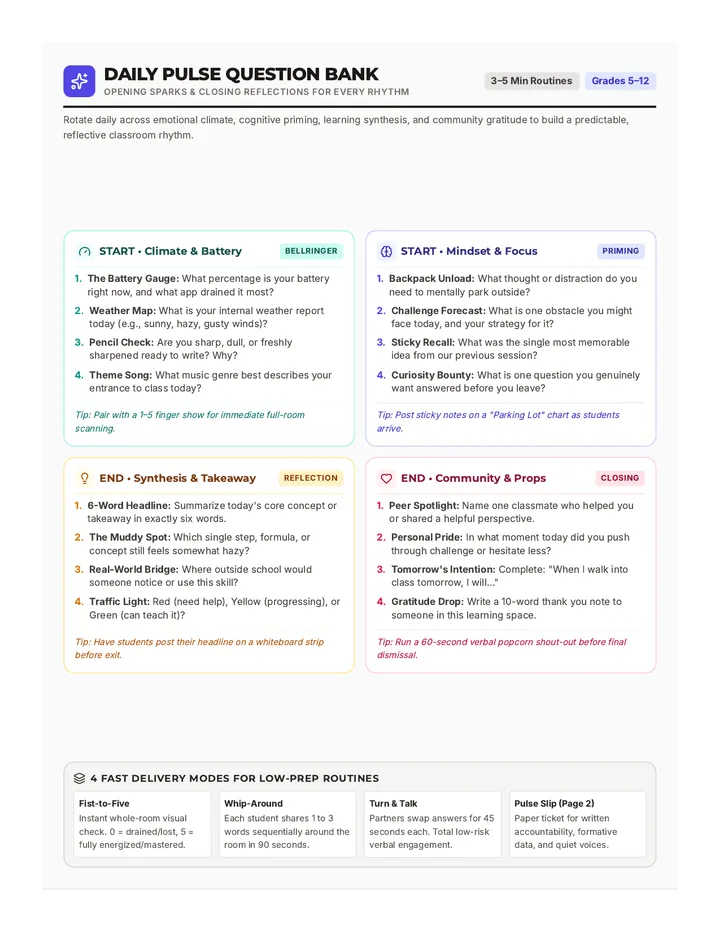
A practical toolkit of daily opening and closing check-in prompts alongside dynamic micro-activities for individual, pair, and whole-group engagement. Designed for seamless classroom community building and active reflection across grade levels.

TB

Tyler Battist

2
Goal Design Blueprint Worksheet

Goal Design Blueprint Worksheet

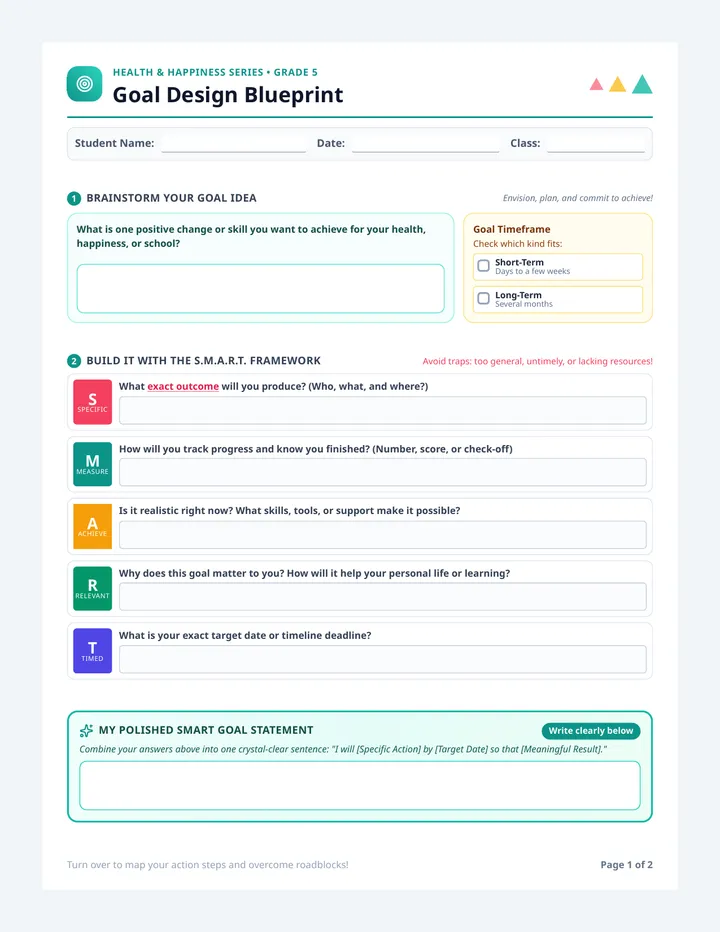
A 2-page printable 5th-grade worksheet guiding students to design, evaluate, and map out a SMART goal with an action plan and roadblock-busting strategies.

S

SD

Initiation Hurdles Slides

Execution Lab

An executive functioning and work completion curriculum designed specifically for gifted middle schoolers. Students learn cognitive strategies to dismantle perfectionism paralysis, accurately pace multi-phase projects, and conquer the final submission hurdle.

MB

Michele Berning

6
Meditation Monday Slides

Meditation Monday

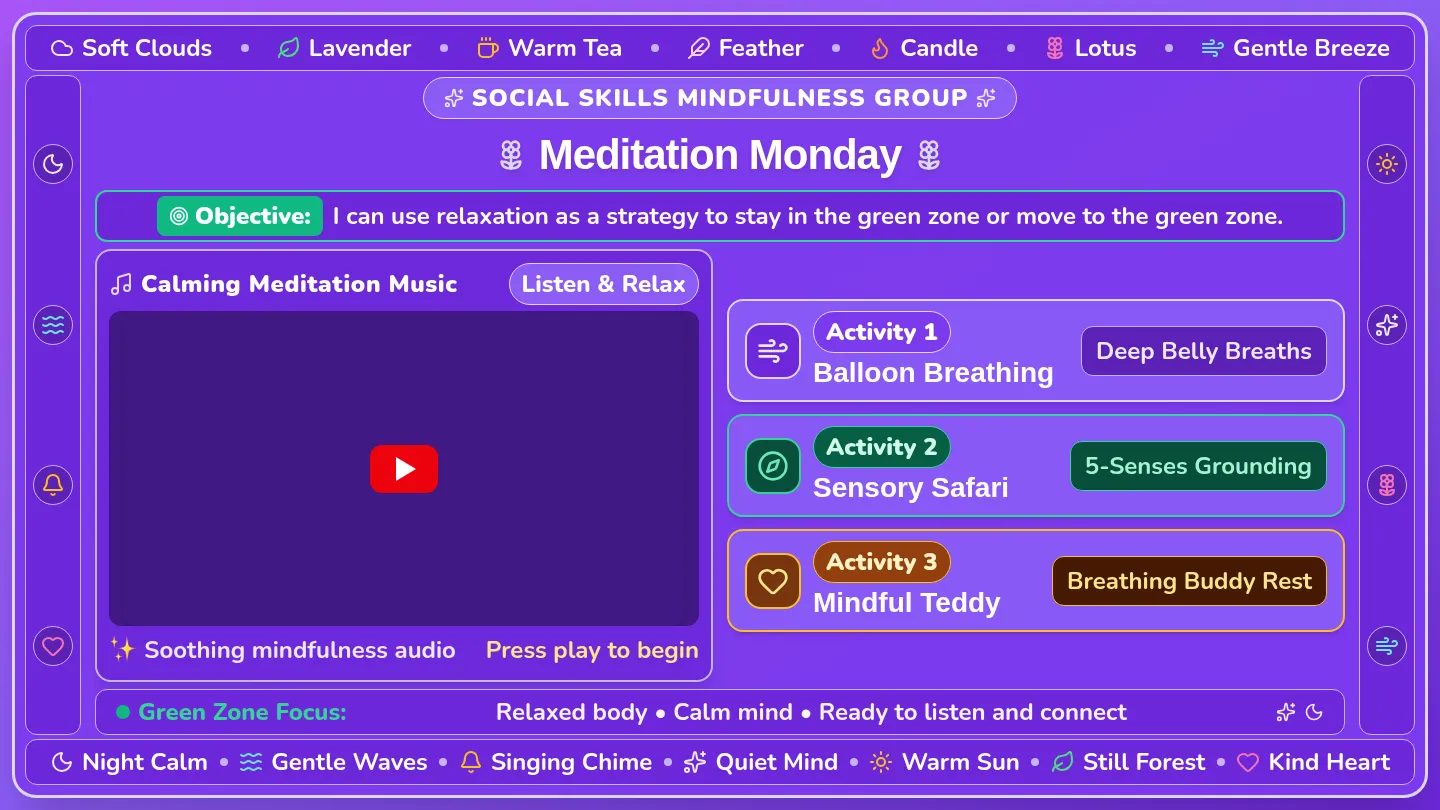
A social skills mindfulness lesson focusing on relaxation strategies, self-regulation in the Green Zone, and sensory awareness through guided practice and personal reflection.

JR

JUDI-ANN REID

4
React Choose Activity Signs

React Choose Activity Signs

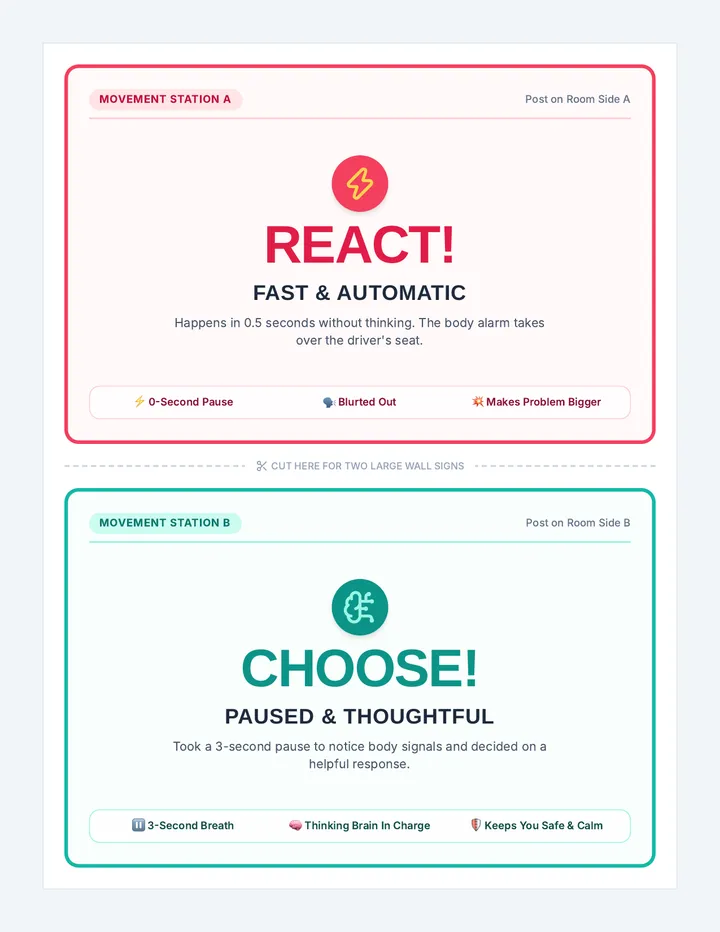
Printable high-contrast classroom wall signs for the movement game along with cut-out scenario prompt cards with coaching cues for teacher or student leaders.

Lenny Avatar
Lenny
Leadership Playbook Curriculum Guide

Leadership Skills Program

An adaptable 8-week high school leadership and self-regulation curriculum program. Each weekly unit provides targeted facilitation, interactive labs, and student application materials for social intelligence and composure.

MP

Madison Paz

13
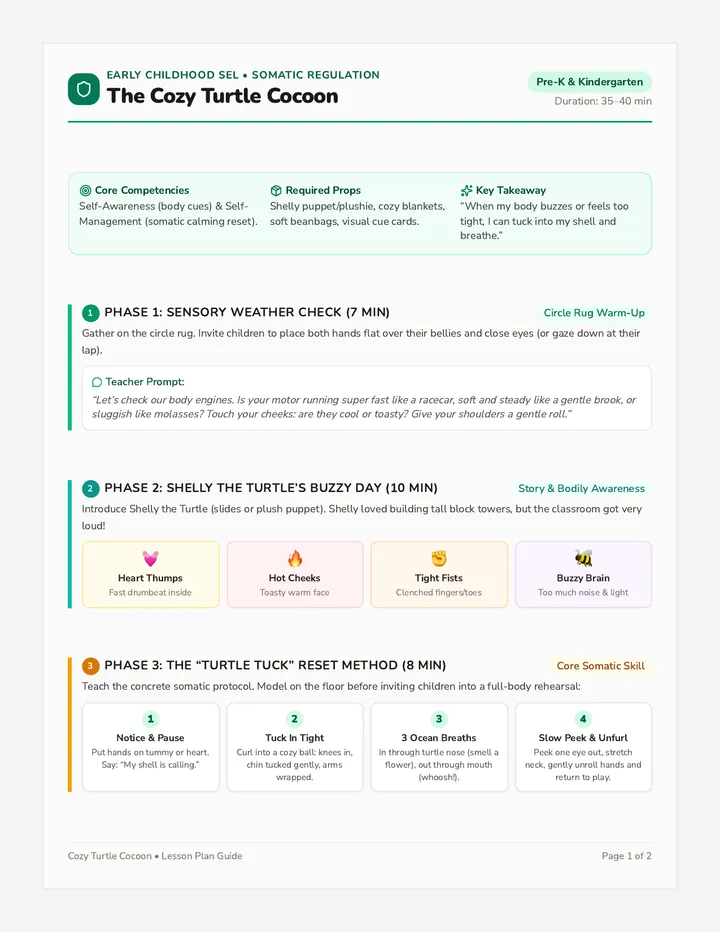
Cozy Turtle Lesson Plan

Cozy Turtle Cocoon

A gentle social-emotional learning lesson for Pre-K and Kindergarten students to discover physical signals of emotional overwhelm and practice the somatic 'Turtle Tuck' calming technique. Learners explore Shelly the Turtle's story, map their own bodily clues, and build safe space reset routines.

CH

Celi Henderson

4
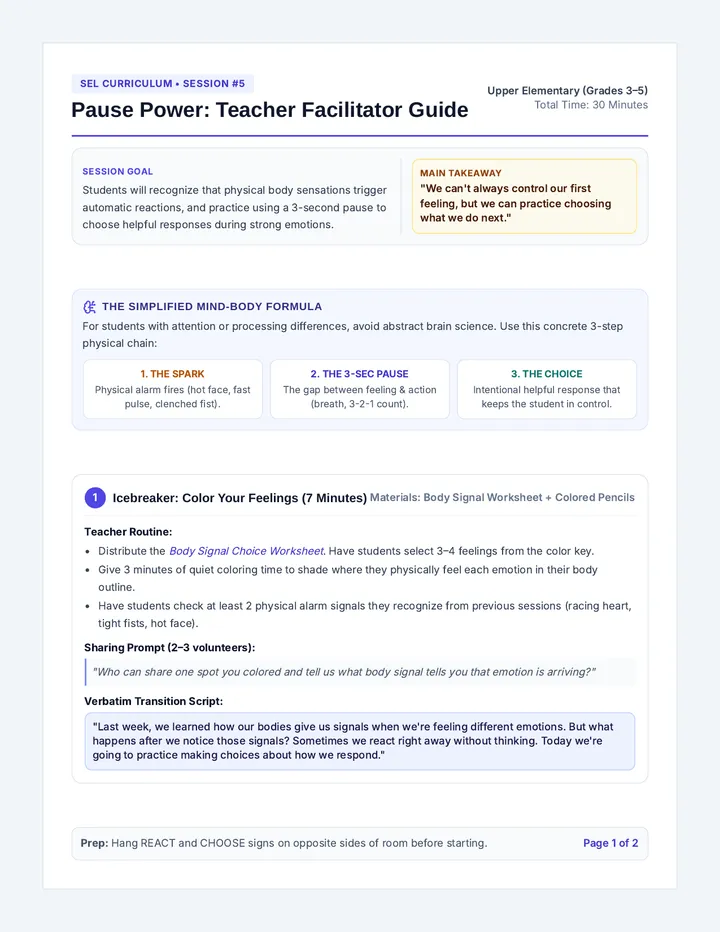
Pause Power Teacher Guide

Pause Power Teacher Guide

Comprehensive teacher facilitation guide with step-by-step pacing, scripted transitions, 8 movement game scenarios, and accommodations for diverse attention and processing needs.

Lenny Avatar
Lenny
Launch Ignition Slides

Spark to Finish

A structured multi-day sequence designed to build executive function routines, overcome task initiation friction, sustain momentum through completion, and cultivate self-confidence.

MB

Michele Berning

9
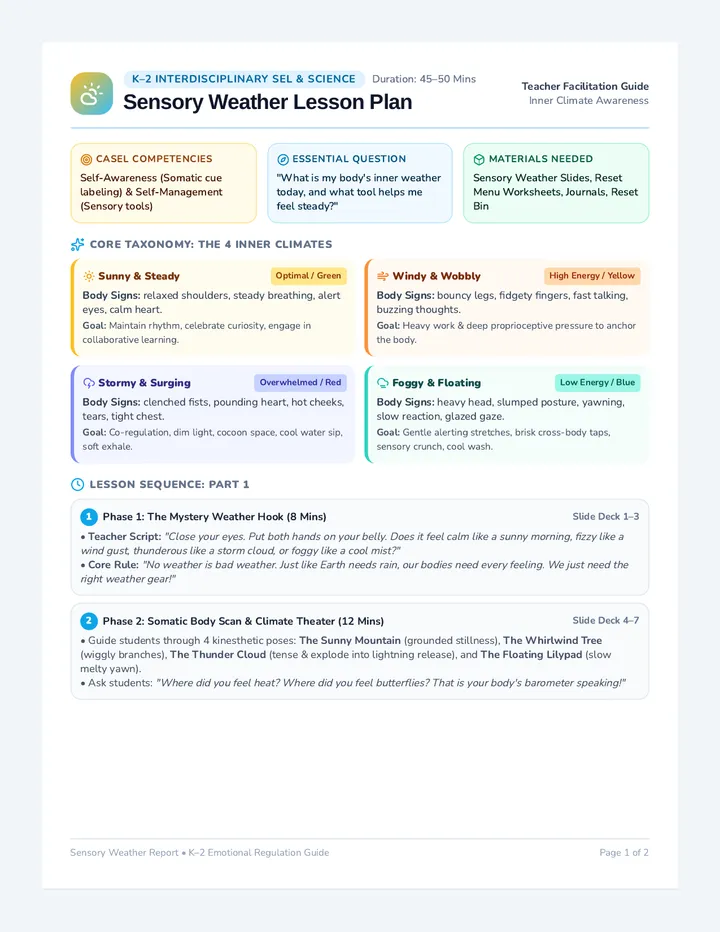
Sensory Weather Lesson Plan

Sensory Weather Report

An interdisciplinary emotional literacy lesson for K-2 students to identify inner energy states through weather metaphors. Students learn to map physical sensations, recognize four core inner climates, and independently select sensory resets to self-regulate.

CH

Celi Henderson

4
Freshman Launch Slides

Mindset to Mastery

A four-year developmental progression of academic study skills designed for high school educators. Guides students through foundational habits, active memory encoding, sustained project management, and college-ready metacognition.

S

smikamo

8