Professional email structure, tone modulation, and formatting standards for workplace communication. Addresses subject line clarity, professional greetings, and effective follow-up strategies.
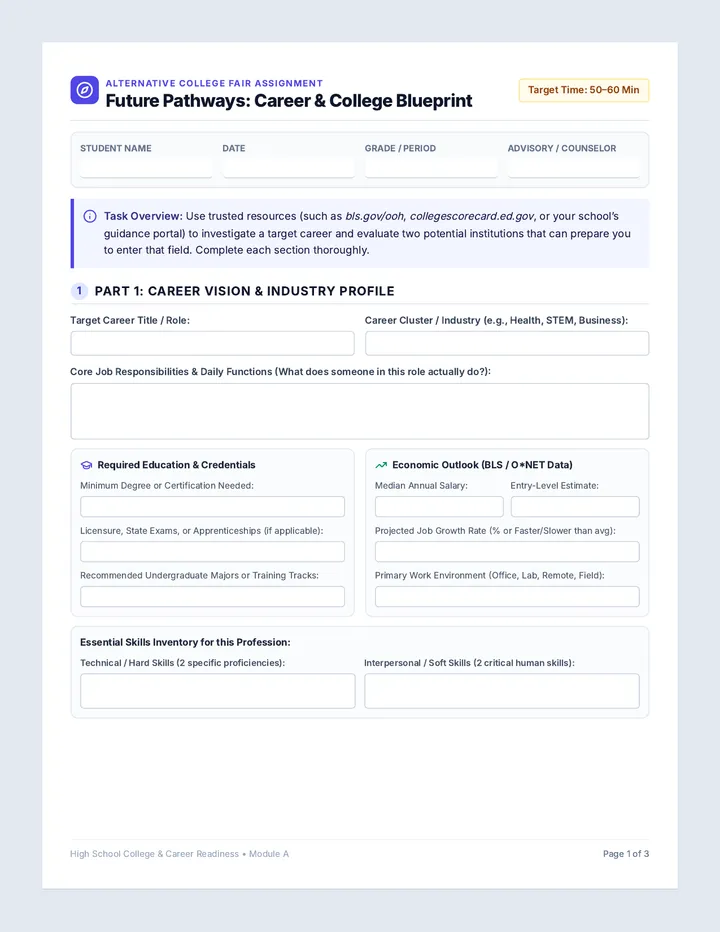
A comprehensive three-page independent research and comparison worksheet designed for high school juniors and seniors exploring postsecondary options. Guides students through career trajectory mapping, head-to-head college comparisons, and financial return-on-investment planning.
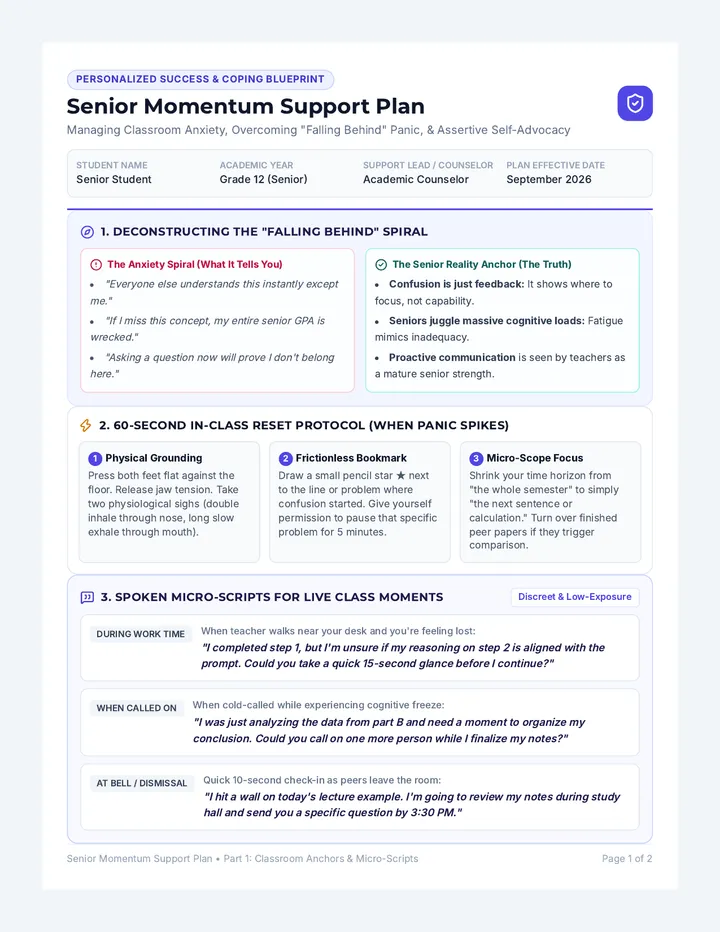
A comprehensive two-page individualized classroom coping and self-advocacy plan designed for a high school senior experiencing academic anxiety and feelings of falling behind. It features immediate classroom de-escalation protocols, word-for-word spoken micro-scripts, proactive email templates for extensions and accommodations, and a customizable advocacy script planner.
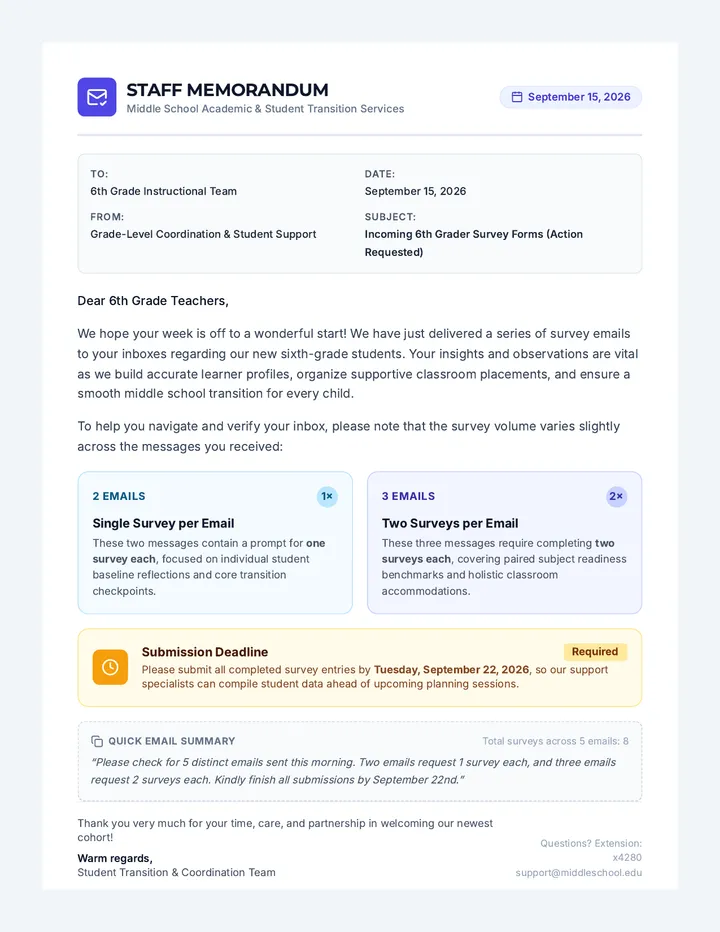
A polite, professionally formatted administrative memo and email notice to 6th grade teachers detailing incoming student surveys, email breakdowns, and the September 22nd completion deadline.
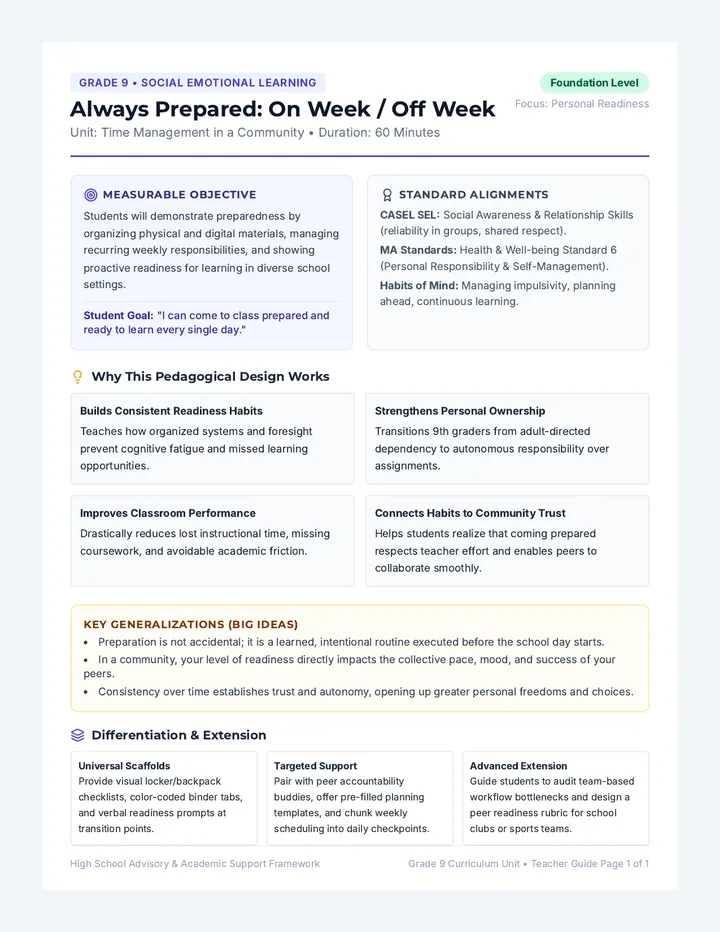
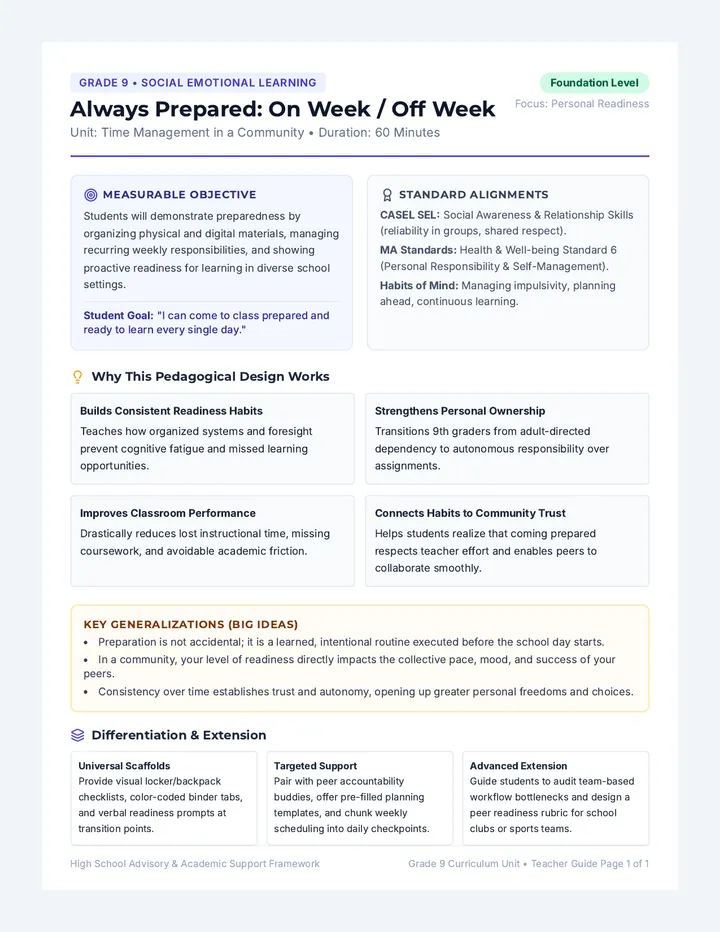
A scaffolded 4-grade social-emotional and executive functioning curriculum guiding high school students from foundational personal preparedness to balanced living, postsecondary goal alignment, and collaborative community leadership.
A 6-session transition unit designed to prepare high school students for the academic rigor of a charter school environment through study habits, organization, and self-advocacy.
A comprehensive sequence where 8th-grade students act as 'organizational consultants' to diagnose and solve scheduling conflicts and executive functioning challenges through case studies. Students learn root cause analysis, professional self-advocacy, emotional regulation strategies for procrastination, and tool evaluation before creating a final consultancy report.
A simulation-based sequence where 10th-grade students act as 'Student-Consultants' to master schedule management and adaptive resiliency. Students learn to handle 'Chaos Factors', negotiate deadlines, and manage energy levels to maintain balance amidst competing demands.
A 12th-grade sequence focused on empowering students with working memory challenges to advocate for single-step directions in professional and academic settings. Students learn to recognize their processing limits, draft professional scripts, and practice high-stakes role-play to ensure they can manage information overload effectively.
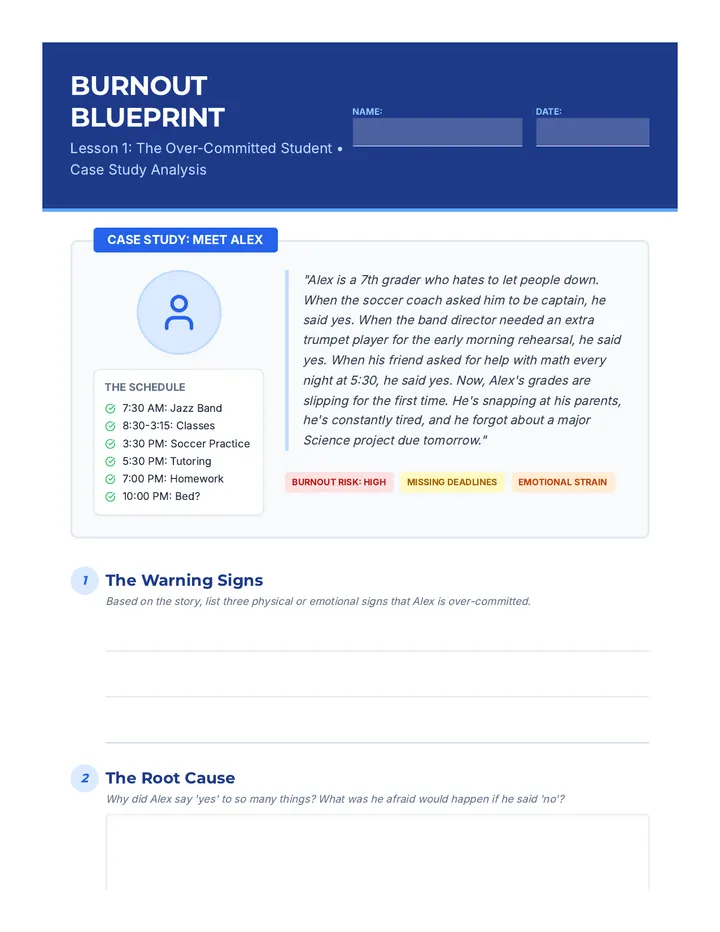
A 5-lesson unit for 7th-grade students focusing on the interpersonal skills required for time management: setting boundaries, communicating overload, and advocating for a balanced schedule. Students progress from identifying burnout to drafting a personal accountability contract.
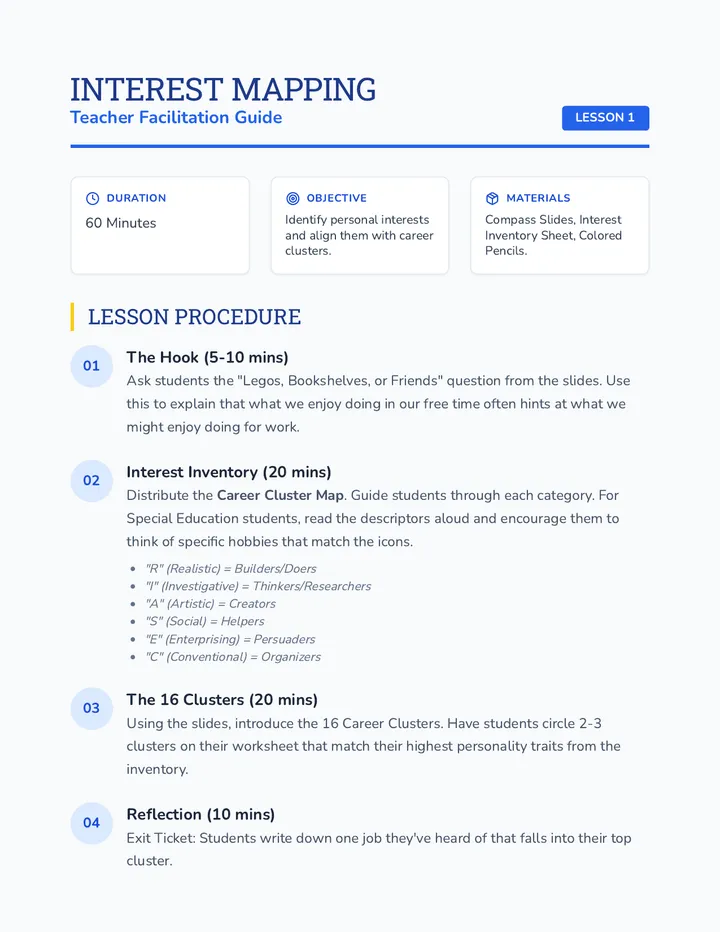
This sequence guides 8th-grade students through self-discovery and career exploration, helping them bridge the gap between their current interests and future professional opportunities. Students will explore career clusters, identify employability skills, conduct job research, and practice professional communication.
A comprehensive sequence for 9th-grade students focusing on self-advocacy, communication skills, and boundary setting to manage schedule conflicts and prevent burnout. Students learn to recognize stress signals, draft professional requests, negotiate deadlines, and prioritize tasks during crises.
A comprehensive sequence for 12th-grade students focused on navigating interpersonal dynamics during and after sensory dysregulation. Students develop skills in identifying co-regulators, using non-verbal signals, advocating for professional accommodations, and managing relationship repair post-crisis.
A workshop-style sequence for 12th graders to master the professional application process, covering resumes, personal statements, digital portfolios, networking, and interviewing.
A comprehensive workshop-style unit where 7th-grade students navigate the job-seeking process, from identifying transferable skills and drafting their first resumes to mastering professional etiquette and succeeding in mock interviews. Students will develop tangible professional documents and interpersonal communication skills critical for workforce entry.
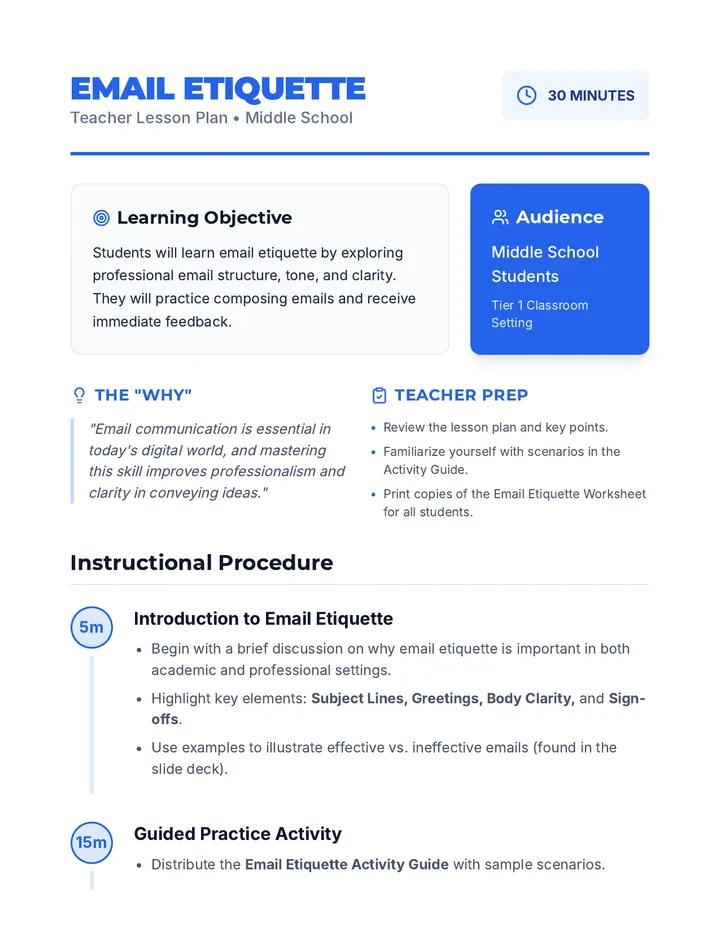
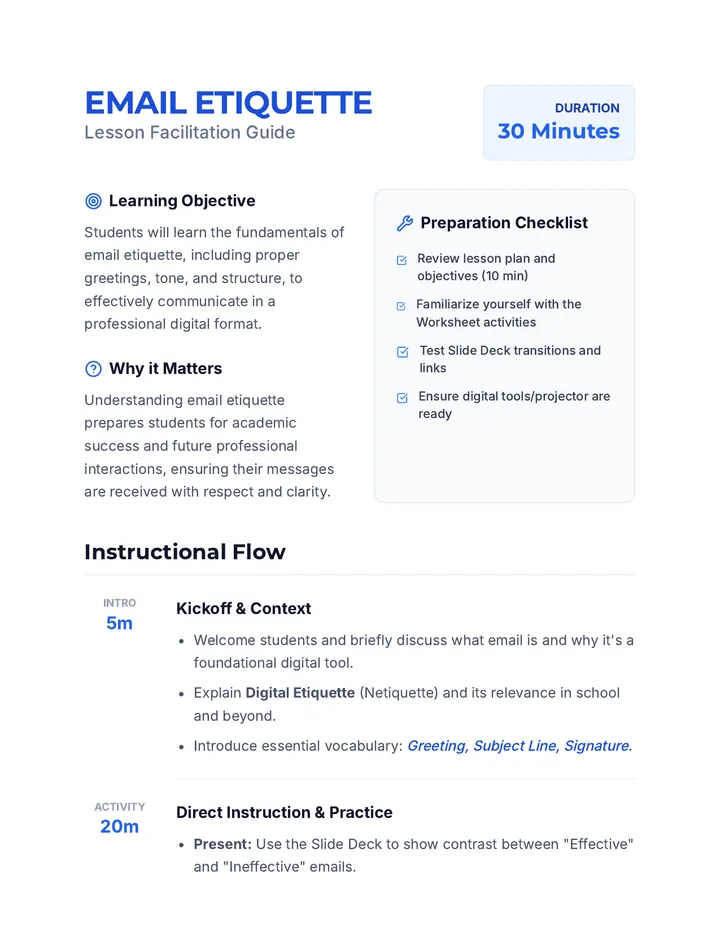
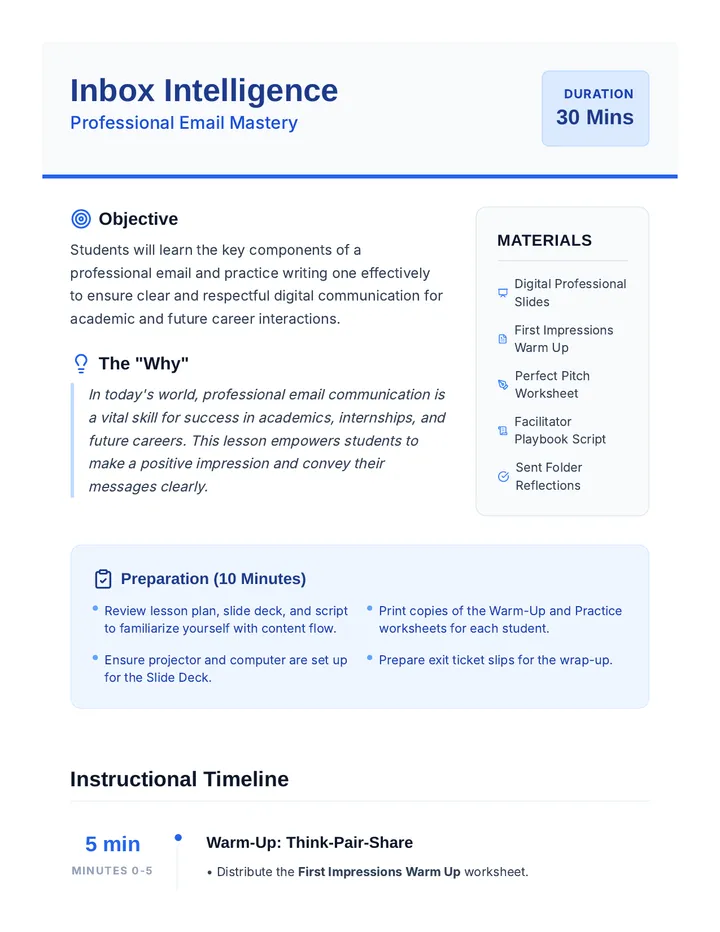
A comprehensive 30-minute lesson teaching middle schoolers the essentials of professional email communication, including structure, tone, and etiquette.
This 60-minute lesson for 9th graders focuses on mastering professional email etiquette. Students learn the essential components of a formal email, analyze common mistakes through an 'Email Clinic,' and practice drafting their own messages for various real-world scenarios.
A 30-minute Tier 1 lesson for 9th-grade students covering the anatomy of professional emails and proper digital communication etiquette. Students will learn about subject lines, salutations, body content, closings, and signatures through guided practice.
A comprehensive lesson for high school students on the essentials of professional email etiquette, covering subject lines, salutations, body content, and sign-offs. Students learn to craft clear, respectful messages for academic and professional success through direct instruction and a hands-on makeover challenge.
This engaging lesson for 6th graders focuses on teaching the essentials of email etiquette, an important skill in today's digital world. Students will learn how to communicate effectively and respectfully through email for academic and personal success.
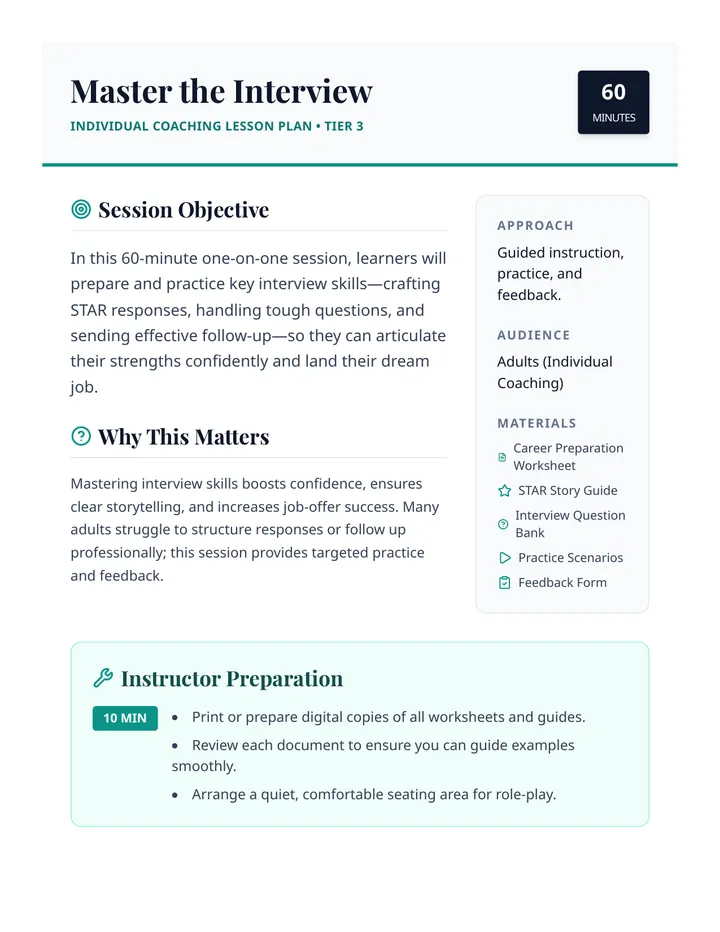
A 60-minute individual coaching session for adults focusing on interview preparation, the STAR method, handling behavioral questions, and professional follow-up techniques.
A comprehensive 30-minute lesson for 10th-grade students on the essentials of professional email communication, covering subject lines, greetings, tone, and formatting.
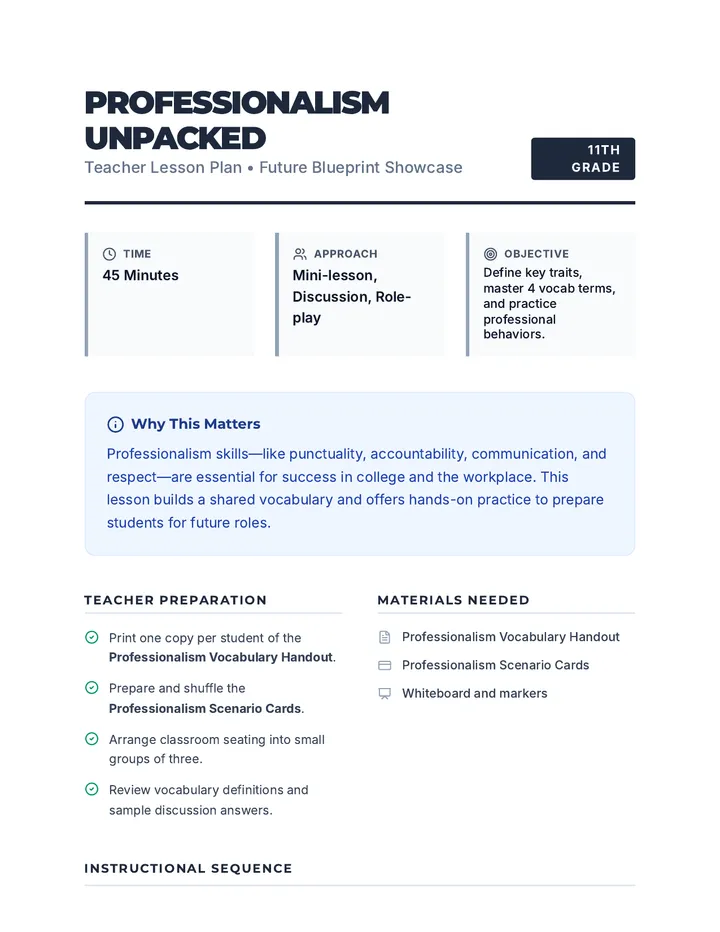
In this 45-minute lesson, 11th grade students explore the essentials of professional behavior for college and the workplace, build a shared vocabulary, and practice responding to real-world scenarios through interactive discussion and role-play.
A comprehensive 5-day interactive unit designed for 30-minute daily class sessions on workplace self-representation. Students explore professional appearance, core character traits, virtual and digital etiquette, in-person workplace norms, and collaborative adaptability through scenario analysis, station rotations, and a cumulative portfolio.
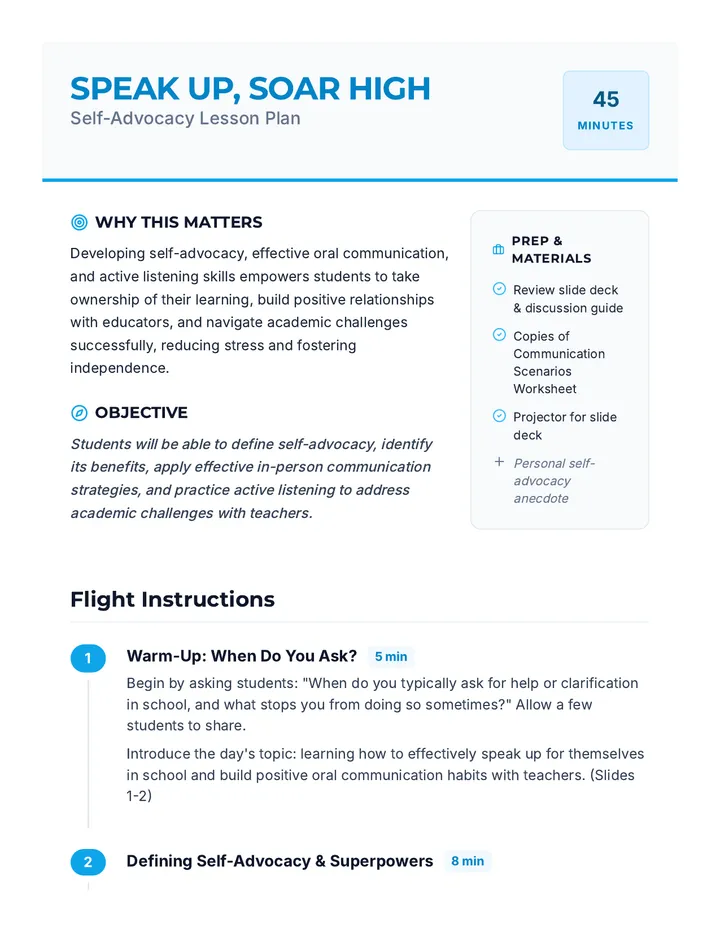
A Tier 2 group lesson for 9th graders focused on developing self-advocacy and oral communication skills to improve teacher-student relationships and academic success.
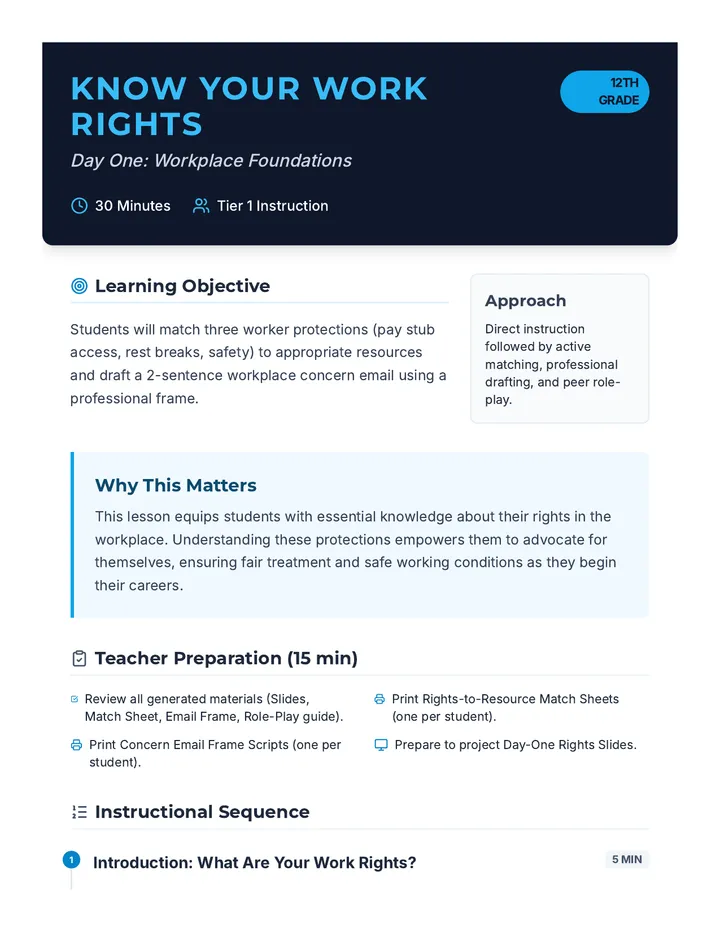
A comprehensive 30-minute introductory lesson for 12th graders on fundamental workplace rights, including pay stub access, rest breaks, and safety. Students learn to identify protections, locate resources, and communicate workplace concerns professionally.
A 15-minute lesson for 8th-grade students on the essential skills of composing clear, respectful, and effective emails to teachers. Students will learn email etiquette through a slide presentation, guided drafting, and a hands-on sorting game.