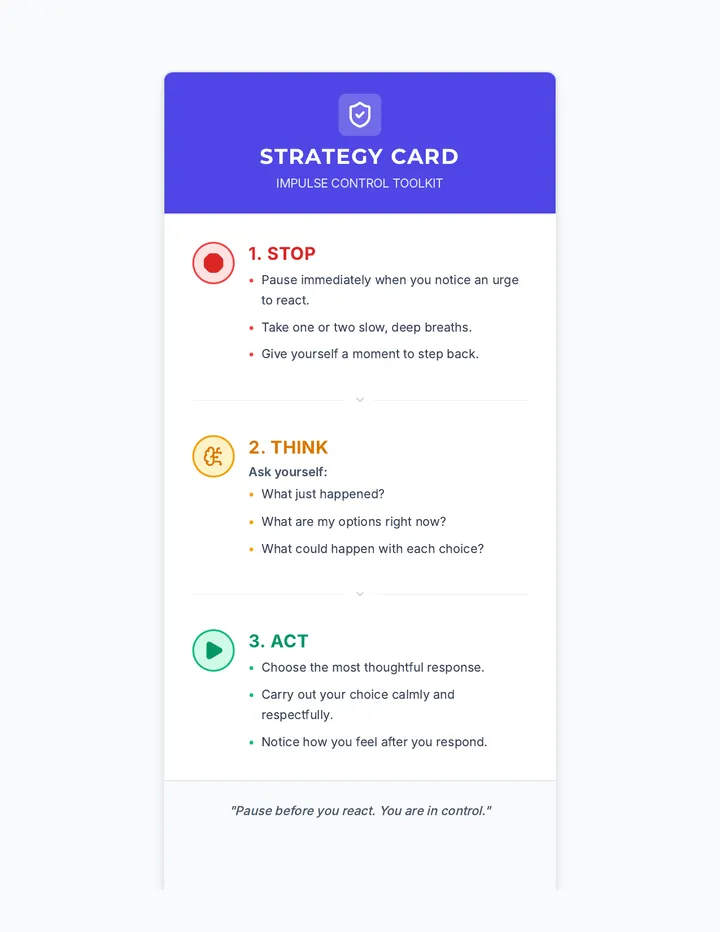
Techniques for identifying behavioral triggers and implementing self-regulation strategies like the 'stop and think' method. Strengthens inhibitory control and independent decision-making across social and academic environments.
A 4-page set of printable conflict de-escalation scenario practice cards, featuring essential calm communication toolkits, five realistic school conflict role-play scenarios, and a structured peer observer scorecard.
A two-page self-reflection worksheet designed for students to explore and reflect on ADHD symptoms, strengths like creativity and hyperfocus, and personal coping strategies.
A bold, vibrant kindergarten family handout for the Duck Duck Dance SEL lesson. Features high-contrast colors, chunky outlines, punchy headlines, and high-energy formatting highlighting sequence skills, turn-taking, and whole-body self-regulation.
A complete 30-minute gamified lesson plan for Pre-K and Kindergarten focused on sportsmanship, emotional regulation, and gracious winning and losing. Features word-for-word teacher scripts, high-energy coaching drills, and proactive de-escalation strategies.
A comprehensive 19-slide psychoeducation presentation rendered in a soft pastel pink, blush, and strawberry cream aesthetic for a 13-year-old online student, covering digital communication psychology, respectful language, de-escalation, the four-part I-message formula, and 10 realistic online conflict role-play scenarios.
A comprehensive 24-card printable restorative justice discussion deck featuring community building openers, harm and accountability prompts, realistic school conflict scenarios, and circle keeper facilitation tools.
A 4-page printable illustrated social story and reflection workbook featuring Champ the dog, helping 2nd-grade students understand why listening to teachers is safe, avoiding unsafe behaviors like running or shouting out, and reflecting on their own daily choices.
A vibrant 4-page printable social story booklet enriched with kid-friendly illustrations, including an expressive character avatar, an emotional traffic light, a detailed 5-finger breathing hand diagram, transition scene vignettes, and visual answer icons.
A 2-page printable dry-erase desk tracker kit designed for student-led blurt self-monitoring. Page 1 features two laminated-ready desk mats for Goal & Count tracking and Interval Self-Checks with a dedicated Thought Parking Lot; Page 2 provides slim desk-edge ruler strips and a weekly goal progress log.
A two-page middle school Zones of Regulation worksheet focusing on emotional self-awareness, physiological body signals, peer situations, and discreet, covert regulation tools for the classroom.
A 4-page printable social story for kindergarteners with clear character illustrations modeling safe hands, safe feet, deep breathing, self-squeezing, and calm words when frustrated.
A 2-page early elementary social problem-solving worksheet featuring chicken-themed classroom and playground scenarios. Students evaluate calm peacemaker choices, explore a step-by-step conflict resolution model, and draw and write their own peaceful solution.
A 5-week individual lesson series for 8th-grade students with social-emotional disabilities, introducing core DBT modules: Mindfulness, Distress Tolerance, Emotion Regulation, Interpersonal Effectiveness, and Walking the Middle Path.
A comprehensive two-part unit for Secondary 1 and 2 students focusing on developing impulse control. Students learn to navigate immediate urges using the 'Pause, Think, Act' and 'Pause, Process, Proceed' frameworks through interactive activities, real-world scenarios, and personal planning.
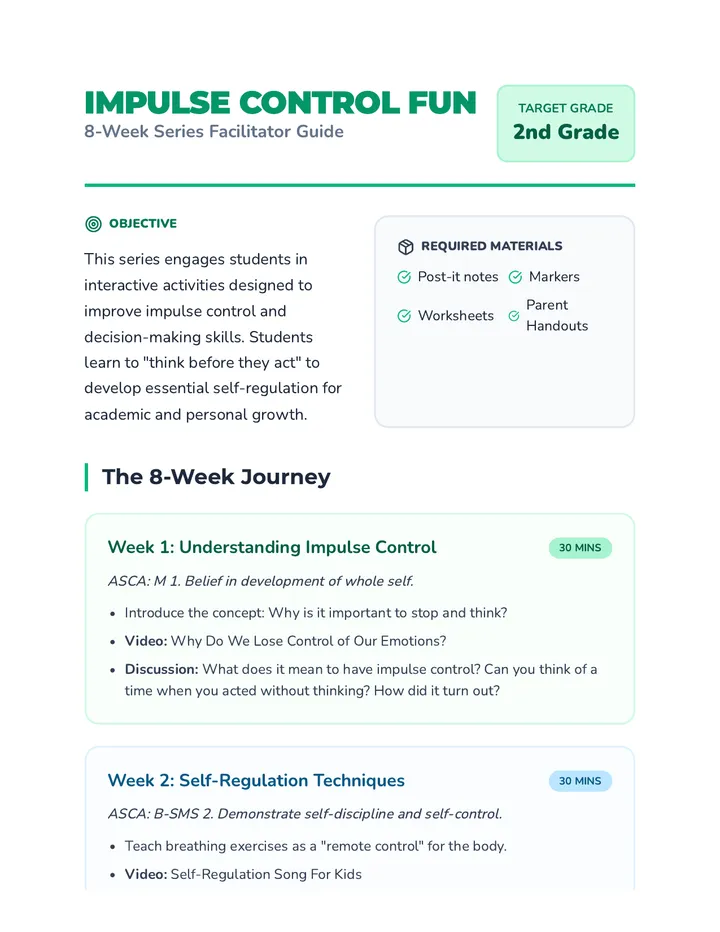
An 8-week series for 2nd graders to develop impulse control, self-regulation, and decision-making skills through interactive activities and reflection.
A 6-session small-group course for 2nd grade boys designed to build self-control, manage impulsivity, and handle frustration using the 'Stop, Think, Shine' framework.
A 6-week Tier 3 intervention sequence designed for a student with an IEP, focusing on identifying triggers, developing coping strategies, and practicing self-regulation to manage anger and anxiety.
A Kindergarten sequence focused on teaching emotional regulation through positive actions. Students learn to use activities like physical movement, deep breathing, and creative expression to 'switch the channel' from negative to positive emotions, building a toolkit of coping strategies.
A 10-session Tier 3 social-emotional learning unit for students with ASD, focusing on identifying emotions, recognizing dysregulation, and applying self-regulation strategies through a space-themed journey.
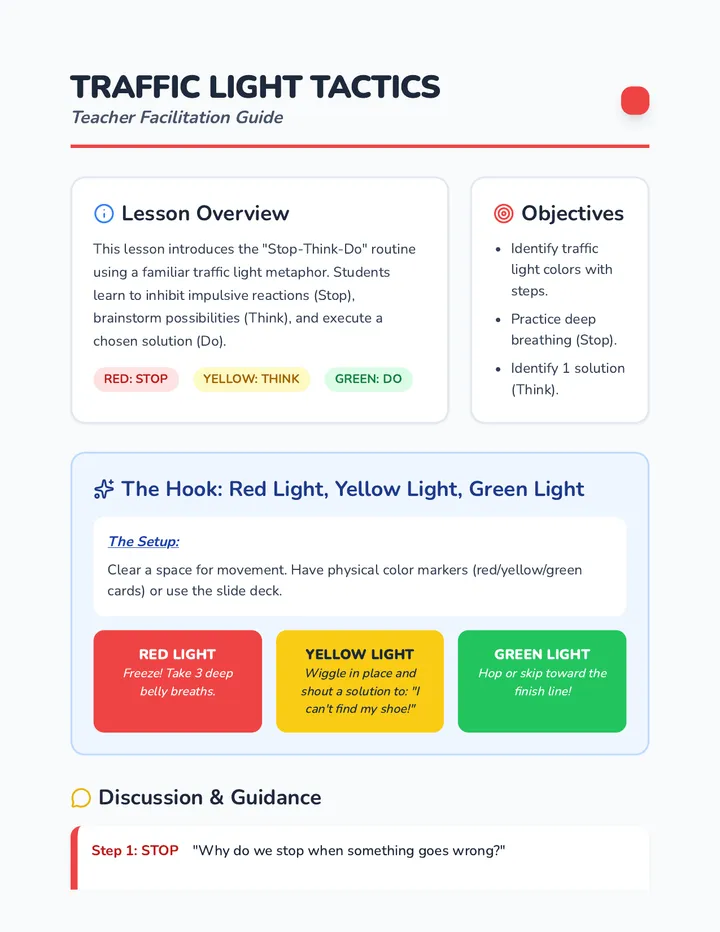
A Kindergarten sequence focused on teaching students a structured problem-solving routine (Stop, Think, Do) and applying it to multi-step challenges through games, sequencing activities, and a final detective project.
A 5-lesson sequence for 7th grade students focusing on restorative practices, the difference between intent and impact, crafting genuine apologies, and the long-term process of rebuilding trust after conflict.
A 5-lesson sequence designed for 4th-grade students to build cognitive flexibility. Students learn to identify rigid versus flexible thinking, recognize physical stress responses to change, practice rapid task-switching, and apply emotional regulation strategies through role-play and a final 'flexibility obstacle course'.
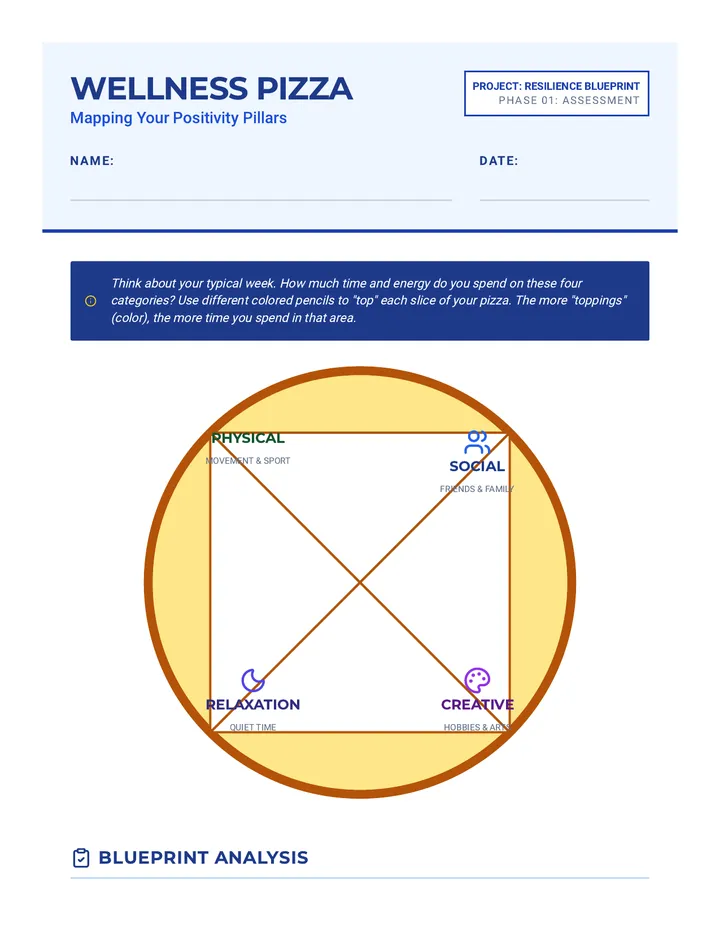
A 5-lesson project-based sequence for 5th graders focusing on building positive experiences through routine design and habit formation. Students learn to categorize wellness activities, overcome barriers like inertia, use habit-stacking techniques, and create a sustainable weekly wellness schedule to build emotional resilience.
An applied sequence for undergraduate students to master self-regulation and de-escalation techniques in high-pressure academic and interpersonal contexts. Students move from identifying personal physiological triggers to practicing real-time regulation during active conflict and performance.
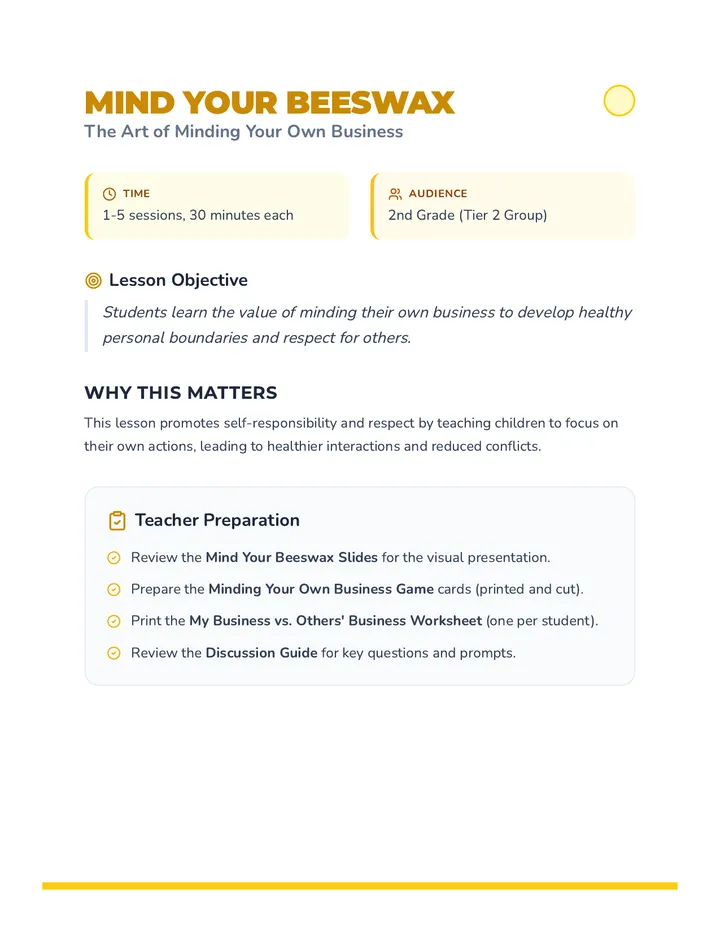
A social skills lesson for 2nd graders focusing on understanding personal boundaries and learning when to focus on one's own tasks versus when to intervene in others' business.
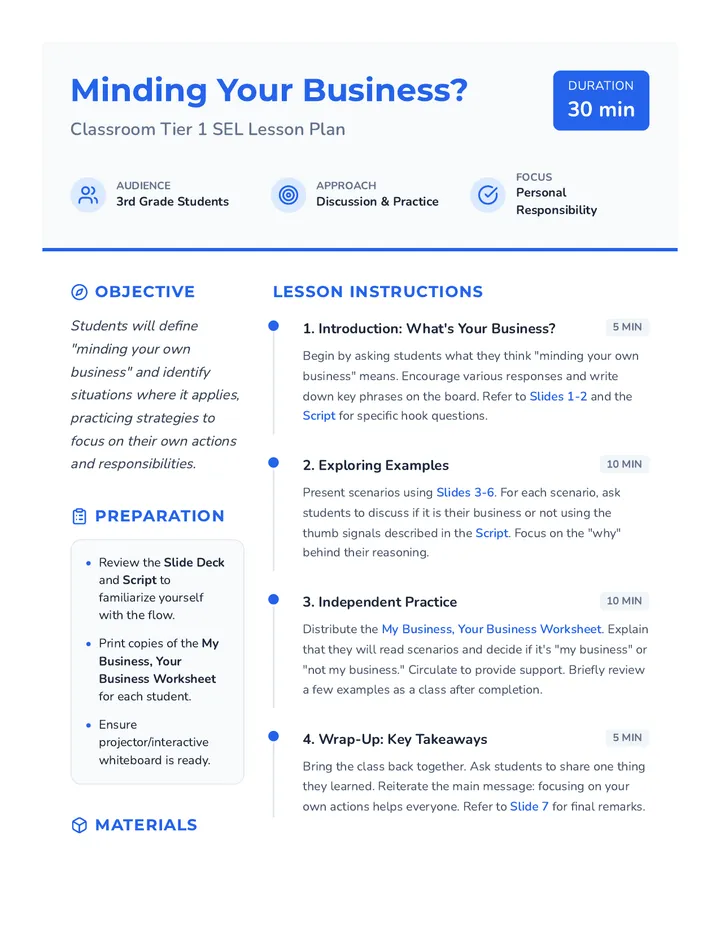
A 30-minute social-emotional learning lesson for 3rd graders that teaches the difference between personal responsibility and interfering in others' affairs through scenarios and discussion.
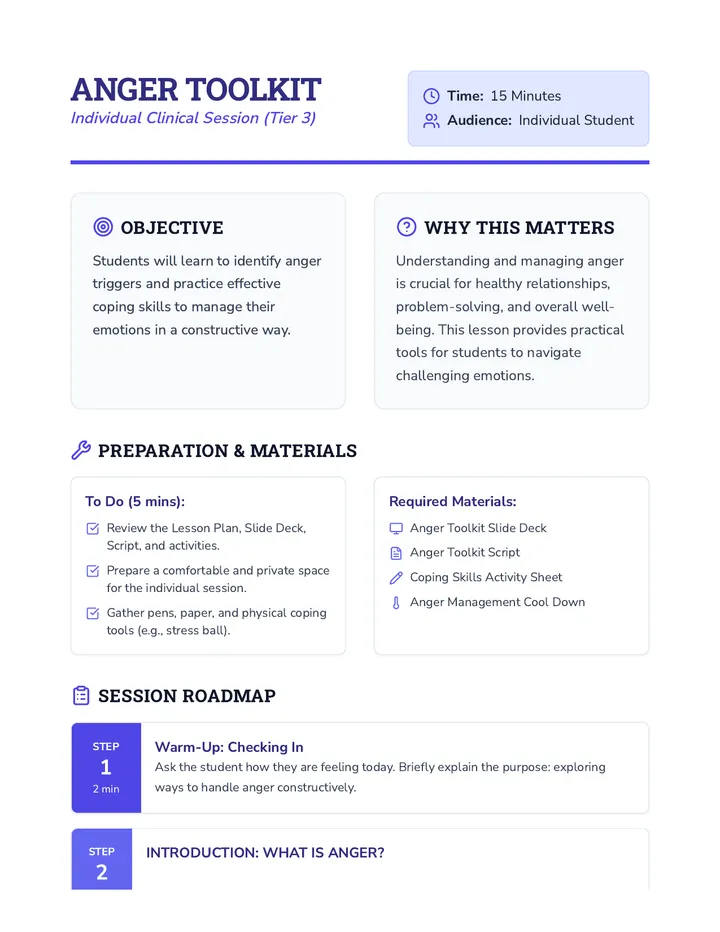
A 15-minute Tier 3 clinical lesson designed to equip individual students with practical anger coping strategies, trigger identification, and emotional regulation tools.
In this engaging 30-minute Tier 1 lesson, 2nd graders will explore the concept of respect by reading 'A Little Respectful Spot,' participating in a hands-on sorting activity, and engaging in a meaningful class discussion. This lesson builds social-emotional skills, fosters a positive classroom environment, and helps students recognize respectful behaviors in everyday life.
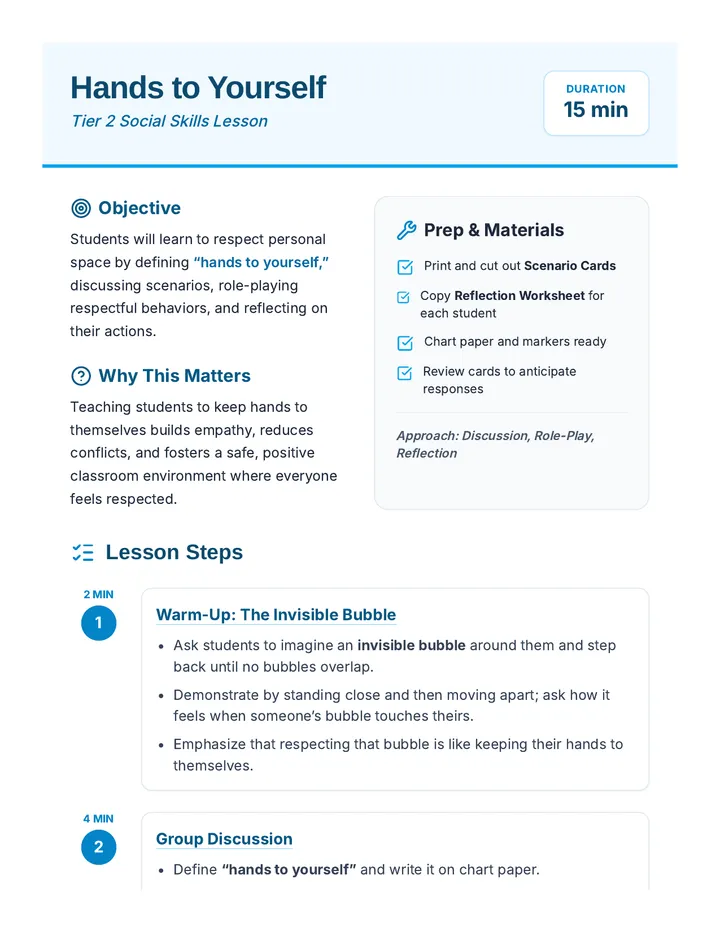
A 15-minute Tier 2 lesson for 5th graders focused on respecting personal space and physical boundaries through the concept of 'invisible bubbles'. Students engage in discussion, role-play, and personal reflection to strengthen social skills and empathy.
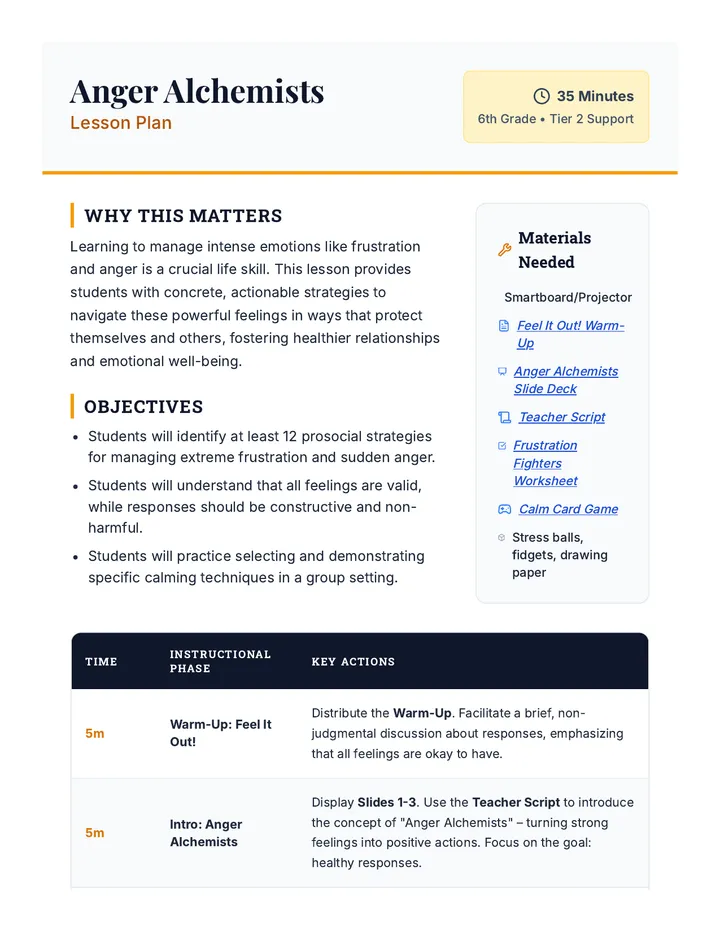
A 35-minute Tier 2 lesson for 6th-grade students to learn over 12 prosocial strategies for transforming intense frustration and anger into constructive responses.
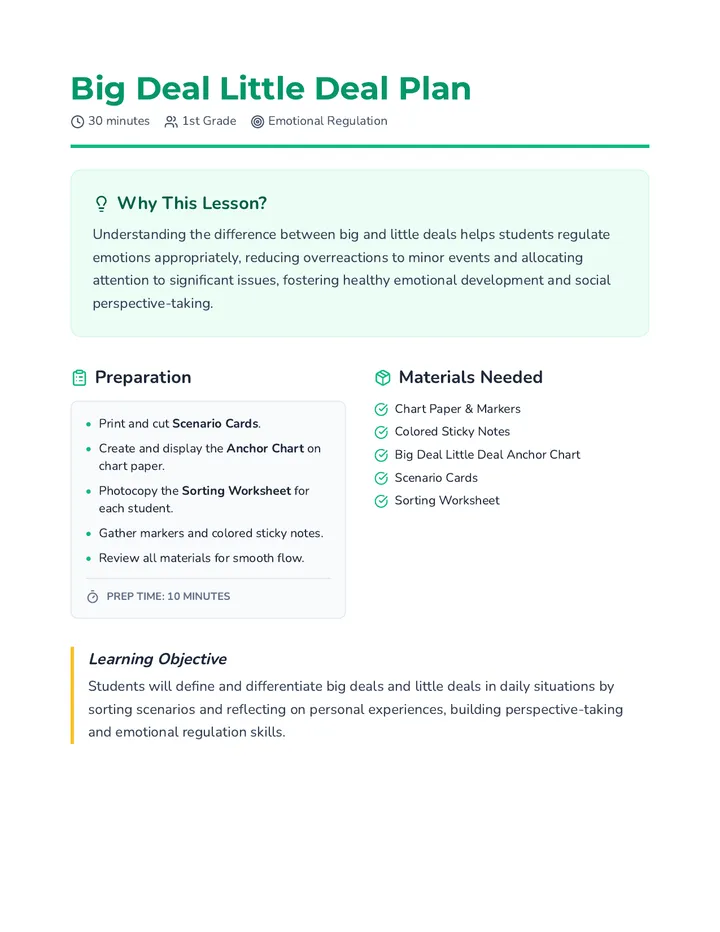
A 30-minute lesson for 1st graders to distinguish between big deals and little deals, building perspective-taking and emotional regulation skills.
A 90-minute intensive Tier 3 intervention for 7th grade students with ADHD, focusing on the Stop-Think-Act strategy to build impulse control and self-regulation skills.
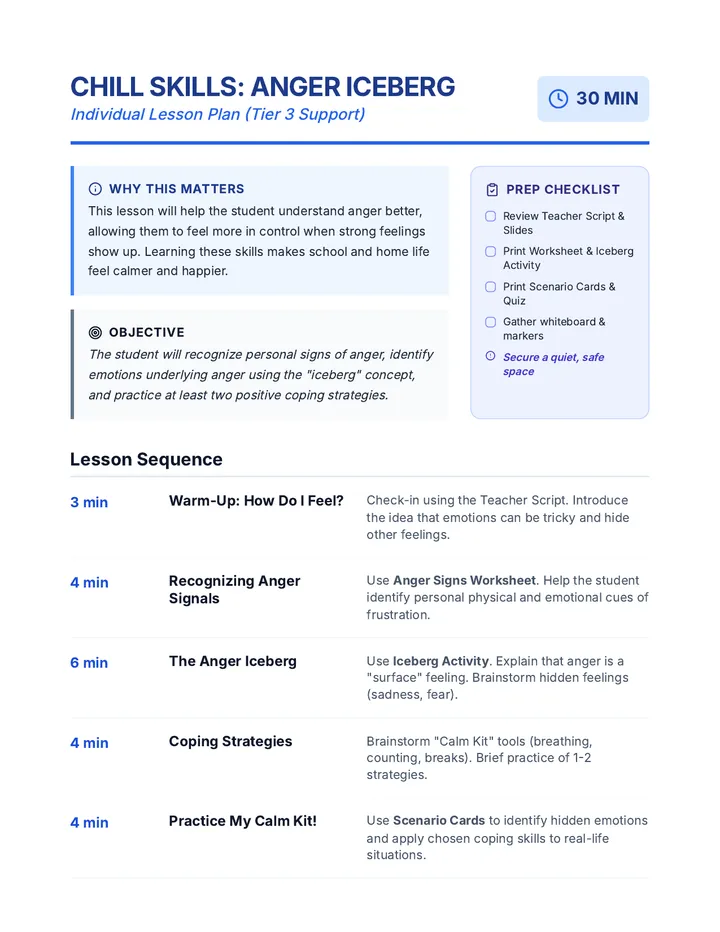
A 30-minute individual Tier 3 lesson for 3rd-grade students focused on identifying anger signals, understanding underlying emotions through the anger iceberg concept, and practicing coping strategies.
This lesson helps 4th-grade students understand and practice self-regulation when they feel like interrupting or speaking out impulsively. It equips them with strategies to control their impulses, fostering a more respectful and focused classroom environment.
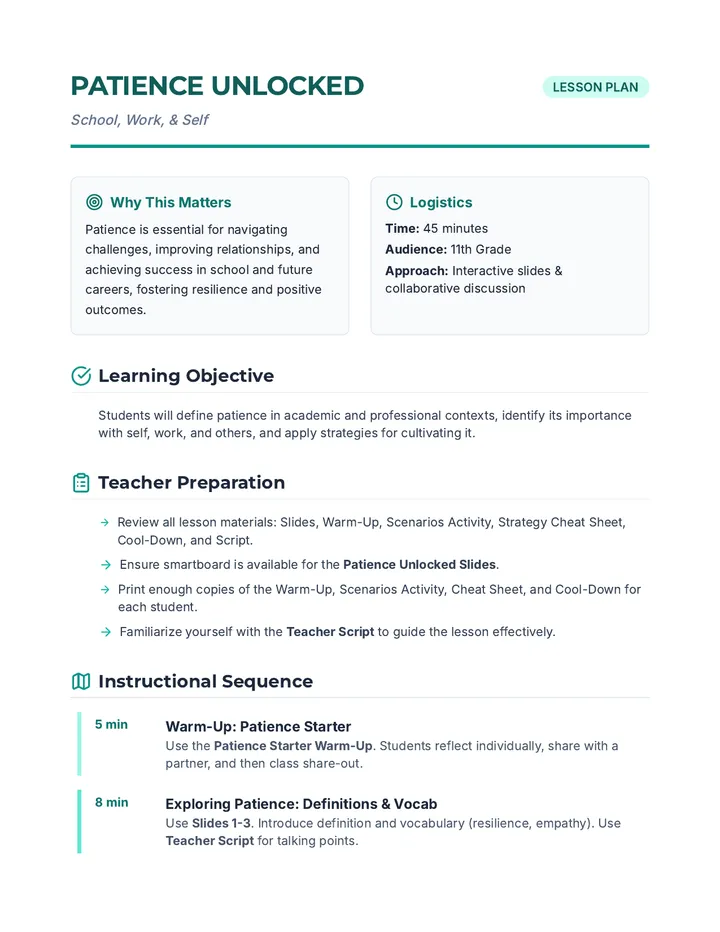
This lesson empowers 11th-grade students to cultivate patience as a critical skill in academic and professional settings. Students will explore strategies for managing impatience with themselves, their work, and others, fostering resilience and positive relationships.
A 30-minute small group lesson for Kindergarten students to learn impulse control through the 'Stop, Think, Choose' strategy, featuring interactive voting and discussion.