Financial analysis of high-cost acquisitions including vehicles, real estate, and higher education. Addresses interest rate calculations, loan terms, credit impacts, and total cost of ownership.
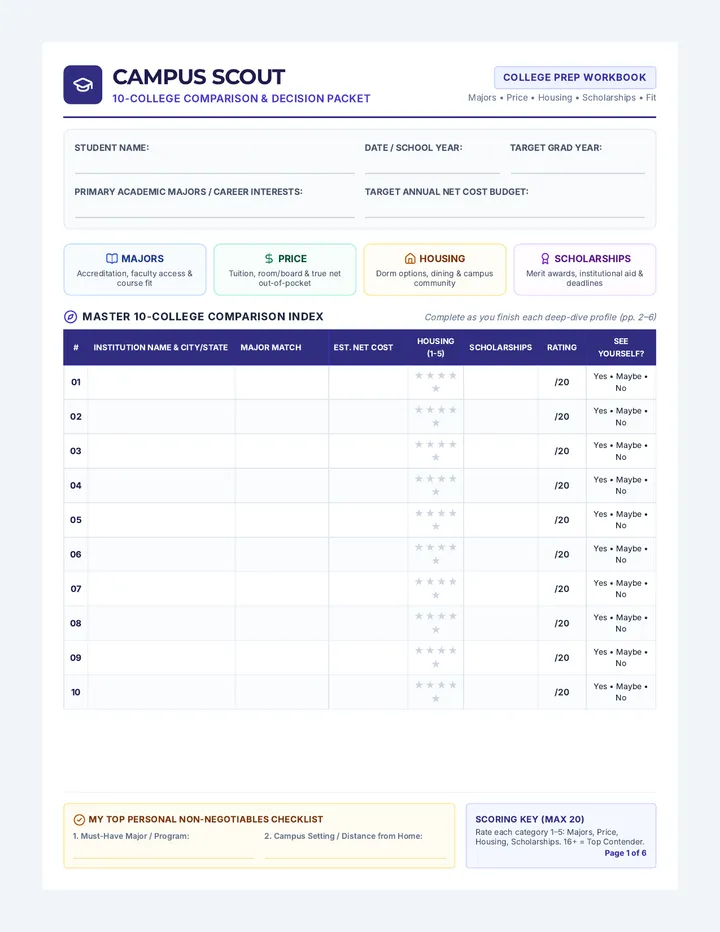
A comprehensive 6-page printable student workbook for evaluating and comparing 10 colleges across majors, price, housing, scholarships, rating scales, and personal fit. Features a master index leaderboard, spacious two-college deep-dive evaluation spreads, and a final decision showdown podium.
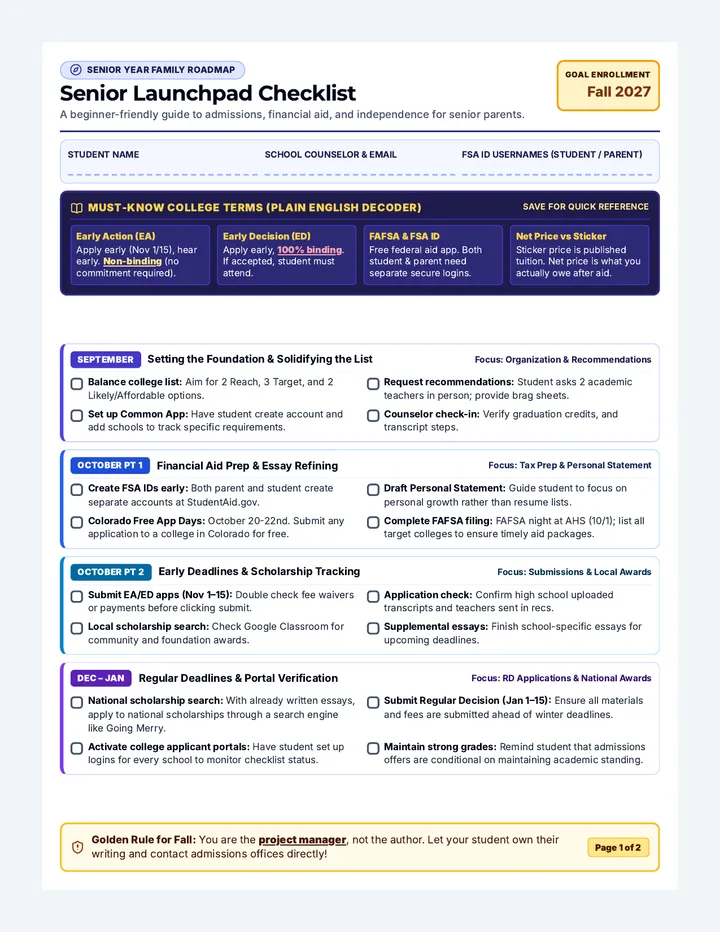
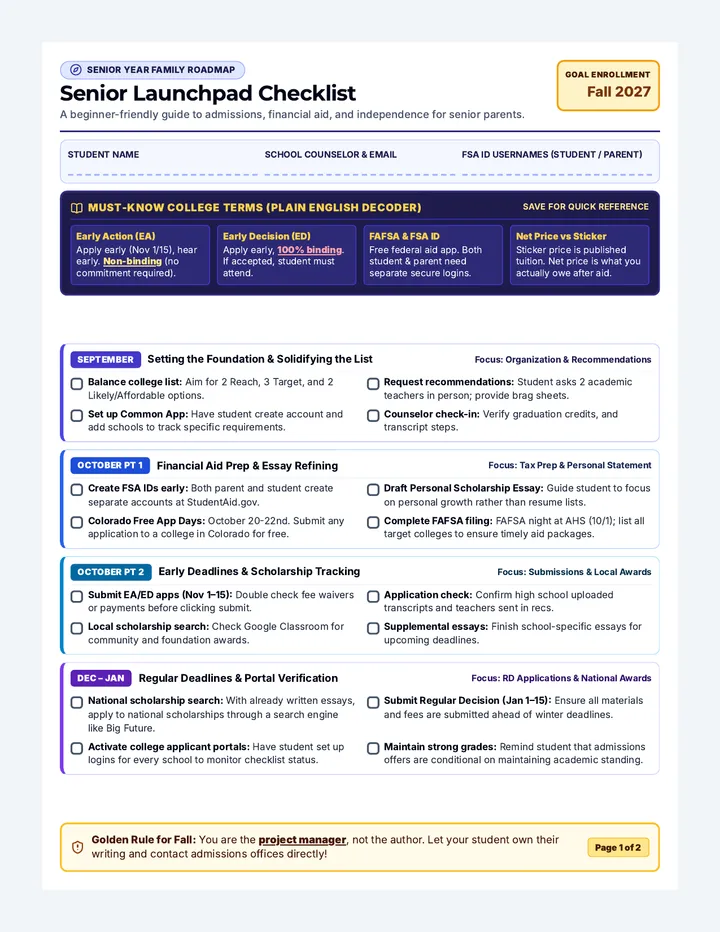
A full-color, high-contrast, printable month-by-month checklist and roadmap for parents navigating college admissions, financial aid, enrollment, and student independence.
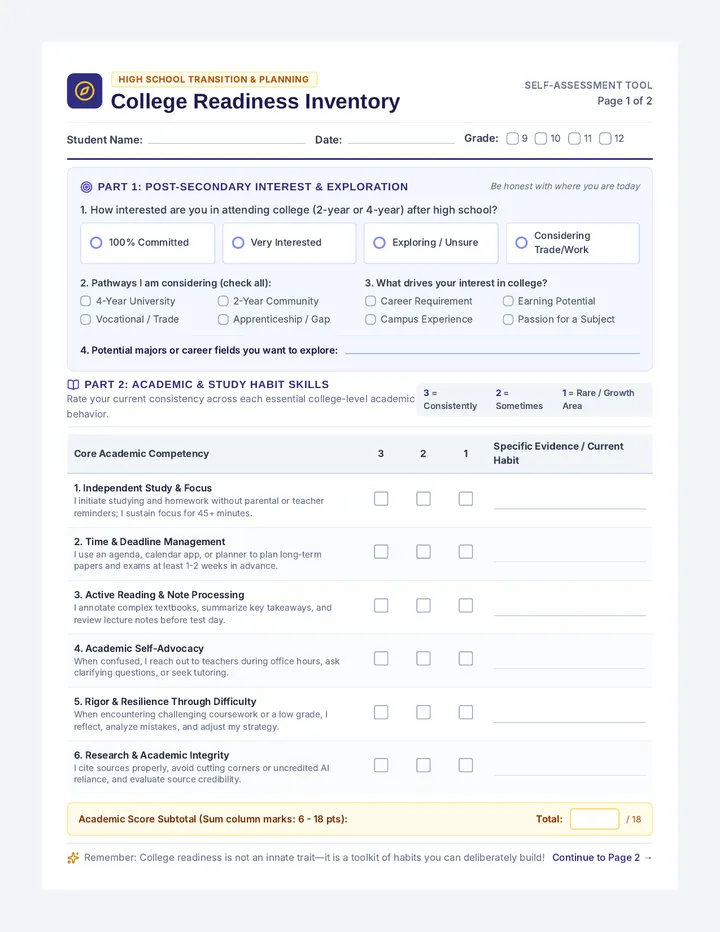
A comprehensive two-page self-assessment worksheet designed for high school students to evaluate their post-secondary aspirations, academic study habits, and independent life skills. Includes structured rating matrices, reflection questions, and a goal-setting action blueprint for college preparation.
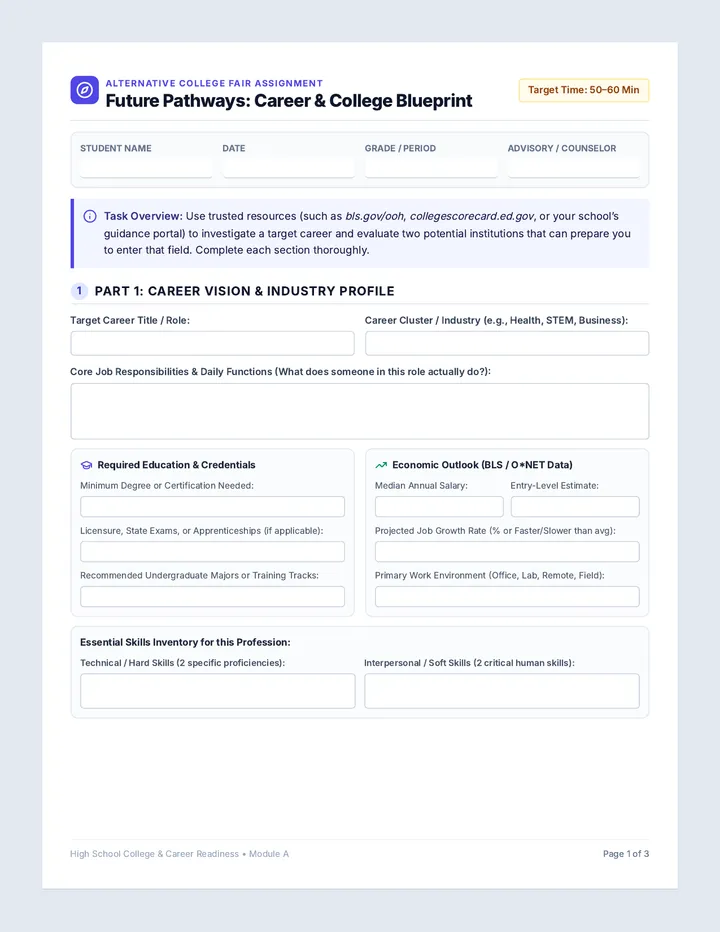
A comprehensive three-page independent research and comparison worksheet designed for high school juniors and seniors exploring postsecondary options. Guides students through career trajectory mapping, head-to-head college comparisons, and financial return-on-investment planning.
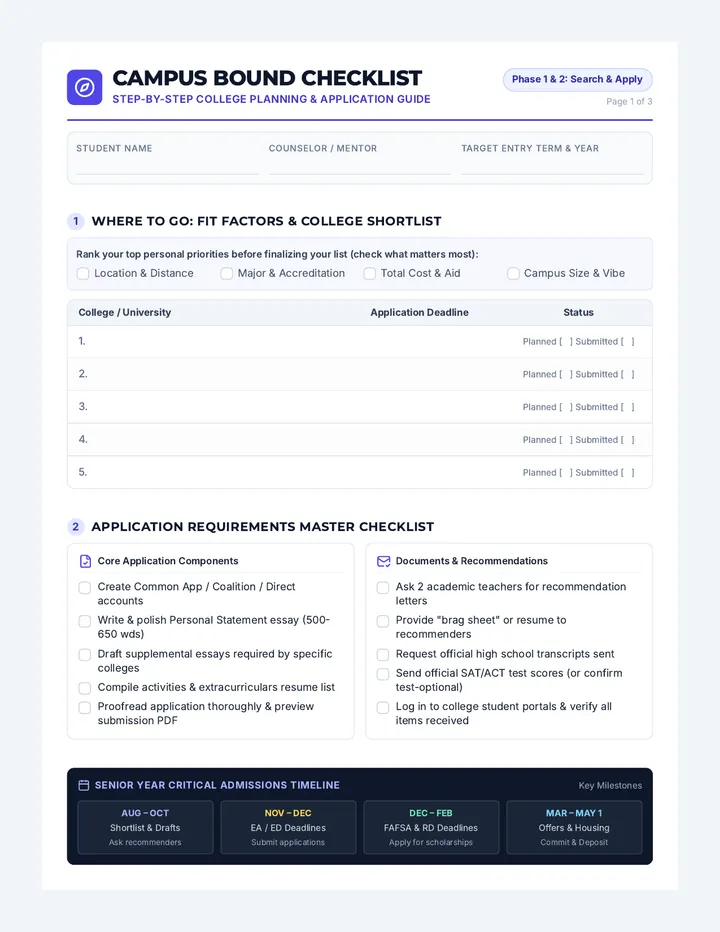
A comprehensive, printable three-page student checklist and planning guide covering college research, application tracking, FAFSA and financial aid, scholarship management, campus tours, housing selection, and final enrollment decisions.
A four-session personalized coaching series designed to help students with low motivation and self-esteem explore career options and college types. Through guided activities, self-reflection, and research, students will build confidence in making informed decisions.
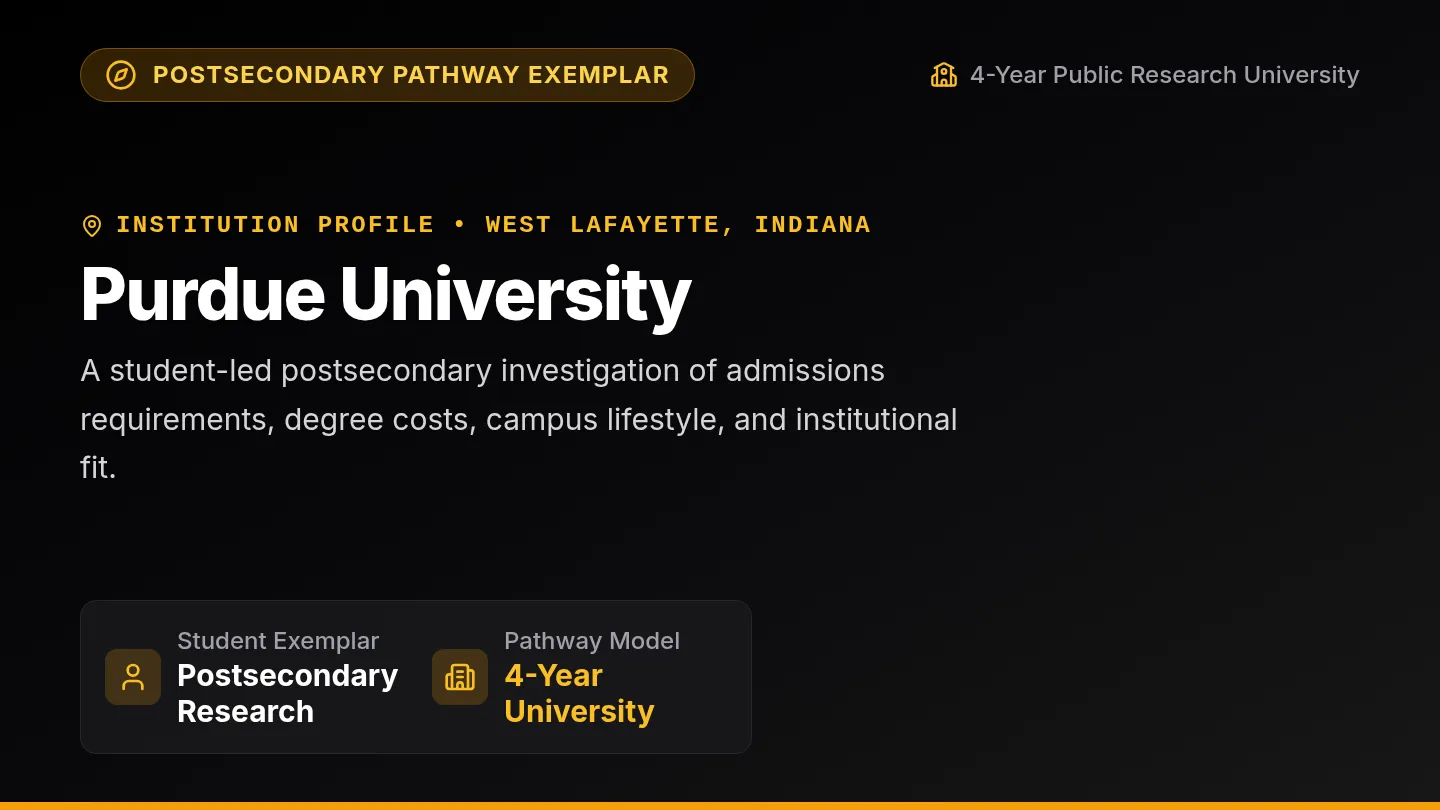
A comprehensive comparative postsecondary exploration sequence guiding high school students through admissions criteria, degree timelines, affordability, campus culture, and career outcomes across flagship and regional public universities.
Students explore diverse post-secondary options, comparing vocational training, military service, apprenticeships, and college degrees through the lens of 'Return on Investment' (ROI). The sequence guides students from understanding basic credentials to mapping out a strategic backwards plan for their chosen career path.
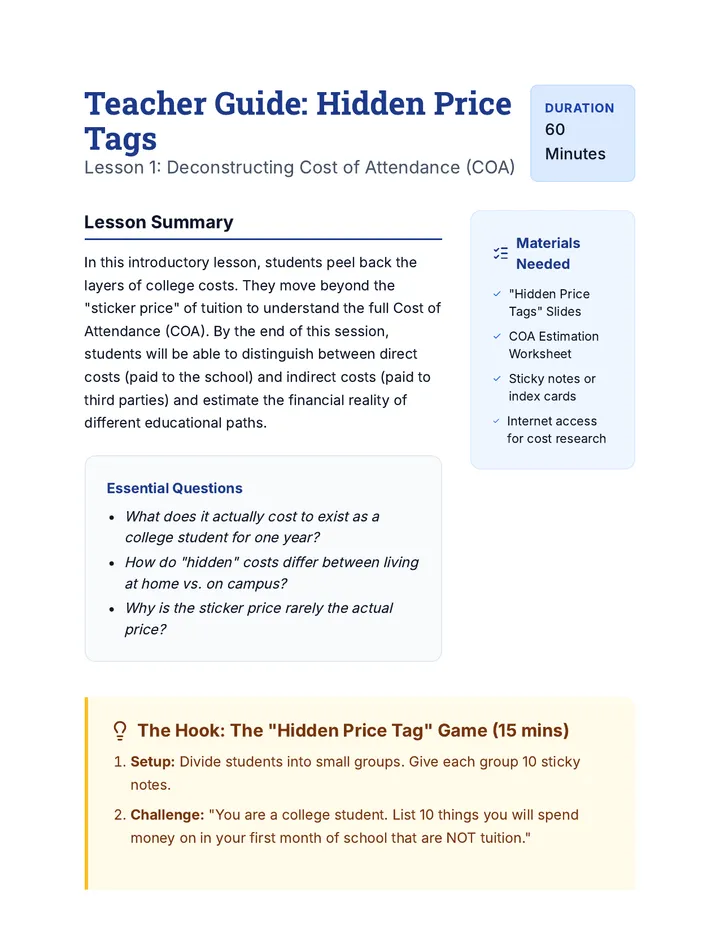
A project-based sequence for 10th-grade students to master the complexities of college funding. Students will learn to deconstruct costs, prioritize non-repayable aid, interpret confusing financial aid letters, and design a sustainable borrowing strategy to minimize long-term debt.
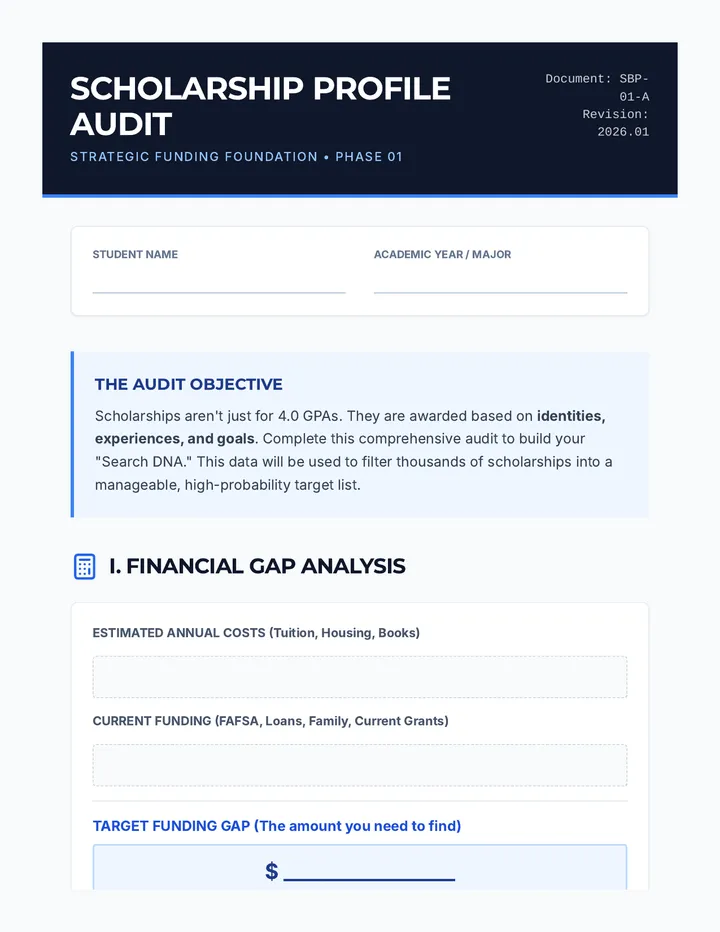
A comprehensive guide for undergraduate students to systematically search for, evaluate, and manage scholarship applications. The sequence covers self-auditing, database navigation, ROI analysis, project management, and donor mission alignment.
This sequence introduces 6th-grade students to the variety of post-secondary pathways available after high school. It covers universities, community colleges, trade schools, apprenticeships, and military service, emphasizing that different careers require different training routes and focusing on financial awareness and goal setting.
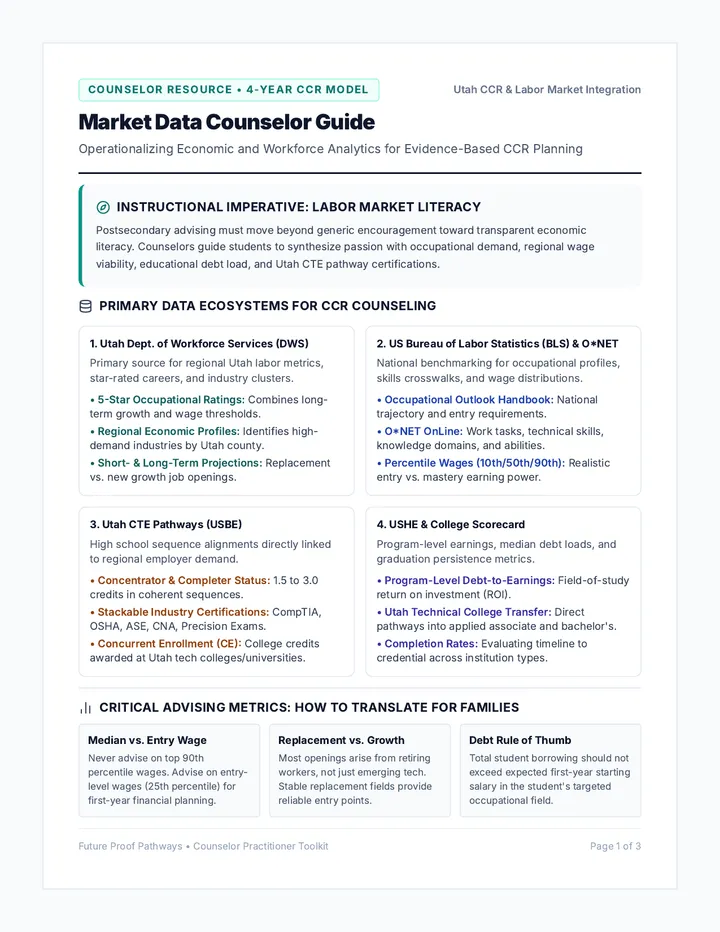
A data-driven four-year college and career readiness advising curriculum utilizing US Bureau of Labor Statistics, Utah Department of Workforce Services, and CTE pathways data. Students and counselors analyze labor market demand, postsecondary training return on investment, and construct personalized graduation-to-career trajectories with family engagement.
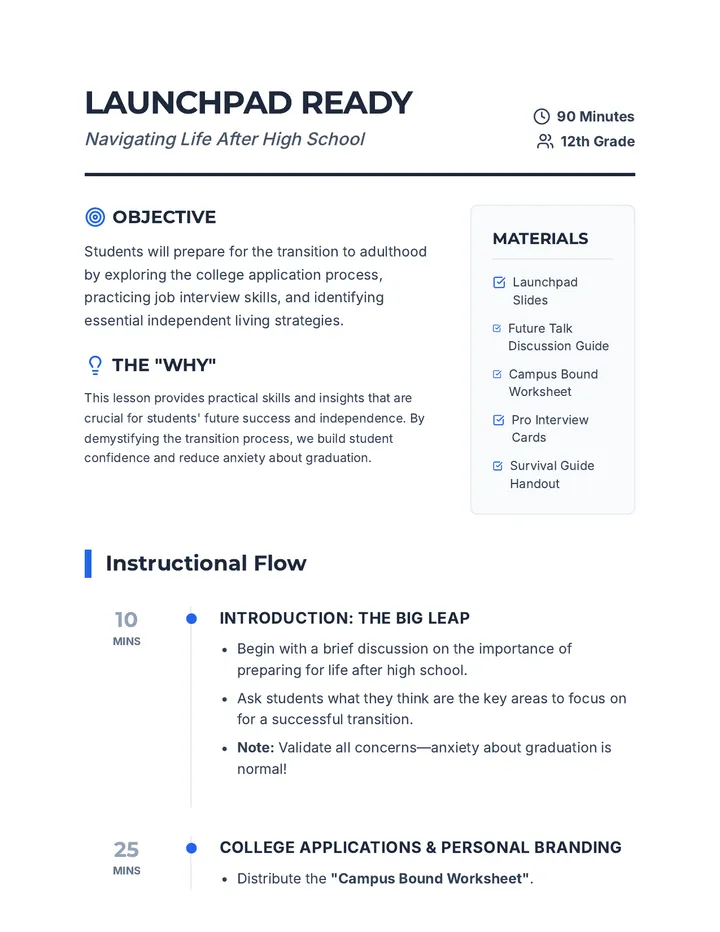
This lesson helps 12th-grade students prepare for the transition to adulthood by exploring college applications, job interviews, and independent living skills. It aims to equip students with the knowledge and confidence to succeed after graduation.
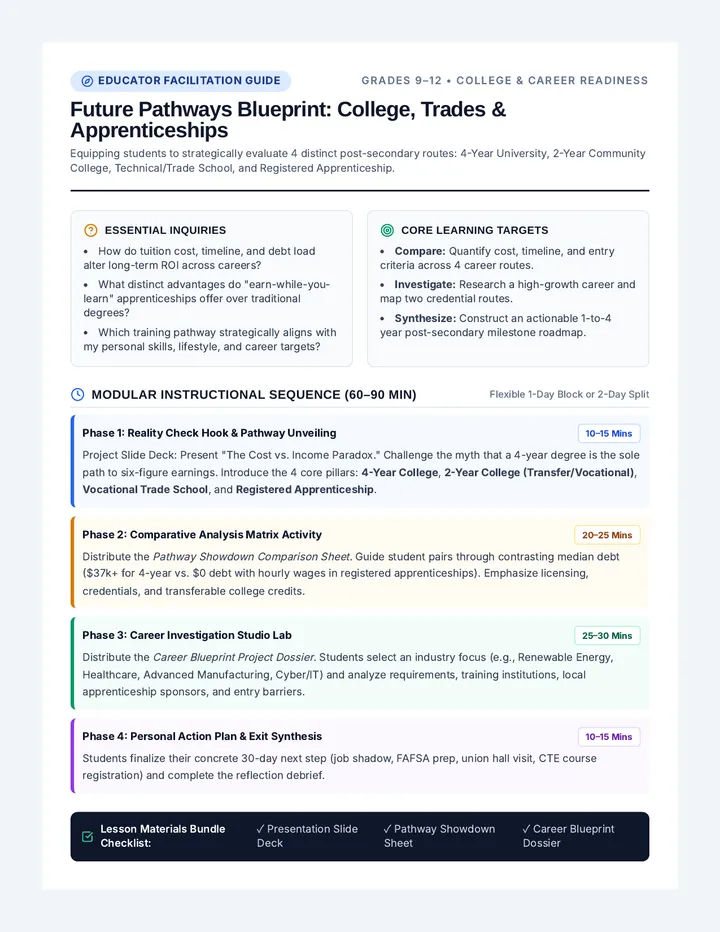
A comprehensive career exploration bundle guiding students through post-secondary options including 4-year universities, community colleges, vocational trade schools, and registered apprenticeships. Students analyze costs, timelines, and career outcomes before drafting an individualized career research dossier and actionable launch plan.
A career readiness and financial literacy mini-unit guiding students to research entry-level employment, housing markets, and living costs in an unfamiliar US city. Students evaluate economic feasibility, calculate take-home budgets, and present a practical relocation plan.
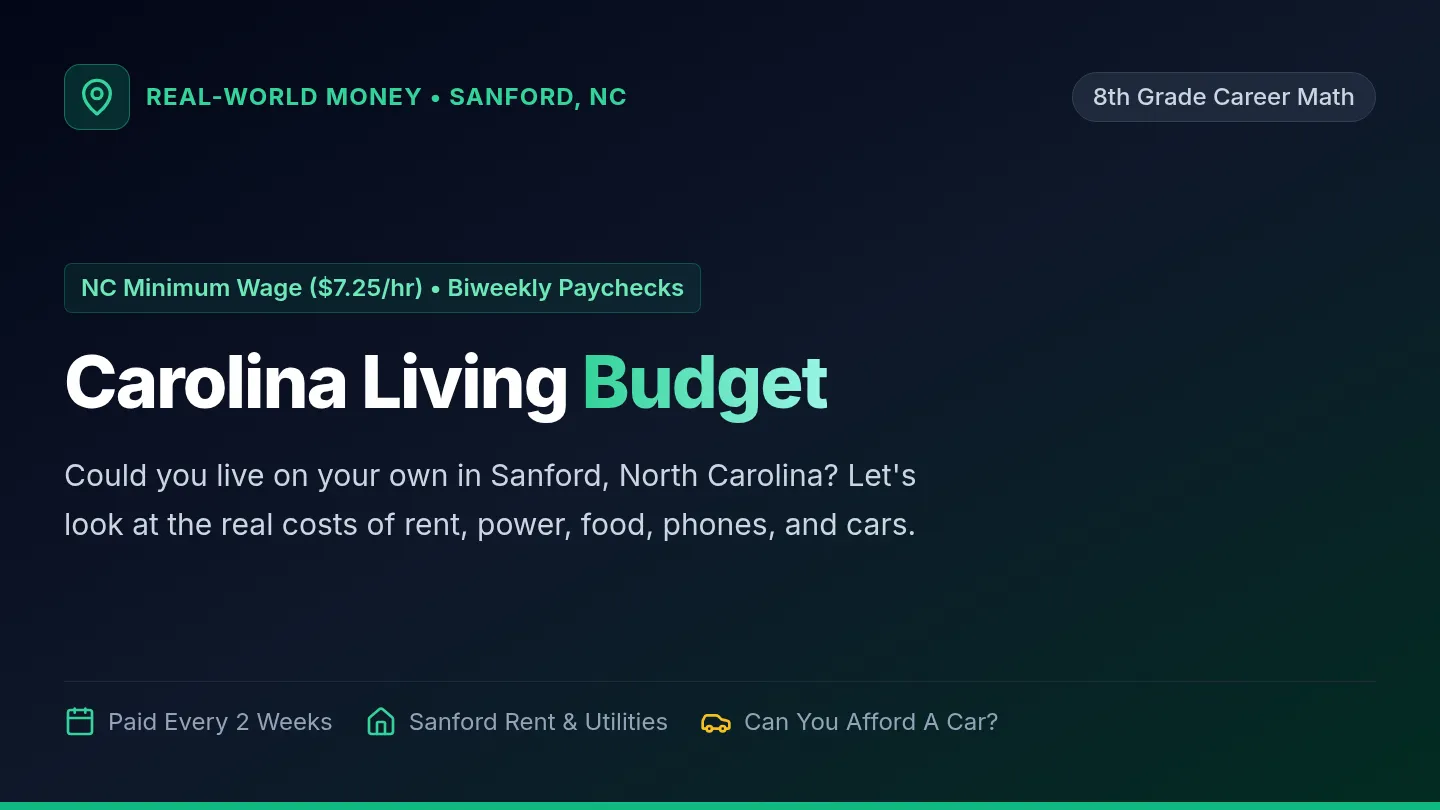
A realistic budgeting project for 8th-grade special education students based on North Carolina minimum wage ($7.25/hr) paid biweekly. Students analyze housing, utility, and phone options in Sanford, NC, balance a set grocery budget, and evaluate teen wants like cars and gaming.
A hands-on, interactive lesson guiding middle school students to explore the core differences between college and trade school pathways. Through a self-guided station rotation, students analyze learning styles, costs, program durations, and career matches to chart their own potential futures.