Identification of scholarship databases, application management, and essay writing techniques. Equips students with tools to secure funding through organized tracking and persuasive personal narratives.
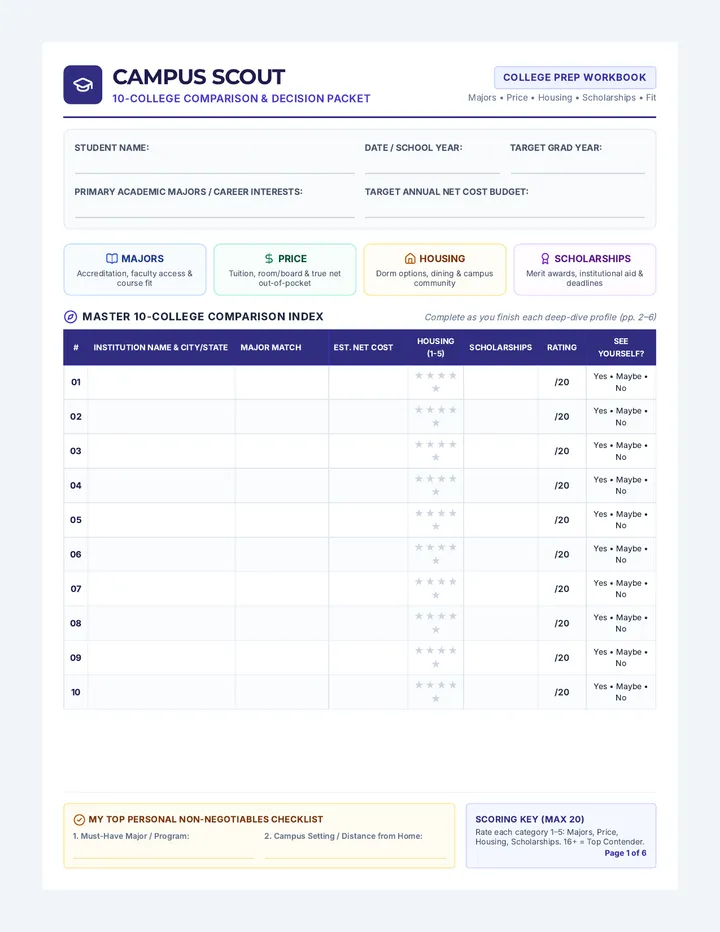
A comprehensive 6-page printable student workbook for evaluating and comparing 10 colleges across majors, price, housing, scholarships, rating scales, and personal fit. Features a master index leaderboard, spacious two-college deep-dive evaluation spreads, and a final decision showdown podium.
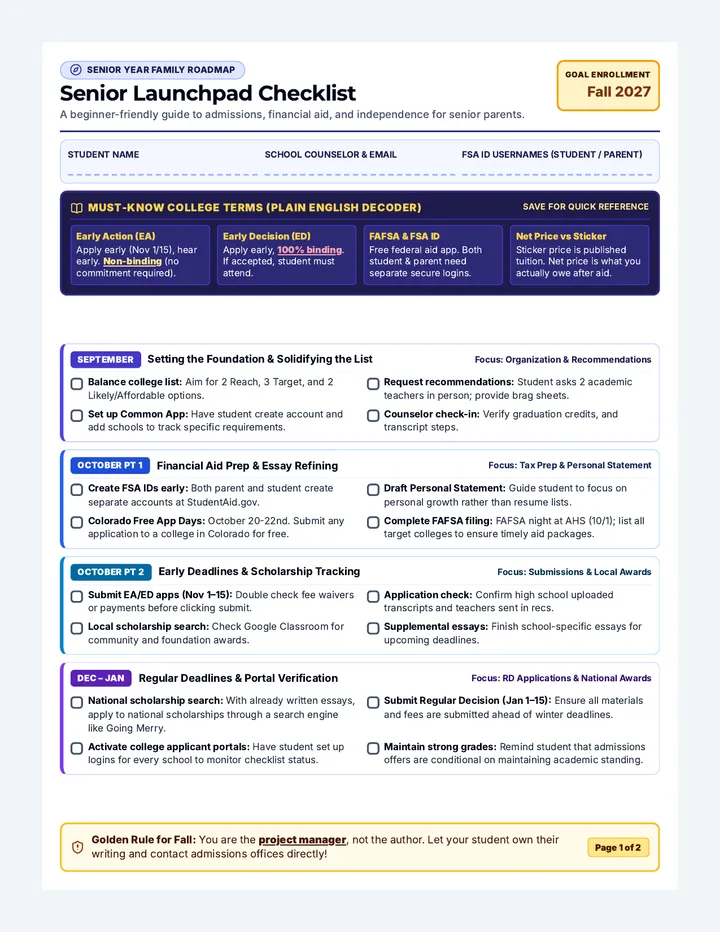
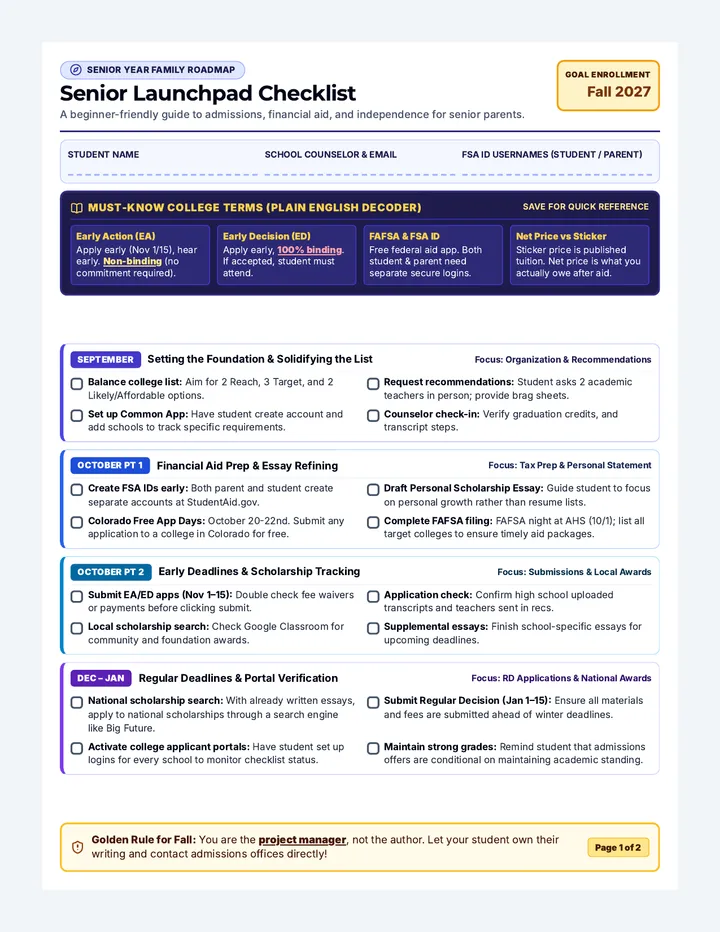
A full-color, high-contrast, printable month-by-month checklist and roadmap for parents navigating college admissions, financial aid, enrollment, and student independence.
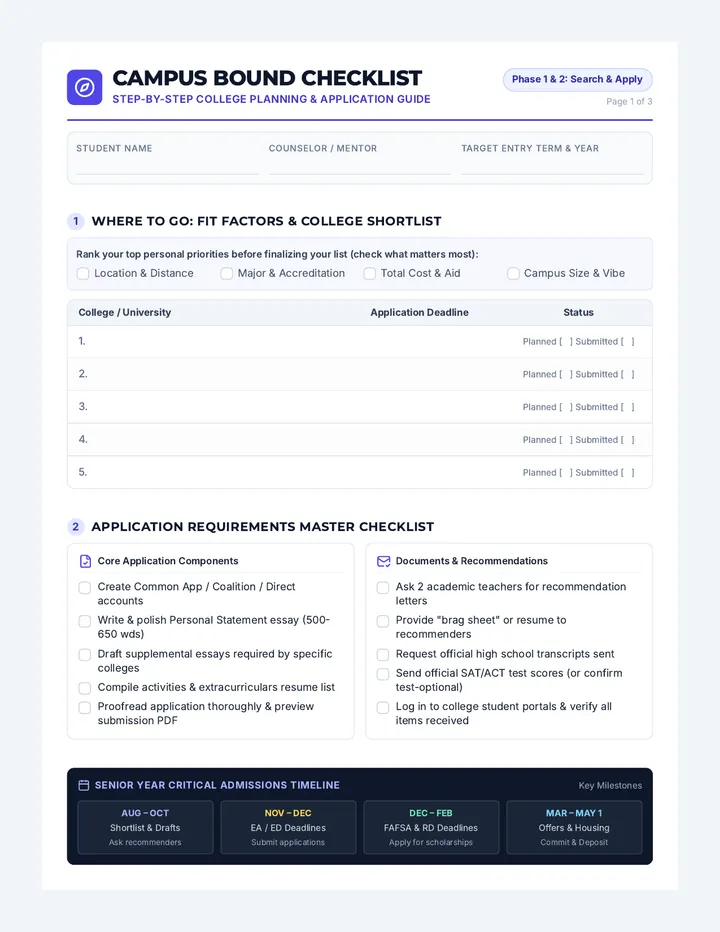
A comprehensive, printable three-page student checklist and planning guide covering college research, application tracking, FAFSA and financial aid, scholarship management, campus tours, housing selection, and final enrollment decisions.
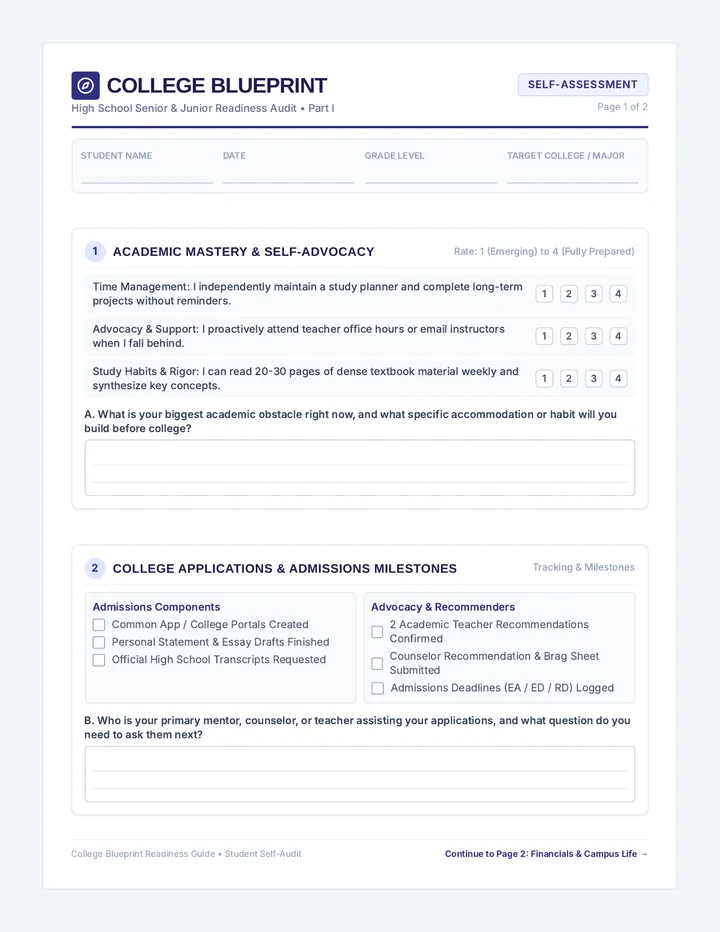
A comprehensive two-page printable readiness worksheet guiding high school students through academic self-advocacy, college applications, financial planning, and campus independence.
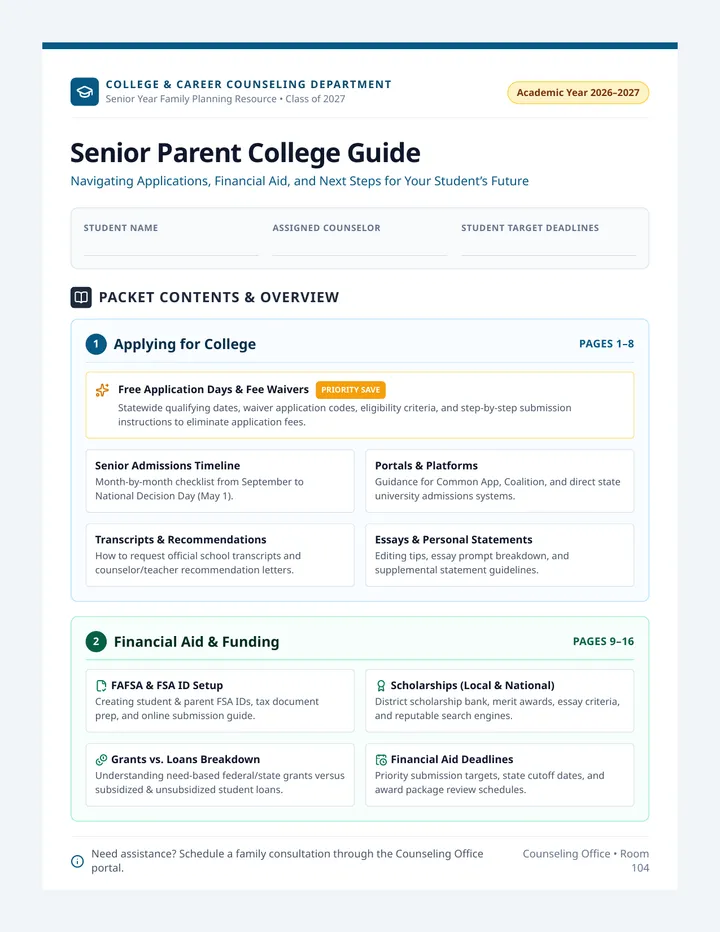
A polished, print-ready cover sheet and table of contents for senior parents, featuring structured guidance on college applications (including free application days) and financial aid.
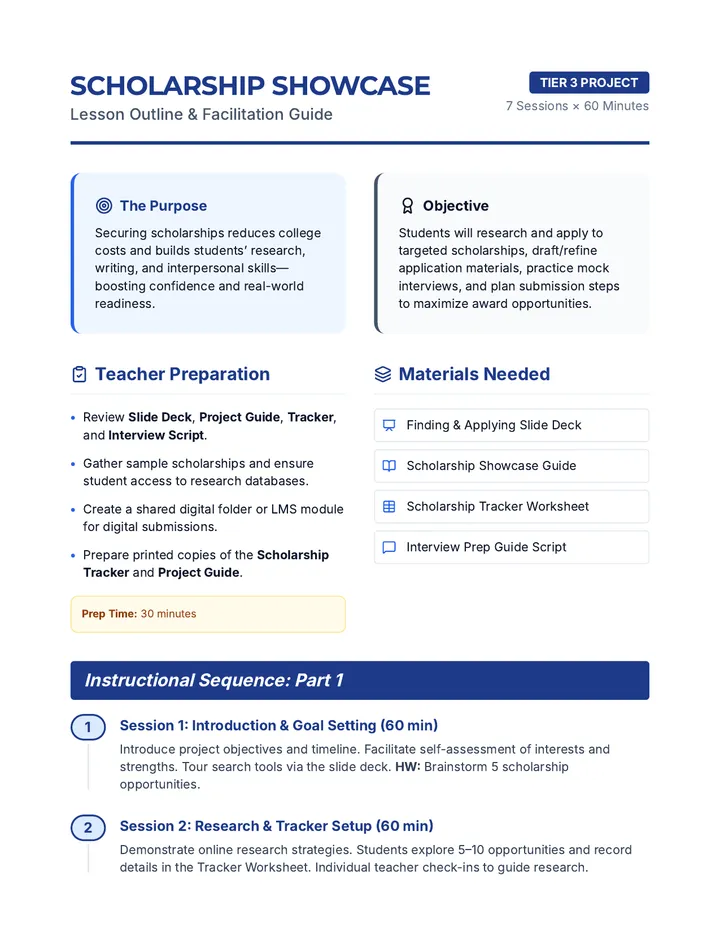
A college and career readiness sequence focused on securing financial aid through scholarship research, application drafting, and interview preparation.
A project-based sequence for 10th-grade students to master the complexities of college funding. Students will learn to deconstruct costs, prioritize non-repayable aid, interpret confusing financial aid letters, and design a sustainable borrowing strategy to minimize long-term debt.
A comprehensive 5-lesson unit for 12th-grade students to master the art of writing persuasive, tailored cover letters. Students learn to decode job descriptions, craft compelling narratives, and apply professional business formatting.
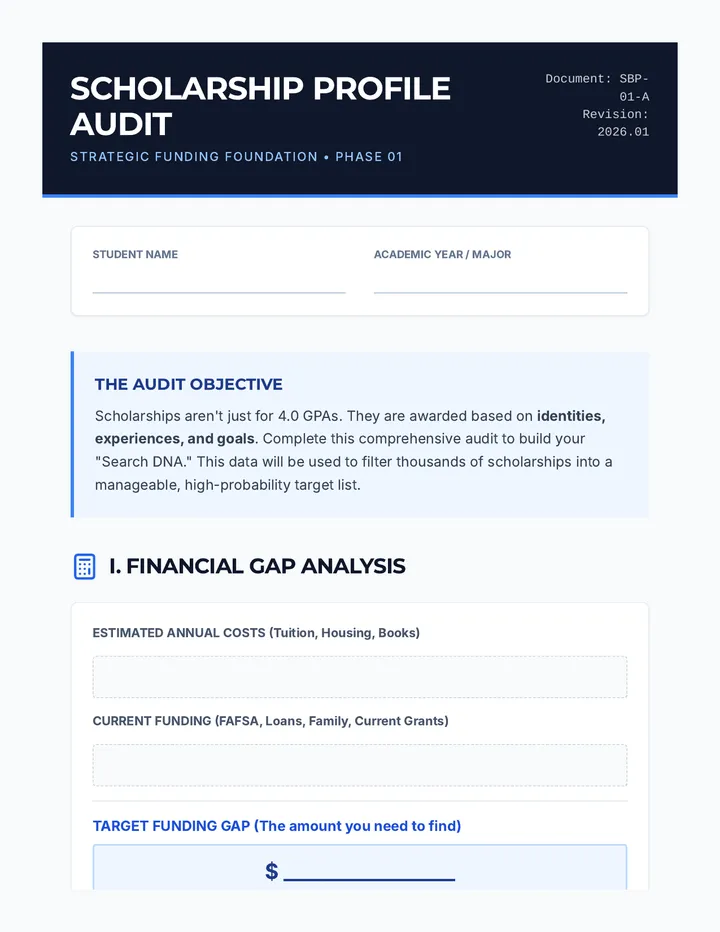
A comprehensive guide for undergraduate students to systematically search for, evaluate, and manage scholarship applications. The sequence covers self-auditing, database navigation, ROI analysis, project management, and donor mission alignment.
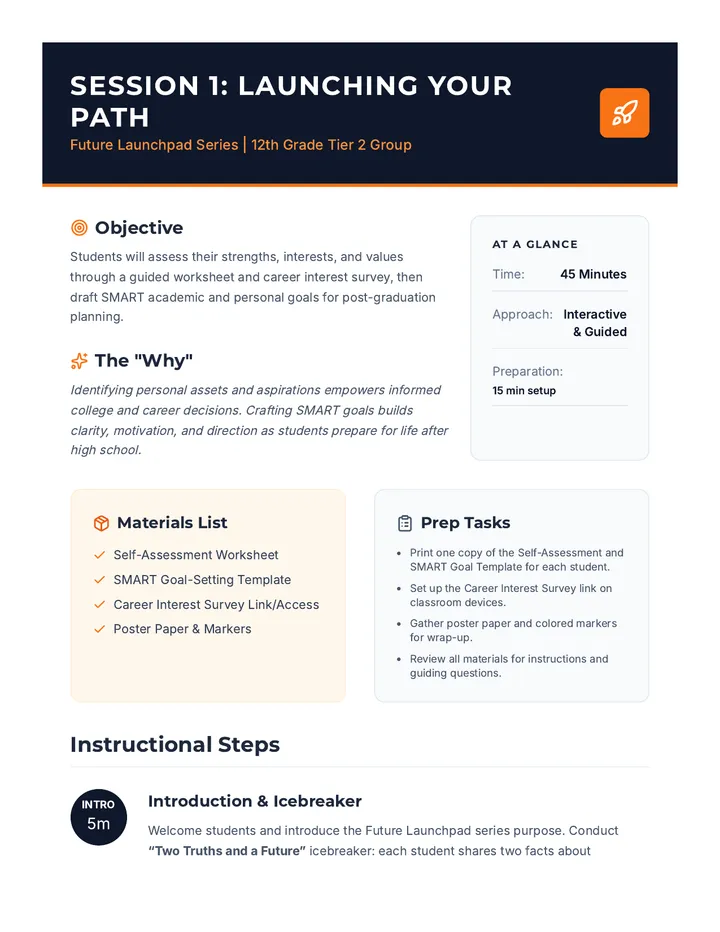
A 6-session Tier 2 group series for 12th-grade students to explore college and career pathways, develop application skills, and create a personalized post-graduation plan.
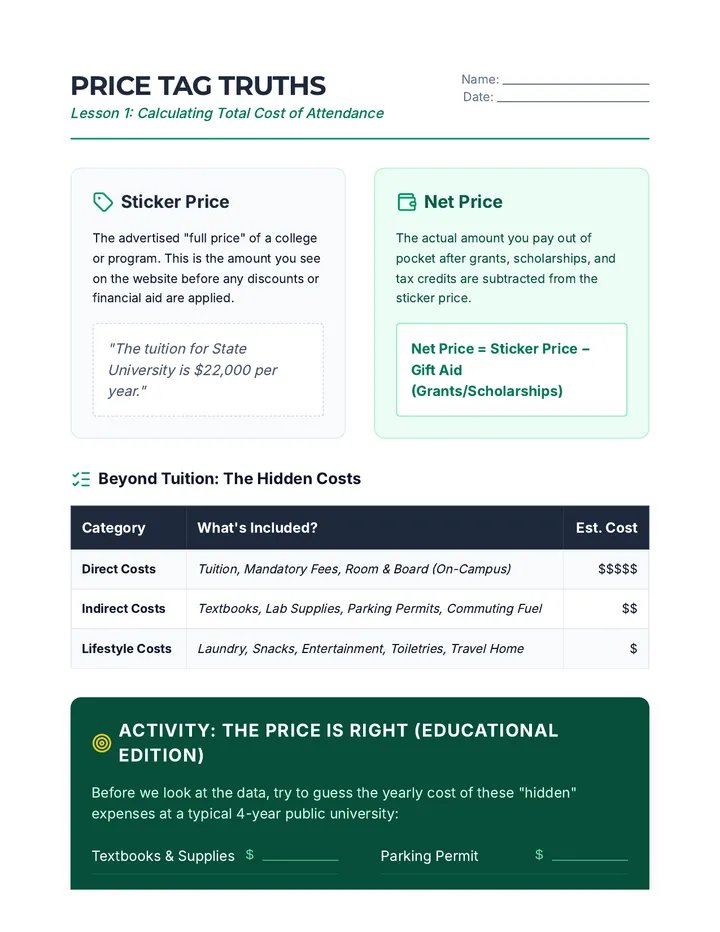
Students analyze the financial viability of post-secondary education by calculating total costs, exploring financial aid, and projecting return on investment based on career earnings. The sequence culminates in a strategic financial plan for a chosen educational path.
This lesson guides 12th-grade students in critically assessing their digital footprint and understanding the importance of online authenticity. Students will learn to curate an online image that aligns with their future academic and professional aspirations through discussions and reflection activities.
This lesson helps 12th graders develop coping strategies, reframe setbacks as learning opportunities, and build emotional resilience when facing rejection from colleges, scholarships, or other opportunities. It utilizes personal reflection and group discussion to help students navigate the transition to post-secondary life.
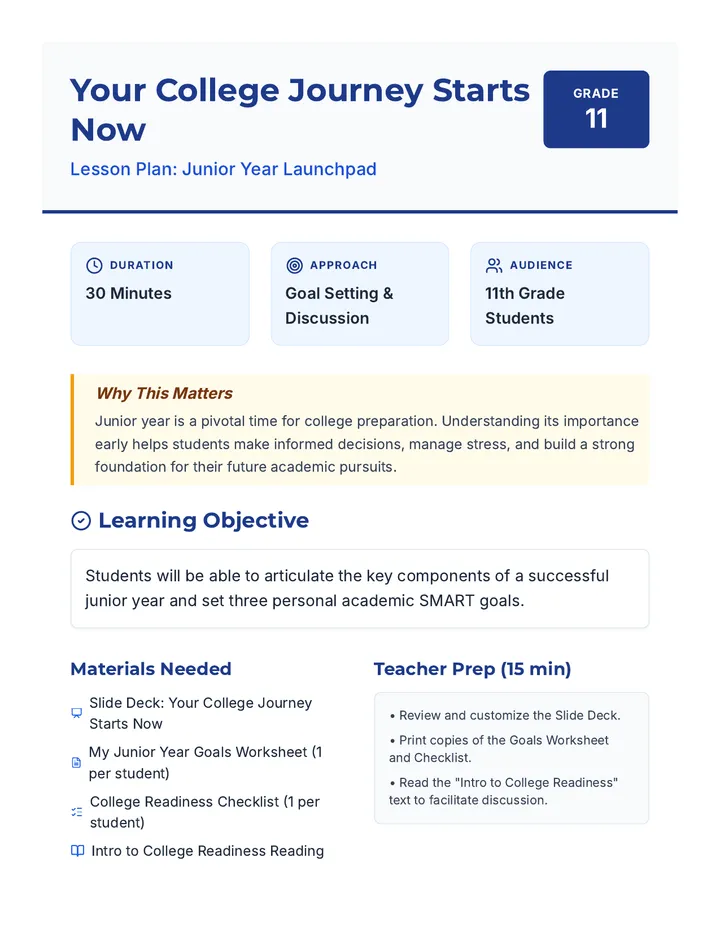
This single-session lesson helps 11th-grade students understand the critical importance of their junior year in college preparation. Students will explore key components of college readiness, understand application timelines, and set personal academic SMART goals.
A 30-minute lesson for 9th-grade students on creating an academic brag sheet to track achievements, extracurriculars, and skills for future applications and self-reflection.
A comprehensive 40-minute small-group lesson for high school juniors and seniors to navigate the post-secondary enrollment process, covering research, applications, and financial aid.
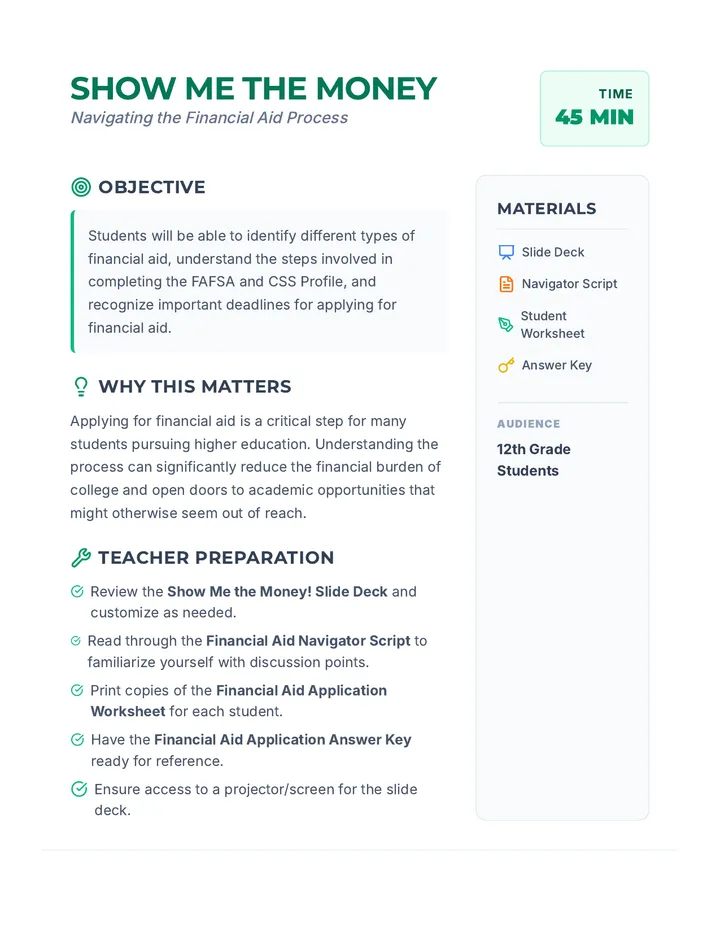
This interactive lesson guides 12th-grade students through the complexities of the financial aid process, covering grants, scholarships, loans, and work-study, while providing practical steps for completing the FAFSA and CSS Profile.