Identification of the five stages of grief—denial, anger, bargaining, depression, and acceptance—within the Kübler-Ross model. Examines individual variations in the mourning process and provides strategies for healthy emotional processing.
A six-session Tier 2 support group for 8th-grade students processing grief and loss. The sequence focuses on creating a safe space for emotional expression, understanding the grieving process, developing healthy coping mechanisms, and building long-term support networks.
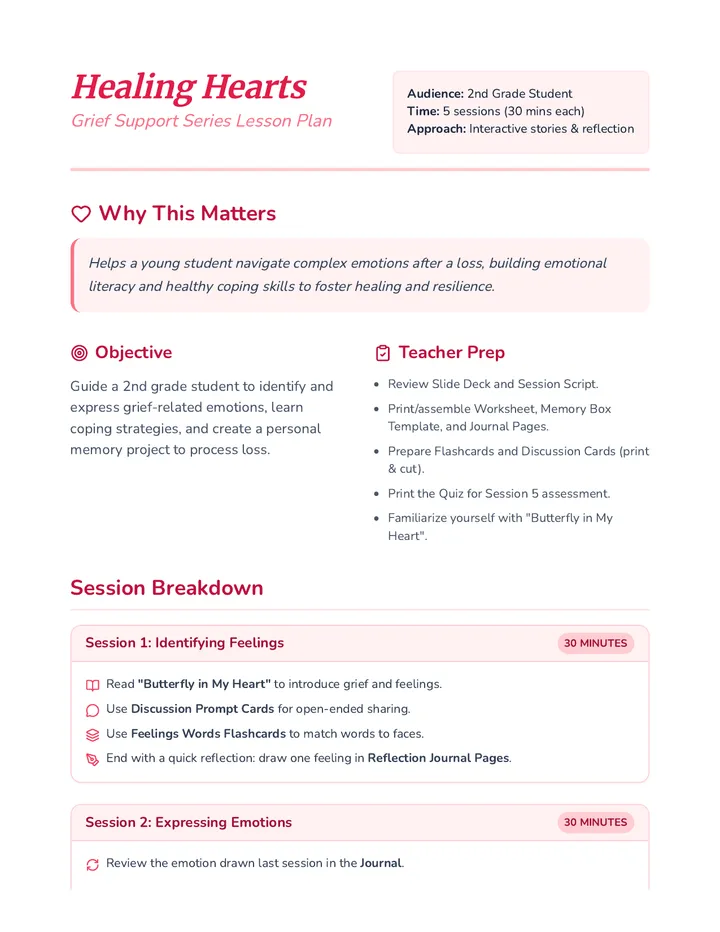
A comprehensive 11-session social-emotional support sequence for 2nd graders, comprising two distinct units: 'Healing Hearts' (5 sessions on grief and loss) and 'Space Savvy' (6 sessions on personal space and boundaries).
A 6-session Tier 2 small group counseling program for high schoolers to navigate the complexities of grief through understanding stages, challenging norms, and building a self-compassion toolkit.
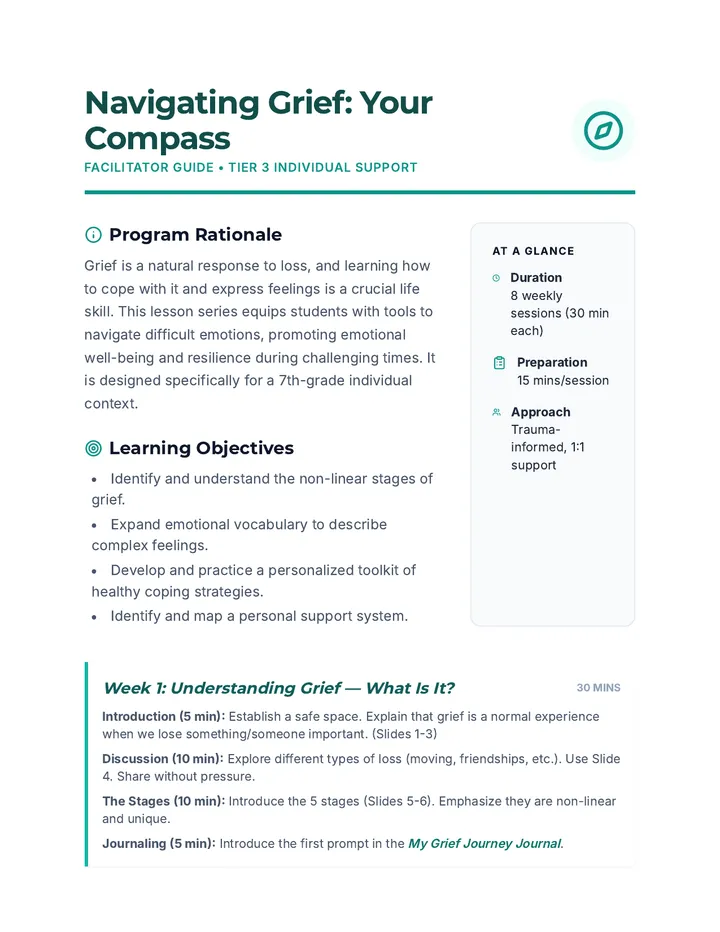
An 8-week Tier 3 individual intervention designed for a 7th-grade student to process grief, identify emotions, and build a toolkit of healthy coping strategies. The sequence uses a 'compass' metaphor to help the student navigate the complex landscape of loss and healing.
A four-session small-group series helping elementary students understand grief, develop coping strategies, and build hope, plus a Tier 3 individual routine for morning transitions.
A six-session series for middle schoolers to build self-confidence through videos, discussions, activities, and reflection worksheets.
This sequence introduces 9th-grade students to the biological underpinnings of the stress response system. Students explore the roles of the amygdala, hippocampus, and prefrontal cortex, the four primary trauma responses (Fight, Flight, Freeze, Fawn), and the difference between acute and chronic stress.
A comprehensive graduate-level sequence focused on the neurobiological and clinical foundations of trauma narrative work, moving from theory to practical assessment and preparation techniques.
This graduate-level sequence focuses on the ethical and practical frameworks required to maintain psychological safety in group counseling. Students progress from initial contracting to managing complex dynamics like over-disclosure, trauma-informed gatekeeping, and conflict resolution, concluding with professional closure protocols.
An advanced clinical sequence focused on adapting narrative trauma interventions for complex populations, including refugees with multiple traumas, dissociative clients, youth, and diverse cultural contexts. It culminates in a focus on clinician self-care and vicarious resilience.
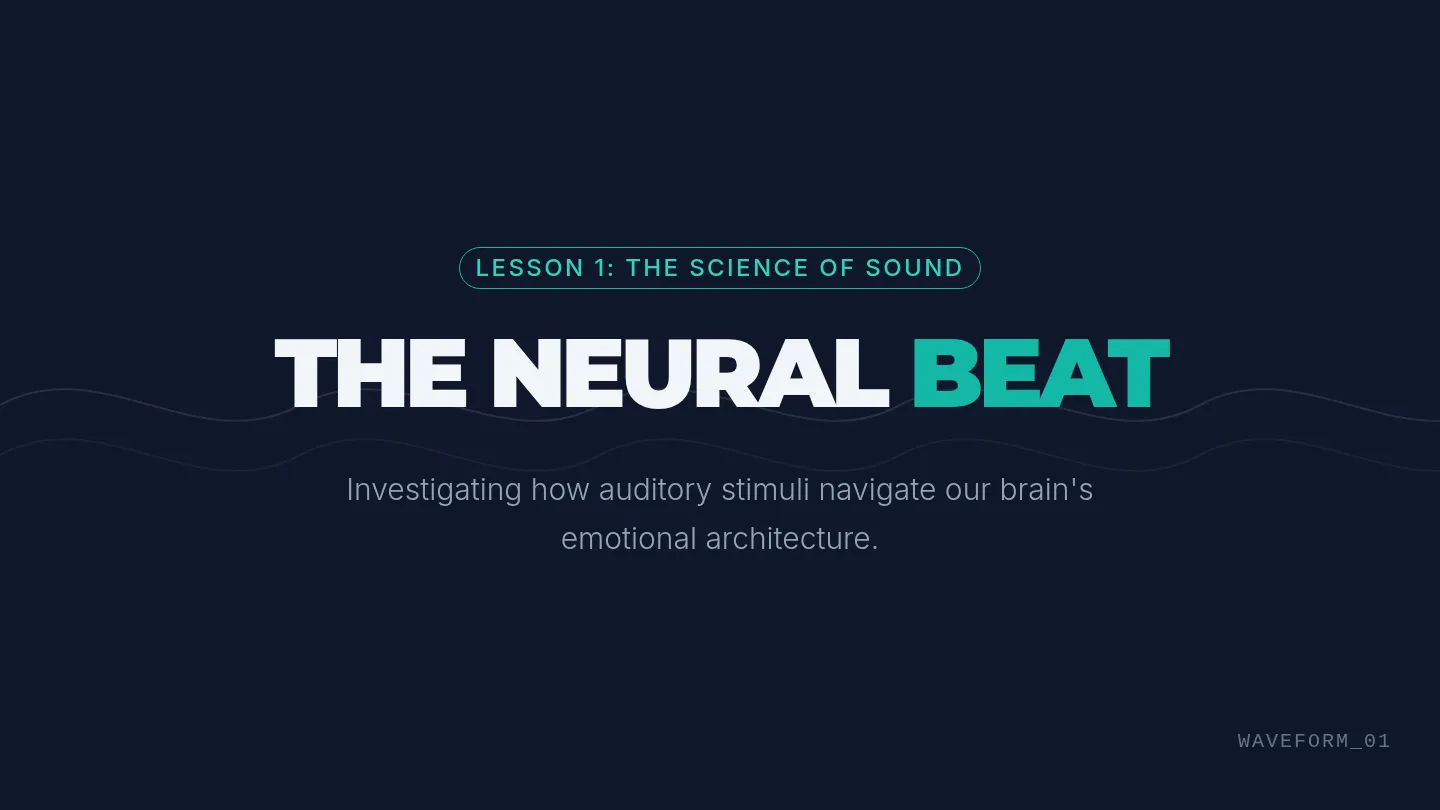
This sequence explores the physiological and psychological connection between sound and emotion, specifically focusing on how music can be used to regulate grief and loss through the Iso-Principle. Students analyze brain responses, lyric themes, and tempo to curate personal playlists that support emotional transitions.
A 5-lesson sequence for 8th-grade students focusing on narrative therapy techniques to process loss. Students explore freewriting, blackout poetry, unsent letters, and perspective-shifting to build emotional resilience and self-expression.
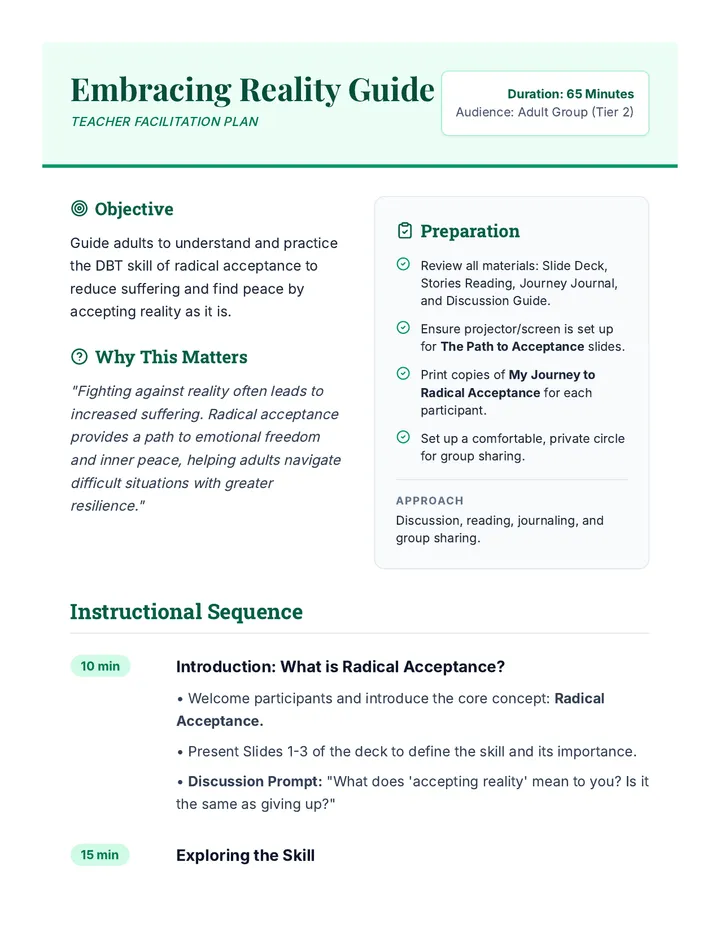
A 65-minute DBT-based lesson for adults focusing on the skill of Radical Acceptance to reduce suffering and find emotional freedom. Participants will explore the difference between pain and suffering, distinguish willingness from willfulness, and apply acceptance to personal life situations.
A 30-minute Tier 3 individual session for 4th graders to navigate grief through emotional identification, journaling, and coping strategy development. This lesson provides a safe, structured environment for students to build resilience and create a personalized support plan.
A compassionate lesson for high school students to understand the non-linear stages of grief and develop healthy coping mechanisms for navigating loss.
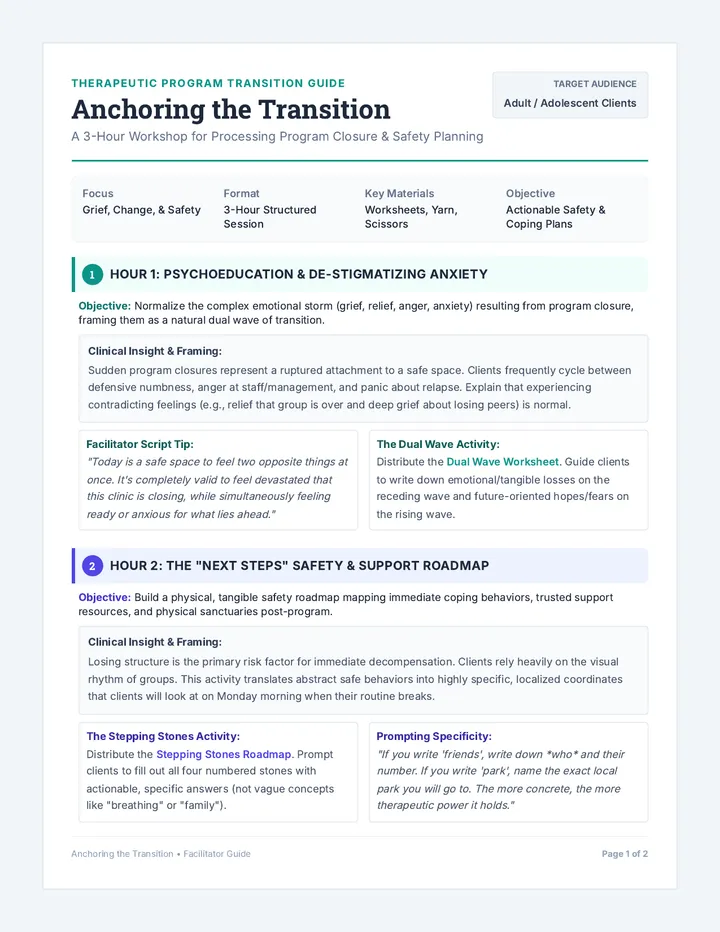
A therapeutic workshop lesson plan designed to support clients through a program closure by normalizing transition emotions, mapping safety plans, and building peer support.
A gentle 15-minute individual session designed to help elementary students navigate the complex emotions of grief, explore healthy coping mechanisms, and find meaningful ways to remember their loved ones.
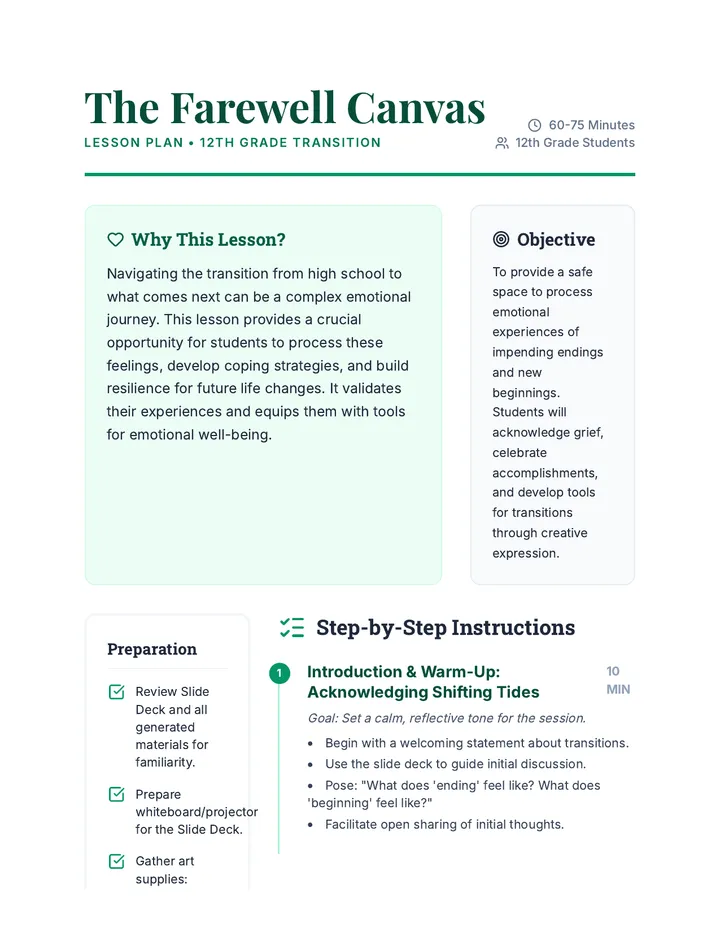
A 60-75 minute social-emotional learning lesson for 12th graders to process the transition from high school to their next chapters through creative art and reflection.
A Tier 3 transition lesson for 2nd graders moving to a new sub-separate classroom, focusing on emotional processing, celebrating past successes, and building hope for future beginnings.
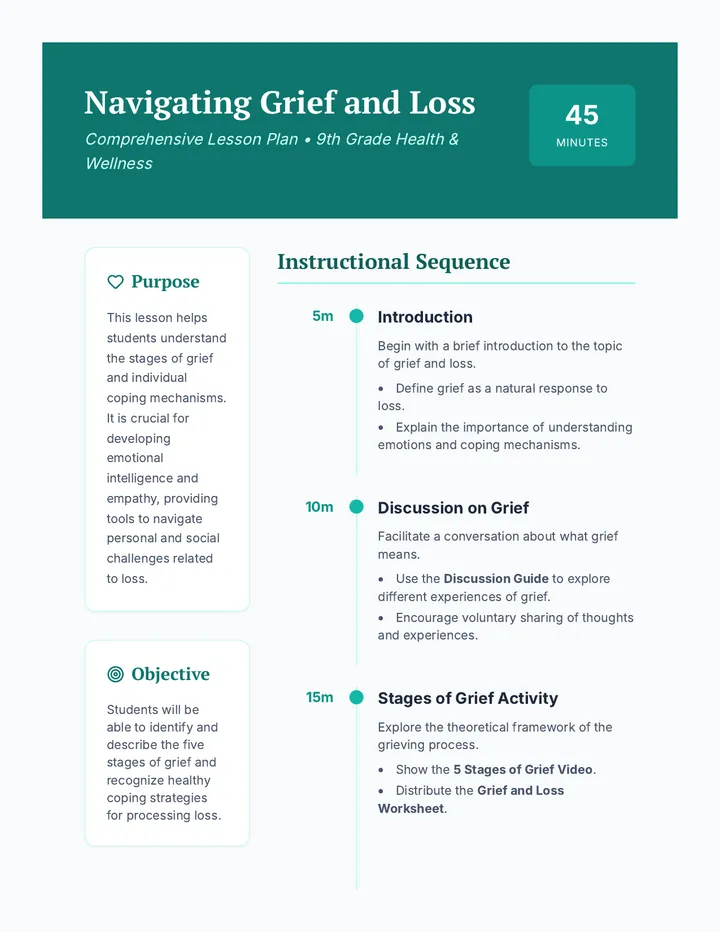
This lesson introduces 9th grade students to the concept of grief and loss, focusing on understanding the stages of grief and how individuals cope differently. Through discussions and activities, students will learn to identify and express their emotions in a healthy manner.
A foundational lesson designed to help students define grief, identify its various causes, and recognize the diverse emotional, physical, and cognitive reactions it can trigger. This lesson builds empathy and emotional literacy through reading and guided discussion.
This lesson introduces the concept of loss, encompassing not just death but also other life changes, and how these experiences shape us. It is vital for fostering understanding and compassion within the classroom environment. This lesson is designed for a 5th-grade class and will take approximately 40 minutes.
A gentle and inclusive lesson for Grade 3 students to explore diverse family structures and understand how families can change over time, including through divorce. Students will engage with a story and guided discussion to build empathy and resilience.
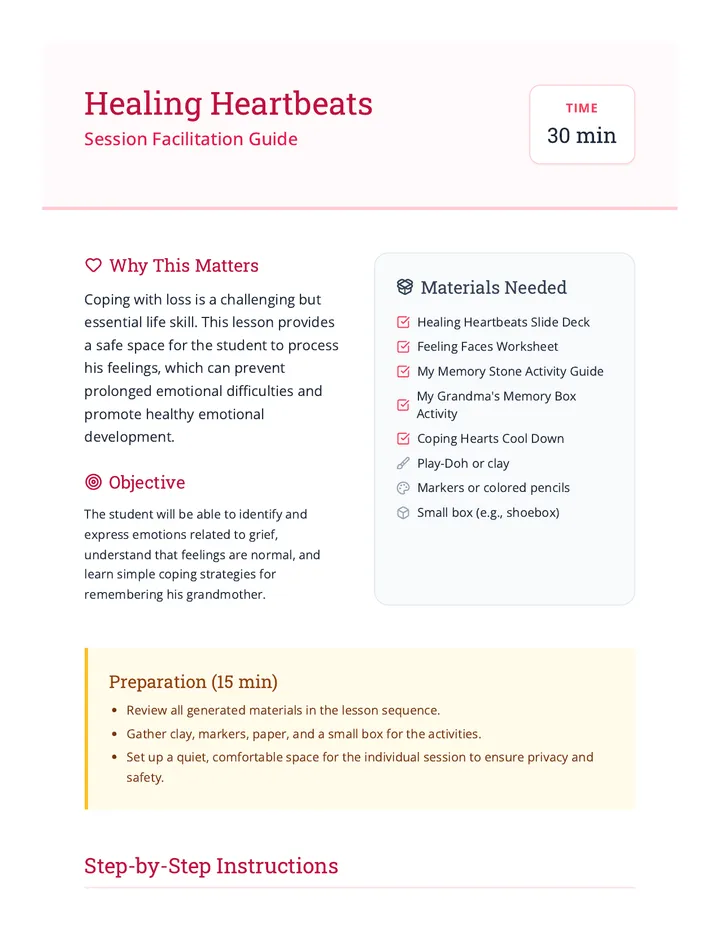
A 30-minute Tier 3 individual counseling session for a second-grade student coping with the loss of a grandmother, focusing on emotional expression and memory-keeping.