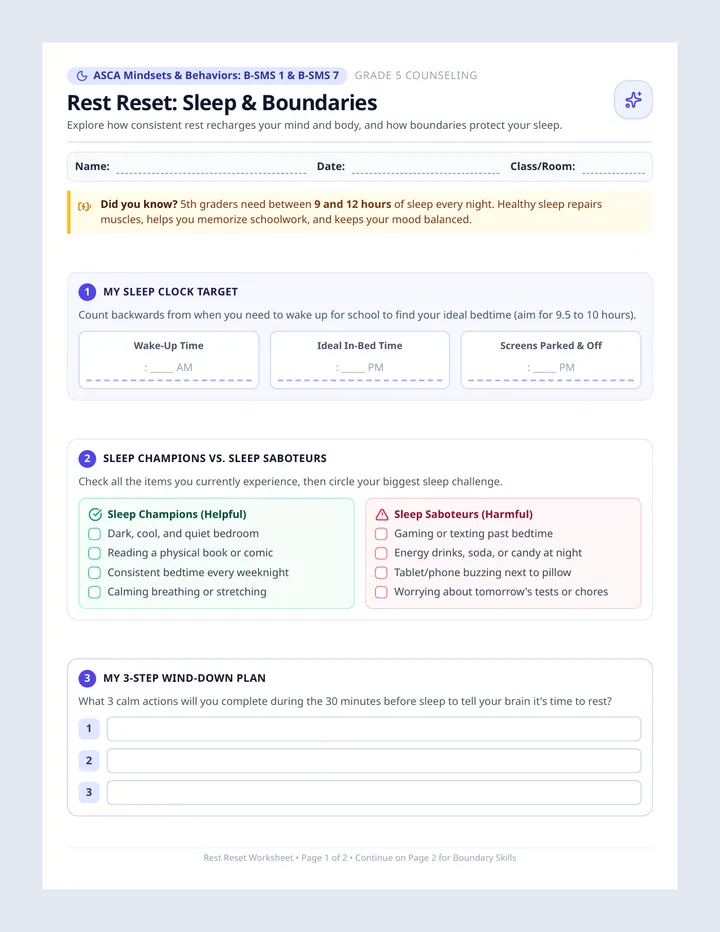
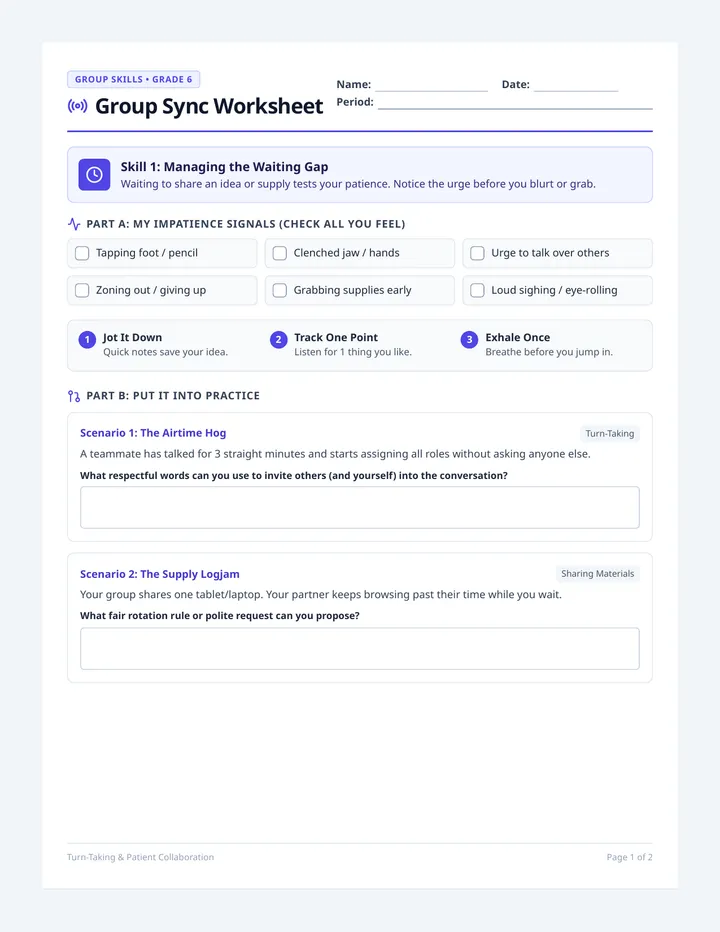
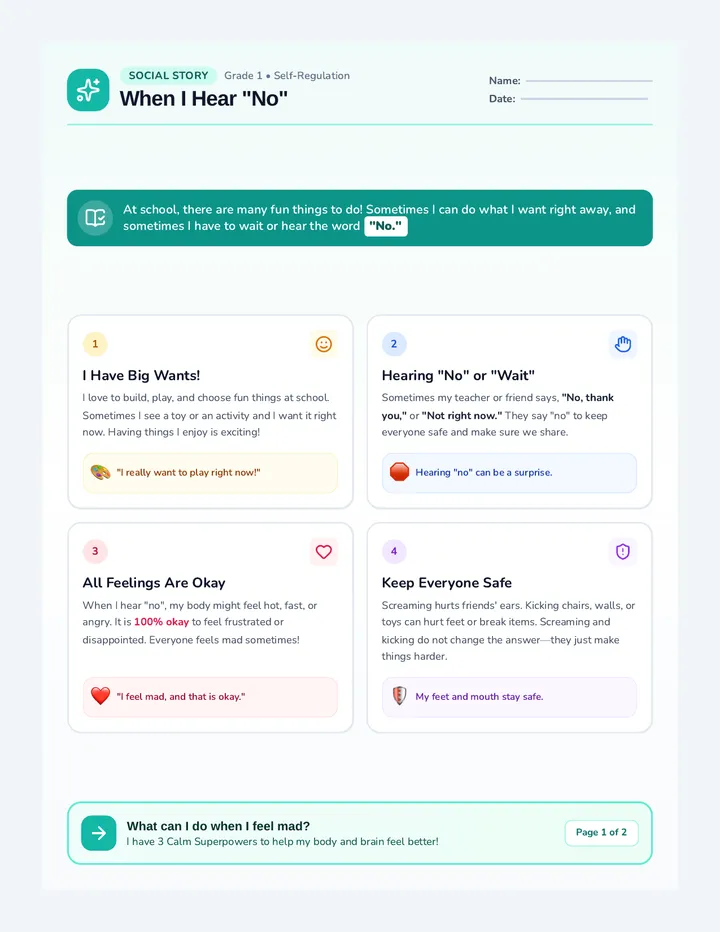
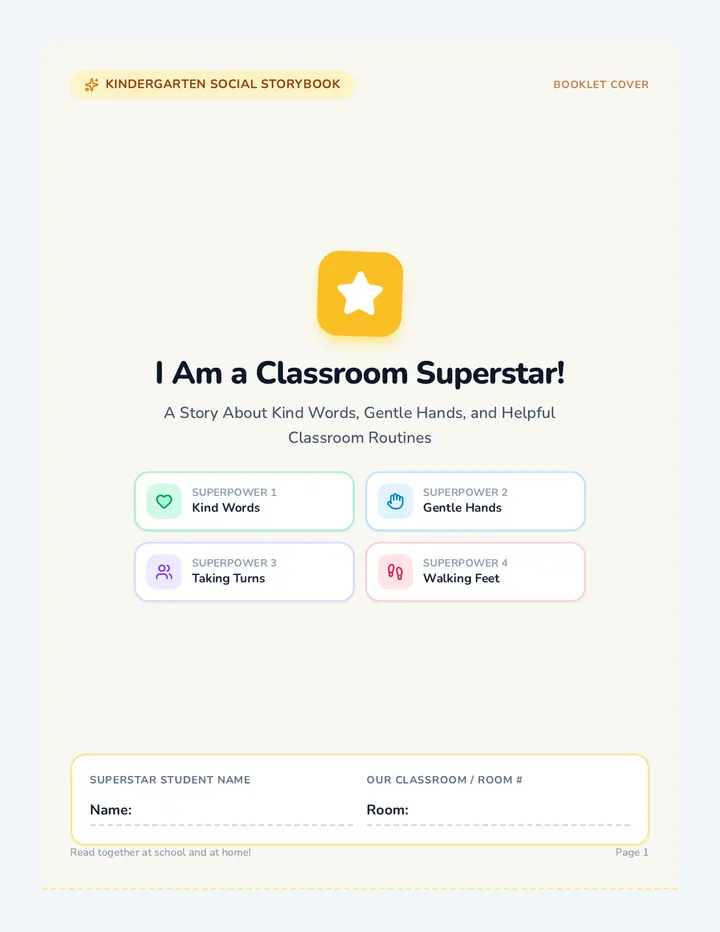
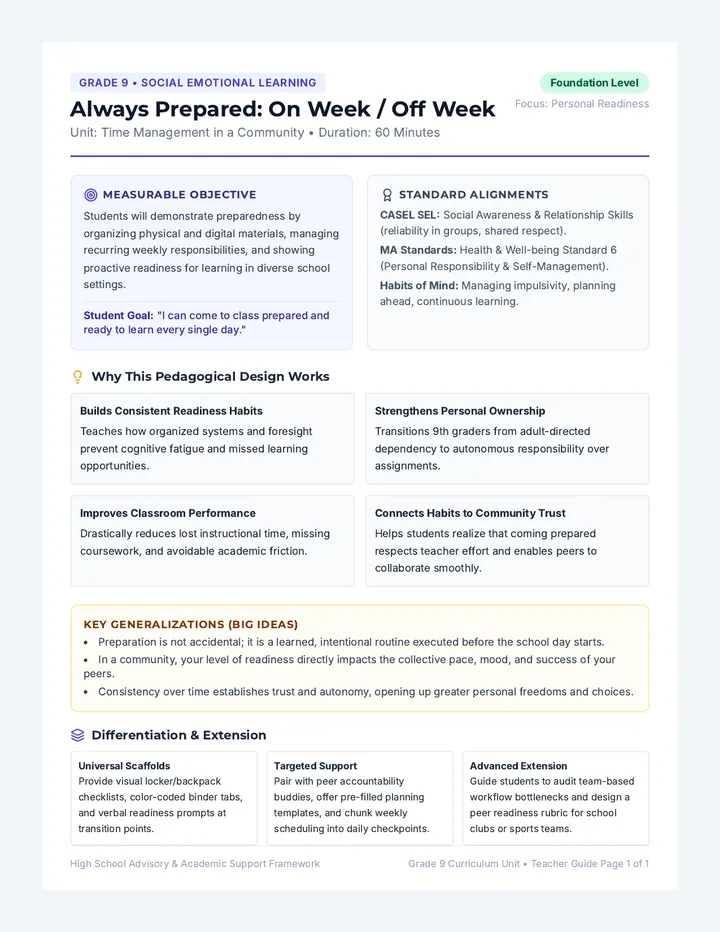
Impulse control strategies and techniques for prioritizing long-term rewards over immediate satisfaction. Strengthens self-regulation through goal-setting exercises and patience-building activities.
A comprehensive teacher guide for the Joy Architect sequence, outlining the instructional arc, key concepts for each lesson, and the core skills developed.
Student reflection sheet for the final lesson. Features 'resilience scenarios' for practicing flexible thinking and a final reflection on the unit's key takeaways.
Final slide deck for Lesson 5. Focuses on resilience, 'flexible thinking' when routines are disrupted, and celebrates students' progress as 'Joy Architects'.
A 7-day progress tracker for students to monitor their consistency with a chosen joy habit. Includes goal setting and reflection sections.
Slide deck for Lesson 4 on creating a progress tracker. Explains the concept of 'streaks' and the importance of self-monitoring and honesty in habit formation.
Student worksheet for designing an afternoon schedule. Uses the 'Grandma's Rule' concept to sequence chores before rewarding joy activities.
Slide deck for Lesson 3 on designing a balanced schedule. Introduces 'Grandma's Rule' (sequencing chores before rewards) and using joy as a motivation anchor.
A set of cut-out cards for students to brainstorm and record 'micro-moments' of joy they can easily integrate into their day.
Slide deck for Lesson 2 focusing on micro-moments of joy. Introduces the concept that frequency of positive experiences is key to resilience.
Small printable cards with breathing exercises, grounding techniques, and positive visualization prompts for students to use during practice.
Student worksheet for auditing their daily routine. Includes a timeline for mapping tasks and reflection questions to identify 'joy gaps'.
A post-simulation reflection worksheet for students to analyze their accuracy, fatigue levels, and strategic adjustments.
Students reflect on their routine changes and practice 'flexible thinking' for when plans go awry, building resilience and adaptability.
Students create personal trackers to monitor their consistency in engaging with positive habits, learning the power of 'streaks' and self-monitoring.
Students design a balanced afternoon routine using 'Grandma's Rule' to sequence chores and rewards, creating a sustainable and motivating schedule.
Students explore the concept of 'micro-moments' of joy and learn that frequency of positive experiences is more important than intensity for building long-term happiness.
Students audit their current daily schedules to distinguish between 'must-do' tasks and 'choose-to-do' activities, identifying gaps where positive experiences can be added.
A full-length practice simulation designed to build cognitive endurance and practice micro-break techniques.
Teaches statistical and logical strategies for educated guessing when an answer is not immediately clear.
Explores techniques for maintaining focus and reducing anxiety during high-pressure assessments.
Focuses on the 'triage' method to prioritize questions and manage time effectively during an exam.
Students determine their current testing pace and learn to calculate precise time allocations for specific exams.
A 5-lesson unit for 3rd graders focused on building emotional resilience through habit formation. Students learn to audit their time, identify small 'micro-moments' of joy, and design balanced daily schedules that prioritize positive experiences.
A comprehensive graduate-level sequence focused on the psychological and logistical aspects of high-stakes testing, including time management, anxiety reduction, and strategic decision-making.
A game-based simulation sequence for 8th-grade students to master time and energy management. Students treat time as a finite currency, navigate trade-offs through opportunity cost simulations, and design a sustainable weekly schedule.
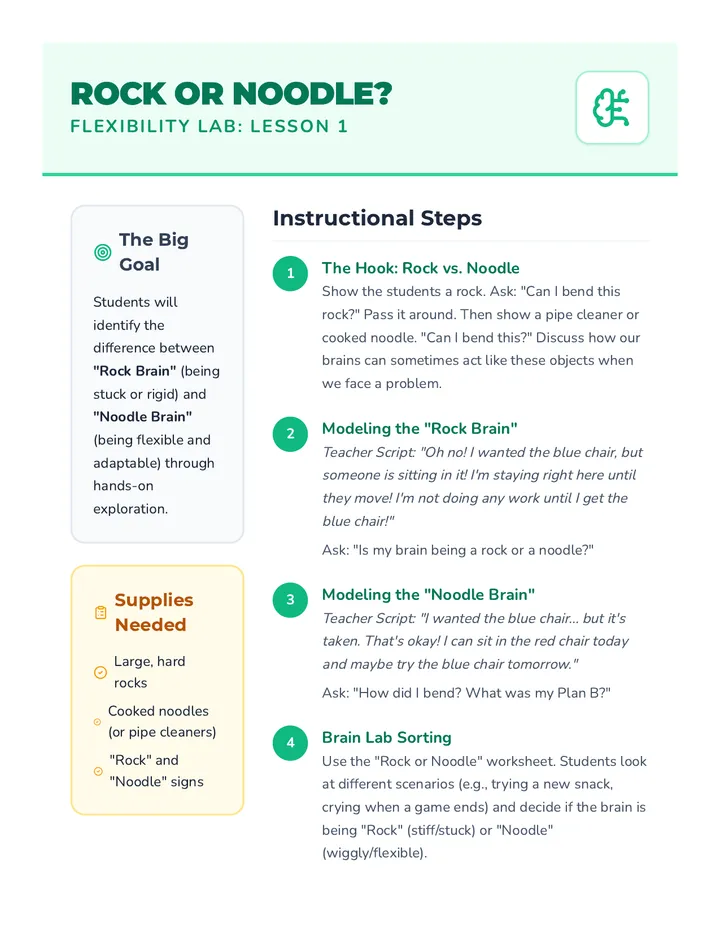
A 5-lesson unit for 1st-grade students focusing on cognitive flexibility. Students learn to navigate obstacles, tool breakage, schedule changes, and unavailability using the 'Rock Brain' vs. 'Noodle Brain' metaphor and the 'Plan B' framework.
A project-based sequence for 7th-grade students to master 'Backwards Planning' by breaking down complex projects into manageable milestones, estimating time accurately, and developing accountability strategies to overcome procrastination.
A Kindergarten sequence focused on building task persistence and management through visual supports, routines, and incremental stamina building. Students learn to use timers, First/Then boards, and self-monitoring tools to sustain attention.
A 5-lesson sequence for Kindergarten students focused on using visual schedules and symbols to support working memory, transitions, and independence. Students progress from symbol recognition to creating their own personal mini-schedules.
This sequence introduces Pre-K students to the foundational concepts of task persistence, utilizing visual supports and structured reinforcement to build attention stamina. Students learn to identify 'finished', use timers, manage frustration, follow 'First-Then' logic, and self-monitor their work.
A Pre-K sequence focused on working memory and auditory processing through single-step directions using table-top manipulatives. Students develop fine motor skills and inhibitory control while following specific verbal commands in a hands-on workshop environment.
This sequence helps 3rd-grade students overcome 'time blindness' and master task prioritization through the 'Now-Next-Later' framework. Students practice time estimation, distinguish between urgency and interest, and learn to adapt plans when unexpected changes occur.
A 5-lesson sequence designed to help 4th-grade students master task prioritization using visual matrices and executive functioning strategies. Students progress from defining urgency and importance to applying a 2x2 priority matrix to their own real-world schedules.
A 4th-grade sequence introducing the Leitner System for spaced repetition, helping students understand memory, build physical study tools, and develop effective long-term retention habits.