Lenny.com
Explore
Create
ActivitiesNewMathEnglish Language ArtsScience & EngineeringSocial StudiesGlobal LanguagesHealth & Physical EducationSpecial EducationCounseling & Life SkillsArts & CreativityESL
Lenny.com
Lenny.com
Explore
Create
ActivitiesNewMathEnglish Language ArtsScience & EngineeringSocial StudiesGlobal LanguagesHealth & Physical EducationSpecial EducationCounseling & Life SkillsArts & CreativityESL
Lenny.com
Lenny.com

Solutions

Lenny for EducatorsLenny for SchoolsLenny for Districts

Product

ExploreSign inCreateSupportAbout

Resources

Getting startedMTSS Acceleration Program

Newsletters

School Funding Newsletter

© 2026 Lenny Learning Inc.

TermsPrivacyAccessibility
LinkedInInstagramX
Lenny

Trauma Responses & Triggers

Examines neurobiological mechanisms of fight-flight-freeze responses and identifies environmental or emotional triggers. Develops clinical strategies for stabilization, emotional regulation, and trauma-informed intervention.

Counseling & Life SkillsSelf-AwarenessBasic Emotion RecognitionComplex Emotion IdentificationEmotional Nuance & Mixed FeelingsBuilding Positive Self-ImageRecognizing Strengths & Growth AreasAccurate Self-AssessmentPersonal Values IdentificationCultural & Individual Identity ExplorationValues-Based Decision MakingSelf-ManagementStop-and-Think StrategiesDelaying GratificationIndependent Impulse ManagementIdentifying Stress TriggersShort-Term Goal SettingSMART Goals DevelopmentGoal Monitoring & AdjustmentBuilding Perseverance & ResilienceInternal Motivation DevelopmentComprehensive Stress Reduction PlanningSocial AwarenessRecognizing Others' FeelingsDemonstrating EmpathyRespecting Individual DifferencesUnderstanding Cultural DiversityComplex Empathetic ResponsesMultiple Viewpoint ConsiderationMulti-Perspective AnalysisChallenging Stereotypes & BiasRelationship SkillsActive ListeningClear Verbal & Nonverbal CommunicationBuilding Positive FriendshipsWorking Cooperatively in GroupsCommunicating Personal BoundariesRespecting Others' BoundariesAssertive ExpressionPeaceful Problem-SolvingContributing to Team GoalsComplex Conflict NavigationMediation & NegotiationHealthy Romantic RelationshipsResponsible Decision-MakingDaily Problem IdentificationBrainstorming Multiple SolutionsEvaluating Pros & ConsRecognizing Risks & ConsequencesApplying Ethical FrameworksInformed Risk-Benefit DecisionsRoot Cause AnalysisMindfulnessMindful BreathingBody Scan MeditationDaily Mindfulness ApplicationDaily Self-Care RoutinesBalancing Life DemandsAdvocating for Wellness NeedsMental Health SupportUnderstanding Anxiety SymptomsWorry Management StrategiesProgressive Muscle RelaxationRecognizing Depression SignsBuilding Mood-Supporting RoutinesBehavioral Activation for MoodUnderstanding Grief StagesHealthy Grief CopingCreative Expression of LossBehavioral SupportDaily Check-In ProceduresDaily Goal Setting & ReviewRecognizing Escalation Warning SignsRequesting Breaks & SupportSelf-Calming During DistressUnderstanding Positive ReinforcementToken Economy ImplementationBehavior Chart TrackingAnalyzing Behavior PatternsIdentifying Antecedents & ConsequencesDetermining Behavior FunctionFunction-Based InterventionsIndividualized Behavior ContractsData-Driven Behavior AdjustmentTherapeutic ApproachesThoughts-Feelings-Behaviors ConnectionRecognizing Thinking PatternsChallenging Negative ThoughtsPositive Self-Talk PracticeThought Record TrackingAdvanced Cognitive RestructuringComprehensive CBT PlansBehavioral Activation TechniquesBuilding Positive ExperiencesExposure Hierarchies for AnxietyPresent-Moment AwarenessNon-Judgmental ObservationSelf-Soothing & DistractionComplex Emotion LabelingReducing Emotional Vulnerability (PLEASE)DEAR MAN CommunicationGIVE Skills for RelationshipsFAST Skills for Self-RespectRadical Acceptance PracticeCrisis Survival Skills (TIPP)Understanding Trauma EffectsTrauma Responses & TriggersIdentifying Trauma FeelingsGrounding TechniquesRegulation During Trauma DistressSafe Place VisualizationProcessing Through NarrativeDeveloping Trauma StoryPersonalized Safety PlanningGroup SupportTurn-Taking & SharingGroup Conversation SkillsSharing in Supportive EnvironmentLearning from Similar ChallengesBuilding Community & BelongingNavigating Peer RelationshipsGroup Skill PracticeGroup Mental Health EducationStress & Anxiety UnderstandingCrisis Support & SafetyKnowing When to Seek HelpIdentifying Mental Health CrisesGrounding During CrisisUsing Crisis HotlinesBuilding Support NetworksAccessing Mental Health ResourcesWarning Signs & Coping StrategiesDeveloping Personal Safety PlansUnderstanding Suicide Warning SignsGatekeeper Skills for PeersDigital LiteracySocial MediaTechnology BasicsProductivity ToolsInternet and Online ResearchWeb Design and PublishingDigital CitizenshipOnline Safety and PrivacyEmerging TechnologiesFinancial LiteracyMaking Financial DecisionsBanking and AccountsConsumer SkillsSaving and InvestingCredit and DebtEmployment and IncomeTaxesInsuranceMajor PurchasesEconomic ConceptsFinancial PlanningCollege & Post-Secondary PlanningCareer ExplorationUnderstanding Post-Secondary OptionsCollege Research & SelectionAdmission RequirementsCollege Application ProcessPersonal Statement WritingFAFSA CompletionScholarship Search & ApplicationsUnderstanding Student LoansContinuing Education PlanningInterview PreparationResearching EmployersCommon Interview QuestionsSTAR Method ResponsesProfessional Interview PresenceVirtual Interview SkillsInterview Follow-UpJob Search SkillsUnderstanding Job PostingsEffective Job Search StrategiesNetworking for OpportunitiesResume Writing BasicsAction Verbs & AchievementsTailoring Resumes to JobsCover Letter WritingProfessional ReferencesProfessional CommunicationBusiness Email EtiquettePhone & Voicemail ProfessionalismMeeting ParticipationPresentation SkillsProfessional Work EthicTime Management & ProductivityTeamwork & CollaborationAdaptability & FlexibilityProblem-Solving at WorkConstructive FeedbackWorkplace RightsUnderstanding Employment LawsPay & Benefits UnderstandingWorkplace SafetyAnti-Discrimination & Harassment

Videos

What causes panic attacks, and how can you prevent them? - Cindy J. Aaronson

What causes panic attacks, and how can you prevent them? - Cindy J. Aaronson

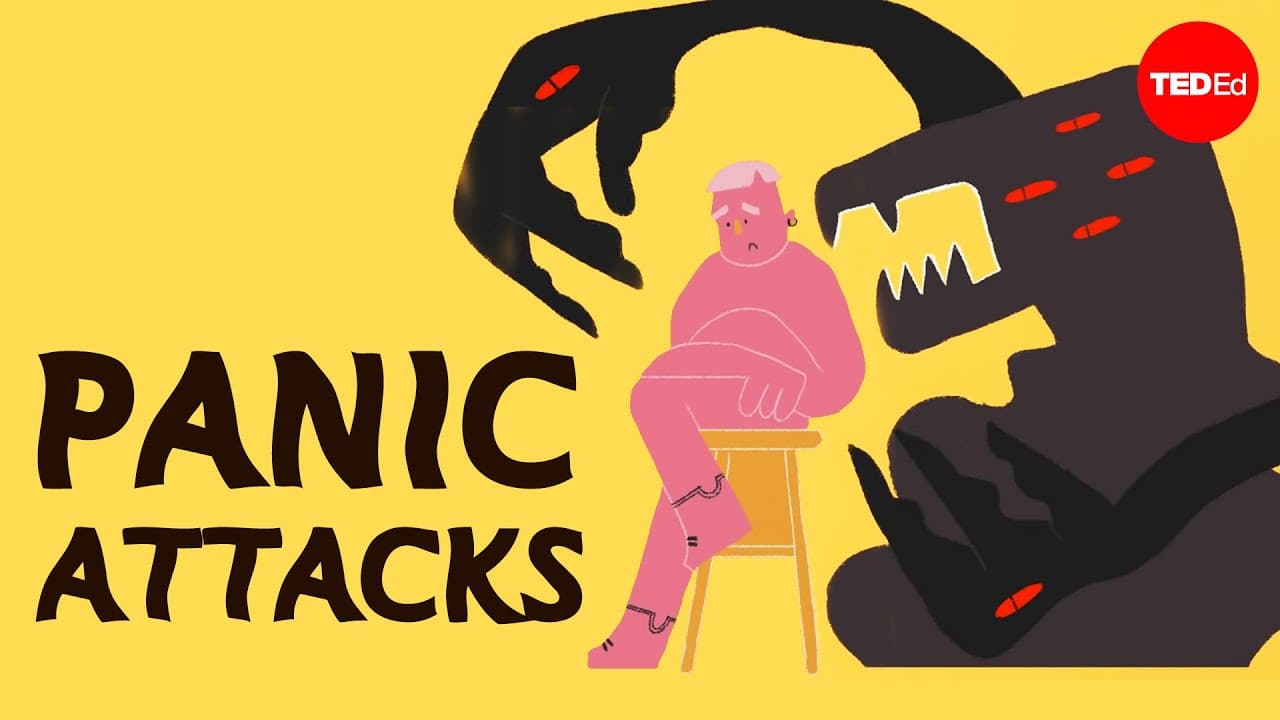
This animated lesson provides a deep dive into the physiological and psychological mechanics of panic attacks. It begins by vividly describing the subjective experience of a panic attack through poetic metaphor before transitioning into the hard science of what is actually happening in the brain and body. The video explains that a panic attack is essentially a "false alarm" where the body's fight-or-flight response is triggered without real danger, involving the amygdala, the sympathetic nervous system, and the release of adrenaline. The content moves beyond just the biology to explore the cycle of fear that maintains panic disorders—specifically, how the fear of having another attack can actually trigger one. It outlines the differences between distinct anxiety disorders like PTSD, OCD, and Generalized Anxiety Disorder. Crucially, it clarifies that while these experiences are terrifying and mimic life-threatening events like heart attacks, they are not physically dangerous in the long term. Finally, the video offers concrete, evidence-based solutions, comparing medication with Cognitive Behavioral Therapy (CBT). It breaks down how CBT works through physiological education, breathing exercises, cognitive restructuring (changing thoughts), and exposure therapy. This resource is invaluable for health and psychology classrooms to de-stigmatize mental health issues, explain the nervous system, and equip students with practical mental tools for managing anxiety.
TED-EdTED-Ed

5mins 23s

Materials

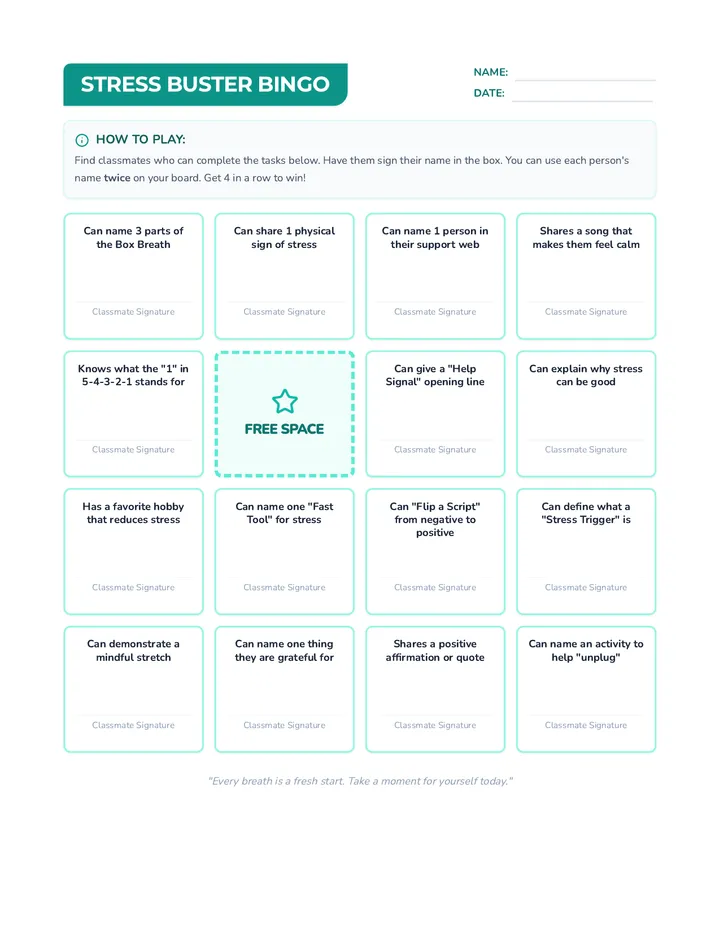
Stress Buster Bingo Activity

Stress Buster Bingo Activity

A revised 4x4 Human Bingo board activity designed to help students interact while reviewing stress-management strategies. Optimized for single-page printing and readability.

J

Jenna

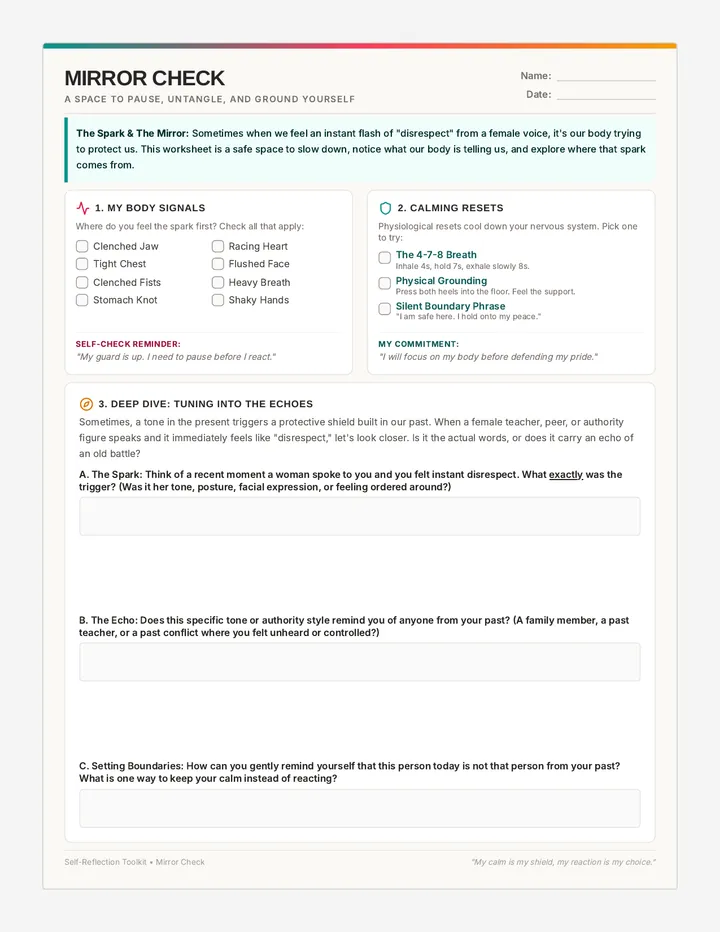
Mirror Check Worksheet

Mirror Check Worksheet

A compassionate, print-ready self-reflection worksheet for female students to identify physical anger triggers, explore past experiences with female authority figures, and develop grounding physiological coping strategies.

EW

Eric Wilson

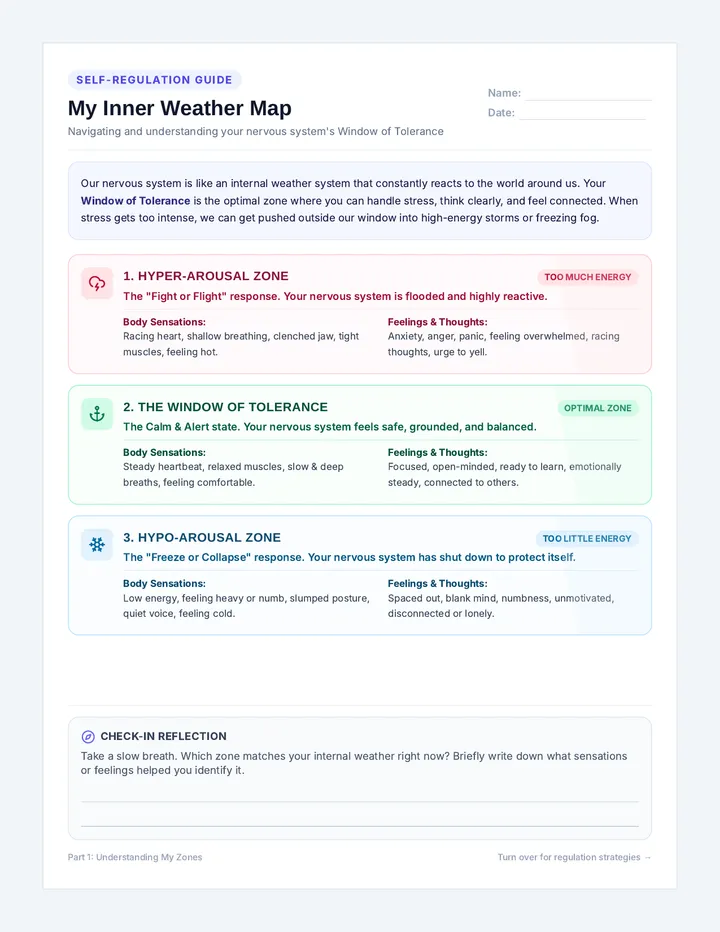
Inner Weather Map Handout

Inner Weather Map Handout

A beautifully designed, print-ready 2-page educational handout mapping the Window of Tolerance. It details the physical, mental, and emotional signs of Hyper-arousal, the Optimal Window, and Hypo-arousal, alongside a comprehensive self-regulation toolbox and a reflective personal action plan.

SW

Sarah Wilmot

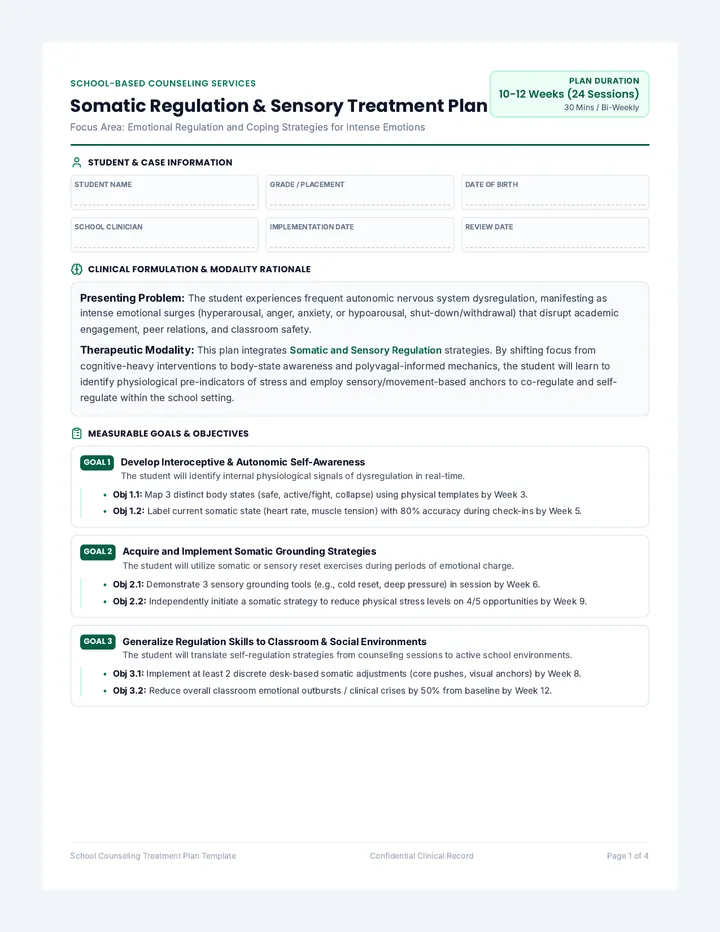
Somatic Regulation Treatment Plan

Somatic Regulation Treatment Plan

A comprehensive clinical school-based counseling treatment plan template structured for 10-12 weeks (2 sessions per week, 30 minutes each). Built around somatic and sensory regulation modalities, this clinical document includes a complete 24-session curriculum roadmap, measurable goals, objectives, grounding resources, and school-based accommodations.

WD

William Dominguez-Barrios

System Logic Handout

System Logic Handout

An informational handout for students using a computing/coding metaphor to explain mental health and body systems, featuring a high-tech "Architect Decoder" theme. Updated to fit on a single page with high contrast for printing.

SM

Suzanna Mangray

CPS Expansion Poster

CPS Expansion Poster

A professional bi-fold poster presentation for the Arlington Public Schools CPS expansion proposal, featuring strategic alignment, rationale, data visualization, and impact metrics.

J

jklau

Sequences

Basecamp Facilitation Guide

Anxiety Navigators

A comprehensive sequence of lessons designed for high school students managing re-entry and school-based anxiety. The curriculum focuses on physical and psychological safety, self-regulation tools, self-advocacy skills, and navigating social peer dynamics.

E

erica.lee

20
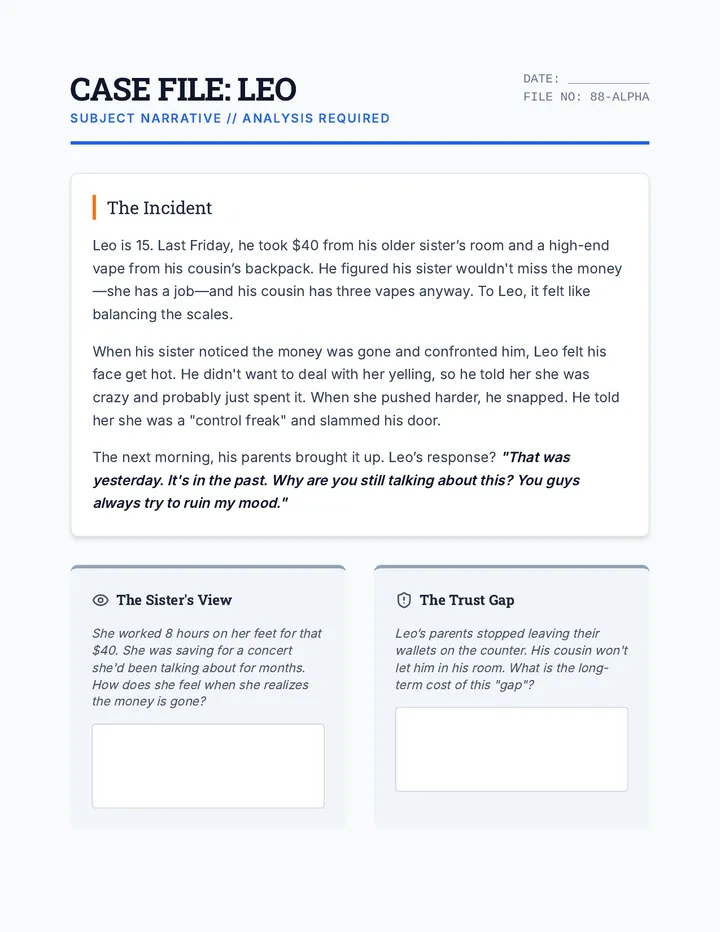
Leo Case Study Narrative

Reality Check

A targeted intervention sequence focusing on accountability, empathy, and the psychological roots of entitlement and anger for teenagers struggling with theft and confrontation.

TC

TINA COTTRELL

10
Echo Slides

Inner Compass

A comprehensive counseling sequence designed to help students navigate their emotional landscape, understand the impact of their actions on school relationships, and build a personalized repertoire of coping strategies. Through three core modules, students move from awareness to accountability to action.

BG

Bianca Gregorio

10
Brain Lock Slides

Neurobiology of Escalation

This sequence explores the neurobiological foundations of student escalation, connecting internal physiological stress responses (the 'amygdala hijack') to observable external warning signs. Students will learn to depersonalize behavior by understanding it as a biological survival mechanism, training them to recognize subtle somatic, respiratory, and muscular cues before a full behavioral outburst occurs.

15
Biological Baseline Slides

Nerve Center Training

A graduate-level exploration of the biological underpinnings of stress. Students move from theoretical understanding of the autonomic nervous system and Polyvagal Theory to practical application of somatic regulation and interoceptive awareness, culminating in a personalized physiological safety plan.

15
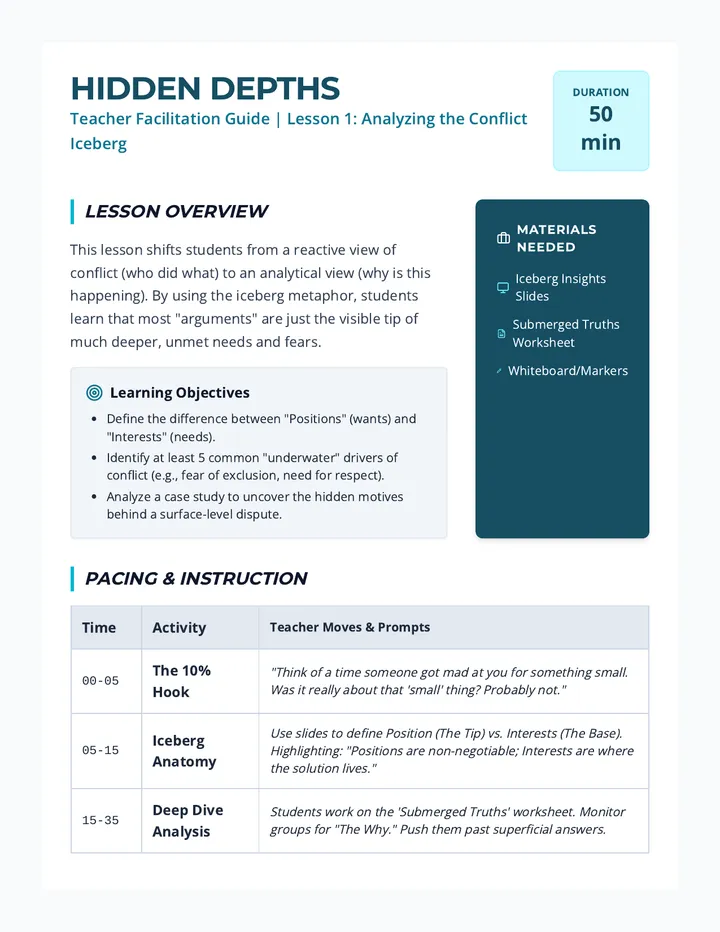
Hidden Depths Teacher Guide

Conflict Blueprints

A comprehensive 9th-grade sequence exploring the psychological and biological roots of conflict. Students learn to distinguish visible behaviors from hidden needs, understand the neuroscience of emotional escalation, and develop practical self-regulation strategies to navigate complex interpersonal disputes.

15

Lessons

Resilient Roots Slides

Resilient Roots

A professional development session for high school teachers focusing on restorative practices, emotional regulation, and the implementation of proactive care plans. This lesson equips educators with the tools to handle chronic emotional challenges and foster deep connection with students in grades 9-12.

S

sadams4

5
Glow Up Grounding Slides

Calm and Collected

A visually charming and supportive lesson designed to teach students effective grounding techniques for managing anxiety and panic attacks in school settings.

SA

Sarah Adams

13
Anger Alchemist Journal

Cool Down Chronicles

A 30-minute intensive one-on-one session focused on identifying anger triggers and implementing distress tolerance and emotion regulation skills to prevent escalation.

SM

Sydney Mansfield

4
Reset Rescue Teacher Guide

Regulation Rescue

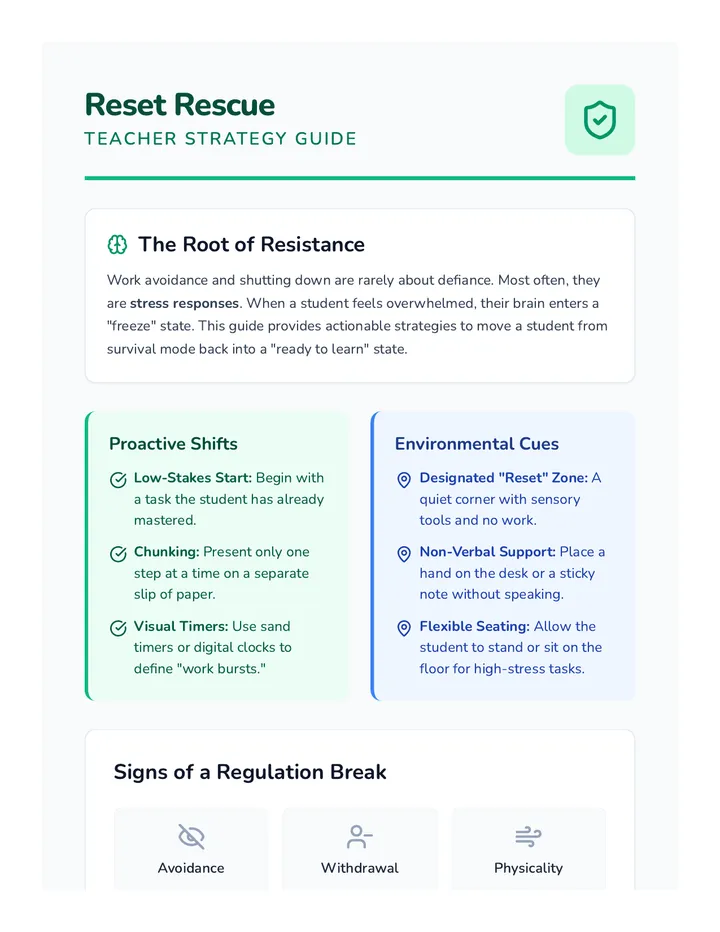
A comprehensive set of tools for teachers to support students experiencing work avoidance or shutting down, focusing on emotional regulation and proactive intervention.

L

lkonstantinidis

4
Clinician Guide Somatic Storm Anchors

Somatic Storm Anchors

An introductory Dialectical Behavior Therapy (DBT) session focusing on the three minds (Reasonable, Emotional, Wise Mind) through a trauma-informed, somatic lens. Designed specifically for young adults (around 19) navigating trauma, it includes a clinician facilitation guide, a visual handout, a somatic mindfulness worksheet, and a multi-page interactive reflection workbook.

TC

Theresa Casarella

4
Internal Volcano Map Organizer

The Breaking Point

A de-escalation and anger management lesson specifically designed for justice-involved youth (17-18), focusing on high-stakes conflict resolution, physiological awareness, and consequence management.

A

AZ

8