Lenny.com
Explore
Create
ActivitiesNewMathEnglish Language ArtsScience & EngineeringSocial StudiesGlobal LanguagesHealth & Physical EducationSpecial EducationCounseling & Life SkillsArts & CreativityESL
Lenny.com
Lenny.com
Explore
Create
ActivitiesNewMathEnglish Language ArtsScience & EngineeringSocial StudiesGlobal LanguagesHealth & Physical EducationSpecial EducationCounseling & Life SkillsArts & CreativityESL
Lenny.com
Lenny.com

Solutions

Lenny for EducatorsLenny for SchoolsLenny for Districts

Product

ExploreSign inCreateSupportAbout

Resources

Getting startedMTSS Acceleration Program

Newsletters

School Funding Newsletter

© 2026 Lenny Learning Inc.

TermsPrivacyAccessibility
LinkedInInstagramX
Lenny

Understanding Trauma Effects

Neurobiological and psychological impacts of traumatic events on brain development and emotional regulation. Examines symptom manifestations such as dissociation, hypervigilance, and long-term behavioral patterns.

Counseling & Life SkillsSelf-AwarenessBasic Emotion RecognitionComplex Emotion IdentificationEmotional Nuance & Mixed FeelingsBuilding Positive Self-ImageRecognizing Strengths & Growth AreasAccurate Self-AssessmentPersonal Values IdentificationCultural & Individual Identity ExplorationValues-Based Decision MakingSelf-ManagementStop-and-Think StrategiesDelaying GratificationIndependent Impulse ManagementIdentifying Stress TriggersShort-Term Goal SettingSMART Goals DevelopmentGoal Monitoring & AdjustmentBuilding Perseverance & ResilienceInternal Motivation DevelopmentComprehensive Stress Reduction PlanningSocial AwarenessRecognizing Others' FeelingsDemonstrating EmpathyRespecting Individual DifferencesUnderstanding Cultural DiversityComplex Empathetic ResponsesMultiple Viewpoint ConsiderationMulti-Perspective AnalysisChallenging Stereotypes & BiasRelationship SkillsActive ListeningClear Verbal & Nonverbal CommunicationBuilding Positive FriendshipsWorking Cooperatively in GroupsCommunicating Personal BoundariesRespecting Others' BoundariesAssertive ExpressionPeaceful Problem-SolvingContributing to Team GoalsComplex Conflict NavigationMediation & NegotiationHealthy Romantic RelationshipsResponsible Decision-MakingDaily Problem IdentificationBrainstorming Multiple SolutionsEvaluating Pros & ConsRecognizing Risks & ConsequencesApplying Ethical FrameworksInformed Risk-Benefit DecisionsRoot Cause AnalysisMindfulnessMindful BreathingBody Scan MeditationDaily Mindfulness ApplicationDaily Self-Care RoutinesBalancing Life DemandsAdvocating for Wellness NeedsMental Health SupportUnderstanding Anxiety SymptomsWorry Management StrategiesProgressive Muscle RelaxationRecognizing Depression SignsBuilding Mood-Supporting RoutinesBehavioral Activation for MoodUnderstanding Grief StagesHealthy Grief CopingCreative Expression of LossBehavioral SupportDaily Check-In ProceduresDaily Goal Setting & ReviewRecognizing Escalation Warning SignsRequesting Breaks & SupportSelf-Calming During DistressUnderstanding Positive ReinforcementToken Economy ImplementationBehavior Chart TrackingAnalyzing Behavior PatternsIdentifying Antecedents & ConsequencesDetermining Behavior FunctionFunction-Based InterventionsIndividualized Behavior ContractsData-Driven Behavior AdjustmentTherapeutic ApproachesThoughts-Feelings-Behaviors ConnectionRecognizing Thinking PatternsChallenging Negative ThoughtsPositive Self-Talk PracticeThought Record TrackingAdvanced Cognitive RestructuringComprehensive CBT PlansBehavioral Activation TechniquesBuilding Positive ExperiencesExposure Hierarchies for AnxietyPresent-Moment AwarenessNon-Judgmental ObservationSelf-Soothing & DistractionComplex Emotion LabelingReducing Emotional Vulnerability (PLEASE)DEAR MAN CommunicationGIVE Skills for RelationshipsFAST Skills for Self-RespectRadical Acceptance PracticeCrisis Survival Skills (TIPP)Understanding Trauma EffectsTrauma Responses & TriggersIdentifying Trauma FeelingsGrounding TechniquesRegulation During Trauma DistressSafe Place VisualizationProcessing Through NarrativeDeveloping Trauma StoryPersonalized Safety PlanningGroup SupportTurn-Taking & SharingGroup Conversation SkillsSharing in Supportive EnvironmentLearning from Similar ChallengesBuilding Community & BelongingNavigating Peer RelationshipsGroup Skill PracticeGroup Mental Health EducationStress & Anxiety UnderstandingCrisis Support & SafetyKnowing When to Seek HelpIdentifying Mental Health CrisesGrounding During CrisisUsing Crisis HotlinesBuilding Support NetworksAccessing Mental Health ResourcesWarning Signs & Coping StrategiesDeveloping Personal Safety PlansUnderstanding Suicide Warning SignsGatekeeper Skills for PeersDigital LiteracySocial MediaTechnology BasicsProductivity ToolsInternet and Online ResearchWeb Design and PublishingDigital CitizenshipOnline Safety and PrivacyEmerging TechnologiesFinancial LiteracyMaking Financial DecisionsBanking and AccountsConsumer SkillsSaving and InvestingCredit and DebtEmployment and IncomeTaxesInsuranceMajor PurchasesEconomic ConceptsFinancial PlanningCollege & Post-Secondary PlanningCareer ExplorationUnderstanding Post-Secondary OptionsCollege Research & SelectionAdmission RequirementsCollege Application ProcessPersonal Statement WritingFAFSA CompletionScholarship Search & ApplicationsUnderstanding Student LoansContinuing Education PlanningInterview PreparationResearching EmployersCommon Interview QuestionsSTAR Method ResponsesProfessional Interview PresenceVirtual Interview SkillsInterview Follow-UpJob Search SkillsUnderstanding Job PostingsEffective Job Search StrategiesNetworking for OpportunitiesResume Writing BasicsAction Verbs & AchievementsTailoring Resumes to JobsCover Letter WritingProfessional ReferencesProfessional CommunicationBusiness Email EtiquettePhone & Voicemail ProfessionalismMeeting ParticipationPresentation SkillsProfessional Work EthicTime Management & ProductivityTeamwork & CollaborationAdaptability & FlexibilityProblem-Solving at WorkConstructive FeedbackWorkplace RightsUnderstanding Employment LawsPay & Benefits UnderstandingWorkplace SafetyAnti-Discrimination & Harassment

Videos

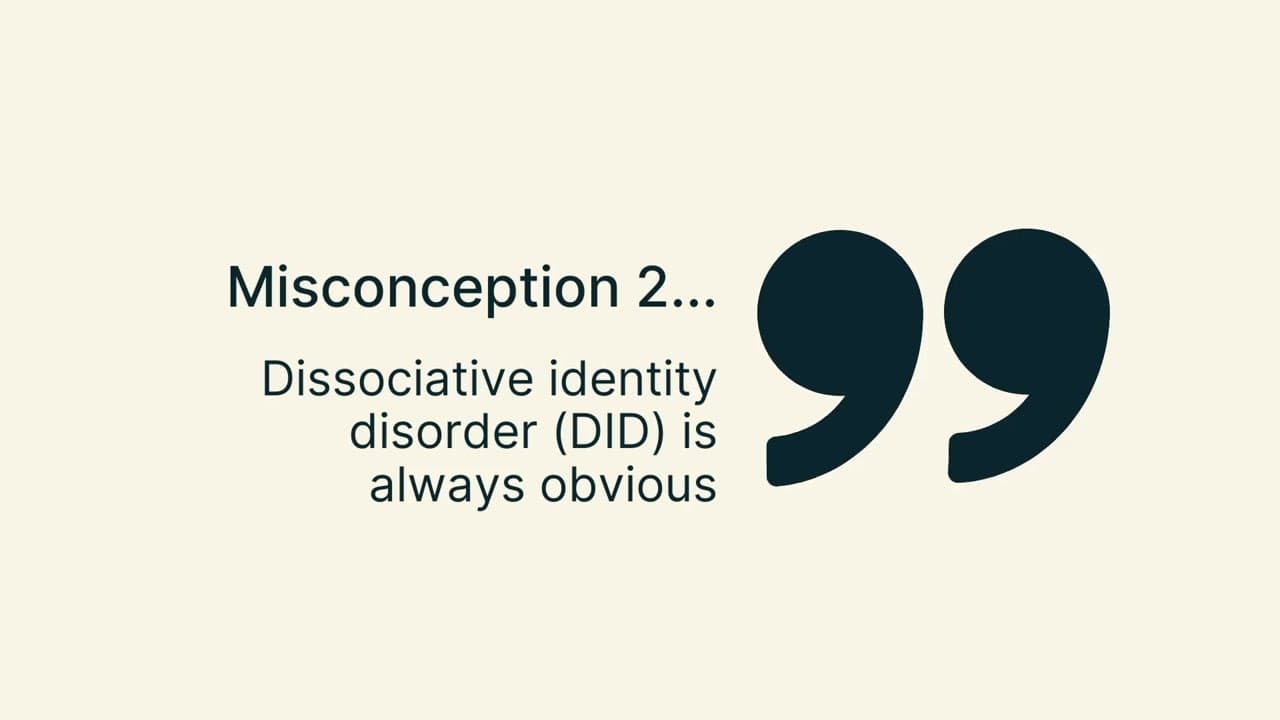
Common Misconceptions about Dissociative Disorders

Common Misconceptions about Dissociative Disorders

This educational video dismantles three prevalent myths surrounding dissociative disorders, aiming to reduce stigma and increase understanding of these mental health conditions. Through clear narration and simple visuals, it addresses misconceptions regarding medication, diagnosis difficulty, and the perceived danger of individuals living with these disorders. Key themes include the complexities of mental health treatment, the long road to accurate diagnosis within the healthcare system, and the damaging effects of media stereotypes. The video emphasizes that while there is no "cure-all" pill for dissociation itself, effective therapies exist, and that individuals with these disorders are no more violent than the general population. For educators, this resource serves as a crucial tool for psychology, health, and social-emotional learning curriculums. It provides a factual counter-narrative to the sensationalized portrayals often seen in movies and TV, helping students develop empathy and a more scientific understanding of mental health challenges.
Brain Health BootcampBrain Health Bootcamp

1min 55s

Materials

System Logic Handout

System Logic Handout

An informational handout for students using a computing/coding metaphor to explain mental health and body systems, featuring a high-tech "Architect Decoder" theme. Updated to fit on a single page with high contrast for printing.

SM

Suzanna Mangray

CPS Expansion Poster

CPS Expansion Poster

A professional bi-fold poster presentation for the Arlington Public Schools CPS expansion proposal, featuring strategic alignment, rationale, data visualization, and impact metrics.

J

jklau

Sequences

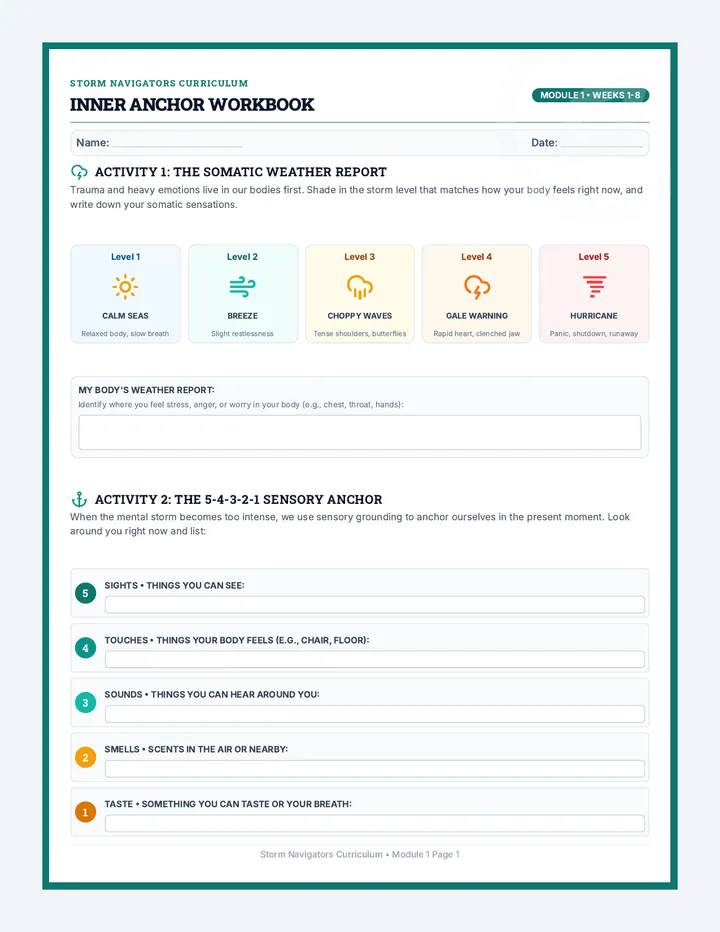
Inner Anchor Workbook

Storm Navigators

A comprehensive 16-week school-based therapeutic curriculum designed to equip students with emotional regulation, healthy relationship skills, trauma-informed coping mechanisms, and self-advocacy strategies.

NW

Nicholas Wren

6
Mind Mechanics Master Facilitation Guide

Mind Mechanics Sequence

A multi-lesson unit designed to build mental health literacy, identify internal system alerts (Anxiety, Depression, Anger), and develop a sustainable toolkit of coping strategies. Students explore the 'Wellness Spectrum', 'Neuroplasticity', and the deceptive nature of 'System Bypasses' like substances.

RD

Rebecca Del Nigro

5
Brain Lock Slides

Neurobiology of Escalation

This sequence explores the neurobiological foundations of student escalation, connecting internal physiological stress responses (the 'amygdala hijack') to observable external warning signs. Students will learn to depersonalize behavior by understanding it as a biological survival mechanism, training them to recognize subtle somatic, respiratory, and muscular cues before a full behavioral outburst occurs.

15
Biological Baseline Slides

Nerve Center Training

A graduate-level exploration of the biological underpinnings of stress. Students move from theoretical understanding of the autonomic nervous system and Polyvagal Theory to practical application of somatic regulation and interoceptive awareness, culminating in a personalized physiological safety plan.

15
Stress Circuitry Slides

Stress Circuitry and Regulation

A comprehensive sequence for undergraduate students exploring the neurobiology of stress, the autonomic nervous system, and physiological self-regulation techniques. Students move from theoretical understanding of brain structures to practical mastery of interoception and vagal tone modulation.

10
Foundations of Safety Slides

Healing Paths Trauma Informed Care

A comprehensive project-based unit where 12th-grade students master the principles of trauma-informed care. Students progress from theoretical understanding to the practical application of designing and presenting clinical intervention strategies for complex trauma cases.

15

Lessons

Relationships and Emotions Semester 2 Final Exam

Relationships and Emotions Final Exam

A comprehensive final exam for a high school Relationships and Emotions course, covering emotional literacy, grief, power dynamics, boundaries, and communication. The lesson includes the 50-question traditional exam and a detailed answer key.

BF

Brandi Flanigan

3
Clinician Guide Somatic Storm Anchors

Somatic Storm Anchors

An introductory Dialectical Behavior Therapy (DBT) session focusing on the three minds (Reasonable, Emotional, Wise Mind) through a trauma-informed, somatic lens. Designed specifically for young adults (around 19) navigating trauma, it includes a clinician facilitation guide, a visual handout, a somatic mindfulness worksheet, and a multi-page interactive reflection workbook.

TC

Theresa Casarella

4
Bridge to School Guide

Bridge to School Home Visit

A comprehensive home visit framework designed for social workers to support students experiencing school avoidance. This lesson focuses on building trust, identifying specific barriers to attendance, and co-creating a gradual return plan with the student and family.

J

jbreneisen

7
Calm Pocket Cards Printable

The Inner Compass

A comprehensive exploration of the psychology of emotions and the physiological impact of stress, featuring a multi-page informational guide and portable coping skill cards for middle school students.

KH

Kayle Hanson

4
Healing Connections Guide

Inner Compass

A 30-minute trauma-informed session for a 9th-grade student focused on reclaiming intuition, setting boundaries, and identifying healthy friendship dynamics in the context of early adultification.

A

annabel.davis

4
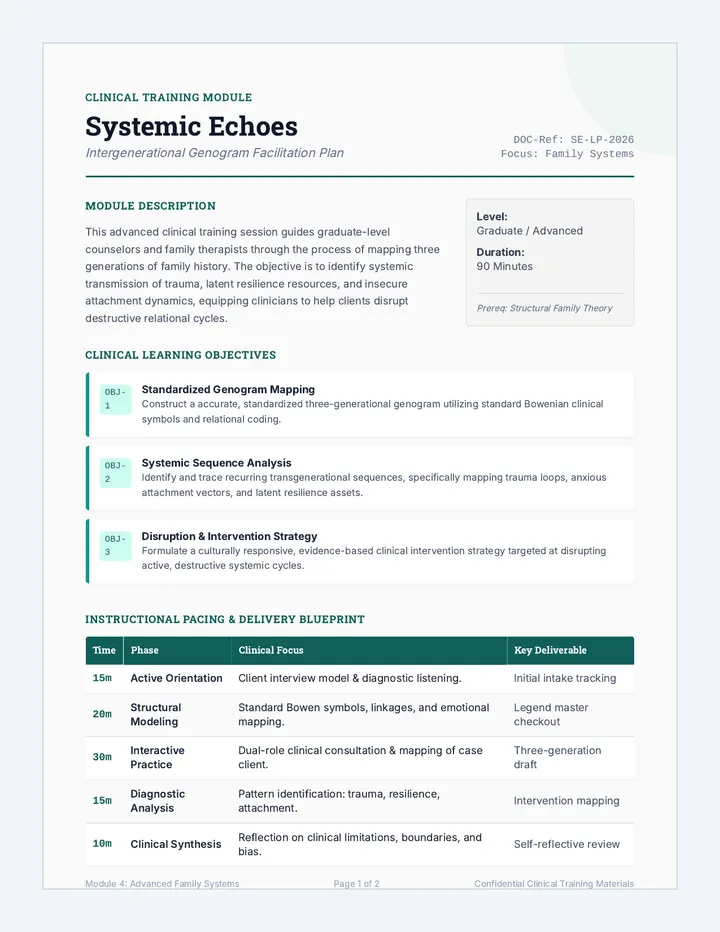
Systemic Echoes Lesson Plan

Systemic Echoes

A comprehensive clinical training lesson on mapping and analyzing three-generational genograms. Students learn to trace patterns of trauma, resilience, and attachment styles to help clients visualize systemic influences and break maladaptive cycles.

JG

Judith Gallardo

5