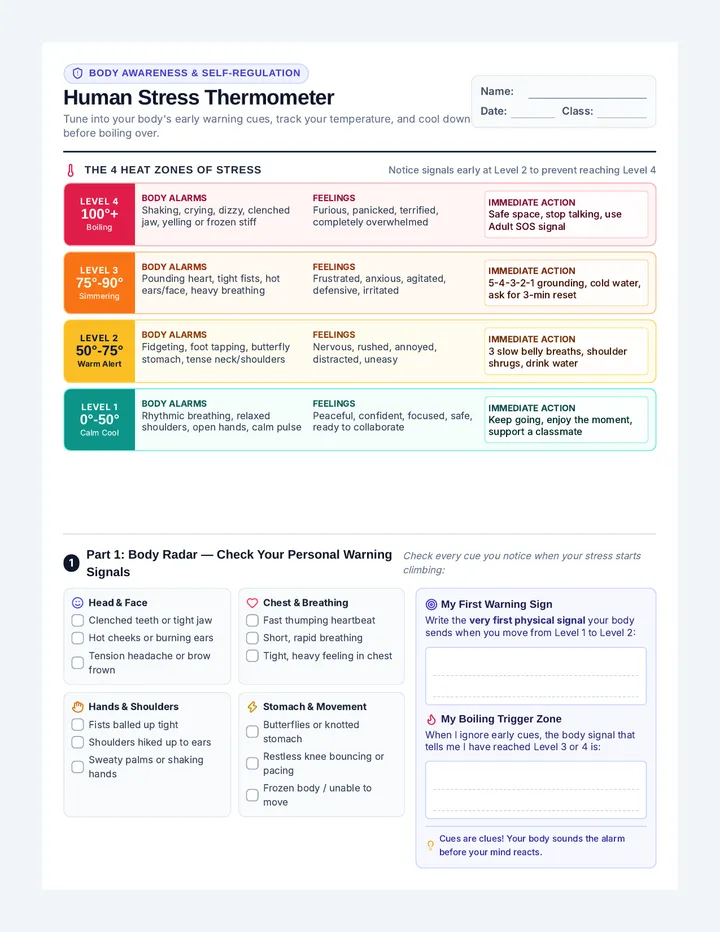
A multi-lesson unit designed to build mental health literacy, identify internal system alerts (Anxiety, Depression, Anger), and develop a sustainable toolkit of coping strategies. Students explore the 'Wellness Spectrum', 'Neuroplasticity', and the deceptive nature of 'System Bypasses' like substances.
Support: Connecting with adults, friends, or specialized mechanics like counselors for system repairs.
Warning: Biological Debt
Using a substance to fix a mental health alert is like a high-interest loan. It provides CALM NOW but requires INTEREST LATER (worse anxiety, lower baseline).
Section 2: Visual Manual // Page 2 of 3
Calibration Quiz
10-Point Operator Check
NAME:
DATE:
1. Mental Health is best defined as the machine's overall state of handling load and pressure.
True
False
2. Which term describes the brain's ability to re-wire roads through repeated habits?
Resilience
Neuroplasticity
3. Resilience is characterized as the machine's ____________ system.
fuel injection
suspension
4. On the Wellness Spectrum, "Struggling" means warning lights are currently on.
True
False
5. Scenario: Jordan feels heavy, slow, and can't enjoy things. Which alert is Jordan experiencing?
Anxiety
Depression
Anger
6. A substance bypass fixes the core engine problem rather than just hiding the light.
True
False
7. What is the long-term result of repeated bypasses?
The dopamine baseline rises significantly.
Biological Debt makes normal life feel empty.
8. Scenario: Liam uses a grounding technique to cool a racing engine. This is an example of:
Immediate Coolant
System Bypass
9. Which tool involves movement to burn off stress chemicals like cortisol?
Schematic Rewrite
System Flush
10. Stigma is a system glitch that stops an operator from seeking repairs.
True
False
End of Assignment // Section 3: Operator Quiz // Page 3 of 3
Section 2: System Deception // Page 2 of 4
Maintenance Reference Visual
Immediate Coolant
Usage: Anxiety / Racing Engine
Grounding: Calm the system down using physical moment focus (e.g., 5-4-3-2-1 technique or Box Breathing).
System Flush
Usage: Anger / System Overheat
Movement: Physical activity (exercise, sprinting, jumping jacks) to burn off built-up stress chemicals like cortisol.
Schematic Rewrite
Usage: Negative Thought Glitches
Logic: Identifying "software errors" in thinking (like 'I'm a failure') and rewriting them with factual evidence.
Expert Assistance
Usage: Depression / Low Power Mode
Support: Connecting with adults, friends, or specialized mechanics like counselors for system repairs.
Calibration Task
Review Sections 01-03 before starting the Knowledge Check on the next page.
Section 3: Visual Reference // Page 3 of 4
Calibration Quiz
10-Point Knowledge Check
1. Mental Health is best defined as the machine's overall state of handling load and pressure.
True
False
2. Which term describes the brain's ability to physically re-wire its neural roads?
Resilience
Neuroplasticity
3. Resilience is characterized as the machine's ____________ system.
fuel injection
suspension
4. On the Wellness Spectrum, "Struggling" means warning lights are currently on.
True
False
5. Scenario: Jordan feels heavy, slow, and can't enjoy things. Which alert is Jordan experiencing?
Anxiety
Depression
Anger
6. A Bad Coping Mechanism fixes the core engine problem rather than just hiding the light.
True
False
7. What is the long-term result of repeated Bad Coping Mechanisms?
The dopamine baseline rises significantly over time.
Biological Debt makes normal, healthy life feel empty.
8. Which term refers to the shame or judgment that stops an operator from seeking repairs?
Stigma
Resilience
9. Scenario: Casey snaps at small inconveniences and feels 'overheated'. Which tool is best?
System Flush (Movement)
Bad Coping Mechanism
Open Ended System Analysis:
Explain how using a Good Coping Mechanism makes your mind machine stronger for the FUTURE compared to a Bad Coping Mechanism.
End of Assignment // Section 4: Quiz // Page 4 of 4