Identification of personal space, consent, and verbal boundary-setting strategies. Equips students to communicate comfort levels and recognize appropriate physical interactions in social contexts.
An urgent, science-backed investigation into the reality of vaping, nicotine addiction, and industrial manipulation designed for middle school health education. Students explore the neurological impact of chemicals, deconstruct marketing tactics, and build practical refusal skills.
A comprehensive sequence of lessons for secondary students (Yr 7-8) focused on conflict resolution, social media responsibility, and assertive communication in both physical and digital spaces.
A sequence of materials designed to help Kindergarten students understand body boundaries and appropriate times and places for private behaviors.
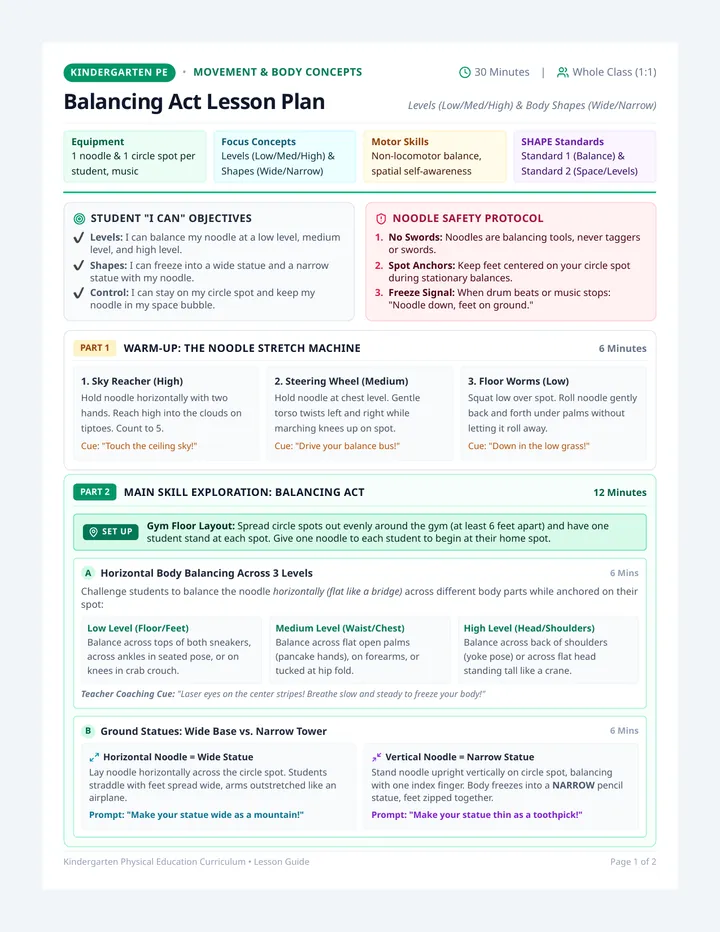
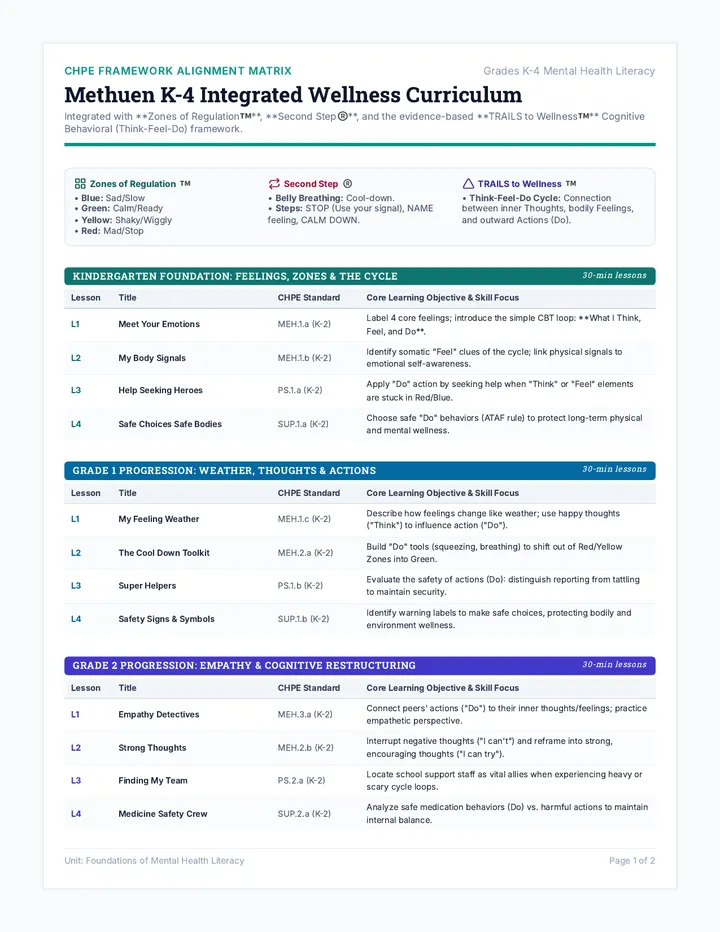
A comprehensive K-2 Physical Education curriculum aligned with New York State Physical Education Learning Standards, focusing on motor skill development, spatial awareness, and social-emotional learning through play-based discovery.
A two-week wellness unit for middle schoolers focused on analyzing influences (media, tech, values) and mastering health-enhancing decision-making models. Students culminate their learning by creating a collaborative research poster on a chosen wellness topic.
A comprehensive set of empathetic hygiene guides tailored for different age groups, from primary students to adults. The sequence focuses on building self-esteem and health through consistent, simple self-care routines.
A 12-week introductory cooking curriculum for elementary students focusing on safety, nutrition, and the emotional connection to food.
A comprehensive 7th-grade child development course focused on safety, basic caregiving, developmental milestones, and professional babysitting business skills. The curriculum is designed for 45-minute class periods and aligns with Urbandale CSD standards and proficiency scales.
A series of three 15-minute mini-lessons designed for small group interventions or PE warm-up discussions. The sequence focuses on the social, physical, and community consequences of horseplay in school settings.
A comprehensive 4-week high school health unit covering mental health, nutrition, substance use, and sexual health. Students analyze health behaviors, influence, and prevention strategies to promote lifelong well-being.
A sequence focused on teaching students about personal boundaries, body safety, and respectful physical interactions in a school environment.
A series of lessons focused on teaching young children about personal boundaries, body autonomy, and appropriate social interactions.
A 1-page print-ready dual-ticket sheet containing two identical half-page exit tickets with brief formative assessment questions on salon health hazards.
A 2-page print-ready station activity featuring four large, highly detailed task cards covering ventilation, ergonomics, hygiene, and mental health boundaries.
A 2-page student-facing guided notes organizer and a scenario analysis worksheet designed with clean, white, spacious areas for student writing.
An 8-slide presentation with large readable typography, clear structured visual blocks, and student discussion prompts on salon safety topics.
A 2-page print-ready teacher handbook containing pacing, step-by-step facilitation instructions, direct teaching scripts, discussion guides, misconceptions, and grading rubrics.
A 7-slide presentation deck used by teachers to guide students through the lesson. It includes slides for the opening reflection, exploring the 4 domains of self-care, co-constructing a menu of options, learning the habit-stacking formula, establishing healthy boundaries, and committing to action.
A 1-page guided student protocol for identifying potential obstacles to their self-care plan, brainstorming Plan B solutions, and engaging in boundary-setting role-play with structured scripts.
A 1-page rubrics and peer feedback scorecard for students to evaluate their self-care micro-plans against quality criteria, including specificity, habit stacking integration, realistic scope, and boundary protection.
A 1-page student menu and micro-planner where 9th graders select realistic, teen-friendly self-care options from across the 4 wellness domains and write down their customized, SMART-aligned plan for two daily micro-actions and one weekly action.
A 1-page student guide explaining the core pillars of a realistic self-care system: the 4 domains of self-care (physical, emotional, social, cognitive), the SMART criteria for micro-planning, and setting boundaries to protect your time.
A 1-page matching activity sheet where 9th graders learn and practice habit stacking. It features an explanation of James Clear's habit-stacking formula, a matching section pairing common school-day anchor habits with realistic self-care additions, and a creative application space.
A detailed 30-minute pacing guide, dialogue script, and safety questioning framework to assist teachers in delivering the 'Safety Shield Champions' lesson.
A comprehensive Grade 5 lesson focusing on physical, chemical, biological, and psychological health hazards in the cosmetology industry, equipping students with self-advocacy and prevention strategies.
A 45-minute wellness lesson for 9th graders where they design a customized, realistic self-care micro-plan. Students explore self-care domains, master habit stacking, establish boundaries to protect their time, and map personal barriers and support systems.
An empowering 30-minute personal safety lesson for kindergarteners using the 'Safety Shield' framework (Run, Yell, Tell, and Safe Touches) to teach them how to identify unsafe secrets and take action.
A comprehensive 45-minute personal safety lesson for 1st-grade students. It focuses on empowering children to understand their personal boundaries, confidently say 'no' to unsafe touches, distinguish between safe and unsafe secrets, and identify trusted adults.
A comprehensive Kindergarten body safety lesson that teaches students to recognize physical warning signs ('uh-oh' feelings), differentiate between safe and unsafe touch, and identify trusted adults.
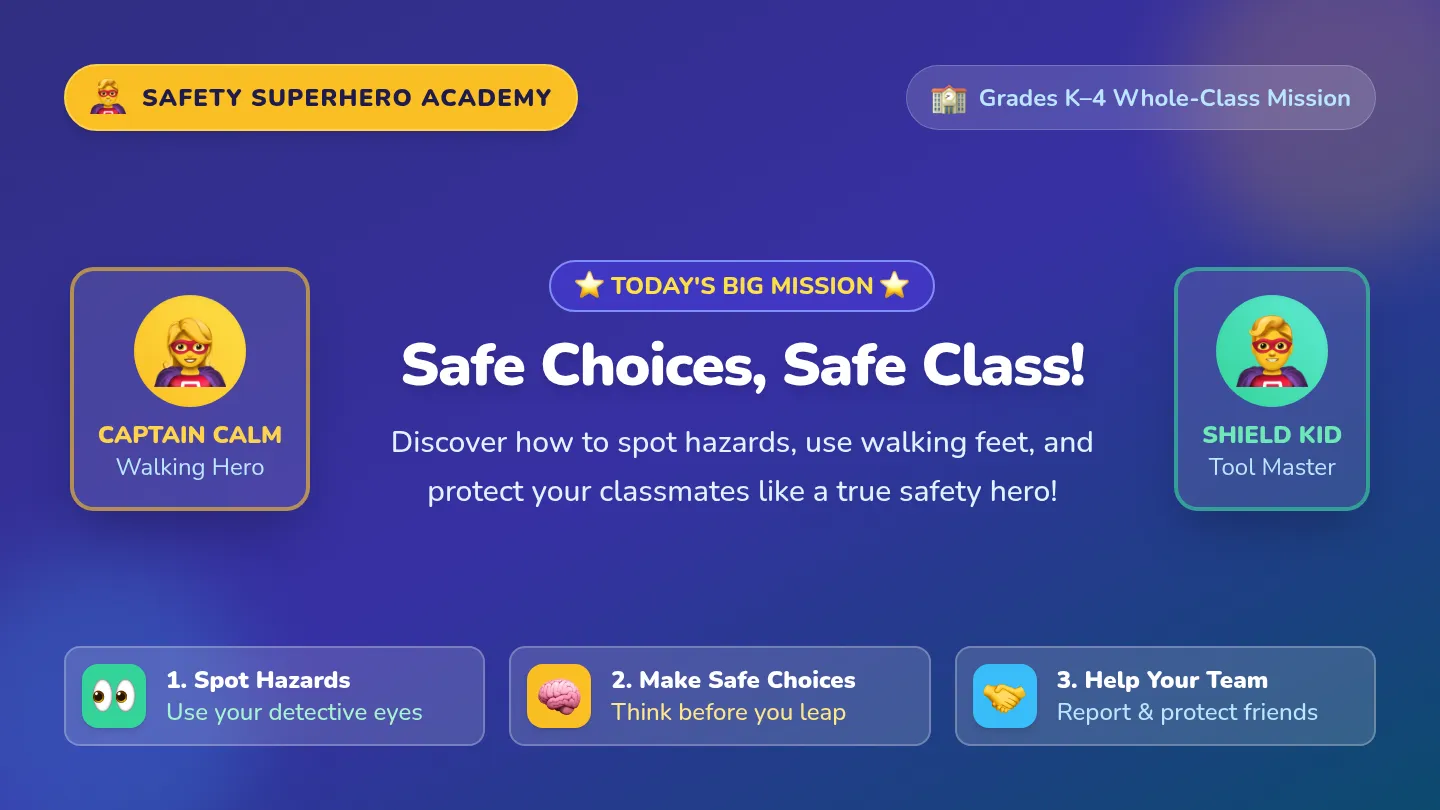
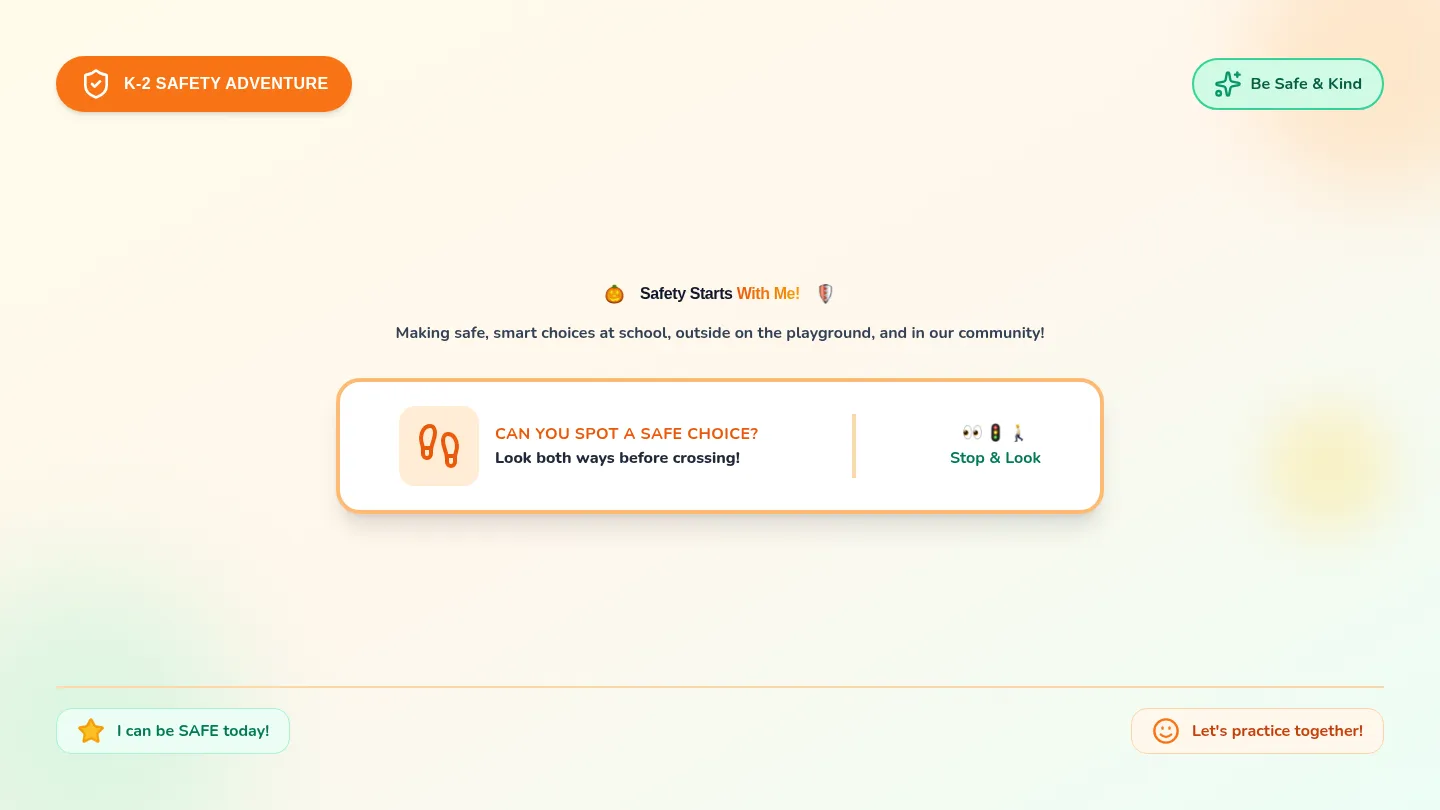
A lesson for 2nd graders to learn and practice making safer choices in the classroom using interactive 'Stop, Think, Choose' cards. It teaches students to keep their hands to themselves and use classroom tools safely.
A comprehensive lesson on resisting peer pressure using Botvin LST decision-making strategies, featuring structured scenarios, slide-guided instruction, and a graphic organizer.
A trauma-informed wellbeing lesson focused on healthy relationships, family dynamics, and safe social interactions for Year 2, 3, and 5 students. Aligned to the Western Australian SCSA Health curriculum, this resource features visual sorting tasks and conversational quizzes designed for quick, impactful 1:1 sessions.
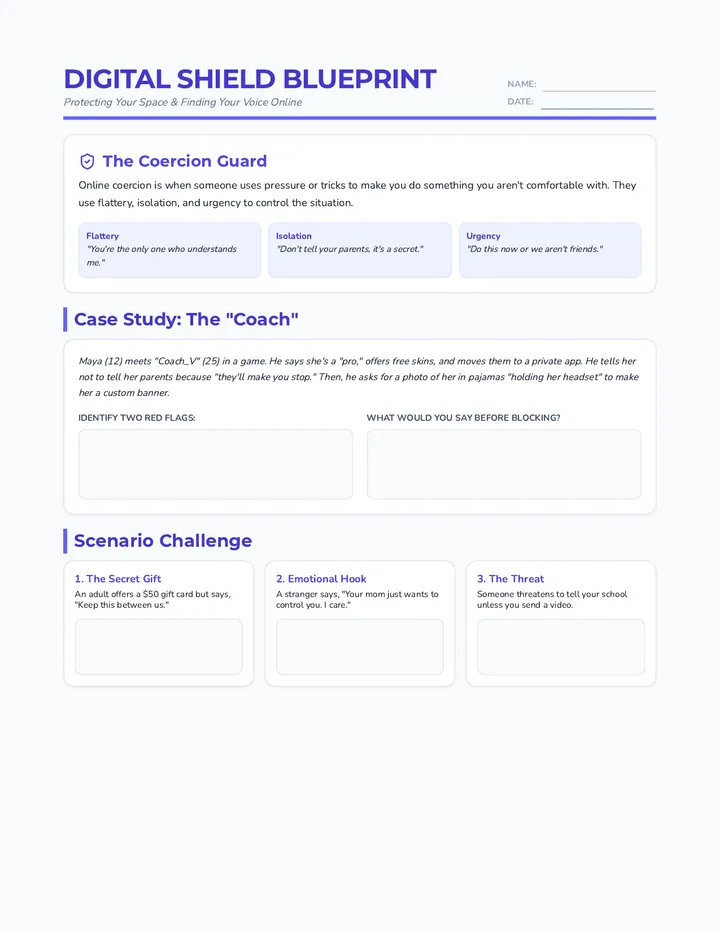
An interactive, high-impact middle school lesson plan focusing on healthy relationships, physical boundaries, and digital consent. Includes a step-by-step teacher guide, student blueprint worksheet, scenario sorting activity, and peer discussion cards.
Equip students with the social tools to resist peer pressure and the agency to choose a vape-free future. Students practice refusal scripts and reflect on their personal values.
Uncover the toxic truth behind aerosol ingredients and the deceptive marketing tactics used to target youth. Students analyze the disparity between "flavor" branding and chemical reality.
Investigate how nicotine hijacks the developing middle school brain and the science of the reward system. Students map the neural pathways affected by addiction and explore why young brains are particularly vulnerable.