Identifies common peer pressure tactics and builds assertive communication skills to set healthy boundaries. Equips students with specific refusal strategies for social situations and high-risk scenarios.
Session 4 equips students with personalized, gradual-reduction plans, craving-management toolkits, and peer support systems for sustained progress.
Session 3 focuses on identifying situational and emotional triggers, navigating social pressure, and practicing refusal skills in real-world scenarios.
Session 2 exposes the targeted marketing tactics used by e-cigarette corporations and helps students identify their own intrinsic motivators to reclaim control.
Session 1 introduces the group, establishes trust, and dismantles misconceptions around vape chemistry and its physical impact on the teen brain and body.
An end-of-unit project bundle where students act as public health advocates to design a PSA or select from a creative choice board, analyzing the short- and long-term physical and mental health effects of substance use.
A 45-minute media literacy and substance prevention lesson for 7th grade. Students decode vape, THC, and pill advertisements, apply a 5-step decision-making model, and practice assertive refusal skills and healthy stress-management alternatives.
A comprehensive 45-minute substance prevention lesson for 9th-grade students. It builds critical awareness of vaping, alcohol, and cannabis risks while equipping students with a four-step decision-making model, assertive refusal scripts, and a personal stress-coping plan.
A comprehensive lesson on resisting peer pressure using Botvin LST decision-making strategies, featuring structured scenarios, slide-guided instruction, and a graphic organizer.
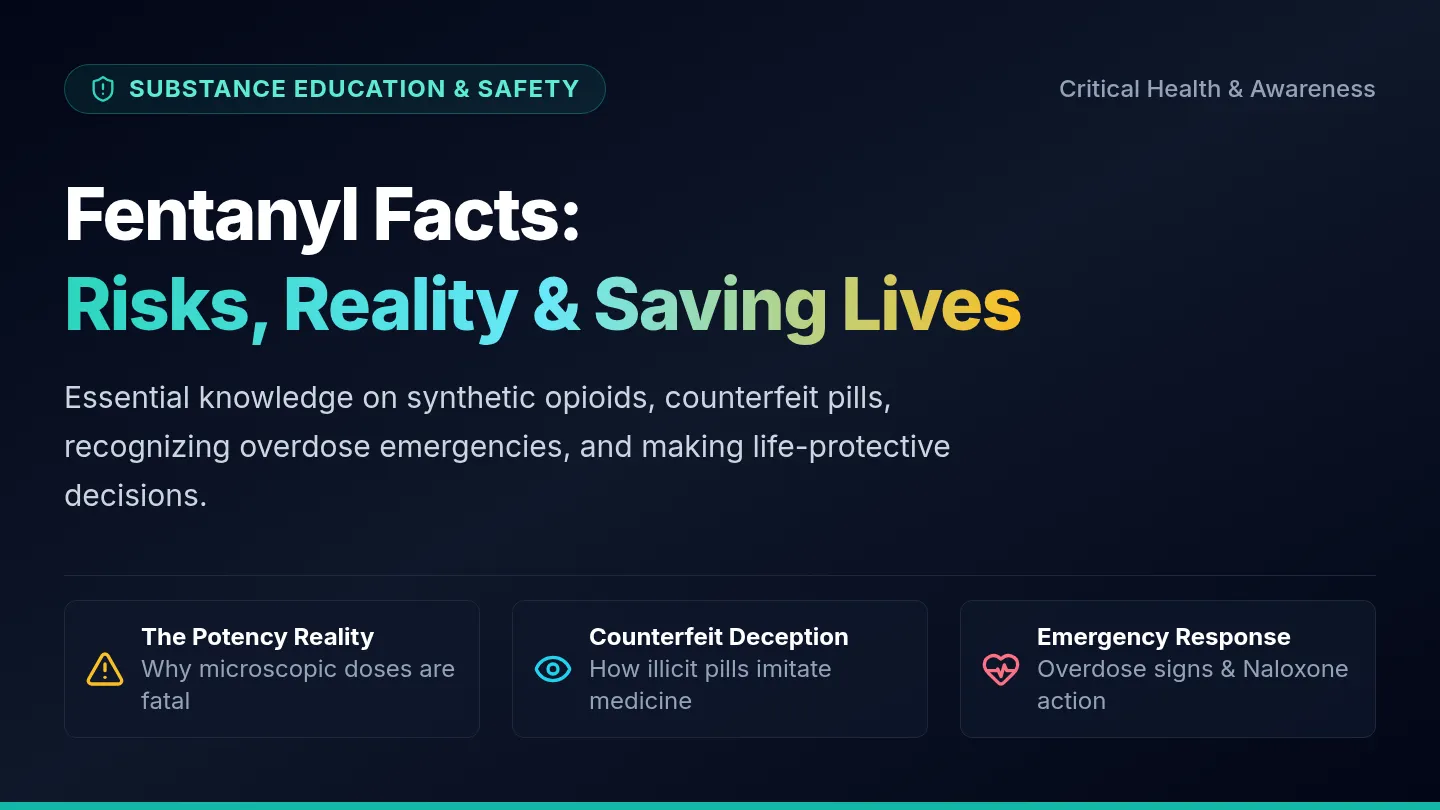
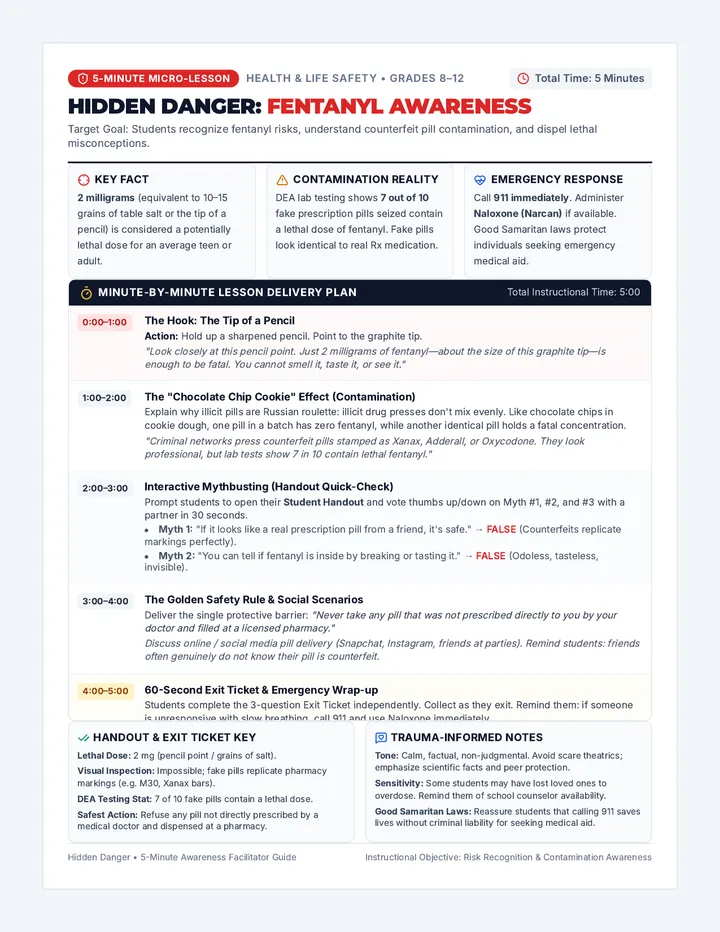
A critical drug education and safety lesson designed for middle or high school students, focusing on the dangers of illicit fentanyl, how fake prescription pills are manufactured to look identical to real medicine, refusal strategies, and emergency safety protocols. This lesson uses an interactive read-aloud scenario to engage students in critical thinking and real-world decision-making.
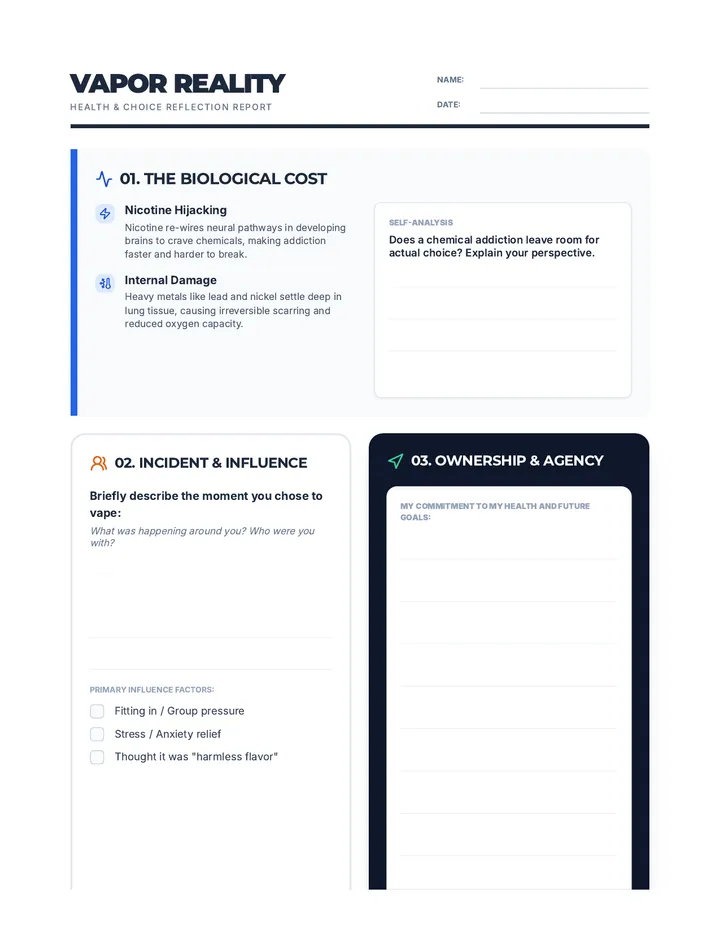
Equip students with the social tools to resist peer pressure and the agency to choose a vape-free future. Students practice refusal scripts and reflect on their personal values.
Uncover the toxic truth behind aerosol ingredients and the deceptive marketing tactics used to target youth. Students analyze the disparity between "flavor" branding and chemical reality.
Investigate how nicotine hijacks the developing middle school brain and the science of the reward system. Students map the neural pathways affected by addiction and explore why young brains are particularly vulnerable.
A 2-page student reflection journal for Session 4, providing personalized gradual-reduction plans, craving-management toolkits, and peer support systems for sustained progress.
A comprehensive, 2-page facilitator guide for Session 4, providing clinical frameworks for gradual nicotine reduction, troubleshooting for slips or setbacks, and instructions for forming long-term support plans.
A 2-page student reflection journal for Session 3, detailing personal trigger mapping exercises, habit-loop analysis, and low-friction peer refusal scripts.
A 2-page facilitator guide for Session 3, outlining clinical methodologies to map emotional and situational triggers, teaching low-friction refusal skills, and detailing the habit-loop intervention model.
A 2-page student reflection journal for Session 2, providing corporate trap analysis grids, subscription math calculation templates, and structured reflection areas for intrinsic motivators.
A 2-page facilitator guide for Session 2, providing instructions on exposing corporate youth-targeting strategies, utilizing healthy outrage as a clinical tool, and guiding students to find their intrinsic motivators.
A 2-page student reflection journal for Session 1, containing the Vapor Chemistry Map, the Dopamine Spike-Crash diagram, and a non-judgmental baseline self-audit worksheet.
A comprehensive, 2-page facilitator guide for Session 1, establishing group agreements, outlining clinical mindsets, providing a 50-minute pacing timeline, and giving step-by-step instructions for dismantling misconceptions about e-cigarette aerosol.
A 1-page print-ready grading rubric and self-reflection sheet based on standard H1.Su2.6, allowing teachers to score students across Levels 1-4 and students to self-reflect.
A 2-page print-ready graphic organizer for students to research, brainstorm, and structure the physical, mental, and social effects of their chosen substance, with dedicated spaces for Level 4 criteria.
A 2-page print-ready student project guide outlining the public health advocate scenario, chosen substance categories, and the detailed 3-option creative choice board.
A 6-slide presentation introducing the end-of-unit substance use advocacy project, breaking down short- and long-term physical and mental effects, detailing the creative choice board, and highlighting rubric expectations.
A comprehensive, 4-session harm reduction curriculum for high school support groups addressing vaping. Focuses on physical effects, industry marketing traps, trigger identification, and action-oriented gradual reduction plans.
An urgent, science-backed investigation into the reality of vaping, nicotine addiction, and industrial manipulation designed for middle school health education. Students explore the neurological impact of chemicals, deconstruct marketing tactics, and build practical refusal skills.
A series of lessons designed to educate high school students about the dangers of illicit drugs and promote healthy decision-making.
A two-week wellness unit for middle schoolers focused on analyzing influences (media, tech, values) and mastering health-enhancing decision-making models. Students culminate their learning by creating a collaborative research poster on a chosen wellness topic.
A comprehensive 10th-grade health sequence exploring the physical and mental health risks of cannabis use, focusing on respiratory health, mental health correlations, and dependency criteria (CUD).
A comprehensive tobacco and vaping cessation program focused on the science of addiction, long-term health impacts, and practical refusal and quitting strategies for students.
A middle school health and wellness unit focusing on substance safety, legal awareness, and decision-making regarding alcohol and marijuana.
A comprehensive 4-week high school health unit covering mental health, nutrition, substance use, and sexual health. Students analyze health behaviors, influence, and prevention strategies to promote lifelong well-being.
A comprehensive vaping prevention unit that covers health risks, the science of nicotine addiction, and social refusal strategies for middle and high school students.
A 2-day condensed unit for 10th-grade sports nutrition focused on identifying industry "Red Flags" and expert consensus for supplement safety. Students complete a digital Label Hunt and a final synthesis assessment to demonstrate mastery.
A sequence designed for 10-12 year olds to explore the psychological and social factors that influence decision-making, specifically regarding substance use. Students will learn to distinguish between internal emotions and external social pressures.
A multi-lesson unit designed to build mental health literacy, identify internal system alerts (Anxiety, Depression, Anger), and develop a sustainable toolkit of coping strategies. Students explore the 'Wellness Spectrum', 'Neuroplasticity', and the deceptive nature of 'System Bypasses' like substances.