Lenny.com
Explore
Create
ActivitiesNewMathEnglish Language ArtsScience & EngineeringSocial StudiesGlobal LanguagesHealth & Physical EducationSpecial EducationCounseling & Life SkillsArts & CreativityESL
Lenny.com
Lenny.com
Explore
Create
ActivitiesNewMathEnglish Language ArtsScience & EngineeringSocial StudiesGlobal LanguagesHealth & Physical EducationSpecial EducationCounseling & Life SkillsArts & CreativityESL
Lenny.com
Lenny.com

Solutions

Lenny for EducatorsLenny for SchoolsLenny for Districts

Product

ExploreSign inCreateSupportAbout

Resources

Getting startedMTSS Acceleration Program

© 2026 Lenny Learning Inc.

TermsPrivacyAccessibility
LinkedInInstagramX
Lenny

Breathing and Relaxation Techniques

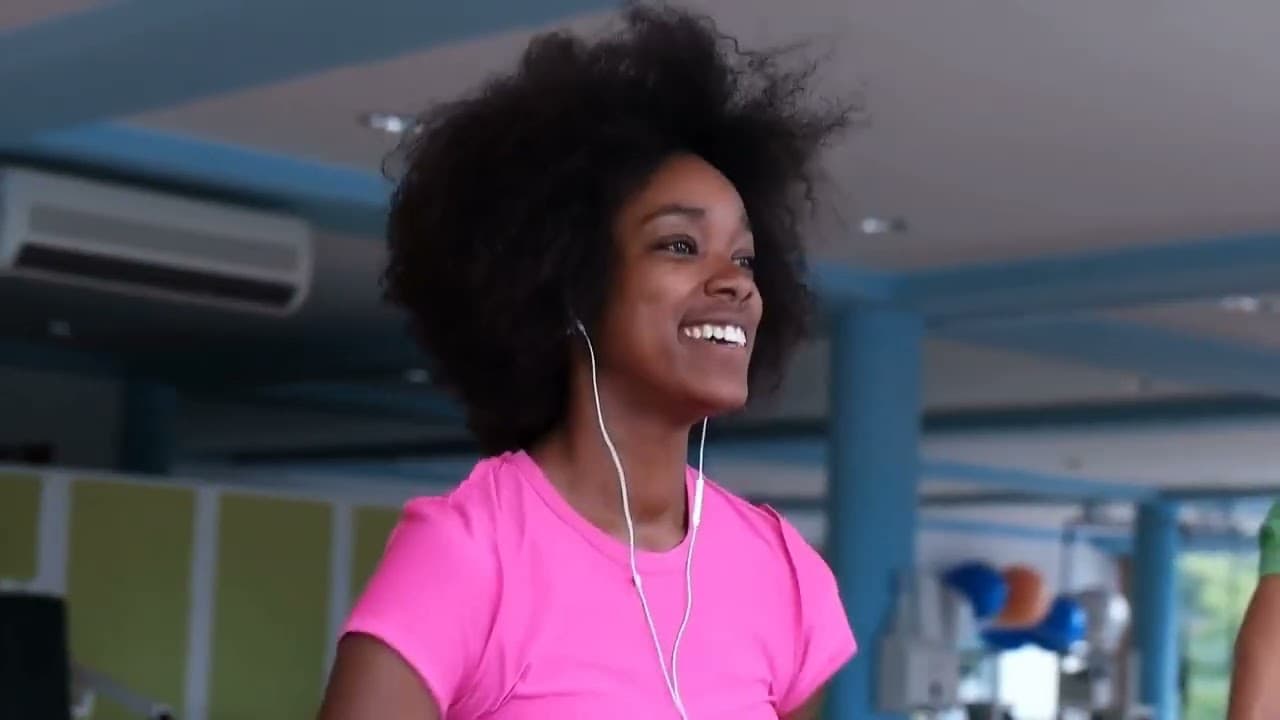
Guided breathing patterns and progressive muscle relaxation exercises to lower physiological stress markers. Builds self-regulation skills for managing anxiety and improving focus in high-pressure situations.

Health & Physical EducationMovement Skills and ConceptsBody ControlLocomotor SkillsNon-Locomotor SkillsFine Motor SkillsManipulative SkillsBalance and CoordinationSpatial AwarenessMovement PatternsRhythmic Activities and DanceRhythm and TimingDance BasicsIndividual and Dual SportsGymnastics and TumblingTrack and FieldRacket SportsSelf-Defense and Martial ArtsTeam SportsCooperative GamesSportsmanshipTeam CommunicationBasketball SkillsSoccer SkillsVolleyball SkillsFootball SkillsGame StrategiesFitness and Physical ActivityCardio FitnessFlexibility and StretchingMuscular Strength and EnduranceSetting Fitness GoalsHealthy HabitsHygiene PracticesSleep and RestPhysical Activity HabitsHydrationInjury PreventionBody Awareness and Self-CareDisease PreventionHealth Decision-MakingHelp-Seeking and Self-AdvocacyMental HealthMental Health BasicsEmotional AwarenessStress ManagementCoping StrategiesMindfulness PracticesBreathing and Relaxation TechniquesMeditation BasicsResilience and PerseveranceHealthy RelationshipsSocial and Emotional SkillsHelp-Seeking and Support SystemsDigital WellbeingNutritionNutrition BasicsFood GroupsBalanced MealsHealthy Eating HabitsReading Food LabelsPersonal SafetyRecognizing Unsafe SituationsHuman and Child TraffickingStranger DangerPersonal BoundariesFire and Water SafetyEmergency ResponseConflict Resolution BasicsInternet and Social Media SafetySafe Personal RelationshipsSubstance AwarenessTobacco AwarenessAlcohol AwarenessCannabis AwarenessOpioid AwarenessStimulant AwarenessPrescription Drug AwarenessRefusing Peer PressureOutdoor and Adventure ActivitiesOutdoor Recreation SafetyHiking and OrienteeringTeam Building Activities

Videos

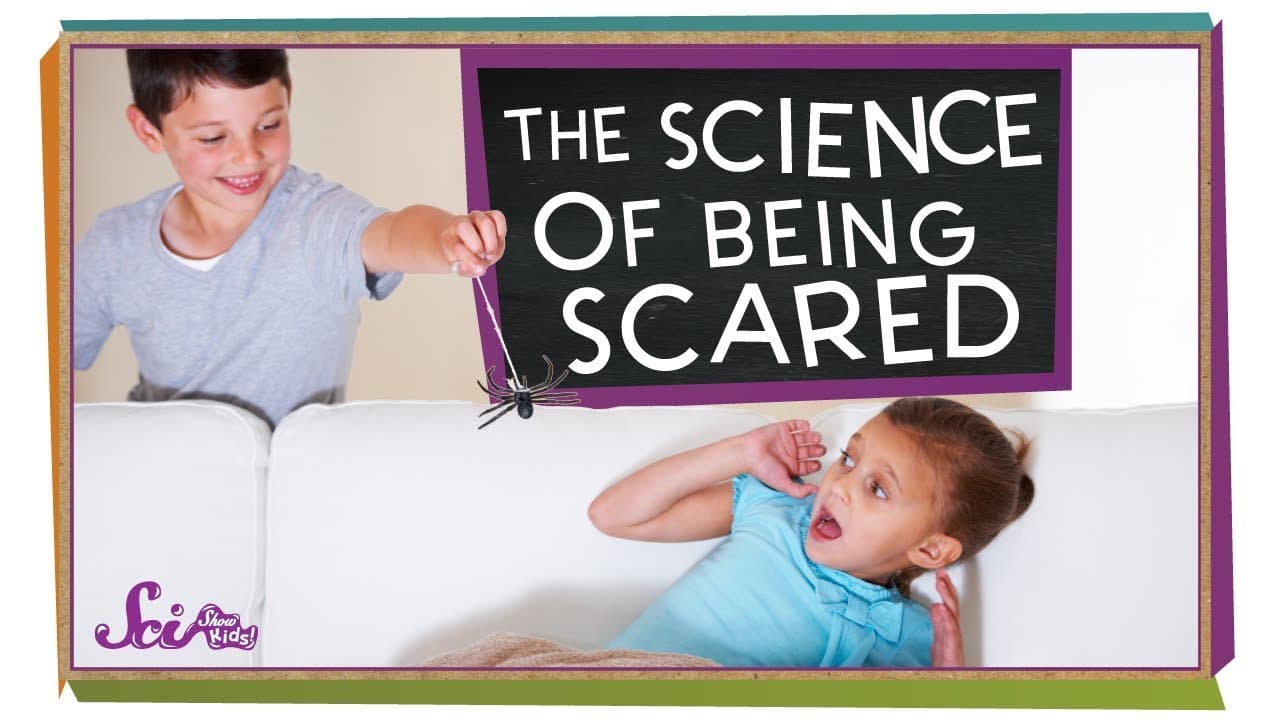
Why We Get Scared: The Fight or Flight Response

Why We Get Scared: The Fight or Flight Response

This educational video from SciShow Kids explores the biological and physiological reasons behind fear through the concept of the "fight or flight" response. Hosted by Jessi and her robot mouse friend Squeaks, the video uses a friendly skit involving a surprise scare to introduce how the brain and body react to perceived danger. It breaks down complex biological processes into child-friendly terms, explaining how the brain sends signals to organs like the heart and lungs to prepare the body for action. The video covers key themes such as instincts, the nervous system's automatic responses, and the connection between physical sensations and emotions. It distinguishes between the "fight" reaction (defending oneself) and the "flight" reaction (running away to safety), clarifying that these are automatic choices made by the brain, not conscious decisions. The video also details the physical symptoms of this response, such as increased heart rate, faster breathing, and sharper vision. For educators, this resource is excellent for both science and social-emotional learning (SEL) curricula. It helps students understand their own bodies by normalizing the physical sensations of fear, removing the stigma of being scared. The video concludes with a practical deep-breathing strategy to help manage these automatic responses, providing students with a tangible tool for emotional regulation in the classroom.

SciShow KidsSciShow Kids

3mins 59s

Keeping Your Brain Healthy

Keeping Your Brain Healthy

This educational video outlines practical, everyday strategies for maintaining and improving mental wellness, framing brain health as an active process similar to physical fitness. It introduces viewers to actionable habits such as practicing mindfulness, minimizing screen time, spending time in nature, maintaining a balanced diet, and seeking professional support when needed. The narration emphasizes that mental health requires consistency and patience, just like exercising any other muscle in the body. Key themes explored include the mind-body connection, digital wellness, the therapeutic benefits of nature, and the destigmatization of seeking therapy. The video explicitly connects lifestyle choices—like nutrition and exercise—directly to cognitive function and emotional well-being. It also addresses the impact of substance use on brain health, providing a holistic view of what it means to stay mentally fit. For educators, this video serves as an excellent primer for Social Emotional Learning (SEL) units focused on self-care, stress management, and health education. It provides a non-threatening entry point for discussing mental health, normalizing the idea of "brain check-ups," and empowering students with tangible tools they can use immediately to manage stress and anxiety.
Brain Health BootcampBrain Health Bootcamp

1min 48s

Materials

Daily Recharge Break Workbook

Daily Recharge Break Workbook

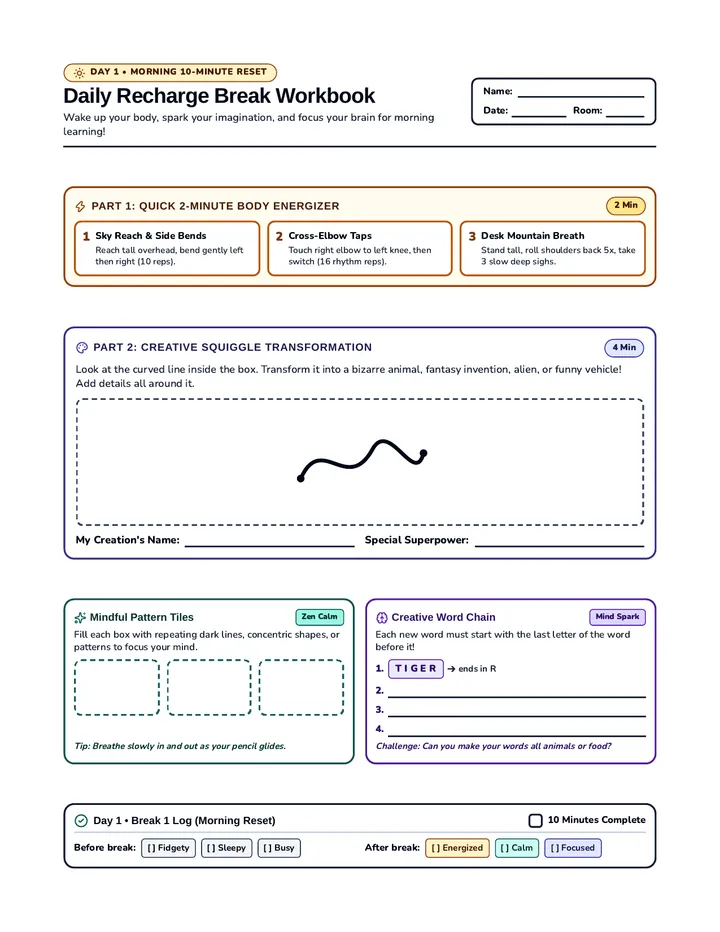
A complete 12-page high-contrast printable 3rd grade break workbook covering 6 full days (12 sessions total: morning reset and afternoon studio each day), pairing 2-minute movement warmups with squiggles, inventions, blueprints, comics, and focus puzzles, all optimized for dark printing.

T

Tyler.Tavares

Healthy Me Worksheet

Healthy Me Worksheet

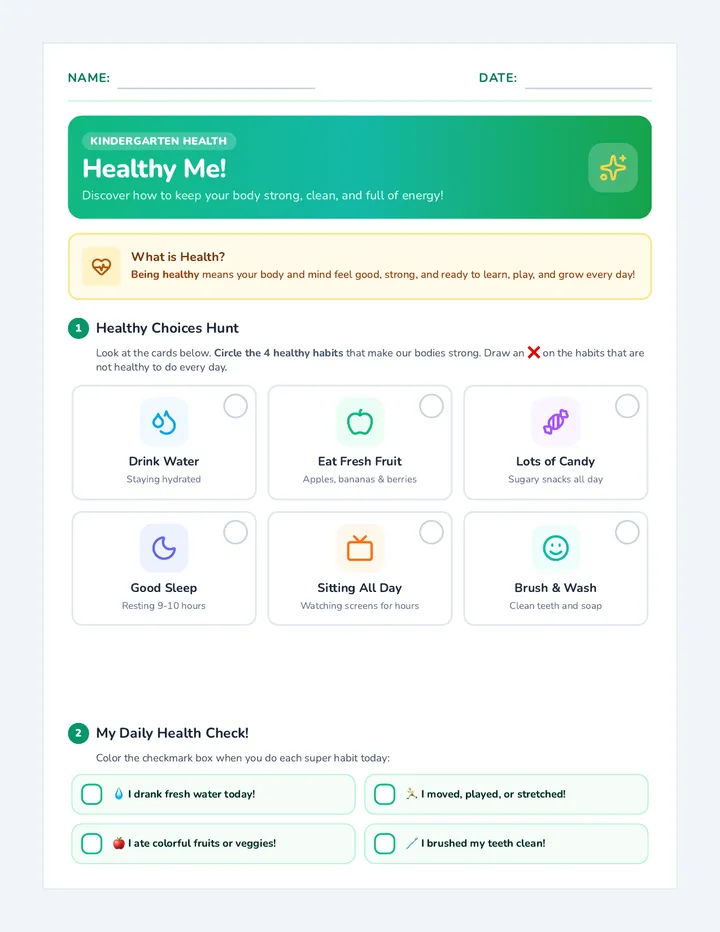
A 2-page print-ready Kindergarten and 1st Grade worksheet exploring the fundamentals of health, including physical habits, nutrition, hygiene, emotional well-being, and a guided draw-and-write reflection.

S

SD

Calm Motion Worksheet

Calm Motion Worksheet

A two-page student worksheet combining yoga postures and breathing techniques for stress relief and emotional regulation. Includes visual step-by-step cue cards, before-and-after tension check-ins, a guided reset sequence, and structured emotional regulation reflection prompts.

CS

Charity Stolworthy

Motion Station Break Cards

Motion Station Break Cards

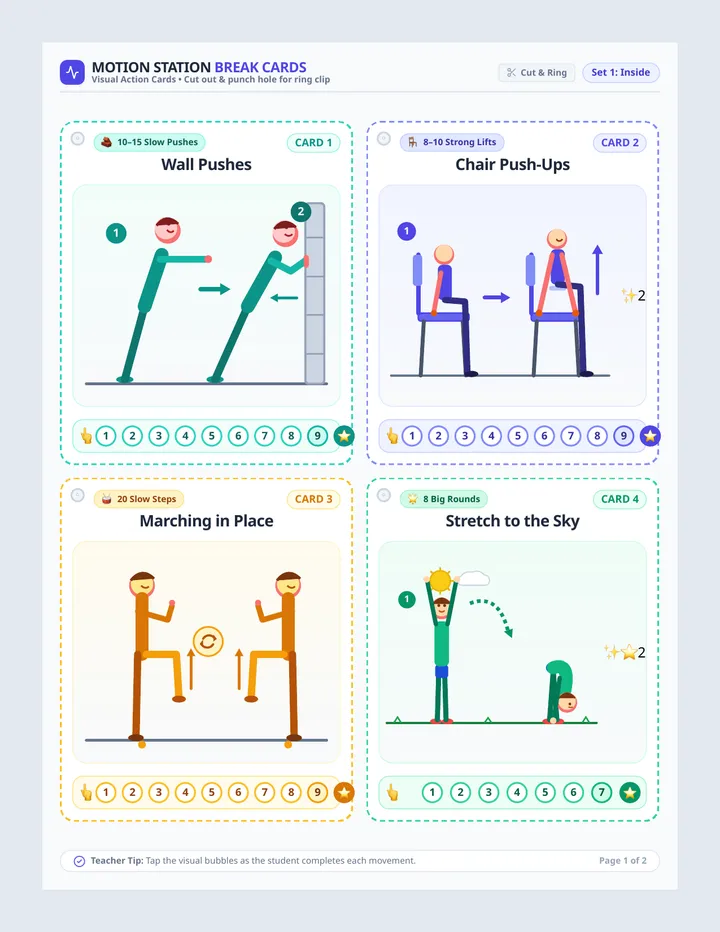
Printable set of 8 movement break cards with prominent titles, tactile counting bubbles, and a completely redesigned Card 7 (Starfish Breaths) featuring an ultra-clean 5-finger tracing track with paired green inhale and blue exhale paths.

L

lhicks

Operation Ice Cube Slides

Operation Ice Cube Slides

A concise 3-slide morning announcement presentation for K-4 students about staying cool. Covers hydration, shade, identifying 'Heat Grumpiness,' and using coping tools like breathing and asking for help. Designed for informational delivery without interactive prompts.

DG

Devlin Gauthier

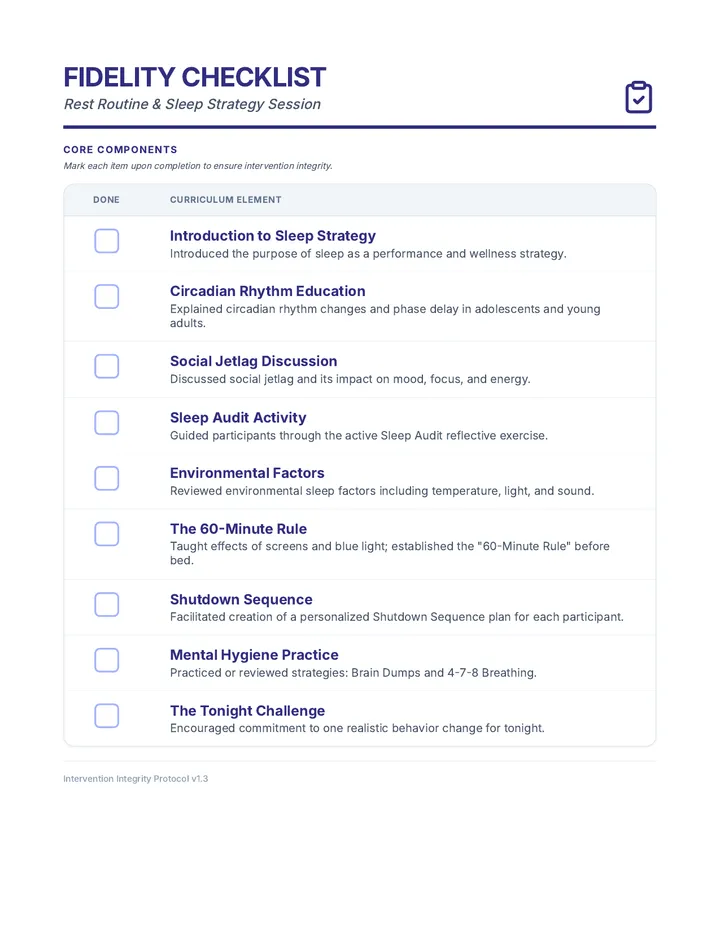
Rest Routine Fidelity Checklist v3

Rest Routine Fidelity Checklist v3

A final streamlined version of the fidelity checklist focusing solely on core components. Removed session metadata, observation sections, and the signature line for a clean, simple verification tool.

CL

Chloe LeBlanc

Sequences

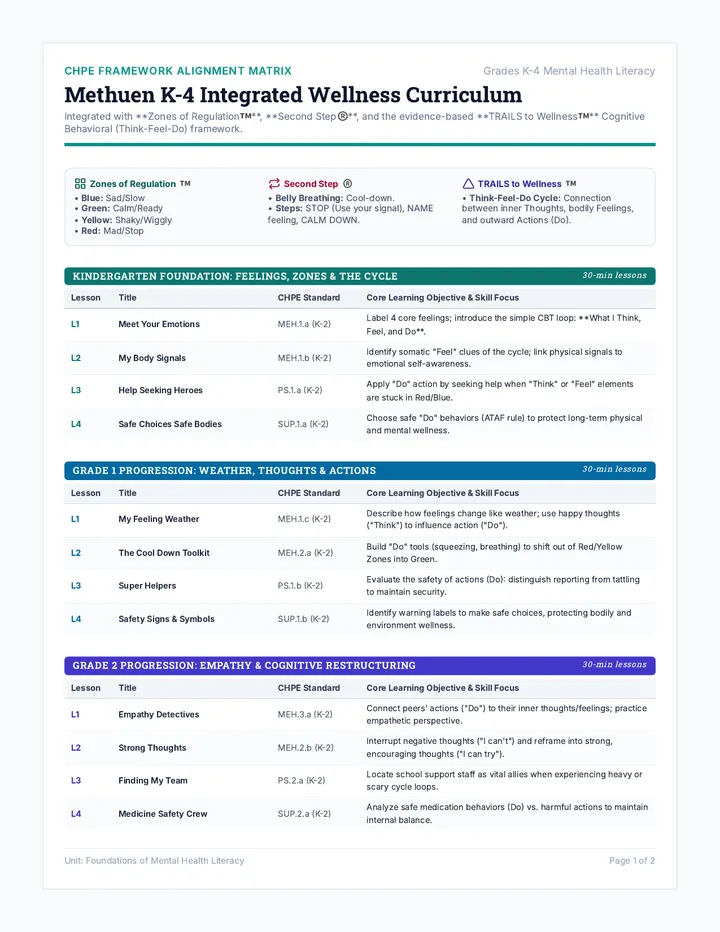
Methuen Wellness Curriculum Reference Sheet

Methuen K-4 Integrated Wellness Curriculum

A comprehensive, developmentally appropriate mental health literacy curriculum for elementary students (Grades K-4) aligned with the CHPE Framework. This curriculum delivers structured lessons across multiple grades covering emotion identification, physical body signals, trusted helpers, and safe choices, integrated with Zones of Regulation, Second Step, and TRAILS to Wellness.

JC

John Crocker

61
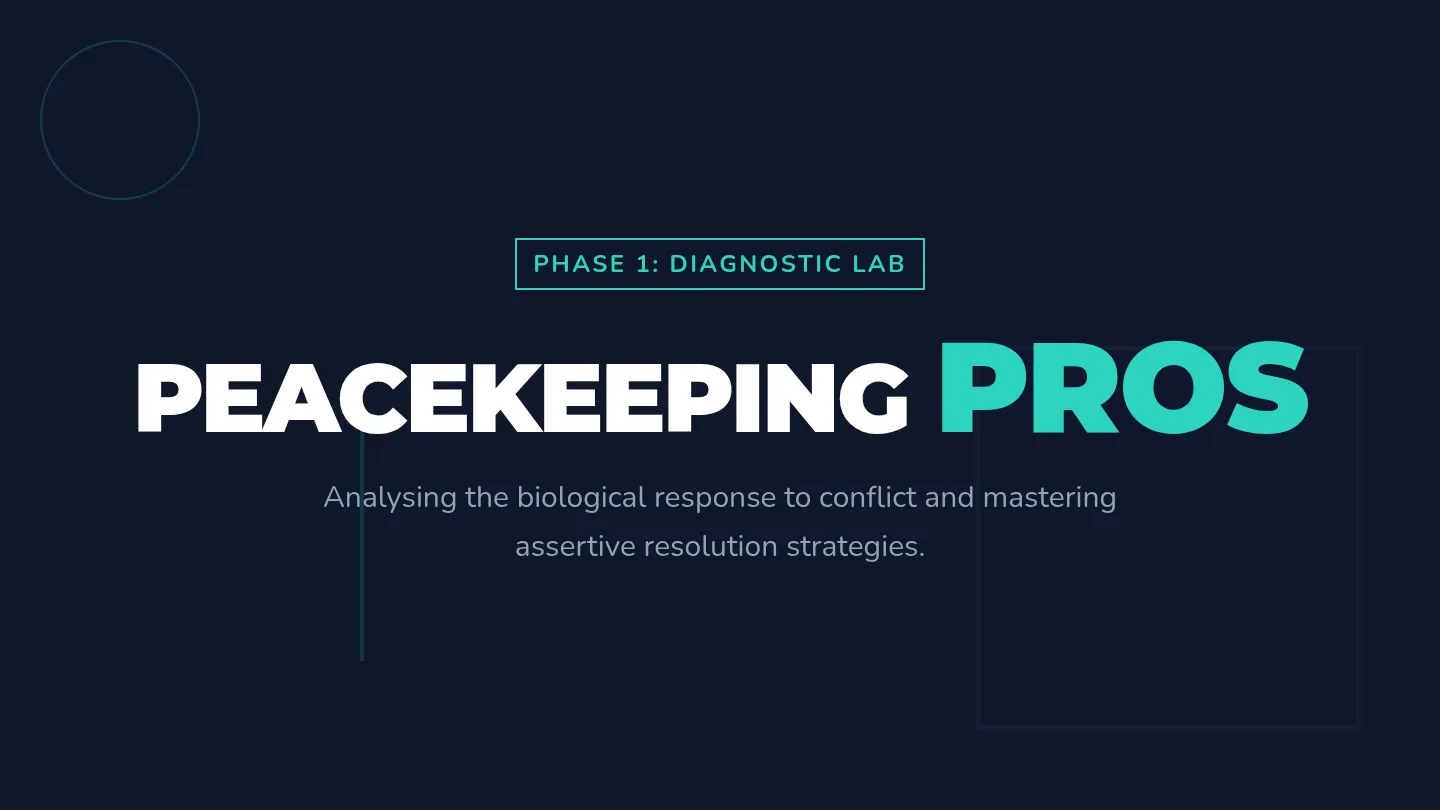
Peacekeeper Slides Presentation

Social Harmony Sequence

A comprehensive sequence of lessons for secondary students (Yr 7-8) focused on conflict resolution, social media responsibility, and assertive communication in both physical and digital spaces.

KH

Kellee Hodge

29
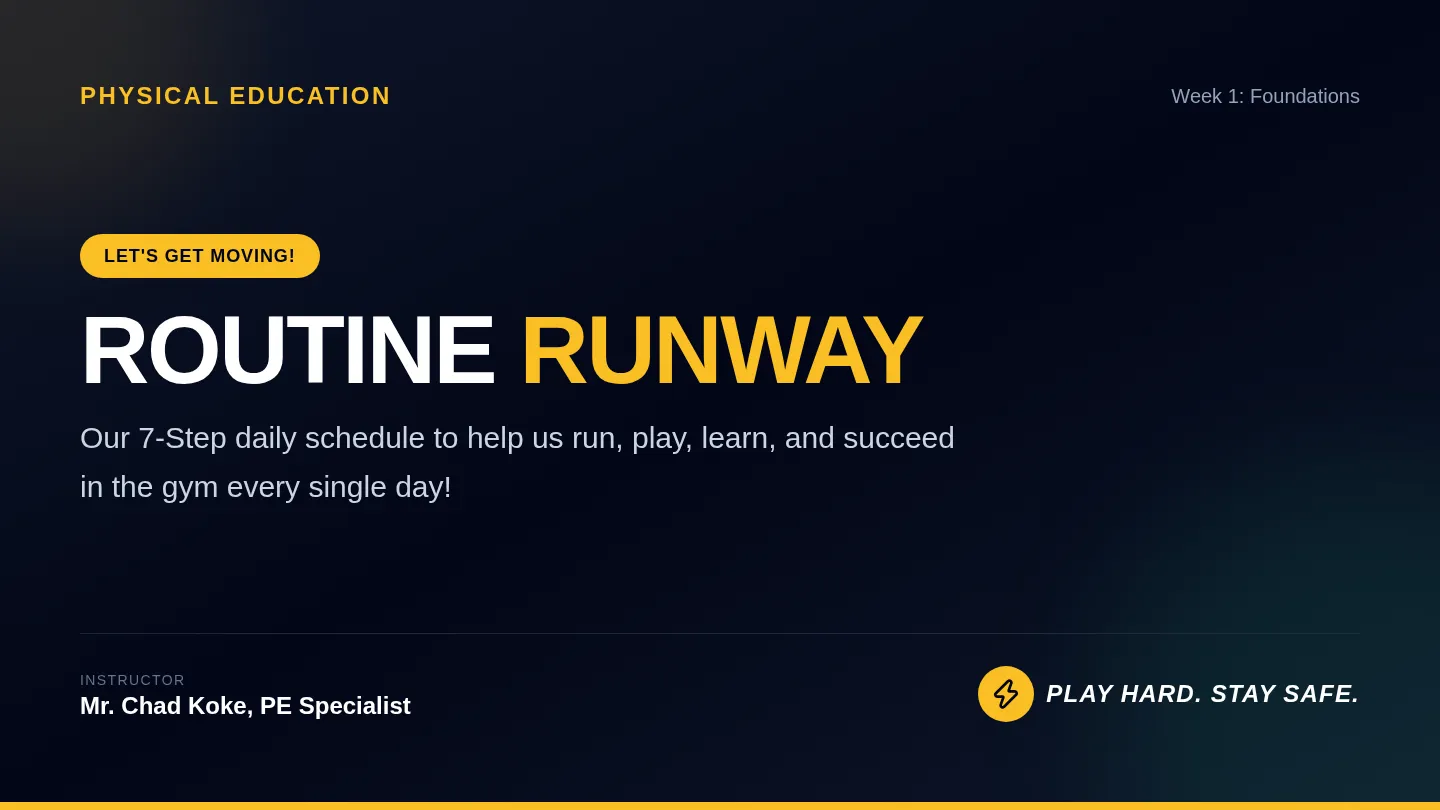
Routine Runway Slides

Gym Foundations

A comprehensive physical education unit for the first weeks of school, focusing on establishing solid daily routines, teaching safety rules, and practicing self-regulation using the Gym Reset System. It sets primary elementary students up for a safe, structured, and active year.

C

Chad.Koke

16
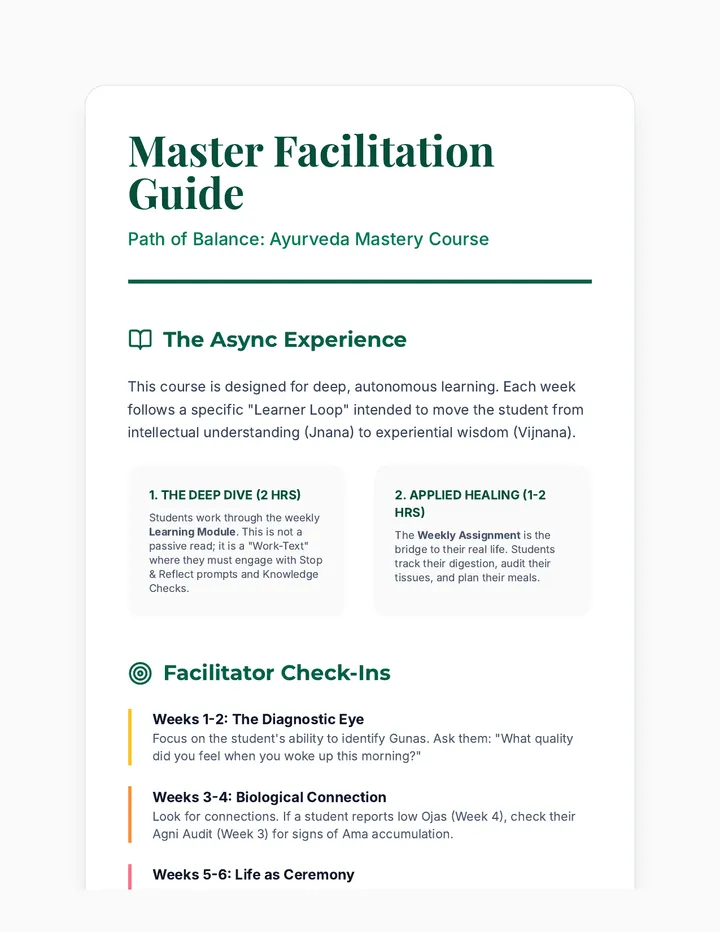
Master Facilitation Guide

Path of Balance Mastery

A professional 6-week certification-style journey into Ayurveda. Each week features a comprehensive 2-hour 'Deep Dive Module' combining academic reading, interactive reflections, and knowledge checks, supported by practical 'Applied Healing' assignments (1-2 hours) for real-world integration.

AJ

Ann John

13
Vaping Illusion Slides

Clear Air Quest

A comprehensive 5-day unit designed to educate students on the physiological effects of vaping and provide actionable, healthy coping mechanisms like deep breathing and mindfulness.

DH

Destiny Hancock

10
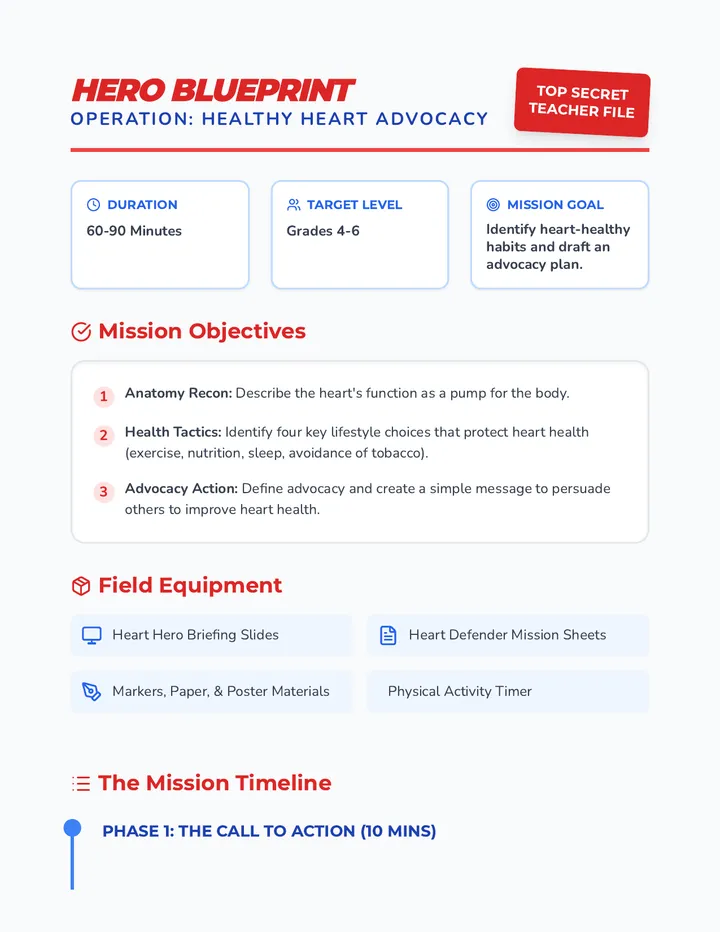
Hero Blueprint Lesson Plan

Heart Hero HQ

A comprehensive lesson sequence designed to empower students to become 'Heart Heroes' through education and advocacy for cardiovascular health.

KB

Kelly Brown

6