Lenny.com
Explore
Create
ActivitiesNewMathEnglish Language ArtsScience & EngineeringSocial StudiesGlobal LanguagesHealth & Physical EducationSpecial EducationCounseling & Life SkillsArts & CreativityESL
Lenny.com
Lenny.com
Explore
Create
ActivitiesNewMathEnglish Language ArtsScience & EngineeringSocial StudiesGlobal LanguagesHealth & Physical EducationSpecial EducationCounseling & Life SkillsArts & CreativityESL
Lenny.com
Lenny.com

Solutions

Lenny for EducatorsLenny for SchoolsLenny for Districts

Product

ExploreSign inCreateSupportAbout

Resources

Getting startedMTSS Acceleration Program

© 2026 Lenny Learning Inc.

TermsPrivacyAccessibility
LinkedInInstagramX
Lenny

Body Awareness and Self-Care

Fundamental hygiene practices, nutrition, and physical activity routines for daily wellness. Develops recognition of physical sensations and personal boundaries to support long-term health.

Health & Physical EducationMovement Skills and ConceptsBody ControlLocomotor SkillsNon-Locomotor SkillsFine Motor SkillsManipulative SkillsBalance and CoordinationSpatial AwarenessMovement PatternsRhythmic Activities and DanceRhythm and TimingDance BasicsIndividual and Dual SportsGymnastics and TumblingTrack and FieldRacket SportsSelf-Defense and Martial ArtsTeam SportsCooperative GamesSportsmanshipTeam CommunicationBasketball SkillsSoccer SkillsVolleyball SkillsFootball SkillsGame StrategiesFitness and Physical ActivityCardio FitnessFlexibility and StretchingMuscular Strength and EnduranceSetting Fitness GoalsHealthy HabitsHygiene PracticesSleep and RestPhysical Activity HabitsHydrationInjury PreventionBody Awareness and Self-CareDisease PreventionHealth Decision-MakingHelp-Seeking and Self-AdvocacyMental HealthMental Health BasicsEmotional AwarenessStress ManagementCoping StrategiesMindfulness PracticesBreathing and Relaxation TechniquesMeditation BasicsResilience and PerseveranceHealthy RelationshipsSocial and Emotional SkillsHelp-Seeking and Support SystemsDigital WellbeingNutritionNutrition BasicsFood GroupsBalanced MealsHealthy Eating HabitsReading Food LabelsPersonal SafetyRecognizing Unsafe SituationsHuman and Child TraffickingStranger DangerPersonal BoundariesFire and Water SafetyEmergency ResponseConflict Resolution BasicsInternet and Social Media SafetySafe Personal RelationshipsSubstance AwarenessTobacco AwarenessAlcohol AwarenessCannabis AwarenessOpioid AwarenessStimulant AwarenessPrescription Drug AwarenessRefusing Peer PressureOutdoor and Adventure ActivitiesOutdoor Recreation SafetyHiking and OrienteeringTeam Building Activities

Videos

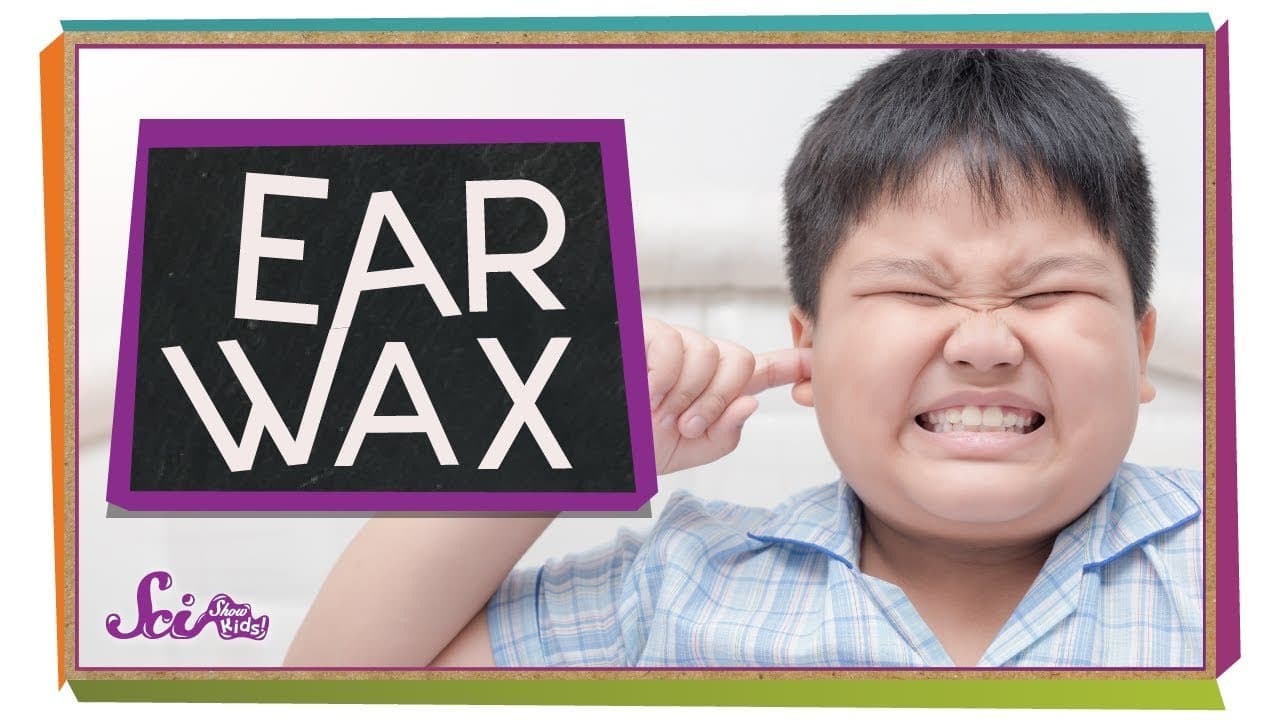
Why Our Ears Make Wax and How It Protects Us

Why Our Ears Make Wax and How It Protects Us

This engaging episode of SciShow Kids explores the science behind earwax, scientifically known as cerumen. Host Jessi and her robot rat friend Squeaks explain what earwax is, where it comes from, and the vital role it plays in keeping our ears healthy. Through colorful animations and clear explanations, the video demystifies a bodily function that children often find "gross" but intriguing. The video breaks down the anatomy of the ear, specifically the ear canal, and uses accessible metaphors to explain how earwax acts as a self-cleaning mechanism. Key topics include the production of cerumen, how jaw movement helps move wax out of the ear, and the three main jobs of earwax: moisturizing the ear canal, removing dead skin cells, and trapping germs and dust to protect the eardrum. Ideally suited for early elementary science and health curriculums, this resource serves as excellent material for teaching body systems, hygiene, and personal safety. It directly addresses the common childhood habit of putting objects in ears, providing a scientific explanation for why ears are best left alone to clean themselves. Teachers can use this to spark discussions about how different parts of the body have specific protective functions.

SciShow KidsSciShow Kids

2mins 32s

Exploring How Our Eyes Work

Exploring How Our Eyes Work

This educational video provides a comprehensive and age-appropriate introduction to the human eye, explaining its function as a sense organ and its role in daily life. It covers the biological basics of how eyes gather information, the diversity of eye colors due to genetics, and the physiological function of tears. The narrative transitions seamlessly from biology to practical health advice, emphasizing the importance of hygiene, nutrition, and protection from the sun. A significant portion of the video is dedicated to vision health, normalizing the use of glasses and the role of optometrists. It explains why some people see differently and how glasses act as "special helpers," demystifying the experience of visiting an eye doctor. This helps reduce anxiety children might feel about eye exams or wearing corrective lenses. For educators, this resource is an excellent tool for units on the human body, the five senses, or personal health and hygiene. It offers clear visual examples of healthy habits and provides a springboard for discussions about genetics (eye color), diversity (physical differences), and when to seek help from an adult regarding health concerns.

Next Generation ScienceNext Generation Science

3mins 4s

Why Eating a Healthy Breakfast Matters

Why Eating a Healthy Breakfast Matters

This concise educational video explains the physiological and behavioral importance of eating a nutritious breakfast. It breaks down how the first meal of the day provides essential fuel for the body and brain, highlighting specific benefits such as improved concentration in school, a boosted metabolism, and better appetite control throughout the rest of the day. The narration is clear and accessible, making complex concepts like metabolism easy for younger students to understand. The video visually demonstrates a variety of healthy breakfast options, moving beyond sugary cereals to showcase balanced meals like oatmeal with fruit, whole grain avocado toast with eggs, and greek yogurt parfaits. It introduces the nutritional triad of carbohydrates, proteins, and healthy fats, explaining why this combination is crucial for sustained energy and satiety. Visuals alternate between students engaging in academic and physical activities and high-quality close-ups of appetizing, healthy food preparations. For educators, this resource serves as an excellent hook for units on nutrition, health, and human biology. It connects biological needs (nutrients) with practical daily choices, empowering students to take ownership of their morning routine. The video is particularly useful for initiating discussions about healthy habits, analyzing food groups, and planning balanced menus in Health or Science classes.

Next Generation ScienceNext Generation Science

1min 19s

What Happens During a Dental Checkup

What Happens During a Dental Checkup

In this engaging episode of SciShow Kids, host Jessi and her robot friend Squeaks explore exactly what happens during a visit to the dentist. After returning from her own appointment with a "goody bag" of dental supplies, Jessi breaks down the step-by-step process of a professional teeth cleaning. She introduces the role of the dental hygienist and explains the specific tools used to keep teeth healthy, demystifying the strange noises and sensations children experience in the dental chair. The video covers key oral health concepts including plaque buildup, the formation of cavities, and the purpose of X-rays. It provides detailed, age-appropriate explanations for various dental instruments like the metal scaler, the electric scaler (water sprayer), the suction tube, and the polisher. Through clear animations and friendly narration, the video explains why daily brushing isn't always enough and why professional checkups are necessary to remove hardened plaque and check for cavities. This resource is an excellent tool for health education and social-emotional learning, particularly for alleviating anxiety about dental visits. By familiarizing students with the sights, sounds, and vocabulary of a dental appointment, teachers can help transform a potentially scary experience into an understandable routine. It connects well to units on community helpers, body systems, personal hygiene, and healthy habits for early elementary students.

SciShow KidsSciShow Kids

4mins 12s

Why Sleep Is Important for Your Brain and Body

Why Sleep Is Important for Your Brain and Body

In this engaging episode of SciShow Kids, host Jessi and her robot mouse friend Squeaks explore the biological necessity of sleep. Starting with a relatable scenario where Jessi feels tired from a lack of rest, the video breaks down exactly what happens to the human body during slumber. It explains complex biological processes in age-appropriate terms, covering how the body conserves energy, heals itself, fights off germs, and physically grows during the night. The video places a special emphasis on the brain's role during sleep, using helpful metaphors like a "filing cabinet" to explain how the brain organizes memories and emotions. It addresses the consequences of sleep deprivation—such as lack of focus and irritability—and offers practical advice for better sleep hygiene. Key strategies introduced include establishing a consistent bedtime routine and avoiding electronic screens that can trick the body into thinking it is still daytime. For educators, this resource is an excellent tool for Health and Science units focused on the human body, self-care, and social-emotional learning. It provides a scientific basis for rules like bedtimes and screen limits, helping students understand the "why" behind healthy habits. The clear visual explanations of energy conservation and memory processing make abstract concepts concrete for young learners, facilitating discussions about self-regulation and physical well-being.

SciShow KidsSciShow Kids

3mins 33s

Exploring the Five Food Groups and Healthy Eating

Exploring the Five Food Groups and Healthy Eating

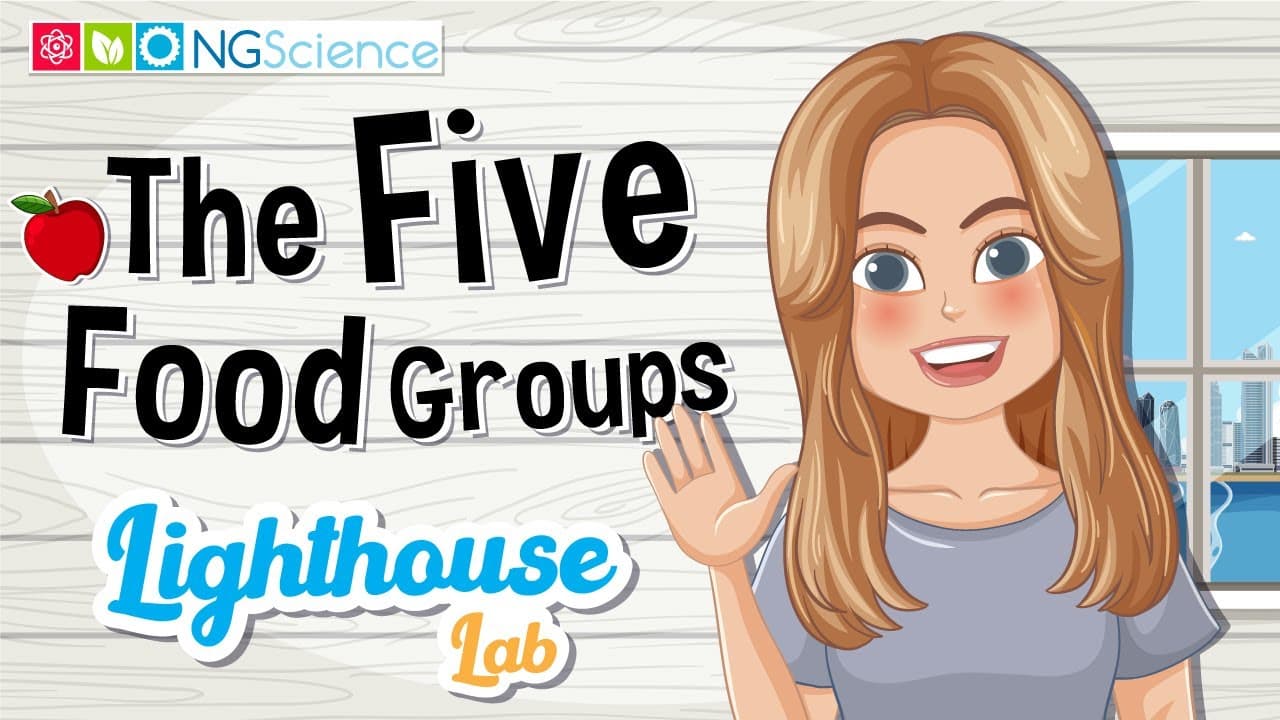
This educational video from the Lighthouse Lab introduces young students to the five major food groups and the basics of nutrition. Through clear narration and vibrant visuals, the host explains how different foods provide specific benefits to the human body, such as energy from grains, vitamins from fruits and vegetables, muscle-building power from proteins, and bone-strengthening calcium from dairy. The video explores key themes of healthy eating, biological functions of nutrients, and food categorization. It breaks down complex nutritional concepts into digestible segments, explicitly categorizing common foods like apples, carrots, bread, chicken, and milk. It also addresses "sometimes foods" like candy and ice cream, explaining why they don't fit into the main nutritional groups due to high sugar, fat, or salt content. For educators, this video serves as an excellent foundational tool for health and science curriculums. It provides a structured framework for discussing diet and biology, offering clear visual examples that help students recognize and classify the foods they eat every day. The content naturally leads into activities about meal planning, identifying plant parts, and making healthy lifestyle choices.
Next Generation ScienceNext Generation Science

4mins 28s

Materials

Little Steps Planner Template

Little Steps Planner Template

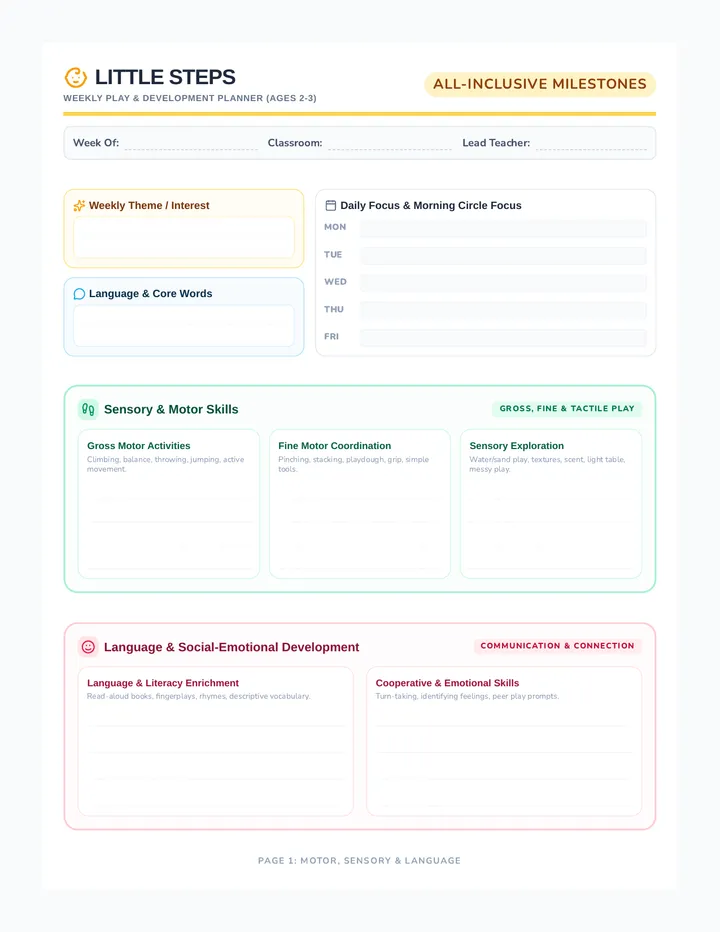
A beautifully structured, 2-page weekly lesson plan template specifically designed for 2 and 3-year-olds. It features dedicated blank writing spaces for sensory, motor, language, social-emotional, creative, and cognitive developmental milestones to support holistic early childhood planning.

MO

Michelle Owens

Snap Crackle Treats Recipe Card

Snap Crackle Treats Recipe Card

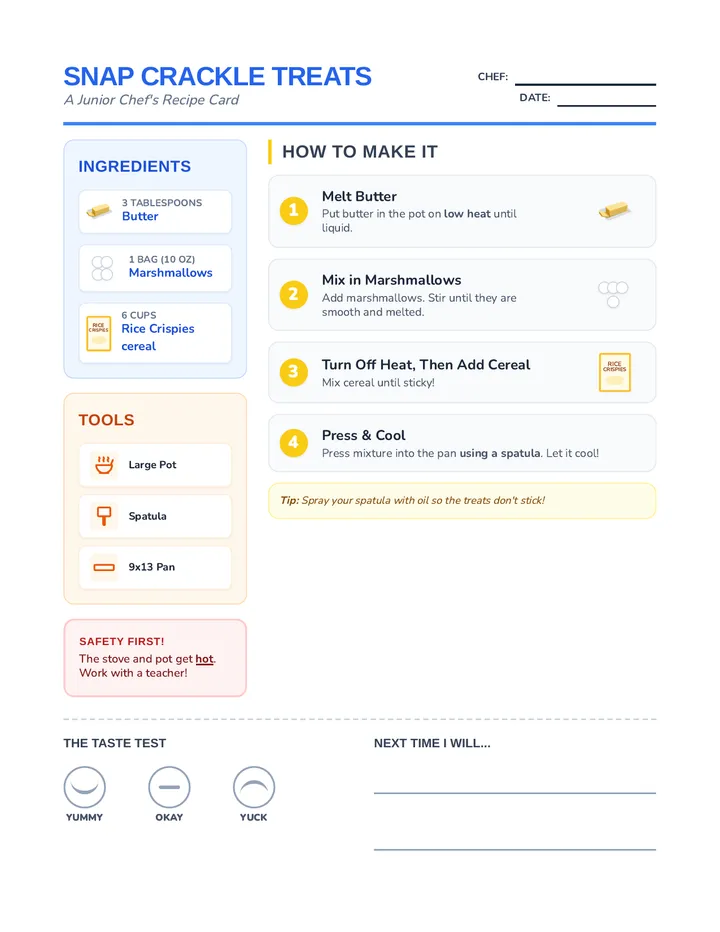
A simplified, single-page picture recipe for Rice Krispie treats. It features illustrations for the three core ingredients (including a labeled Rice Crispies box) and the three kitchen tools, with clear stovetop instructions and an expanded student reflection area. Safety instructions have been updated for a classroom setting. Step 3 heading explicitly includes turning off the heat. Cereal is labeled as "Rice Crispies cereal" in the ingredients list.

SE

Sarah Endo

Healthy Choices Slides

Healthy Choices Slides

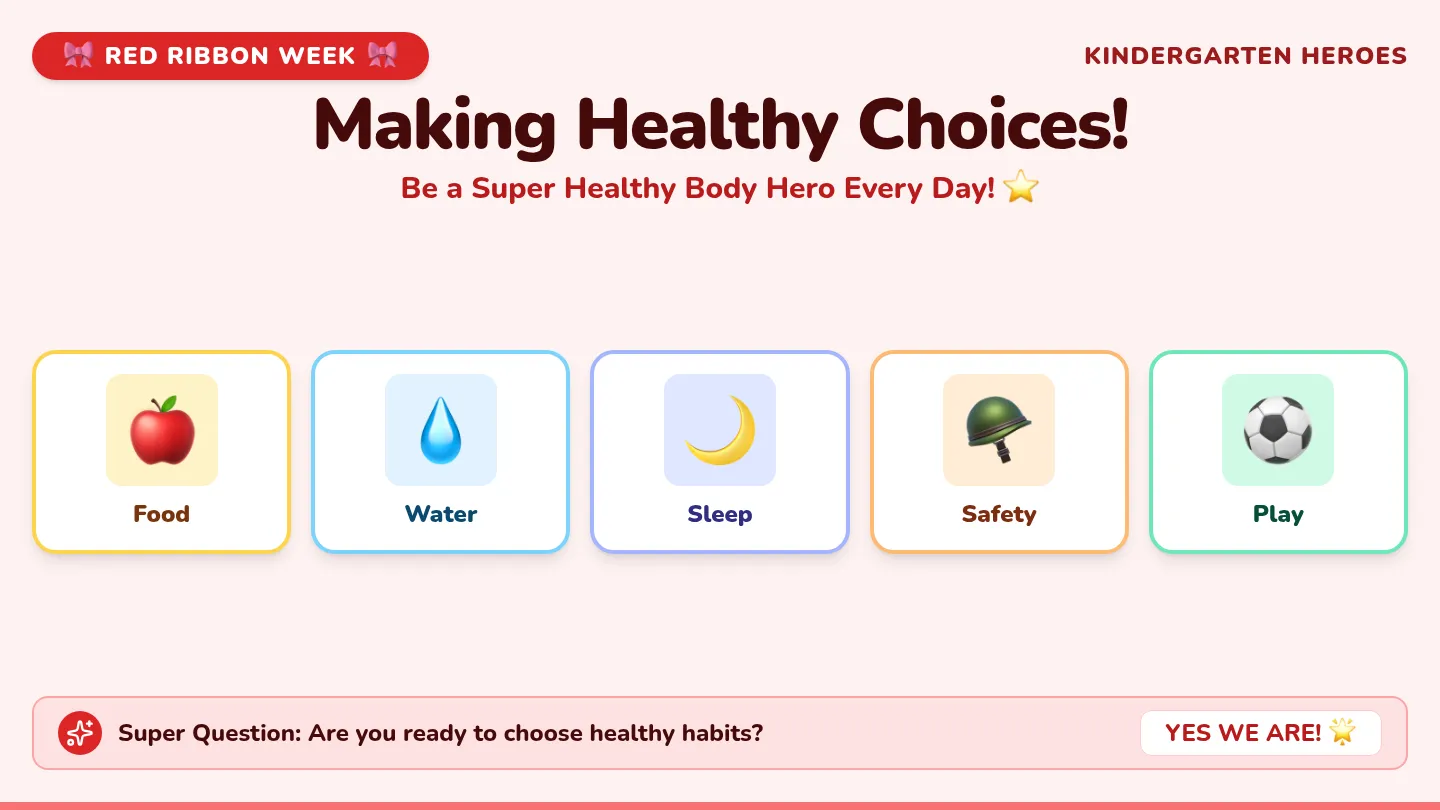
A 6-slide kindergarten presentation for Red Ribbon Week on making healthy choices, featuring a celebratory title slide followed by giant visual slides for food (with blueberries), water, sleep, transportation safety gear, and active play.

IN

I needRosa Vazquez

Health Check-In Badge Checklist

Health Check-In Badge Checklist

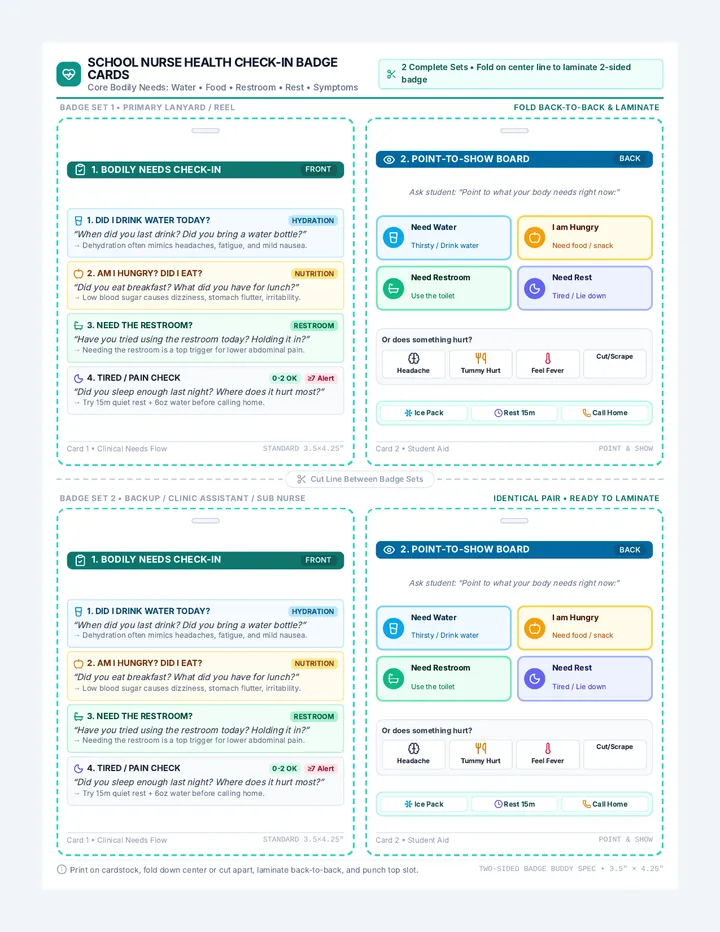
A print-and-laminate school nurse badge checklist focused on core bodily check-in prompts: drinking water, hunger and food intake, restroom needs, rest, and symptom identification.

CS

Courtney Scherer

Blood Sugar Test Log

Blood Sugar Test Log

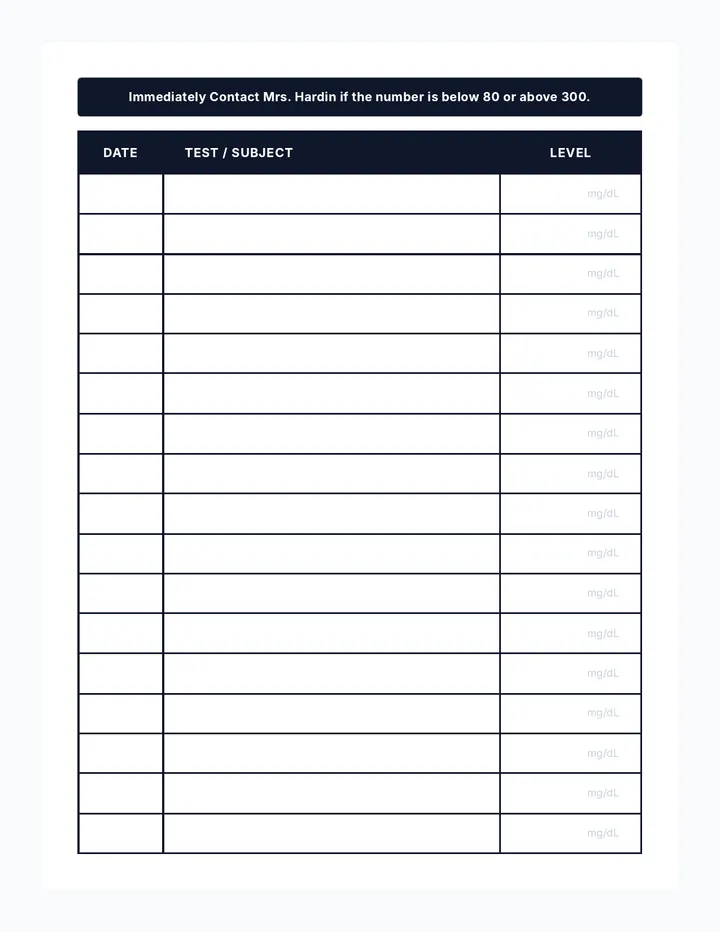
An ultra-simplified, high-contrast 3-column log sheet for students to track their levels and dates before taking tests. Designed for maximum focus and legibility with zero visual distractions.

KS

Kaila Strubhart

Weather Wardrobe Maze Worksheet

Weather Wardrobe Maze Worksheet

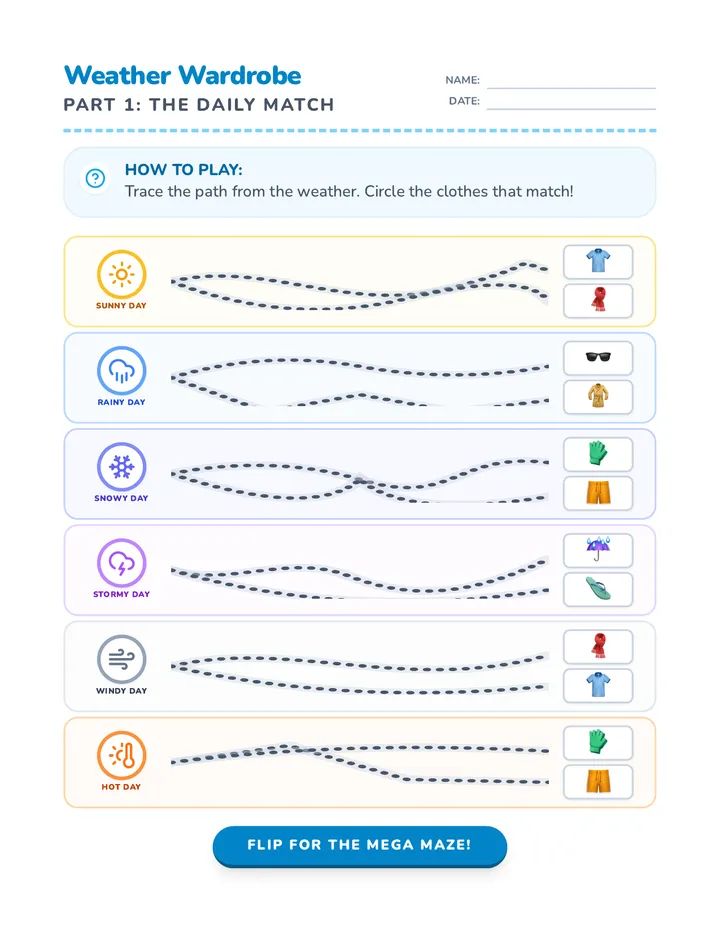
An expanded weather wardrobe activity worksheet for kindergarteners. Page 1 features matching exercises for six weather types (sunny, rainy, snowy, stormy, windy, hot) with two choices each. Page 2 contains a "Mega Maze" where students navigate complex, high-contrast paths from all six weather stations to their respective clothing items in a central closet.

ZC

Zachariah Call

Sequences

Freshness Slides (3) v2

Glow Up Guide (K-4)

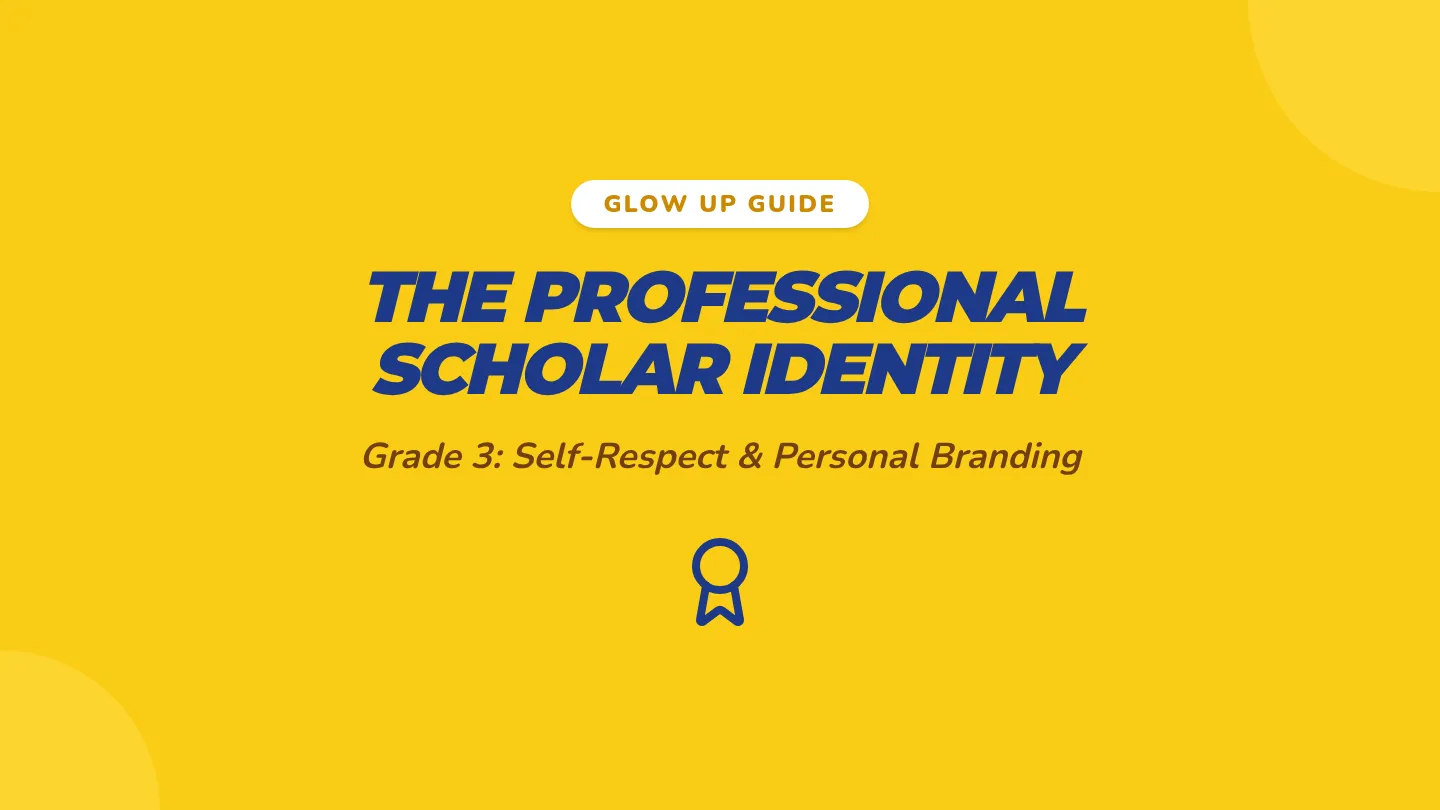
A comprehensive SEL-integrated hygiene curriculum for elementary scholars (K-4), focusing on self-awareness, social impact, and personal responsibility through the lens of a 'Glow Up'.

T

tkeya.void

86
Weekly Curriculum Overview Teacher Guide

Toddler Theme Weeks

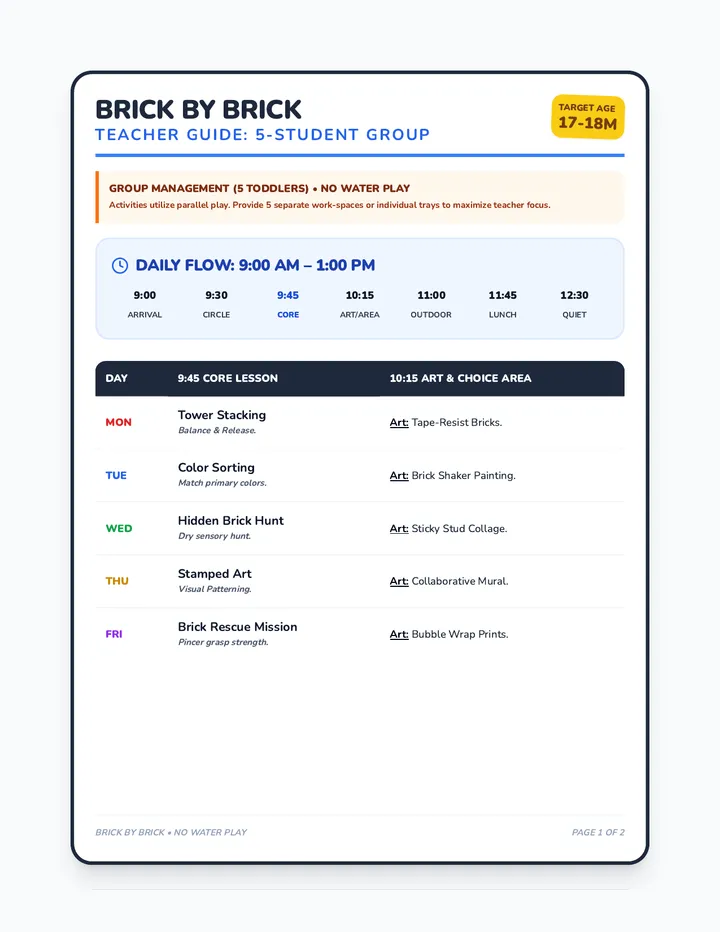
A collection of comprehensive week-long curricula for toddlers aged 17-18 months. Each themed week focuses on developmental play, sensory exploration, and fine motor skills for a group of 5 students with zero water play.

SN

Susan Nowlin

69
Summer Safety Hero Slides

Summer Safety Academy

A multi-grade social-emotional learning unit focused on 'Summer Safety Heroes'. Lessons are tailored for different developmental levels, from 1st-grade foundations to 3rd-grade scientific mastery and risk management.

HM

Heidi Moore

26
Safety Squad Teacher Guide

Kitchen Heroes Academy

A 12-week introductory cooking curriculum for elementary students focusing on safety, nutrition, and the emotional connection to food.

CC

Chara C.

74
Routine Runway Slides

Gym Foundations

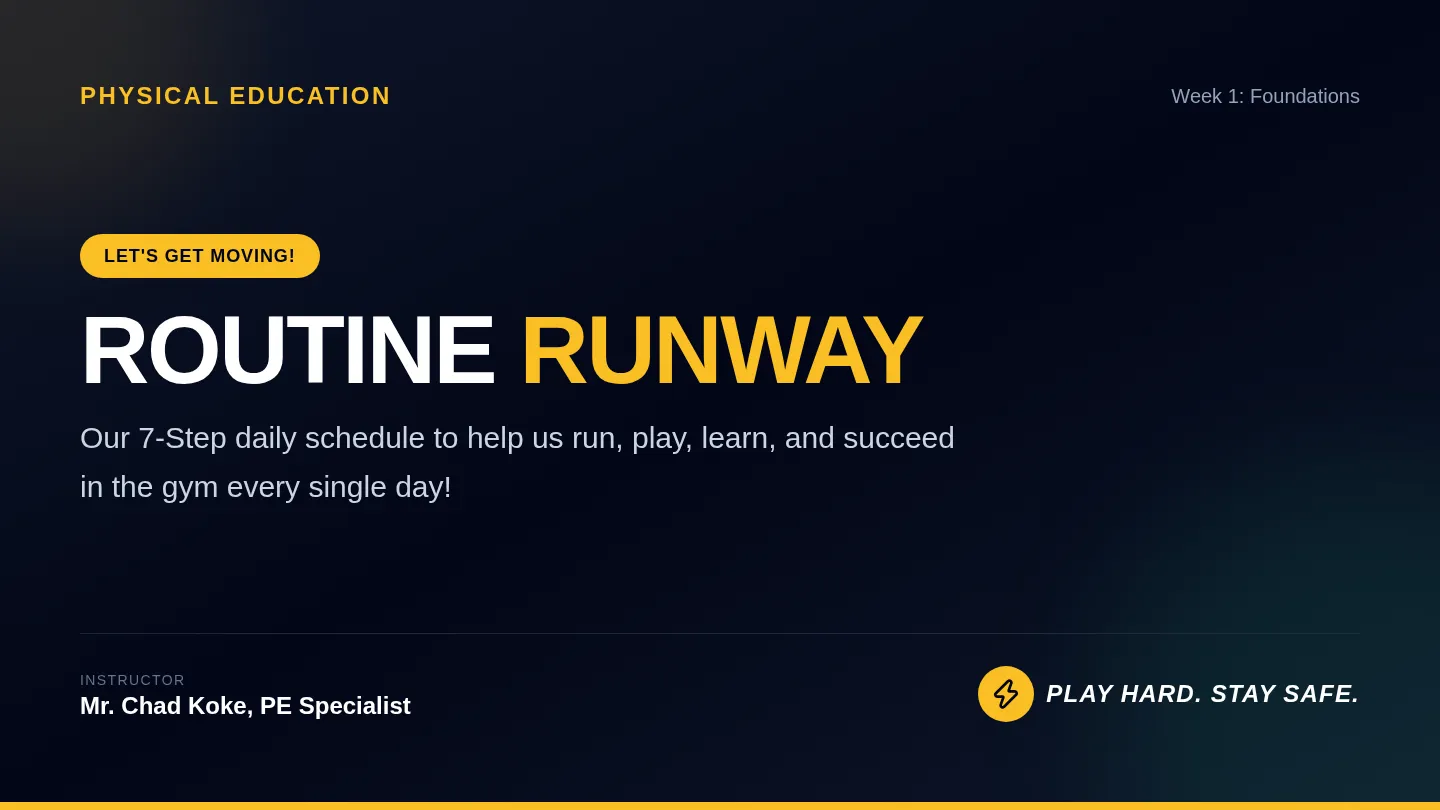
A comprehensive physical education unit for the first weeks of school, focusing on establishing solid daily routines, teaching safety rules, and practicing self-regulation using the Gym Reset System. It sets primary elementary students up for a safe, structured, and active year.

C

Chad.Koke

16
Maturation Mentor Guide Lesson Plan

Glimmer and Glow

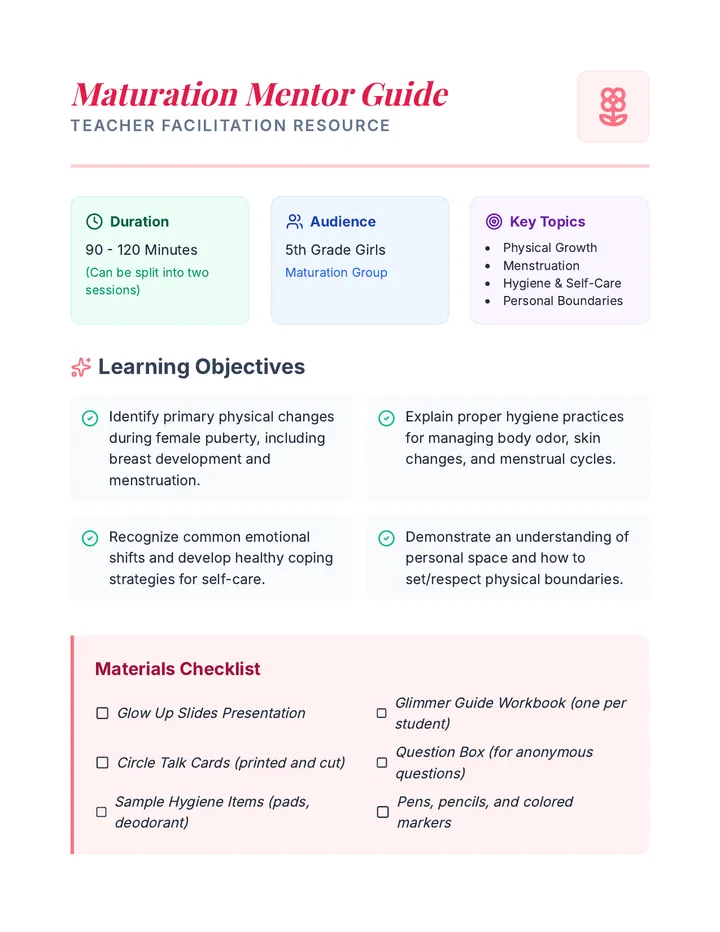
A comprehensive maturation unit for 5th-grade girls covering physical, emotional, and social changes during puberty. Includes a detailed teacher guide, interactive slides, a student workbook, and discussion cards to foster a supportive and informative environment.

W

wwiedeman

7

Lessons

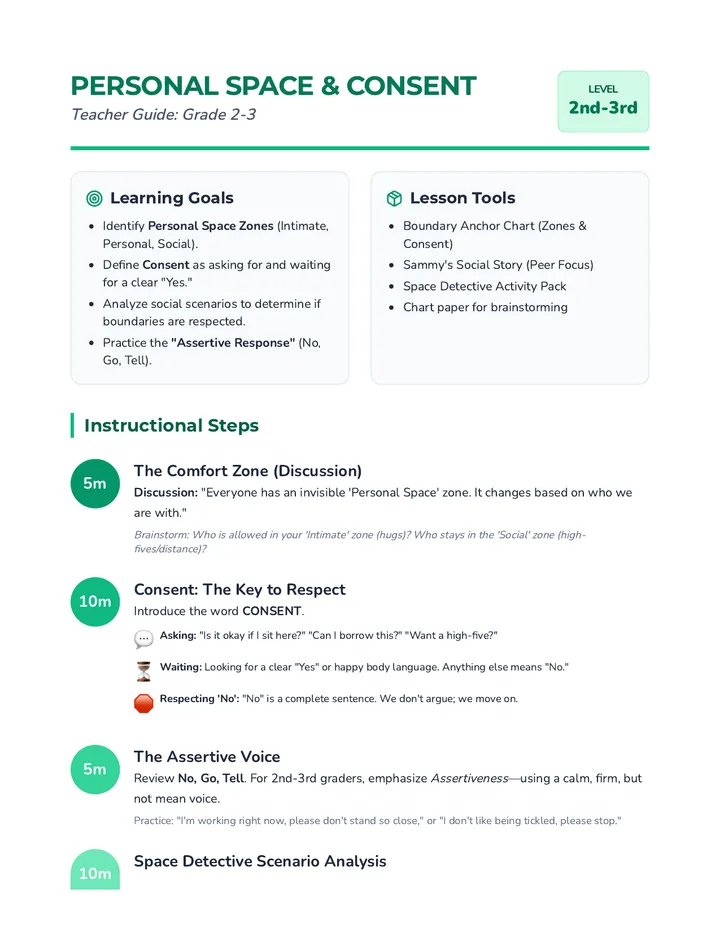
Odor Science Teacher Guide

Beat the Body Odor

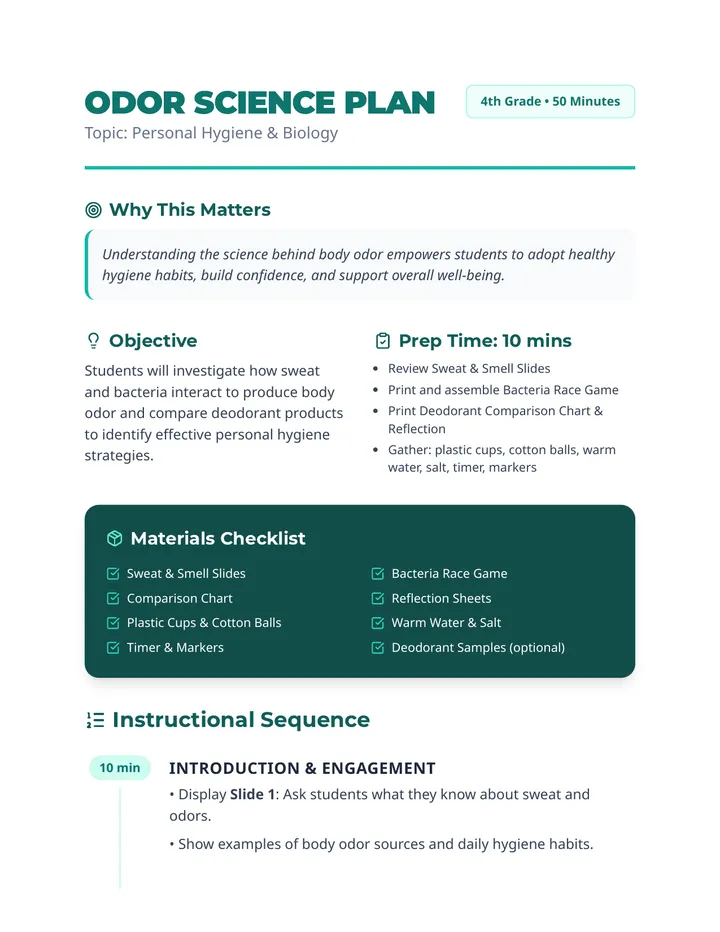
In this 50-minute Tier 1 lesson for 4th graders, students explore the science of sweat, bacteria, and deodorant through hands-on activities that make personal hygiene fun and memorable. This lesson builds understanding of body odor causes and empowers students with practical strategies for daily hygiene.

CM

Chanel Monroe-Minor

5
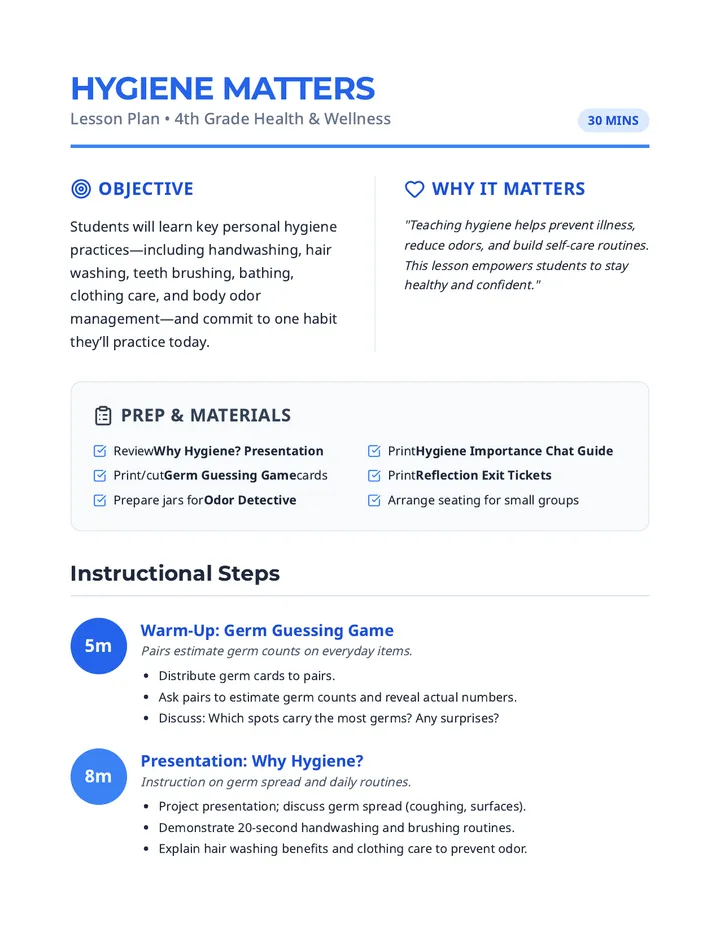
Hygiene Matters Lesson Plan

Why Does Hygiene Matter

This 30-minute Tier 1 lesson for 4th grade sparks discussion on the importance of personal health and hygiene. Through interactive activities like the Germ Guessing Game and Odor Detective, students explore how germs spread and how habits like handwashing, bathing, and clothing care keep them healthy and confident.

LN

Liana Nerbonne

6
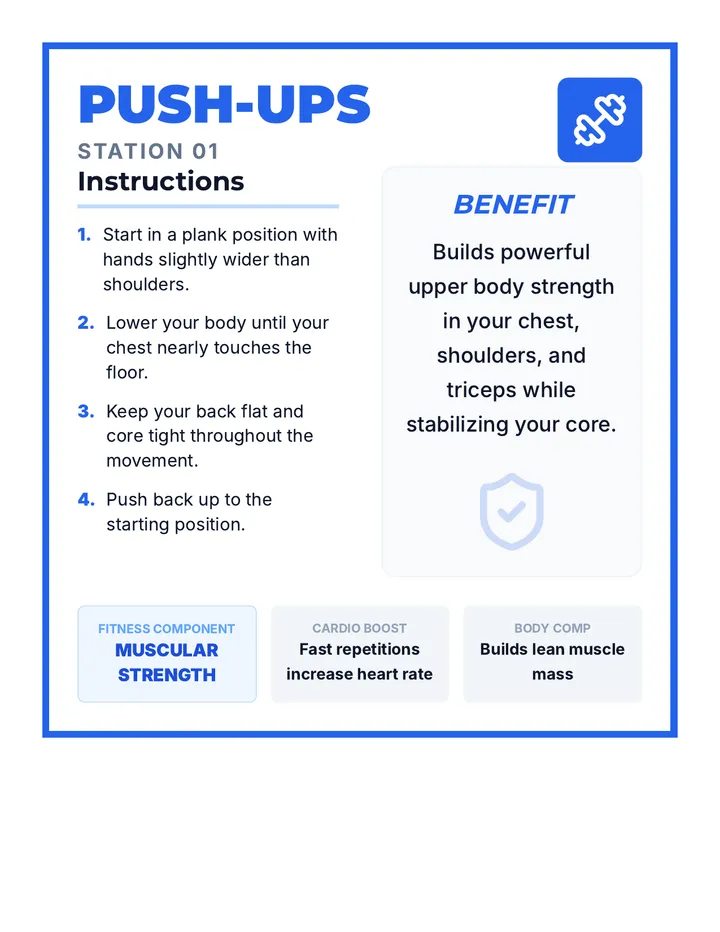
Fitness Circuit Station Cards

Bodyweight Blast

A high-energy lesson focused on bodyweight exercises that target the five components of fitness through a circuit-style training session. Students will learn proper form, the benefits of each exercise, and how they contribute to overall health.

SR

Socorro Rojas Rojas

13
Safety Routine Lesson Plan

Stop Don't Touch Tell

In this 45-minute Kindergarten lesson, students learn to identify unsafe substances, practice the Stop–Don’t Touch–Tell routine, and understand that medicine should only come from a trusted adult. Through visuals, role-play, and songs, they’ll build safety habits and confidence in asking for help.

KS

Kimest Sanders

10
Safety Circle Lesson Plan

My Safety Circle

A 30-minute introductory lesson on personal boundaries, body ownership, and differentiating between safe and unsafe touch. Students learn to identify trusted adults and practice communication skills for setting boundaries.

HM

Heidi Moore

4
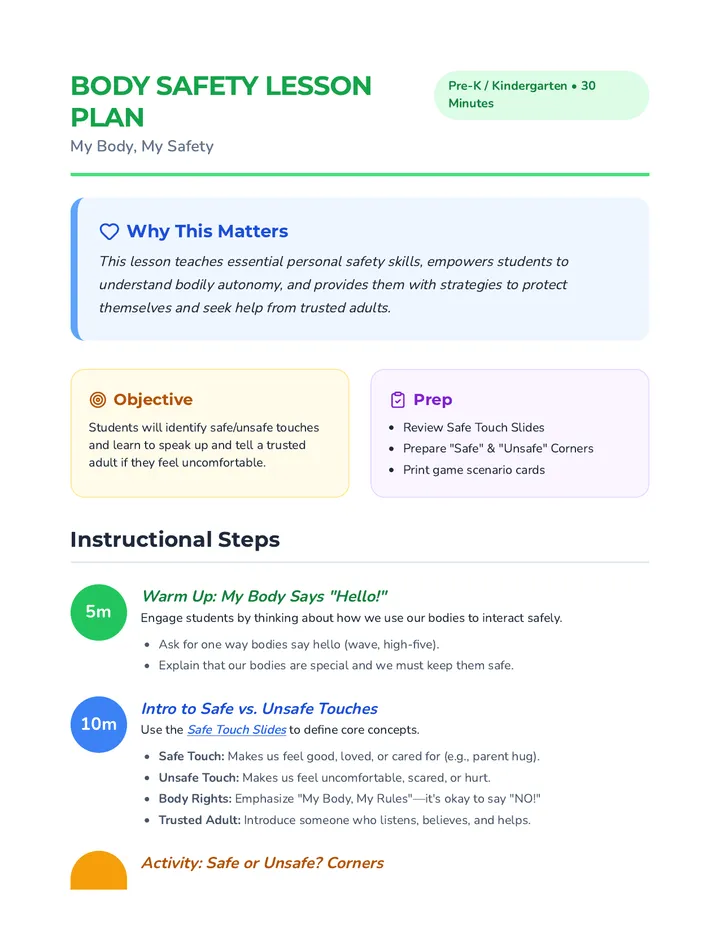
Body Safety Lesson Plan

My Body My Safety

This lesson empowers Pre-K and Kindergarten students to recognize safe and unsafe touches, understand bodily autonomy, and identify trusted adults for help.

J

jprater

5