Fundamental techniques for racket sports, track and field, and gymnastics maneuvers. Develops physical literacy through martial arts disciplines and self-defense strategies.
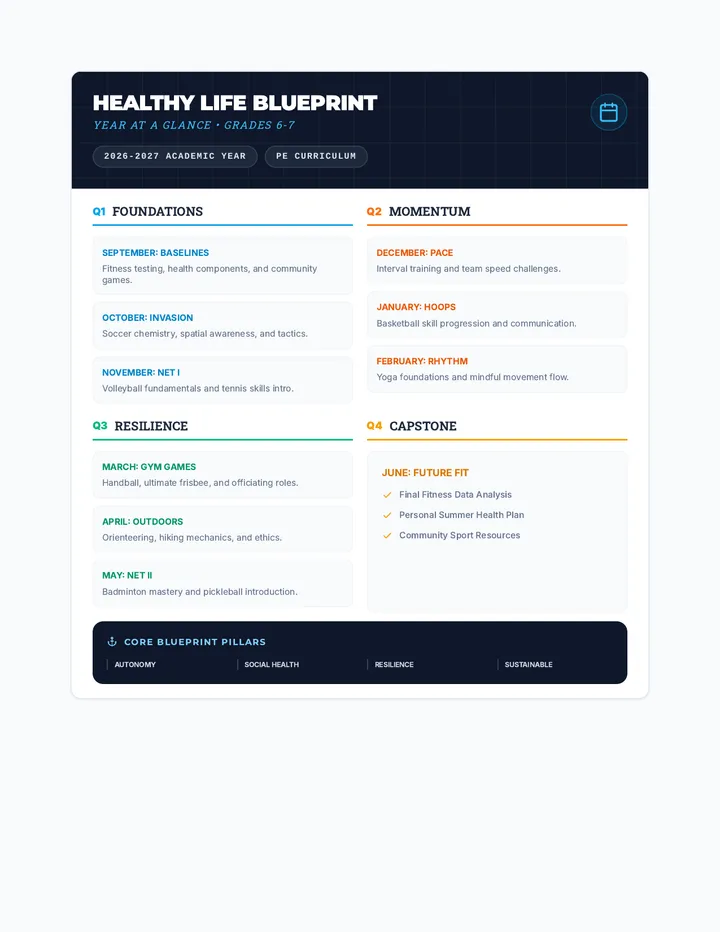
A comprehensive middle school PE curriculum for mixed 6th and 7th grade classes, focusing on developing sustainable physical health habits through varied movement, teamwork, and personal goal-setting. This year-long program balances traditional sports with modern wellness practices to ensure every student finds their path to lifelong fitness.
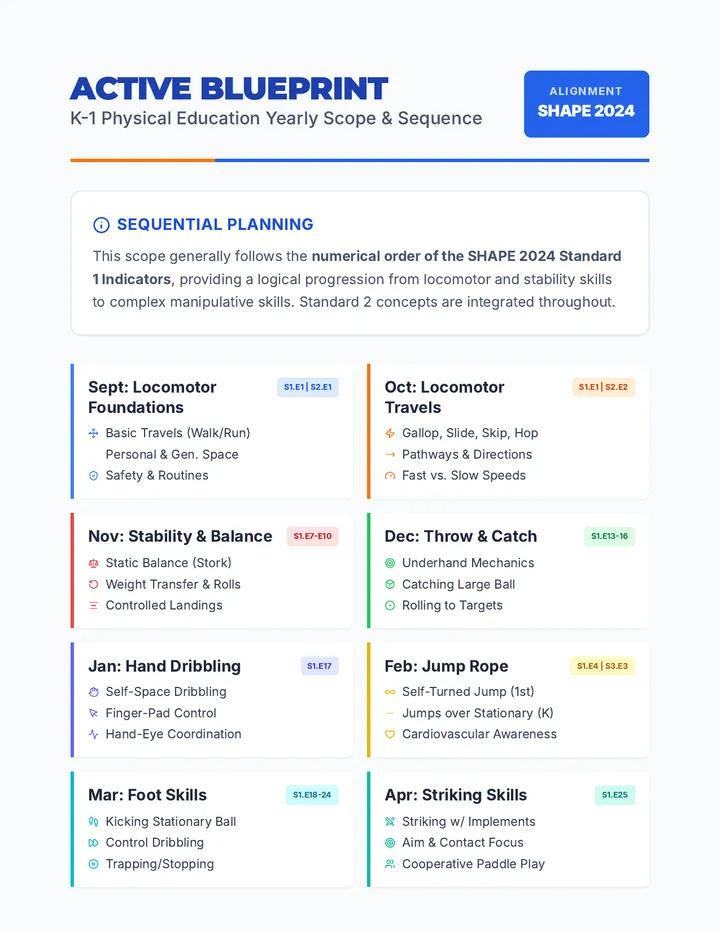
A comprehensive yearly planning guide for K-1 Physical Education using the updated 2024 SHAPE America Standards.
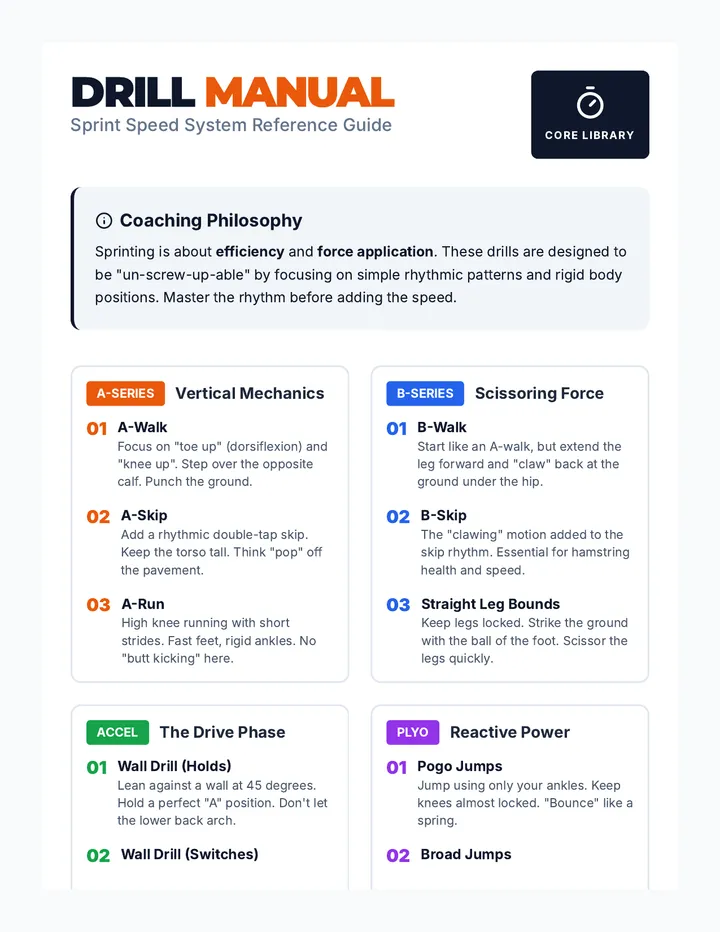
A comprehensive 4-week introductory sprinting program focused on mechanics, power, and injury prevention for outdoor track athletes.
This sequence explores cardiovascular endurance and track meet operations for 5th-grade students. It covers pacing strategies, interval training through games, the mathematical geometry of track lanes, and culminates in a student-led class track meet where they apply both athletic and officiating skills.
A comprehensive 5th Grade physical education unit focused on the mechanics, safety, and competition of horizontal jumping events. Students progress from safe landing techniques to the complex coordination of the long jump and triple jump, concluding with a student-led competition.
This sequence introduces 5th-grade students to the mechanics of shot put, discus, and javelin throwing. Students explore the physics of power generation through leg drive, rotation, and momentum while prioritizing safety in the throwing sector.
A comprehensive 5-lesson sequence for 5th-grade students focused on the biomechanics of sprinting and the technical coordination of relay racing. Students progress from individual form analysis to complex team-based baton exchanges in a simulated competitive environment.
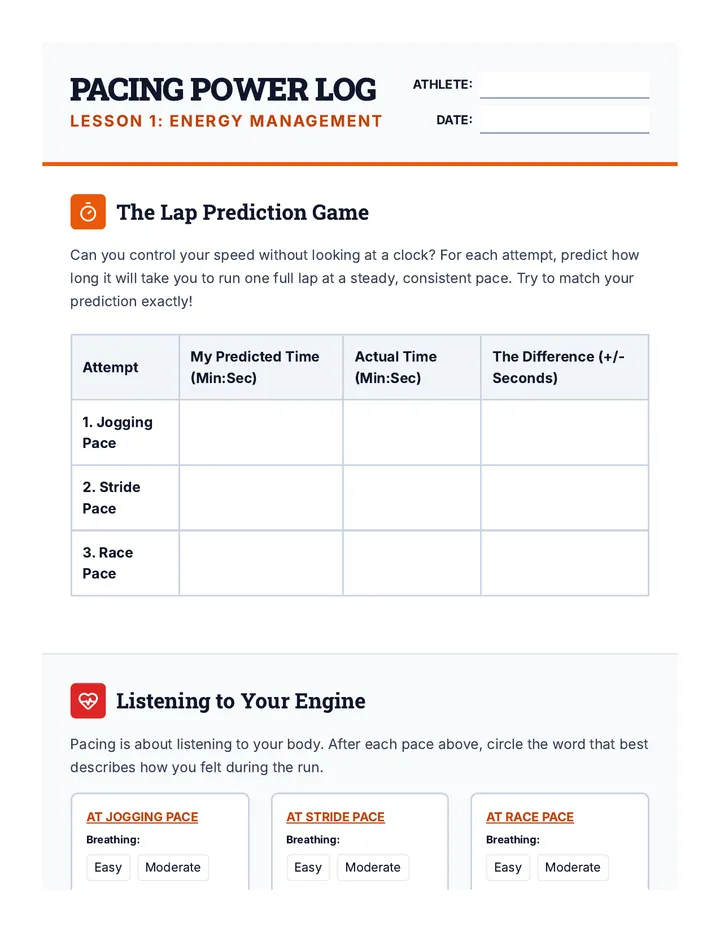
A 5-lesson unit for 4th graders focusing on the difference between anaerobic sprinting and aerobic endurance. Students learn to regulate energy through pacing, rhythm, and interval training, culminating in a goal-setting endurance run.
This sequence shifts focus from pure mechanics to the organizational structure, rules, and etiquette of a track meet. Students take on roles as both athletes and officials, learning how events are measured, judged, and scored. The unit emphasizes fair play, understanding disqualifications, and accurate measurement, culminating in a class-organized mini-meet.
Students explore the physics and techniques behind track and field events, focusing on long jump and throws. This 5-lesson sequence covers mechanics of force, angle, and body positioning through inquiry and skill-building activities.
A comprehensive 4th-grade physical education unit focused on the biomechanics of sprinting and the technical skills of relay racing. Students progress from individual running form to collaborative baton exchanges and team strategy.
This 8th-grade Physical Education sequence blends middle-distance endurance training with the logistics of track meet administration. Students develop pacing strategies and physiological awareness while taking on the roles of officials and managers, culminating in a student-led mini-meet.
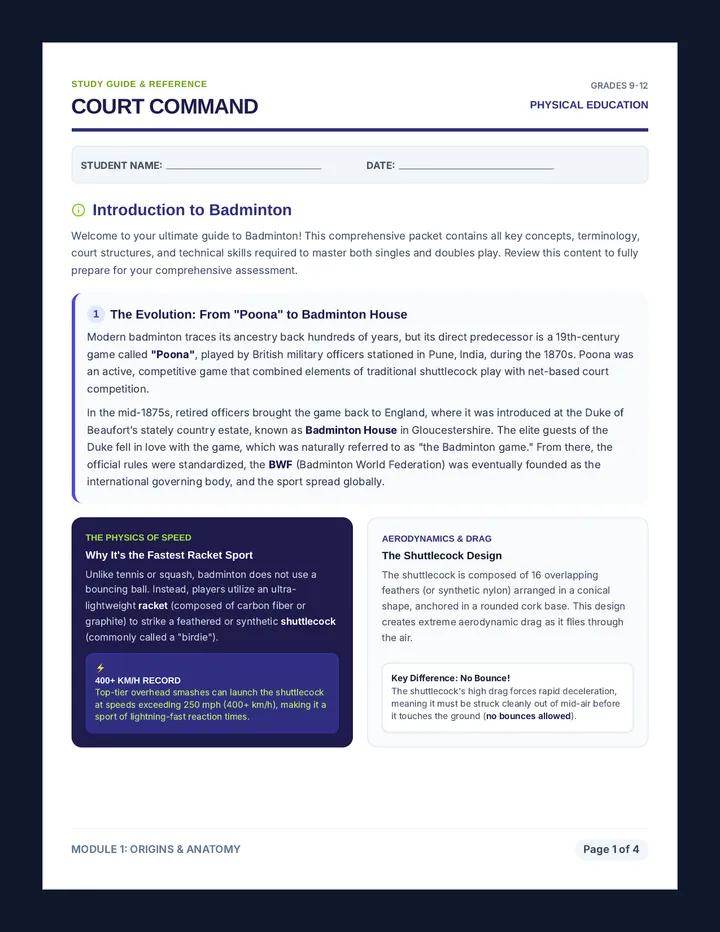
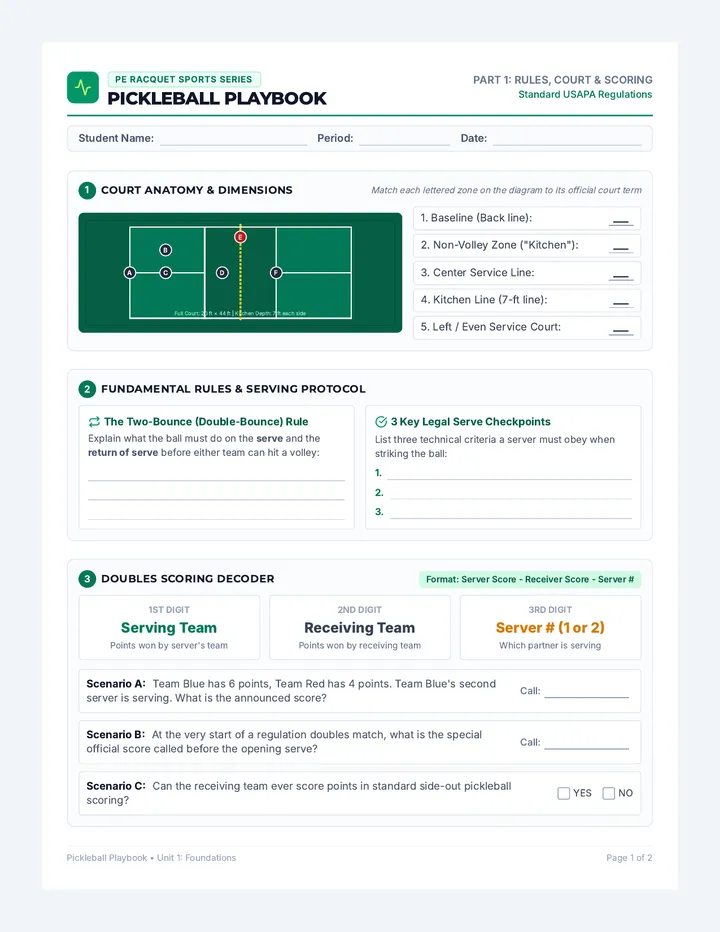
This unit focuses on individual sports like badminton, tennis, and track and field. Students develop personal mastery, perseverance, and an understanding of how individual pursuits contribute to lifelong activity.
A foundational unit focused on assessing current fitness levels, understanding health components, and setting personalized goals for the year. Students learn the 'why' behind lifelong fitness through hands-on testing and data collection.
Students explore team-based sports with a focus on communication, strategy, and social-emotional health. Activities include basketball, soccer, and ultimate frisbee, emphasizing participation over elite performance.
Designing and implementing personal fitness plans and mastering lifetime activities for Grades 9-12.
Applying advanced tactical principles and health-related fitness analysis for Grades 7-8.
Transitioning from skill mastery to tactical application and fitness planning for Grades 5-6.
Curriculum planning and pacing for Grades 2-4, focusing on skill refinement and introductory strategies.
Foundational planning documents and visual guides for the K-1 PE school year.
A comprehensive one-page syllabus for middle school PE. Updated for the 2026-2027 school year with a cleaner, high-contrast professional blueprint layout that includes all core rules, grading policies, and safety standards.
A visually engaging one-page info sheet summarizing the middle school PE syllabus, including grading policies, dress code, safety rules, and course goals. Designed with the blueprint aesthetic for a professional and cohesive look.
A printable half-sheet handout featuring the four core PE rules for the 2026-2027 school year. Redesigned for a cleaner, more professional blueprint aesthetic.
A one-page student-facing skills mastery tracker for five core sports. Updated for the 2026-2027 school year with a cleaner, more professional blueprint layout that fits perfectly on a single page.
A personal performance log for students to track their times across five key running distances throughout the 2026-2027 school year. Polished for a cleaner, professional blueprint layout.
A teacher's discussion and facilitation guide for teaching invasion games to mixed-grade middle school classes. Updated for 2026-2027 with a clean, high-contrast professional layout.
A student reflection and data collection worksheet for establishing fitness baselines and setting SMART goals for the 2026-2027 school year. Polished for a cleaner, professional layout.
A comprehensive year-long curriculum calendar for middle school PE, detailing thematic phases and monthly focuses for mixed 6th and 7th-grade classes. Updated for the 2026-2027 school year with a cleaner, professional blueprint layout.
A unit-ending reflection sheet. Features corrected answer choice uniformity, page breaks, and labels for the skill rubric. High-contrast footer for better legibility.
A tournament organizer for Lesson 09. Optimized for single-page printing with corrected table rendering and high-contrast rotation headers.
A tactical cheat sheet for badminton shot selection and defense. Fits on one page with high-contrast text for gym use. Corrected page breaks.
A visual guide for doubles rotation. Improved layout consistency, increased handwriting space, and corrected page breaks.
An intensive 15-minute 'Express' session focused on the core mechanics of the clinch and sprawl. Students learn to close the distance safely and defend against leg tackles with maximum efficiency.
Students engage in specific task-based grappling games, such as 'King of the Hill' or 'Escape the Mount.' They start in a specific position with a clear goal (e.g., hold the position for 10 seconds or escape). This allows for full-effort practice with limited variables for safety.
Students explore how to reverse a position from the bottom using bridges and rolls. They apply the concept of 'trapping' a post (arm or leg) to flip a partner over. This lesson highlights the use of leverage over strength.
This lesson introduces standard grappling positions: Mount, Side Control, and Guard. Students learn the hierarchy of these positions based on mobility and safety. Solo drills on the mats help students understand hip movement (shrimping/bridging) required for ground movement.
Students learn how to safely close the distance and establish a clinch position to control an opponent's upper body. They practice 'sprawling' to defend against leg tackles, focusing on driving hips down and legs back. The lesson emphasizes control over aggression.
Synthesizes all previous skills into fluid combinations, focusing on rhythm, recovery, and transition between offense and defense.
Breaks down the mechanics of front and roundhouse kicks, emphasizing the importance of chambering and pivoting.
Teaches students how to deflect energy through high blocks and parries, focusing on reaction time and protecting vital zones.
Introduces the jab and cross, emphasizing hip rotation and kinetic linking to generate force safely and efficiently.
Focuses on establishing a stable base and moving efficiently. Students explore the physics of stability and practice non-crossing footwork.
Students investigate the concept of 'base' through push-pull games, learning how stance width and knee bend affect stability. They practice recovering their balance when disrupted by a partner. The lesson establishes the rules of safe contact and tapping out.
The sequence culminates in a formal performance. Students demonstrate their original forms with an emphasis on zanshin (awareness), respect, and technical proficiency.