Lenny.com
Explore
Create
ActivitiesNewMathEnglish Language ArtsScience & EngineeringSocial StudiesGlobal LanguagesHealth & Physical EducationSpecial EducationCounseling & Life SkillsArts & CreativityESL
Lenny.com
Lenny.com
Explore
Create
ActivitiesNewMathEnglish Language ArtsScience & EngineeringSocial StudiesGlobal LanguagesHealth & Physical EducationSpecial EducationCounseling & Life SkillsArts & CreativityESL
Lenny.com
Lenny.com

Solutions

Lenny for EducatorsLenny for SchoolsLenny for Districts

Product

ExploreSign inCreateSupportAbout

Resources

Getting startedMTSS Acceleration Program

© 2026 Lenny Learning Inc.

TermsPrivacyAccessibility
LinkedInInstagramX
Lenny

Sleep and Rest

Circadian rhythms, bedtime hygiene, and the restorative functions of sleep on the brain and body. Connects consistent rest patterns to improved mood, focus, and physical health.

Health & Physical EducationMovement Skills and ConceptsBody ControlLocomotor SkillsNon-Locomotor SkillsFine Motor SkillsManipulative SkillsBalance and CoordinationSpatial AwarenessMovement PatternsRhythmic Activities and DanceRhythm and TimingDance BasicsIndividual and Dual SportsGymnastics and TumblingTrack and FieldRacket SportsSelf-Defense and Martial ArtsTeam SportsCooperative GamesSportsmanshipTeam CommunicationBasketball SkillsSoccer SkillsVolleyball SkillsFootball SkillsGame StrategiesFitness and Physical ActivityCardio FitnessFlexibility and StretchingMuscular Strength and EnduranceSetting Fitness GoalsHealthy HabitsHygiene PracticesSleep and RestPhysical Activity HabitsHydrationInjury PreventionBody Awareness and Self-CareDisease PreventionHealth Decision-MakingHelp-Seeking and Self-AdvocacyMental HealthMental Health BasicsEmotional AwarenessStress ManagementCoping StrategiesMindfulness PracticesBreathing and Relaxation TechniquesMeditation BasicsResilience and PerseveranceHealthy RelationshipsSocial and Emotional SkillsHelp-Seeking and Support SystemsDigital WellbeingNutritionNutrition BasicsFood GroupsBalanced MealsHealthy Eating HabitsReading Food LabelsPersonal SafetyRecognizing Unsafe SituationsHuman and Child TraffickingStranger DangerPersonal BoundariesFire and Water SafetyEmergency ResponseConflict Resolution BasicsInternet and Social Media SafetySafe Personal RelationshipsSubstance AwarenessTobacco AwarenessAlcohol AwarenessCannabis AwarenessOpioid AwarenessStimulant AwarenessPrescription Drug AwarenessRefusing Peer PressureOutdoor and Adventure ActivitiesOutdoor Recreation SafetyHiking and OrienteeringTeam Building Activities

Videos

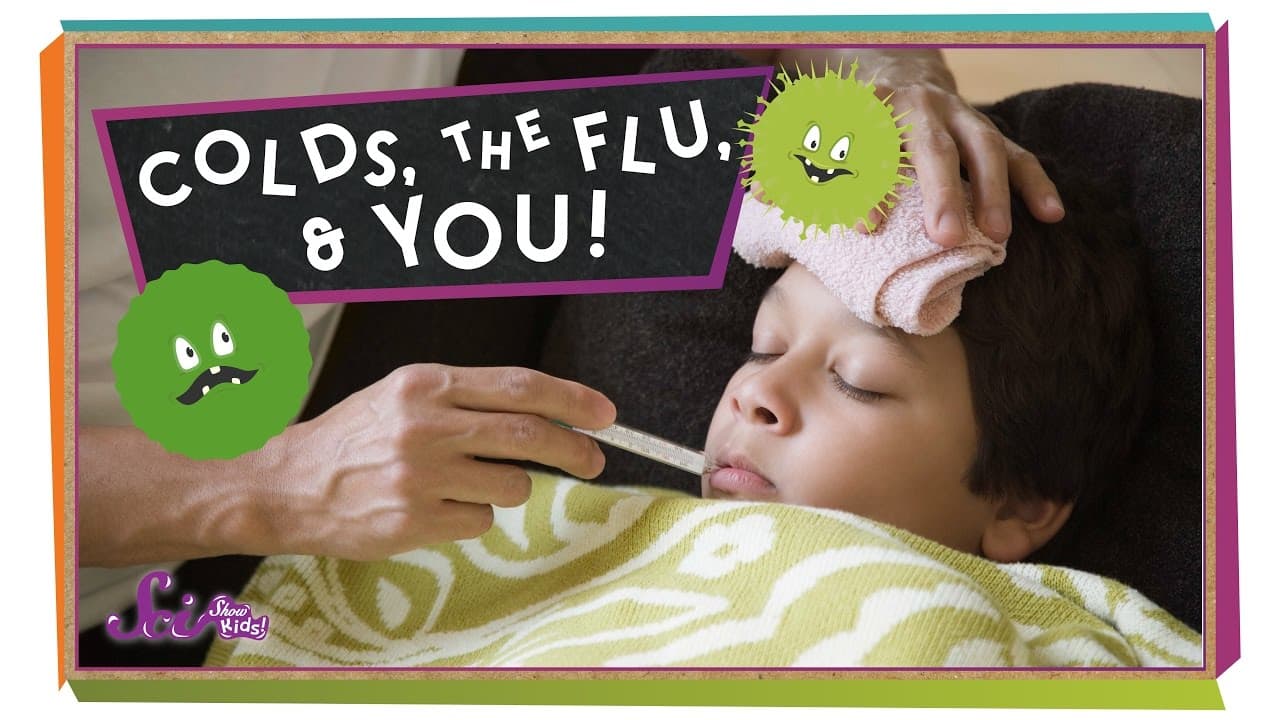
How the Flu Works and How Your Body Fights It

How the Flu Works and How Your Body Fights It

This engaging science video explains the biology behind the common cold and the flu, specifically tailored for young learners. Hosted by Jessi and her robot friend Squeaks, the video breaks down what causes sickness (viruses), how these microscopic invaders enter the body, and the specific mechanisms the body uses to fight back. It demystifies scary or unpleasant symptoms like runny noses, sneezing, and fevers by reframing them as heroic efforts by the body's defense system to expel germs.

SciShow KidsSciShow Kids

4mins 16s

Why Sleep Is Important for Your Brain and Body

Why Sleep Is Important for Your Brain and Body

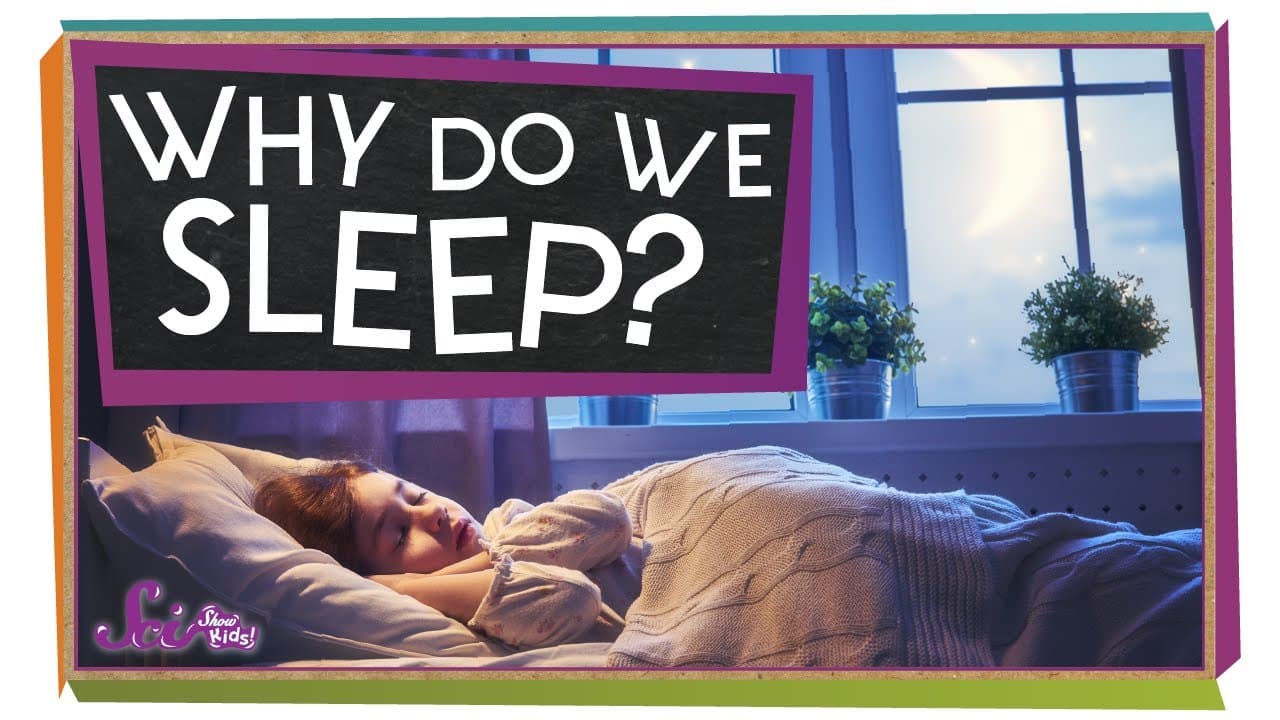
In this engaging episode of SciShow Kids, host Jessi and her robot mouse friend Squeaks explore the biological necessity of sleep. Starting with a relatable scenario where Jessi feels tired from a lack of rest, the video breaks down exactly what happens to the human body during slumber. It explains complex biological processes in age-appropriate terms, covering how the body conserves energy, heals itself, fights off germs, and physically grows during the night. The video places a special emphasis on the brain's role during sleep, using helpful metaphors like a "filing cabinet" to explain how the brain organizes memories and emotions. It addresses the consequences of sleep deprivation—such as lack of focus and irritability—and offers practical advice for better sleep hygiene. Key strategies introduced include establishing a consistent bedtime routine and avoiding electronic screens that can trick the body into thinking it is still daytime. For educators, this resource is an excellent tool for Health and Science units focused on the human body, self-care, and social-emotional learning. It provides a scientific basis for rules like bedtimes and screen limits, helping students understand the "why" behind healthy habits. The clear visual explanations of energy conservation and memory processing make abstract concepts concrete for young learners, facilitating discussions about self-regulation and physical well-being.

SciShow KidsSciShow Kids

3mins 33s

How to Take Care of Your Amazing Body

How to Take Care of Your Amazing Body

This engaging educational video introduces young learners to the fundamental habits required to maintain a healthy body. Through vibrant footage of diverse children in action, the narrator explains that our bodies are amazing machines capable of incredible feats, but they require regular maintenance to function optimally. The video breaks down health into four accessible categories: personal hygiene, physical activity, nutrition, and rest, providing concrete examples for each that children can easily relate to their daily lives. Key themes explored include the importance of cleanliness (washing hands, brushing teeth), the joy of movement (dancing, sports, outdoor play), and the balance of nutrition (prioritizing fruits and vegetables while treating sweets as occasional snacks). It specifically addresses the concept of "sometimes foods" versus "always foods," helping children navigate dietary choices without shame. The video concludes by adding a critical fourth pillar often overlooked in children's health discussions: the necessity of a good night's sleep. For educators, this resource serves as an excellent anchor for a "Healthy Living" unit in early elementary classrooms. Its clear structure allows teachers to pause and focus on one specific health aspect at a time. The relatable visuals of children engaging in everyday activities help students see themselves in the content, fostering a personal connection to healthy habits. It is particularly useful for sparking discussions about daily routines, categorizing foods, and understanding the 'why' behind rules like bedtime and handwashing.

Next Generation ScienceNext Generation Science

1min 56s

Why We Need Sleep and How to Rest Better

Why We Need Sleep and How to Rest Better

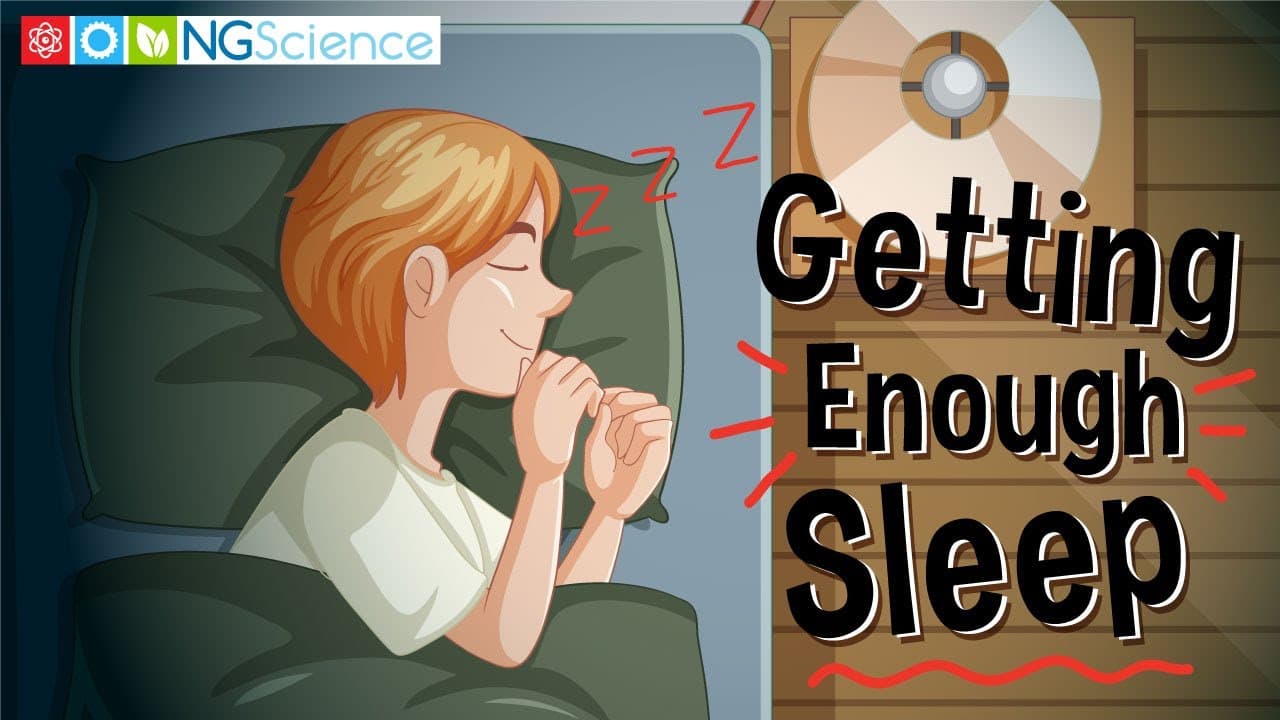
This educational video explains the vital role sleep plays in maintaining physical and mental health. It begins by establishing why sleep is necessary, describing it as a recharge period for the body and mind, and contrasts this with the negative effects of sleep deprivation, such as irritability and difficulty concentrating. The gentle narration is supported by clear visuals of people sleeping, waking up, and going about their daily lives. The video outlines practical, actionable strategies for improving sleep hygiene known as "tips." Key themes include the importance of maintaining a consistent sleep schedule, optimizing the bedroom environment (lighting and temperature), limiting daytime naps, engaging in regular physical activity, and making dietary choices that support rest. It specifically advises against consuming sugar or caffeine close to bedtime and encourages relaxing pre-sleep rituals like reading. For educators, this resource is an excellent tool for Health, PE, and Wellness curriculums. It provides a straightforward framework for discussing self-care and biological needs with younger students. Teachers can use the specific tips provided in the video to help students evaluate their own routines and create personal goals for better health, fostering early awareness of how lifestyle choices impact daily performance and mood.

Next Generation ScienceNext Generation Science

1min 38s

Four Fun Ways to Stay Healthy and Strong

Four Fun Ways to Stay Healthy and Strong

This engaging educational video introduces children to four fundamental pillars of a healthy lifestyle: exercise, nutrition, sleep, and hygiene. Through clear narration and relatable stock footage of diverse children, it breaks down complex health concepts into simple, actionable habits. The video explains not just *what* to do, but *why* these habits matter, connecting physical actions to benefits like brain function, body repair, and disease prevention. The content is structured around four distinct segments. First, it explores exercise, highlighting how movement benefits both the body and the brain by releasing happy chemicals. Second, it covers nutrition, emphasizing a balanced diet of fruits, vegetables, and proteins while dispelling the myth that healthy food is boring. Third, it discusses the restorative power of sleep and the importance of bedtime routines. Finally, it addresses personal hygiene practices like hand washing and teeth brushing to keep germs away. For educators, this video serves as an excellent anchor for a health and wellness unit. It provides a comprehensive overview that can be paused to dive deeper into each specific topic. The friendly tone and clear visual examples make it perfect for sparking classroom discussions about daily routines, encouraging students to reflect on their own habits, and inspiring them to make healthy choices both at school and at home.
Next Generation ScienceNext Generation Science

3mins 4s

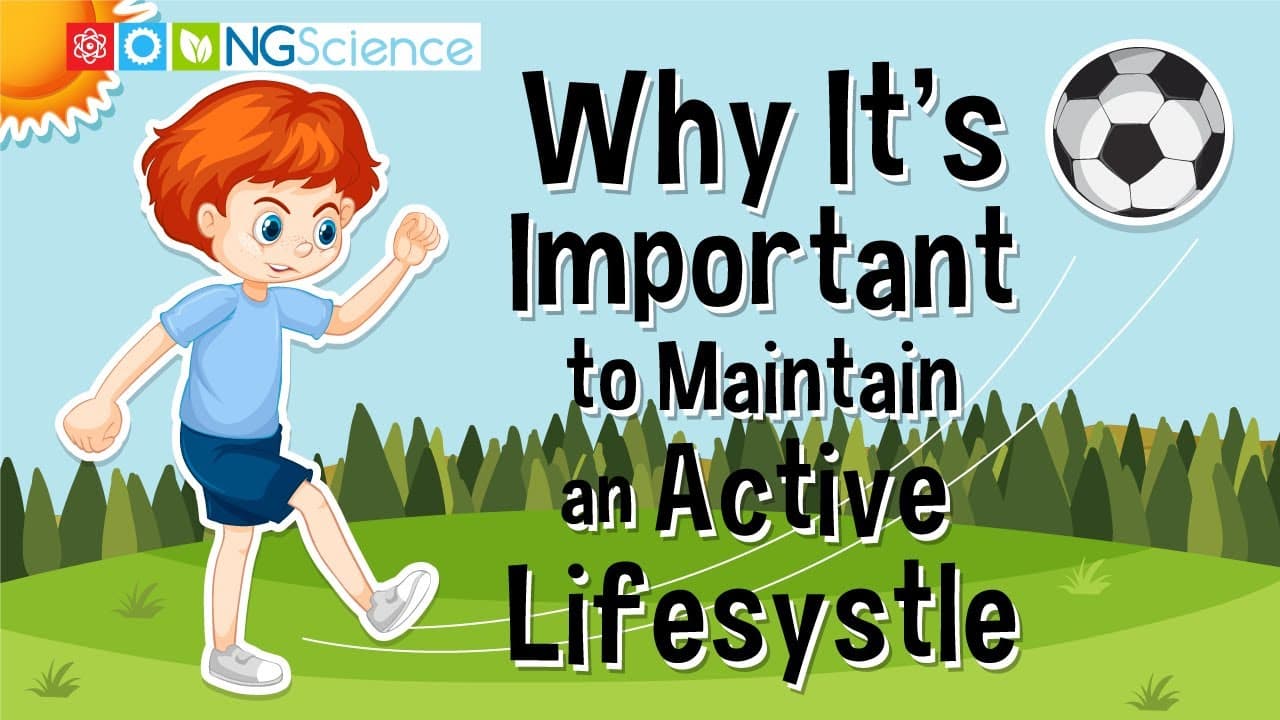
5 Steps to a Healthy and Active Lifestyle

5 Steps to a Healthy and Active Lifestyle

This educational video provides a comprehensive guide to maintaining a healthy and active lifestyle, breaking down complex health concepts into five actionable steps suitable for young audiences. It explains the biological benefits of exercise—such as strengthening muscles, improving flexibility, and releasing mood-boosting hormones—while emphasizing that physical activity can be enjoyable rather than just a chore. The content covers a holistic view of health, exploring key themes beyond just movement. It integrates the importance of adequate sleep for cognitive function and muscle recovery, the necessity of limiting sedentary screen time, and the role of a balanced diet in fueling the body. A specific segment visualizes proper nutrition through a pie-chart breakdown of food groups, helping students understand portioning for optimal energy. For educators, this video serves as an excellent anchor for health and physical education units. It connects abstract health advice to concrete actions students can take immediately, like finding a sport they love or taking stretch breaks during gaming sessions. The clear structure allows teachers to focus on specific pillars of health—sleep, diet, or exercise—making it versatile for science lessons on the human body or guidance lessons on self-care and routine building.

Next Generation ScienceNext Generation Science

3mins 15s

Materials

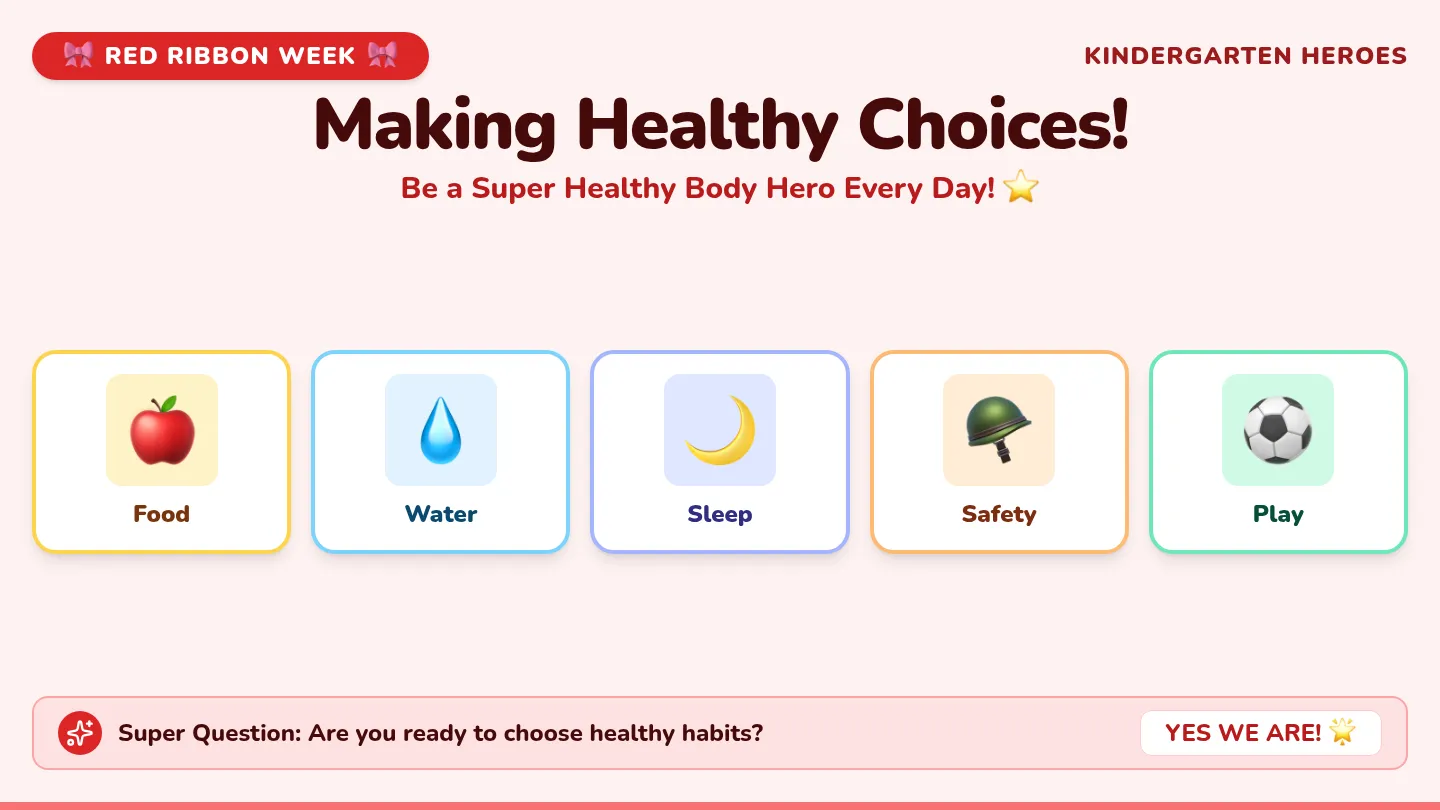
Healthy Choices Slides

Healthy Choices Slides

A 6-slide kindergarten presentation for Red Ribbon Week on making healthy choices, featuring a celebratory title slide followed by giant visual slides for food (with blueberries), water, sleep, transportation safety gear, and active play.

IN

I needRosa Vazquez

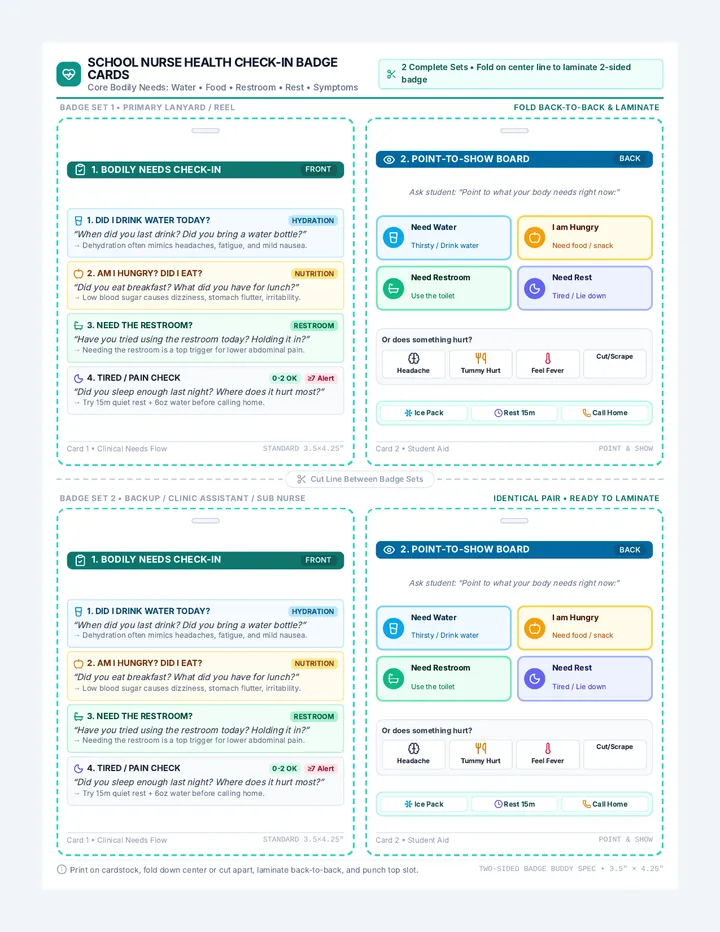
Health Check-In Badge Checklist

Health Check-In Badge Checklist

A print-and-laminate school nurse badge checklist focused on core bodily check-in prompts: drinking water, hunger and food intake, restroom needs, rest, and symptom identification.

CS

Courtney Scherer

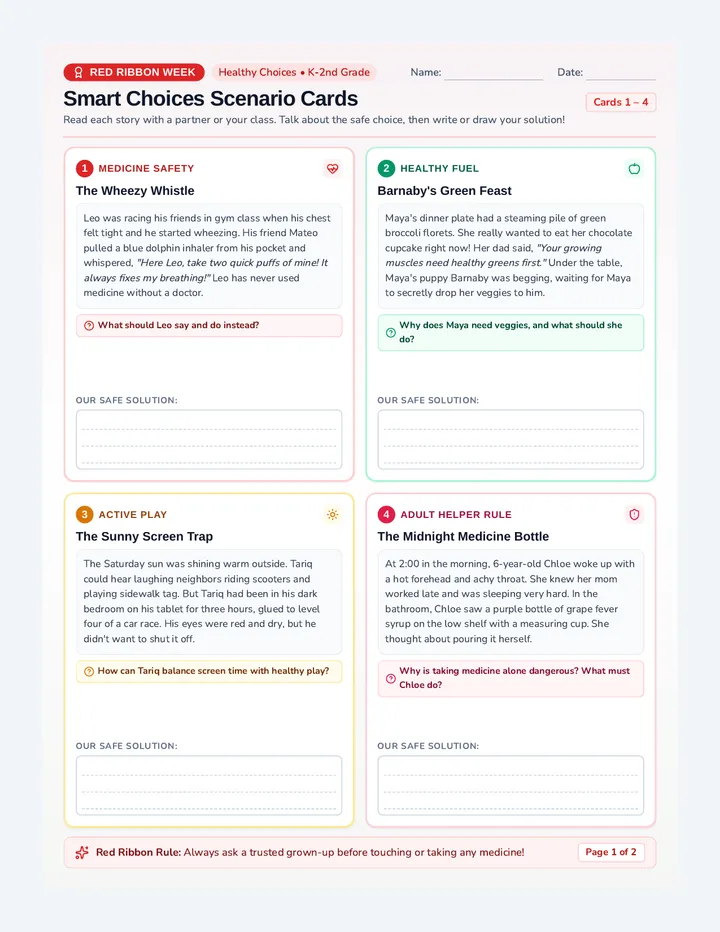
Healthy Choices Scenario Cards

Healthy Choices Scenario Cards

Eight engaging, realistic Red Ribbon Week scenarios for K-2 students focused on healthy decision-making, medicine safety, nutrition, active play, household safety, and emotional self-regulation. Each card features an illustrated dilemma paragraph and dedicated response lines for student problem-solving.

KT

Kristin Tines

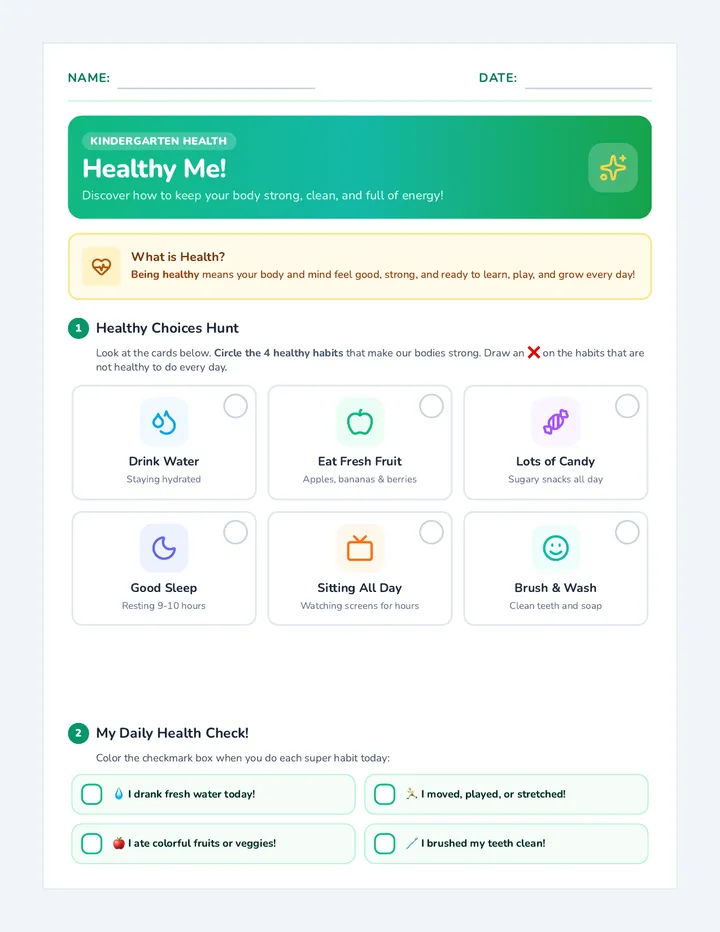
Healthy Me Worksheet

Healthy Me Worksheet

A 2-page print-ready Kindergarten and 1st Grade worksheet exploring the fundamentals of health, including physical habits, nutrition, hygiene, emotional well-being, and a guided draw-and-write reflection.

S

SD

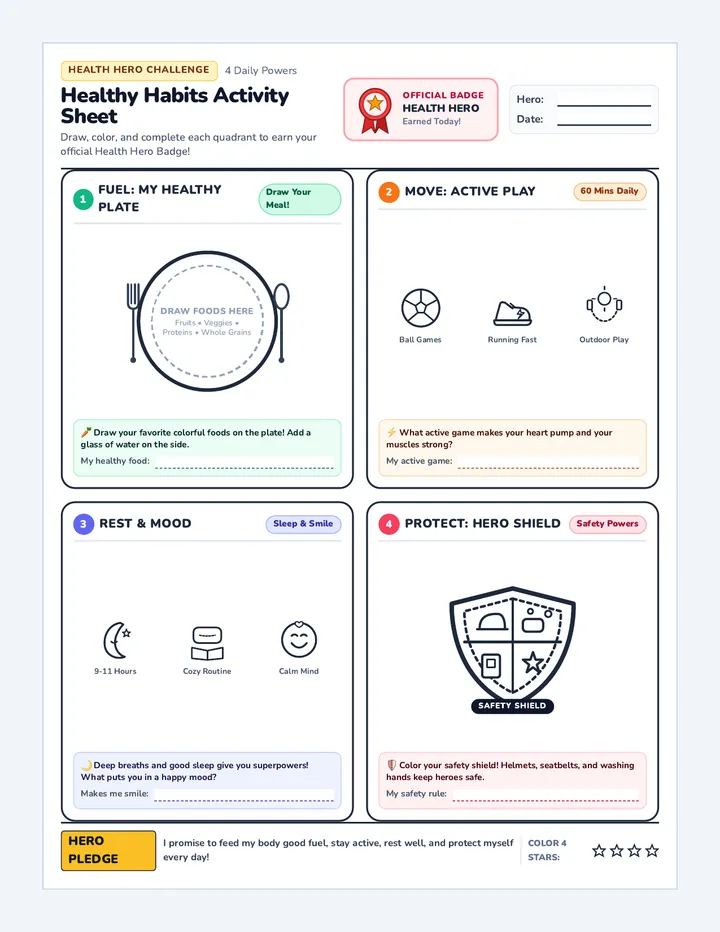
Healthy Habits Activity Sheet

Healthy Habits Activity Sheet

A printable healthy habits activity worksheet featuring a red ribbon badge, a drawing plate for balanced meals, an active play zone, a sleep and mood booster area, and a colorable safety hero shield.

IN

I needRosa Vazquez

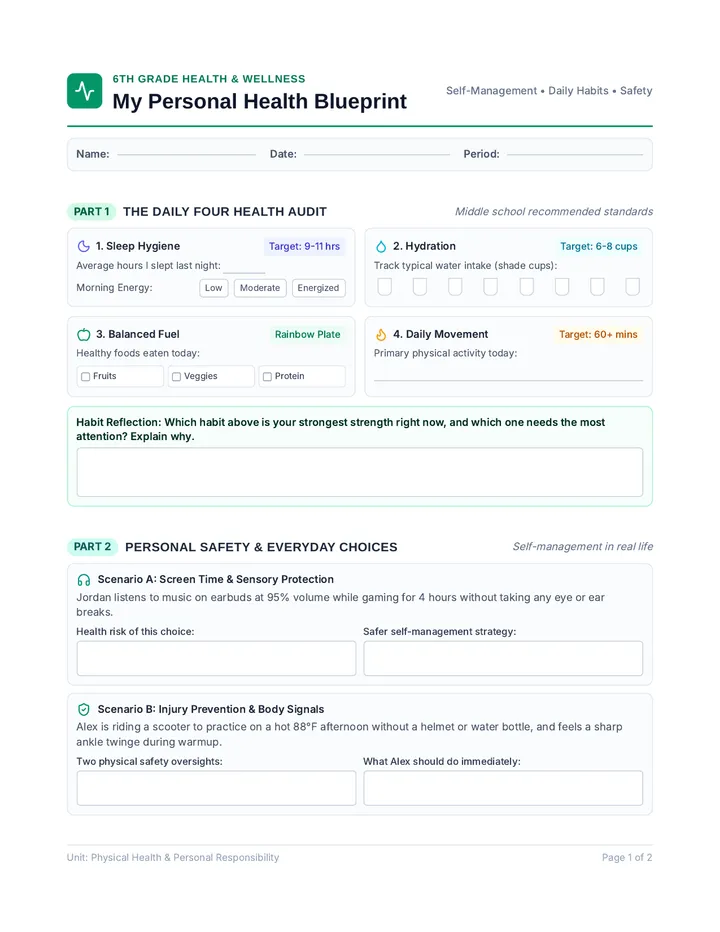
Health Blueprint Worksheet

Health Blueprint Worksheet

A comprehensive 6th-grade health and self-management worksheet featuring a daily health audit across sleep, nutrition, hydration, and movement, scenario-based personal safety checks, and a structured SMART goal action planner.

BP

Brianna Popp

Sequences

Safe Circles Slides

Mindful Choices

A two-week wellness unit for middle schoolers focused on analyzing influences (media, tech, values) and mastering health-enhancing decision-making models. Students culminate their learning by creating a collaborative research poster on a chosen wellness topic.

CH

Collin Harney

39
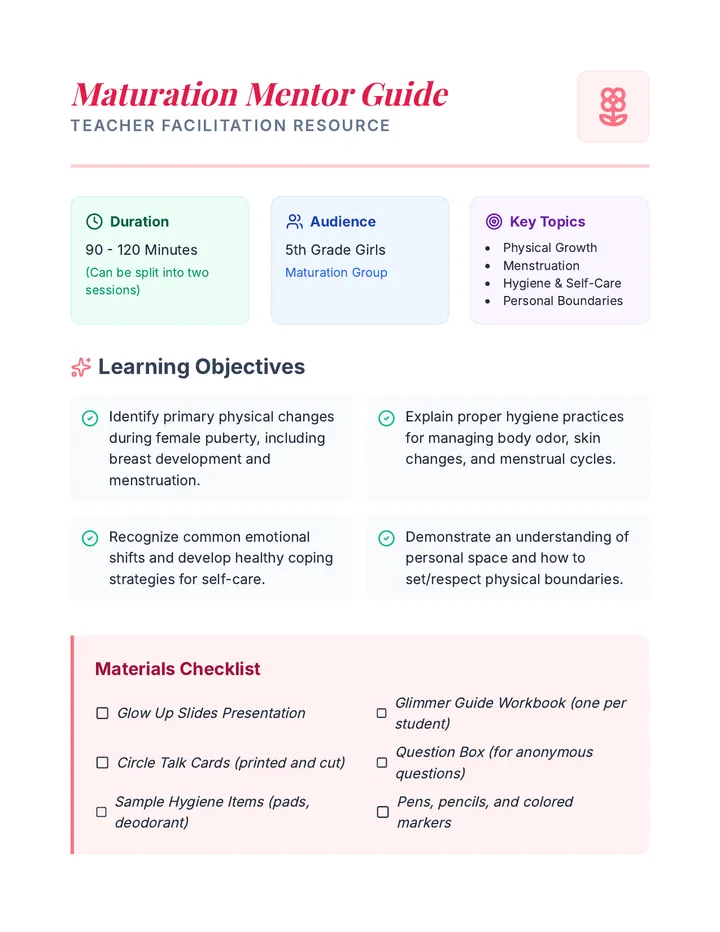
Maturation Mentor Guide Lesson Plan

Glimmer and Glow

A comprehensive maturation unit for 5th-grade girls covering physical, emotional, and social changes during puberty. Includes a detailed teacher guide, interactive slides, a student workbook, and discussion cards to foster a supportive and informative environment.

W

wwiedeman

7
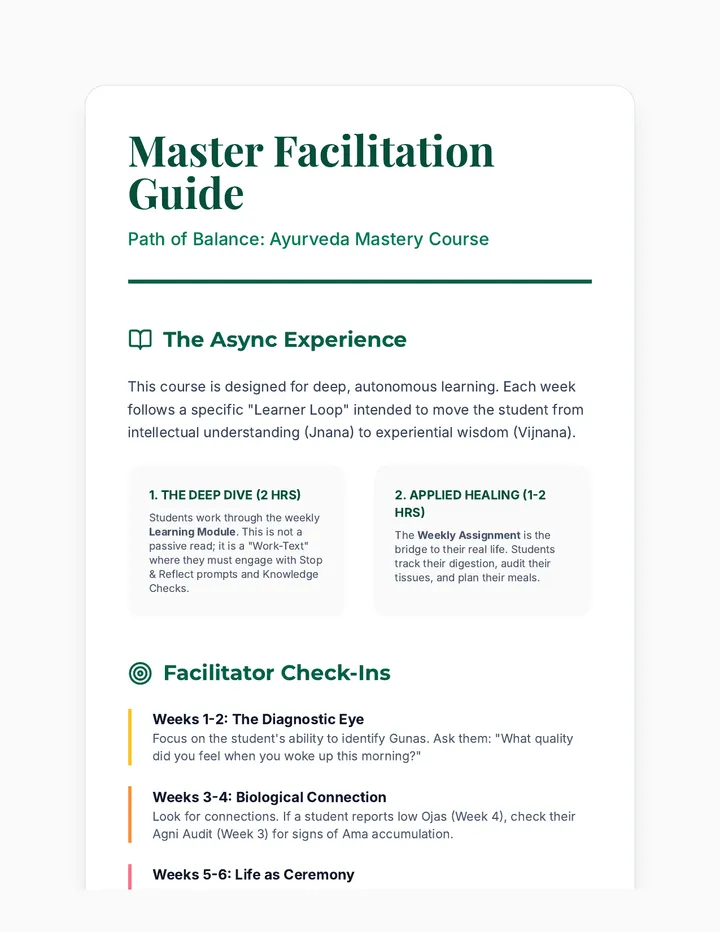
Master Facilitation Guide

Path of Balance Mastery

A professional 6-week certification-style journey into Ayurveda. Each week features a comprehensive 2-hour 'Deep Dive Module' combining academic reading, interactive reflections, and knowledge checks, supported by practical 'Applied Healing' assignments (1-2 hours) for real-world integration.

AJ

Ann John

13
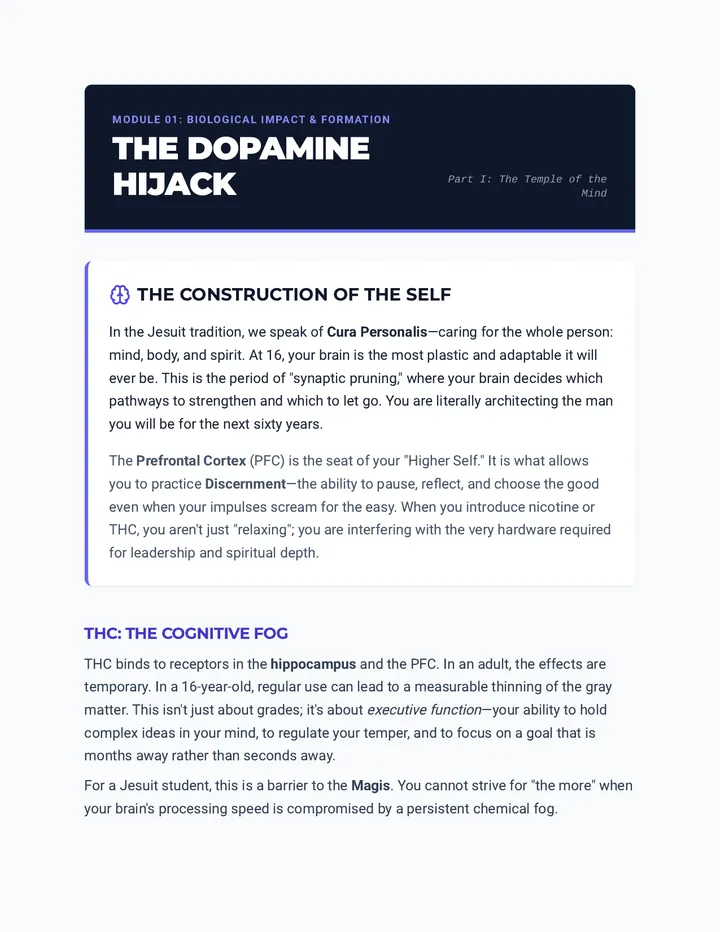
Body Blueprint Article

The Reset Project

A restorative learning program designed for high school students to reflect on the impact of substance use and prepare for a positive return to their school community. The program balances scientific facts with deep personal reflection.

EL

Elijah Langston

4
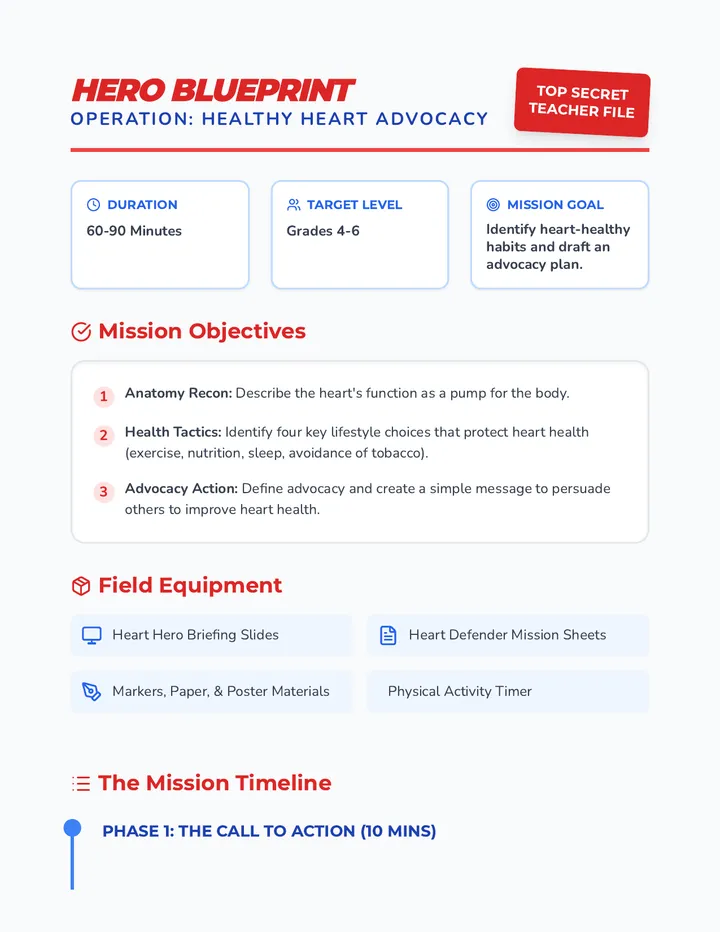
Hero Blueprint Lesson Plan

Heart Hero HQ

A comprehensive lesson sequence designed to empower students to become 'Heart Heroes' through education and advocacy for cardiovascular health.

KB

Kelly Brown

6
Safety Gear Teacher Guide

Safety and Emergency Response Unit

A unit focusing on injury prevention, safety equipment maintenance, and foundational emergency response principles for caregivers and students.

JM

Jill Miller

17