Puzzle Protocol Teacher Guide Puzzle Protocol
Teacher Facilitation Guide
Lesson 1: The Hidden Cost of Rewards • Grade 12 Behavioral Support
The "Pay-to-Play" Hook
This opening activity demonstrates the Overjustification Effect in real-time. By "paying" half the class to perform a task they might naturally enjoy, you create a measurable difference in their willingness to continue that task once the reward is removed.
Materials Needed
Set of 20 simple logic puzzles or riddles
Small rewards (e.g., candy, stickers, "bonus points")
A timer
Time Required
15–20 minutes
Facilitation Steps
1
Divide & Distribute
Split the class into Group A (Incentivized) and Group B (Control) . Hand out the puzzles to both groups. Ensure the groups are separated enough so they don't immediately notice the difference in instructions.
2
The Pitch
Tell Group A: "For every puzzle you solve correctly in the next 5 minutes, you'll receive a [reward]."
Tell Group B: "We have some puzzles here. See how many you can solve in the next 5 minutes."
3
The Work Period
Set the timer for 5 minutes. Walk around and "praise" Group A specifically for their "earnings." Ensure Group B works without mention of rewards.
4
The Pivot (Critical Step)
Collect Group A's puzzles and distribute rewards. Then say: "I've run out of rewards, so I can't pay you anymore. But we have 5 more minutes of 'free choice' time. You can keep doing puzzles, or you can just sit quietly/check your phones."
5
The Observation
Do not intervene.
Observe which students continue the puzzles. Typically, Group B (never paid) will continue at a higher rate than Group A (recently paid but now cut off).
Debriefing Questions
For Group A: How did your motivation change the moment I said I ran out of rewards? Did the puzzle itself feel "less fun" once it became a job?
For Group B: Why did you keep working during the free period even though there was no incentive?
Synthesis: If we want someone to love a hobby, is giving them a reward for it the best way to help them keep doing it long-term?
Tip: The transition to the "Free Period" must be natural. If you frame it as a chore, both groups will stop. Frame it as "I don't have anything else for you to do right now," letting their natural curiosity (or lack thereof) drive their behavior.
Hidden Costs Slides Hidden Costs
The Psychology of the Overjustification Effect
Why rewards sometimes backfire
Defining the Phenomenon
"The Overjustification Effect occurs when an expected external incentive decreases a person's intrinsic motivation to perform a task."
Essentially, when you are paid for something you already love, you stop seeing it as play and start seeing it as work.
Intrinsic
Doing it for the joy of the activity itself.
Extrinsic
Doing it for a reward or to avoid punishment.
Lepper, Greene, & Nisbett (1973)
The Gold Star Experiment
Group 1: Expected Reward
Children were told they would receive a "Good Player" certificate for drawing with markers.
Group 2: Unexpected Reward
Children drew with markers and received a surprise certificate at the end.
Group 3: No Reward
Children drew with markers and received no certificate at any point.
The Result:
Weeks later, which group spent the least amount of time drawing during free play?
Group 1
The Cognitive Shift
Self-Perception
"I'm not drawing because I like it; I'm drawing to get the sticker."
Erosion of Joy
Once the reward is removed, the reason for the activity is gone.
"We turn play into labor by attaching a price tag."
The Paradox of Parenting & Pedagogy
If we pay students for good grades, are we helping them learn or teaching them to game the system?
Can a professional athlete ever truly play for the "love of the game"?
When is a reward useful versus destructive?
Intrinsic Analysis Worksheet Intrinsic Analysis
Study Guide: The Lepper, Greene, & Nisbett Investigation
NAME:
DATE:
"If you take a child who enjoys drawing and tell them they will get a prize for drawing, you have introduced a third party into their relationship with their creativity. The question is: who is in control?"
Part I: Experimental Design
Analyze the three conditions of the 1973 study. In your own words, describe the psychological state of a child in each group during the task.
Group 1:
Expected Reward
Group 2:
Unexpected Reward
Group 3:
No Reward
Part II: Identifying the Shift
1. The "Discounting Principle": Why did Group 1's interest drop compared to Group 2, even though both received the same prize?
2. Autonomy vs. Control: How does an expected reward change a person's sense of "who is responsible" for their behavior?
Part III: The Reward Audit
Think about your own life—school, sports, hobbies, or chores. Identify one activity where an external reward (grades, money, praise) might be "crowding out" your natural interest.
The Activity
The External Incentive
Prediction: What would happen to your engagement with this activity if the incentive were removed tomorrow? Why?
Exit Thought:
If external rewards can destroy internal interest, should we stop rewarding good behavior entirely? What is the "Middle Path"?
Creative Killers Slides Creative Killers
Rewards vs. High-Level Thinking
"There is a mismatch between what science knows and what business does." — Dan Pink
The Candle Problem
The task: Attach a candle to the wall so the wax doesn't drip on the table, using only:
A candle
A book of matches
A box of thumbtacks
The Twist:
Group A was offered $20 for speed. Group B was just asked to solve it.
Functional Fixedness
To solve it, you must see the box not just as a container for tacks, but as a platform.
The "Incentive" Backfire
3.5
Minutes Longer
The incentivized group took longer to solve the problem.
Why?
Rewards narrow our focus. This is great for repetitive tasks, but it blocks the peripheral vision needed for creative insight.
The Motivation Matrix
Algorithmic
A task with a set of established instructions down a single path to one conclusion.
Rewards Work:
"If you do this, then you get that."
Heuristic
A task with no set instructions; you have to experiment and find a new way.
Rewards Fail:
Rewards narrow the mind and block the solution.
Deep Dive: The Puzzle of Motivation
Dan Pink: The Puzzle of Motivation
(Teacher: Embed YouTube Video Here)
Watch For:
The Glucksberg Experiment
The failure of "carrot and stick"
Autonomy, Mastery, Purpose
Task Type Analyzer Worksheet The Task Analyzer
Algorithmic vs. Heuristic
According to psychological research, the effectiveness of an incentive depends entirely on the nature of the work. Complete the categorization audit below to determine when rewards help—and when they hurt.
Algorithmic Tasks
Routine, repetitive, following a fixed path. Solving requires focused attention on known steps. (e.g., Data entry, stacking boxes).
Heuristic Tasks
Creative, non-routine, requiring experimentation. Solving requires "out-of-the-box" thinking and broad focus. (e.g., Designing an app, writing a poem).
Part I: The Sorting Room
For each activity below, determine if it is Algorithmic (A) or Heuristic (H). Briefly explain why a financial reward would help or hinder the person doing it.
1. Stacking 500 grocery shelves identically.
Reasoning:
2. Brainstorming a new logo for a brand.
Reasoning:
3. Writing a response to an open-ended prompt.
Reasoning:
4. Cleaning a stadium after a concert.
Reasoning:
Part II: The Focus Paradox
"Rewards, by their very nature, narrow our focus. That is their utility."
1. Why is "narrow focus" a benefit for the stadium cleaner but a disaster for the logo designer?
2. The High-School Incentive Audit: Think of your classes. Are most of your graded assignments Algorithmic or Heuristic? How does the grading system affect your creativity in those tasks?
NAME: ____________________
DATE: ____________________
Nudge Wars Seminar Guide Nudge Wars
Socratic Seminar Facilitation Guide
The Ethical Conflict
Psychological reinforcement is no longer just for lab rats. It is the engine of the digital economy. We are being "nudged" constantly by algorithms designed to trigger dopamine and reinforce specific behaviors (scrolling, buying, voting).
Key Question: Is it ethical to use a person's biological reward system against them to serve a corporate or political end?
Focus Skills
Ethical Reasoning
Evidence-Based Debate
Active Listening
Seminar Question Progression
Round 1: The Opening (Clarifying)
"In your own experience, where do you feel your behavior is most influenced by 'unseen' rewards (notifications, likes, streaks)?"
"Does a 'streak' on an app like Duolingo or Snapchat make the activity more meaningful, or just harder to stop?"
Round 2: The Core (Evaluation)
"If a health insurance company uses rewards to 'nudge' you into exercising, is that an infringement on your autonomy or a helpful service?"
"Psychologist B.F. Skinner believed that since we are always being reinforced anyway, we might as well do it scientifically for the 'greater good.' What are the dangers of this view?"
Round 3: The Closing (Actionable)
"If you could 'opt-out' of all behavioral reinforcement in your digital life, would you? What would you lose? What would you gain?"
"Is positive reinforcement a form of 'soft' coercion?"
Seminar Etiquette
"I agree with [Name] that rewards narrow focus, but I wonder if..."
"Where in the research did we see evidence for that idea?"
"Could you clarify what you mean by 'autonomy' in this context?"
"Is there a case where reinforcement is actually necessary for safety?"
Dopamine Loop Reading Guide Case Study: The Dopamine Loop
Research Dossier
Architecture of Addiction: How Social Media Uses Operant Conditioning
Subject: Behavioral Engineering & Ethics
The "pull-to-refresh" mechanism on your smartphone is no accident of design. It is modeled directly after the slot machine—a device engineered for maximum behavioral reinforcement. In psychology, this is known as a variable ratio schedule. When you pull to refresh, you don't know if you'll get a "win" (an interesting photo or notification) or nothing at all. This uncertainty is what makes the behavior addictive.
Sean Parker, the founding president of Facebook, famously admitted that the platform’s early mission was: "How do we consume as much of your time and conscious attention as possible?" The solution was to provide a "little dopamine hit" every so often, through a like or a comment. It’s a "social-validation feedback loop," exactly the kind of thing that a behavioral psychologist would design to exploit human vulnerability.
The ethics of this are increasingly under fire. If an algorithm learns exactly what kind of reward will keep a specific user scrolling for five more minutes, is that user still in control of their own time? Or has their autonomy been subverted by a machine that knows their psychological pressure points better than they do?
Critics argue that we have moved past "positive reinforcement" into a realm of "surveillance capitalism," where our biological reward systems are the raw material being harvested for profit. The goal isn't to help us achieve our goals; it's to keep us engaged with theirs.
Analysis Questions
1. Variable Rewards: Why is a reward that happens sometimes more powerful at creating a habit than a reward that happens every time?
2. The "Weaponization" of Dopamine: Using the text above, define how "social-validation" acts as an extrinsic reward in the digital world.
3. Ethical Threshold: At what point does "encouraging a behavior" (like using an app) cross the line into "manipulation"? Where is the boundary for you?
INCENTIVE AUDIT // CASE STUDY 03
NAME: _____________________________ DATE: __________________
Intrinsic Spark Slides Intrinsic Spark
Beyond Carrots and Sticks
How to foster motivation when rewards stop working.
The Self-Determination Theory
Autonomy
The need to be the causal agent of one's own life; to have choice.
Competence
The need to experience mastery and control over outcomes.
Relatedness
The need to feel connected to others and have a sense of purpose.
Shifting the Language
Controlling
"Do this and you'll get that."
Focuses on external pressure and compliance.
Autonomy-Supportive
"Here is why this matters, and here is how you can approach it..."
Focuses on rationale, choice, and feelings.
The Checklist:
1 Provide a meaningful rationale.
2 Acknowledge negative feelings.
3 Use non-controlling, informational language.
Scenario: The Reluctant Task
The "Old" Way:
"If you don't finish your college application by Friday, you're grounded for the weekend."
Result: Fear-based compliance, low quality.
The "Intrinsic" Way:
"I know these forms are incredibly tedious and frustrating. The reason we want to get them done early is to give you the best chance at scholarships so you have more options later. How do you want to break up the work this week?"
Result: Autonomy preserved, rationale clear.
Autonomy Toolkit Handout The Autonomy Toolkit
Mastering Autonomy-Supportive Communication
Lesson 4 // Skill-Building Handout
When we stop using "carrots and sticks" (rewards and punishments), we must use something better: support. Autonomy-support is about helping others find their own internal reasons for acting. Use this toolkit to practice reframing controlling situations.
Tool 1: The Reframing Matrix
Technique
Controlling (Wait...)
Autonomy-Supportive (Try this!)
Meaningful Rationale
"Because I said so."
"The reason this is helpful is because it builds the skill of..."
Acknowledging Feelings
"Stop complaining and just finish it."
"I can see you're frustrated by this; it really is a tedious task."
Non-Controlling Choice
"If you don't do it now, you'll be penalized."
"Would you prefer to do this alone or with a partner?"
Tool 2: Mastery Practice
Re-write the following "Carrot and Stick" commands into Autonomy-Supportive invitations.
Scenario A: A parent to a teen regarding a clean room.
"If your room isn't clean by 6 PM, I'm taking your phone."
Scenario B: A coach to a player regarding practice.
"If you want to play in the game Friday, you better work harder in these drills."
NAME: ____________________ DATE: ___________
IGNITING INTRINSIC DRIVE
System Audit Project Guide The System Audit
Final Summative Project Guide
Project Code INCENTIVE-05
The Mission
Now that you have explored the science of motivation, it is time to apply it to the real world. You will select an existing Incentive System and perform a psychological audit. You must evaluate how the system works, identify where it might be backfiring, and propose an ethically sound, autonomy-supportive alternative.
Example Systems to Audit:
High School GPA & Class Rank
Credit Card Reward/Points Programs
Video Game "Loot Boxes" or Battle Passes
Sales Commissions in Business
Corporate Employee of the Month
Required Deliverable:
A 3-5 page formal audit report OR a 10-slide visual presentation deck presented to "management."
Phase Checklist
01
System Deconstruction
Identify the core components: What is the behavior being incentivized? What is the reward? Is it expected or unexpected? Is the task algorithmic or heuristic?
02
Psychological Analysis
Apply theory: Does this system risk the Overjustification Effect? Does it narrow focus in a destructive way? Does it undermine the user's autonomy or competence?
03
The Ethical Verdict
Is this system honest? Does it use "nudge" techniques that border on manipulation? Is the trade-off (reward vs. psychological impact) fair for the user?
04
Redesign Proposal
Propose a "Version 2.0." How can you achieve the same behavioral goals using autonomy-support, rationale, and intrinsic drive rather than just rewards?
Pre-Approval Form
Target System
Primary Goal of the System
Initial Hypothesis: Where is the flaw?
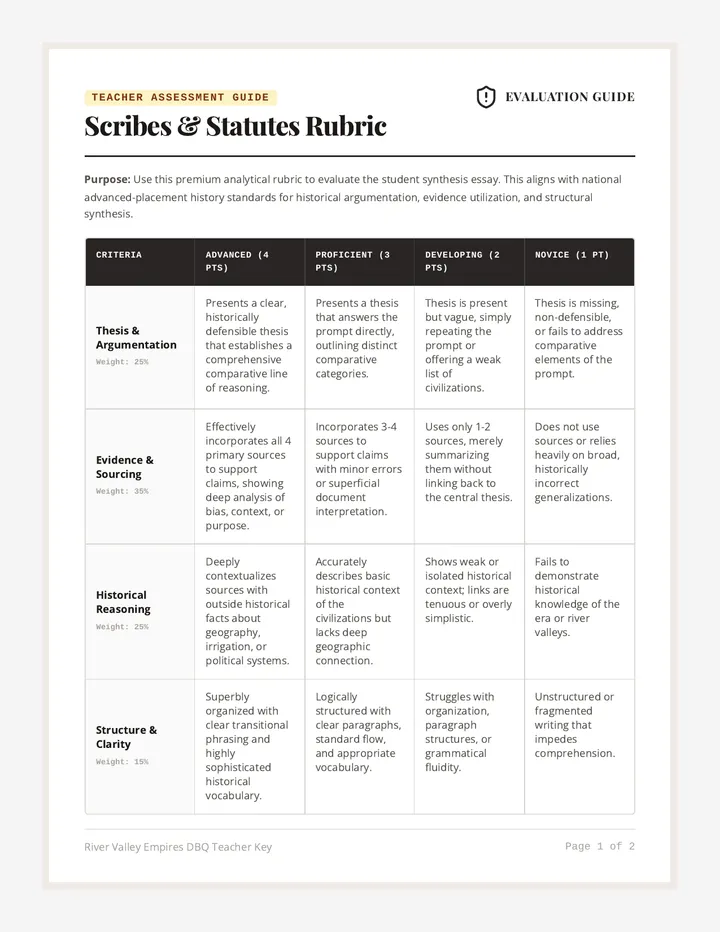
Audit Assessment Rubric Teacher Resource Audit Assessment Rubric
Summative Evaluation Checklist
TOTAL SCORE: / 40
Criterion
Exemplary (10)
Proficient (8)
Developing (6)
Beginning (4)
Psychological Analysis
Deep application of Overjustification Effect and Task Type (Algorithmic vs. Heuristic).
Nuanced connection to multiple studies (Lepper, Pink, etc). Accurate task typing.
Clear connection to core theories. Most task analysis is accurate.
Surface-level mention of rewards backfiring. Analysis is broad.
Limited or incorrect application of psychological terms.
Ethical Evaluation
Assessment of autonomy, control, and manipulation in the system design.
Profound insight into the "Nudge" factor. Sophisticated debate on autonomy.
Clear ethical stance supported by logic and seminar themes.
Identifies ethical concerns but lacks depth in reasoning.
Ethics are ignored or simplified to "it's good/bad."
Redesign Utility
Effectiveness and creativity of the proposed autonomy-supportive changes.
Brilliant shift from carrots/sticks to rationale and mastery-based support.
Solid proposal using toolkit techniques. Feasible and ethical.
Proposal is present but relies heavily on "softer" rewards.
Proposal does not address the core motivational issue.
Communication
Organization, professional tone, and clarity of the final deliverable.
Polished, professional, and compelling. Exceptional clarity.
Well-organized with minor errors. Professional tone throughout.
Organization is loose. Tone is inconsistent.
Significant clarity or organizational issues.
Teacher Feedback & Observations
"The goal of education is not the reinforcement of performance, but the ignition of purpose."