Lenny.com
Explore
Create
ActivitiesNewMathEnglish Language ArtsScience & EngineeringSocial StudiesGlobal LanguagesHealth & Physical EducationSpecial EducationCounseling & Life SkillsArts & CreativityESL
Lenny.com
Lenny.com
Explore
Create
ActivitiesNewMathEnglish Language ArtsScience & EngineeringSocial StudiesGlobal LanguagesHealth & Physical EducationSpecial EducationCounseling & Life SkillsArts & CreativityESL
Lenny.com
Lenny.com

Solutions

Lenny for EducatorsLenny for SchoolsLenny for Districts

Product

ExploreSign inCreateSupportAbout

Resources

Getting startedMTSS Acceleration Program

© 2026 Lenny Learning Inc.

TermsPrivacyAccessibility
LinkedInInstagramX
Lenny

World History 20th Century

Analyzes the causes and consequences of major global conflicts including World War I, World War II, and the Cold War. Examines decolonization movements, ideological shifts, and the rise of international organizations.

Social StudiesSocial Studies PracticesLocation WordsMapsOrder EventsChronology and CausationEvaluating SourcesHistorical ThinkingGeography, Humans, & the EnvironmentAmerican Symbols and LandmarksCitiesStatesState CapitalsRegions of the United StatesGeographic SkillsPhysical GeographyHuman GeographyRegional GeographyGeography of AfricaGeography of AsiaGeography of EuropeGeography of OceaniaGeography of the AmericasSociety and Environment of EuropeSociety and Environment of AsiaSociety and Environment of The AmericasSociety and Environment of the Middle EastSociety and Environment of AfricaHistoryPrehistoryComparing Ancient River CivilizationsAncient MesopotamiaAncient Egypt and KushAncient South AsiaEarly ChinaGreeceRome and the Byzantine EmpireAncient World HistoryNative Peoples of North AmericaNative Peoples of Mesoamerica and South AmericaAfrican EmpiresMedieval AsiaMedieval EuropeThe Silk RoadMedieval HistoryIslamic EmpiresWorld ReligionsRenaissance PeriodAge of ExplorationThe Thirteen ColoniesThe American RevolutionUS History Early RepublicFounding of the United StatesUS History AntebellumUS Civil WarReconstruction PeriodThe Gilded AgeUS ImperialismWorld ImperialismWorld War IUS History 1920sGreat DepressionWorld War IIThe Cold WarUS History 1950-60sUS History 1960s-70sWorld History 20th CenturyContemporary US HistoryContemporary World HistoryHolidaysCivics and GovernmentCitizenshipGovernment FoundationsThe ConstitutionUS ConstitutionExecutive BranchLegislative BranchJudicial BranchState and LocalPolitical ParticipationPublic PolicyPolitical SystemsPower and AuthoritySocial MovementsDefining DevianceTheories of DevianceCrime and Criminal JusticeEconomicsBasic Economic PrinciplesSupply and DemandWhat is MoneyEconomic FundamentalsMicroeconomicsMacroeconomicsBanking and FinanceEconomic SystemsGlobal EconomicsCorporations and PowerThe Changing WorkplaceUnemployment and LaborClass and InequalitySocial MobilityGlobal InequalityPsychologyHistory of PsychologyPsychology as a ScienceBrain and Nervous SystemNeuroscience and BehaviorGenetics and BehaviorSleep and ConsciousnessSensory ProcessesPerceptual OrganizationClassical ConditioningOperant ConditioningObservational LearningCognitive LearningMemory ProcessesThinking and Problem SolvingLanguage and CognitionTheories of MotivationStress and CopingPrenatal and Infant DevelopmentChildhood DevelopmentAdolescent DevelopmentAdulthood and AgingSelf and IdentitySocial CognitionSocial InfluenceAttraction and RelationshipsGroup BehaviorPrejudice and DiscriminationAnxiety and Mood DisordersClinical PsychologyForensic PsychologyPhilosophy & EthicsIntroduction to PhilosophyMajor Philosophers & IdeasMind and Body ProblemFree Will vs DeterminismEthics & MoralityReligion & PhilosophyPolitical Philosophy

Videos

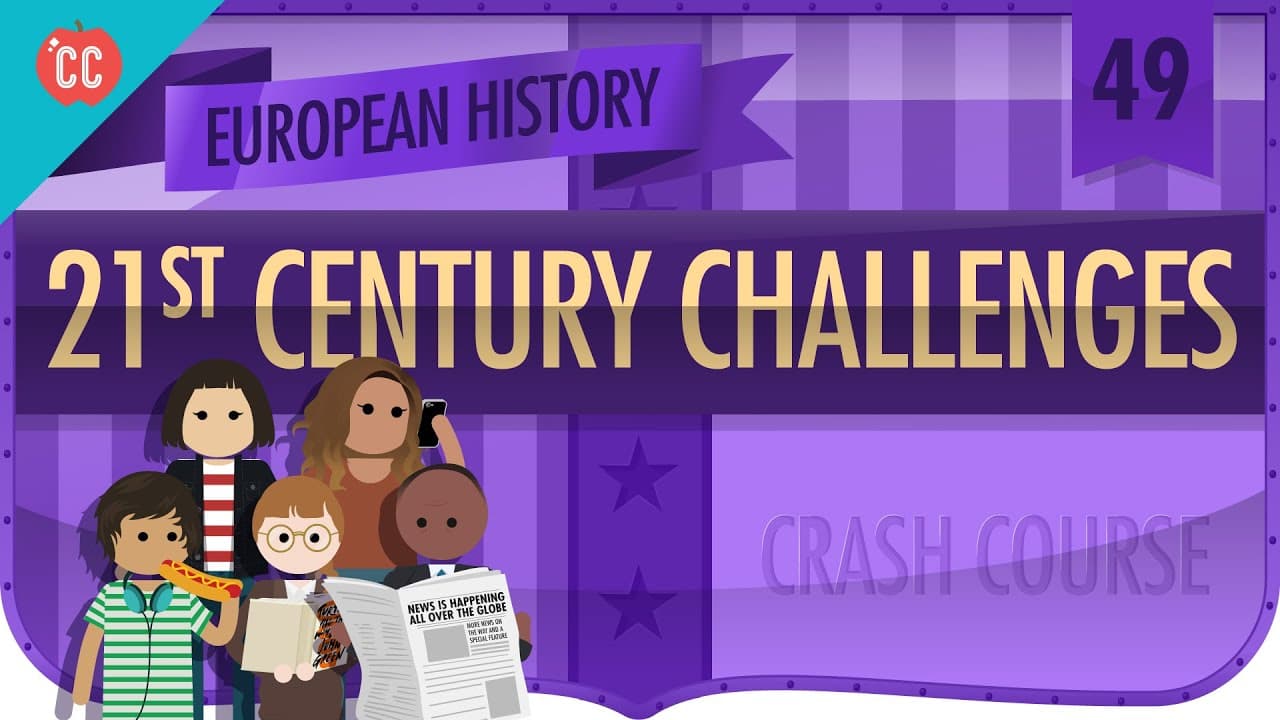
How 21st Century Economics and Identity Shaped Modern Europe

How 21st Century Economics and Identity Shaped Modern Europe

This educational video from Crash Course European History explores the tumultuous first two decades of the 21st century in Europe. Host John Green contrasts the initial optimism of the new millennium—characterized by EU expansion and technological innovation—with the series of economic and social shocks that followed. The narrative covers the global impact of financial crises starting in the 1990s, the Great Recession of 2008, and how economic instability fueled social unrest and identity politics across the continent. The video provides a critical examination of the rise of populism and authoritarianism in modern Europe, specifically profiling Vladimir Putin in Russia and Viktor Orbán in Hungary. It connects these political shifts to the refugee crisis triggered by the Syrian Civil War and the subsequent rise in xenophobia and nationalism, culminating in the Brexit vote. The content also highlights cultural shifts, discussing how globalization and migration have diversified European society, influencing everything from sports to literature. For educators, this resource serves as a vital tool for connecting contemporary current events with historical trends. It helps students understand complex concepts like "illiberal democracy," the domino effects of global economics, and the distinction between patriotism and nationalism. By presenting modern history through both macro-economic lenses and individual human stories (via Nobel Prize winner Svetlana Alexievich), the video encourages students to analyze how systemic shocks influence human behavior and political systems.

CrashCourseCrashCourse

12mins 46s

How Leadership Styles Shaped the Mughal Empire

How Leadership Styles Shaped the Mughal Empire

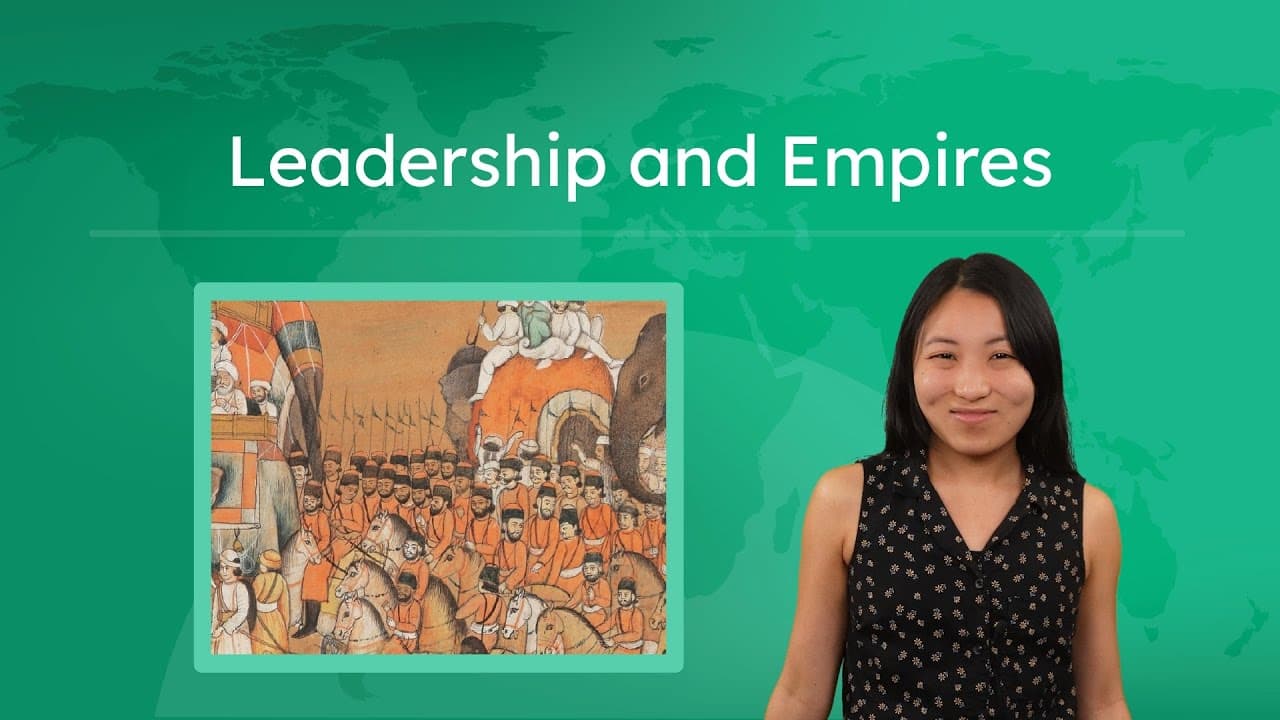
This educational video presents a comparative case study of two major emperors of the Mughal Empire in India: Akbar and Aurangzeb. It begins by contextualizing the Mughal Empire within the "First Global Age," mentioning contemporaries like the Ottomans, Ashanti, Tokugawa Shogunate, and Qing Dynasty. The narrative then focuses on how these two specific leaders managed the immense challenge of governing a vast, religiously and culturally diverse population. The video contrasts Akbar's policies of religious tolerance, cultural integration, and decentralized administration with Aurangzeb's later approach of strict centralization, religious orthodoxy, and relentless military expansion. Key themes explored include the impact of leadership styles on political stability, the role of religious tolerance in unifying diverse populations, and the economic consequences of continuous warfare. The video delves into specific historical examples, such as Akbar's "Divine Faith" discussions and tax reforms versus Aurangzeb's imposition of Islamic law and the reinstatement of taxes on non-Muslims. It highlights the direct correlation between these administrative choices and the empire's rise and eventual decline. For educators, this video serves as an excellent tool for teaching cause-and-effect in history and comparative governance. It transforms abstract political concepts into concrete examples by pitting two distinct ruling philosophies against one another. The content encourages critical thinking by asking students to evaluate which leadership style was more effective and why, making it highly applicable for units on World History, Asian Studies, or Civics. The clear visual aids, including maps and historical miniature paintings, help students visualize the geography and culture of the period.

Miacademy & MiaPrep Learning ChannelMiacademy & MiaPrep Learning Channel

9mins 50s

How the World Wide Web Transformed the 90s

How the World Wide Web Transformed the 90s

This educational video takes students on a time-traveling adventure back to the 1990s to explore the invention and profound impact of the World Wide Web. Through a narrative frame where the host, Anthony, and his robot companion, Mia, get trapped inside a computer, viewers meet 'Webster,' a guide to the digital past. The video breaks down the history of the internet versus the World Wide Web, introducing key milestones like the 1989 invention by a British scientist and the explosion of usage by the late 90s. The content is structured around three primary pillars of impact: Social, Economic, and Political. Socially, it covers the shift from physical libraries to search engines (Ask Jeeves, Google), the birth of instant communication (AIM, Email), and the rise of social media and misinformation. Economically, it explains the 'Dot Com' boom, the birth of e-commerce giants like Amazon and eBay, and new career paths in tech. Politically, it discusses how the 1992 election utilized email for the first time and how digital platforms revolutionized voter engagement and activism. This resource is highly valuable for Social Studies and History classrooms as it connects recent history to students' current digital lives. It effectively contrasts life 'before' and 'after' the web, helping students appreciate the technological conveniences they often take for granted while critically analyzing the double-edged sword of instant information. The video includes built-in pause points with discussion questions, making it ready-to-use for interactive classroom instruction.
Miacademy & MiaPrep Learning ChannelMiacademy & MiaPrep Learning Channel

13mins 4s

How Simón Bolívar Liberated South America

How Simón Bolívar Liberated South America

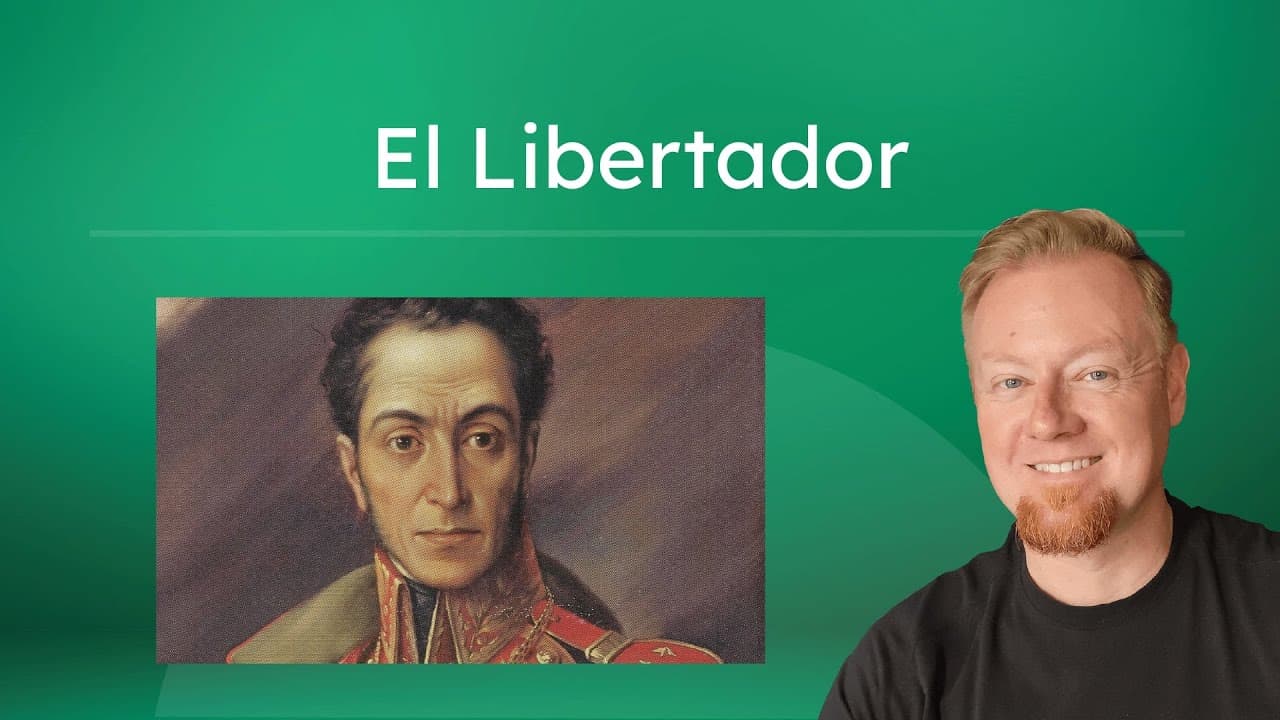
This educational video provides a comprehensive overview of the life and legacy of Simón Bolívar, known as 'The Liberator' of South America. It contextualizes his work within the broader Age of Revolutions, connecting the Latin American independence movements to the American, French, and Haitian revolutions. The narrative follows Bolívar's journey from a wealthy Venezuelan creole to a revolutionary leader who played a crucial role in liberating six nations from Spanish rule. The video explores key historical themes including the rigid colonial social hierarchy (the caste system) that fueled resentment among creoles and mixed-race populations, the impact of Enlightenment ideals, and the geopolitical catalyst of Napoleon's invasion of Spain. It delves into the military and political struggles Bolívar faced, his partnership with Haiti, and the rise and eventual collapse of his dream of a unified Gran Colombia. For educators, this resource serves as an excellent case study for understanding the complexities of post-colonial nation-building. It highlights how social inequality drives revolution and illustrates the difficulties of establishing stable governance in diverse territories. The video uses maps, diagrams, and reenactments to make complex political history accessible, making it valuable for World History units on revolutions, Latin American history, or political science discussions on leadership and governance.

Miacademy & MiaPrep Learning ChannelMiacademy & MiaPrep Learning Channel

11mins 15s

How the Cold War Shaped America

How the Cold War Shaped America

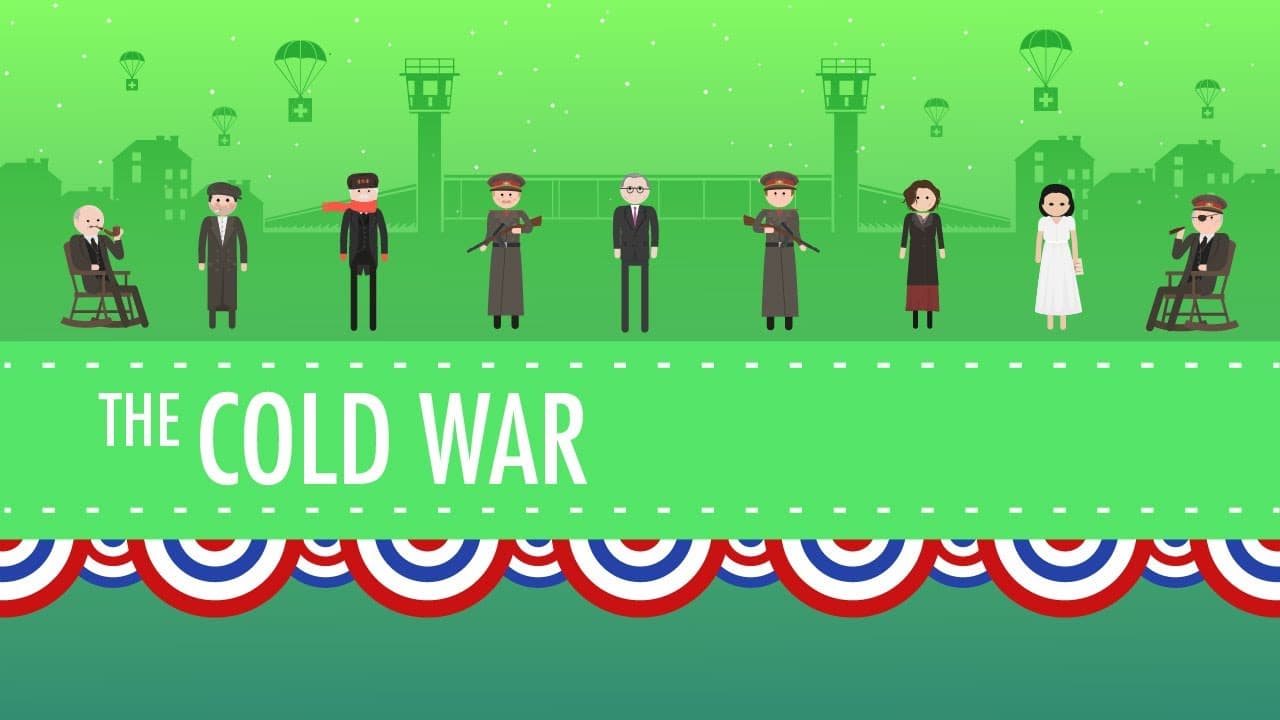
This fast-paced educational video provides a comprehensive overview of the Cold War, framing it not just as a geopolitical struggle but as an era that fundamentally reshaped the United States between 1945 and 1990. Hosted by John Green, the video explores the origins of the conflict, contrasting the post-WWII positions of the United States and the Soviet Union. It explains the ideological battle between capitalism and communism and details key American strategies like the policy of containment, the Truman Doctrine, and the Marshall Plan, which aimed to stop the spread of Soviet influence in Europe and Asia. The narrative digs deep into how foreign policy decisions impacted domestic life in America. It covers the creation of the national security state (CIA, NSC), the nuclear arms race, and the cultural impact of living under the constant threat of annihilation. Significant attention is given to the "Red Scare" and McCarthyism, illustrating how the fear of communism led to loyalty oaths, espionage trials (the Rosenbergs), and a political climate where dissent was often equated with disloyalty. The video also highlights unintended domestic benefits, such as the construction of the interstate highway system and increased funding for education and science. For educators, this resource serves as an excellent anchor for units on 20th-century history, foreign policy, or civics. It challenges students to think critically about the definition of "war," the trade-offs between security and liberty, and how international relations can dictate domestic social agendas. The video includes primary source analysis (NSC-68) and connects historical events to modern concepts of freedom and government responsibility, making it a versatile tool for stimulating high-level classroom discussion and analysis.

CrashCourseCrashCourse

13mins 34s

Is History Everywhere? A Global Tour of Resistance and Remembrance

Is History Everywhere? A Global Tour of Resistance and Remembrance

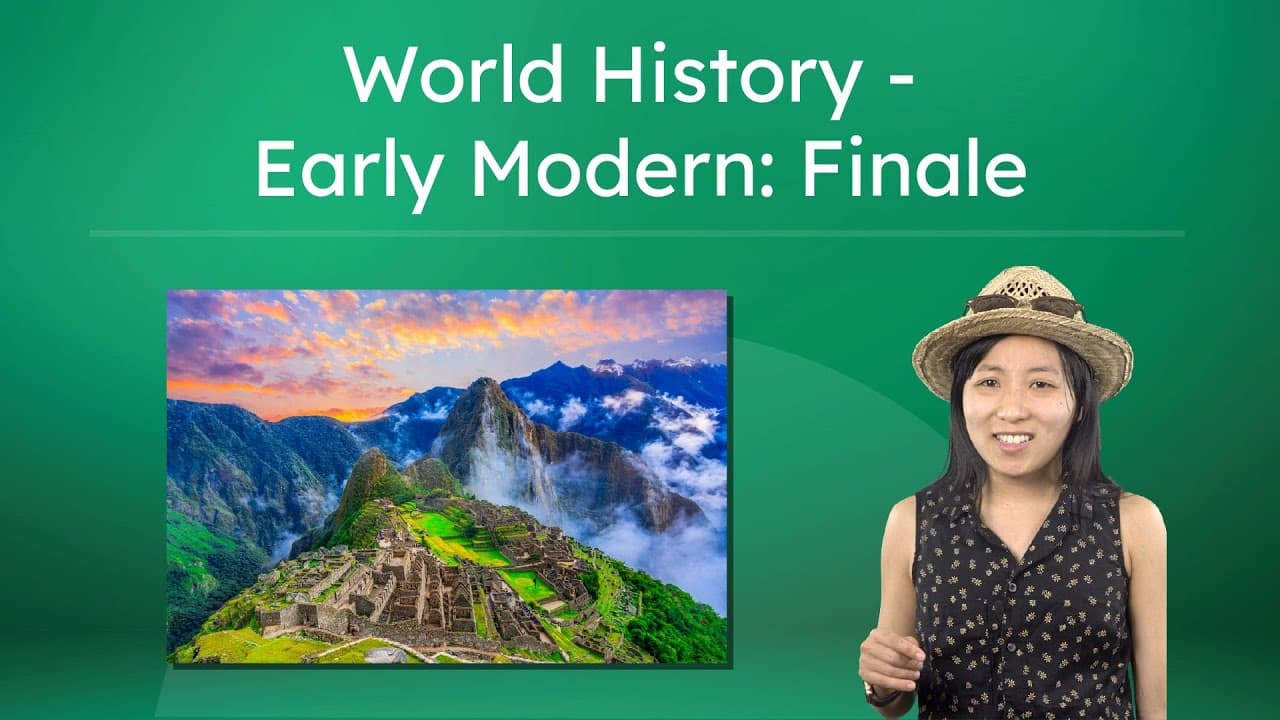
In this engaging finale to a World History course, the narrator takes viewers on a virtual "world tour vacation" to demonstrate that history is present everywhere we look. Using a travel narrative framework, the video visits three distinct locations—Cusco, Peru; Isandlwana, South Africa; and Hiroshima, Japan—to explore how historical events shape modern landscapes and cultural identity. The video moves beyond a dry recitation of dates, instead focusing on the enduring legacy of resistance, conflict, and the universal desire for peace. The content highlights three specific historical moments: the rebellion of Túpac Amaru II against Spanish colonial rule in Peru, the Zulu victory over British forces at the Battle of Isandlwana, and the solemn remembrance of the atomic bombing at the Peace Memorial Park in Hiroshima. Through these examples, the video explores profound themes including indigenous resistance to colonialism, the fragility of imperial power, and the importance of historical memory in preventing future tragedies. This video serves as an excellent capstone for a World History unit or as a standalone lesson on historical significance. It demonstrates how to connect past events to present-day locations, encouraging students to look for history in their own surroundings. Educators can use the specific case studies to discuss the long-term impacts of imperialism and war, or use the video's framework to launch a "history is everywhere" inquiry project where students investigate local statues, battlefields, or memorials.

Miacademy & MiaPrep Learning ChannelMiacademy & MiaPrep Learning Channel

11mins 3s

Materials

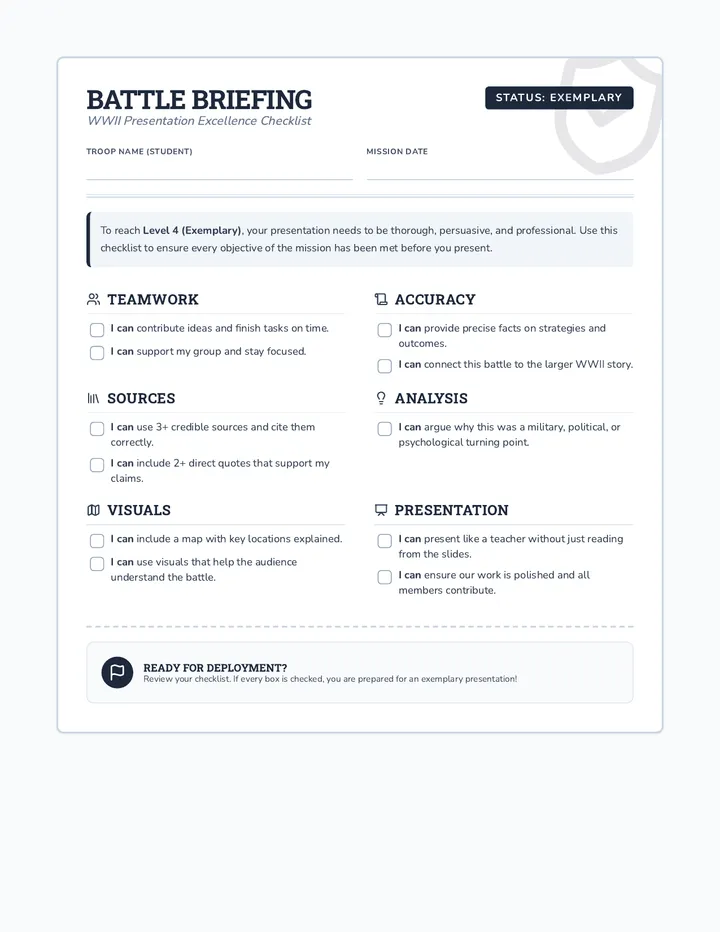
Battle Briefing Checklist

Battle Briefing Checklist

A student-friendly presentation checklist based on Level 4 criteria of a WWII Battles Project rubric, featuring 'I can' statements and visual icons. Revised to fit on a single page.

NP

Nicole Palmiotto

Crisis Analysis Grade Report

Crisis Analysis Grade Report

A detailed grade report based on the Energy Crisis Rubric, featuring a breakdown of scores and clear, constructive feedback for the student's essay.

SB

Shanna Brady

Energy Crisis Grade Sheet

Energy Crisis Grade Sheet

A graded evaluation report for an essay on the 2026 Iran War energy crisis, providing a detailed point-by-point breakdown and clear feedback based on the provided rubric.

SB

Shanna Brady

Inquiry Guide IEP Document

Inquiry Guide IEP Document

An ultra-accessible inquiry guide for 9th-grade teachers featuring six extremely simplified, high-contrast essential questions about the end of WWI. Specifically designed for students with IEPs, it uses large text, high contrast, and minimal wording to ensure clarity and engagement.

B

bliddy

Sequences

Soulful Cyphers Lesson Plan

We Gon’ Be Alright- A Century of Black Excellence

A comprehensive 6-lesson Black History Month curriculum for 5th-8th graders, exploring historical excellence, emotional expression, and community through the lens of five core values: Virtus, Kenkyo, Sankofa, Ubuntu, and Ganas. Inspired by a century of resilience and brilliance.

JS

Joleen Shillingford

18
Conflict Cards Activity

Century Crossroads

A comprehensive assessment sequence covering the pivotal moments of 20th-century US history, from the build-up to World War II through the height of the Cold War and the diverse Civil Rights movements.

AH

Ashley Hopf

16
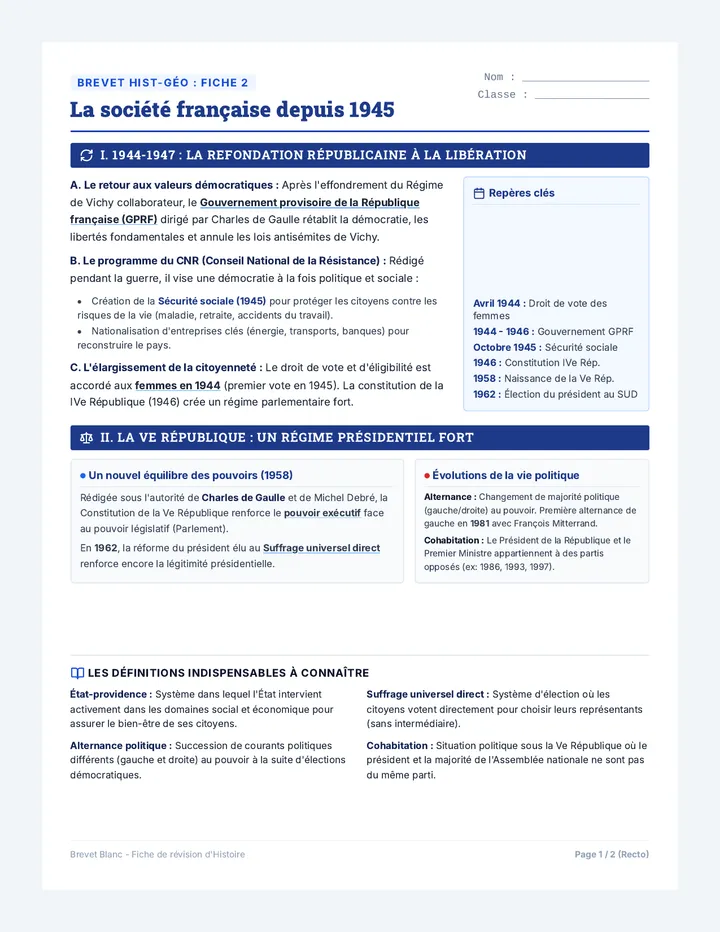
Societe Francaise Depuis 1945 Fiche

Brevet Fiches : Hist-Géo, EMC & Physique-Chimie

Une collection complète de fiches de révision classiques (recto-verso A4) très ciblées pour préparer les élèves de Troisième aux épreuves d'Histoire, de Géographie, d'EMC et de Physique-Chimie du DNB. Chaque fiche traite d'une leçon précise des programmes officiels.

MW

Myriam Wb

16
Mobilization Intro Slides

Global Conflict WWII

A comprehensive 2-day unit covering World War II for 11th Grade US History, aligned with TEKS. It focuses on the transition from isolationism to total war, the home front experience, major turning points in both the European and Pacific theaters, and the strategic decisions that ended the conflict.

BB

Bridgette Burdick

17
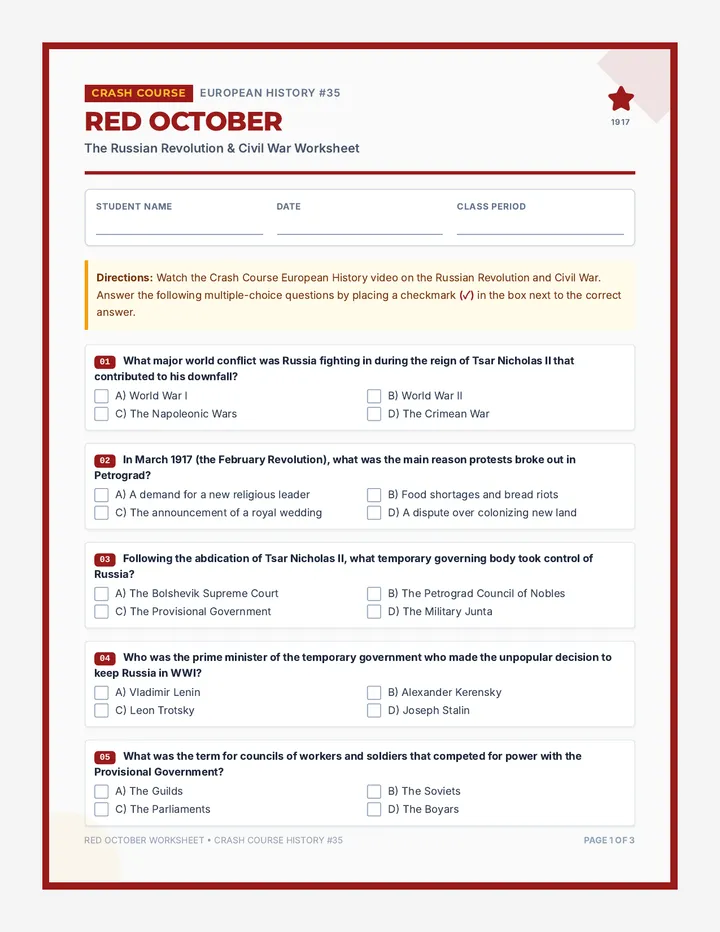
Red October Worksheet

Red Star Rising

A comprehensive history sequence focusing on 20th-century communist revolutions in Russia and China. This sequence uses Crash Course videos, detailed worksheets, complete answer keys, and accessible vocabulary flashcards to explore the collapse of old empires and the rise of communist states.

J

james.shaw

9
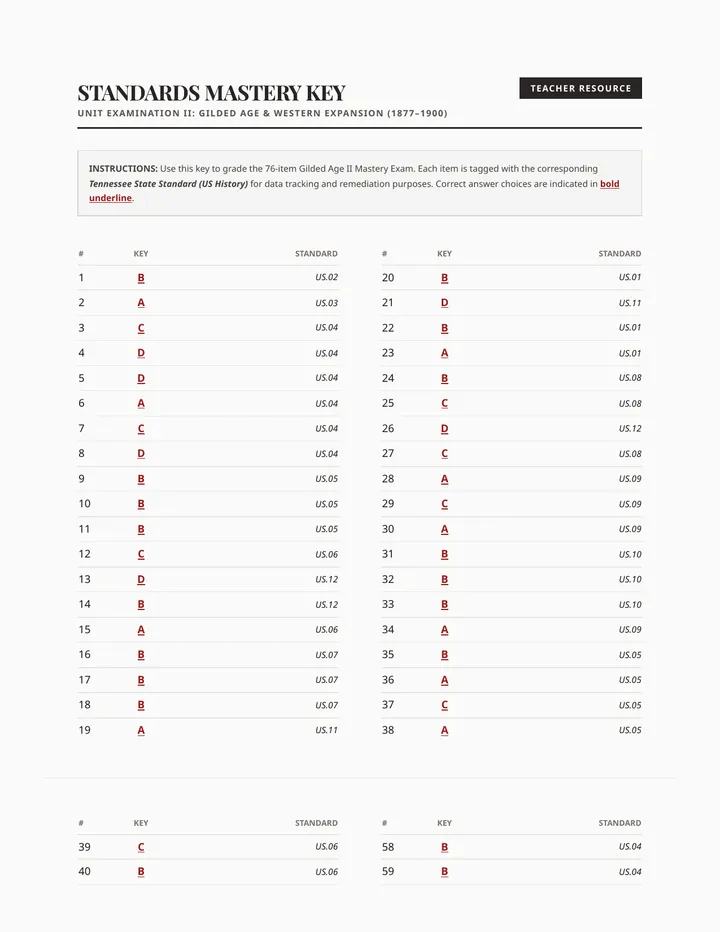
Gilded Age II Standards Key

Modern America Mastery

A comprehensive curriculum sequence covering late 19th and early 20th-century American history, focusing on economic transformation, Western expansion, global imperialism, and the impact of the Great War.

A

Andrew

29

Lessons

History Sprint Pacing Guide

STAAR History Sprint

A comprehensive pacing guide and activity resource designed to cover the remaining 11th Grade US History TEKS before the STAAR test on April 16th. This lesson provides a day-by-day calendar for A/B block schedules and high-engagement activities for each remaining historical era.

BB

Bridgette Burdick

51
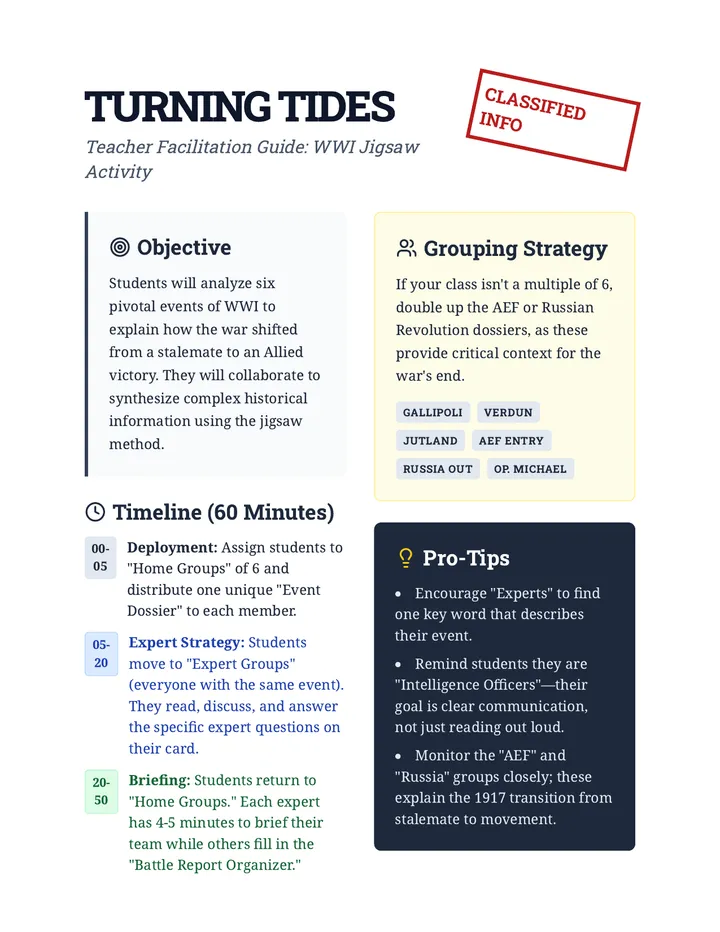
Turning Tides Teacher Guide

Turning Tides

A comprehensive jigsaw activity focusing on six pivotal events of World War I, designed for a 60-minute class session. Students act as intelligence officers to piece together the shifting dynamics of the Great War.

B

bliddy

34
Modern Era Reader Part 1

The Modern Ledger

A comprehensive exploration of the 1990s through the modern day, covering technological shifts, political milestones, military conflicts, and cultural evolution in the United States.

CE

Chelsea Elliott

20
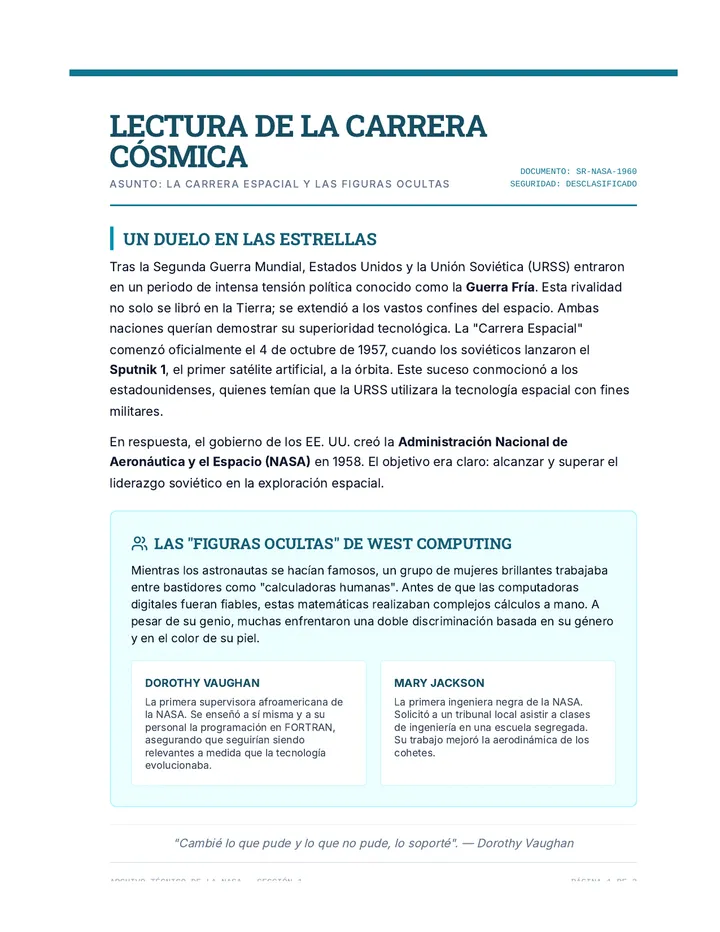
Cosmic Race Reading Text

Stellar Rivalry

A comprehensive exploration of the Space Race, highlighting the technological competition between the US and USSR, the essential contributions of African American women at NASA, and the international agreements that keep space a peaceful frontier.

RM

Robyn MacDonald

16
Jersey Creator Activity

World Stage Kickoff

A 45-minute lesson for 10th-grade ELL students exploring the history and global impact of the FIFA World Cup through reading, narrative analysis, and creative design.

KB

Kathleen Basoco

5
Asia Expedition Teacher Guide

Asia Expedition Stations微

A four-station rotation activity exploring the geography, culture, and innovations of Asia. Students investigate literary themes, analyze historical conflicts and migrations, map technological impacts, and play a geography-themed speaking game.

JR

Jessica Ross

6